I look out on the Occupy Wall Street (Chicago, LA, ad infinitum) demonstrations and I am both encouraged and dismayed (dichotomy, anyone?) I am encouraged because I see people finally following outrage with action. As much as the presumably cynical and worldly types like to express their worldly cynicism with a haughty disdain over the 'fact' that 'someone is always protesting something', the actual fact that people are actually in the streets at this moment is something that is all too rare in this day and age. But I am dismayed because my initial reaction to those demonstrations is that they are too passive and they will too easily become part of the background noise that is Somnolent America.
When I think of our current circumstances, what I want to say is this:
Let every dirty, lousy tramp arm himself with a revolver or knife on the steps of the palace of the rich and stab or shoot their owners as they come out. Let us kill them without mercy, and let it be a war of extermination and without pity.
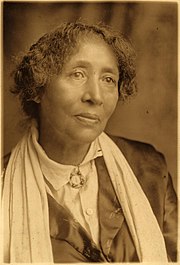
The problem with compelling compliance through violence is that the people who often end up dying as a consequence of said violence are the 99%, as it were. It would be nice if we could all storm the Bastille again and watch the landholders flee the country, but they've figured out that being part of the owning class also means that they own most of the guns and the people that have access to them. Not that parallels to 1789 are completely absent:

Some people will always be oblivious, even if they don't know how to spell "brioche".
My gut reaction that trends toward violence is a product of decades of frustration on this issue, even if I recognize its obvious drawbacks. Thus, if I were to exercise a degree of restraint, I'd more likely want to express something like this:
If, in the present chaotic and shameful struggle for existence, when organized society offers a premium on greed, cruelty, and deceit, men can be found who stand aloof and almost alone in their determination to work for good rather than gold, who suffer want and persecution rather than desert principle, who can bravely walk to the scaffold for the good they can do humanity, what may we expect from men when freed from the grinding necessity of selling the better part of themselves for bread?That was also Lucy Parsons. Certainly, she was speaking of the potential of her own class, likely having already discarded the idea that anything genuinely good for society could come from the wealthy leeches that surmount it. But it's still a noble idea that one would like to think would compel people toward that compliance; that, indeed, society would be better, even for the wealthy, if more people had access to the time and resources that would allow them to express some of the potential within them. It hearkens back to what I often refer to as the "Henry Ford principle": Ford realized that if he wanted his company to truly grow and become a buttress of American society, he couldn't continue to build products that his own workers couldn't afford to buy. It took a long time and a lot of violence for him to come to that realization, but it did occur. I'd like to cut out both the time and the violence parts and weave me a flying carpet while you're at it, won't you?
That acknowledgement of the seeming need for restraint has a personal quality to it, as well. Marcus stressed the avoidance of negative emotions or actions. The expression of Stoicism in the face of difficult situations was meant to be the perfect example of the nobility of the human spirit. The ability to stand against daunting odds without lashing out should be seen as an example of how to resist and effect change without bloodshed. King thought this and eventually won. But that was 50 years ago and the owning class has learned (witness even now the implicit derision of the media toward the Occupy gatherings.) Brother Malcolm may have been ahead of his time in stating his own preference for how to resist and demonstrate. Or was it simply a reversion to the tried and occasionally true method, acknowledging that the real problem of society, class not race, would never truly be affected? After all, when King shifted his emphasis from race to class, they killed him.
I'm hoping for a tipping point. I'm hoping that said point leads to a genuine acknowledgement of the problem. I'm hoping that leads to genuine change. I'm hoping it happens without too many people getting killed. Or am I?

