We spent that night in Fatima, which is the town in which a vision of the Virgin Mary apparently materialized to three children in 1917, telling them that World War I must stop and they needed to deliver her message of peace and life. Said message didn't sink in to two of them, since they died of the Spanish Flu a couple years later (the third lived on into her 90s) but it was apparently enough to attract hordes of Catholics to see the place of the miracle, if not the miracle itself, so there's a colossal basilica in town and they do processions all the time around various buildings/sites and whatnot. The hotel we stayed in was kinda podunk and the town is very, very dead when it comes to entertainment, so if the opportunity comes up when you visit the country, I'd skip it. All of that said, we didn't see a whole lot of said town, since we stopped at a giant gift shop for some reason, which was selling images of Mary and other religious tchotchkes, plus general ones. Most of the 45 minutes that we spent there, I was trying to keep track of Liverpool playing Arsenal, but if there had been anything else to do, I would've kept my head out of my phone. (As it is, we ended up with a 2-2 draw.) We did find a solid bistro with a guy who made really good burgers (again, catering to tourists), though.
The next day, we left Fatima and headed to Tomar, which is the locale of a massive Templar fortress/monastery complex that produced some of the best pictures of the trip. Sitting in the bistro the night before, Tricia had to suffer through a 15-minute lecture about just whom the Templars (and the Hospitallers) were and what happened to them. Our guide did a similar, albeit much shorter summary the next day when we arrived at the fort. On the one hand, she brought up the one fact I'd forgotten about the Templars essentially being the world's first bank. OTOH, she didn't say anything about the Hospitallers or the Crusades, in general, so if you want actual context with your history, I guess that's my (boring) role. I, at least, will not spare you the fact that the Templars were, in many instances, the equivalent of brigands in the Levant, and the Hospitallers were pirates in the last decades of their existence. Opportunists, all.
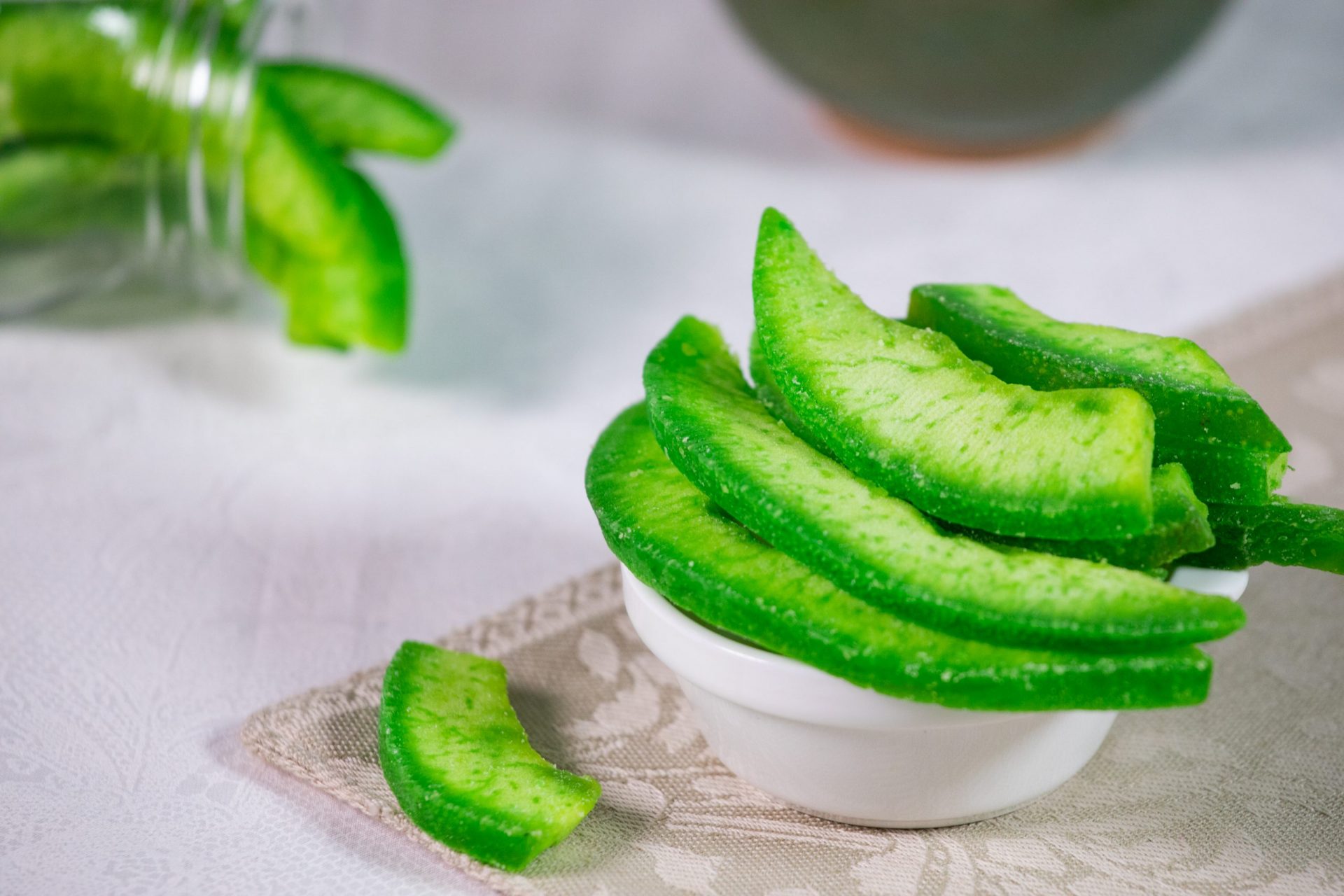
Nevertheless, as you can see, there was some cool stuff inside. Also, we had a bit of an experience with a woman who was outside the exit, selling dried fruit and other things from a cart to the by now hungry tourists. I didn't know that dried grapefruit is naturally bright green because of chlorophyll. I'm not normally a huge grapefruit fan, but this stuff was great.
Then we continued on to Coimbra, which turned out to be one of the highlights of the trip. Coimbra is the former capital of Portugal and the home of its oldest university and one of the oldest in Europe. We had been looking hard at Coimbra in terms of landing spots because it's a college town, which both of us appreciate (both the one we live in and the much larger one next door) for the energy and dynamism that young people bring to local life. That vibe was more than evident in this particular college town from the moment we set foot in it. Not only can you see college kids running around all over the place, including many wearing the traditional cloaks/capes for being part of their various honor societies (which most of the people in our group immediately squealed about "because they look like Harry Potter-!"), but the town is almost equally dependent on their business as it is on hordes of foreign tourists. In other words, this Portuguese town had both the feeling of being oriented toward the Portuguese but also toward the wider world, as most university towns tend to be.
Like Obidos and Nazare, it's also still largely made up of twisting, medieval roads that gives the place part of its enormous character. The architecture of the university is accompanied by similar medieval and post-earthquake 18th-century constructions that still seem to fit right in alongside the modernist apartment and commercial buildings. Speaking of which, our tour guide pointed out some of the government buildings present in town as being built during the Salazar era and having the brutalist nature of Soviet architecture, so authoritarianism doesn't really change much from place to place and culture to culture, whether fascist or Stalinist. (Keep that in mind when it comes to voting on Tuesday, if you would.)
As with most of the major towns and cities in Portugal, there's also a fantastic river that flows right through Coimbra, separating the old town (north) from the new town (south.) We had some great food here at another hole-in-the-wall that we found (duck-and-orange salad with not typical oranges, pica pau (stewed pork)) and just generally loved every minute of it, including while we were marveling at a police van that rolled up right near our meeting spot, spilling out 8 or 10 polícía in vests and kneepads, with batons in hand, looking like they were going to make a bust. Turned out they were just going to get coffee(?) Our tour guide looked at me when they first emerged and said: "What did you do?!" I said: "I don't know. Be a Marxist? I thought you told me Salazar was dead!"
We did miss out on one thing that we were both really interested in, which is the famous library of said university of Coimbra. We know that it was available, because some new friends we met at the fado show who were on the adjoining tour were planning to stop in and had asked us about it in Nazaré. (We ran into them in almost every location we stopped, as you might expect.) Our guide didn't let us know it was an option until we got into town and, by then, there were no time slots open before we were scheduled to leave. So, something to see on the next trip, I guess.

Then we headed up to Porto for the next couple days. Where we're staying in Lisbon is apparently the "old town" which is heavily residential and feels more like many areas of Detroit, where you wouldn't be surprised to not worry about bumping into other people on the sidewalks, despite it being a huge city. We stayed in proper downtown Porto, which meant it had much more of a "big city" feel, even on a Monday night when we arrived. We couldn't walk 20 feet without having to dodge someone else and the city was very alive and lit and still working while we were out. The Mercado do Bolhão, a market similar to the Time Outs, was a couple blocks from our hotel, so we headed there to get something to eat. We tried some port for the first time since we'd gotten in-country (we were waiting to reach Porto) and it was still way too sweet, but not bad (This would change when we tried some genuinely good stuff...) Unlike my usual taste in wine, I liked the white port we had more than ruby (red) or what I thought was a rosé in tawny port. (I was wrong, as I'll explain.) Still can't find a decent porter anywhere in this country, though. The US is still far, far ahead of the rest of the world when it comes to beer. The best we were able to find throughout most of Portugal was a brand called Super Bock which doesn't actually produce bocks, but instead has your bog-standard lagers and an average stout.
We set off from Lisbon for Sintra, which is a UNESCO site around a massive mansion formerly inhabited by Freemasons and not a whole lot else. We arrived before a road rally made up of "old cars", many of which were cheap 70s models like Pacers and Vegas, along with a couple old-school, gas-guzzling Mustangs and so forth. Having zero interest in automotive festivities, it continues to fascinate me how and why someone would obtain and restore a crappy 70s hatchback and then use it to run a road rally. But, y'know, everybody's gotta have a hobby.
Anyway, said massive mansion does have some interesting parts, like a well that goes down a couple dozen meters and was never used for water but for initiation to the club. But it was also a tour through another ornate mansion that has never really been my thing (I don't know shit about interior decorating) and we were there for several hours and about two too long. We ate at this local tapas place (they don't call them "tapas" here; it's "petiscos." Why are tapas restaurants in the US labeled as Portuguese? Probably because "petiscos" is too complicated/foreign-sounding for most Americans.) and it was good but it was here that four straight days of seafood were starting to wear on me a bit, too. I mean, I get it. Small country, formerly one of the greatest seafaring nations on Earth and with abundant resources in that respect. But variety is the spice of life, yo.
The people in Sintra were accustomed to tourists (the unending line of tchotchke and pasteis shops was sure enough sign of that) and certainly are happy to have that steady stream of income. But there's a certain expression of resigned endurance that appeared there and in later towns that's probably universal to most tourist spots and Portugal, like Iceland, depends on tourism for its economy to function. I don't think it's the #1 revenue source, but it's pretty close, not least because of the insane number of tour buses that we saw everywhere we went and the fairly astounding skill of the drivers of said buses when it came to maneuvering not only past each other, but also through the roads of medieval towns that are only barely wide enough to accommodate them and which are still part of the complete lack of urban planning and design that never thought about anything larger than a horse-and-wagon.
After Sintra, we briefly stopped off at the westernmost point of continental Europe (during a driving rain squall), Cape Roca, and then moved on to Cascais, the former beach resort of the aristocracy, which kinda still is. Our tour guide was only too proud to inform us that Cristiano Ronaldo had a house there and so did many other players from the Primeira Liga and other leagues in Europe. My impression is that it's kind of a low-rent Ft. Lauderdale, in that there's obvious money around and the town has been reshaped to serve not only that money but the legions of tourists who come to see it. There was a distinct commercial element to pretty much everything and I was kinda repelled. Needless to say, this day wasn't going as well as the others. This was one of the obvious downsides of being part of a tour, too, since if we had encountered this kind of situation on our own, we would have quickly departed for something more interesting.
We returned to Lisbon and headed down to the Time Out Market to eat, since Bourdain had spoken highly of it, as had some friends. It's a venture by a British company which also has locations in Miami and Chicago apparently and, like the food courts in Iceland, is a hotspot, even on a Saturday night. Food was decent. Drinks were solid. We had some more ginjinha, which I failed to mention last time. It's a liqueur made from a type of sour cherries that's incredibly sweet but still not repellent as most things like that would be to me. Part of it may be that I like cherries. We went to a small shop on the edge of one of the plaças that Bourdain (of course) had visited. The proprietor was just finishing up a new bottle that had the berries in question sitting in the liquid, a couple of which landed in each glass and each of which provides kind of a powerful ending punch to the drink. The couple we tried after that lacked berries and kind of paled in comparison until we got to Obidos. A lot of people like it in chocolate cups, which I'm kinda meh on. The stuff at the Market was OK. While it initially struck me as too sweet, the more we tried it, the more comfortable I was with it.
The next day we piled on to the bus to leave Lisbon for a few days, The first stop was Obidos. It's a town that's largely contained within its original medieval walls. You can walk the whole circuit of them and we did. This was a town that was also beset by its original medieval layout, which meant that only residents could have cars within the town itself. That presents some interesting situations wherein said residents know that their living place is utterly dependent on the legions of tourists that pack its streets and make driving on them with a car quite difficult. But, just like the Uber drivers in Lisbon, they just accept it and patiently crawl through crowds that don't really know what a "Peugeot" is or why they should move out of the way of one.
In addition to the genuinely impressive castle walls, Obidos claims to be the origin place of ginjinha. No one can verify that (and the EU apparently hasn't confirmed it, since the drink is made everywhere in Portugal without issue) but I will say that it was the best we've had so far, outside of that little hole-in-the-wall that Bourdain visited in Lisbon. There was an extra layer of flavor there somewhere and it tempted me again to try to find a way to ship a bottle home (which, of course, isn't possible thanks to Michigan's inane protectionist law.)
After that, we went to Nazare, which is the Portuguese name of Nazareth. This is not really a religious site, despite the name, unless you're into worshiping Poseidon. Nazare apparently has the largest waves in the world striking its two large beaches (mostly the north one.) But that happens only if the wind is coming from the southwest, rather than the northwest as it was on the day we visited. It's also the home of what seems to be an impromptu museum on said beach of Portugal's formerly mighty fishing industry; another casualty of the EU. Nazare would formerly have been one of the centers of major export production, but now just has a bunch of cool-looking boats on the beach with permanent placards talking about who owned them and how they were used, with some of that implicit fado longing in those words about what used to be and now no longer is with the shrug of the shoulders of much of the surrounding residents.
Unlike Cascais, however, Nazare has its own character that has little to do with commercialism, but still a lot to do with tourism. I found the place to be very pleasant and seemed like the prototypical experience of "small Portuguese fishing village" albeit one that no longer really fishes and is known far more for the surfers who come to try the biggest waves in the world (there were placards with the names and faces of several of the more notable figures of that sport also present about 100 yards from the boat museum.) This last pic was from a fort at the end of a peninsula that separates the two beaches and which was quite the hike down and even moreso back up at something like a 40 degree angle. I don't think either of us gained any weight on our vacation... More towns in the next post.