Showing posts with label literature. Show all posts
Monday, April 23, 2012
"Bronn, the next time Ser Meryn speaks, kill him."
Thus, the line of the night in an up-and-down episode of GoT; delivered, as usual, by Tyrion, who has all the best lines in the book, too (at least until Dance of Dragons, where Jon steals what may be the line of the series, to date.) That's replicating a pattern, but other elements of this episode are quite new. One of the most notable, of course, was the introduction of Harrenhal and Qarth in the opening credits. However, I also noticed that even though Pyke, Winterfell, and The Wall were all shown, there was no action in any of those sites. The credit locations haven't always exactly matched the episode's scenes, but that's the largest departure that I can recall. Furthermore, since in the books, Renly had moved to Storm's End to confront Stannis' siege, would it have been so difficult to identify Storm's End as where Renly's camp had been hanging out, rather than on some unknowable part of the coastline? What follows is dark and full of spoilers...
I feel like there's a bit of preachiness seeping into the script here (and, admittedly, it could be frustration from a very disappointing Mad Men episode spilling over the banks) but it's clear that a motivation for many of the women in the storyline has become "Why must everyone be fighting?" It's as good a question to ask as any, of course, but the story has already presented sufficient cause for at least some combat to be taking place (the Mountain riding rampant across the Riverlands, Joffrey being Aerys, Jr., Stannis basically starting a religious war), so it's kind of a specious one. But, since the question has been asked, the show proceeds to reinforce the whys even moreso than before with a couple scenes that are bordering on the gratuitous: Joffrey mistreating Tyrion's gift and the Harrenhal torture scene. Certainly, there's nothing wrong with continuing to point out what a sociopath Joffrey is (played excellently by Jack Gleeson, who gives a sincere sigh of pleasure when one whore starts abusing the other) but after the throne room scene with Sansa, was it necessary to see another woman get the scepter treatment? And, of course, some evidence of what's happening at Harrenhal is important to Arya's story and to the possible introduction of Vargo Hoat and the Brave Companions (in addition to bringing about mention of the Brotherhood without Banners), but it just seemed to stretch it a bit far when we were re-entering the scene and spent a few seconds watching someone's head get hammered onto a stake. Yes, yes, the horrors of war. We get it. You do remember you only have 10 episodes to fit in over 1000 pages of story, yes?
Adding to the preachiness is the introduction of Jeyne Westerling (played by the lovely Oona Chaplin, granddaughter of the great Charlie and namesake of his wife) who claims to be from Volantis (odd and partially pointless, if true, as the Westerlings are bannermen to the Lannisters, providing some of the poignancy of her relationship with the King of the North) and who implicitly blames Robb for responding to the new Mad King in the same way his father did. Yes, it would be great if all problems could be solved by negotiation and passive resistance. It'd be especially great since the common people are the ones who suffer most in any war, not the lords/Congressmen who start it which is, indeed, one of the overarching themes of Martin's work. But this point is being driven home in the same way everything looks like a nail if all you have is a hammer. Surely introducing Jeyne as someone helping the wounded is as poignant a reminder of how devastating the war is as making her blame Robb for the entirety of it? Given that the Lannisters took the field first and unleashed the Mountain before Robb ever thought of leaving Winterfell, methinks the frustration is slightly misplaced. Of course, there's no way Jeyne would know that but the aggression which soon turns to romance bit makes their relationship more than a bit Hollywood for my taste.
Bringing this all back around to the other among the host of strong, female characters in the show, we find Daenerys, four episodes in, finally walking through the gates of Qarth. Xaro Xhoan Daxos looks absolutely nothing like I had imagined him, which is unusual for the show so far. Almost everyone else has at least been an approximation. Nonso Anozie looks too big and too normal. And he's missing the jewels in his nose. But that's not a huge problem. What bugged me even more was the first appearance of Roose Bolton without even a hint of eeriness to the man. Seriously, does this
look like the lord of the Dreadfort or does this? (Bottom left is Roose Bolton.) Again, it's not a disaster and certainly Bolton's seeming normalcy in public and... deviations in private are part of what make him who he is. But I think they missed a moment of one kind to introduce him. Of course, you can make a moment of another kind later by showing the true nature of this unassuming man who only talks about flaying people...
I know. Bitch, bitch, bitch. You'd think I hate the show. Tyrion's scenes were, once again, brilliant, as Dinklage continues to play the role of a man with a firm grasp of the rest of the world's short hairs to the hilt. But I hope the preachiness slowly leaches (no, leeches are Bolton's friends) out of the scripts as we proceed. I realize that's impossible for Catelyn's character, but every other woman doesn't have to be reproving all the time.
Monday, April 16, 2012
Initial thoughts on GoT episode 3 (spoilers)
I suggested to the guys on the board that, since I was no longer reading it, I'd post some thoughts here about Game of Thrones, as many of them have become fans in the last year-and-a-half since the HBO series began. Obviously, there are colossal spoilers below for anyone who hasn't watched or read the books...
I think they conveyed the sense of idleness that permeates the Baratheon/Tyrell alliance. Although the HBO Renly is very different from the book Renly, they both are lacking the same sense of aggression that made Robert the warrior king that he was (or tried to be; far better the former than the latter.) It's all nice and well to assemble 100K men-at-arms and knights, but it's a far cry from an actual army until you have a leader capable of taking it somewhere. Catelyn gets the pleasure of pointing that out on her walk with Renly. Gwendoline Christie was excellent as Brienne, though, and I'm glad they skipped the renaming of Renly's Kingsguard. Given the fact that they're giving free rein to Renly's sexual preferences, rather than overt allusion in the books, the "Rainbow Guard" would have been way over the top. It's a bit much even in the books.
On the one hand, I like that they've introduced Margaery as a smart, capable woman. OTOH, I like the subtlety with which Martin moves her in the books. Even though there is no frank admission of Renly's love for Loras in Clash of Kings, she's presented as clearly knowledgeable about the reality of her marriage and the people around her. Again, this is one of those things that you'd be hard-pressed to imply in a 10-episode TV series (like Melisandre's relationship with Stannis and Craster's arrangement with the Others), so they kind of have to lay it out in the open (as it were.) I think this change to Margaery is unfortunate, but nowhere near as disastrous as the one to Stannis (who was, regrettably, absent from this episode.) With this in mind, it will be interesting to see how they present the Queen of Thorns if she appears next season, as her character is all about subtlety and vague menace. I hope they go into a bit more detail about House Tyrell, as well.
Just like in Clash of Kings, Tyrion is killin' it and, likewise, Peter Dinklage has completely assumed the role of leading man this season. I noticed a lot of people thrilled with his lines and actions in the first two episodes, but this was the one where he really seemed to grow into his own as Hand. The Myrcella situation played out just like in Clash and they preserved a lot of the dialogue, including the moment with Varys ("I've decided I don't like riddles."), which was great to see.
The resolution to the Craster change from last episode was acceptable, although I think they're twisting the "even the good guys make cynical choices in this world" knife a bit too hard. It was obvious when Sam confronted Jon about the fact that Gilly is a person last episode. Having the moment of shock for Jon while Mormont as much as admits that he knows what Craster is up to was unnecessary, IMO. It could have been done much more casually and much faster. We get it, already.
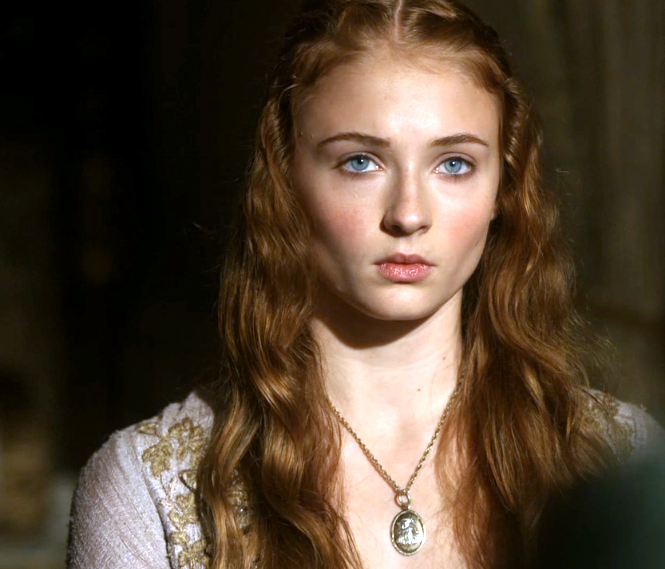
It was certainly good to see Sophie Turner (Sansa) get something out of a script other than shock and dismay. The scene with Shae reminds the TV-only audience that Sansa is still Sansa and not entirely a sympathetic character. I think Shae is being presented as a bit too obvious a fish-out-of-water, though. If this is going to be a secret that is kept from Cersei, the handmaid that flounces around, clearly irritated by her role, is going to be the talk of the servants' quarters pretty damn soon; putting aside the clearly not-Westeros origins.
The Ironborn stuff is still great. Every note of interaction between Theon, Balon, and Yara/Asha has been spot on. While some people complained about the fact that Theon had to be convinced to betray Robb, I think that makes it have more impact. Theon was portrayed by Martin as a petulant irritant from beginning to end (rhymes with 'meek'...), while HBO Theon, although arrogant with the local prostitutes, was showing some genuine ethics and honor in his dealings with Robb. Having to abandon that in order to be accepted by his family makes his decision less of an Eddard-error by Robb and more of a tragedy for Theon. And Aeron Damphair! Woo hoo! But why were the banners gray-blue? Is House Greyjoy so impoverished that they can't replace the banners when they get that badly sun-bleached? Lame.
Bran's scenes were great for two things. First, we got to see Hodor's acknowledgement of it being Bran inside Summer when the latter was walking around. Second, we got to see Maester Aemon actually talk about the maester's chain and its different links, which is a first for the TV show. Isaac Wright-Hempstead continues to impress as Bran, but I find it kind of odd that they still haven't mentioned Summer's name. They, of course, missed the classic line from the first book when he awakens in order to provide a different dramatic moment when Lady is killed last season. But, at some point, you'd think the TV audience would like to know that the wolf has a name.
Finally... Yoren is dead. Too bad. I really didn't care for the character much in the books, but Francis Magee has been brilliant in the past two episodes, sharing the best line honors with Tyrion this time ("I never really cared for crossbows...") Just as Natalia Tena has impressed Martin enough as Osha for him to expand on her part in the upcoming Winds of Winter, one wonders whether Yoren would have gone out so quickly if Martin had had a chance to watch Magee play the role. I think they fumbled the end a bit, as the ordinarily brilliant Maisie Williams (Arya) sounded very wooden when declaring the corpse of Lommy to be Gendry. I think she could have played it sounding a bit more emotional and we could have stopped to look at her while saying the line before moving to the body. But that may be a director thing, as it was the first time for Alik Sakharov in the command chair, even though he's been director of photography on other episodes and many other HBO series.
Anyway, solid episode all around, although I'll be eager to see Dany finally reach Qarth next week.
I think they conveyed the sense of idleness that permeates the Baratheon/Tyrell alliance. Although the HBO Renly is very different from the book Renly, they both are lacking the same sense of aggression that made Robert the warrior king that he was (or tried to be; far better the former than the latter.) It's all nice and well to assemble 100K men-at-arms and knights, but it's a far cry from an actual army until you have a leader capable of taking it somewhere. Catelyn gets the pleasure of pointing that out on her walk with Renly. Gwendoline Christie was excellent as Brienne, though, and I'm glad they skipped the renaming of Renly's Kingsguard. Given the fact that they're giving free rein to Renly's sexual preferences, rather than overt allusion in the books, the "Rainbow Guard" would have been way over the top. It's a bit much even in the books.
On the one hand, I like that they've introduced Margaery as a smart, capable woman. OTOH, I like the subtlety with which Martin moves her in the books. Even though there is no frank admission of Renly's love for Loras in Clash of Kings, she's presented as clearly knowledgeable about the reality of her marriage and the people around her. Again, this is one of those things that you'd be hard-pressed to imply in a 10-episode TV series (like Melisandre's relationship with Stannis and Craster's arrangement with the Others), so they kind of have to lay it out in the open (as it were.) I think this change to Margaery is unfortunate, but nowhere near as disastrous as the one to Stannis (who was, regrettably, absent from this episode.) With this in mind, it will be interesting to see how they present the Queen of Thorns if she appears next season, as her character is all about subtlety and vague menace. I hope they go into a bit more detail about House Tyrell, as well.
Just like in Clash of Kings, Tyrion is killin' it and, likewise, Peter Dinklage has completely assumed the role of leading man this season. I noticed a lot of people thrilled with his lines and actions in the first two episodes, but this was the one where he really seemed to grow into his own as Hand. The Myrcella situation played out just like in Clash and they preserved a lot of the dialogue, including the moment with Varys ("I've decided I don't like riddles."), which was great to see.
The resolution to the Craster change from last episode was acceptable, although I think they're twisting the "even the good guys make cynical choices in this world" knife a bit too hard. It was obvious when Sam confronted Jon about the fact that Gilly is a person last episode. Having the moment of shock for Jon while Mormont as much as admits that he knows what Craster is up to was unnecessary, IMO. It could have been done much more casually and much faster. We get it, already.
It was certainly good to see Sophie Turner (Sansa) get something out of a script other than shock and dismay. The scene with Shae reminds the TV-only audience that Sansa is still Sansa and not entirely a sympathetic character. I think Shae is being presented as a bit too obvious a fish-out-of-water, though. If this is going to be a secret that is kept from Cersei, the handmaid that flounces around, clearly irritated by her role, is going to be the talk of the servants' quarters pretty damn soon; putting aside the clearly not-Westeros origins.
The Ironborn stuff is still great. Every note of interaction between Theon, Balon, and Yara/Asha has been spot on. While some people complained about the fact that Theon had to be convinced to betray Robb, I think that makes it have more impact. Theon was portrayed by Martin as a petulant irritant from beginning to end (rhymes with 'meek'...), while HBO Theon, although arrogant with the local prostitutes, was showing some genuine ethics and honor in his dealings with Robb. Having to abandon that in order to be accepted by his family makes his decision less of an Eddard-error by Robb and more of a tragedy for Theon. And Aeron Damphair! Woo hoo! But why were the banners gray-blue? Is House Greyjoy so impoverished that they can't replace the banners when they get that badly sun-bleached? Lame.
Bran's scenes were great for two things. First, we got to see Hodor's acknowledgement of it being Bran inside Summer when the latter was walking around. Second, we got to see Maester Aemon actually talk about the maester's chain and its different links, which is a first for the TV show. Isaac Wright-Hempstead continues to impress as Bran, but I find it kind of odd that they still haven't mentioned Summer's name. They, of course, missed the classic line from the first book when he awakens in order to provide a different dramatic moment when Lady is killed last season. But, at some point, you'd think the TV audience would like to know that the wolf has a name.
Finally... Yoren is dead. Too bad. I really didn't care for the character much in the books, but Francis Magee has been brilliant in the past two episodes, sharing the best line honors with Tyrion this time ("I never really cared for crossbows...") Just as Natalia Tena has impressed Martin enough as Osha for him to expand on her part in the upcoming Winds of Winter, one wonders whether Yoren would have gone out so quickly if Martin had had a chance to watch Magee play the role. I think they fumbled the end a bit, as the ordinarily brilliant Maisie Williams (Arya) sounded very wooden when declaring the corpse of Lommy to be Gendry. I think she could have played it sounding a bit more emotional and we could have stopped to look at her while saying the line before moving to the body. But that may be a director thing, as it was the first time for Alik Sakharov in the command chair, even though he's been director of photography on other episodes and many other HBO series.
Anyway, solid episode all around, although I'll be eager to see Dany finally reach Qarth next week.
Friday, March 30, 2012
Is Fantasy. Is not Fantasy.
Win the Internets for a day if you can tell me which band is referenced by the title without Googling. They were easily one of the most innovative groups of the 90s.
So, allow me to prove myself wrong almost immediately by having something occur to me that is not fiction, but is actually about fiction (Is fiction. Is not fiction...), since fantasy and SF seem to be hot items in the entertainment world these days (All those of us who've been fans for decades can finally roll our eyes once again at mainstream America in that respect: Yes. It was always cool.) But there's a bit of seeming hypocrisy present in the fantasy end of the genre and that's what I wanted to touch on because it directly affects what I'm working on from a viability standpoint.
Clearly, the hottest fantasy series out there right now is George R. R. Martin's A Song of Ice and Fire, known to many by the title of the HBO series, named after the first book, A Game of Thrones.
One of the most frequent comments I see about both the TV series and the books (as the vast majority of viewers seem to have become readers, much to the joy of Martin's bank account (and quite deservedly so; it's a strange world in which we live when a person's months or years of work can be bought for less than the price of a fast food lunch, but that's another post...)) is that Game of Thrones is appealing to them because the "fantasy" elements are largely left in the background. With the exception of one appearance by the Others in the first episode and the appearance of dragons in the finale and a couple minor bits along the way (zombies, the presence of the Wall, etc.), Martin's story is far more medieval power struggle than fantasy epic. Of course, since he largely based the series on the Wars of the Roses and Venetian clan conflicts, that's perhaps to be expected. I have grave news for those viewers who still aren't readers in that the fantasy elements tend to ramp up a bit in the second book (and, presumably, in the second season of the TV series, which begins this Sunday.) You'll see alchemists creating a fascimile of Greek fire, more evidence of the Others, shapeshifting assassins, Wildling mammoths, and a huge dose of mysticism in the mysterious city of Qarth. And, of course, the continued presence of flying, fire-breathing lizards. Will that same audience continue to be sucked in by Martin's brilliant characters and simply accept the emergence of the sorcery half of the typical sword-and-sorcery combo?
One of the interesting aspects to that declaration of the enjoyment of "non-fantasy fantasy" is the demeaning comparison to The Lord of the Rings. The latter is presented as the "too much magic" fantasy which Martin supposedly successfully avoids. The interesting thing about that is, if you read Tolkien's books, there really isn't that much typical fantasy involved, once you get past the very presence of elves, dwarves, and orcs. Take out the One Ring and that's short people and skinny people fighting bestial people, which could be propaganda in any number of wars throughout human history.
(Did I just imply that the uruk-hai were the misunderstood victims of politics? Oh, yes, I did.) The movies tended to add fantastical elements that really weren't present in the books (there is no on-camera telekinetic duel between Gandalf and Saruman, for example) but LotR is still considered the byword for something that real people wouldn't admit to reading or liking if they wanted to be accepted by mainstream America (despite the movies somehow raking in billions and several Oscars; I'm not getting into it...)
But the books are quite different. Tolkien used to harp on a concept he called "lore" more than anything else. The rings didn't actually do anything overt. You couldn't haul off and shoot fireballs with them. They simply enabled people to do other things. The elves built the scintillating forest realm of Lothlórien on the strength of one of the three rings. Sauron built the Barad-dûr on the strength of a ring that seemingly did nothing more fantastic than turning the wearer invisible. Nice for David Copperfield, but hardly something that would turn him into ruler of the world. But the "lore" behind it was what was important. It was the theme of Tolkien's story; his disdain for the modern world and its machine-like impulses (most prevalent in the pursuit of war) when the truer, deeper, more elevated impulses were those embodied by not humans: mostly elves. It was a longing for a time that had never been when confronted by a time that he really didn't care for (having been a participant in WWI and with his son an active participant in WWII while he was writing The Lord of the Rings.) The sword-and-sorcery fantasy in Tolkien's work is actually far more conceptual than what would produce big explosions on screen. But his work is now often derided because it is the foundation of modern fantasy and Martin's work, possessed of far more adult-oriented themes than much of Tolkien's work (savage murder by other humans as opposed to monsters, sex, overt politics (as opposed to the subtle themes of Minas Tirith), etc.), is given credit for being that much more "real", walking precisely the path that Tolkien so derided for being what it was. Tolkien wanted to be fantasy and is now derided for it. Martin's story is fantasy and will become even more overtly so once the dragons start contesting the world with the walking ice men, but is hailed for it.
Bringing this all around to what I'm doing: the prologue that I posted the other day is set in a world that is unapologetically fantasy, but not Tolkien fantasy. Magic is a constant presence but so is the presence of what Martin's books are often lauded for. For example, the pseudo-main character is a contract killer who happens to be of the class of people known as magi: those who can invoke powers beyond their world and use that energy to do fantastic things. But murder is a constant presence. So is the (supposedly) past element of slave trading. And labor rights. And the exploitation of the poor by the rich. And drugs. And, yes, "lore" in more of the Tolkien vein (or at least my interpretation of it.) It will be, in essence, both Tolkien and Martin taken to the Nth degree in many ways (except no dwarves or elves, sorry.)
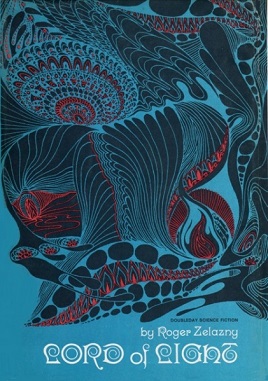
Does the darker atmosphere make it more viable in today's market or does the constant presence of sorcery and mage stuff make it less viable? Both? Neither? Will it cross the same audiences as Martin's work? Or get relegated to a niche because one element overwhelms the other? When you look at typical fantasy, like Terry Brooks' Shannara series, which is unarguably successful from a sales perspective, does that make it better than Roger Zelazny's brilliant and beautifully-written Lord of Light, which is barely remembered?
I'm not particularly concerned about the sales or audience questions at this point, since my story is largely unwritten and, thus, can't be sold even if people wanted to buy it. It's just another of those theoretical questions that invade my brain and cause me to wonder about people's identity crises vis-a-vis their choice of media. Is it OK to be a prototypical "jock" and like fantasy? Or only Game of Thrones-type fantasy? Do those labels even apply anymore? I'm a diehard Michigan football fan who understands the 4-3 under (that's a defense) better than most football fans I've ever met. But I have a closet full of board games, the majority of which could typically be described as "geeky" (Descent, et al) because of their themes and styles. Does that make me the ideal "modern fantasy" consumer? Good thing I know several other people like me, I guess...
So, allow me to prove myself wrong almost immediately by having something occur to me that is not fiction, but is actually about fiction (Is fiction. Is not fiction...), since fantasy and SF seem to be hot items in the entertainment world these days (All those of us who've been fans for decades can finally roll our eyes once again at mainstream America in that respect: Yes. It was always cool.) But there's a bit of seeming hypocrisy present in the fantasy end of the genre and that's what I wanted to touch on because it directly affects what I'm working on from a viability standpoint.
Clearly, the hottest fantasy series out there right now is George R. R. Martin's A Song of Ice and Fire, known to many by the title of the HBO series, named after the first book, A Game of Thrones.
One of the most frequent comments I see about both the TV series and the books (as the vast majority of viewers seem to have become readers, much to the joy of Martin's bank account (and quite deservedly so; it's a strange world in which we live when a person's months or years of work can be bought for less than the price of a fast food lunch, but that's another post...)) is that Game of Thrones is appealing to them because the "fantasy" elements are largely left in the background. With the exception of one appearance by the Others in the first episode and the appearance of dragons in the finale and a couple minor bits along the way (zombies, the presence of the Wall, etc.), Martin's story is far more medieval power struggle than fantasy epic. Of course, since he largely based the series on the Wars of the Roses and Venetian clan conflicts, that's perhaps to be expected. I have grave news for those viewers who still aren't readers in that the fantasy elements tend to ramp up a bit in the second book (and, presumably, in the second season of the TV series, which begins this Sunday.) You'll see alchemists creating a fascimile of Greek fire, more evidence of the Others, shapeshifting assassins, Wildling mammoths, and a huge dose of mysticism in the mysterious city of Qarth. And, of course, the continued presence of flying, fire-breathing lizards. Will that same audience continue to be sucked in by Martin's brilliant characters and simply accept the emergence of the sorcery half of the typical sword-and-sorcery combo?
One of the interesting aspects to that declaration of the enjoyment of "non-fantasy fantasy" is the demeaning comparison to The Lord of the Rings. The latter is presented as the "too much magic" fantasy which Martin supposedly successfully avoids. The interesting thing about that is, if you read Tolkien's books, there really isn't that much typical fantasy involved, once you get past the very presence of elves, dwarves, and orcs. Take out the One Ring and that's short people and skinny people fighting bestial people, which could be propaganda in any number of wars throughout human history.
(Did I just imply that the uruk-hai were the misunderstood victims of politics? Oh, yes, I did.) The movies tended to add fantastical elements that really weren't present in the books (there is no on-camera telekinetic duel between Gandalf and Saruman, for example) but LotR is still considered the byword for something that real people wouldn't admit to reading or liking if they wanted to be accepted by mainstream America (despite the movies somehow raking in billions and several Oscars; I'm not getting into it...)
But the books are quite different. Tolkien used to harp on a concept he called "lore" more than anything else. The rings didn't actually do anything overt. You couldn't haul off and shoot fireballs with them. They simply enabled people to do other things. The elves built the scintillating forest realm of Lothlórien on the strength of one of the three rings. Sauron built the Barad-dûr on the strength of a ring that seemingly did nothing more fantastic than turning the wearer invisible. Nice for David Copperfield, but hardly something that would turn him into ruler of the world. But the "lore" behind it was what was important. It was the theme of Tolkien's story; his disdain for the modern world and its machine-like impulses (most prevalent in the pursuit of war) when the truer, deeper, more elevated impulses were those embodied by not humans: mostly elves. It was a longing for a time that had never been when confronted by a time that he really didn't care for (having been a participant in WWI and with his son an active participant in WWII while he was writing The Lord of the Rings.) The sword-and-sorcery fantasy in Tolkien's work is actually far more conceptual than what would produce big explosions on screen. But his work is now often derided because it is the foundation of modern fantasy and Martin's work, possessed of far more adult-oriented themes than much of Tolkien's work (savage murder by other humans as opposed to monsters, sex, overt politics (as opposed to the subtle themes of Minas Tirith), etc.), is given credit for being that much more "real", walking precisely the path that Tolkien so derided for being what it was. Tolkien wanted to be fantasy and is now derided for it. Martin's story is fantasy and will become even more overtly so once the dragons start contesting the world with the walking ice men, but is hailed for it.
Bringing this all around to what I'm doing: the prologue that I posted the other day is set in a world that is unapologetically fantasy, but not Tolkien fantasy. Magic is a constant presence but so is the presence of what Martin's books are often lauded for. For example, the pseudo-main character is a contract killer who happens to be of the class of people known as magi: those who can invoke powers beyond their world and use that energy to do fantastic things. But murder is a constant presence. So is the (supposedly) past element of slave trading. And labor rights. And the exploitation of the poor by the rich. And drugs. And, yes, "lore" in more of the Tolkien vein (or at least my interpretation of it.) It will be, in essence, both Tolkien and Martin taken to the Nth degree in many ways (except no dwarves or elves, sorry.)
Does the darker atmosphere make it more viable in today's market or does the constant presence of sorcery and mage stuff make it less viable? Both? Neither? Will it cross the same audiences as Martin's work? Or get relegated to a niche because one element overwhelms the other? When you look at typical fantasy, like Terry Brooks' Shannara series, which is unarguably successful from a sales perspective, does that make it better than Roger Zelazny's brilliant and beautifully-written Lord of Light, which is barely remembered?
I'm not particularly concerned about the sales or audience questions at this point, since my story is largely unwritten and, thus, can't be sold even if people wanted to buy it. It's just another of those theoretical questions that invade my brain and cause me to wonder about people's identity crises vis-a-vis their choice of media. Is it OK to be a prototypical "jock" and like fantasy? Or only Game of Thrones-type fantasy? Do those labels even apply anymore? I'm a diehard Michigan football fan who understands the 4-3 under (that's a defense) better than most football fans I've ever met. But I have a closet full of board games, the majority of which could typically be described as "geeky" (Descent, et al) because of their themes and styles. Does that make me the ideal "modern fantasy" consumer? Good thing I know several other people like me, I guess...
Monday, December 27, 2010
"Let me tell you about the very rich. They are different from you and me."
That's F. Scott Fitzgerald, from his short story, "The Rich Boy" (1926.) The man was a fiction writer when said people still had to take a grasp of what was going on around them and transmit that through a fictional story to be considered a great writer. Now you just have to spew the content of Jane's Defense Weekly with some half-assed dialogue and you can be Tom Clancy. And get off my lawn. (No, really, there are some truly excellent modern writers. I'll get to that later.)
The concept that Fitzgerald was trying to get across was that of the nurture side of the classic nature vs. nurture debate. The conditions in which one was raised tend to shape the worldview of the individual. There are still instinctive reactions (e.g. nature is still part of it), but the broader actions of life like, say, policy design will tend to follow what you've become accustomed to, whether as a child or later... unless you're dumb as a post and claim that global warming can't be a reality since god promised that he wouldn't hurt us again after Noah's boat landed, like Representative John Shimkus does. Congress really is high comedy sometimes.
So, if you were an idealistic young lawyer who had spent a good part of your life working with impoverished communities or on various civil rights issues, but along the way had done time at Harvard Law... and then been elected to state office... and then national office... the whole way along hobnobbing with money and lobbyists and apparatchiks... wait. Am I reminding you of someone?
Oh, yeahhhh. That guy. "Change you can deceive wit-" sorry- "believe in." It never fails to amuse and then irritate me when people declare that this or that candidate is THE guy (it's almost always a guy...) that will be the "difference maker." The one to "change the way Washington works." The one who's really "in touch with the people." That kind of crap has been spread around since Rome, but then it was who was really in touch with the mob (read: rabble) to keep them from rioting and toppling the state. The way to be in touch with them was to buy them off with the bread dole and public games. Now you just have to convince people that their pet agenda is the one thing on your mind long enough to get past the first Tuesday in November.
So, community organizer to Wall Street's best friend? How does it happen? It happens because of the nurture effect. If you hang around long enough with people who tell you the Chicago gang's economic ideas are the only reliable answer to life, the universe, and everything (42!), pretty soon you'll be thinking like they do. When you start to think that way, it becomes very easy to imagine that your station in life is reliant upon thinking that way. Presto! You could have seen this coming as soon as he hired Geithner and Summers to be his economic team (By the way, one of my dearest wishes in life is to drop Larry Summers into the middle of an intersection somewhere in Russia or Latvia or one of the other nations he traumatized with his economic "shock therapy" and see how long it takes for the population to get medieval on his ass.)
Your savior president doesn't care about you. To paraphrase the eminent philosopher D. Duck: "He's rich! He's wealthy! He's comfortably well off!" That means you're one thing and one thing only: you're a number ("You're the weak... and I am the tyranny of evil men.") He needs a certain amount of numbers to stay in office, so as long as you do your duty every 4 years and abandon all critical thought, walk into a booth and pull a lever/connect an arrow/touch a screen and elect him or someone like him, you've fulfilled your role, as far as they're concerned. He's not there to serve you or help you. He's there to serve the people that pay for all the advertising that you soak up, swallow, and believe for a few months before having your image shattered once again. If you drop out and don't participate at all, that's even better. They don't even have to pay to sucker you in. They can go on draining the money out of your paycheck and denying you opportunity without even having to pay lip service to your concerns. And you'll let them, because your iPod is much more interesting, right?
They have control. They know that they have control. And you're letting them have control every time you believe that anyone with a D or R following their name will somehow act differently and act in your interests. How much do you have in common with a millionaire? With the results of the latest election, 100 of 100 US Senators are millionaires (prior to that, the lone exception was Russ Feingold of Wisconsin.) These are the people you expect to represent you? It doesn't matter that someone used to be a community organizer. Once they're rich and in office, it's over (funny how those two go hand in hand by default, isn't it?) And if you think I'm talking about "class warfare", you're right, because there's been a class war going on in this country since its inception and the non-wealthy have a two century losing streak. Wake up to it.
The concept that Fitzgerald was trying to get across was that of the nurture side of the classic nature vs. nurture debate. The conditions in which one was raised tend to shape the worldview of the individual. There are still instinctive reactions (e.g. nature is still part of it), but the broader actions of life like, say, policy design will tend to follow what you've become accustomed to, whether as a child or later... unless you're dumb as a post and claim that global warming can't be a reality since god promised that he wouldn't hurt us again after Noah's boat landed, like Representative John Shimkus does. Congress really is high comedy sometimes.
So, if you were an idealistic young lawyer who had spent a good part of your life working with impoverished communities or on various civil rights issues, but along the way had done time at Harvard Law... and then been elected to state office... and then national office... the whole way along hobnobbing with money and lobbyists and apparatchiks... wait. Am I reminding you of someone?
Oh, yeahhhh. That guy. "Change you can deceive wit-" sorry- "believe in." It never fails to amuse and then irritate me when people declare that this or that candidate is THE guy (it's almost always a guy...) that will be the "difference maker." The one to "change the way Washington works." The one who's really "in touch with the people." That kind of crap has been spread around since Rome, but then it was who was really in touch with the mob (read: rabble) to keep them from rioting and toppling the state. The way to be in touch with them was to buy them off with the bread dole and public games. Now you just have to convince people that their pet agenda is the one thing on your mind long enough to get past the first Tuesday in November.
So, community organizer to Wall Street's best friend? How does it happen? It happens because of the nurture effect. If you hang around long enough with people who tell you the Chicago gang's economic ideas are the only reliable answer to life, the universe, and everything (42!), pretty soon you'll be thinking like they do. When you start to think that way, it becomes very easy to imagine that your station in life is reliant upon thinking that way. Presto! You could have seen this coming as soon as he hired Geithner and Summers to be his economic team (By the way, one of my dearest wishes in life is to drop Larry Summers into the middle of an intersection somewhere in Russia or Latvia or one of the other nations he traumatized with his economic "shock therapy" and see how long it takes for the population to get medieval on his ass.)
Your savior president doesn't care about you. To paraphrase the eminent philosopher D. Duck: "He's rich! He's wealthy! He's comfortably well off!" That means you're one thing and one thing only: you're a number ("You're the weak... and I am the tyranny of evil men.") He needs a certain amount of numbers to stay in office, so as long as you do your duty every 4 years and abandon all critical thought, walk into a booth and pull a lever/connect an arrow/touch a screen and elect him or someone like him, you've fulfilled your role, as far as they're concerned. He's not there to serve you or help you. He's there to serve the people that pay for all the advertising that you soak up, swallow, and believe for a few months before having your image shattered once again. If you drop out and don't participate at all, that's even better. They don't even have to pay to sucker you in. They can go on draining the money out of your paycheck and denying you opportunity without even having to pay lip service to your concerns. And you'll let them, because your iPod is much more interesting, right?
They have control. They know that they have control. And you're letting them have control every time you believe that anyone with a D or R following their name will somehow act differently and act in your interests. How much do you have in common with a millionaire? With the results of the latest election, 100 of 100 US Senators are millionaires (prior to that, the lone exception was Russ Feingold of Wisconsin.) These are the people you expect to represent you? It doesn't matter that someone used to be a community organizer. Once they're rich and in office, it's over (funny how those two go hand in hand by default, isn't it?) And if you think I'm talking about "class warfare", you're right, because there's been a class war going on in this country since its inception and the non-wealthy have a two century losing streak. Wake up to it.
Subscribe to:
Posts (Atom)