Monday, April 16, 2012

Initial thoughts on GoT episode 3 (spoilers)

I suggested to the guys on the board that, since I was no longer reading it, I'd post some thoughts here about Game of Thrones, as many of them have become fans in the last year-and-a-half since the HBO series began. Obviously, there are colossal spoilers below for anyone who hasn't watched or read the books...


I think they conveyed the sense of idleness that permeates the Baratheon/Tyrell alliance. Although the HBO Renly is very different from the book Renly, they both are lacking the same sense of aggression that made Robert the warrior king that he was (or tried to be; far better the former than the latter.) It's all nice and well to assemble 100K men-at-arms and knights, but it's a far cry from an actual army until you have a leader capable of taking it somewhere. Catelyn gets the pleasure of pointing that out on her walk with Renly. Gwendoline Christie was excellent as Brienne, though, and I'm glad they skipped the renaming of Renly's Kingsguard. Given the fact that they're giving free rein to Renly's sexual preferences, rather than overt allusion in the books, the "Rainbow Guard" would have been way over the top. It's a bit much even in the books.

On the one hand, I like that they've introduced Margaery as a smart, capable woman. OTOH, I like the subtlety with which Martin moves her in the books. Even though there is no frank admission of Renly's love for Loras in Clash of Kings, she's presented as clearly knowledgeable about the reality of her marriage and the people around her. Again, this is one of those things that you'd be hard-pressed to imply in a 10-episode TV series (like Melisandre's relationship with Stannis and Craster's arrangement with the Others), so they kind of have to lay it out in the open (as it were.) I think this change to Margaery is unfortunate, but nowhere near as disastrous as the one to Stannis (who was, regrettably, absent from this episode.) With this in mind, it will be interesting to see how they present the Queen of Thorns if she appears next season, as her character is all about subtlety and vague menace. I hope they go into a bit more detail about House Tyrell, as well.

Just like in Clash of Kings, Tyrion is killin' it and, likewise, Peter Dinklage has completely assumed the role of leading man this season. I noticed a lot of people thrilled with his lines and actions in the first two episodes, but this was the one where he really seemed to grow into his own as Hand. The Myrcella situation played out just like in Clash and they preserved a lot of the dialogue, including the moment with Varys ("I've decided I don't like riddles."), which was great to see.

The resolution to the Craster change from last episode was acceptable, although I think they're twisting the "even the good guys make cynical choices in this world" knife a bit too hard. It was obvious when Sam confronted Jon about the fact that Gilly is a person last episode. Having the moment of shock for Jon while Mormont as much as admits that he knows what Craster is up to was unnecessary, IMO. It could have been done much more casually and much faster. We get it, already.
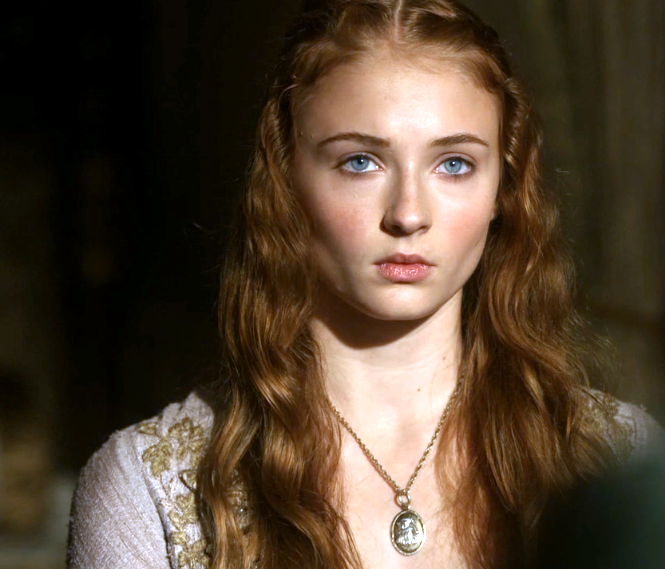

It was certainly good to see Sophie Turner (Sansa) get something out of a script other than shock and dismay. The scene with Shae reminds the TV-only audience that Sansa is still Sansa and not entirely a sympathetic character. I think Shae is being presented as a bit too obvious a fish-out-of-water, though. If this is going to be a secret that is kept from Cersei, the handmaid that flounces around, clearly irritated by her role, is going to be the talk of the servants' quarters pretty damn soon; putting aside the clearly not-Westeros origins.

The Ironborn stuff is still great. Every note of interaction between Theon, Balon, and Yara/Asha has been spot on. While some people complained about the fact that Theon had to be convinced to betray Robb, I think that makes it have more impact. Theon was portrayed by Martin as a petulant irritant from beginning to end (rhymes with 'meek'...), while HBO Theon, although arrogant with the local prostitutes, was showing some genuine ethics and honor in his dealings with Robb. Having to abandon that in order to be accepted by his family makes his decision less of an Eddard-error by Robb and more of a tragedy for Theon. And Aeron Damphair! Woo hoo! But why were the banners gray-blue? Is House Greyjoy so impoverished that they can't replace the banners when they get that badly sun-bleached? Lame.

Bran's scenes were great for two things. First, we got to see Hodor's acknowledgement of it being Bran inside Summer when the latter was walking around. Second, we got to see Maester Aemon actually talk about the maester's chain and its different links, which is a first for the TV show. Isaac Wright-Hempstead continues to impress as Bran, but I find it kind of odd that they still haven't mentioned Summer's name. They, of course, missed the classic line from the first book when he awakens in order to provide a different dramatic moment when Lady is killed last season. But, at some point, you'd think the TV audience would like to know that the wolf has a name.

Finally... Yoren is dead. Too bad. I really didn't care for the character much in the books, but Francis Magee has been brilliant in the past two episodes, sharing the best line honors with Tyrion this time ("I never really cared for crossbows...") Just as Natalia Tena has impressed Martin enough as Osha for him to expand on her part in the upcoming Winds of Winter, one wonders whether Yoren would have gone out so quickly if Martin had had a chance to watch Magee play the role. I think they fumbled the end a bit, as the ordinarily brilliant Maisie Williams (Arya) sounded very wooden when declaring the corpse of Lommy to be Gendry. I think she could have played it sounding a bit more emotional and we could have stopped to look at her while saying the line before moving to the body. But that may be a director thing, as it was the first time for Alik Sakharov in the command chair, even though he's been director of photography on other episodes and many other HBO series.

Anyway, solid episode all around, although I'll be eager to see Dany finally reach Qarth next week.

Thursday, April 5, 2012

A long, long time ago in a town right nearby

I used to attend shows like this and think that I would be making my way in the industry:


Comic Con has changed quite a bit and I am more distant from it than ever.

Friday, March 30, 2012

Is Fantasy. Is not Fantasy.

Win the Internets for a day if you can tell me which band is referenced by the title without Googling. They were easily one of the most innovative groups of the 90s.

So, allow me to prove myself wrong almost immediately by having something occur to me that is not fiction, but is actually about fiction (Is fiction. Is not fiction...), since fantasy and SF seem to be hot items in the entertainment world these days (All those of us who've been fans for decades can finally roll our eyes once again at mainstream America in that respect: Yes. It was always cool.) But there's a bit of seeming hypocrisy present in the fantasy end of the genre and that's what I wanted to touch on because it directly affects what I'm working on from a viability standpoint.

Clearly, the hottest fantasy series out there right now is George R. R. Martin's A Song of Ice and Fire, known to many by the title of the HBO series, named after the first book, A Game of Thrones.


One of the most frequent comments I see about both the TV series and the books (as the vast majority of viewers seem to have become readers, much to the joy of Martin's bank account (and quite deservedly so; it's a strange world in which we live when a person's months or years of work can be bought for less than the price of a fast food lunch, but that's another post...)) is that Game of Thrones is appealing to them because the "fantasy" elements are largely left in the background. With the exception of one appearance by the Others in the first episode and the appearance of dragons in the finale and a couple minor bits along the way (zombies, the presence of the Wall, etc.), Martin's story is far more medieval power struggle than fantasy epic. Of course, since he largely based the series on the Wars of the Roses and Venetian clan conflicts, that's perhaps to be expected. I have grave news for those viewers who still aren't readers in that the fantasy elements tend to ramp up a bit in the second book (and, presumably, in the second season of the TV series, which begins this Sunday.) You'll see alchemists creating a fascimile of Greek fire, more evidence of the Others, shapeshifting assassins, Wildling mammoths, and a huge dose of mysticism in the mysterious city of Qarth. And, of course, the continued presence of flying, fire-breathing lizards. Will that same audience continue to be sucked in by Martin's brilliant characters and simply accept the emergence of the sorcery half of the typical sword-and-sorcery combo?

One of the interesting aspects to that declaration of the enjoyment of "non-fantasy fantasy" is the demeaning comparison to The Lord of the Rings. The latter is presented as the "too much magic" fantasy which Martin supposedly successfully avoids. The interesting thing about that is, if you read Tolkien's books, there really isn't that much typical fantasy involved, once you get past the very presence of elves, dwarves, and orcs. Take out the One Ring and that's short people and skinny people fighting bestial people, which could be propaganda in any number of wars throughout human history.


(Did I just imply that the uruk-hai were the misunderstood victims of politics? Oh, yes, I did.) The movies tended to add fantastical elements that really weren't present in the books (there is no on-camera telekinetic duel between Gandalf and Saruman, for example) but LotR is still considered the byword for something that real people wouldn't admit to reading or liking if they wanted to be accepted by mainstream America (despite the movies somehow raking in billions and several Oscars; I'm not getting into it...)

But the books are quite different. Tolkien used to harp on a concept he called "lore" more than anything else. The rings didn't actually do anything overt. You couldn't haul off and shoot fireballs with them. They simply enabled people to do other things. The elves built the scintillating forest realm of Lothlórien on the strength of one of the three rings. Sauron built the Barad-dûr on the strength of a ring that seemingly did nothing more fantastic than turning the wearer invisible. Nice for David Copperfield, but hardly something that would turn him into ruler of the world. But the "lore" behind it was what was important. It was the theme of Tolkien's story; his disdain for the modern world and its machine-like impulses (most prevalent in the pursuit of war) when the truer, deeper, more elevated impulses were those embodied by not humans: mostly elves. It was a longing for a time that had never been when confronted by a time that he really didn't care for (having been a participant in WWI and with his son an active participant in WWII while he was writing The Lord of the Rings.) The sword-and-sorcery fantasy in Tolkien's work is actually far more conceptual than what would produce big explosions on screen. But his work is now often derided because it is the foundation of modern fantasy and Martin's work, possessed of far more adult-oriented themes than much of Tolkien's work (savage murder by other humans as opposed to monsters, sex, overt politics (as opposed to the subtle themes of Minas Tirith), etc.), is given credit for being that much more "real", walking precisely the path that Tolkien so derided for being what it was. Tolkien wanted to be fantasy and is now derided for it. Martin's story is fantasy and will become even more overtly so once the dragons start contesting the world with the walking ice men, but is hailed for it.

Bringing this all around to what I'm doing: the prologue that I posted the other day is set in a world that is unapologetically fantasy, but not Tolkien fantasy. Magic is a constant presence but so is the presence of what Martin's books are often lauded for. For example, the pseudo-main character is a contract killer who happens to be of the class of people known as magi: those who can invoke powers beyond their world and use that energy to do fantastic things. But murder is a constant presence. So is the (supposedly) past element of slave trading. And labor rights. And the exploitation of the poor by the rich. And drugs. And, yes, "lore" in more of the Tolkien vein (or at least my interpretation of it.) It will be, in essence, both Tolkien and Martin taken to the Nth degree in many ways (except no dwarves or elves, sorry.)

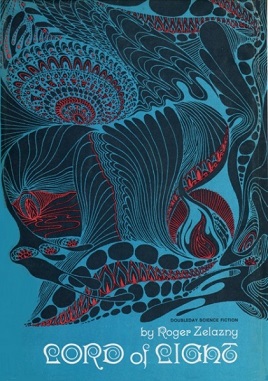
Does the darker atmosphere make it more viable in today's market or does the constant presence of sorcery and mage stuff make it less viable? Both? Neither? Will it cross the same audiences as Martin's work? Or get relegated to a niche because one element overwhelms the other? When you look at typical fantasy, like Terry Brooks' Shannara series, which is unarguably successful from a sales perspective, does that make it better than Roger Zelazny's brilliant and beautifully-written Lord of Light, which is barely remembered?


I'm not particularly concerned about the sales or audience questions at this point, since my story is largely unwritten and, thus, can't be sold even if people wanted to buy it. It's just another of those theoretical questions that invade my brain and cause me to wonder about people's identity crises vis-a-vis their choice of media. Is it OK to be a prototypical "jock" and like fantasy? Or only Game of Thrones-type fantasy? Do those labels even apply anymore? I'm a diehard Michigan football fan who understands the 4-3 under (that's a defense) better than most football fans I've ever met. But I have a closet full of board games, the majority of which could typically be described as "geeky" (Descent, et al) because of their themes and styles. Does that make me the ideal "modern fantasy" consumer? Good thing I know several other people like me, I guess...

Wednesday, March 28, 2012

Doings lately

So, I've not been posting recently as there hasn't been much to say that someone else isn't already saying better. And I've been working on something else which is taking up the attention and energy that was occasionally pointed here. A sample follows. I'm not sure how many people read the blog or would be interested in this kind of thing but, there it is.


Prologue-
The arcing discharge from the diamond-shaped chamber at the top of the Spire, known as the Malwirra, flashed again. The light placed the path of his life in stark relief, literally and figuratively, as it briefly showed the way through the usual gloom of the North, while Faluk sprinted across the canvas walkway. The faint hope flitted through his mind that this was one of the swaths that had had ropes recently replaced or at least inspected. This being one of the less-appointed neighborhoods on the Lower Span, the normal noises of cooking, drinking, shouting, and general human life swirled around his ears as he raced past various dwellings and businesses, some anchored to the Lower with wood and steel, and others free-swinging. He couldn't hear any sound of organized pursuit, but the Watchers never really made much noise...

He grabbed a loose line and swung out over the Pit, descending as quickly as his burning palms would allow. He kept his eyes on the walkway he'd just left and those immediately above it. Was that a depression from a foot? Someone running? The discharge came again, leaving hazy, purple shapes in his eyes as he swung back in toward the city, landing on a rope-supported wooden platform. He dove for a rope ladder descending through a ragged square cut in the wood, its edges worn smooth by generations of hands and feet. The ladder was fixed at both ends, making travel much easier as he headed for another broad canvas walkway below him. Dropping the last few feet, he wheeled and stopped with a gasp before colliding with the figure in front of him.

The Watcher stood there, implacable in its skin-tight grey covering that ever so vaguely resembled fur, and its almost featureless bone-white mask. The masks were the trademark of the Watchers, lacking holes for eyes, mouth, or nose but with the depressions for eyes and a ridge for a nose of some kind present, as a simulacrum of human features. Faluk stopped to wonder if it was intentional that they looked subhuman or if it was true. He inhaled quickly as he tried to focus his thoughts. Was it making him confused already, without even touching him? All of the stories and lies he'd heard about them came flooding back to him.  Its head swung from side to side like a hunting dog as it began to step forward, surely examining the escape angles, what weapons Faluk might have concealed, surveying. Watching. Surely it was doing that reasonable thing, he thought. Or was it scenting him?

Faluk staggered back toward the ladder, eyes darting to both sides, mostly looking for possibilities below his position, but also for possible aid. Where were they?!, he thought. It's not like I expect them to reveal themselves completely but something-! Anything! His eyes fixed on the slowly advancing Watcher as it flicked a wrist and produced a two-foot, translucent rod from nowhere. At the end of the rod was a silvery ball that exuded intermittent ghostly emanations, like the mist from the swamps at the southern end of the Jun Wastes. Faluk found himself peering into them, seeing if he could make out the faces of former victims that legend had it appeared as images from these weapons. He straightened himself and looked into the featureless face.

"You don't want me, you know?" He tried to chuckle and ended up coughing, but used the movement to try to conceal his right hand reaching into his simple, linen belt. "The truth goes further than you know. I'm just a pawn." He huffed out a laugh. "Watchers! You don't even know what you're seeing-!" His beginning tirade was cut off in a gasp of pain as the rod shot out and the silver ball just grazed his right shoulder. Immediately, the entire arm was wracked with pain, followed by total numbness. He recoiled and staggered toward the edge of the platform. The Watcher stabbed forward again with the rod but Faluk pitched himself over the side.

He fell through some casual netting and a couple clotheslines, a skirt and breeches beginning their long, slow fall to the Pit. Flailing out with his usable arm, he grabbed a support stanchion beneath what looked like a locksmith's business. His hand found a mounting spike and gripped it and he swung into the mounting post that supported the structure, wrenching his left shoulder and knocking the wind from his lungs with the impact. He hung there for a few seconds, again listening to the surrounding sounds of the city, wondering about pursuit. He wasn't quite sure where he was at this point, but knew he had traveled a fair distance. He hauled on the spike, straining to bring himself up to the level of the support bar before his strength gave out. His right arm was still useless, but he could at least hurl that part of his body over the diagonally-mounted beam and gain some respite for a moment. He hung there across the stanchion, wheezing, and reached with his left hand into his belt and withdrew the pouch.

Holding it aloft, he studied its simple, black leather and casual guild stamp. The drug, he thought. The drug was the key. If more people knew about it, everything would begin to change. As he sat there staring at the bag, a Watcher descended without a sound to another stanchion in front of him, mere feet away.

Faluk grimaced and shook his head, his black, scraggly hair already moving in the constant updraft around the exterior of the Spire. The Watcher crouched there, pain rod at the ready, seemingly waiting. Faluk spit at the mask, briefly surprised that he could even summon up either the energy or the spittle, at the same moment as the rod darted forward and struck his throat. His thoughts vanished in a flash of white light and the Watcher lunged forward to grab the pouch as it fell from Faluk's open hand.

Just past the reach of the Watcher's grip, the pouch fell into the blackness, any trace of its passing swallowed by night and sound. The Watcher stared after it as two more of its kind swung beneath the locksmith's shop. The white masks turned to each other briefly and then dispersed back up into the reaches of the Spire. Faluk's body swayed slightly in the wind, lit once more by the Malwirra's constant energy.

Thursday, February 23, 2012

Market-driven idiocy

So, I came across this interesting article from Al Jazeera, which goes into some detail about "peak oil" possibilities and the suspicion that most OPEC members have been drastically overstating their reserves in order to expand their sale quotas. Cue Capt. Louis Renault...


I posted it on the board because someone had earlier asked about the current jump in oil prices. The usual cavalcade of responses followed: some grim agreement, some questions, and the usual market-driven refutations about the limited knowledge of so-called "scientists" to understand how a "profit-making" venture really works.

To wit:
If it was more profitable to hold resources than sell them, oil companies would not hesitate to do that. So really, this article asserts that it understands the oil business better than the oil companies. I'll believe that when I see it.
 No. That's not what it's saying. It's saying that oil, the very cornerstone of modern civilization, the substance that is used (or the byproducts of which are used) for everything from energy (oil, gasoline, kerosene, jet fuel) to lubricants to asphalt to plastics to resins to artificial fibers (nylon) to solvents will soon become harder to obtain and, thus, more expensive... which makes everything produced from it more expensive and/or more difficult to obtain. Understanding the oil business has little relevance to anything if there's less (or no) oil to be had.
If it was clear that supply really will be restricted, people would be acting accordingly. If you really believe what you say, you should research the oil companies with the highest proven reserves and buy their stock, because you believe those reserves are undervalued at current prices.
 OK. See, first off, I'm not saying anything. I'm passing along what Al Jazeera and geologists, government agencies, and the US Department of Defense(!) have all been saying for some time now: there's a problem a'comin' and it has enormous implications for society as a whole, the preparation for which has exactly zero to do with sticking one's head in the sand and suggesting that short-term profit anticipation would have reacted by now to a long-term problem (which is ridiculous even from a market-based approach.) I loved the suggestion that I should invest for the long-term, though. Forethought! Or maybe...
The market's not perfect. But least it's informed. They have engineers working the fields. They have an exploration and planning process. They are thinking about replacing supplies as they are used. If the market had a reasonable basis for believing that supply will fall substantially, the market would react in anticipation, just as it has reacted to the threat of war in the Middle East.

This makes me wonder about the breezy conclusion in the article that we know supply is going to plummet. At a minimum, that conclusion is not self-evident to market participants, no matter the degree to which it is an article of faith in much of the environmentalist community.
 Hm. How to put this simply...? Ah. Got it. Market no matter if oil no there no more. I realize there were two polysyllabic words in there but one has to make allowances when dealing with a complex topic.

To the market devotee (especially the "free" market devotee), everything is defined by short-term profits. To expect traders and their true believers to think beyond, say, tomorrow is folly. Their self-assured position that the unfettered market will react perfectly and rationally to all available information and, furthermore, convey that information in a perfect and rational way to all of society is absolute. This is Adam Smith's oft-misinterpreted "invisible hand" phrase pushed to the Nth degree. This is economics as science putting all lesser sciences (like, say, geology) to shame.  Except that economics isn't a science. It's a loosely understood set of supposed rules that depends largely on external factors that often can't be controlled. Like humans, most of whom are idiots and subject to whim and lack of information or the wisdom to know how to use it if they had it. Or, even more important in this case, greed.

Even better is the assertion that the market would react appropriately to an anticipation of lack of supply when the article is based on the idea that the producers of said supply are lying about that very issue and making profits based on that lie. If the market can only function perfectly with perfect information (something the aforementioned Smith mentions repeatedly and which is studiously ignored by most of his presumed disciples), then it can't react to the problem.

But that's OK because "They are thinking about replacing supplies as they are used." See, despite the fact that oil is a finite resource, the smart engineers and geologists that work for the oil companies are already thinking about ways to make it sustainable. The market clearly hasn't reacted, so it must be so. Paraffin candles for everyone!

Friday, February 17, 2012

Risk

I play a lot of games. That being said, I don't play Risk because it's a little too simplified for me. I'm all about complexity, so that makes me an elitist about my boardgames, my beer (I generally avoid American mass-produced swill; I drink because I like the taste of it, not just because it's there), and my fiction. If you're going to try to hand me something recycled from 20 years ago with 2-dimensional characters and monosyllabic dialogue, but with flashier special effects, you will likely lose. On the one hand, this looks good: Guy Pearce, some witty banter, grim future; I'm all about it. On the other hand, it's Escape from New York in space and I'm betting that it lacks the moody direction of John Carpenter that made the latter rise above its B-movie level. The story overall simply lacks complexity. There's no risk inherent in presenting it because it likely doesn't push the boundaries of anything that's been presented before.

No one will ever be Snake Plissken again. That's probably a good thing.


I like risk-taking because I think it encourages original thought. Game design is a sterling example of how it can be done well and done poorly. Games Workshop is notorious for including minor rules in its games that presumably reward risky play. What they don't get is that, in the framework in which they provide such things (turn-based wargames that already involve a substantial amount of risk known as "dice"), those risks will preclude their participation because they create scenarios that go beyond individual choice. It's not a case of "If I make this move, I could win the game." It's "If I do this, there's a solid chance it could go horribly awry because of a die roll over which I have no control and I could lose what should be a sure win in this fight... or I could just do well in the fight." This is a risk-reward system predicated too heavily on the risk. (Why does a lifelong peace activist play wargames? Dichotomy, baby.)

That guy in front is a good guy. Fer reals.
 
WoW has been the same way over much of its development. Warlocks, historically, have been saddled with many abilities that focused largely on their traditional "attempts to control forces beyond their ken" (this is a recurring theme in GWs approach, as well, as many of the major "drawback" rules appeared in their games for Chaos (read: the bad guys.)) The problem is that, if you're into organized play, like raiding, you don't want random factors or large drawbacks to impede your progress. If that warlock summoning that demon is going to tip the balance against you in a tough encounter, most players will not engage that ability and would rather just work through the problem with abilities they know either won't damage them or will work more reliably. Blizzard, to their credit, has deemed said abilities "not fun" (i.e. no one uses them) and has been gradually weeding them out over the years. GW is a little slower on the uptake...

Should I sacrifice a friend to summon this thing that might attack me... or just grind through it? (rhetorical!)

This whole process is similar in a political vein: risk-taking encourages original thought because it often is original thought. By the same token, it also encourages knee-jerk, reactionary, and often hysteric responses. That's the risky part. Should we continue down a path of ever-dwindling and increasingly-dirty fossil fuel extraction or should we make a serious effort at transforming our economy and our infrastructure into something sustainable, despite the fact that the capitalist model of ceaseless economic growth will likely stall while this development takes place? Should we persist in demonizing (warlock term!) "non-traditional" lifestyles in the name of protecting the sanctity of outdated traditions or should we put all of that aside and pay attention to some problems that really matter? The answer to both of those is both more complex than a one word answer (which is one reason you'll rarely hear them addressed in an honest fashion by major party politicians) and perfectly obvious if approached in a logical and reasonable fashion (which is the other reason.)

Most political figures can't answer them in one word because they'd have to explain them. Explaining things requires context, which opens one up to being misquoted or having things taken out of context and then used against you. The reason that tactic works is the other reason you can't stop to explain things: the American electorate, by and large, is neither logical nor reasonable but, in fact, dumb as a bag of hammers. Containing complex concepts to three word soundbites ("Drill, baby, drill!") is a way of both staying on message (no matter how stupid said message may be) and risk aversion. Why doesn't anyone want to take the risky approach with their Chaos Lord or warlock? Because people are naturally risk averse; even moreso when presented with a bad choice (e.g. where one selection is not clearly more positive than the other(s).) There's a brilliant book on this sort of behavior that we're all subject to called Scorecasting. It contextualizes the concept of risk aversion into sports and makes it clear(er) why officials, coaches, and players often do what they do. Politicians, like most humans (speaking very broadly here...), are subject to the same psychological tendencies.

Are solar, wind, and geothermal sources of energy sustainable? Yes. Are they cleaner than fossil fuels? Yes. Will they create new industries and technological innovation? Yes. Can they be achieved on a national scale quickly? No. (There's risk.) Will it be an easy transition? No (There's risk.) Are there enormous moneyed interests working against it? Of course (biggest risk of all...) From this perspective, the idea that a politician may be abandoned by an enormous source of campaign cash and political influence (the fossil fuel industry) is indeed a warlock's bargain for him or her. It's a good risk for the rest of the world, but a bad risk for the short-term profits of BP and the short-term prospects of most American politicians; not to mention their personal short-term profits that BP would love to pay them as soon as they leave office.

Is fighting against gay marriage a waste of time and money...? Seriously, do I need to go into this? If you're concerned that the sanctity of your marriage might be threatened by the relationship of two other complete strangers, I'm sorry, but you're an idiot.

To be honest, I'm not sorry. You're just an idiot.

Risk and risk aversion are essential concepts in a lot of the things I enjoy. In many cases, I tend to focus on them because I like to see how other people are willing to engage or avoid them. As I said, I appreciate risky behavior because it often means people are thinking "outside the box" (to overuse an aphorism that should probably be killed by now.) Do I engage in it myself? Sure. I even tried using some of those horrible choices presented by GW and WoW; mostly because I just wanted to see what happened. It doesn't make me particularly good at playing said games. As a case example, I just played a couple games of Twilight Struggle (games and politics!) with Brian this past weekend. My risk aversion led to a play in our second game that likely sealed the loss for me. If I'd been willing to be more risky, things might have turned out differently. (The fact that I won the first game because he led the world into a nuclear war will go almost unspoken...) Are you considered more of a success at life if you take the safe path and are good at what you do or if you opt for the less traveled road, as it were?

The final example of risk today goes to the following clip, because it's the most beautiful political rant I've heard or seen in 20 years. Napolitano was already getting cancelled, so the risk is whether he'll ever land a TV job again. Bet he could get a few votes for public office at this point...


Wednesday, February 15, 2012

"The Catholic Church is not a democracy."

These were the words posted on the board in response to this poll, which indicates that 61% of Catholics in the US support the idea of mandatory coverage of contraception in insurance plans provided by religiously-affiliated employers. I'm sure you've heard about the controversy, since it's been rebounding from the walls of the newsosphere for the past couple weeks. The opinion proffered by the title comment was that it didn't matter that the majority of US Catholics supported the idea. The Church is against it and the Church is not a democracy, so people will just have to suck it up and live with medieval philosophy for a while longer. A quick response was that it was too bad for the Church, because the US is a democracy. In a democracy, we don't cotton to the idea of a bunch of old, rich, white men making decisions about what happens with women's bodies without even consulting the women.

Anti-abortion bill signing, because all of them are worried about being forced to have one.

Oh. Right.

What I always find amusing is the ability for the same people who regularly rant about "government control infringing upon our freedoms" to instantly accede to the idea that "the Church is against it, therefore we must obey." This isn't even a case of drawing some barely contextual example from the Bible to "prove" that "God said so!". This is following a dictate set down by a bunch of guys who are extrapolating from that presumed word of God and giving it their own shine (in the same way that a lot of people like to extrapolate from the Constitution... but let's get back to that later.) "Go forth and multiply" becomes "Thou shalt never not run the risk of having kids if thou art performing the evil, evil deed that God intended thou perform to have kids." And that's it. They said, therefore everyone must follow. This is the same institution that used to pressure scientists to not talk about things that contravened Church opinions, even though those discoveries soon were proved true and are accepted by everyone today. But most of those, of course, were about physical phenomena and this issue is about social engineering, which has always been more important to the proponents of organized religion.

Much of said engineering occurs on the strength of one idea: the Pope is the direct conduit to God. Everything the Pope says is what God says. Even the councils to choose the next Pope must be divinely inspired (omniscient and omnipotent, remember?) because that's how they got the right guy, of course. Believe what you'd like to believe, but it stretches credulity for intelligent humans in this day and age to completely subsume themselves in the concept that someone can be a regular, pious individual one moment and be speaking the Word of God in the next; especially in a day and age when the Church is losing members. It's as if they feel like they're in an arms race with other religions and everyone has to do their part. Repeatedly. And without end. The arms just happen to be human and most have two of them (the concern over the loss of "cherished cultures" as a consequence of low birth rates (in comparison to less cherished (i.e. non-white) cultures) has been prevalent for some time.)

In the end, it's hard to escape the idea that this is all really about sex, as opposed to the sanctity of human life and/or associated organisms.


Sin of Onan and all that. The funny thing about that skit is the line in the song where he says that "Catholics will take you as soon as you're warm", when most know that the anti-choice movement in the US is far more concerned about human life when its connected to an umbilical cord and for not one second after that cord is cut (especially if you're not, you know, white...)

There are two things that humans in general and men in specific like to do: screw and kill each other. Given the choice, most would prefer the former. Why that's always been a problem for organized religion is enough to fill a couple dozen more posts but let's let it rest with the idea that if people favor "earthly pleasures" over "serving God (and especially the Church!)", many think that religion kinda loses its verve. While humans have proved at times that they're fully capable of engaging in multiple pursuits with abandon, monotheism is monotheism for a reason. If you piss off the one God, you can't go running to another like Taygete (even though she didn't really anger Zeus; it was all about the sex (again!)) Therefore, sex should be about procreation and it's enjoyable because you should be multiplying. If you take away the threat of procreation, it's just enjoyable and you forget about serving God. See how easy? And you don't even have to get into that whole conflict of interest wherein a desire for sex may preclude you from killing each other or, preferably, those the Church would have you kill. That's too complicated. Deus vult!