Monday, May 6, 2019

Just waiting

Yeah, that's kinda what I felt like when it was over.
At some point, the process of writing tends to inform you, the writer, whether or not you know what you're doing. That can come early, if you're lucky, when you realize that you either enjoy what you're doing or you don't; that you feel confident about what you're doing or you don't; that you know these characters that you've assembled to tell your story... or you don't. But sometimes it comes late and you look back on however many hundreds or thousands of pages and discover that what you tried to do really hasn't materialized. I've been fortunate in that I've only gotten dozens of pages into something, rather than hundreds (or thousands), before I realized that the product wasn't matching the idea.

George R. R. Martin has been often criticized for his slow progress on A Song of Ice and Fire and he's often mentioned that "sometimes these characters speak to me and sometimes they don't." When they do, he can write them. When they don't... I've gradually come to the conclusion that these characters aren't really speaking to Benioff and Weiss, but they're continuing to write them because they want to be finished with them and move on to other things. After a decade of almost exclusive involvement with this one project, one can hardly blame them. But the fact is that what the writer writes, the reader reads. If my perception is that D&D have gotten to the point where they just want it to be over, then it's not difficult for me to be in that position, either. At this point, everything is proceeding by rote and there are very few surprises to be had. And I don't mean "surprises" as in which main characters are going to be killed off. Anyone who thinks that Game of Thrones' essential identity is killing off people to shock the audience is an idiot and should not be listened to. No one has died in the story, books or shows, who wasn't clearly intended to die. That's always been part of the identity of the world and the epic storyline. People die in wars.

I really hope we're upwind.
But there are no surprises for the way this is all proceeding, in general. The emotional conflict between Jon and Dany; the distrust by Sansa and Arya of anyone who isn't a Stark; Tyrion clinging to the ideals of Dany moreso than she is; Jaime having to be there at the last showdown with his sister; the dragons being neutralized so that the end is far more traumatic than it otherwise would be; and on and on and on. What's worse is that even when the nominally impartial observer (aka the viewer) can see that many of these choices are foolishly impractical (Tyrion), the way the character has developed over the previous two seasons hasn't covered enough ground to really sell the idea. Tyrion's path in the books makes him far more likely to have decided to base his existence on the better side of everyone's nature than in the show. But that's because GRRM has spent thousands upon thousands of words detailing that path. D&D haven't had that much time, so making their story conform to that path, however indirectly, leaves it feeling hollow and stilted and very, very staged. Once again, this is the difficulty of shifting from one medium to another.

Is this why Benioff and Weiss were given the credit "Written for television by", rather than the usual "Written by" for this episode? Did they detach themselves from this part of it because it's more Martin's story that they want to finish, rather than what they would do? Has the story been degrading over the past couple seasons because it doesn't have GRRM's hand on the tiller, as many suspect? I don't know. I just know that I'm to the point where I don't really care whether Martin ever finishes the books... and I don't really care about the ending of this show, either. Until you give me something that isn't underwhelming (last week) or patently obvious (this week), I'm watching this (and writing these) mostly because I've watched the rest of it for the past eight years and not because I'm particularly compelled to see what happens to anyone among the cast. I'm kinda bored and, like the writers, really just waiting for it to end. Dany spent a moment tonight asking the honest man, Jon, to lie. He couldn't do it and neither can I.
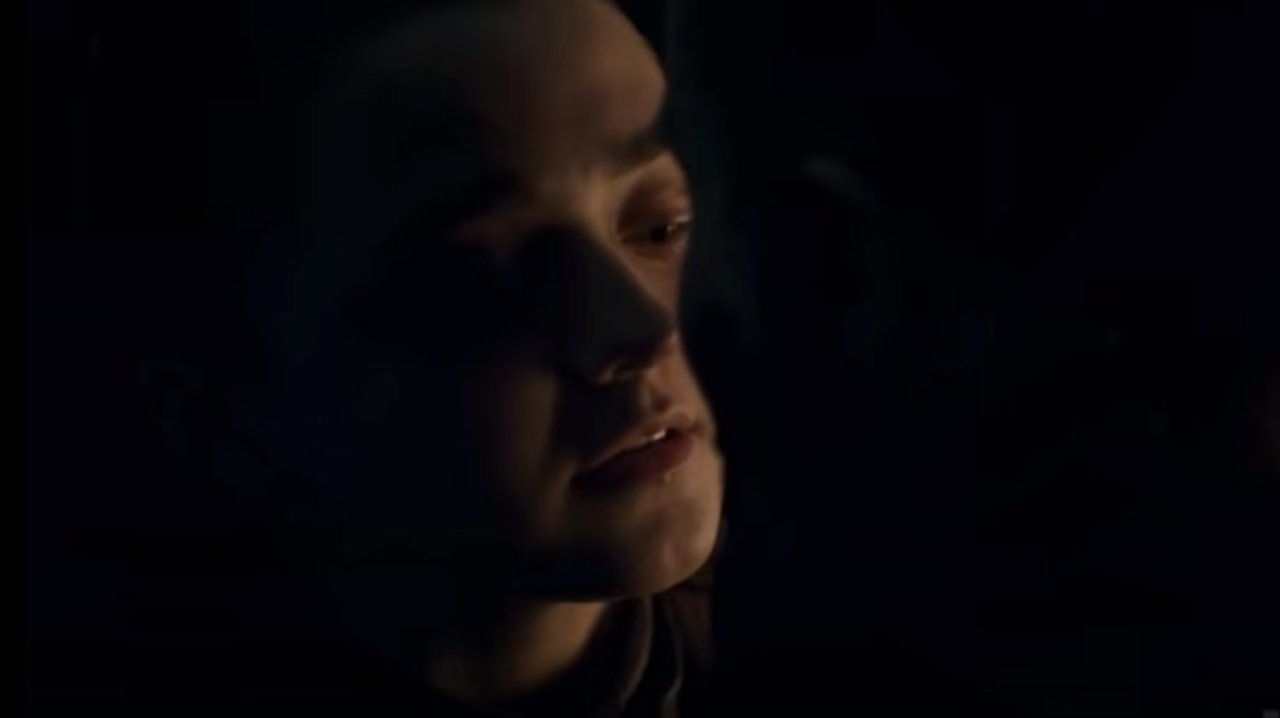
I'm either going to kiss you or tell you you're just another target to me. Maybe both.
Technical stuff:

That's not to say that there weren't some good performances in this episode. Among those that stand out are the shared moments between my favorite character, the Hound, and both Sansa and Arya. The former and Clegane commiserating over their shared suffering and how it forged Sansa into what she is now was as genuine a reunion as has yet occurred in this season. Similarly, the Odd Couple back on the road again was a welcome development that speaks to the chemistry between actors and characters. By the same token, while the performances weren't particularly great, the scenes between Gendry and Arya, as well as Brienne and Jaime, were totally appropriate. I know some people are ranting about "fan service", but both of those relationships were obvious from the moment the two pairs met and having both of them culminate in finally getting together and then inevitably separating because of the nature of the people involved is wholly appropriate. People squawking about those situations being "for the fans" or some such nonsense don't know shit about writing.

However, they're working the 'Jon is Really Aegon Targaryen' thing pretty hard, with him being the one giving the in memoriam speech before burning the bodies, instead of Dany or Sansa, and then the pointed difference between the austere and distant queen and the good ol' boy at the banquet. I think that's laudable to a certain degree, since you don't want the fate of the realm hanging solely on the lovers' quarrel about heritage and primogeniture. But anyone who's watched the show for any length of time knows that both of those characters are emotional enough that the rift between them is already believable enough without having to emphasize Jon's inherent leadership ability among the Westerosi and Dany's apparent lack thereof. In short, they're laying it on a little thick.

I am who you thought I was.
Also, I get that the point of Jon's series of goodbyes was for him to demonstrate that he was willing to leave behind all of what made him to this point. After all, he's going south to another war and he's discovered that he's not who he thought he was, so he's abandoning the "northern" part of his identity. But it's also putting the final stake in what was a running theme in the books: the Starks' connection to the land itself via the dire wolves. Turning to Tormund and telling him to "take" the eternally loyal Ghost not only doesn't make much sense in terms of the relationship they've shared (How is Tormund going to stop Ghost when the latter decides to head south? With a leash?) but it's OTT in terms of the "have to leave all that behind" theme. Again, given the short shrift that they've gotten, they really should have written Ghost out when the rest of the wolves' died or disappeared. It's just been awkward for a while now.

I wanted more Varys... and we got it! Unfortunately, it was mostly Varys spouting his particular brand of Marxism, which I wholly agree with in principle, but that often seems even more idealistic than Tyrion trying to appeal to his murderous sister. The Varys in the books recruited the Martells and Illyrio Mopatis because he felt that a Targaryen could keep the realm from exploding into the constant warfare that had beset the continent when it was actually seven kingdoms. He later revealed that his concern was for the people, not any particular regime. That's all well and good, but shifting gears now to someone whom he has to be aware will be pliable and indecisive because he doesn't want the job doesn't seem to be the wisest tack for the Master of Whispers. Yes, yes; spout all the old aphorisms about how the "best president is the guy who doesn't want to be president" that you like. It still seems too artificial for someone who's been playing this game for as long as he has.

Speaking of staged and artificial, my most ardent complaint was the Bronn scene. Now, in the books, Bronn leaves the stage in book 3 when given his compliant wife and a castle; easy street for life. I'm glad that D&D didn't follow suit, because Jerome Finn is a great actor and he's been fun to watch. But this scene was just poor from beginning to end. It was a Marx Brothers' routine, except not funny. So, you're telling me that this random guy is going to be able to stroll right into not just Winterfell, but the castle, hauling the most elaborate crossbow anyone has ever seen and not be stopped by anyone? Then he's going to walk in on the two Lannister brothers, extract an outlandish promise without witnesses, and then almost literally exit stage right, his bit done, and the new skit starting in a moment? Seriously? This isn't even good comedy, to say nothing of drama. The whole bit just screams: "Hey, we got this guy under contract to the end of the series. We need something. How about...?"

Yeah, well, I was still the sexiest woman in the whole series, so I got that going for me. Which is nice.
Lines of the week:

"We fought dead things and lived to tell about it. If this isn't the time to drink, when is?"
Jaime with the mantra of role-players everywhere. ("I'm getting drunk! Are there any girls there?!")

"We may have defeated them, but we still have us to contend with."
This is the backside of the theme of the series since page 1.

"You shouldn't envy me. Mostly, I live in the past."
Seriously, Bran gets the best lines these days. It's almost a GOP voter tagline.

"I'm happy that you'll finally have to climb for it. Do you know how long I've been waiting to tell tall person jokes?"
Tyrion still has his moments, though.

Monday, April 29, 2019

The Long Fight and the difficulty of endings


Endings are difficult. No less a writer than Neal Stephenson taught me that. I love Stephenson's intricate storylines and data dump of information inside a narrative that still makes sense and moves forward. But his endings suck. He's gotten better at them, but when you build up a story that elaborate and then suddenly have to wrap it up, it becomes a tricky thing to figure out just how much time or how many words to devote to people and events that you've been working with for years. I know that I've struggled with them at times because, having had some characters in my head for years (decades, in some cases), I don't want the story to end because it often means the end of that character and his/her intricately constructed situation. Thus, we arrive at the first of the final battles of Game of Thrones.

On the one hand, all stories must have an ending and this was the ending for the Night's King. In some ways, the symmetry was rather interesting. Bran's plan was to lure him back to the point where the Others were created, in the Godswood of Winterfell, and hope that Arya would be able to close the door. She did, appropriately with the Valyrian steel dagger that had once been used in the attempt on Bran's life that triggered many of the events that have led most of the cast to this time and place. (Yes, Littlefinger started the ball rolling with Jon Arryn's death, but Catelyn jump-started the war when she thought Tyrion had tried to assassinate her comatose son.) The immediate events leading up to that dagger plunging into the greatest threat to the world entire were suitably chaotic and desperate and tense and action-packed. That's all well and good.


OTOH, one of the basic themes of the story was that the petty squabbles among humans grasping for temporal power paled in comparison to the Others returning with their eternal power. We as yet don't know why the Others were returning now instead of any time over the thousands of years since their initial defeat and the raising of the Wall. The show also has (probably wisely) skipped over the fact that the Night's King wasn't really created by the Children, since he was a commander of the Night's Watch before being lured north by a witch, which means the Wall was already present when he left his post. So, now we've been given the lie to that entire and ancient theme (which, in truth, may only be a concern to those of us who've read the books.) In fact, the war to end all wars was just a prelude to the REAL fight between more of those squabbling humans. This seems a little like putting World War II before World War I, despite the presence of trenches. (Air power was far more important in the former, too.)

To properly serve the story, you really can't reduce the final confrontation between Cersei and everyone else and the final decision on who sits on the Iron Throne to a sideshow in the face of the advancing Others, so I get it. This had to be wrapped up before everyone turned back to the south. However, with half the season still left to play out, I can't help but feel like this was a little too quick an ending for the greatest threat to the world entire. Despite losing Jorah, Edd, Beric, Melisandre, the lady Mormont, and Theon, that's not quite the casualty list one would have expected from a story built on the idea that "no one is safe." Of course, we know that's not true and that most of the major characters who have died (Ned, Robb, Drogo) were long planned to do so as our tragedy proceeded. All the same, I have to say that the overall impact of this episode for me was pretty low. I expected that the Others and their army of the dead would carry on for at least another episode, perhaps pushing everyone to the south and forcing Cersei to get involved. Instead of another instance of "those northerners and their fairy tales", everyone south of the Neck would have to acknowledge that the Night's Watch actually served a purpose for those thousands of years. Instead, we've ended up in the spot that Cersei, with her usual pragmatic perspective, had predicted: Let the monsters kill each other and then she'll mop up what's left. That feels too easy.


And that's kind of the root of my mixed feelings. Yes, I understand the need to end this plot line here. No, it doesn't feel satisfactory. Yes, I understand the technique of battle chaos. There is such a thing as too much of it. I think there were some great moments of atmosphere: the wait in the darkness for all the troops; the weighted silence between Jon and Dany on the hill; the tender moment before what seems like their impending death between Sansa and Tyrion; Melisandre taking the last walk into dust, the Lord of Light's purpose fulfilled. But I still feel like I wasn't getting much story or, if I was, not as much story as I expected from a threat that we first encountered almost a decade ago on the show (and far longer in the books.)

Now that we've resolved the plot line that's been running since the prologue of the first episode (and the prologue of the first novel) and it feels kind of empty, where do we go? Again, I get why this had to be pushed out of the way in order to resolve so many other plot lines, because this is a story about characters. But it's also a story about grand themes and the remaining three episodes now have a tinge of the Scouring of the Shire, where we've done all the hard work and now it's just about cleaning up some recalcitrant old man and his thugs who just won't go away. This is not what I was expecting and I'm wondering if, like Stephenson's novels, there just isn't a way to make this ending work in the way that everyone would like it to.

Technical stuff:

Years and years ago, I enjoyed the approach that action directors were taking in showing scenes and fights/battles in "real time". Fights are chaotic and it's often hard to tell friend from foe, especially if there are thousands of them milling around. That's part of why warriors in medieval Japan used to wear those little flags on their backs; so they could tell who was lining up with which daimyo. But that's been taken to an extreme in the last decade and it's now often difficult to even tell what's happening in a lot of fight scenes. This one, also taking place at night and with the flickering lighting of fire, was perhaps the worst example of that I've seen in quite some time. I spent a fair amount of time feeling like I was missing something or trying to tell whom it was that was actually fighting. That's called "knocking your audience out of the action." I mean, yeah, the episode is titled "The Long Night" so it's hard to see and the haze over the action only added to that feeling of tension and disorientation. Fine. But when I'm reading your story, I still don't want the words to be blurry. It was and is a fine technique. As with most directors over the past 20 years, I think they overdid it. And get off my body-filled lawn.


I've already seen some criticism going around about the execution of the battle, especially over the suicidal charge of the Dothraki. Well, let's just say that that was a fine example of one of the oldest of military aphorisms: "No plan survives contact with the enemy." A full Dothraki charge is one of the most fearsome things in all of Essos and, presumably, Westeros. A full Dothraki charge with flaming arakhs is even more fearsome. That it was swallowed up without a sound (Dothraki screamers, remember?) by the dead was just one way of demonstrating how fearsome the opposition was. That's the way the helmet bounces sometimes.

In contrast... FFS, trebuchets are not field weapons! They're siege machines because, for all the enormous damage they can do, they're ridiculously hard to aim. That's why everyone in the real world only aimed them at things that didn't move, like curtain walls. They're really good at pitching stones at those walls that, like most walls, don't move anywhere until they fall over. They're horrible when used to hurl projectiles ahead of your advancing lines! Even worse when those projectiles are designed to burst and shower flames when they land. You're much more likely to end up dropping so-called friendly fire on your own guys than you are the enemy, most of whom probably haven't even come into range of your weapons and, if they have, then you're about to drop shit on your own guys who are, at that moment, engaged in an all out charge at the enemy. I really wish ancient/medieval/fantasy warfare writers and directors would get over that idea. Artillery in the ancient world wasn't like that of the Gunpowder Era and beyond.


I hope they delve into Bran's nature and actions a bit more in the last three weeks. I hope it's not just a case of "we really don't know what to do with the magic man." Last week, much was made of the fact that the Night's King was coming to Winterfell because he was coming for Bran and the plan was to lure him to the Godswood and then try to take him out from there. So far, so good. But if the King knew that Bran was at Winterfell, it felt to me like he didn't need a flashing neon sign to find him. Bran went warging into all of the ravens in Winterfell and my initial thought was that he was sending them out to summon some allies that we didn't know existed or perhaps to harass the enemy somehow. But, looking back on it, it seems like he was just using the birds to lure the King to the Godswood which... okay? That seems kind of superfluous. But maybe it's just my lingering dissatisfaction with the episode as a whole.

One other moment of symmetry also involved Arya, which had her revert to her childhood role of running in order to stay alive. The library/horror scene was well done in that respect and I understand why they did it, since non-stop battle can get a little old. But I also felt that, as much as I liked the flashback to Arya running through the catacombs under the Red Keep (and then having the prayer to the god of Death recited to her again; first sword of Braavos, salute), it felt a little unwieldy. There's this rampaging horde of undead, sprinting and growling through every square yard of Winterfell... but these guys have slowed to a walk and are just wandering around. Wouldn't they have sprinted through the library in search of things to kill? Instead, we do the horror scene for a couple minutes. Again, the lingering dissatisfaction and the difficult endings.


I'm disappointed that over the last two seasons, Conleth Hill's role has been one of stating the obvious in grim reflection of what we can already see happening around us. He used to be so much more interesting and insightful. Granted, the Lord of Whispers doesn't have the same impact in the middle of all-out war, but I'd still like to see him saying something other than his lone line for the entire episode ("At least we're already in a crypt.") being an obvious flaw in the plan that most viewers were already talking about at the end of last week's episode. (When facing a guy who raises the dead, what do we stay away from? Dead people!) Similarly, perhaps the wolf unit should have just been retired. We got two seconds of Ghost sitting in the battle lines and another second of him running with the Dothraki charge. That's it. I know using the dogs is a complicated task, but these little glimpses are possibly worse than just having written the wolves out entirely.

Lines of the week:

"That's the most heroic thing we can do now: look the truth in the face."
The wisdom of the formerly naive that has been through things almost worse than death.

"Everything you did brought you to where you are now. Where you belong. Home."
Bran with the summation of a lot of these characters.


Monday, April 22, 2019

Last time across the bridge


Game of Thrones has always had a pattern to its seasons. At least once or twice, they'd run what I've always referred to as "bridge" episodes. They were basically lots of people talking about events that had just happened as a way to get to the next series of things that would happen. When you have this many characters and storylines to keep track of, they kind of become a necessity to make the characters into real people. These events impact them- mentally, emotionally, and often physically -and you have to take time to depict that if you're going to properly tell their stories. In the end, GoT remains the story of these characters, as much as it is the story of the Song of Ice (Night's King) and Fire (Dragons.) I once remarked that GoT was emblematic of a plot-driven story, in that many of the major events taking place would happen with or without Tyrion or Sansa or Davos Seaworth. But the story is about how those major events impact those people, as much as it is about the transformation of the world (human and beyond.) And, given the presence of people like Dany and Cersei, it's a character-driven story, as well. If you have a character-driven story, then you need to show those characters as human. Otherwise, you end up with a repeating serial like a comic book that never comes to an end because the characters are never truly changed (and don't age, unlike some people in this story...)

This was one of those bridge episodes. Last week was the collection of reunions among most of the key figures and introductions between a few more. This week, in the face of their impending doom, we spent time both reminiscing and demonstrating how much the world had changed through the eyes of the major figures of that world. As much as a certain segment of the audience wants something "to happen" in each episode, what they may not realize is that things are happening. The exchanges between these characters are moving their stories and, thus, the story forward. No one is getting killed, but many of these scenes are payoffs for things begun literally years ago or often hinted at for so long that leaving them hanging might be doing both character and audience a disservice. GoT has avoided fan satisfaction in the name of good storytelling for a long time, but there are limits to all things. Sometimes the two happen to intersect.


That was no more evident than in the scene between Arya and Gendry where she decides she's going to experience sex for the first and maybe last time. Their attraction to each other has been evident from almost the moment they met. Bringing that thread to an end is something both appropriate from the relationship formed between those two characters and from the macro perspective: they're all about to die, so they might as well celebrate life before it happens. Even believers in the god of Death gotta get laid. The fact that said scene was a bit of fan service to the "shipper" types is just a (ahem) happy coincidence. Aside from that, the meta implication that the audience has seen both character and actress grow from girl to woman over the years that the show has been running and were witness to "little Arya's (Maisie's)" first sex scene is just another layer to that event. If it made you uncomfortable, then you're still looking at Arya (Maisie) as she was then and not what she is now. But that's exactly what these bridge episodes are supposed to help you with: seeing how these characters are changed by and are changing in the world around them. To the writers' credit, they kept the scene firmly within current Arya's wheelhouse. There was no outpouring of emotion or new realization on her part about the wonders of sex. It was functional, detached, purposeful; just like the Faceless Men, which was always going to be the central question around Arya when the Starks returned to Winterfell: How does the inhuman assassin function around other humans?

With all of that in mind, it was mildly annoying to note how maudlin some of these scenes were, with Tyrion and Jaime doing the "what if we'd done things differently?" routine and Jon even directly telling his former Black Watch comrades to "think back to where we started." We didn't really need to be reminded of that. We've all been remembering how things started in the books for 23 years and in the show for 8. We get it. And, keeping in theme, the episode brings back the likely prophetic song device, where the lyrics of an old folk song (sung by Pod!) are laying out the path that the story is likely to take, when so many of them will die on the "damp, cold stones" of Winterfell. But being maudlin is part of anticipating death with (relatively) good humor, so there's that, and reaffirming the fondness between some of the characters that indicates why they're willing to fight and die for each other is another element that can't be ignored if, once again, you're telling stories about humans and not cardboard cutouts.

Technical stuff:


Hats off to Gwendolyn Christie for making Brienne not only a compelling character but one of the most principled and honorable in a den of liars and politics. There's something interesting about being surrounded by people who are telling lies for their own benefit or for what they think is someone else's benefit and often being the only one willing to stand up and say it plain. She was one half of what I still think is the best character scene in the whole series (her and Jaime in the hot tub in season 4) and she used the revelation from that scene to empower her defense of Jaime in this episode. One might have also suggested that Jaime slaying someone who was burning people alive for no reason is right in line with Dany's professed values, so her standing up to defend her dead father is more than a little like Sam's rush of emotion about losing his own tyrannical progenitor last week. I get the whole family loyalty thing but, seriously, come on. (Yes, I know. Humans. They're weak.)


Similarly, Sophie Turner is killing it in her brief moments on screen. This is Sansa as she is now: politically aware, suspicious, determined to not let her family be taken advantage of again ("What about the North?") I admit to being kind of surprised at the emotional reunion with Theon, before I remembered that he's the one who engineered her escape from Ramsay Bolton. I've become so accustomed to the recriminatory attitudes amidst reunions with people who've done bad things in the past (like Jaime) that it was almost unusual to see Theon, object of scorn, become Theon, long lost heartfelt companion. I have continued similar thoughts about Isaac Hampstead-Wright. He's not getting a ton of lines, but most of them ("The things we do for love.") carry weight and are wonderfully delivered.

It was good to see that the wolf unit continuing to be credited actually had some effect on the screen, as Ghost made a brief cameo. Here's hoping he's involved in more than just standing in the background when the fisticuffs start up. There was a point in the books when the connection between the wolves and the Stark children was actually important. With that in mind, it occurred to me tonight with the second appearance of the new astrolabe (with images of what's happened in the show, rather than in the history that led up to it) just how long it's been since the stag's head on the title medallion has had any impact whatsoever. The dragon, lion, and wolf have remained the movers and shakers behind and within the story, but House Baratheon has been a non-entity for several seasons now. One would think they'd have been willing to make an adjustment there.


On a more negative front, the scene with Davos and Gilly guiding the refugees seemed almost completely superfluous and ham-handed. Perhaps it was a way to get the two of them more screen time (for Hannah Murray, her first of the season) or to emphasize how the smallfolk are put upon once again by the wars happening over their heads, since the rest of the episode was taken up by the nobles talking about how they're going to conduct said war. But it still felt extremely tacked on to a story that was otherwise about the emotional impacts of the last few years. The young girl's initial insistence on being involved also detracted from the later confrontation between the Mormonts, as Lady Lyanna insisted that she be present in the same way. We're already getting a Kit Harrington height joke every episode. We probably don't need a re-emphasis of the Lady Mormont meme, as well. (I continue to enjoy every moment of Bella Ramsey's time on screen, even if she is basically comic relief.)

Two non-show things: I realized later that I'd been misspelling Tyrion's name as "Tirion." That's because Blizzard's Warcraft games have a character named "Tirion Fordring" and I'd been playing Hearthstone recently, so that spelling was stuck in my brain.

For the second week in a row, HBO previewed something that has me at least as excited as I am about the last season of GoT, if not more. Last week, it was the Chernobyl miniseries, which feeds my Cold War history urge (There are several excellent books about the disaster which are quite engrossing.)  This week it was the long awaited Deadwood movie. Only took 13 years! That's, um, only a little longer than the gap may be between A Dance with Dragons and The Winds of Winter...

Lines of the week:

"You want to know what they're like? Death. That's what they're like." Said to the Faceless Man. Gendry really doesn't know what he's getting into.


"How do you know there is an 'afterwards'?"
Bran with the killer lines. If he sees everything, maybe he's already seen enough to know the end result isn't what everyone wants. Watching everyone die at the hands of the Night's King only for the final credits to roll would be far more catastrophic than Tony Soprano sitting in a diner. But it would almost be funny.

"She's always been good at using the truth to tell lies."
There is no more accurate summation of Cersei ever spoken. Fitting that it's her two brothers ruminating on it.


"She never fooled you. You always knew exactly what she was. And you loved her, anyway."
And, again, a hard truth that Jaime is fully aware of.

"We have never had a conversation last this long without you insulting me!"
Speaking of self-deprecation, Brienne remains a font of honesty. I thought the knighting scene was very well done, but I think the closest Jaime came to an actual acknowledgment of affection was offering to serve under her command.

"He wants to erase this world and I am its memory."
Again, Bran with the lines that speak not only the obvious truth, but the essential truth of the story. The Others were designed to exterminate the First Men. All of these people are descendants in some way of the First Men (humans.) Therefore, wiping out their history fulfills the original intent of the Children of the Forest. But it's also a larger statement on a society beholden to family histories and tradition. If The Others wipe out all of that, it's a way to start over.

"I'm not the Red Woman. Take your own bloody pants off."
Again, this isn't really about an emotional attachment or the excitement of having sex for the first time. It's functional. She's willing to engage in the enticement of undressing each other only so far. Then, it's down to business and everyone better be ready.

"I'm not a king, but if I were, I'd knight you ten times over."
Uncomfortable innuendo, they name is Tormund Giantsbane (and his giant breast milk.)


But the winner, as always, was the Hound. The scene with him and Arya, the boon companions of death, sitting bored against the parapets, waiting for the killing (their life's purpose) to start, produced a number of gems:

"Was he on your list?"
Here's the practical Hound: If Beric was on her list, then I can get her to get rid of this annoying guy.

"Thoros isn't here anymore, so I hope you're not about to give a sermon. Cuz if you are, he's gonna wonder why he brought you back 19 times only for you to die when I chuck you over this fucking wall."
Or I can just do it myself. Like always. Especially since I don't want to spend my last night alive with a devotee of a fire god.

"I might as well be at a bloody wedding."
There's a couple layers of in-joke, having missed the Red Wedding and citing the Hound's general distaste for interacting with humans. It's also kind of funny of him to point out the segment of the audience who are totally missing the relevance of episodes like this one.

"Last man here, burn the rest of us."
But the last word goes to Dolorous Edd, for whom the atmosphere of this episode is especially fitting.

Monday, April 15, 2019

The hard truths


In the real world, most situations involving more than two people are rarely simple. Even relationships between pairs can involve a dizzying array of facets and conturbations, depending on how long the two have known each other and how many other people they have to answer to (which is usually where the "more than two people" comes in.) When it comes to sociopolitical scenarios involving bloodlines, tradition, regional rivalries, and centuries of distrust (if not hatred), there will never be an easy answer to almost any question. Thus, we have arrived at episode 1 of season 8 of Game of Thrones.

When you've gone this far in an epic story, there are going to be complications. Even when you get to the point where the essential plot element is: "The world will end if we don't work together!", it's never going to be that simple as long as your characters are human with all the associated flaws and emotional responses that come with being... you know... human. Consequently, everyone in our collective audience should have known that things wouldn't be straightforward, even if the season is slated to be almost half the length of the first six. But I think the production team did a good job of presenting a lot of those personal and ethical dilemmas in a believable manner even if, like has often been the case in kicking off the season, the episode was mostly about reunions/setup/laying the groundwork for the titanic battle(s) to come.


Most of those dilemmas involve hard truths about the ethics and mores of war, but also those of personal relationships. Jon Snow is the most obvious case here, being central to almost everything. One of his hard truths is being confronted with the facts that a) acting for the presumed greater good can often have a significant personal toll and b) not everyone will recognize the greater good even when you're explaining it to their faces. The Northerners decided, against all tradition, that the bastard who'd sworn an oath to the Night's Watch should be the new king, not just of Winterfell, but all the North. Their king promptly went and surrendered his crown to the daughter of the famed Mad King who's not only a "southerner", but not even Westerosi. This misunderstanding of Jon's actions extends not only to the average northern lord, who may or may not be genuinely cognizant of the situation, but to Jon's sister, Sansa, whom other sister Arya now claims is the smartest person she's ever met. (I think Sansa is actually highly intelligent and learned a great deal from Littlefinger, but I'm not sure I'd lather her with quite that much praise.)

In addition to that, Jon's now confronting the fact that the man he idolizes, his deceased adoptive father, Ned Stark, lied to him for his entire life. This is the man that Jon just used as a case example in the final episode of last season as an argument as to why he was bluntly honest with Cersei about his loyalty. Ned Stark was too honest to play the game of thrones and now Jon discovers that he wasn't honest about a basic fact of Jon's life: he's not Jon Snow. He's Aegon Targaryen VI. And, uh, that means that the woman that he just took on all of these other ethical quandaries for, at least in part because he loves her, is now the person he supersedes for the goal that has consumed her life for the past several years: the Iron Throne. (Hereditary monarchies cause so many problems. This is why we have the estate tax, boys and girls!) You've just sacrificed a lot of personal loyalties by making a move that actually contravenes your existence as the heir to the throne AND you have to tell your new girlfriend that's she's been shuffled to the side because you're alive. Have fun!


But Jon's not the only one. Tyrion is destined to be the most tragic character in the series, IMO. He's finally confronted his sister on basic realities and accepted her word, only to have it thrown in his face by the formerly naive Sansa. He wants so much to believe in the basic humanity of even Cersei that he lets that belief blind him to the realities of who many of these people are. It's interesting to see one of the more canny political operatives let himself get led astray out of what seems to be simple fatigue. Having largely abandoned politics for the past decade, I can sympathize. But the confronting of difficult realities gets even narrower when Dany reveals that she elevated Sam to Lord Tarly by roasting his family alive. This is, again, where the basic humanity and emotional reactions of these characters are allowed to come to the fore. Sam knows that his father detested him, but still finds himself outraged at the callous actions of the woman that Jon claims is the answer to the slaughterhouse that the game of thrones has released; not to mention the army of the dead advancing from the north. It's often really difficult to act in a clinical manner, even when you might know it's the right thing to do; personally and publicly.

It's that kind of personal introspection; the shaping of characters as real, emotional, fraught, flawed, sometimes stupid, occasionally humane people that will let the show's legacy continue as really wonderful TV and a fine example of the last truly broad cultural touchstone in our now far more diverse market. Credit in that respect is due to the original creator, GRRM, but also Benioff and Weiss for shaping this into a story about people, instead of just Valyrian steel and dragons.

Production stuff:

The new opening was great. It was nice to see a big changeup for the last season, with the more elaborate presentations of Winterfell and King's Landing. But it was also interesting to see a lot of touches back to the first season and, in fact, the first episode with a young boy scrambling high to see Dany's armies parade in and Arya watching said parade go by in a very different set of circumstances from when she was a young girl swiping a guard's helmet. I will say that the one moment of CGI I felt was poorly done was the withdrawal from Winterfell, which lost all of its texture and became like the opening clockwork buildings. Perhaps that was intentional, but it threw me off.


Among all of the re-introductions and reunions, the raw emotion of Jon and Arya meeting again was great. Here were the two members of the Stark household who both felt like outsiders but whom had a connection with each other as a result of that, finally returning home and to each other, having both succeeded beyond anything anyone would have expected for them.

There were several excellent performances with almost all of the cast piled together. Isaac Hempstead-Wright was a high point as the Three-Eyed Raven Bran. The constraints of his role don't allow him to emote like your regular actor, so he has to convey things in a far subtler manner (the intensity of glances, the slight change to the set of his mouth, etc.) and he did an excellent job of it. One of the best moments may have been the last of the episode, when he finally sees the "old friend" he's waiting for, as he confronts the man who condemned him to a wheelchair for the basest of motives, likely knowing of Jaime's moral transformation and his importance to coming events. It's another one of those personal quandaries for a man who can now be every person and, thus, none of them, so the only tell that the past occurs to him is a very slight narrowing of his eyes. Maisie Williams continues to shine as the mildly unnerving assassin, Arya, as does Lena Headey as the endlessly aggressive and smilingly raging Cersei. And Pilou Asbaek has a great moment when referring to Cersei's sex life with her twin with a knowing glance.


There were a couple moments of mild annoyance, though. Telling Bronn to be the assassin of his two best friends, Tyrion and Jaime, with Joffrey's crossbow is just a bit too pat for me. It's clearly a setup for a personal challenge to Bronn, but it's also just a tad too obvious. Cersei sets it up as something singularly appropriate for a family weapon to lay low the family betrayers, but it struck me as too staged. Also, Davos referring to the enemy as the "Night King", rather than the "Night's King" is still a book vs TV difference that bugs me. The latter title is just more interesting, since it invokes the period of time (The Long Night) when the King first appeared, rather than just giving him a superhero title. Also, with so much story left to tell and only six episodes in which to tell it, did we really need a two- or three-minute roller coaster ride on the backs of a couple dragons? Also also, the wolf unit is still listed in the credits. Does that mean that Ghost finally makes a reappearance? Or perhaps Nymeria if the dead make it all the way to their presumed goal, the Isle of Faces? (The pattern of limbs left at House Umber resembles the pattern that was shown during the scenes with the Children of the Forest on the Isle.)

Lines of the week:

"Look at you! You're a man."
"Almost."
This is what I mean about Hempstead-Wright having grown into the role. The tiny curl of lip to indicate his pleasure at seeing Jon, followed by his matter-of-fact answer to Jon's slightly askew declaration. Great stuff.

"Where's Arya?"
"Lurking. Somewhere."
This is an embodiment of the reunion of the family, as they fall back into the comfort of old habits: Sansa's mild contempt for Arya's "weirdness" and Jon's eagerness to engage with his siblings.

"What do dragons eat, anyway?"
"Whatever they want."
This moment isn't particularly clever, but it's a pointed example of the venom passing between the two ruling women. Both Sophie Turner and Emilia Clarke played Sansa's initial disdain for Dany and the latter's growing response to it very well.


"The last time we spoke was at Joffrey's wedding. A miserable affair."
"It had its moments."
This reunion highlights both the earnestness of Tyrion to continue to try to play to peoples' better natures, as well as Sansa's maturity in resisting that entreaty. Her subsequent mocking of her ex-husband for his willingness to trust his sister only compounds that.

"You're insolent, I've executed men for less."
"They were lesser men..."
Euron still getting the best one-liners in.

"What if he doesn't want me to?!"
"Then I've enjoyed your company, Jon Snow."
The practical queen. If the royal consort can't ride dragons, then he can't be the consort. The hidden fact that he's a Targaryen is what makes this kind of funny.

"You want to worry about who holds what title and I'm telling you it doesn't matter! Without her, we don't stand a chance!"
This is the root of it, from a strategic perspective.

"I've always had blue eyes!"
Tormund and the endlessly practical Edd.


Thursday, April 11, 2019

They (Us) were TTH


[HUGE spoilers below if you haven't seen Us.]
"Therefore, thus saith the Lord: Behold, I am bringing disaster upon them which they will not be able to escape. They will cry out to me, but I will not listen to them." - Jeremiah, 11:11

I wouldn't go quite that far in describing Jordan Peele's Us. After all, there are some solid performances and I think the camera work and the lighting and other technical aspects were really well done. But overall, I can't really say that it's a film that worked for me and there are a variety of reasons for that. The largest one seems to be what, on the famous board, we used to call TTH, or Trying Too Hard.

TTH first came up in a discussion about one cultural phenomenon or another. One of the regulars was complaining about something that struck him as being more image than reality; an event that was trying to show how "real" it was, only to make everyone understand that it was more show than substance by trying too hard. He asked for examples from the rest of the board and I remember mine distinctly: "Every Woody Allen film, post-Annie Hall." All of them have struck me as Allen trying too hard to be "Woody Allen"; to present a story and a style that most would identify as his work but without really carrying the weight and depth and whimsy that originally defined it. I think Peele's latest effort suffers from that same phenomenon but, on top of that overreach, I'm not really sure who he's trying too hard to emulate. Is it himself, following on the heels of his excellent debut, Get Out? Is it a pivot toward the Hitchcockian label that many are so eager to hang around his neck? Is it something more Serling-esque? All three and, thus, none of them? I really can't say.


What I can say is that it feels like he was attempting to set up a giant metaphor and wrapped it into a story that had a Twilight Zone-ish premise, but also wanted to keep the pace of more modern thrillers. That's a big ask for any writer or director, since any two of those are not going to cooperate with the third. (e.g. Pick any two: Fast/Good/Cheap.) Apparently, he was directly inspired by the Twilight Zone episode, Mirror Image, and that can be seen in the basic premise of the film: the vengeful doppelgangers, the Tethered, emerging to slaughter their other selves. It's also not difficult to see a lot of the metaphors that he was building into the story, like the references to Jeremiah 11:11, which was the doomsayer's warning against worshiping the wrong things; in this case, rampant consumerism demonstrated by Gabe's desire to keep up with the Tylers. Or the dichotomy of the world's wealthiest nation propped up by the existence of so many who have no chance to take part in that exercise of wealth, whether because of skin color or circumstance. The Tethered are "the other" that so many Americans are whipped into a frenzy about by our xenophobic president, even though many of those "others" are Americans themselves; thus, inciting the quote from Red early in the first confrontation: "We're Americans." That statement is equally one of defiance and condemnation, depending on one's perspective both inside and outside the film.

But I have to say that all of that kind of gets lost under the blood spray and screams of the routine chase sequence that takes up the latter 2/3 of the film. There's nothing particularly innovative or exciting about any of the action. I am most certainly not the audience for this kind of thing, since I find it to be a pretty pedestrian storytelling technique, most of the time. But it's especially so when the antagonists happen to be led by someone who shows regular emotion and stops to disgorge significant segments of the plot not once, but twice, when Peele could have been building tension and/or trying to relay that exposition visually, rather than make the audience sit there and wonder why both we and our protagonists are (also) sitting there listening to someone almost literally tell their life story. In the end, there is some basis for that, given that Red is not like the other Tethered, but that doesn't help me when I drop out of the story like a body hitting the floor because the tension balloon has just been punctured. The reasons the original Halloween spawned an entire genre are because Michael Myers was implacable and John Carpenter, working with a tiny budget, had to perform a lot of low-grade tricks to show things that special effects would have done for him. But that low-grade approach was storytelling and I'm not sure that modern horror films really carry that kind of atmosphere, especially if you've seen more than, say, three of them (which I have.)


Plus, I'm not entirely sure about a lot of the small touches. Why the focus on Hands Across America? Was it because it was more publicity stunt than obvious act of philanthropy; a moment for celebrities to show up on camera while great swathes of the country were excluded? Is that a statement about the artificiality of the 80s where the current consumerist culture really took hold and continues today? Were the references to Black Flag, a band of rebellion in the 80s where the film starts and a note of kitsch today, a further example of that culture? Were the rabbits a statement about the testing that still goes into the products that fuel that culture? Did we need the reference to the actual tunnel networks at the start of the film because Peele thought it would make the existence of the Tethered easier to believe? (It had zero effect.) Was I easily distracted by this stuff because the main story failed to hold my interest?

The key element to Get Out was that you weren't clobbered by those metaphors. Peele made a number of statements within that film about race and racism, culture and style, personal relationships and public ones, and they all flowed together. There were obvious statements and far more subtle ones about the social and sociopathic tendencies of modern America. In the midst of that, there was an intriguing mystery and a gradual level of horror. Us was nowhere near that progressive. We started with a scene of mystery and some tension... and then skipped right to the main event where Adelaide (Luptita Nyong'o) was already worked into a pretty good frenzy by returning to the scene of the crime. That level of discord on her part made the casual attitude by Gabe (Winston Duke) that much more unnatural. She was instantly panicked and he was instantly an idiot. The most natural character (and actor) of the whole film was Shahadi Wright Joseph as Zora, who went from bored teenager to terrified kid to practical actor in what seemed like a normal progression in a crisis (allowing for the usual Joseph Campbell journey in a fictional story.)


I think the only conclusion I can come to is that Us isn't a bad film. It's just not a very good one. Maybe if Peele tried to focus a bit more on what he was trying to say or, for that matter, simply dump the message and go with a good story. Even doomsayers have to be able to sell what they're saying or they just get ignored.

Monday, December 17, 2018

Emotional tools


Alfonso Cuarón stated that he wanted to make his latest film, Roma, 12 years ago, right after he made the highly-regarded Children of Men. But he also said that he now feels it was a good thing that he didn't do that, since he lacked the "emotional tools" to tell the story properly. Given that Roma is a story based on those emotional tools that all of us use in daily life, I think he may have been correct in both doing and saying so.

Roma is a story told from the perspective of Cleo, a cleaning woman in a well-to-do household in Mexico City in 1970. The story is semi-autobiographical, as Cuarón grew up in the Roma neighborhood of that city and wanted to convey something about his childhood there. It becomes quickly apparent that the youngest of the four children, Pepe, is the stand-in for the director as he spends most of his time observing what is happening and spending time getting Cleo's feedback on events in the household; just as Cuarón did in preparing for the film, through extensive conversations with his own childhood housekeeper. The traumas that engulf Cleo and the members of her family (as this is clearly what they are) are not exotic or complicated in a storytelling sense, but they carry the complexity that emotional situations of this kind always have. So, in a sense, Roma is not complicated, but it carries great emotional depth because it's something that is both instantly relatable for many people and still foreign enough (leaving aside the dual subtitles; Spanish and Mixteca) to hold one's interest. Cuarón emphasizes that simplicity with the opening shot of the film over which the credits are depicted, which is nothing but the tile of the driveway, occasionally broken by water and soap suds, which we later discover is Cleo cleaning dog shit off that driveway. But it's that simple take on an everyday task that becomes entrancing when contrasted with the dense emotional interplay of the characters.


The film is also a woman-focused story, in that men are largely absent other than a couple of key moments, while everyone else deals with the impact of those moments or the impact of their absence afterwards. Fermin, Cleo's boyfriend, we eventually learn is a member of Los Halcones (from the Corpus Christi massacre), a paramilitary group trained by the government (and funded by the CIA) to react to student demonstrations. He impregnates and then abandons her before later reappearing in the midst of one of those demonstrations with severe consequences on whether she can have that baby. Antonio, the father (figure) of the family, whose most notable contribution to it is the Galaxie which can barely fit into their driveway, later abandons both car and family, leaving all of them to deal with the repercussions. Indeed, Antonio is so much an afterthought in the film that we never a closeup on his face or even see it for longer than a split second. Again, these aren't complicated storylines. The plot is not dense. The beauty of the film comes across in how simply it's told, with Cuarón's love of long shots (the opening, Cleo sitting in the theater waiting for Fermin to return, staring at the bumper of the Galaxie while Antonio tries to maneuver it inside) and stark imagery keeping the viewer paying attention to the most detailed things provided to them: the characters' faces and the emotions flowing across them. The decision to shoot it in digital black-and-white maintains that simple and spartan approach to the vision that the director wanted to convey.


There's been some debate about whether the "appropriate" venue in which to screen the film is in a theater or at home on Netflix. Cuarón, as one might expect, chimed in with his opinion at a recent event that Roma is best viewed in a theater. I think that's probably based on the mindset he wants his audience to have. In a darkened theater, there are no other distractions, visual or otherwise, and you experience the film the way he does: as memory, quietly, intimately. We ended up watching it on Netflix and perhaps that's why, despite its obvious high points, I found myself less impacted by it than I had anticipated. As noted many times before, I'm a story guy. I want you to tell me a story that holds my interest. I think Cuarón does that, but it's not a story that sat with me or had me mulling it over days later. I was entertained by it. I was fascinated, as usual, by the craft which he demonstrates in all of his films. But I found it far less earth-shattering than many other people have. I can definitely recommend carving a couple hours out of your life to sit in front of it, wherever you do so, and would be interested to hear others' experience from seeing it in theaters. But it's not a film that I would urge people not to miss. As much as I enjoyed the story, it's like many others out there.

Monday, November 12, 2018

True believer


I had a complicated relationship with Stan Lee, who died today at the age of 95. Even as a kid, I knew that his exuberant cheerleading for the Marvel Way was something that everyone around him would roll their eyes at. I had figured out the inside joke that was the No Prize and knew that his favorite buzzword "Excelsior!" was just his way of being bombastic at the same time as he was exercising his vocabulary (a habit I picked up from him and am still prone to.) If we'd actually had a relationship, Stan would have been the weird uncle that everyone laughed with (or at) but actually didn't mind having around for Thanksgiving.

As into the comic world as I was, I also knew that as much as Stan seemed to be the godfather of Marvel Comics, Jack Kirby had also been just as influential in the creation of the Marvel universe and most of the key characters that inhabited it: the Fantastic Four, the Hulk, Thor, Iron Man, the X-Men, the Inhumans, Black Panther, Galactus, and the character that would go on to become Lee's favorite and exclusive writing property for many years: the Silver Surfer. Kirby became the comics creators' favorite upon his death, as it became popular to draw a comparison between Kirby's departure from Marvel and that of Jerry Siegel and Joe Shuster (the creators of Superman, who had been exiled by DC), especially when the question of creators' rights in a work-for-hire world was raised. Stan, editor-in-chief and soon publisher at Marvel, was dismissed as the huckster, while Kirby was the genius. As much respect as I had and still have for Kirby, I felt badly for Stan that he had been relegated to the role inhabited by so many of us, the secondary people in comics: the writers. The way their relationship was often presented was that Kirby was the real creative force and Lee simply animated the characters; as if Kirby created the puppets and wrote the script and Stan simply flapped his hands in the window to make them come alive.


But the fact is that they did come alive in his hands and as much as Kirby is properly lauded for his remarkable imagination, it was Stan Lee who made The Amazing Spider-Man into Marvel's most popular title, not least by focusing on social issues of the day, such as the Vietnam War and student activism, as well as the personal lives of the characters in the book. It was Stan Lee who created the first African-American superhero when he and Gene Colan created The Falcon in the pages of Captain America. It was Stan Lee who broke the back of the execrable Comics Code Authority, by insisting that his story about Harry Osborn's drug addiction be published without the CCA seal, proving that the censor was outdated and served no purpose for the more mature readers of modern comics. Goofy uncle that he was, Stan's social consciousness resonated with me and I felt that he saw the world the same way I did; those dark eyes glistening from his mop-haired, pornstached caricature on the Stan's Soapbox page. Take heart, true believers!, he said. And I did, because I knew that he was one, too. He believed that stories could change people's outlook on the world, even if those stories were full of colorful costumes and onomatopoeic sound effects. I could feel the stress of someone trying to go to school, hold down a job, and protect the streets of New York at the same time. I could wonder over the anguish of a man who could lead his people without being able to utter a word. I could imagine the pathos of a being who had been responsible for guiding a force of nature to the deaths of billions. I could feel these characters and these stories and knew that I wanted to do something like that.


Stan was later levered away from being the face of the company to essentially being its mascot. He was, again, the weird uncle kind of shuffled off to the side, still cheerleading, but no longer leading. Comics were a serious business now, worth real money, and stockholders and corporate boards were the ones who owned the soapbox. But I'll never forget sitting down in a room with Stan and a couple dozen other people at a convention and listening to him tell us stories about how they meant real money back when he helped build the company into the monstrosity it became. That real money was about jobs and paychecks and paying the rent, not only on their homes, but on the building where the studio was housed. He talked about how they would occasionally get letters essentially saying "You guys suck!" and he'd tack them up on the walls because at least they were getting letters, which meant that somewhere, someone was reading. Of course they were, Stan. We read and we never forgot. We always knew who you were.