Showing posts with label Christopher Nolan. Show all posts

Friday, July 21, 2017

Modern war


There's a generational divide in movie audiences. Pre-Deer Hunter, war movies typically focused on the heroism inherent to soldiering and not the impact that it often had on the soldiers themselves. Despite the catastrophic human cost, including those killed and the survivors, war was usually still presented with a pre-WW1 lens, where marching off to battle was a big party and, after some requisite tension, the heroes would win out and everyone would stroll out of the theater with a sense of satisfaction. Post-Deer Hunter and, for American audiences, post-Vietnam in general, war movies have tended to focus on the psychological impact, both on the people doing the shooting and the people living around them after they return. Society has gradually come to grips with the fact that, as William Sherman once noted, war is hell and although there may be moments of genuine heroism, no one emerges unscathed, even through glorious victory.

That's why it's perhaps singularly appropriate for Christopher Nolan to have presented Dunkirk as his first film stepping away from science fiction premises in quite some time, but still carrying the themes prevalent in his storytelling. Most of Nolan's films deal with psychology in some form or another. Memento, the Batman series, Inception, Interstellar; all of them deal with either extreme choices and the consequent impact of those choices or the essence of making those choices in the first place. Most good screenplays spend some time analyzing the personality of their protagonists (and often their antagonists; see: the Joker.) but Nolan's tend to step beyond that and confront the viewers with a series of if/thens that quite feasibly could have led the story in a number of different directions and leave different parts of the audience sympathizing with the different possibilities. Dunkirk does that well.


First and foremost, Dunkirk was not a success. As Nolan takes pains to point out via Churchill's speech on the subject, no one celebrates a defeat, despite the extreme bravery inherent to the RAF pilots over that week and the private citizens who enabled the rescue to be as successful as it was. So while there was heroism, it was heroic action in the name of defeat, not victory. Nolan highlights this from the opening moments of the film, when Tommy (Fionn Whitehead) and Gibson (Aneurin Barnard) are shown attempting to get ahead of the thousands of soldiers already on the beach by pretending to be Red Cross workers transporting the wounded. These are not heroic soldiers. These are guys attempting to cut the line, as it were, to save their own skins instead of those similarly stranded. In many war movies, these guys would be portrayed as cowards for fleeing the battle. But the battle was already over and like the old man handing out blankets at the end says: "Sometimes, surivin' is enough." This is especially true in the era of "total war" which became prominent again during World War II, where the pre-Enlightenment practice of slaughtering the fleeing enemy, rather than simply routing them from the field or capturing them, once again rose to the fore.


But I think Nolan's point was to show the desperation and panic that are as inherent to combat as heroism often is. These guys were the unwitting pawns in someone else's war, like the Lannister soldiers of this season's first episode, and all they wanted to do was get home in one piece. It was, of course, not common knowledge as to what the German regime had become and how "someone else's war" could be seen as a war by humanity against inhumanity. But that engages my frequent bias against WW2-era films. That conflict is frequently mentioned as the last "good war" that everyone can get behind, as if it somehow lacked political or economic motives. But war is war. There are very rarely good motives for it and almost always pernicious ones that tend to detract from the heroic angle if one looks too closely. Most pre-Vietnam war films didn't bother to do that. Almost all of them do that now and Nolan has gone one step further in making a film about defeat and desperation, rather than saving the day.


On the film itself, it has Nolan's hallmarks all over it, in terms of the quick cuts between closeups and broad shots to create context for the subject's reactions, and in terms of the long focus on certain characters as they process what's in front of them with visage, rather than verbs. Nolan apparently wrote the screenplay specifically with minimal dialogue, attempting to emphasize the visual medium. I don't know if that's what led him and Hans Zimmer, the composer, to try to inject tension with music tempo deliberately, rather than as an added element, but I have to say that I think they overdid it. Perhaps it was just an artifact of the theater I was sitting in having the volume too high, as we were getting a lot of reverb that often drowned out said minimal dialogue, but the pounding bass line accompanying moments of high tension became rather annoying. If your story and direction are already providing that stress, why do you think vibrating every seat in the theater is going to make it better? People ducking on the mole while bombs drop around them and the howl of Stukas ripping overhead is plenty of visual and aural excitement already. I don't think Zimmer's efforts really helped and probably detracted from my focus on the scene, as I remember shaking my head at the accompanying noise.

Most of the performances were solid. Whitehead, Barnard, Harry Styles, and Nolan-favorite Cilian Murphy all did well at conveying the strain that their characters were under without becoming too emotive. There's a fine line between what most perceive as wooden and obvious dolor and shellshock and I think most of them hit it. Kenneth Branagh was Branagh and Tom Hardy was Hardy; both filling their roles appropriately, although I think Branagh's scenes rode a little high on the sentimental angle and I kind of yearn for the day when Hardy will have another role that allows him to do something other than look grim and intense. He was brilliant in The Revenant and I still think he should have won the Oscar for that role.


However, the man who beat him for the trophy had the best performance of this film: Mark Rylance. His redoubtable Mr. Dawson was easily the most magnetic character of the story. Every moment of his face, digesting the circumstances and then deciding on a course of action, spoke volumes. This was the pinnacle for those who would view war films as an example of the good and right succeeding over the non-, as every instance displayed his determination to do what he felt was the right thing. That character was the soul of the Dunkirk effort on the part of the regular citizens and Rylance played it brilliantly. Apparently, he initiated a ton of improv between takes and I think it paid off.

And it's worth noting here that Nolan certainly doesn't shy away from mentioning that, although the British government was making efforts to rescue their stranded soldiers  (and maybe even their French and Dutch compatriots), they were also preserving resources (mostly ships) for the impending defense of the home country, too. So the pawns were still pawns, ready to be sacrificed for the king or queen (almost literally) and Dunkirk remains a modern war film, in that respect. Overall, I enjoyed it and I remain a fan of his work. I'm not quite on the "best film of 2017!" level that many critics (and many of my friends) seem to be, but it's certainly a great effort and worth seeing on the big screen, as opposed to waiting for the small one.

Friday, December 30, 2016

And in the taste confounds the appetite

"These violent delights have violent ends
 And in their triumph die, like fire and powder
 Which as they kiss consume
 the sweetest honey is loathsome in his own deliciousness
 And in the taste confounds the appetite."
That's Romeo and Juliet, act II, scene VI. The first line was whispered by character Peter Abernathy (Louis Herthum) in the premiere episode of Westworld, which I am only now perusing since I've just recently turned the cable back on. Does that make me a cord rejoiner? I don't know. What it does make me is late to the party, since several people I know and most of the TV critics out there in La La Land (otherwise known as the realm of the ICP: Insane Clown President) think that Westworld is the best thing to hit HBO since the first season of True Detective (We will never speak of the second season again.) After watching the first two episodes, I can't say that I agree.


Westworld is based on the original Michael Crichton film from 1973 which, as an artifact of its era, was decent. Yul Brynner is excellent as the leading unstoppable android and Crichton's misunderstood premise of corporate greed (a theme he would return to, repeatedly) overriding basic morality was lost amidst the general audience perception that technology is evil and, obviously, wears a black hat. And I suppose I'm carrying some degree of bias while I watch the HBO series, because I know how this story plays out, based on what I've been seeing in the first couple episodes. Critics hailed it for its "world-building" but I spent a fair amount of time during both doing the "get on with it, already" wave with my hand. There is a certain amount of time that's necessary to establish the fact that the hosts essentially forget everything with every morning. Visual repetition is the best way to establish that for new viewers, so I get it.

But my problem with said world-building runs deeper than that. Many of the interactions, such as that between Lee, the narrative director (Simon Quarterman), and Theresa, the operations director (Sidse Babett Knudsen) were blatantly staged for the audience's benefit. Instead of appearing as an organic interaction (like, say, between Rust and Marty in True Detective), this was a neon sign blaring: "Here be conflict! Engage it if you dare!" Yes, you have to lay the groundwork and, yes, it's tough to do in a 10 episode series. But it's been done with somewhat more subtlety and which made both characters seem even mildly interesting, which those two do not.


Similarly, Ed Harris as the Man in Black in the world's most obvious homage to Brynner (Can his name be Johnny to make it that much more ham-fisted? He shoots people just to watch them die!) does nothing for me. He's been around awhile and he wants to see what makes the big machine tick. Fair enough. Does he have to be completely amoral in order to do that? Was the semi-gratuitous rape scene necessary to establish the spiel he'd already spoken on the train, about playing the black hat being the best time of his life? And if we were going to have a rape scene to establish an amoral character, was it necessary to close the door so that tender sensibilities somehow aren't bruised by the already-screaming woman? With the amount of nudity and violence already going around in order to establish that this is the point where ordinary people can abuse thinking beings to their heart's content, somehow that moment was deemed over the top and, instead of simply going off camera, Nolan felt that overtly shutting the barn door was how it should work? Get the audience to focus specifically on that act and then shield them from its consequences? Super-meta example of what the park embodies or shying away from what your story is depicting?

Don't get me wrong. It's not awful. It's just not gripping. I can and will watch the next couple episodes, but there's certainly nothing compelling me to do so. As all three of my regular readers know, I regard the director's cut of Blade Runner (no voiceover, ends in the elevator) to be the finest science fiction film ever made and one of the finest, period. That film asked many of the important questions about humanity and consciousness (and conscience) in a far more elegant way than anything I've seen so far on Westworld. Telling me that these are sentient beings locked in an endless loop for the entertainment of others is a good starting point. Expanding into their realization of this indentured servitude is a natural progression. But so far none of the mystery involved (Dolores and Maeve's past memories; the Man in Black's pursuit of the maze; etc.) is interesting enough to get me to want to rush back to the series tomorrow morning.


Also, I certainly respect Jonathan Nolan's (and Lisa Joy's) writing talent. He's been the co-writer on some of his brother, Christopher's, biggest films. But I wonder if he has the vision of his brother to carry a grand concept through to the ends that it requires. Crafting a story about questioning personal, corporate, and societal morality is all well and good. But including the original creator, Robert Ford (Anthony Hopkins; is he a coward? Does he have a friend named Jesse?), attempting to try to steer that amorality train back toward something more acceptable by including Christianity is just a step too far down the idiot path for me. Is the assumption that the park, in general, lacks a moral basis because it lacks religion? Do I really need to delve into the history of the church to prick that balloon? Hey, are the hosts like those slaves you can get from surrounding nations, per Leviticus? Or is Dolores like one of the daughters of Lot?

To the show's credit, I did really enjoy Jeffrey Wright's performance as Bernie, mildly conflicted soul designer (I thought he was great in Syriana, too) and the most intriguing moment for me of the whole two-plus hours was when programmer Elsie (Shannon Woodward) kissed host Clementine (Angela Sarafyan.) There was character revelation ("world-building") and mystery in one little motion that had me asking questions that are both intriguing and not obvious. More of that, please, and perhaps less of the grandiose references. I mean, if we're going to go all Shakespearean on everybody, should we be referencing the constant presence of the flies in what seems to otherwise be a fairly sanitized environment?
"As flies to wanton boys are we to the gods
 They kill us for their sport."
That's King Lear, act IV, scene I. Seems almost referential to the overall plot. Or perhaps I'm either overthinking it or asking too much?


Sunday, July 22, 2012

Dark Knight closing

There's a fair amount to be said about The Dark Knight Rising and much of it has to do with trends in the source material: the Batman/Detective comics that have been published for almost 75 years now. I think DKR was a solid movie, but I can't say it was a great one. I think it is the weakest of the Nolan trilogy, but still vastly superior to anything done by Burton or the wretched sequels that followed his efforts. Part of that is an appreciation for the character's roots and part of it is clearly an appreciation for its (relatively) very recent history. Significant spoilers below.


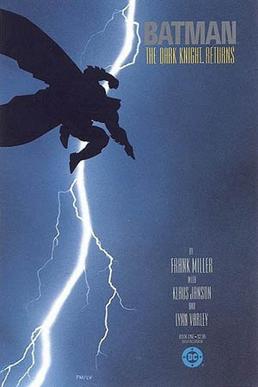
No matter what anyone tries from this point forward, they will likely never be able to escape the presence of Frank Miller's The Dark Knight Returns mini-series. Along with Watchmen, it heralded the beginning of the "grim and gritty" era of comics in the mid-80s. Those books grounded comics in "the real world"; they were emblematic of the way people talked and thought and lived in the 1980s, not some upgraded version of the 1950s that most superhero worlds inhabited. Despite dealing with drugs, sex, and racial issues from the late 60s onward (Marvel's Amazing Spider-Man #96-98 in 1969 essentially broke the Comics Code publishing authority by including a story about the detrimental effects of heroin addiction; the authority essentially ceased to be relevant from that point forward) and despite Neal Adams and Denny O'Neill having restored the Batman to his dark roots in the early 70s in an effort to escape the 1960s TV show, the culture of the worlds that comics created were still outside the realm of the everyday. They were still too staged and too preoccupied with super-powered explosions.

Then came Watchmen, firmly grounded in the Cold War and humanity's natural tendency to fear and hate whatever it didn't understand, including those weird people with the masks and very unnatural abilities. The Dark Knight Returns also rode that wave, pursuing the idea that the Batman along with those like him had been outlawed many years before, leaving a bitter and spiteful Bruce Wayne to watch Gotham City sink into chaos. In Miller's story, he attempts to save it from the utter destruction visited upon it by the gangs that control it. The Joker returns and the public blames the Batman for his actions. In the end, all-out war takes place on the streets, as different factions vie with each other and the Batman attempts to keep order, while ducking the government's attempts to capture him (with Superman, no less.). Along the way, the only person defending him is the now-forcibly-retired Commissioner Gordon. Sound familiar?

Miller reflected society and what would be at least some of the prevailing impulses and responses to a costumed vigilante. Nolan's scripts reflect this, as well, because the movie-going public will not swallow the basic reality that the comic-reading public often accepts: that seeing Spider-Man swinging down the street in pursuit of Electro and having the Batman beating the crap out of Killer Moth outside your restaurant is simply the natural order of things.

I think that the Nolans' script continues to embrace Miller's perspective (as I mentioned before, Batman Begins borrows heavily from Miller's Batman: Year One), but they've also demonstrated a willingness to adapt that perspective to tell their own story about a man so possessed by vengeance that he would sacrifice his fortune, his life, his friends, and his body in order to fulfill it. In the process, they've come full circle on that quest and shown the ripple effects of its outsized ambition. I like that. I appreciate that they showed the blowback, as it were, rather than simply dismissing what has gone before as last issue, which will only become relevant when the surely-dead major villain miraculously appears alive.


Interestingly, Bane as a character was essentially an homage to Miller's work, as well. In the second issue of The Dark Knight Returns, the Batman is beaten to within an inch of his life by the leader of the Mutant gang. He eventually returns the favor and breaks the will of the gang by defeating their leader (assisted, incidentally, by a version of the Batmobile that is more tank than car; yes, that's Miller, too.) This was the first time that Batman had been seen to be physically overmatched by another human, albeit one that was, as Wayne himself noted in the story "faster, stronger, and younger than [me] by 20 years." I think that inspired Denny O'Neill, who was an editor in the early 90s, to develop the idea of a character that would "break" the Batman, physically and mentally. Thus, Bane was developed as one of the early 90s massive crossover/super-platinum cover events which dominated the market (and almost destroyed it later in the decade) and still does to one degree or another.

In other words, Bane is a cipher. He's a plot device. He doesn't really have a motivation other than to break Batman's back, which he does, releasing chaos onto the streets, while the Batman is replaced by an almost-equally psychotic disciple for a few months until miracle surgery can be performed to return him to Gotham to defeat both Bane and the new Batman. It was all rather trite and redolent of spectacle over story... which is why I think that, despite some of the nice turns that Nolan put into the script to create Bane as something more than a device, the story still falls behind the prior two films. The central threat is not driven by anything that most audiences will be able to either relate to or even care about and, fittingly, Bane is removed from the film by a casual blast from the Bat-pod driven by Selina Kyle and, presumably, dies off-screen somewhere. In some respects, it's appropriate because, of course, the true driving force behind the whole threat is not Bane, but Talia. It's also appropriate in that, at it's root, the story is not about Bane. It's about the Batman/Bruce Wayne. But the reason that The Dark Knight worked so well and the reason that Batman/Detective comics have lasted as long as they have is that the Batman is not so much the protagonist of his adventures as the antagonist. The audience/reader wants to see the crazy stuff that the Joker, the Riddler, and the Scarecrow are going to engage in. They want to see inside the mind of the insane. The single-minded force of reason (the Batman) is already understood. What's interesting is to explore the other side. In Rising, Bane doesn't supply that because he's still more tool than character, which is a shame.

Things I liked


I like that they included Talia. She had always been an element of stories surrounding Ra's al Ghul and it's appropriate that Nolan hewed close enough to the source material to make her the driving element behind the master scheme. It's also nice to see a very capable and intelligent woman in the recent parade of superhero movies (they haven't been entirely absent, but they haven't been foci, either.) One wonders if Marion Cotillard will approach Nolan about being something less than a mildly-crazed destructive force for his next film, since that seems to be her trend. Nothing wrong with playing a villain, of course, as I tend to follow Dark Helmet's dictum on that. While the sexual/love interest contact between her and Wayne was as contrived as ever, it was nice to see their nod to that element of the two characters' relationship, which has been present since Ra's was created by O'Neill in the 70s. (Incidentally, the name Ra's al Ghul means "head of the demon" in Arabic (after the "demon star", Algol) and it's pronounced "raysh", not "rahs". Given their otherwise spectacular attention to detail, I wonder why that's never been corrected.)


I like that they never once referred to Selina Kyle as "Catwoman".  The fact that her IR goggles when pushed back on her head resembled a cat's ears seemed playfully coincidental. Hathaway played another intelligent, energetic, and capable female character and it was, again, good to see them slip in the romantic attachment that has been an element of Selina Kyle since she was first created (as "The Cat") by Bob Kane and Bill Finger in the 30s.

I liked the reduction in explosions. While there were still plenty to be had, the Dark Knight became a bit glutted by fire and shock waves to the point of tedium. More of the action in Rising was reverted to plain, old Batman fisticuffs, which can be tiresome in its own right, but was broken nicely by multiple perspectives and a lot of motion. One of the previews prior to the film was for the latest film incarnation of Resident Evil. I'm fairly certain that no more than two seconds elapsed at any point during the 60-second clip before yet another incendiary or propulsive display took place. That one got the greatest Sigh Factor™ for the day.

I liked the inclusion of contemporary issues and the public questioning of how the average citizen will survive while the owning class revels in their own existence.*

I think all of the performances were solid. Bale's was probably his best of the three films (one wonders if the Oscar win for The Fighter was his light bulb moment) as he certainly seems to have grown, not just in this role, but in his craft, overall. I continue to think that Gary Oldman is criminally underused in the staid Commissioner Gordon role, but there's something to be said for versatility (akin to Helena Bonham-Carter's performance in The King's Speech.) It was good to see Cilian Murphy return as Jonathan Crane for a few minutes. That was also a nice nod to the Robin legend at the end which was, thankfully, kept off-screen and served as a fitting pass of the torch to whomever takes up the writing/directing chair(s) in the future.

Things I not so liked

The script was uneven. There were some good lines (Hathaway seemed to get the best of them) and the characters remained as real as in the prior films. But there were some heavy expository moments that didn't involve philosophical outlooks so much as rote re-telling of origin stories or some such thing that you hoped would be shown more than told. Furthermore, there seemed to be a lot more "comic dialogue" than was present in the earlier films. When the Batman first encountered the Joker in The Dark Knight, he didn't stop to blurt out the latter's name so everyone in the crowd would know who it was. Everyone knew that already. Yet, in Rising, when he first encounters Bane, despite being aware of who he is and the audience already being fully educated, Bale stops and delivers the dramatic line: "Bane." I sat in anticipation of the Image-style posing shot before the ego-massaging/face-beating commenced.

Despite the capable direction of the action sequences, I think we've reached the limit of where the "real-time fighting" can take us. Half of the Bane/Batman engagements seemed to be a version of E. Honda's Hundred-Hand Slap: there were clearly a lot of strikes, but you didn't know where they landed or sometimes who threw them. Having practiced martial arts for a number of years, I've come to appreciate films (and actors) who've taken the time to engage in actual techniques that clearly do something other than just batter the opponent like a hailstorm. I can see the aikido and the jiu-jitsu and the escrima that Jason Bourne uses and I can see the kickboxing that Martin Blank uses in Grosse Pointe Blank; mostly because I can see them throwing punches and can see where they land. While it's all well and good to convey the speed and urgency of the encounter, I wouldn't mind going back to a little choreography that could actually be followed.

Perhaps it was simply the poor sound equipment of the theater or the position we were in relative to the speakers (we saw the IMAX version and ended up pretty close to the screen) but I heard a ton of reverb and feedback that frequently overwhelmed spoken lines. The ominous bass line of the soundtrack didn't help with this at all and, of course, the fact that Bane's voice was already distorted meant that I spent a fair amount of time trying to decipher what he said rather than simply listening to what he was saying.

On the topic of Bane, I failed to understand the whole mask backstory. The original character wore a mask for the same reason the Batman does: to intimidate his opponents. What gave him his power was a drug called Venom that was injected directly into his brain.


That's why you can see cables wrapped around him in most of his pictures from the comics. In Rising, we were presented with the idea that Bane's face had been ruined in prison and he took drugs from a unit directly attached to his face to save him from the pain of... bad dental work? The pain suppressors are what enable him to break concrete pillars by punching them? I have a hard time believing that his voice couldn't have been altered in the same way that Bale's is when he's in costume. Perhaps I'm just missing something.

*That said, I expressly disliked the idea that the revolt of the average citizen against the wealth that owns them was somehow necessarily driven by a nihilistic savage and was, therefore, implicitly wrong. Given that significant social change and some degree of justice in this country is unlikely to occur without violence, one doesn't need a terrorist and a fusion bomb to effect it. One really only needs Mitt Romney and Barack Obama as the only two sides of the argument about how many of the underclass should be sacrificed for a couple more million to flow to the top percent.

So, overall, I wouldn't call it one of Nolan's stronger efforts, but I think it was a decent end to a trilogy that will have lasting positive effect on the character and its legend for most of the public. I'd certainly recommend seeing it if you enjoyed the prior films, but it's not a must-see if you're just not into the whole Caped Crusader thing.

Wednesday, May 23, 2012

Directors: Recent memories

So, I thought I might look at a director who's been more relevant recently. There are certain people who stick with me out of a sense of nostalgia, in that they were the first to really open my eyes to a certain style or approach in filmmaking. I haven't become as attached to many in more recent years because, in many ways, the Hollywood approach has continued to further poison the well of American cinema (get off my lawn.) There are, of course, standouts as there always have been and Christopher Nolan is one of those.


From his insider-hailed debut, Following, to his groundbreaking wide-release hit, Memento, to the blockbuster Batman films, and through to his pet project, Inception, Nolan has demonstrated again and again that he's not only willing to take risks with his stories and his audience, but to do so with an excellent sense of style.

My first exposure to Nolan was via Memento, which I saw mostly for Guy Pearce, who was great in LA Confidential (and who possesses much the same flair as Nolan; while the film, Lockout, was a rather dreadful re-imagining of Carpenter's Escape from New York, this trailer has everything that you can ask from an actor in Pearce), as I had no idea whom the director was. The story was co-written by Nolan and his brother, Jonathan, from an idea by the latter. Jonathan would go on to co-write most of Nolan's projects and Christopher's wife, Emma Thomas, would also frequently co-produce them with him through their company. Memento is a story about a man whose head injuries render him unable to form new memories, so he's forced to rely on flashbacks to events that took place prior to his injury and a series of markers and notes that he leaves to himself every time he wakes up. Consequently, the story can't be told in a normal linear progression, but has to be relayed out of sequence and, largely, backwards. This in itself requires a great deal of trust between the director and his audience. The fact that Nolan was doing so with his first major release bespeaks someone who has great confidence in his own vision; an aspect that he has continued to reinforce throughout his career.

In the following scene, we're just getting introduced to the chaos that is Lenny's life, as he acts in ways that seem familiar but which have little foundation for him. He fails to understand much of what is going on, which places him in the same boat with the audience, but the method by which it's portrayed is just intriguing enough to keep most hanging on for the ride:


The shift from black-and-white to color, the lighting changes, the isometric viewpoint; all of these are part of Nolan's style of storytelling, so that you can often tell where you are in his films without having to listen to dialogue or have any groundwork laid by exposition. They're also redolent with a comic book-esque approach, which probably explains some of his appeal to me. The importance of memories and how they can be shaped and used is also a theme that Nolan explores in great detail in his other films and, again, is a topic of some considerable interest to me.

In 2005, Nolan launched what would become a trilogy of films with Batman Begins. Obviously, the character has become archetypal in its own right and has been the subject of various media for the past half-century. Rather than overload the character with his own stylistic interpretation a la Tim Burton, Nolan decided to return to the roots of the character and expand on them. In doing so, he borrowed heavily from Frank Miller's Batman: Year One and some of the classic storylines laid down in Steve Englehart's eight issue run on Detective Comics in the mid-70s which has long been lauded as "the definitive Batman" and was used in development for Burton's first film. Nolan's determination to explore the psychological motivations of a man who, with the world at his feet, would dress up as a bat and beat people senseless in order to combat his own personal demons is another example of his willingness to depart from the standard and focus on the mind of his characters. His representation of the Scarecrow (Cillian Murphy) as more psychiatrist than super-villain is an example of that same approach:


Nothing much happens in this scene other than people standing around looking at the ceiling. Just the same, the tension is thick and we never get tired of waiting for something to happen. Nolan's grasp of the material was stronger than any director of the Batman to date, as he was willing to use some relatively arcane details from the character's past (Ra's al Ghul was, until recent years, a relatively unknown villain even to Batman readers; certainly not in the same class as the Joker, Riddler, Catwoman, etc.) Also, he demonstrated his own knowledge of the character by having others refer to him as THE Batman, which makes him more force than human, which is the whole point.

What followed was the most well-received superhero film made to date (although The Avengers may have changed the equation): The Dark Knight. The interesting thing about it is that I don't think it's quite as strong a film as Batman Begins. Christian Bale's performance is a bit on the contrived side, but that's certainly outweighed by Heath Ledger's stunning turn as The Joker. The script is actually more interesting and less linear than the first film, but we're also handed far more and larger explosions and fireworks and gadgets. So, everything is kind of ramped up and it seems like that makes the movie lose a bit of the soul that it had with Begins. But, by the same token, The Dark Knight moves in ways that Begins simply couldn't and the tight pacing and delivery of Nolan's signature style is still plainly evident, as in the opening scene:


Everything works in this scene. The mysterious and ominous music; the rapid but seamless transitions; the exposition presented as shop talk amongst the thieves; and the final, "anti-ironic" (the face behind the mask is still the mask) appearance of The Joker. This is Nolan at his best: it's an action scene for an action film, but shown with so many intriguing hooks that the audience is left wanting more and laughing at the audacity of what is, at its root, a simple bank heist. The same kind of touch holds true in the first clip that began the post; the famous "pencil trick" scene. While, again, I think Batman Begins may have been the better overall film, I think Dark Knight had the better script and the more interesting (and elaborate) story, the credit for which, of course, goes to the director. While it's often an open question as to whether an actor's performance is of his/her own creation or is inspired by the director or both, I think some credit has to go to Nolan being able to extract a performance from Ledger that I thought he was largely incapable of making before I'd seen the film. It was one of the worst moments in recent film history when we discovered that the actor would not be able to reprise this role or continue with any other.

Making a complex story function for the general audience was a hallmark of the other film Nolan released in 2006: The Prestige. While I think the performances were average for most of the cast other than Michael Caine and Bale, the intimacy of the emotional struggles between the two competing magicians was portrayed well and fell short of melodrama most of the time, even if the nominal lead, Hugh Jackman, isn't a strong enough actor to convey all of the intensity that I think his role required. The great camera work of the following scene was emblematic:


As the film audience, we're behind the scenes for much of the story, so we stay intimate with the characters via the handheld camera as Jackman and Scarlett Johanssen prepare to sell the illusion. This is different from this scene, when we're left wondering how Bale's character pulls off his new trick and are, thus, left in the audience. Bale's properly emotionless performance leaves us distant as, for his character, it's all about the mechanics. OTOH, in the Jackman trick, the response is the thing, so we spend a few seconds below the stage while he tries to drink in the applause that should be his. Again, the contrast in lighting and music for the two scenes shows off Nolan's storytelling approach, in that both could be shown almost absent of dialogue and still convey the meaning that the director wants. (It's unfortunate, of course, that the latter scene misses the prestige...)

Finally, we come to Inception. Nolan had written a treatment for the concept in 2001, but felt he needed more experience in production before approaching a project his ambitious (this from the man who presented Memento as his second film...) It's interesting to find someone with that much restraint. There are numerous stories of films that have been sitting in a drawer for years on end because the person wanting to produce them didn't have the right conditions (typically a studio willing to take the project, such as Robert Duvall's The Apostle, which he wrote in the 80s and which finally hit the screen in 1997.) But there are few films that were held back because the producer, with solid credit and support to his name (and a writer and co-producer in the family), was conscious of his own potential flaws. It resonates with me the same way that the story about Orson Scott Card's Ender series does; in which Card had the concept for the third book, Xenocide, well before considering Ender's Game. On the advice of his agent, he decided that he wasn't mature enough as a writer to do the former and, thus, wrote the latter to huge critical appraisal and success.

Inception, of course, is almost solely based on the mind and how it functions. Oneirology and its use in fiction has been a favored topic of mine in similar bent to Nolan's approach. The fact that he chose to combine it with a tense story of corporate espionage markedly similar to William Gibson's New Rose Hotel (which uses the theft of people who have the "edge" gene) but takes it one step further into ideas made it an instant draw to me. Once again, Nolan takes a complex plot and makes it easily understandable for those that are willing to listen (the question of how many appreciated the film for its story rather than its stunning action sequences is up for debate.) Even in scenes that demand exposition, the overall feeling of tension and moodiness in the film is maintained by the anguish and intensity of the lead, Leonardo DiCaprio, as in this scene:


Capable performances by DiCaprio, Ellen Page, and Tom Hardy sell a scene that is a completely foreign concept to most audiences but which feels more natural after it's explained to them (just like a dream?) Inception also had the most frequent examples of a director's conceit that Nolan displays often in previous films: a love for wide-angle establishing shots (big halls, theaters, warehouses, Batcaves, etc.) They serve this film because of the magnitude of the idea that he was trying to convey. While there is some room to criticize Inception for the rapid pace and trend toward explosions even while dealing with a very dense and cerebral (heh) topic (in the same way that the Dark Knight could be criticized for not spending even more time with the fascinating Joker and, instead, spending millions on Batpods and rocket launchers), I think Nolan made the decision to keep the action fairly frenetic for fear of losing the audience that would find a lecture on the meaning of dreams soporific, to say the least. It reminds me of Rick Veitch's venture from innovative work on titles like Swamp Thing and his own Bratpack into meandering around the meaning of his own dreams with Rare Bit Fiends. Incorporating those ideas into other stories would be great. Trying to make a story out of random symbolism and personal anecdotes relevant only to close friends is about as interesting as it sounds. While Nolan could have gone more in a Philip K. Dick direction with the story, I think he made the right choice with a story less about ethical choices than about mysteries that we're all still trying to unravel.

Needless to say, I'm excited about seeing The Dark Knight Rises in a few weeks to see if Nolan continued in the direction of more slam-bang or instead brought the trilogy to a close with a more introspective story about the impact of the character's motivation on the world around him (something which has been handled with lesser and greater acumen by writers of the Batman since the 1930s.) Regardless, I have a hard time seeing how I'll be disappointed. Nex time, I think I'll go back into the past with another "fallen hero", as it were.