Showing posts with label actual use of Youtube. Show all posts
Sunday, February 9, 2020
Right Out
We saw the trailer for Knives Out a few months ago and my kneejerk reaction was: "It looks like Clue: The Movie, but with better actors." And it is quite the (middling to real) star-studded cast, with Daniel Craig, Jamie Lee Curtis, Chris Evans, Toni Collette, Don Johnson, and Lakeith Stanfield. There was enough intrigue there (Don Johnson, back on camera? Jamie Lee Curtis, likewise? Daniel Craig, seemingly attempting a Southern accent?) to at least make me curious. But then, seriously, it looked like the plot of a Clue-type boardgame. I suffered through enough Agatha Christie adaptations as a kid and have never been a fan of police procedurals, be they Angela Lansbury vehicles (Murder, She Wrote makes a cameo on a TV screen) or modern, CSI-type stuff. So, I waved a hand at it, thinking I wouldn't bother.
And, then, the snowball started. Audiences were flocking to it. Critics were singing about it (97% on Rotten Tomatoes!) So, I was thinking, maybe I was being too cynical. Maybe there was something here that writer/director Rian Johnson (now famous/infamous for The Last Jedi) was onto. Maybe Daniel Craig doing a faux Louisiana drawl wouldn't be that bad for two hours? So, when the opportunity came to sit down and watch something on Amazon, we decided that we'd watch one of the nominees for best original screenplay...
So, here's where you automatically say to yourself: "Always trust your first instinct. That's why they call it an 'instinct', defined as 'an inherent inclination towards a particular complex behavior.'" My particular complex behavior? Avoiding awful fucking movies, because that's what this is. It's tedious. It's obvious. It's completely predictable. I was seriously bored halfway through it while waiting for Craig to chew through another one of his monologues, none of which are memorable, half because he wasn't saying anything interesting and half because his accent is so bad as to distract from anything interesting he might've been saying. I seriously considered just doing a La La Land and turning to Tricia and saying: "Yeah, I can't watch this." But we'd paid for it, so I kept going, in the desultory hope that something positive might happen (I think I snorted a couple times, but I'm not sure if it was at an actual funny moment or in derision at their attempts to produce one.)
Best original screenplay! This film! For writing! I can't even... OK. Back up. There are generally two ways that a screenplay gets nominated: Clever writing and good storytelling (sometimes, you get both!) An example of the first is Pulp Fiction. All you have to do is say the phrase "Royale with cheese!" and you'll get most people spewing other lines from that opening dialogue between Vincent and Jules in the car on their way to a hit job. It's a totally natural conversation between two friends/colleagues and they deliver it with aplomb. Most of the lines in the film are delivered that way and that's why most of them are memorable. That's why actors clamored to be in the 'next Tarantino' because they saw that and wanted to be the next cool cat on the screen saying that cool shit.
An example of #2 could also be derived from Pulp Fiction, given its non-linear approach and sharp camera work, but my favorite is always Blade Runner, the director's cut. Blade Runner is a brilliant example of visual storytelling. Most people, indeed, think of dialogue when they think of screenplays, but the writer is also responsible for laying the groundwork for the director to build on and Ridley Scott does an excellent job of telling the story just with what you see on the screen. The idiots at Warner Bros. decided to ruin the theatrical release by adding Harrison Ford's voiceover, but you don't need that because the story is in front of you and everything you need to know about Deckard, Rachel, Roy, and everyone else appears in the words they speak and the faces they show. Those are proper screenplays; proper stories; and, often, great films. But there's an old moviemaking aphorism: You can make a bad film out of a good screenplay, but you can't make a good film out of a bad screenplay.
Knives Out has neither of those two key aspects (dialogue, storytelling.) I can't think of a single memorable line from the entire movie. I can't think of a single moment that said to me: "Yeah. I'm watching something interesting develop here." Most of these characters are intended to be contemptible. The problem is, they have to be interesting, as well, if you're going to continue to enjoy watching them, and they simply aren't. In some ways, it reminded me of another film where the patriarch (also a writer) dies and the family comes together for his funeral: August Osage County. That had an ensemble cast, as well, and the story was similar; in that old, family dynamics reemerged and chaos erupted as people remembered just how much they can't stand each other and why they left Osage County, OK in the first place. Many of those characters, likewise, were contemptible in their own ways. But they were also human and the story was heartfelt. These characters were plastic and two-dimensional, which means that there was no depth in them to be suffused with any of the genuine emotion that came from AOC.
I mean, was this supposed to be a modern Death on the Nile? Was Daniel Craig supposed to be a Hercule Poirot reference, just in case a contemporary audience hadn't seen murder mysteries from the 70s where the entire plot had to be re-told, step by step, at the end? One envisions a young Liam Neeson explaining to an equally young Jim Carrey that it's "not a ripoff. It's an homage!" in The Dead Pool (not that Deadpool...) Was Craig's Benny Blanc(o) (from the Bronx!) an homage or a parody? Were we ever going to get an explanation as to why the local cops were so willing to put up with his antics? Or why the insufferable family considered a PI some kind of voice of authority? Or why the suspicious death of a multi-million selling author wasn't immediately TV newsworthy, but his leaving all of those millions to a young, Hispanic woman somehow was, in this, our Internet age of conspiracies and Twitter hordes? Wait. Am I venturing too far outside the canned, Hallmarkian plot? Sorry. I guess I should have stopped thinking.
Every time I sit down to read a book or watch a film or an episode of a TV series, my main desire is to be told a story. It doesn't even have to be an original story. Just tell me a good one. Give me a reason to say: "Yeah. That story was good because..." This film didn't do that and, what's worse, it didn't provide any other reason (performances, cinematography, visuals) for me to think that I didn't waste two hours of my life because I, once again, didn't trust my first instinct. Every time that happens, I say: "Never again." And, yet...
Monday, January 23, 2017
Catching up with the past
In addition to Westworld (which, yes, I will get back to at some point. I've watched the third episode, but Tricia and I have been watching most series together and we've been kind of distracted by house things and it's a measure of interest generated by any particular show as to how quickly she falls asleep while trying to watch it. Orange is the New Black? No problem sitting through three or four episodes. Westworld... eh.), I recently started watching Vikings, which has been heralded by the history geeks on the board for years now. I was hesitant to get into it for a couple reasons. First off, my tolerance for dramatized history is fairly low. Being a nerd, I know the reality of a lot of what I'm watching and, thus, don't often have the fascination with it like I would for a new story. I've kinda seen it before, so when deviations are added for the sake of story, it's a little jarring and then I start poking holes in things and it just gets muddled. A lot of people I know rave about HBO's Rome as one of the best things ever. I did enjoy it, but I also thought it was adding a lot of soap opera drama for a story that was already pretty exciting (see: William Shakespeare, if not The Gallic Wars.) In terms of historical dramas, I thought Deadwood was vastly superior and I enjoy Roman history much more than the American West.
Secondly: History Channel. I get that they have to produce what sells and that their audience is probably largely made up of nominal Trump voters who enjoy endless retakes on Vietnam and other manifestations of the Cold War, but they've already created an American Heroes channel. Isn't that enough? Every depiction of history is going to have an implicit agenda, but I stopped watching the History channel years ago because I really tired of the often-ridiculously Americanized aspect to it. Howevah, I had a day off and finally started watching some Vikings.
That phrase has some odd implications. It's like being a 9th-century monk in some monastery on the coast of the North Sea whose previous goal in life was observing the habits of Northern Lapwings. "The Bloodythroated Savages began their migration today. The local field was quite literally aflame with their presence." And, of course, the opening scene to the first episode is exactly that, showing Ragnar (Travis Fimmel) and brother, Rollo (Clive Standen), slaughtering the natives somewhere in what is presumably a narrowly-successful raid, since they seem to be the only survivors. Can two people guide a longboat back across the sea? Guess we'll find out. It's a bit too early in the timeline for them to be the Danish invaders/settlers on the British east coast.
But then we drop right back into wherever Ragnar and Co. are originating from ("Scandinavia") and get a good dose of the culture surrounding them. I thought that was a great way to start, especially since they spent a fair amount of time on the Thing, the tribal council that somewhat influences Earl Haraldson's (Gabriel Byrne) thinking. It's about as effective in that respect as our own modern Congress will be in the next four years, but it at least conveys some of the differences in Viking thought from, say, Western European serfdom. Speaking of Byrne, I was at first excited to see that he was present, since I'm a fan of a lot of his work, and the presentation of some past tragedy involving his sons was at least the foundation of a motivation that gives him more depth than the usual Sauron-style bad guy ("I am mean and angry... because I am mean and angry! Arrrrrrr!") However, fairly soon, it felt to me like Byrne was kind of slumming it for a paycheck in that there was nothing particularly compelling about his character. It was a nice Denethor moment (speaking of Sauron; the LotR references will be plentiful here, given the foundation for much of Tolkien's work) when he was warning Ragnar to keep his wild ideas to himself, though.
Most of the other actors do well enough in their parts. Some of them shaded a bit toward the trite side; Lagertha (Katheryn Winnick) having to flex her shieldmaiden muscle and Floki (Gustaf Skarsgård) being the prototypical "mad scientist" shipbuilder who will enable Ragnar to follow his dream like his namesake of legend (and possibly history.) But you can forgive some of that for the level of production involved and the writers trying to clue people in to both the history and the drama, simultaneously, because they know there are nerds out there like me who will be spot-checking.
So, altogether, pretty worthwhile. I'm mildly fascinated by that period of history (as with so many others) mostly because of the aforementioned migratory patterns of the tribes and civilizations of that era and the impact that they had. I don't know that I'll be checking back in regularly on it in this space, since I'm not sure what kind of progress I'll make. New seasons of regular stuff like House of Cards and GoT aren't that far off. And, yes, I'm trying to finish Westworld. But I thought it was worth a mention and perhaps I'll see if I can get on board with all the other sunstone compass followers.
Monday, May 12, 2014
Hellblazer?
John Constantine is returning to the in-motion visual medium this fall. NBC has announced that Constantine will be one of their new shows for the season, as they try to capitalize on the recent surge in horror/sci-fi/fantasy audiences (they were always walking among us...) i09 was recently raving about this trailer:
I'm, um... mixed. While I appreciate the fact that, unlike the abhorrent Keanu Reeves film, it appears they actually, you know, read Hellblazer before making the series, it still strikes me as questionable.
First off, Constantine isn't an exorcist. While his story is steeped in Judeo-Christian mythology and lore and some of the best story arcs have revolved around his relationship with Lucifer and other entities of that ilk, presenting him in this fashion leads very quickly to the assignation of black hats and white hats. The demons are the black hats and their exorcist must, of course, be the white hat... which is exactly the wrong way to approach the character AND the wrong way to present this material, in general. Despite trying to attach themselves to the coattails of shows like Game of Thrones and True Blood, I get the feeling that NBC still hasn't quite grasped the idea of shades of gray (yes, even more than 50...) If you draw a clear line between good and evil, not only do you confine your stories to boilerplate Hollywood/Joseph Campbell stuff, you also do the Keanu Reeves thing by utterly missing the point of the character.
John Constantine is generally an asshole. He has friends who range from hating themselves for letting him into their lives to barely tolerating him. Part of the reason is his essentially anti-social attitude. The other part of the reason is that many of them know what he's done to other people who considered themselves his friends. Constantine sees the big picture. The big picture, as we know, often overlooks the little guy. Those little guys are often friends of his and if he needs to sacrifice them in order to accomplish a greater good (like freeing an entire town from the death cult that has infected it) well, that might just have to happen. And does. Repeatedly. Constantine is not without a conscience in that all of these sacrifices that he's made tend to stay with him (some of them quite literally) and so he spends a fair amount of time inside a bottle. Is NBC going to be willing to show him screwing over the people that love him, drinking himself to death, and spitting in the eye of whichever demon he's scripted to deal with this episode? Or is it just going to be a canned retelling of The Exorcist every week? I think the former is a bit much for their main channel. If it was showing up on one of their subsidiaries like FX (home base for the brilliant and way-too-risqué for NBC Archer), I'd feel a lot more secure that they weren't going to sanitize it into idiocy or, even worse, a slightly scruffier version of Highway to Heaven.
Secondly, Hellblazer was rarely confined to just Christianity. There are a lot of other religions and forms of magic in the world and Constantine had experience in most of them. That was what made him what he was; jack-of-all-trades, master of none. That's part of why other entities considered him so dangerous because they were focused on one area of the netherworld and he was comfortable everywhere. If you're going to confine him to a strictly Westernized and Americanized approach, again, you've limited the range of motion of the character before he even hits the screen or are reducing him to taking the occasional excursion to New Orleans ("The Brady Bunch goes to Hawaii!!" "The Simpsons go to Africa!!") to deal with the eerie voudoun before getting back on the anti-Satan train the following week.
Finally, Constantine is a cynic. That's what made him interesting when Alan Moore first created him. That's how he excelled when Jamie Delano and Garth Ennis took him to the greatest heights that the series hit during its run. He's bitter about society (he's the former front man for a hardcore punk band, Mucous Membrane; what else would I be listening to while writing this other than Minor Threat?); he's contemptuous of almost everyone because he can see what makes them tick; he despises his own knowledge, the ambition that led him to acquire it, and the horrible things that it has led him to experience and to do. Matt Ryan, at least in the clips I've seen, is not that guy. He's way too glib and not nearly suspicious enough of those around him to be John Constantine. Yes, he's blond, and raggedy, and English (Keanu Reeves? Seriously? You needed a casting director and found some guy gutting fish, right?) but he doesn't display that unfathomably canny attitude that makes the character what he is.
Despite my praise of Ennis, Delano, and Moore, I have to say that the best encapsulation of the character I ever read was done by Neil Gaiman in a limited series called The Books of Magic. The premise was that a young boy was the Earth's new sorcerer supreme (ahem) and he needed to be taught just what that meant and how to deal with it (a decade before Harry Potter.) In one of those issues, his guide is the inimitable John Constantine, who proceeds to give the lad the streetwise angle on how to deal with his newfound power and all of the danger that it will present. At one point, they stumble into a meeting of DC's magical community (Zatanna, the Spectre, various demons, etc.), all of whom are trying to influence the young Tim and Constantine stops them all cold. The room comes to a standstill as he tells them: "You know me. You know my reputation. Does anyone really want to start something?" Silence. When Tim asks him how to tell the good guys from the bad guys, Constantine tells him that there aren't any. They're all just people, trying to get by. I don't get that kind of real world acumen from the limited bits that I've seen of this show and it's the kind of mercenary and realistic attitude that's not generally going to appear in a show that NBC likely thinks is mostly about the horned guys on fire.
And, yes, confessed cynic here, especially on topics like this. I've seen too many bad attempts at this sort of thing to the point where I doubt that any network that is as concerned about the censors as NBC is will ever be able to get it done. At this point, it's cable or nothing and preferably pay cable... which also means it's HBO or nothing, since a Constantine written with the acumen of a Black Sails is a series waiting to be put out of its misery before the first episode.
Friday, April 18, 2014
Friday Music
There's a habit on the board (it's not really consistent or old enough to refer to it as a "tradition") for a couple years now in which people post Youtube videos of bands they're currently listening to or have recently discovered or just think that the majority of the regulars won't know and might enjoy. There's a fairly diverse set of tastes and interests there, so it's usually a decent introduction to new and generally good stuff. The few times that I've participated (where I'm working now makes Youtube a bit of a challenge), I've usually posted 4 or 5 items largely because I tend to be listening to multiple new things (just today I dropped another $40 in new mp3s over at the commerce overlords (aka Amazon)) or have enough varied things on my mind that people might be interested in that it's easier to just do an information dump. Since I was home today (hooray for pointless religious observances that have nothing to do with the religion (or lack thereof) of the majority of the population!), I was ready to spam my usual output, but in thinking about what to post, decided to bring it here instead.
I've been listening to a lot of North Mississippi All-Stars lately. I'm fond of Delta Blues and these guys are the genuine item; plus they put on a helluva show because they're very enthusiastic about their music and their fans and that's always fun to see. Two overriding themes in many of the bands/performers that I regularly listen to is: a) Fearlessness. They try different stuff on a regular basis and aren't afraid to grow, even if they know that will piss off a segment of their audience that doesn't want to change; and, b) They're audiophiles. Part of that willingness to try new stuff is because they like taking sounds and making music with them, regardless of source or connection to their own assigned genre. NMAS are definitely in that vein, even if they stick to their Delta roots. The multiple layers of percussion in Goin' Down South makes it stand out from its more conventional blues guitar work. There are several rhythms going on here and you can bob and weave with any or all of them.
Speaking of awesome shows, my friend, Nathan, traveled down to the Majestic in Detroit with me a few weeks ago to see one Les Claypool and his current project, Duo de Twang:
I've enjoyed stuff by Claypool ever since Primus because, again, he's one of those aural experimenters. His song are bass-focused, as you might expect, but he's all over the spectrum in terms of rhythm, melody, and style. The problem is that, unlike more electronically-focused performers like The Orb or The Crystal Method, his music doesn't really jump off the disc to me when it's prerecorded. There are some performers that just do better on stage than in the studio and, based on what I saw at the Majestic, he's one of them, as his show completely blew me away. He and Bryan Kehoe just sat on stage with nothing but a blue light on them the whole time and just tore it up. I kept trying to follow his hands on the bass and kept losing him because he was doing more with it than most other players that I've ever seen (the only person I can remember who struck me as similarly talented is Melvin Gibbs, who I saw a couple times with Rollins Band.) It didn't hurt that they had a hilarious opening act ("Hello. We are reformed whores... and, uh, that is the name of our band, too.") and I happened to be the crossing point for two different groups of people passing some really good stuff back and forth (since I was helping, I was duty-bound to take a hit; Duty. Bound.) I pulled up some regular tracks on Youtube the next day and it just didn't have the same energy, so I'll wait 'til he rolls into town again but I will definitely be going. EDIT: Of course someone recorded the Majestic show, the first part (of six) of which I've now included.
Speaking of electronic bands, I've been a long-time fan of the Dutch techno producer, Speedy J, who originally engaged in the more flowing style that emerged from Detroit in the 90s and became prominent with groups like the aforementioned Orb and Aphex Twin, but later switched into much heavier rhythms and more complex sonic arrangements that often leave a tonal memory in your head precisely because of their lack of melody. He's using sounds to create an image in the same way that musical scores do for film, TV, and stage. What I really like about this approach is that it hearkens back to the industrial sounds of the early 90s that bands like The Disposable Heroes of Hiphoprisy and Atari Teenage Riot were using (albeit in drastically different ways) and, again, keeps with that thought of using new and interesting sounds to make music that a wider audience can still appreciate.
Soundtracks aren't confined to just performed art anymore, either, as there's a great amount of really good music turning up in games.
This is the background music for an area of the World of Warcraft called Booty Bay. As you might expect from the name and should be able to tell from the sound, it's where a lot of pirates tend to hang out. It's clearly soundtrack music designed to generate a certain image and atmosphere and does so in a rather phenomenal way, IMO. Even though the location is some distance from the regular cities where the majority of players tend to stay because certain services are easily available, I've left a couple characters here upon signing off just so that when I logged on, I could hear the background theme because it was so inspiring and exciting. Having a full orchestra to make game music certainly helps with that endeavor and, as any viewer of shows like Game of Thrones will tell you, having an innovative thinker like a Ramin Djawadi can go a long way toward making your show/game/play a compelling draw for years to come and leave your viewers/players/audience humming your theme songs as they go about their day.
On the orchestral note, I figured I'd end with a favorite composer, George Philipp Telemann. Telemann was a German baroque composer of the late 17th to mid-18th centuries and a contemporary of JS Bach and his sons, as well as Georg Friedrich Handel, among others. He was one of the most prolific composers of history and tended to stay at the cutting edge of musical development and led a lot of that change himself by his willingness to experiment with underused instruments (like the viola) and new arrangements. I have a collection of his trumpet concertos that's a favorite because of the compelling sound of the horns breaking free from the supporting music around them. This piece, the Concerto for 3 trumpets, 2 oboes, and timpani in D, is probably my favorite from that collection. Unfortunately, the arrangement in the above performance is a bit shaded toward the strings and less toward the horns, which are much clearer in the one that I have listened to most often (and which occasionally compels me to abuse Shakespeare's sonnet style, to the chagrin of everyone around me.) But the music still embodies the phrase "clarion call" and is one of the more compelling that I own. I gave a copy to my friend, Juscha, a few years back and she emailed me the next day, saying that she "woke up today to the sound of beauty."
Bonus extra!:
In the course of the last 45 minutes of writing this I've actually been listening to none of these performers but instead to Trixie Whitley. She's the daughter of semi-known blues guitarist Chris Whitley, whose one significant charting hit from the 90s was a track called "Big Sky Country":
Sadly, Chris died about a decade ago but his daughter has been carrying on with her own career after performing on several of his albums. She did some work with a group called Black Dub, which is kind of a blues/dub/rock fusion with some supporting sounds, but recently released her first full-length offering, Fourth Corner. This is one of the gems from that:
In short, she has dad's voice which kinda makes my knees go weak every time I hear it (but I'm odd like that; I've been talking a lot recently with a friend from the political past who speaks Dutch and my knees wobble just at the thought of hearing that...) Plus, it was a good excuse to bring this back to its blues beginning. Now on to some Lydia Loveless...
I've been listening to a lot of North Mississippi All-Stars lately. I'm fond of Delta Blues and these guys are the genuine item; plus they put on a helluva show because they're very enthusiastic about their music and their fans and that's always fun to see. Two overriding themes in many of the bands/performers that I regularly listen to is: a) Fearlessness. They try different stuff on a regular basis and aren't afraid to grow, even if they know that will piss off a segment of their audience that doesn't want to change; and, b) They're audiophiles. Part of that willingness to try new stuff is because they like taking sounds and making music with them, regardless of source or connection to their own assigned genre. NMAS are definitely in that vein, even if they stick to their Delta roots. The multiple layers of percussion in Goin' Down South makes it stand out from its more conventional blues guitar work. There are several rhythms going on here and you can bob and weave with any or all of them.
Speaking of awesome shows, my friend, Nathan, traveled down to the Majestic in Detroit with me a few weeks ago to see one Les Claypool and his current project, Duo de Twang:
I've enjoyed stuff by Claypool ever since Primus because, again, he's one of those aural experimenters. His song are bass-focused, as you might expect, but he's all over the spectrum in terms of rhythm, melody, and style. The problem is that, unlike more electronically-focused performers like The Orb or The Crystal Method, his music doesn't really jump off the disc to me when it's prerecorded. There are some performers that just do better on stage than in the studio and, based on what I saw at the Majestic, he's one of them, as his show completely blew me away. He and Bryan Kehoe just sat on stage with nothing but a blue light on them the whole time and just tore it up. I kept trying to follow his hands on the bass and kept losing him because he was doing more with it than most other players that I've ever seen (the only person I can remember who struck me as similarly talented is Melvin Gibbs, who I saw a couple times with Rollins Band.) It didn't hurt that they had a hilarious opening act ("Hello. We are reformed whores... and, uh, that is the name of our band, too.") and I happened to be the crossing point for two different groups of people passing some really good stuff back and forth (since I was helping, I was duty-bound to take a hit; Duty. Bound.) I pulled up some regular tracks on Youtube the next day and it just didn't have the same energy, so I'll wait 'til he rolls into town again but I will definitely be going. EDIT: Of course someone recorded the Majestic show, the first part (of six) of which I've now included.
Speaking of electronic bands, I've been a long-time fan of the Dutch techno producer, Speedy J, who originally engaged in the more flowing style that emerged from Detroit in the 90s and became prominent with groups like the aforementioned Orb and Aphex Twin, but later switched into much heavier rhythms and more complex sonic arrangements that often leave a tonal memory in your head precisely because of their lack of melody. He's using sounds to create an image in the same way that musical scores do for film, TV, and stage. What I really like about this approach is that it hearkens back to the industrial sounds of the early 90s that bands like The Disposable Heroes of Hiphoprisy and Atari Teenage Riot were using (albeit in drastically different ways) and, again, keeps with that thought of using new and interesting sounds to make music that a wider audience can still appreciate.
Soundtracks aren't confined to just performed art anymore, either, as there's a great amount of really good music turning up in games.
This is the background music for an area of the World of Warcraft called Booty Bay. As you might expect from the name and should be able to tell from the sound, it's where a lot of pirates tend to hang out. It's clearly soundtrack music designed to generate a certain image and atmosphere and does so in a rather phenomenal way, IMO. Even though the location is some distance from the regular cities where the majority of players tend to stay because certain services are easily available, I've left a couple characters here upon signing off just so that when I logged on, I could hear the background theme because it was so inspiring and exciting. Having a full orchestra to make game music certainly helps with that endeavor and, as any viewer of shows like Game of Thrones will tell you, having an innovative thinker like a Ramin Djawadi can go a long way toward making your show/game/play a compelling draw for years to come and leave your viewers/players/audience humming your theme songs as they go about their day.
On the orchestral note, I figured I'd end with a favorite composer, George Philipp Telemann. Telemann was a German baroque composer of the late 17th to mid-18th centuries and a contemporary of JS Bach and his sons, as well as Georg Friedrich Handel, among others. He was one of the most prolific composers of history and tended to stay at the cutting edge of musical development and led a lot of that change himself by his willingness to experiment with underused instruments (like the viola) and new arrangements. I have a collection of his trumpet concertos that's a favorite because of the compelling sound of the horns breaking free from the supporting music around them. This piece, the Concerto for 3 trumpets, 2 oboes, and timpani in D, is probably my favorite from that collection. Unfortunately, the arrangement in the above performance is a bit shaded toward the strings and less toward the horns, which are much clearer in the one that I have listened to most often (and which occasionally compels me to abuse Shakespeare's sonnet style, to the chagrin of everyone around me.) But the music still embodies the phrase "clarion call" and is one of the more compelling that I own. I gave a copy to my friend, Juscha, a few years back and she emailed me the next day, saying that she "woke up today to the sound of beauty."
Bonus extra!:
In the course of the last 45 minutes of writing this I've actually been listening to none of these performers but instead to Trixie Whitley. She's the daughter of semi-known blues guitarist Chris Whitley, whose one significant charting hit from the 90s was a track called "Big Sky Country":
Sadly, Chris died about a decade ago but his daughter has been carrying on with her own career after performing on several of his albums. She did some work with a group called Black Dub, which is kind of a blues/dub/rock fusion with some supporting sounds, but recently released her first full-length offering, Fourth Corner. This is one of the gems from that:
In short, she has dad's voice which kinda makes my knees go weak every time I hear it (but I'm odd like that; I've been talking a lot recently with a friend from the political past who speaks Dutch and my knees wobble just at the thought of hearing that...) Plus, it was a good excuse to bring this back to its blues beginning. Now on to some Lydia Loveless...
Tuesday, June 25, 2013
Welcome to the rest of the world
In the midst of job hunting again, I came across a listing for an NGO in California that is nominally led by a good friend of mine. They're looking for someone to handle the financial end of their operation and, while finance and fundraising are not my most preferred activities, I'd certainly feel a lot better about doing so for an activist organization than for yet another property owner. So I pinged my friend and asked if they'd be OK with me doing the job remotely, as I'm not currently compelled to go back to Cali. He said: "It's no problem doing it remotely, but I have to tell you, the board is pretty set on hiring a person of color."
...
The first thought that comes to mind, since I'm kind of eager to be employed again, is that it's frustrating as hell to immediately be discounted simply because of who I am. They haven't looked at a resume or even seen my name and already I am persona non grata. The second thought that comes to mind is: Welcome to what many non-white people encounter every day! Irritating as it is, it's almost impossible to remain so because there are probably 10 other jobs for which I would be ushered right to the top of the list, while someone who didn't share my skin color or gender would not be.
Now, one competing thought is that the progressive political world is one that needs more people, not less. One of the defining characteristics of that world, in general, is inclusiveness. Anyone that wants to assist in reforming society or pushing forward an agenda that helps everyone, not just the rich, is going to be welcome there, regardless of color, sex, creed, whathaveyou. And not just welcome, but NEEDED. Gotta keep up with the Tea Party somehow, right? (Ignorance is always easier than reason.) On the other hand, it's also that world that should be at the forefront of demonstrating that people who aren't white can also be at the helm. It's that world that should be actively promoting the idea that non-white people are just as capable of performing any task asked of them. How does one do so? By counter-balancing the inherent racial attitude of society by creating accelerated opportunity. In other words, intentionally choosing people of color (and/or women.)
There is, of course, room for argument that doing so is inherently a racist act. I would be justified in the eyes of some by claiming: "I was encouraged not to apply simply because I'm white!" And that's true. As I said, the board was already slanted against me without even having seen my name. But there's a rather poignant example from the book, Freakonomics, on just how much impact actually seeing my name would have had. Those with "black-sounding" names frequently get less, or less positive, attention than those with "white-sounding" names. (And you don't get much more white-sounding than my full name.) I've seen evidence of this, first-hand, as well.
I just left a job on the south side of Taylor, the population of which is predominantly black. The company I worked for is fairly ruthless about rent collection and I had to review my delinquency reports with another long-time manager in an adjoining property to ensure that I was toeing the company line. Now, this woman is white and had been working in Taylor for at least 20 years. Every single time we came across a "black-sounding" name, like "Tawnisha", she would pretend to struggle over its pronunciation and then shake her head and grumble at the idea that someone would actually have that name, as opposed to something like "Judy". I always followed her faux struggles with a quick enunciation of the name in question ("Taw-NEE-sha."), which she responded to with a roll of her eyes. Accompanying that mild cultural resistance was a rather pronounced difference in attitude when it came to interpreting just why the rent wasn't paid. White names had reasons. Black names had excuses or lies.
So, in my personal circumstances, I'm disappointed that I wouldn't be given the opportunity. I like the sound of the job. It fits my principles. It's something I am motivated to do. I want the job. But there are many more people who may be as capable of and are as motivated to do the job as I would be who haven't had opportunities before this one and I think that's probably the more positive result for society, overall. Frustrating, especially while unemployed, but understandable.
...
The first thought that comes to mind, since I'm kind of eager to be employed again, is that it's frustrating as hell to immediately be discounted simply because of who I am. They haven't looked at a resume or even seen my name and already I am persona non grata. The second thought that comes to mind is: Welcome to what many non-white people encounter every day! Irritating as it is, it's almost impossible to remain so because there are probably 10 other jobs for which I would be ushered right to the top of the list, while someone who didn't share my skin color or gender would not be.
(H/T jabarkas for reminding me of this.)
Now, one competing thought is that the progressive political world is one that needs more people, not less. One of the defining characteristics of that world, in general, is inclusiveness. Anyone that wants to assist in reforming society or pushing forward an agenda that helps everyone, not just the rich, is going to be welcome there, regardless of color, sex, creed, whathaveyou. And not just welcome, but NEEDED. Gotta keep up with the Tea Party somehow, right? (Ignorance is always easier than reason.) On the other hand, it's also that world that should be at the forefront of demonstrating that people who aren't white can also be at the helm. It's that world that should be actively promoting the idea that non-white people are just as capable of performing any task asked of them. How does one do so? By counter-balancing the inherent racial attitude of society by creating accelerated opportunity. In other words, intentionally choosing people of color (and/or women.)
There is, of course, room for argument that doing so is inherently a racist act. I would be justified in the eyes of some by claiming: "I was encouraged not to apply simply because I'm white!" And that's true. As I said, the board was already slanted against me without even having seen my name. But there's a rather poignant example from the book, Freakonomics, on just how much impact actually seeing my name would have had. Those with "black-sounding" names frequently get less, or less positive, attention than those with "white-sounding" names. (And you don't get much more white-sounding than my full name.) I've seen evidence of this, first-hand, as well.
I just left a job on the south side of Taylor, the population of which is predominantly black. The company I worked for is fairly ruthless about rent collection and I had to review my delinquency reports with another long-time manager in an adjoining property to ensure that I was toeing the company line. Now, this woman is white and had been working in Taylor for at least 20 years. Every single time we came across a "black-sounding" name, like "Tawnisha", she would pretend to struggle over its pronunciation and then shake her head and grumble at the idea that someone would actually have that name, as opposed to something like "Judy". I always followed her faux struggles with a quick enunciation of the name in question ("Taw-NEE-sha."), which she responded to with a roll of her eyes. Accompanying that mild cultural resistance was a rather pronounced difference in attitude when it came to interpreting just why the rent wasn't paid. White names had reasons. Black names had excuses or lies.
So, in my personal circumstances, I'm disappointed that I wouldn't be given the opportunity. I like the sound of the job. It fits my principles. It's something I am motivated to do. I want the job. But there are many more people who may be as capable of and are as motivated to do the job as I would be who haven't had opportunities before this one and I think that's probably the more positive result for society, overall. Frustrating, especially while unemployed, but understandable.
Saturday, June 22, 2013
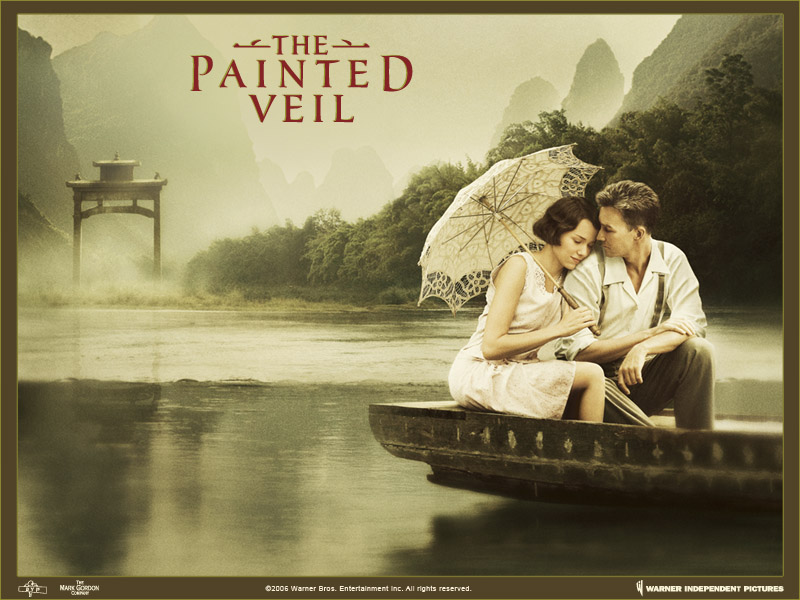
The Painted Veil
I first saw this film a few months after its release. It came up as a recommendation on Netflix, probably because I'd displayed a passion for historical pieces. What arrived on the disc was an historical piece with far more passion than I'd expected and it's a film that has sat with me ever since. It's one of those that I have to avoid when looking for something to watch for a few minutes over a meal because I know I'll sit there to the end. Sometimes I do, anyway.
I've never read the Somerset Maughm novel that it's based upon nor have I seen the two earlier film adaptations. I suppose that engaging any of those might be interesting, simply to see how other actors and writers have approached it. But I have such an identification with the 2006 version that I feel certain that I'd be disappointed with any other depiction at this point.
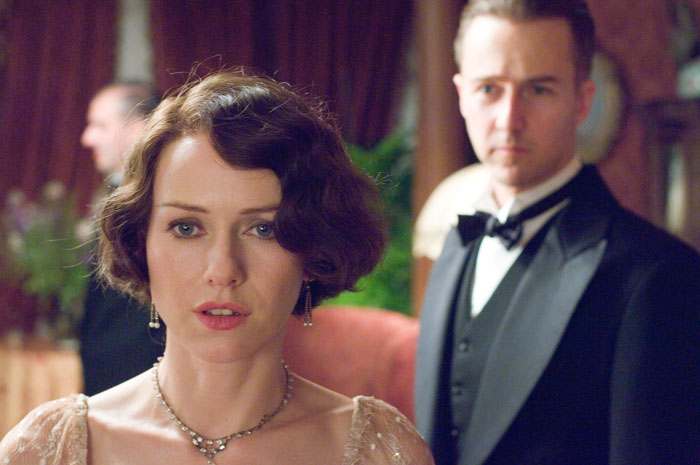
First and foremost, it's the performance of the two leads, Naomi Watts and Edward Norton, that makes the film go. As it is essentially focused on the peaks and valleys of their relationship (and like the surrounding karst, there are many), that seems only natural. But both of them carry the film with such intensity that it seems to border on a recorded play. Everything in the film smolders when they're on the screen, whether with anguish or lust, heartache or fear. Norton, as the austere and emotionally stunted Walter Fane, creates an image so distant and spiteful that it's difficult to actually sympathize with his reaction to being cuckolded. When the revelation is made some distance into the story that he's actually fond of children and chooses to spend most of his time caring for them, the audience is every bit as surprised as his then-estranged wife.
Watts, as Kitty, displays her own dichotomy, as well, given that her character is far more emotionally and sexually experienced than her husband, but perhaps just as easily adrift in her own fantasy world about the way things "ought to be." Having been the life of her own little social circle in London, she enters the circle of the real world when she takes up with her lover (Liev Schreiber) and believes that this far more suitable man will disrupt his own life to perfect hers. This time it's Walter's turn to be the more experienced one as he laughs at her disillusionment before the two of them proceed into the hinterlands of China.
It's that setting which plays the third role in the film, as the foreign culture, the sub-tropical location, and the stark class and racial struggles and differences create the crucible that expands the story beyond that of yet another infidelity tale. Walter's delicate dance between age-old spiritual customs, the realities of the then-still-recent science of bacteriology, and the nationalist politics amidst competing warlords create a story that would be interesting to follow as a documentary but which is presented here with the greater urgency generated by his personal conflict. By the same token, Kitty is also forced to come face-to-face, quite literally, with both "the other half" and the conditions they inhabit, often based on class, but in this case also starkly tied to race (in true British Imperial fashion.) Her submergence of the playgirl lifestyle, so obvious to everyone around her, in order to work in an orphanage run by nuns, is a demonstration of a personal transformation. Her doing so even as Walter reminds her that the inherent religious imperialism practiced by those nuns (and their mother superior, played by Diana Rigg, currently of Game of Thrones' Olenna Redwyne fame) is at least partially responsible for the resistance of the local population to their very presence is a demonstration of just how fine the lines can be when trying to compress one's personal philosophies into the shapes requested or even needed by society. This in itself is a replication of the struggle that the two leads have: how to get their disparate personalities and worldviews to function for the betterment of both of them. As Rigg states to Kitty at one point: "When you have duty and passion, then you have grace within you."
There's a certain languid intensity that permeates the film's every corner, even when Watts and Norton aren't the focus. The touches on various historical elements - the opium culture and its notorious British past; the ferocity of and terror created by a disease like cholera; the implacability of the warlords in the face of a "Nationalist" rule that is best defined as "only within the eyesight of the ruler" - all create a texture rich enough to generate 2 or three films, but which is properly contained here to give as complete a story as possible and let the audience pursue it afterward in their own thoughts as they may. The film stays with you because of that texture and the infused passion. What encourages that is the phenomenally moody and ethereal score composed by Alexandre Desplat:
That simple 5-note phrase has so much depth that it's almost an emotional appeal unto itself. One could get lost in the story hidden behind that music even without having seen the film. There aren't many soundtracks that I listen to without the movie playing. This is one of them.
Of course, it has to be said here that the class struggles and the history are perhaps more poignant to me than most. Societal transformation and the emergence into a new cultural paradigm both within and without China during the period that the film is set is the "writ large", as it were, of the two leads' personal anguish. But what also comes to my mind is that I first saw this film while going through a period in my own marriage that was very similar. My (now) ex-wife and I were on very different pages in the manual of life and of mindsets that were quite similar to Walter and Kitty, respectively. I remember when the credits first started rolling and both of us were silent for quite some time, digesting not only what we'd seen but how emblematic it was of what we were living at that time. One would think that that's another reason, perhaps the primary one, of why the film has stuck with me over the years. But I never think about that time when I see it these days, as the film stands on its own as a rather under-appreciated production of a remarkable story about life, death, and the emotional path that ties them together.
Thursday, May 30, 2013
The Iron Fist rule
There's a creative problem that comes up most often in serial productions like comics and in movies (which comics are closer to than prose) that are destined for sequels (and, aren't they all if they make serious money?), but which also emerges in prose. It's a tendency that I've always referred to as the "Iron First rule."
Iron Fist is a Marvel Comics character that was created in the 70s during the height of the Bruce Lee-led martial arts explosion. As with most one-note and/or fad creations, the series only lasted for 15 issues because the fad flamed out fairly quickly, as well. (You can see this phenomenon in all kinds of Marvel efforts in the 70s and 80s, including a series based around a trucker, but I digress...) But part of what propelled the series' demise is that the character itself, despite having an interesting backstory that could have led to all kinds of creative discursions, was part of the Marvel Universe™ and had to have some way to compete with the guys who could punch through walls or shoot down aircraft with their eyes or whatever. He had to be, in short, a superhero and not simply a badass martial artist. Whither Batman, you cry? Sure, but he also couldn't just be another badass martial artist who also happened to be filthy rich enough to drive tanks down the street in order to take on the guy made of living flame.
Consequently, Danny Rand also had a superpower: his fist could become unto a thing of IRON!! That's how you beat the guys who could brush off your jeet kune do. That's how you're Iron Fist. And that's how you beat them and be Iron Fist. Every. Single. Time. Every issue involved becoming the thing of iron, perhaps even multiple times. Now, you're thinking that I've just described the average porno (in detail, even.) You're not wrong. But putting aside the implications of getting your readers off with every issue (not passing judgment here; everybody has their thing), you also can't keep doing it the same way every issue (unless you're talking about actual porn. Sometimes. I'm leaving this metaphor.) If every fight is solved by hauling out the iron fist, why not just do it in the first three pages of the issue and deal with the latest super-villain right away? (Just like porn has become 3 minute clips instead of 90 minute films. I'm leaving it. For real.)
Not only do you have to come up with a good reason to not use the ultimate power right away, you have to come up with guys that aren't affected by it unless it's used in new and exotic ways AND you have to convince the audience that all of this is credulous. Granted, baseline credulity and superheroes do not often mix. Your audience is already often predisposed to the fantastical or not really concerned about a shaky premise because they've just decided to plop down and read one issue of your continuing series. But if you do have a regular readership, they're going to get tired of that routine at about the same pace as the writer. No one wants to keep distracting themselves with justifying their story while they're trying to write it. But if your character is more self-contained, you don't have that problem.
Shang-chi also existed in the Marvel Universe™ and was also an outgrowth of the 70s martial arts explosion. However, while Iron Fist lasted 15 issues, Shang-Chi lasted for 125; a success story by almost any measure in the comics world. Shang-Chi was simply a kung fu guy, walking the earth, and his book remained in that sphere. There was no ultimate power because there were very rarely opponents of the standard super-villain style. He did encounter other characters in Marvel's stable, but almost always in their books. His story continued to be largely his story because it was about the character and not about his supreme ability. But that Iron First rule can work against more established and well-rounded characters, as well.
Most people remember this famous scene:
(among others.) "Dude! He can kill people just by looking at them! And holding his hand in the kung fu grip!" OK, fine. Then why does he have to throw down in risky lightsaber battles with his real enemies? Because if Vader could just snuff out everyone he ran across by frowning, there would be no story. "But wait!", you say. "The reason he can't just reach out and treat Luke's head like a water balloon is because Luke is also strong with the Force!" Sure. That's plausible. But what about the next time they meet up? And the next time? And the next time? Eventually, it all comes crashing in, which is why one of the few things Lucas did properly post-Empire was to let Vader die. Once you've presented an irresistible force, it either lays waste to everything or it ends. That, of course, isn't possible if the character in question, like Iron Fist, is the franchise. But that also results in the inherent problem of many sequels in movies.
The first Iron Man film was a good film. Not just a good superhero film, but a good film overall. Well acted, tightly-paced, tightly-written, and with a decent resolution. Tony Stark has created the world's ultimate weapon in the name of defending it and does so successfully. The End. Enter Iron Man 2. What now? "Well... Let's blow more stuff up!" This is the Iron Fist rule again (perhaps it is now just "the rule of Iron"?) You're still a man in a suit of armor and there have to be an increasing number of more spectacular ways of displaying that if you want to keep (some) audiences entertained. Hollywood's shortcut these days is usually CGI explosions, plus 3D, IMAX, and whatever else they can tack on to keep people from simply waiting to watch it on their 50" flatscreens at home. Iron Mans 2 and 3 are not horrible films. Robert Downey, Jr. is the lifeline in both of them, as he was seemingly born to play this role (and Ben Kingsley was a hoot in 3.) Furthermore, Tony Stark has always been one of Marvel's more interesting characters because of his implicit moral quandary (weapons manufacturer wanting to protect people), personal issues (alcoholism), and heavy load of responsibility for his company and the people whose lives are affected by it. The movies portray most of this very well, so it's not as if the films were entirely bogged down by the rule. But there can be little argument that the first film was the best because it simply told a story and didn't concern itself with having 15 Iron Men flying about in one of the most appropriately-labeled deus ex machina moments I can remember:
How do you do better than Iron Man? "Have more! And blow more stuff up!" I'm all about heightening the excitement and trying to top yourself. But there comes a time when the ordnance and the one-note superpower tends to overwhelm the story. At that point, you're just a gimmick and gimmicks, like fads, neither last long (Cue Twilight fans in 3... 2... 1...) nor are remembered very fondly. This rule does stretch into prose, as well, and sometimes very good prose.
I just finished Joe Abercrombie's First Law trilogy. It was excellent. It was a very restrained take on the fantasy genre combined with a rather brutal depiction of medieval mores, all functioning under the relatively obvious veneer of modern political corruption. His characters are great and they speak and act like real people, which is always my first hope in reading or watching a story. One of the most prominent is Logen Ninefingers. Logen is a Northman who can speak to spirits; something he does precisely twice in the ~2000 pages of story. Logen also has an alter ego that resembles the famed Viking battle frenzy, wherein he becomes what people around him refer to as "the Bloody Nine" and proceeds to slaughter everything within reach: friend, foe, and innocent alike. He does this several times in the series and almost always at a crisis point (very Hulk-like, since we're talking about comics.) By the third book, it becomes mildly predictable and a bit tedious, but what restrains it from being a completely Iron Fist situation is that there are implications to his actions beyond simply defeating the enemy. As noted, he kills everything, including characters of some prominence in the story and then is left with nothing but the guilt of having saved some and slain others that he was trying to save. It doesn't rescue the situation completely, but it at least provides tension for the reader, knowing that wanting Logen to go off won't always have the best results for the story if you've become fond of one of his incidental victims. I mention it here largely to demonstrate that the rule isn't a complete death knell to either character or story and can be contextualized successfully. However, the standard note about length must be included. Abercrombie has written three more books in the same world as the First Law series. Logen is not present in them. When his story was done, it was done.
What has occurred to me over the years is simple: If you want to have good characters, they can't be one-dimensional and you can't cover up that lack of depth with any success if you want to do something credible. Granted, it also depends on your readers' willingness to follow along.
Iron Fist is a Marvel Comics character that was created in the 70s during the height of the Bruce Lee-led martial arts explosion. As with most one-note and/or fad creations, the series only lasted for 15 issues because the fad flamed out fairly quickly, as well. (You can see this phenomenon in all kinds of Marvel efforts in the 70s and 80s, including a series based around a trucker, but I digress...) But part of what propelled the series' demise is that the character itself, despite having an interesting backstory that could have led to all kinds of creative discursions, was part of the Marvel Universe™ and had to have some way to compete with the guys who could punch through walls or shoot down aircraft with their eyes or whatever. He had to be, in short, a superhero and not simply a badass martial artist. Whither Batman, you cry? Sure, but he also couldn't just be another badass martial artist who also happened to be filthy rich enough to drive tanks down the street in order to take on the guy made of living flame.
Consequently, Danny Rand also had a superpower: his fist could become unto a thing of IRON!! That's how you beat the guys who could brush off your jeet kune do. That's how you're Iron Fist. And that's how you beat them and be Iron Fist. Every. Single. Time. Every issue involved becoming the thing of iron, perhaps even multiple times. Now, you're thinking that I've just described the average porno (in detail, even.) You're not wrong. But putting aside the implications of getting your readers off with every issue (not passing judgment here; everybody has their thing), you also can't keep doing it the same way every issue (unless you're talking about actual porn. Sometimes. I'm leaving this metaphor.) If every fight is solved by hauling out the iron fist, why not just do it in the first three pages of the issue and deal with the latest super-villain right away? (Just like porn has become 3 minute clips instead of 90 minute films. I'm leaving it. For real.)
Not only do you have to come up with a good reason to not use the ultimate power right away, you have to come up with guys that aren't affected by it unless it's used in new and exotic ways AND you have to convince the audience that all of this is credulous. Granted, baseline credulity and superheroes do not often mix. Your audience is already often predisposed to the fantastical or not really concerned about a shaky premise because they've just decided to plop down and read one issue of your continuing series. But if you do have a regular readership, they're going to get tired of that routine at about the same pace as the writer. No one wants to keep distracting themselves with justifying their story while they're trying to write it. But if your character is more self-contained, you don't have that problem.
Shang-chi also existed in the Marvel Universe™ and was also an outgrowth of the 70s martial arts explosion. However, while Iron Fist lasted 15 issues, Shang-Chi lasted for 125; a success story by almost any measure in the comics world. Shang-Chi was simply a kung fu guy, walking the earth, and his book remained in that sphere. There was no ultimate power because there were very rarely opponents of the standard super-villain style. He did encounter other characters in Marvel's stable, but almost always in their books. His story continued to be largely his story because it was about the character and not about his supreme ability. But that Iron First rule can work against more established and well-rounded characters, as well.
Most people remember this famous scene:
(among others.) "Dude! He can kill people just by looking at them! And holding his hand in the kung fu grip!" OK, fine. Then why does he have to throw down in risky lightsaber battles with his real enemies? Because if Vader could just snuff out everyone he ran across by frowning, there would be no story. "But wait!", you say. "The reason he can't just reach out and treat Luke's head like a water balloon is because Luke is also strong with the Force!" Sure. That's plausible. But what about the next time they meet up? And the next time? And the next time? Eventually, it all comes crashing in, which is why one of the few things Lucas did properly post-Empire was to let Vader die. Once you've presented an irresistible force, it either lays waste to everything or it ends. That, of course, isn't possible if the character in question, like Iron Fist, is the franchise. But that also results in the inherent problem of many sequels in movies.
The first Iron Man film was a good film. Not just a good superhero film, but a good film overall. Well acted, tightly-paced, tightly-written, and with a decent resolution. Tony Stark has created the world's ultimate weapon in the name of defending it and does so successfully. The End. Enter Iron Man 2. What now? "Well... Let's blow more stuff up!" This is the Iron Fist rule again (perhaps it is now just "the rule of Iron"?) You're still a man in a suit of armor and there have to be an increasing number of more spectacular ways of displaying that if you want to keep (some) audiences entertained. Hollywood's shortcut these days is usually CGI explosions, plus 3D, IMAX, and whatever else they can tack on to keep people from simply waiting to watch it on their 50" flatscreens at home. Iron Mans 2 and 3 are not horrible films. Robert Downey, Jr. is the lifeline in both of them, as he was seemingly born to play this role (and Ben Kingsley was a hoot in 3.) Furthermore, Tony Stark has always been one of Marvel's more interesting characters because of his implicit moral quandary (weapons manufacturer wanting to protect people), personal issues (alcoholism), and heavy load of responsibility for his company and the people whose lives are affected by it. The movies portray most of this very well, so it's not as if the films were entirely bogged down by the rule. But there can be little argument that the first film was the best because it simply told a story and didn't concern itself with having 15 Iron Men flying about in one of the most appropriately-labeled deus ex machina moments I can remember:
How do you do better than Iron Man? "Have more! And blow more stuff up!" I'm all about heightening the excitement and trying to top yourself. But there comes a time when the ordnance and the one-note superpower tends to overwhelm the story. At that point, you're just a gimmick and gimmicks, like fads, neither last long (Cue Twilight fans in 3... 2... 1...) nor are remembered very fondly. This rule does stretch into prose, as well, and sometimes very good prose.
I just finished Joe Abercrombie's First Law trilogy. It was excellent. It was a very restrained take on the fantasy genre combined with a rather brutal depiction of medieval mores, all functioning under the relatively obvious veneer of modern political corruption. His characters are great and they speak and act like real people, which is always my first hope in reading or watching a story. One of the most prominent is Logen Ninefingers. Logen is a Northman who can speak to spirits; something he does precisely twice in the ~2000 pages of story. Logen also has an alter ego that resembles the famed Viking battle frenzy, wherein he becomes what people around him refer to as "the Bloody Nine" and proceeds to slaughter everything within reach: friend, foe, and innocent alike. He does this several times in the series and almost always at a crisis point (very Hulk-like, since we're talking about comics.) By the third book, it becomes mildly predictable and a bit tedious, but what restrains it from being a completely Iron Fist situation is that there are implications to his actions beyond simply defeating the enemy. As noted, he kills everything, including characters of some prominence in the story and then is left with nothing but the guilt of having saved some and slain others that he was trying to save. It doesn't rescue the situation completely, but it at least provides tension for the reader, knowing that wanting Logen to go off won't always have the best results for the story if you've become fond of one of his incidental victims. I mention it here largely to demonstrate that the rule isn't a complete death knell to either character or story and can be contextualized successfully. However, the standard note about length must be included. Abercrombie has written three more books in the same world as the First Law series. Logen is not present in them. When his story was done, it was done.
What has occurred to me over the years is simple: If you want to have good characters, they can't be one-dimensional and you can't cover up that lack of depth with any success if you want to do something credible. Granted, it also depends on your readers' willingness to follow along.
Friday, March 15, 2013
Songs to shag to
Horrible prepositional phrases, FTW!
There's very little possible argument against music as a sexual force. It's been condemned throughout history as an enabler, from David to Marilyn (no, not that Marilyn (thanks, Brian) but, yeah... her, too.) What's occasionally rattled around in my brain (and... other... places...) is what kind of music really drives the sexual impulse. It certainly depends on the listener(s) and their particular tastes and impulses, but sometimes it's the foundation of the track:
Ministry's Jesus Built My Hotrod off their transcendent Psalm 69 can't be described any other way by anyone willing to pay attention. Gibby Haynes' obvious lyrics and the song's driving, repetitive beat tend to make it obvious. But would it be a song that encourages sex with someone other than oneself?
Schubert's Ave Maria, on the other hand, is a piece I've heard recommended more than once to "set and continue the mood."
I can see the possibilities, even if it's something that might not occur to me. I wonder, however, if the soprano's presence is too much of an intrusion into the situation for most people. Does she make one rise and fall with her voice or propel one forward? Of course, in the classical vein, many people say you can't go wrong with the classic:
The physical mimicry of Ravel's Bolero, shifting from a slow, quiet build with an everconstant beat to something of more prominence is doubtlessly why it's lasted through the years as music emblematic of the deed. In the modern era, its attachment to Bo Derek and the movie 10 has certainly perpetuated that mental image.
Or we can shift away from mimicry and return to the direct approach:
John Lee Hooker's I'm in the Mood is not only a song explicitly about sex, but also contains that languid beat that tugs at your guts until you're willing to move in the way he wants you to. Many people think that there's something essentially sexual about the blues and its origins from long, slow, hot nights along the Mississippi. Of course, if you'd rather stick with modern tradition, you hearken back to the 70s:
I'd never be able to do it because I grew up in the 70s and Barry White makes me think of seedy, vaguely-Irish-themed bars, filled with smoke and the sounds of Space Invaders; not that the increasingly rapid and regular rhythm of the advancing aliens doesn't make a good aural simulation.
But there's a key element: Is the music supposed to draw you into another world or help enhance the one you're in? I suppose it depends on whom you have to imagine you're screwing, if you have to do that, but then we wouldn't really be talking about playing the right music. Personally, I remember having one of the more thrilling experiences of my life while listening to
AC/DC's Shake a Leg. Again, it was the driving beat and urgency of the whole track (I will forever be rooted in punk, I think) that kind of set the tone for the whole moment. We had put the album on to cover the noise and, thankfully, this track came on at just the right time, just as things were reaching a physical crescendo, as it were. Just like Ministry, it's a complete separation from the slower and just as intense urges driven by players like Hooker and again highlights the question of just which world you're trying to inhabit at any given moment.
Of course, sometimes it's all about timing. I have a friend who was hitting his peak right around the time that someone next door in the dorm was blasting Kraftwerk at 11:
He said that he could never hear this track again without, um, feeling it. Of course, some would say that techno/house/dub music like The Orb's Blue Room
is supposed to inspire precisely that kind of motion on the dance floor, vertically and horizontally. I can't really disagree with that, especially given the ethereal quality that is, in fact, meant to transport the listener (often to another world...) I had this track playing in a hotel room in Coldwater, MI one time (long story.)
Admittedly, I had sexual meaning on the brain tonight after tripping over Friends With Benefits while looking for a brief distraction. I like Mila Kunis as an actress (and, because, well, yeah) and I think the chemistry of the two stars and the script were both great but it was, in the end, yet another formulaic romantic comedy that spoiled all of that potential by kowtowing to test audiences. They were "daring" enough to make the movie largely about sex (trying to PG-13 it would have sacrificed the essential tenet of the story) but music and sex will always beat movies and sex, outside of the whole pr0n thing (Oh. That.) because the former often requires actual thought, whereas the latter frequently avoids it.
There's very little possible argument against music as a sexual force. It's been condemned throughout history as an enabler, from David to Marilyn (no, not that Marilyn (thanks, Brian) but, yeah... her, too.) What's occasionally rattled around in my brain (and... other... places...) is what kind of music really drives the sexual impulse. It certainly depends on the listener(s) and their particular tastes and impulses, but sometimes it's the foundation of the track:
Ministry's Jesus Built My Hotrod off their transcendent Psalm 69 can't be described any other way by anyone willing to pay attention. Gibby Haynes' obvious lyrics and the song's driving, repetitive beat tend to make it obvious. But would it be a song that encourages sex with someone other than oneself?
Schubert's Ave Maria, on the other hand, is a piece I've heard recommended more than once to "set and continue the mood."
I can see the possibilities, even if it's something that might not occur to me. I wonder, however, if the soprano's presence is too much of an intrusion into the situation for most people. Does she make one rise and fall with her voice or propel one forward? Of course, in the classical vein, many people say you can't go wrong with the classic:
The physical mimicry of Ravel's Bolero, shifting from a slow, quiet build with an everconstant beat to something of more prominence is doubtlessly why it's lasted through the years as music emblematic of the deed. In the modern era, its attachment to Bo Derek and the movie 10 has certainly perpetuated that mental image.
Or we can shift away from mimicry and return to the direct approach:
John Lee Hooker's I'm in the Mood is not only a song explicitly about sex, but also contains that languid beat that tugs at your guts until you're willing to move in the way he wants you to. Many people think that there's something essentially sexual about the blues and its origins from long, slow, hot nights along the Mississippi. Of course, if you'd rather stick with modern tradition, you hearken back to the 70s:
I'd never be able to do it because I grew up in the 70s and Barry White makes me think of seedy, vaguely-Irish-themed bars, filled with smoke and the sounds of Space Invaders; not that the increasingly rapid and regular rhythm of the advancing aliens doesn't make a good aural simulation.
But there's a key element: Is the music supposed to draw you into another world or help enhance the one you're in? I suppose it depends on whom you have to imagine you're screwing, if you have to do that, but then we wouldn't really be talking about playing the right music. Personally, I remember having one of the more thrilling experiences of my life while listening to
AC/DC's Shake a Leg. Again, it was the driving beat and urgency of the whole track (I will forever be rooted in punk, I think) that kind of set the tone for the whole moment. We had put the album on to cover the noise and, thankfully, this track came on at just the right time, just as things were reaching a physical crescendo, as it were. Just like Ministry, it's a complete separation from the slower and just as intense urges driven by players like Hooker and again highlights the question of just which world you're trying to inhabit at any given moment.
Of course, sometimes it's all about timing. I have a friend who was hitting his peak right around the time that someone next door in the dorm was blasting Kraftwerk at 11:
He said that he could never hear this track again without, um, feeling it. Of course, some would say that techno/house/dub music like The Orb's Blue Room
is supposed to inspire precisely that kind of motion on the dance floor, vertically and horizontally. I can't really disagree with that, especially given the ethereal quality that is, in fact, meant to transport the listener (often to another world...) I had this track playing in a hotel room in Coldwater, MI one time (long story.)
Admittedly, I had sexual meaning on the brain tonight after tripping over Friends With Benefits while looking for a brief distraction. I like Mila Kunis as an actress (and, because, well, yeah) and I think the chemistry of the two stars and the script were both great but it was, in the end, yet another formulaic romantic comedy that spoiled all of that potential by kowtowing to test audiences. They were "daring" enough to make the movie largely about sex (trying to PG-13 it would have sacrificed the essential tenet of the story) but music and sex will always beat movies and sex, outside of the whole pr0n thing (Oh. That.) because the former often requires actual thought, whereas the latter frequently avoids it.
Tuesday, May 29, 2012
Avengers Assemble
I am really, really glad that they didn't use that battle cry...
So, I finally got around to sitting down in front of The Avengers yesterday. Overall, I was OK with it. It was fun, as most of Marvel's movies are supposed to be. Character-wise, once again, Robert Downey, Jr. was the highlight as Tony Stark/Iron Man, as he's the best actor among them and had the best lines. I think that Chris Evans (Captain America) and Chris Hemsworth (Thor) do solid jobs with what they're given to work with. On that note, Jeremy Renner's role as Hawkeye was pretty monochromatic, which is a shame for a guy that did really well in The Hurt Locker and The Town. You'd hope for something a little more emotive, especially from someone playing Clint Barton, a rather tempestuous character in the comics, but it was not to be. Thankfully, they left out the goofy purple-and-blue costume with the big "H" on the forehead, just in case people forgot who he was. ("Of course! He's H-Man!")
By the same token. Tom Hiddleston was unfortunately stuck with Loki's classic golden-stag-on-PCP uniform. It's not like subtlety has ever been a large facet of the character and Hiddleston plays it for all it's worth, but you still kind of wonder at that choice. Mark Ruffalo was actually really good as Bruce Banner (Here's a bit of cultural trivia: Why was the character named David Bruce Banner in the 70s TV show? Because Universal thought that "Bruce" was a name too closely identified with gay men. I kid you not. There was even a joke about it in a contemporary issue of the comic where Banner is checking the classifieds for jobs and sees an ad for "Turkish baths" and thinks to himself: "Nah. I don't think that's for me." My reaction as an 8-year-old: "What's a bathhouse?") Scarlett Johansson (Black Widow) is herself: she's wooden, she's gorgeous, I could watch her beating the crap out of Russian mobsters all day:
and Sam Jackson (Nick Fury) continues his string of roles that will never even approach his stellar performances in Pulp Fiction and The Red Violin. It's a shame, really, because you'd think with the ethical conflicts inherent to the role (and squaring off on SHIELD's version of Skype with a shadowy Powers Boothe), he'd have a lot of room to work.
I think the script was pretty uneven, though. There were moments when someone was gabbling on about this or that topic where I was actually waving my hand as if to hurry the pace because it was pretty tedious. I don't know whether that's an effect of my knowing all of this stuff (The "tesseract" is the Cosmic Cube, which was created by AIM (Advanced Idea Mechanics) with a biological computer named MODOK (Mental Organism Designed Only for Killing; why, then, was he created to create the Cube...?) It was later used by the Red Skull to try to kill Captain America and was lost by him to the Sub-Mariner and later reclaimed by the Red Skull and later stolen from him by Thanos (the grinning, purple dude at the end), who was the only person able to truly exploit its power to reshape reality ("It's a genie in the lamp. But with a thousand wishes. And in cube form.") and try to reshape the universe and... on and on and on...) There's a lot of backstory here, most of which they dispensed with based on a tale about perpetual energy, which is a nice shortcut and certainly more relevant to a modern, movie-going audience (AIM always looked liked dorks in those yellow outfits, anyway)
but part of taking that shortcut with an ensemble cast is that you have "character stuff" that has to come to light which can't really be done as anything but boilerplate exposition, lest you lose the pace of the film. They almost did that a couple times, anyway.
It was interesting to see them run across the same problem that most comic writers did in the 80s: How do you rationalize the Batman-types (Hawkeye, Black Widow, Captain America) fighting against things that would actually provide a challenge to the Superman-types, like the Hulk and the God of Thunder? You could kind of dodge that when people didn't pay too much critical attention to stuff like, you know... story in the 60s and 70s but it became more difficult later. I still found it kind of ludicrous that, in a battle taking place across all of midtown Manhattan, the three "human-powered" types would think that whatever they were doing in one intersection would have any effect on the thousands of lives endangered by a constant flow of homicidal aliens on personal hovercraft, not to mention the gigantic flying Moray eels/troop carriers. This is where you run into the conflict between character and story that is reminiscent of what I mentioned in this post: "character" is for long-time readers; "cool SF stories where lots of stuff blows up" is often for new readers. In the movie business, it's a microcosm of the same thing and it's all about pacing.
I have no concrete opinion on Joss Whedon. I've seen almost none of his TV work, although I have many friends who swear by Buffy and Firefly, the latter of which I've seen a couple episodes of and which seems to me to be remarkably overblown, but cult audiences are labeled so for a reason and I'm as guilty of it as anyone else. Having seen Serenity, I'd say this is a step up in that it retains his often deft touch with dialogue and humor, but maintains a better handle on the cuts from one point of the ongoing battle to the next. He also handles the sadly obligatory "superheroes meet and beat the crap out of each other before actually talking" encounter about as coherently as you can. He shows a nice touch in this scene, which expresses and releases some of the audience frustration with the slippery villain (and is, without doubt, the funniest of the movie):
The audience laughter overwhelms the Hulk's one actual line in the film, which is the only moment when Whedon gets away from the fact that the whole "Hulk, Mindless Savage" perspective came from the aforementioned TV series. That trope gets old fast, which is why I appreciated the fact that Lee and Kirby originally designed the Hulk as more of a tragic figure. He can talk, if somewhat haltingly, and spends most of his time doing so asking why people keep shooting him for no other reason than he's big, green, and didn't do what the Pentagon told him... He was intended to be a modern spin on Jekyll/Hyde, except that he was misunderstood, as opposed to showing the darker side of humanity. My one real hope was that they would start steering the character back in that direction. This may or may not have been the first step in that process. Am I the only one who thought of a dog trying to shake the life from one of his lifeless toys in that clip?
Bitch, bitch, bitch... I know this all sounds like I'm trying to shred the film but I actually did like it. I'm just so pre-wired to most of this stuff that it's hard for me to look at it with anything but a very jaded (Radioactive Man?) eye. I've read more superhero comics than most people should be in the same room with. Bottom line: if you keep your expectations at the level of "superhero film", you will not be disappointed. I still think Iron Man is the best of the recent offerings by Marvel and the only one that rises above said level. I'm still astounded that The Avengers has been so well received by critics, but I can certainly understand being swept away by the (perpetual) energy. The fact that they've indicated that Thanos is the villain of choice for the sequel fills me with varying degrees of dread. Had this been the early 80s, I'd have been thrilled, but there's been a lot of crap piled on top of that character since then. So, we'll see. Of course, I do have to say that one of the best moments of the film is the shawarma bit after the credits,
if only because it conveys that atmosphere of what it must feel like to have been thrown through a few skyscrapers for a couple hours. The impressive restraint is indicative of Whedon's potential as a director and may indicate an ability to demonstrate that further in the sequels. Here's hoping.
So, I finally got around to sitting down in front of The Avengers yesterday. Overall, I was OK with it. It was fun, as most of Marvel's movies are supposed to be. Character-wise, once again, Robert Downey, Jr. was the highlight as Tony Stark/Iron Man, as he's the best actor among them and had the best lines. I think that Chris Evans (Captain America) and Chris Hemsworth (Thor) do solid jobs with what they're given to work with. On that note, Jeremy Renner's role as Hawkeye was pretty monochromatic, which is a shame for a guy that did really well in The Hurt Locker and The Town. You'd hope for something a little more emotive, especially from someone playing Clint Barton, a rather tempestuous character in the comics, but it was not to be. Thankfully, they left out the goofy purple-and-blue costume with the big "H" on the forehead, just in case people forgot who he was. ("Of course! He's H-Man!")
By the same token. Tom Hiddleston was unfortunately stuck with Loki's classic golden-stag-on-PCP uniform. It's not like subtlety has ever been a large facet of the character and Hiddleston plays it for all it's worth, but you still kind of wonder at that choice. Mark Ruffalo was actually really good as Bruce Banner (Here's a bit of cultural trivia: Why was the character named David Bruce Banner in the 70s TV show? Because Universal thought that "Bruce" was a name too closely identified with gay men. I kid you not. There was even a joke about it in a contemporary issue of the comic where Banner is checking the classifieds for jobs and sees an ad for "Turkish baths" and thinks to himself: "Nah. I don't think that's for me." My reaction as an 8-year-old: "What's a bathhouse?") Scarlett Johansson (Black Widow) is herself: she's wooden, she's gorgeous, I could watch her beating the crap out of Russian mobsters all day:
and Sam Jackson (Nick Fury) continues his string of roles that will never even approach his stellar performances in Pulp Fiction and The Red Violin. It's a shame, really, because you'd think with the ethical conflicts inherent to the role (and squaring off on SHIELD's version of Skype with a shadowy Powers Boothe), he'd have a lot of room to work.
I think the script was pretty uneven, though. There were moments when someone was gabbling on about this or that topic where I was actually waving my hand as if to hurry the pace because it was pretty tedious. I don't know whether that's an effect of my knowing all of this stuff (The "tesseract" is the Cosmic Cube, which was created by AIM (Advanced Idea Mechanics) with a biological computer named MODOK (Mental Organism Designed Only for Killing; why, then, was he created to create the Cube...?) It was later used by the Red Skull to try to kill Captain America and was lost by him to the Sub-Mariner and later reclaimed by the Red Skull and later stolen from him by Thanos (the grinning, purple dude at the end), who was the only person able to truly exploit its power to reshape reality ("It's a genie in the lamp. But with a thousand wishes. And in cube form.") and try to reshape the universe and... on and on and on...) There's a lot of backstory here, most of which they dispensed with based on a tale about perpetual energy, which is a nice shortcut and certainly more relevant to a modern, movie-going audience (AIM always looked liked dorks in those yellow outfits, anyway)
but part of taking that shortcut with an ensemble cast is that you have "character stuff" that has to come to light which can't really be done as anything but boilerplate exposition, lest you lose the pace of the film. They almost did that a couple times, anyway.
It was interesting to see them run across the same problem that most comic writers did in the 80s: How do you rationalize the Batman-types (Hawkeye, Black Widow, Captain America) fighting against things that would actually provide a challenge to the Superman-types, like the Hulk and the God of Thunder? You could kind of dodge that when people didn't pay too much critical attention to stuff like, you know... story in the 60s and 70s but it became more difficult later. I still found it kind of ludicrous that, in a battle taking place across all of midtown Manhattan, the three "human-powered" types would think that whatever they were doing in one intersection would have any effect on the thousands of lives endangered by a constant flow of homicidal aliens on personal hovercraft, not to mention the gigantic flying Moray eels/troop carriers. This is where you run into the conflict between character and story that is reminiscent of what I mentioned in this post: "character" is for long-time readers; "cool SF stories where lots of stuff blows up" is often for new readers. In the movie business, it's a microcosm of the same thing and it's all about pacing.
I have no concrete opinion on Joss Whedon. I've seen almost none of his TV work, although I have many friends who swear by Buffy and Firefly, the latter of which I've seen a couple episodes of and which seems to me to be remarkably overblown, but cult audiences are labeled so for a reason and I'm as guilty of it as anyone else. Having seen Serenity, I'd say this is a step up in that it retains his often deft touch with dialogue and humor, but maintains a better handle on the cuts from one point of the ongoing battle to the next. He also handles the sadly obligatory "superheroes meet and beat the crap out of each other before actually talking" encounter about as coherently as you can. He shows a nice touch in this scene, which expresses and releases some of the audience frustration with the slippery villain (and is, without doubt, the funniest of the movie):
The audience laughter overwhelms the Hulk's one actual line in the film, which is the only moment when Whedon gets away from the fact that the whole "Hulk, Mindless Savage" perspective came from the aforementioned TV series. That trope gets old fast, which is why I appreciated the fact that Lee and Kirby originally designed the Hulk as more of a tragic figure. He can talk, if somewhat haltingly, and spends most of his time doing so asking why people keep shooting him for no other reason than he's big, green, and didn't do what the Pentagon told him... He was intended to be a modern spin on Jekyll/Hyde, except that he was misunderstood, as opposed to showing the darker side of humanity. My one real hope was that they would start steering the character back in that direction. This may or may not have been the first step in that process. Am I the only one who thought of a dog trying to shake the life from one of his lifeless toys in that clip?
Bitch, bitch, bitch... I know this all sounds like I'm trying to shred the film but I actually did like it. I'm just so pre-wired to most of this stuff that it's hard for me to look at it with anything but a very jaded (Radioactive Man?) eye. I've read more superhero comics than most people should be in the same room with. Bottom line: if you keep your expectations at the level of "superhero film", you will not be disappointed. I still think Iron Man is the best of the recent offerings by Marvel and the only one that rises above said level. I'm still astounded that The Avengers has been so well received by critics, but I can certainly understand being swept away by the (perpetual) energy. The fact that they've indicated that Thanos is the villain of choice for the sequel fills me with varying degrees of dread. Had this been the early 80s, I'd have been thrilled, but there's been a lot of crap piled on top of that character since then. So, we'll see. Of course, I do have to say that one of the best moments of the film is the shawarma bit after the credits,
if only because it conveys that atmosphere of what it must feel like to have been thrown through a few skyscrapers for a couple hours. The impressive restraint is indicative of Whedon's potential as a director and may indicate an ability to demonstrate that further in the sequels. Here's hoping.
Wednesday, May 23, 2012
Directors: Recent memories
So, I thought I might look at a director who's been more relevant recently. There are certain people who stick with me out of a sense of nostalgia, in that they were the first to really open my eyes to a certain style or approach in filmmaking. I haven't become as attached to many in more recent years because, in many ways, the Hollywood approach has continued to further poison the well of American cinema (get off my lawn.) There are, of course, standouts as there always have been and Christopher Nolan is one of those.
From his insider-hailed debut, Following, to his groundbreaking wide-release hit, Memento, to the blockbuster Batman films, and through to his pet project, Inception, Nolan has demonstrated again and again that he's not only willing to take risks with his stories and his audience, but to do so with an excellent sense of style.
My first exposure to Nolan was via Memento, which I saw mostly for Guy Pearce, who was great in LA Confidential (and who possesses much the same flair as Nolan; while the film, Lockout, was a rather dreadful re-imagining of Carpenter's Escape from New York, this trailer has everything that you can ask from an actor in Pearce), as I had no idea whom the director was. The story was co-written by Nolan and his brother, Jonathan, from an idea by the latter. Jonathan would go on to co-write most of Nolan's projects and Christopher's wife, Emma Thomas, would also frequently co-produce them with him through their company. Memento is a story about a man whose head injuries render him unable to form new memories, so he's forced to rely on flashbacks to events that took place prior to his injury and a series of markers and notes that he leaves to himself every time he wakes up. Consequently, the story can't be told in a normal linear progression, but has to be relayed out of sequence and, largely, backwards. This in itself requires a great deal of trust between the director and his audience. The fact that Nolan was doing so with his first major release bespeaks someone who has great confidence in his own vision; an aspect that he has continued to reinforce throughout his career.
In the following scene, we're just getting introduced to the chaos that is Lenny's life, as he acts in ways that seem familiar but which have little foundation for him. He fails to understand much of what is going on, which places him in the same boat with the audience, but the method by which it's portrayed is just intriguing enough to keep most hanging on for the ride:
The shift from black-and-white to color, the lighting changes, the isometric viewpoint; all of these are part of Nolan's style of storytelling, so that you can often tell where you are in his films without having to listen to dialogue or have any groundwork laid by exposition. They're also redolent with a comic book-esque approach, which probably explains some of his appeal to me. The importance of memories and how they can be shaped and used is also a theme that Nolan explores in great detail in his other films and, again, is a topic of some considerable interest to me.
In 2005, Nolan launched what would become a trilogy of films with Batman Begins. Obviously, the character has become archetypal in its own right and has been the subject of various media for the past half-century. Rather than overload the character with his own stylistic interpretation a la Tim Burton, Nolan decided to return to the roots of the character and expand on them. In doing so, he borrowed heavily from Frank Miller's Batman: Year One and some of the classic storylines laid down in Steve Englehart's eight issue run on Detective Comics in the mid-70s which has long been lauded as "the definitive Batman" and was used in development for Burton's first film. Nolan's determination to explore the psychological motivations of a man who, with the world at his feet, would dress up as a bat and beat people senseless in order to combat his own personal demons is another example of his willingness to depart from the standard and focus on the mind of his characters. His representation of the Scarecrow (Cillian Murphy) as more psychiatrist than super-villain is an example of that same approach:
Nothing much happens in this scene other than people standing around looking at the ceiling. Just the same, the tension is thick and we never get tired of waiting for something to happen. Nolan's grasp of the material was stronger than any director of the Batman to date, as he was willing to use some relatively arcane details from the character's past (Ra's al Ghul was, until recent years, a relatively unknown villain even to Batman readers; certainly not in the same class as the Joker, Riddler, Catwoman, etc.) Also, he demonstrated his own knowledge of the character by having others refer to him as THE Batman, which makes him more force than human, which is the whole point.
What followed was the most well-received superhero film made to date (although The Avengers may have changed the equation): The Dark Knight. The interesting thing about it is that I don't think it's quite as strong a film as Batman Begins. Christian Bale's performance is a bit on the contrived side, but that's certainly outweighed by Heath Ledger's stunning turn as The Joker. The script is actually more interesting and less linear than the first film, but we're also handed far more and larger explosions and fireworks and gadgets. So, everything is kind of ramped up and it seems like that makes the movie lose a bit of the soul that it had with Begins. But, by the same token, The Dark Knight moves in ways that Begins simply couldn't and the tight pacing and delivery of Nolan's signature style is still plainly evident, as in the opening scene:
Everything works in this scene. The mysterious and ominous music; the rapid but seamless transitions; the exposition presented as shop talk amongst the thieves; and the final, "anti-ironic" (the face behind the mask is still the mask) appearance of The Joker. This is Nolan at his best: it's an action scene for an action film, but shown with so many intriguing hooks that the audience is left wanting more and laughing at the audacity of what is, at its root, a simple bank heist. The same kind of touch holds true in the first clip that began the post; the famous "pencil trick" scene. While, again, I think Batman Begins may have been the better overall film, I think Dark Knight had the better script and the more interesting (and elaborate) story, the credit for which, of course, goes to the director. While it's often an open question as to whether an actor's performance is of his/her own creation or is inspired by the director or both, I think some credit has to go to Nolan being able to extract a performance from Ledger that I thought he was largely incapable of making before I'd seen the film. It was one of the worst moments in recent film history when we discovered that the actor would not be able to reprise this role or continue with any other.
Making a complex story function for the general audience was a hallmark of the other film Nolan released in 2006: The Prestige. While I think the performances were average for most of the cast other than Michael Caine and Bale, the intimacy of the emotional struggles between the two competing magicians was portrayed well and fell short of melodrama most of the time, even if the nominal lead, Hugh Jackman, isn't a strong enough actor to convey all of the intensity that I think his role required. The great camera work of the following scene was emblematic:
As the film audience, we're behind the scenes for much of the story, so we stay intimate with the characters via the handheld camera as Jackman and Scarlett Johanssen prepare to sell the illusion. This is different from this scene, when we're left wondering how Bale's character pulls off his new trick and are, thus, left in the audience. Bale's properly emotionless performance leaves us distant as, for his character, it's all about the mechanics. OTOH, in the Jackman trick, the response is the thing, so we spend a few seconds below the stage while he tries to drink in the applause that should be his. Again, the contrast in lighting and music for the two scenes shows off Nolan's storytelling approach, in that both could be shown almost absent of dialogue and still convey the meaning that the director wants. (It's unfortunate, of course, that the latter scene misses the prestige...)
Finally, we come to Inception. Nolan had written a treatment for the concept in 2001, but felt he needed more experience in production before approaching a project his ambitious (this from the man who presented Memento as his second film...) It's interesting to find someone with that much restraint. There are numerous stories of films that have been sitting in a drawer for years on end because the person wanting to produce them didn't have the right conditions (typically a studio willing to take the project, such as Robert Duvall's The Apostle, which he wrote in the 80s and which finally hit the screen in 1997.) But there are few films that were held back because the producer, with solid credit and support to his name (and a writer and co-producer in the family), was conscious of his own potential flaws. It resonates with me the same way that the story about Orson Scott Card's Ender series does; in which Card had the concept for the third book, Xenocide, well before considering Ender's Game. On the advice of his agent, he decided that he wasn't mature enough as a writer to do the former and, thus, wrote the latter to huge critical appraisal and success.
Inception, of course, is almost solely based on the mind and how it functions. Oneirology and its use in fiction has been a favored topic of mine in similar bent to Nolan's approach. The fact that he chose to combine it with a tense story of corporate espionage markedly similar to William Gibson's New Rose Hotel (which uses the theft of people who have the "edge" gene) but takes it one step further into ideas made it an instant draw to me. Once again, Nolan takes a complex plot and makes it easily understandable for those that are willing to listen (the question of how many appreciated the film for its story rather than its stunning action sequences is up for debate.) Even in scenes that demand exposition, the overall feeling of tension and moodiness in the film is maintained by the anguish and intensity of the lead, Leonardo DiCaprio, as in this scene:
Capable performances by DiCaprio, Ellen Page, and Tom Hardy sell a scene that is a completely foreign concept to most audiences but which feels more natural after it's explained to them (just like a dream?) Inception also had the most frequent examples of a director's conceit that Nolan displays often in previous films: a love for wide-angle establishing shots (big halls, theaters, warehouses, Batcaves, etc.) They serve this film because of the magnitude of the idea that he was trying to convey. While there is some room to criticize Inception for the rapid pace and trend toward explosions even while dealing with a very dense and cerebral (heh) topic (in the same way that the Dark Knight could be criticized for not spending even more time with the fascinating Joker and, instead, spending millions on Batpods and rocket launchers), I think Nolan made the decision to keep the action fairly frenetic for fear of losing the audience that would find a lecture on the meaning of dreams soporific, to say the least. It reminds me of Rick Veitch's venture from innovative work on titles like Swamp Thing and his own Bratpack into meandering around the meaning of his own dreams with Rare Bit Fiends. Incorporating those ideas into other stories would be great. Trying to make a story out of random symbolism and personal anecdotes relevant only to close friends is about as interesting as it sounds. While Nolan could have gone more in a Philip K. Dick direction with the story, I think he made the right choice with a story less about ethical choices than about mysteries that we're all still trying to unravel.
Needless to say, I'm excited about seeing The Dark Knight Rises in a few weeks to see if Nolan continued in the direction of more slam-bang or instead brought the trilogy to a close with a more introspective story about the impact of the character's motivation on the world around him (something which has been handled with lesser and greater acumen by writers of the Batman since the 1930s.) Regardless, I have a hard time seeing how I'll be disappointed. Nex time, I think I'll go back into the past with another "fallen hero", as it were.
From his insider-hailed debut, Following, to his groundbreaking wide-release hit, Memento, to the blockbuster Batman films, and through to his pet project, Inception, Nolan has demonstrated again and again that he's not only willing to take risks with his stories and his audience, but to do so with an excellent sense of style.
My first exposure to Nolan was via Memento, which I saw mostly for Guy Pearce, who was great in LA Confidential (and who possesses much the same flair as Nolan; while the film, Lockout, was a rather dreadful re-imagining of Carpenter's Escape from New York, this trailer has everything that you can ask from an actor in Pearce), as I had no idea whom the director was. The story was co-written by Nolan and his brother, Jonathan, from an idea by the latter. Jonathan would go on to co-write most of Nolan's projects and Christopher's wife, Emma Thomas, would also frequently co-produce them with him through their company. Memento is a story about a man whose head injuries render him unable to form new memories, so he's forced to rely on flashbacks to events that took place prior to his injury and a series of markers and notes that he leaves to himself every time he wakes up. Consequently, the story can't be told in a normal linear progression, but has to be relayed out of sequence and, largely, backwards. This in itself requires a great deal of trust between the director and his audience. The fact that Nolan was doing so with his first major release bespeaks someone who has great confidence in his own vision; an aspect that he has continued to reinforce throughout his career.
In the following scene, we're just getting introduced to the chaos that is Lenny's life, as he acts in ways that seem familiar but which have little foundation for him. He fails to understand much of what is going on, which places him in the same boat with the audience, but the method by which it's portrayed is just intriguing enough to keep most hanging on for the ride:
The shift from black-and-white to color, the lighting changes, the isometric viewpoint; all of these are part of Nolan's style of storytelling, so that you can often tell where you are in his films without having to listen to dialogue or have any groundwork laid by exposition. They're also redolent with a comic book-esque approach, which probably explains some of his appeal to me. The importance of memories and how they can be shaped and used is also a theme that Nolan explores in great detail in his other films and, again, is a topic of some considerable interest to me.
In 2005, Nolan launched what would become a trilogy of films with Batman Begins. Obviously, the character has become archetypal in its own right and has been the subject of various media for the past half-century. Rather than overload the character with his own stylistic interpretation a la Tim Burton, Nolan decided to return to the roots of the character and expand on them. In doing so, he borrowed heavily from Frank Miller's Batman: Year One and some of the classic storylines laid down in Steve Englehart's eight issue run on Detective Comics in the mid-70s which has long been lauded as "the definitive Batman" and was used in development for Burton's first film. Nolan's determination to explore the psychological motivations of a man who, with the world at his feet, would dress up as a bat and beat people senseless in order to combat his own personal demons is another example of his willingness to depart from the standard and focus on the mind of his characters. His representation of the Scarecrow (Cillian Murphy) as more psychiatrist than super-villain is an example of that same approach:
Nothing much happens in this scene other than people standing around looking at the ceiling. Just the same, the tension is thick and we never get tired of waiting for something to happen. Nolan's grasp of the material was stronger than any director of the Batman to date, as he was willing to use some relatively arcane details from the character's past (Ra's al Ghul was, until recent years, a relatively unknown villain even to Batman readers; certainly not in the same class as the Joker, Riddler, Catwoman, etc.) Also, he demonstrated his own knowledge of the character by having others refer to him as THE Batman, which makes him more force than human, which is the whole point.
What followed was the most well-received superhero film made to date (although The Avengers may have changed the equation): The Dark Knight. The interesting thing about it is that I don't think it's quite as strong a film as Batman Begins. Christian Bale's performance is a bit on the contrived side, but that's certainly outweighed by Heath Ledger's stunning turn as The Joker. The script is actually more interesting and less linear than the first film, but we're also handed far more and larger explosions and fireworks and gadgets. So, everything is kind of ramped up and it seems like that makes the movie lose a bit of the soul that it had with Begins. But, by the same token, The Dark Knight moves in ways that Begins simply couldn't and the tight pacing and delivery of Nolan's signature style is still plainly evident, as in the opening scene:
Everything works in this scene. The mysterious and ominous music; the rapid but seamless transitions; the exposition presented as shop talk amongst the thieves; and the final, "anti-ironic" (the face behind the mask is still the mask) appearance of The Joker. This is Nolan at his best: it's an action scene for an action film, but shown with so many intriguing hooks that the audience is left wanting more and laughing at the audacity of what is, at its root, a simple bank heist. The same kind of touch holds true in the first clip that began the post; the famous "pencil trick" scene. While, again, I think Batman Begins may have been the better overall film, I think Dark Knight had the better script and the more interesting (and elaborate) story, the credit for which, of course, goes to the director. While it's often an open question as to whether an actor's performance is of his/her own creation or is inspired by the director or both, I think some credit has to go to Nolan being able to extract a performance from Ledger that I thought he was largely incapable of making before I'd seen the film. It was one of the worst moments in recent film history when we discovered that the actor would not be able to reprise this role or continue with any other.
Making a complex story function for the general audience was a hallmark of the other film Nolan released in 2006: The Prestige. While I think the performances were average for most of the cast other than Michael Caine and Bale, the intimacy of the emotional struggles between the two competing magicians was portrayed well and fell short of melodrama most of the time, even if the nominal lead, Hugh Jackman, isn't a strong enough actor to convey all of the intensity that I think his role required. The great camera work of the following scene was emblematic:
As the film audience, we're behind the scenes for much of the story, so we stay intimate with the characters via the handheld camera as Jackman and Scarlett Johanssen prepare to sell the illusion. This is different from this scene, when we're left wondering how Bale's character pulls off his new trick and are, thus, left in the audience. Bale's properly emotionless performance leaves us distant as, for his character, it's all about the mechanics. OTOH, in the Jackman trick, the response is the thing, so we spend a few seconds below the stage while he tries to drink in the applause that should be his. Again, the contrast in lighting and music for the two scenes shows off Nolan's storytelling approach, in that both could be shown almost absent of dialogue and still convey the meaning that the director wants. (It's unfortunate, of course, that the latter scene misses the prestige...)
Finally, we come to Inception. Nolan had written a treatment for the concept in 2001, but felt he needed more experience in production before approaching a project his ambitious (this from the man who presented Memento as his second film...) It's interesting to find someone with that much restraint. There are numerous stories of films that have been sitting in a drawer for years on end because the person wanting to produce them didn't have the right conditions (typically a studio willing to take the project, such as Robert Duvall's The Apostle, which he wrote in the 80s and which finally hit the screen in 1997.) But there are few films that were held back because the producer, with solid credit and support to his name (and a writer and co-producer in the family), was conscious of his own potential flaws. It resonates with me the same way that the story about Orson Scott Card's Ender series does; in which Card had the concept for the third book, Xenocide, well before considering Ender's Game. On the advice of his agent, he decided that he wasn't mature enough as a writer to do the former and, thus, wrote the latter to huge critical appraisal and success.
Inception, of course, is almost solely based on the mind and how it functions. Oneirology and its use in fiction has been a favored topic of mine in similar bent to Nolan's approach. The fact that he chose to combine it with a tense story of corporate espionage markedly similar to William Gibson's New Rose Hotel (which uses the theft of people who have the "edge" gene) but takes it one step further into ideas made it an instant draw to me. Once again, Nolan takes a complex plot and makes it easily understandable for those that are willing to listen (the question of how many appreciated the film for its story rather than its stunning action sequences is up for debate.) Even in scenes that demand exposition, the overall feeling of tension and moodiness in the film is maintained by the anguish and intensity of the lead, Leonardo DiCaprio, as in this scene:
Capable performances by DiCaprio, Ellen Page, and Tom Hardy sell a scene that is a completely foreign concept to most audiences but which feels more natural after it's explained to them (just like a dream?) Inception also had the most frequent examples of a director's conceit that Nolan displays often in previous films: a love for wide-angle establishing shots (big halls, theaters, warehouses, Batcaves, etc.) They serve this film because of the magnitude of the idea that he was trying to convey. While there is some room to criticize Inception for the rapid pace and trend toward explosions even while dealing with a very dense and cerebral (heh) topic (in the same way that the Dark Knight could be criticized for not spending even more time with the fascinating Joker and, instead, spending millions on Batpods and rocket launchers), I think Nolan made the decision to keep the action fairly frenetic for fear of losing the audience that would find a lecture on the meaning of dreams soporific, to say the least. It reminds me of Rick Veitch's venture from innovative work on titles like Swamp Thing and his own Bratpack into meandering around the meaning of his own dreams with Rare Bit Fiends. Incorporating those ideas into other stories would be great. Trying to make a story out of random symbolism and personal anecdotes relevant only to close friends is about as interesting as it sounds. While Nolan could have gone more in a Philip K. Dick direction with the story, I think he made the right choice with a story less about ethical choices than about mysteries that we're all still trying to unravel.
Needless to say, I'm excited about seeing The Dark Knight Rises in a few weeks to see if Nolan continued in the direction of more slam-bang or instead brought the trilogy to a close with a more introspective story about the impact of the character's motivation on the world around him (something which has been handled with lesser and greater acumen by writers of the Batman since the 1930s.) Regardless, I have a hard time seeing how I'll be disappointed. Nex time, I think I'll go back into the past with another "fallen hero", as it were.
Subscribe to:
Posts (Atom)