Showing posts with label critical disappointment. Show all posts

Tuesday, April 22, 2025

Sound and fury


I've generally appreciated Alex Garland's films over the years. I'm not a devoted fan, in that I'll run out to see whatever he does. But he hit a high point for me with Ex Machina and adding to that writing the screenplays for 28 Days Later (the best modern rendition of the zombie genre) and Dredd (the only decent adaptation of the legendary OTT British comic series) means I'll generally at least take a look at whatever else he gets involved in. That reputation took a minor hit for me with Annihilation (just another version of The Colour Out of Space) and Men, which I talked about here and an even larger hit with Civil War, which I didn't bother to cover. That review of Men was similar to this one in that, again, it's an interesting premise but there are various flaws which make it something less than a must-see or something I'd be eager to watch again (or own, in the way that I do Ex Machina.) In all of those respects, Warfare is no different.


Garland co-wrote and co-directed the film with Ray Mendoza, a former Navy SEAL, based on the latter's experiences in the Iraq War; specifically, the Battle of Ramadi and a couple of hours that Mendoza and his team spent trapped in a house while resistance fighters tried to extirpate them. On a technical level it is, as Garland's films almost always are, very well done. It's told almost completely in "real time", following every movement of and moment that the squad occupied the house and uses ground-level perspective on all of the characters involved, so that we see and hear what they do, with broader looks at the scene represented only by views of the screens of spotter planes as they track enemy movements around the city. It doesn't spare any of the tactical actions or approaches to the situation (multiple "shows of force" (where an F-16 comes in low enough to make everyone want to duck for cover), proper stacking of infantry, etc.) and it also doesn't spare the effect of those tactical actions. This is one of the films that I would generally refer to as "ferociously violent", like The Northman but even moreso. And that, of course, is all well and good if you lack any empathy whatsoever for the human beings that experienced all of this and were the ones behind the blood and the screams of agony and so forth, which presents us with the real problem in all of this...


The Iraq War was one of the more contemptible and stupid actions in this nation's history (almost surely to be surpassed by the current idiot in the White House any day now, which is saying quite a lot.) It was one of the purest expressions of imperialism ("You're sitting on our oil!") and complete obliviousness to the reality infusing the region. Indeed, we had spent decades supporting Saddam Hussein, not least because he was radically opposed to just the kind of fanatical Islamic tendencies that were unleashed as soon as he was toppled. We had a president who had decided on his own "show of force" and that was to unleash the US military machine on a nation that had absolutely nothing to do with the terrorist acts carried out by Al-Qaeda but which made him feel like a tough guy and, therefore, consequences (and millions of Iraqi lives) be damned. Just like other films about the period like American Sniper, this film does nothing to express any of that political reality. It's just an action moment that ends up lionizing the people involved and which will be responded to by much of the American audience with a "Thank you for your service!" obeisance and a complete neglect of the outright crimes committed throughout that period of time. Indeed, it's just a memoir of someone involved in a terrifying moment that doesn't reflect whatsoever on, for example, the terrorizing of the two families that lived in the house that the SEALs occupied. The end of the film even shows the return of members of the unit to that same address as if all is forgiven and now it's just a curio box for former soldiers to remember "those days."


Does it show the brutality of war? Sure does. Does it show the enormous amount of pain, terror, anguish, and trauma that accompanies combat? Absolutely. Does it deliver any kind of message about why any of that should be avoided like in movies such as 1917 and All Quiet on the Western Front? No. It's just an action moment. Certainly, some humans will be spooked by being that close to stuff they've only seen as sanitized news reports before, but just as many will think it's cool to see a JTAC in action and seeing someone hit the clicker to blow the Claymores and so on. In the end, I just don't see the point, despite my appreciation of its technical merits, and my disdain for the central story of this film and the way it's presented is why I still haven't seen things like American Sniper and why my opinion of Garland is continuing to diminish, seemingly with every further step he takes these days.

Sunday, March 23, 2025

The severing knife seems to lack a point


We've now watched the first two seasons of Severance. Season 1 was easily the best thing I've seen on Apple+. Everything else has been some combination of mediocre and/or tiresome. But Severance was compelling. It was an obvious metaphor for the disdain that most American corporations actually hold for the people doing the work that keeps them in business, as well as an examination of the ability to separate work lives and home lives, the question of how much work should dominate one's life (especially in comparison to other societies, like much of Europe), and so forth. It was great. It was well-acted. And, even though I'm not really a mystery show person, I was willing to go along with the hidden elements because it seemed like they were all leading toward some reasonable conclusion. Enter Season 2...


From the very outset, the plot left reason and progression at the door in favor of the bizarre. Not only was it no longer really a metaphor for modern work life, but it also seemed to be grasping in different directions at the stranger corners of said life, such as cultish religions like Scientology. Suddenly, the founder of Lumon didn't just inspire Steve Jobs-like devotion, but was instead this messianic individual whose words were followed like commands from the gods and who had created this miraculous invention that would be the saving grace of humankind as long as those same stupid humans didn't get in the way of its immaculate conclusion. And that's all well and good, as long as you're actually trying to tell a story and not just provide set pieces for being weird. Instead of telling a story that seems to have some kind of sense attached, we were just shown episode after episode of people talking about dire consequences and impending doom, along with side jaunts into basement meadows filled with young goats for no discernible purpose. As I said, I'm not really a mystery show person, so I'm probably not the target audience here. I am OK with weird things happening, as long as said mystery seems to be progressing in a positive direction. That is, to say, progressing at all.


Without that direction, we're going to end up with something like The Killing, which was an American attempt to duplicate a successful Danish TV show about a murder and the subsequent investigation. But the first season was a series of red herrings which meant that the story didn't develop, most of the characters involved didn't develop, and the season finale left everyone watching feeling like they were robbed because what most assumed would be the tedious Agatha Christie-style resolution wasn't even that but yet another massive teaser for the second season, which most viewers largely and rightly abandoned, myself among them. Showrunner Veena Sud then insisted that the fact that people hated the ending of season 1 was a good thing because it meant people were talking about the show. That sounds like a great example of marketing, rather than actually telling a story and there's some of that feel to the end of this season of Severance, as well.


Don't get me wrong. I understand and appreciate a lot of the work that's going into this. The character conflict between Mark's two halves and Dylan's emotional trauma with his wife's attraction to his innie and the halting relationship between Irving and Bert and all of the other quirks of humanity that the actors and their stories are bringing to this are things that I appreciate. But it also feels like all of the strangeness is just there to bring window dressing to outwardly-realized internal conflicts. It's like trying to tell a personal drama by dosing someone with LSD every couple days and seeing if they can figure out what's real and what's delusion; what emotions are genuine and what's just the drugs talking. I can see that our various characters are going through changes and I appreciate that, but I don't feel like the story itself is going anywhere. Again, it's reminiscent of The Killing, in which each episode was about localized emotional trauma but all of those set pieces didn't add up to an actual game, to put it in football terms. (That's not supposed to be another slam against Ted Lasso, but feel free to read it that way, if you like.) This feels like what people tell me Lost turned into: an excuse to keep the mystery going and not actually bringing anyone to a conclusion that they'll feel was worth the effort of keeping up with the non-story. Unlike the end of season 1, I'm not compelled to sit down in front of season 3 at all and that's unfortunate because I felt like the first season was actually saying something and not just an excuse to run to Reddit and talk about everyone's pet theories about what the goat and Brienne of Tarth really represent.

Wednesday, March 19, 2025

Got slipped a Mickey


It's hard to come up with something innovative in the sci-fi world these days. There are a lot of easy comparisons, especially if one is engaging in the "exploration of strange, new worlds" theme. It's even more difficult if the story you're trying to tell only has SF trappings in order to deliver a message and/or metaphor, since you're mostly serving the message in that case, rather than trying to spin a somehow new tale about space travel, aliens, and the future. It's easy to fall into the "been there, done that" realm. That's, unfortunately, what happens with Mickey 17, Bong Joon Ho's first film since the masterful Parasite.  There's a brilliant absurdist premise in the first third of the film, but it then degenerates into bog-standard lessons about alien interactions, facsimiles of current politics, and an adventure story that really lacks adventure.


That brilliant premise is the idea of Mickey (Robert Pattinson) being what is known as an Expendable: a worker whose entire mental and physical imprint are stored in machines so that he can be cloned and returned to life after engaging in whatever lethal situation is deemed necessary by the corporatist/nationalist overlords controlling humanity's venture into deep space. Mickey volunteers for this duty because of mistakes made back home and then ruefully accepts his fate as a societal loser who regularly dies in increasingly gruesome ways. It's that idea- the casual disposal of crucial labor by massive corporations -that not only provides incredible (morbid) humor to the first act, but which created a foundation to build upon that I think might have produced something worthy of memory if Bong had decided to continue with it. But about halfway through act 2, we suddenly pivot to the alien encounter, such that Mickey's societal status becomes virtually irrelevant to the plot and the film is taken over by Mark Ruffalo's pointedly Trumpian performance as right-wing politician, Ken Marshall, who rants about the aliens as a threat, despite their clear lack thereof, and preens for the camera in the hopes that everyone will continue worshipping him. I mean, I can see that just by watching CNN for an hour. Despite Bong's protestations that Marshall was intended to be a representation of "authoritarian figures throughout history", it's a bit too on-the-nose to make any 2025 audience think of anyone else.


And that's part of the problem, in that that character isn't that interesting and neither is anything going on around him. The absurd situation of Mickey constantly being tossed into an almost literal meat grinder and simply shrugging his shoulders and getting on with it was a far more interesting scenario and more potent metaphor for our current circumstances. Instead, we spend a lot of time with CGI-rendered alien hedgehogs and attempts to communicate with them and understand their society and protect them from the depredations of corporatists and yadda, yadda, yadda. I went from cackling with glee for the first 45 minutes to confused for the middle 45 and finally to really wanting it to be over for the final third. We went from wondering how this could possibly continue and where it might end up to yawning at predictable action scenes and wondering how our meek, put-upon, sympathetic main character had transformed into Stock Action Hero. I mean, I guess it's still considered character development if your character goes from painfully human with obvious failings to cardboard cutout with Teflon skin, but it's probably not the kind of development most intelligent viewers really want to see. Meanwhile, interesting characters like Dorothy (Patsy Ferran), the only sympathetic scientist among those maintaining Mickey, get left behind with the (ahem) Expendable plot, and plot device characters like Timo (Steven Yeun) become more central. And this is to say nothing of characters that don't seem to serve any purpose whatsoever to any of the plot lines, like Kai Katz (Anamaria Vartolomei), who might have been a second love interest or a target of Marshall's idiot cult or a challenge to Mickey's newfound role as prime communicator with the aliens, but turns out to be none of these before she disappears from view.


Bong insisted that he had final cut of the film, but I'm not sure he wants to claim that too loudly, because it means that as writer, director, and editor, he's solely responsible for a story that blew away in the breeze halfway through his film and then tottered along on the most overused legs since A Trip to the Moon for the rest of it. It's not a bad film and might be worth seeing just for the humor of the first act. But it's not something that should have any staying power at all because it's mostly just recycled, like Mickey.

Tuesday, January 7, 2025

Blood wasn't the only thing that sucked


The original Nosferatu has a story that's possibly even more interesting than that of the film itself. Not only is it one of the finest examples of the German expressionist era in film and a further example of the fragility of the early art form, after most copies were ordered to be destroyed until a few were later (ahem) unearthed and has since been preserved in various other forms, but it's also a shining example of copyright infringement and an attempt to not pay creators what they're owed. Prana Film, a short-lived production company, didn't want to pay for the rights to Bram Stoker's novel, Dracula, and thus ordered their screenwriter, Henrik Galeen, to change minor details (like Count Dracula becoming Count Orlok and half the story taking place in Germany, rather than England) in an attempt to claim that it was an original story. Stoker's widow, Florence Balcombe, promptly sued after its 1922 release and all copies of the film were ordered to be destroyed by the court. Thankfully, not all of them were, so we can still see the film today and appreciate F. W. Murnau's storytelling technique and innovations in the medium and with the vampire concept, in general (like suggesting that they're destroyed by sunlight, rather than just typically trying to avoid it.) So, there's a space for the film in the history of the medium, even if it was an attempted ripoff. Indeed, the story of its production is fascinating enough that Elias Merhige and Steven Katz collaborated on Shadow of the Vampire about 25 years ago, which is a fictionalized retelling of the filming of Nosferatu which involves some suspicion among the crew as to whether Max Schreck, who plays Count Orlok in the original film and is played in this reexamination by Willem Dafoe, is exactly what he says he is...


So, it was kind of exciting to learn that Robert Eggers was going to attempt a genuine remake of the F. W. Murnau film. I wasn't blown away by The Lighthouse, but I was willing to give it a chance because the latter wasn't terrible and because of my attachment to the original film, which I've seen three times, including at our Michigan Theater, accompanied by the organ to add to the eeriness of its overall tone. Well, in Eggers' new version, tone is definitely an issue because the one he was apparently aiming for was loud, overwrought, and lacking any of the subtlety of the original. You would think that, at the very least, the one upside would be the ability to take advantage of modern production techniques and technology for the visuals, but even those come across as a lesser version of the 1922 film because they're not really used to convey anything interesting. The fascination with Murnau's version was the use of the vampire's shadow to convey threat and accomplish things from a distance and Eggers duplicates that here but it lacks the jittery charm of the original, such that I found myself pining for Coppala's homage to it in his Bram Stoker's Dracula from 33 years ago, if only because it was clearly an effect and didn't look so perfectly clean and manufactured as the version employed by Eggers.


But that's kind of a minor detail because the main problem was simply how loud and abrasive everything was, from the acting to the score. It seems like the instruction given to the cast was that, since they were in a film set at the beginning of the Victorian era (1838), everyone had to act as if they needed a fainting couch at the ready because their next line might drain them of the will to live (kinda like a vampire...) The gushing and exhalation was constant. It was akin to watching an endless series of Loveswept novel covers, one after the other. I thought that it was a cute twist to have Dafoe included in the cast for this film as a seeming nod to Shadow, but I also kind of hoped that his gravitas and capacity for eeriness with just a glance or two might ground it in something akin to Murnau's version. Not so much. He was chewing as much scenery as anyone else and, in a film where the main villain is constantly biting people, that becomes more of a meta description than I care to make. And everything about this production was at that level of OTT. One of the worst parts was the score. This film can easily be summarized by the phrase "orchestral crash" because there were so many of them that the constant din became a genuine annoyance. You really don't need that many strings to announce that someone has once again rushed to a window in anguish/horror/plaintive longing/whathaveyou yet again. We've been there. You use music for atmosphere but here it might have been used as a way to keep people awake. Those of us who had no issue with that just found it irritating.


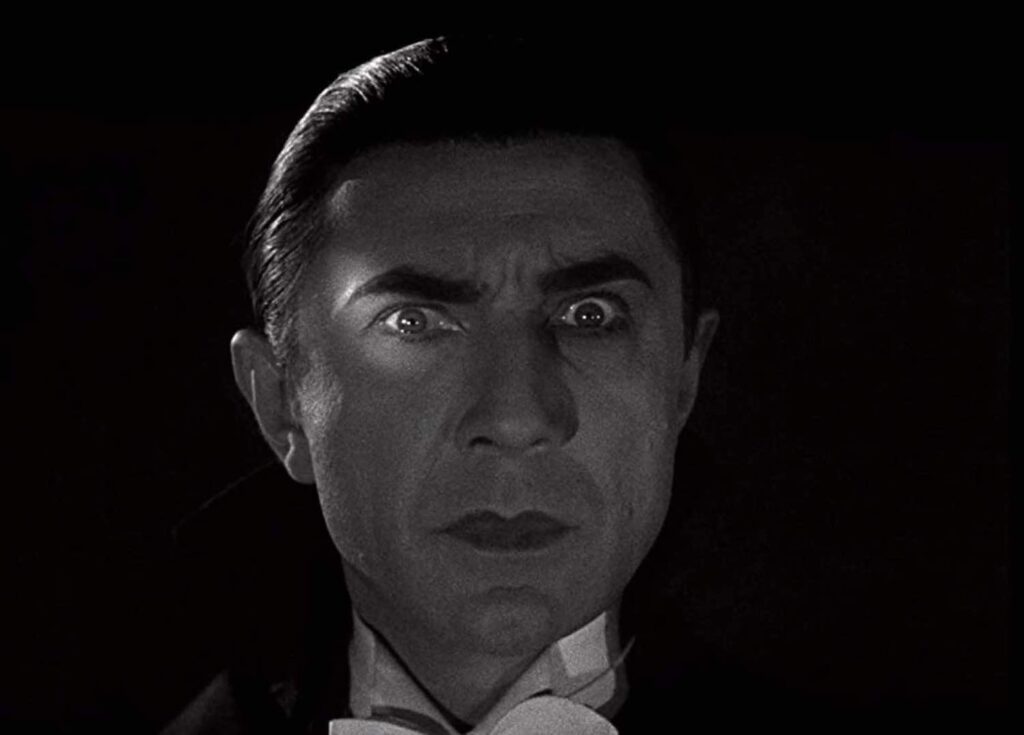
But that inability to keep people interested is a major issue, as well. I was distinctly bored about 2/3 of the way through the film and was restraining myself from checking the phone to see how much longer this might take. Part of the problem for me is certainly that I've seen this same story (and read the book) so many times I honestly can't count them. I know I've seen Murnau's version three times. I've seen Tod Browning and Bela Lugosi's version multiple times, as well. And then there's Coppola's and the Universal derivations of the Lugosi picture (often with Lugosi reprising the role) and on and on. I don't want to say that once you've seen one version, you've seen them all, but the novel has kind of been woven into the cultural fabric, such that seeing it reworked for the dozenth (and more) time isn't going to be mindblowing. With that in mind, it's fair to say that trying to do something slightly innovative with the story might not be a bad idea. But this was bog-standard vampire flick from the very outset, but made worse because it genuinely lacked any of the sense of style that the Prana film or any of the Universal films brought to the screen. There are no moments here that you would point at in the manner of Max Shreck's hand along the wall or Lugosi's penetrating stare and say that it's something that will become iconic or an instant identifier for this film. Instead, the identifier is going to be Lily-Rose Depp falling onto a bed again while we hear the orchestra telling us what's happening right in front of us. For the fifth time in the last ten minutes. So, I cannot recommend this one at all. Find the original streaming somewhere and play something like Danse Macabre in the background if you want an experience with some genuine atmosphere.

Wednesday, November 13, 2024

Where I can't feel anything for a bunch of emotionless people


Last night was another of those moments when I'm beginning to feel firmly detached from modern cinema and especially modern cinema criticism because I can't for the life of me understand what was so compelling about the film we saw that would have critics raving about it, not least because it won the Palm d'Or at Cannes. That film is Anora. It's another Sean Baker production and I agreed to see it for precisely that reason. It's described as a "romantic comedy", which is normally something that I would avoid like it was on fire because most of them are awful. But Baker has a lot of credit in the bank with me because of two previous films: The Florida Project and Red Rocket. The former is a great example of the chasm in understanding between the privileged few and the underserved many in our nation. It's a story with pathos and one that most decent humans could feel sympathy for, in the same way that we watch Willem Dafoe make his own life more difficult in the name of making his tenants' a tiny bit easier. The latter is one of the best things we've ever seen at the Michigan/State theaters. It's a fantastic example of overweening ambition and the obvious impending failure that it leads to (reach exceeds thy grasp or thy Johnson, as the case may be.) Both of those films are replete with examples of genuinely human characters and their genuinely human circumstances and reactions to same. As many have said about Shakespeare: characters will drive your stories and make them last. Both of those stories have that. Anora... does not.


We're presented with a situation that is a young woman's (Mikey Madison) fairly successful stripping/escort career, since she lives in a comfortable home with her sister in Brighton Beach and works at what is implied as an upscale club, probably somewhere in the Lower East Side. She meets an incredibly wealthy young Russian ne'er-do-well (Mark Eydelshteyn) whom she entrances and then convinces to pay her a substantial fee to hang out with him as his "girlfriend" for a week. So far, everything is paved with gold here. But then his family finds out and their servants here in the States come to disrupt this Shangri-La, which is where our story veers from Pretty Woman to Uncut Gems. Anyone who remembers my review of the latter film will recall that I found it to be both tedious and obnoxious, which is a morbidly impressive combination. So our story of the stripper whose life is already pretty cozy and only gets better throughout the first act is suddenly turned into a 25-minute-long home invasion scene where everyone is screaming at each other and, just like with Uncut Gems, is basically being a collection of obnoxious New Yorkers failing to communicate. Just as with that film, I have no concept of how this can be entertaining to anyone. What's worse is that none of the characters involved are even remotely interesting. They're not human. They're ciphers. Pretty Woman is usually discarded as fluff because it is, failing to even approach the reality of working women in LA. Same thing here. What would make me feel sympathy for Ani's situation or person when we don't see her even stepping up from the level of hiding the rent in the toilet tank before dating the millionaire? The worst crisis she encounters before the family servants come barging in is being woken up early by her sister. It never feels like she's latching on to that one thing she's been waiting for and is then traumatized by having it swept away from her. Instead, we've basically watched her just take advantage of the situation (as most would do) and not be too troubled by any of it.


In truth, the only genuinely interesting character in the whole film is Igor (Yura Borisov), one of those thugs who breaks in to disrupt her moment with the wayward Russian heir. What makes him interesting is that we simply watch his face for the entire invasion scene, largely agog at what's happening around him and clearly not quite understanding why he's there in the first place. I really enjoyed Borisov in Compartment No. 6 and was happy to see him again, being just as effective in this role as he was as Lyokha on the train. As the one person not being bombastic but merely trying to survive the ride, he struck me as the one person reacting like most people would in that situation. In other words, as I will say again and again in all of my criticism, he was human. And acting human while everyone else was chewing scenery. He maintains that humanity even as things take a sharp turn into sentimentality in act 3. This would be the point where said sentiment is supposed to engender sympathy from the average American moviegoer. But Baker's films have never been about that, so I don't suspect that that was his intention. But the problem is that, even if it was, none of these characters, including Ani, had done anything throughout this story to generate that sympathy. Everything kind of slid off of her and so she kind of slid off of us, pants on or not. By the end of the film, we still don't really know who she is other than perhaps a vague sensation that she's been brazening her way through most of her life and this was the one time she couldn't call the shots? If that's all you have in terms of character development, then we are a long way from earlier examples of Baker's work.

And, yet, critics are raving about it (97% on RT; the Palm d'Or(!)) and all I can ask is: What am I missing? I look at this film and think of my usual later-Ridley Scott criticism: It's more spectacle than story. I mean, was the Cannes crowd just thrilled that the American submission wasn't another damn Marvel movie?

Wednesday, October 9, 2024

Failure of vision


Francis Ford Coppola is a director of note mainly for the time period when he was part of the insurgent "New Hollywood" in the 70s, who were a collection of filmmakers that were lauded for breaking the studio system, such that the directors of films finally had more authority than the studio did. The studios just looked at the books and what might sell, while said directors had vision that audiences responded to. In Coppola's case, that means films like the Godfather trilogy, Apocalypse Now, and The Conversation. But he's also cited for one of the films that ended said era in One from the Heart, which led to a decade of him producing "commercial" (i.e. studio approved) films to pay back the debt he owed from that colossal failure (critically panned and earning ~$600k against a $26m budget.) Nothing he's done since the 1970s has been the type of success that you'd expect from someone who directed and co-wrote what many people regard as the greatest film ever made (The Godfather; for the record, I am not one of those people) and, in fact, he hadn't done anything for 13 years prior to the release of Megalopolis, which he wrote, directed, and produced. And when I say "produced", I mean "footed the bill for", since he'd been carrying this idea around for 40 years and could convince no one to fund it until he sold some of his businesses in order to do so, which should tell you quite a bit about why it couldn't have been done before now. That "why" is because it's a total travesty of a production and easily the worst thing I've seen since Power of the Dog.


Now, a note on that latter film. At the very least, it had a discernible plot. It wasn't a good story, but you could follow along (for two... and... a... half... hours... at... this... pace...) and at least get some great performances out of the people that were helping to tell that story. Megalopolis has none of this except the horrible pacing. The plot is supposedly based on the Catilinarian conspiracy from 1st century BC Rome. In point of fact, it has absolutely nothing to do with it. The conspiracy was about a demagogue, Lucius Sergius Catilina, who lost the election for consul and tried to instigate a populist insurrection to overthrow the then-current consuls, one of whom was Marcus Tullius Cicero. Sounds like modern times, right? We're dealing with that right now with the walking creamsicle and his collection of MAGAts. Except this film doesn't present that scenario in any way. Adam Driver, playing Cesar Catilina (Coppola was convinced to rename the character "Cesar" so that people would, y'know, get that it was a film about ancient Rome) isn't a political outsider. He's not leading a revolt. He's a visionary inventor who's created something called "megalon" which is supposedly the pathway to economic stability and prosperity for the downtrodden. Is this like the real Catilina promising to wipe out debt (albeit not just for the poor, but also the very wealthy) like the current orange idiot's obsession with tariffs? If this is the political warning that Coppola was trying to convey, then why is Cesar Catilina the hero of the film? Is it because Coppola is following the widely discarded idea that Cicero, in writing about the events, not only embellished but outright lied about what took place and that's why Lucius Catilina has gone down through history as a villain and general threat to democracy? I mean, OK, but then why do many of the opponents of Cesar Catilina, like Mayor Franklin Cicero (Giancarlo Esposito), end up endorsing the hero who has apparently saved society as we know it?


It's that kind of discordancy that is emblematic of the entire production. Apparently, Coppola would spend hours locked in his trailer, only to emerge with new scenes that had nothing to do with either the script or the day's shooting schedule, leaving everyone else to catch up to his "vision." The entire film is like that. We veer from parties that seem to be emblematic of societal decay but also seem to be made up of all of the characters shown as heroes at the end to scenes of Catilina hard at work on the MacGuffin (Meg-uffin?) that he has supposedly already invented to Wow Platinum (Aubrey Plaza) scheming about how having the world at her feet isn't good enough if she can't also have the one man who wants to do nothing but reject and also remake that world. What makes this even worse is the dialogue, which could have been plucked from the nearest 8th grader's first attempt at a novel. There's not a single line of dialogue in the film that I can recall, having seen it just last night, except the scene where Driver recites Hamlet's entire nunnery scene speech ("To be or not to be...") and the sequence where Julia Cicero (Nathalie Emmanuel) regurgitates bits of Marcus Aurelius in rapid succession. In other words, the only memorable dialogue in the entire 2.5 hour film is that written by other writers. The rest of it is boilerplate exposition and exclamation that you'd think would be used in a basic theater class as an exercise. The story from the set was that Coppola asked Driver to do the nunnery speech as a warm-up exercise and then left it in the film because it fit with... what? I have no idea.


Meanwhile, the central element of the plot- the megalon -is, as noted, a MacGuffin. It doesn't really do anything. It's just there for the rest of the non-story to revolve around. It finally makes a concerted appearance in the last 10 minutes, doing what it's claimed to be invented for (reshaping the way people live), but is mostly just visual effects that don't actually impact the story. At one point, Catilina is injured and megalon is used to seemingly save his life, but the miracle substance doesn't affect his body, his character arc, his attitude, or even his appearance in any way. It's just perfect plastic surgery and that major event in the story dissipates like everything else. That includes most of the performances. With a cast like this, you'd expect that you're going to get something interesting, at least. But with the parts they were given (or woefully miscast with; can you imagine Gustavo Freng as a confused buffoon? Because that's what Esposito is in this film.) or the lack thereof, it's not really a surprise that none of them were able to generate much. Dustin Hoffman is in this film for about 5 minutes of screen time and three lines. Like the megalon, he doesn't actually do anything except show up on the cast list, which may be the whole reason he was included, but even if his part were larger, I'm not sure what he could have done with it. Jon Voigt had a significantly greater part and still spent most of his time just being there while other people shouted monosyllabic platitudes around him. It takes real effort to make actors this good look this bad and that's even when they're doing something mildly interesting, like Shia LaBeouf as Claudio Pulcher going down on Platinum while she insists he call her "Auntie Wow." It has nothing to do with the plot and is completely incongruous with the scenes that came just before it, so it fits the definition of titillation perfectly, but at least someone was doing something.


I've really never seen anything like it and really don't care to ever again. I frequently suggest whether films are worth the time and effort of seeing them in this space and this is one in which I don't think I can mention a single, redeeming feature, unlike many others that I've not cared for. I sincerely wish I had the 2.5 hours of my life back. It's possible to see a film just so you can see something that was so bad, it's "good." But if you're going to do that, at least see something short, like The Room. This film is quite simply a mega waste of time (and money. Yours and Coppola's.)

Tuesday, October 1, 2024

When the most innovative thing about your story is the title


So, I'm the story guy. Any of you that have read this blog more than once knows this. If I'm going to enjoy anything on any screen, it's going to have to have at least a semblance of a decent story. That is, in the end, the purpose of most creative works, be they words, pictures, or moving pictures. The old "... worth a thousand words" is a cliché for a reason. Even more importantly, if you're going to present a creative work that's just the latest in a long, long, long train of similar works because the genre has some inherent appeal to modern culture, then you really have to try just a bit more to make your efforts worthwhile. Sadly, My Old Ass does not do this. It's presented as a "coming of age" story with the twist being that the person helping guide Elliott (Maisy Stella, in her well done film debut) through that transition is the older version of herself, complete with knowledge of how their conjoined life will proceed which, of course, can't be told to the younger version, who's too insouciant to care early on in the film, anyway.


The main problem with the story presented in this film is that it lacks pathos. Nothing in it makes you think that it resembles the real life of teenagers around the world in any way, shape, or form. There is no tragedy. There is no concern. There's not even a bit of frustration outside of constructed elements that only vaguely resemble the disenchantment that most teenagers have with family life. The reason for this lack of real emotion is that none of the characters in this film are real people. They're all perfect representations of people, but they lack any hint of the trouble or problems or fears or consternation that all real humans actually have. This is a Hallmark card come to life. One brother is an expert golfer who's going to take over the family cranberry farm, not because he has to in order to save it or because his parents have demanded that he do so, but because he wants to be a farmer in 2024. The other brother is a blissful pre-teen whose only identifying trait is a serious attachment to Saoirse Ronan. Elliott makes noises about being annoyed by both of them as most teenaged girls would be with their younger brothers, but neither of them displays any behavior whatsoever that would be annoying to her. They're cardboard cutouts. Perhaps as a perfect example of how detached this script is from reality, despite this being an American film, all of the characters in it are non-threatening Canadians, since presumably no one could have this artificial an existence in Trumplandia.


Elliott is no different. Not only is she about to depart the rural enclave which is a beautiful lake house and her parents' cranberry farm for life at the University of Toronto with no baggage whatsoever, but she also has equally perfect and contented friends, the girlfriend she's always wanted, and has nothing to do but drive her boat around the picturesque lake out back. Sex with said girlfriend is stated to be fantastic and, of course, since we somehow can't see an actual coming-of-age sequence, Elliott is already eighteen when the film opens, so she's even a legal adult when it comes to sex, just in case some parts of the American audience would have conniptions about the fact that teenagers might have sex with each other. (They do. All the time.) There's absolutely nothing that would drive this film toward telling any kind of story because there's really no story to tell. There is no conflict. There is no change. There's no pathos that is a regular feature of most kids climbing through their teenage years. A perfect contrast is one of the classics of the genre, Stand By Me. In that film, Gordie's parents ignore him in favor of his deceased brother; Chris' older brother is a thug and he's regarded as one by association; Teddy's father is abusive and he bears the emotional trauma of that; and Vern is an outsider to this group of outsiders, seemingly loved and appreciated by no one, but pitied instead (Pathos!) They go through an adventure that shows them confronting these realistic problems and coming out the end of it in a more positive, reflective place. There's a story there that conveys that. My Old Ass, OTOH, shows you a complete fantasy that has to deliver the "wisdom" inherent to coming-of-age films with a boilerplate recital by Elliott telling us all to be brave enough to actually live life, rather than try to avoid its pitfalls. If there were any actual pitfalls in this film, that message might not have sounded so utterly hollow.


As we coasted along through this like Elliott in her boat, the word that kept coming to me as the best descriptor of this film is "cute." If that's all you want your film to be, OK. It rings more of a music video director (and, uh, writer) but I'm probably aiming a lot higher than most audiences, too. The other encapsulation that came to mind is that My Old Ass is the cinematic equivalent of one of those "Live, Love, Laugh" pictures that show up in people's bathrooms. I'd be a lot more interested in "Live, Sob, Glare Accusingly at Husband Over Breakfast" because at least there'd be something that comprised an actual story there and which might resemble life as all of us real humans know it, rather than in that mystical land of Perfectly No Problem Canadia. Am I being too cynical about this? Maybe. But mostly I'm just reacting to the fact that, once again, I sat in a theater for 90 minutes and no one told me a story that was worth seeing. I mean, sure, if all you want is a feel-good "story", fine. But that's why we have Hallmark cards, most of which don't take an hour-and-a-half to read before you find out they weren't worth it.

Monday, November 6, 2023

Focusing on the pedestal


We saw Killers of the Flower Moon almost a week ago and it's taken me this long to get around to writing something about it because, in the end, it was all very mechanical and technical writing is not really my strong suit. That's a forward statement that would prepare most readers with the idea that I didn't like the film. That's actually not entirely the case. I like most Martin Scorsese films to one degree or another. But the problem I've had with his output for the latter half of his career (basically anything post-Goodfellas) is that he's taking the "favored actor" concept to the nth degree. Instead of telling a story, he's just signing the actors that he likes working with and building a production around them which is mostly just an opportunity for them to show off. So, yeah, I have a bit of a critique in mind.


Now, there's nothing wrong with actors "showing off." That's kinda what acting is in the first place. Sometimes, it can even be a great thing. Gangs of New York was completely carried by Daniel Day-Lewis' performance as Bill the Butcher. Indeed, the entire story is centered on him and his experience, despite Leonardo DiCaprio's presence as the nominal lead. It's a fun time watching DDL do his thing for two hours because, as with many of his roles, he's magnetic every time the camera is on him. But it only took one viewing to recognize that the film was basically all about his performance. The story is weak. There is precisely zero character development, as everyone knows what Amsterdam's motivations are from the outset and they don't change and neither does anyone else. It's just a showcase to demonstrate what a great actor Day-Lewis is. And that's fine. Some films are like that. It's what's normally referred to as a "vehicle" for whomever the star is. But even most vehicles have a story that goes somewhere at least mildly interesting and too many Scorsese movies in the latter half of his career really don't. Killers is no exception.


The basis of the story is excellent. It's about the discovery of oil on Osage land in Oklahoma in the early part of the 20th century and how the tribe became the richest people per capita in the world. It's also about how White people then moved in and scammed, stole, and literally murdered many Osage for their land rights and that money flowing from it. This is, as all of you know, something of a repetitive theme when it comes to US interaction with the native tribes of this continent. In this case, it was simply among the most blatant. That sounds like a situation that not only is unfamiliar to many, which can often lead to a good story full of tension, but is also loaded with potential for personal drama, as well. And the film has both of those elements to varying degrees... except that it begins with a documentary approach that essentially wholly describes the circumstances that precede and extend through the entire film. It basically gives the audience all of the dramatic cues before we even reach a moment where said cues would've provided that tension. It's as if Scorsese decided that he didn't want to be questioned as to the idea of scoring cheap emotional points, so he told us all of the bad things that would be happening, rather than letting us discover them through the story. This extends to most of the action in the film, where we see all of the crimes happening in plain sight; most notably those committed by DiCaprio, as the male lead, Ernest Burkhart. There are no faces hidden in shadow or behind masks (for very long) that would create any kind of dramatic effect later in the story where we discover the dastardly Burkhart being involved in these activities against his wife's people and, of course, his wife. We're just shown in documentary fashion everything that's happening.


Now, there's nothing wrong with this if we were watching an actual documentary. Likewise, it might be a little more tolerable if we were watching a more typical 90- to 120-minute film. It would still be disappointing, but wouldn't have brought me to the point where I was questioning what the point of the entire last third of the film was. But it's because that last third of the film is DiCaprio's opportunity to step on the pedestal that Scorsese has given him and emote to his heart's content. Part of the problem may be that, if we're going to see a star vehicle, we generally want that character to be entertaining. That's why it's a vehicle, because you want to see this person, whether it be the actor or the character, if not both, on the screen. But Burkhart is an emotionally-stunted and largely unintelligent person. And, yet, the last hour of the three-and-a-half hours that make up this "epic" is mostly just DiCaprio reenacting everything that we'd already seen for the first two-and-a-half hours. The entire courtroom and jail sequences are him simply admitting to and retelling the events of everything we'd already seen happen. It's like we were given access to the rehearsal and immediately after were shuffled into a room to watch a script reading. We're getting the same information, none of which is new or surprising or particularly compelling. Instead, it's just an opportunity for DiCaprio to demonstrate his evident talent (something we're also already aware of; The Revenant is one of my favorite American films of recent years.) That's not unentertaining, to a point. Watching Burkhart struggle to admit his guilt with his wife (Lily Gladstone), Molly's, eyes boring into him is a fine piece of acting on both their parts. But it also just retells the story that we'd already had explained to us even before we saw it the first time.


If we were going to be shown an acting tour de force in lieu of an actual story, I'd probably have been more entertained by seeing one from Gladstone, who was delightful as the smartest person in the room from the moment she first appears. And she does get plenty of screen time, but simply not as much as old Scorsese favorites DiCaprio and Robert De Niro, who these days doesn't often play a character so much as he plays Robert De Niro playing a character. And, of course, there's any number of cameos of big names from John Lithgow to Jesse Plemons to a scenery-chewing Brendan Fraser to Jason Isbell, a country music star whom I follow on Twitter who's highly entertaining as he interacts with people who probably think the White folks in this film are either Heroes of Progress or being persecuted by the mythical CRT zealots. Those people probably didn't want to see this, anyway, because it's presenting a story that might force them to question their star-spangled (White stars, mind you) version of American history. It's a story that needed to be told because, again, most are probably completely oblivious to it. It's an interesting story, even if macabre. But it's presented here as an excuse to showcase DiCaprio, which isn't at all what this story should have been about. Indeed, the fact that all of the Osage roles other than Molly are often stereotypical stand-ins makes one wonder if it was written from the ground-up as a star vehicle, rather than just adapted to one when it came into Scorsese's field of vision. But apparently he rewrote it to insure that it wasn't just a White Man's Burden thing. I'm, uh, not sure that worked the way he wanted it to.


Scorsese isn't a bad director any more than DiCaprio is a bad actor. But you look at the first half of the former's oeuvre and you see things like Mean Streets, Taxi Driver, Raging Bull, After Hours, and the aforementioned Goodfellas. Then you look at the latter half and you see things like Casino, Gangs, The Departed, The Wolf of Wall Street, and The Irishman. There are high points to all of them. They're not bad films. But they're also not great films because they don't try to tell a story. They're mostly just settings for his favorite actors to do their thing and all of which you either know of because you watch the news (Wolf), have seen many times before especially from Scorsese (Casino), or get explained to you before the drama even begins (The Irishman which, honestly, is probably the exception to this group, in that it's really not a good film, overall.) I didn't actively dislike Killers. I think it's worth seeing if you don't know anything about the story of the Osage. Do I think it's worth sitting in a theater for three-and-a-half hours to watch the same events be relayed to you twice? No. No, I do not. Watch it via Amazon over a couple evenings or something like that and do it mostly for Gladstone's performance. But if you were expecting to see another Scorsese classic on the order of Goodfellas, I'm afraid you're not going to be able to see past the pedestal.

Tuesday, October 3, 2023

Trying too hard to be something different


It's been a few weeks. There hasn't been much playing at the Michigan Theater that's been particularly interesting, so we've mostly just been watching TV on Tuesdays. But there hasn't really been much of that that's particularly compelling, either. We've had the misfortune to see a film that we were hemming and hawing about seeing at the Michigan and also another Apple+ TV series that is ending up like all of the rest of them, other than Severance.

The film was Bottoms; another Emma Seligman feature that is the follow-up to her fairly-entertaining Shiva Baby, which we did see and did enjoy, but wasn't compelling enough for me to sit down and type out a couple thousand words about. It was originally a short film and then was popular enough to become a long film and didn't really benefit from the necessary padding of the script. Meanwhile, Bottoms, which stars and was co-written by Rachel Sennott (also the lead in Shiva Baby) is one part bog-standard teen sex comedy and one part parody of same. The characters are all hyper-realized stereotypes of those idiots you detested in high school, except for the main group, which is the poor nerds that somehow end up with all of the girls. At any moment, I was waiting to hear Robert Carradine's bellowing laugh erupt from one of the women that mostly occupied our time. But the problem, of course, was just that: We've seen all of this before. Many times. None of it is new. None of it is original. None of it is really that funny. The only difference here is that both leads (the other being Ayo Edebiri, best known as Sydney from the spectacular The Bear) are gay. That's a nice acknowledgement of modern viewpoints and the identities that many people had even back when you and I were in high school, but it doesn't make the tired plot or screenplay any better. It just makes it an even more obvious retread with some modern window dressing to try to sell it to new audiences (much like Bros.)


Seriously, the summary offered by Rotten Tomatoes (where the film has a 93% approval rating...) is "Propulsive and over-the-top, Bottoms is an instant high school comedy classic that feels both current and nostalgic." I can assure you that there's nothing inherently "propulsive" (whatever that actually means) about it, especially when it comes to the leaden predictable plot. That, of course, is probably what makes people feel "nostalgic" about seeing the same thing they've seen since the 1980s introduced us to Porky's. I'm sorry to say that nostalgia was not the overarching feeling I was getting. It was more like boredom. And, of course, the "current" part was, again, likely down to the fact that many reviewers seem smitten with the idea of gay people being something original in storytelling when they should just be regular people in a decent story, if one were being told. If they wanted to make a film about being LGBTQ+ in high school, then they could have written a script that fully engaged that topic, rather than simply using it as a note of "modern" difference from the almost 40-year-old Revenge of the Nerds. There really was nothing that made this film stand out- script, direction, performances -from any of the dozens of lookalikes over those past four decades, which is really disappointing after the solid films that we've seen both Sennott and Edebiri (Shiva Baby, Theater Camp(!)) in this past summer. And, yes, I should get around to writing something about The Bear.


Until then, I'll have to content myself (and you) with writing about Apple+'s attempt to be different in a similar failing fashion to Bottoms. As noted, other than Severance, the offerings on Apple+ have been pretty subpar for any number of reasons. The problem with our latest attempt to find something interesting, Invasion, is also one of trying too hard to stand out from the crowd and missing the target in the process. Just from the title, you're automatically aware that the series is about an attempt by little green men to conquer/eradicate/make aggressive contact with/something-as-long-as-it's-violent our little green world. Again, this is a plot that goes back to H.G. Wells at the end of the 19th century (War of the Worlds is 125 years old this year, in fact.) However, in this case, rather than show the snake-necked saucers of the Martians laying waste to the countryside, through the three episodes we've watched, we've seen the presumed aliens once, for about 15 seconds. In their place, we've gotten four stories about emotional and personal loss that just happened to occur during this supposed crisis.


We have the estranged former doctor who gave up her career to be the perfect housewife; the career soldier wrestling with the effects of distance from his own marriage; the fragile schoolboy dealing with bullies and absent parents; and the brilliant engineer who is enduring her first long separation from the love of her life, driven by their mutual careers. Again, all of these are themes of emotional and personal loss and all of which are completely ancillary to the ostensibly overarching theme of an alien invasion. Any of them could have happened in the midst of any other kind of disaster (pandemic, terrorist attack, worldwide forest fire) and any of them could simply have been happening on their own, no crisis required, such that the focus of the show called "Invasion" isn't any SF element at all, but simply the angst of these people going through their personal problems. But all that does is make a footnote of what is supposedly the central thrust of your story. Said invasion is a background element, at best. I think the idea was that they'd tell the story of a "war of the worlds" at the ground level, by showing what happens to these normal people facing normal problems who are suddenly thrust into extraordinary circumstances, akin to the classic Alien. But all they've done is provide a veneer of SF to a pretty standard melodrama; to the point where you wonder why it's considered speculative fiction at all.


Now, I was just complaining about seeing the same, old thing and, certainly, we've seen a few hundred alien invasion-type films and TV series that put our (human) heroes in trying times over the years, from ongoing wars like Battlestar Galactica to plain, old Earth-gets-firebombed stuff like The Tomorrow War. None of that is particularly exciting or original anymore. But none of them try to pretend they're something they're not in the hopes of approaching it from a nominally original angle, either. All of the stories and characters (and performances) in this show are interesting enough. It's not been boring. But it could have just been titled "Four Stories of Loss" with any of the premises mentioned above (jokes or not) and we would have had the same result. But we came into this with the idea that this is about an ALIEN INVASION and instead it's about a lot of longing (and appropriately plaintive looks) for when things can be "normal" again; presumably post-divorce, post-mourning, and post-getting back to primary school before someone kills you and takes the conch. Clearly, they've tried to slow play this as a different way of approaching the stereotypical assumption that many would make and that's all well and good. But it also sets up the viewer to be disappointed as we wade through the emotional debris and wonder what visitors from other worlds have to do with any of this or why they'd bother. We're probably not going to anymore, either.

Saturday, June 24, 2023

The limits of expectations


There hasn't been much traffic here lately. A combination of other activities (vacations, etc.) and a lack of compelling films at the Michigan/State Theaters has led to a similar void at this blog as currently occupies extratime.blog (which is a result of it being the off-season for Euro football.) But we have been watching new things. They've just been on the small screen. Back in the day of cable bundles, there were often complaints about how one might be paying insane fees for some channels simply to gain access to the smaller ones that you really wanted. This was frequently from people paying ESPN's fees as part of their cable bill when they weren't sports fans at all. Given the variety of my interests, I never had that issue, but still found myself bemoaning the fact that I had access to 300 channels and actually watched less than a tenth of those. The idea of splitting everything into distinct networks so that one could actually get what you were paying for was seen as the ideal transformation. Of course, now we have the (predictable) opposite problem, in that there's so much fragmentation among streaming networks and show producers that in order to see everything you'd like, you're paying basically the same amount you would have for that cable bundle, but in eight different directions, instead of just one. This was a long preamble to get around to the fact that we've engaged yet another streaming network, in the form of Apple TV+, because Tricia recently replaced her iPhone and was given three months' access to the network for free. Given that Apple is the home of such heralded shows as Ted Lasso, I was half-excited and half-cringing at the idea of paying for yet another streaming service, if we found that what was on offer was actually worthwhile. The results have been... mixed, to be diplomatic about it, so there may be no need to be concerned about another bill when our free time runs out. But let's start at the top.


Ted Lasso. This was the show that put Apple TV on the map, coming as it did during the dark days of the initial COVID lockdown in 2020 and giving people at least one ray of severe positivity in their lives. That circumstance of timing is what I would suspect is one of the main drivers of its popularity. At that time when people were actively concerned about leaving their homes or associating with their friends and relatives, it must have been awfully reassuring having Jason Sudeikis on the screen on a regular basis to remind you that there was still some sunshine in the world. And that's all well and good, except that it doesn't really replace the rather average quality of both plot and writing. The basis of the show- that the vengeful new owner of Premier League club, AFC Richmond, somehow hires a Div. II American football coach to be the club's manager in the hopes of driving it into the ground (or at least to relegation) -is essentially the plot of Major League (and, indirectly, Slapshot) so we're not really seeing anything new here. This involves completely ignoring the ridiculous media firestorm and likely outright revolt by the club's members and supporters that would accompany any such move, to say nothing of inquiries by the PL wondering why one of their clubs is seemingly sabotaging its own- and, thus, the league's -product. But let's put all that real world stuff aside, accept our absurd premise, and get down to the meat of what the show is. Or, more accurately, isn't.


The main problem I had with Ted Lasso is that it wasn't funny. It's not that it wasn't cerebrally funny or didn't really appeal to my often obscure sense of humor. Those are both difficult paths to walk and I've watched (and laughed at) more than one show that didn't really hit the nail on the head in the same way that, say, Rick and Morty does. But this show wasn't funny at all. It was really just pedestrian. Characters did obvious things with motivations planted in front of them to do so. The joke was already right there before the dialogue came from their mouths, making it akin to already having heard all the jokes even before we watched the show. Certainly, I'm probably very far from the target audience, having watched English football for 45 years and having fully acquainted myself with the George Bernard Shawisms ("Two people separated by a common language.") of the dialectical differences between the States and the mother country. It's not particularly interesting (or funny) to me to see people wondering about calling cleats "boots" and comparing them to the trunk of a car. Indeed, the only time I laughed out loud during the entire first season was when the staff were talking about other managers getting in touch in the face of Ted's obvious failures and started listing names of those who'd contacted the club: "Tony Pulis, Alan Curbishley; Harry Redknapp has called three times." Now, if you know anything about English football over the last decade-and-a-half, that line is hilarious. But it was also utterly lost on probably 99% (at least) of the American audience who were otherwise apparently intended to be amused by the "aw shucks!" approach of Sudeikis and Co.


And, of course, a lot of people were amused. That's fine. There's nothing wrong with that. (see above about "obscure sense of humor.") But I'm always far more interested in shows or movies that are going to make me think. I received much advice about "turning my brain off" and just being entertained by what Ted and others were doing and that's never, ever going to happen. If I'm going to spend an hour watching something, I want to get something out of it other than just having spent an hour not having to think. There has to be a story that interests me. Or at least a character that's compelling. Or even a couple lines that I'd find interesting enough to repeat or remember or even try to swipe for something I'm working on. Ted Lasso had none of that. The characters were all very obvious and mostly quite simple. The story is, as noted, reprocessed from previous efforts and/or so unrealistic as to make me think that the writers didn't even bother to research their setting. And the dialogue is simply routine. There's nothing there that's memorable outside of a an offhand joke that an extreme minority of viewers would appreciate. My reaction to the show has drawn all kinds of negative reactions from my friends; ranging from disbelief to disdain that I wasn't able to appreciate something that was universally-praised. This is not a new phenomenon (see: Titanic among many, many others.) So, yeah, it could be "just me", but it was also a really poor start for Apple TV if I tuned into their hallmark (ahem) property and came away completely detached. We watched the first season and I have no interest in pursuing it any further.


Foundation. So then we moved on to something that is actually rooted in the familiar (e.g. not an obvious outsider's take on something like English football.), in that I've read all of the novels by Isaac Asimov upon which the show is based. The problem that has followed the books around for decades in terms of trying to adapt them to other media is that they're far more Glengarry Glen Ross than Star Wars. In other words, Asimov's work was often about two people in a room holding a conversation on high-end topics (cultural, political, scientific), instead of going through events or initiating actions that tell a story about how the galactic empire is dying. There's a lot more talkin' than there is actin' and that's occasionally a difficult problem when trying to adapt said prose to a visual medium. It's not insurmountable. As GGR displays, it's quite possible to tell a great story about people talking about doing stuff, rather than actually showing them doing it. It's just a different approach and Asimov's books are cornerstones of modern science fiction for taking that approach and showing just how cerebral that kind of storytelling can be; even when not considered "hard" science fiction (e.g. sticking to the actual physical constraints of the universe and embedding those principles in the storytelling approach.) But the problem is that Asimov's rather distant relationship with most of his characters burdens the story with the problems that everyone predicted (Psychohistory!) over the many, many years of thinking about how to adapt the Foundation series to film or TV.


The first problem is that the story is huge. This is a tale that is almost required to take place over decades and centuries in order to come to its conclusion. So, unless you're willing to markedly deviate from Asimov's work and introduce things like suspended animation or time-shifting (not something I would advise unless you want to be accused of ripping off Star Trek's worst excesses), you're going to need to do one of two things: 1. Simply carry forward with multiple actors filling the roles of the books, such that few characters are seen for longer than a couple episodes, giving the audience no chance to develop familiarity and, thus, relate to them. 2. Tell your story in a non-linear fashion so that multiple, concurrent storylines are running simultaneously in "show time", even if they're at different stages in story time. They chose #2, which is clearly the wiser choice if you expect to get renewed for multiple seasons. Now, don't get me wrong. I love non-linear storytelling. Among many standout elements to Pulp Fiction, one of its strongest is that non-linear approach that sets up the story to work and then later blend together in ways that simply going from point A to point B would not have allowed. But that approach works well in a film because you're telling your whole story in two hours. I've found it to be less viable in TV series because, unless you're binge-watching the whole thing, it's quite easy for the average audience member to lose track of- and, thus, lose interest in -what's happening when you're shifting between characters, their children, and their grandchildren, all ostensibly pursuing the same goal. Having to do so much setup of those characters, their surroundings, and their motivations only adds to that potential confusion. In watching the show, I'm OK with it because I read the books and I know what's going on. I know that Tricia tuned out almost instantly, not only because of its slow pace but also because, unless she was riveted to the screen, she probably lost track of what was happening pretty quickly.


Visually, it is impressive, which is what you'd hope for given the massive scope of the story and the modern techniques we have for conveying that majesty. I've only watched the first four episodes and I've been able to appreciate what they're trying to do here. Of course, they also never fully escaped the problem that has dogged attempts at the "unfilmable" series in the past in that, in many ways, it is kinda unfilmable and they've had to make alterations to the story already that many purists would reject and which deviate not only from the narrative but from Asimov's thematic intent. The Star Bridge and its destruction? Doesn't even exist in the books. The cloned emperors? Nope. Both of those are seemingly attempts to add compelling narratives to the story (unrest in the galaxy leading to the dissolution of the empire; said unrest perhaps arising from the "same" man/men being in power for so long, but also struggling with their own preprogrammed roles) but neither are present in Asimov's work because the story he was trying to tell was about the loss of knowledge from one generation to the next and Harry Seldon's attempt to forestall that. Having a ruler who is cyclically cloned from his predecessors and is, thus, infused with their knowledge and history from birth is directly contradicting Asimov's entire premise. It's seemingly become a story of rejecting history, rather than forgetting it. The former is a great premise, too (witness Ron DeSantis' fervent attempts to almost literally whitewash history and education in the state of Florida), but it's not the story Asimov was trying to tell. But in doing so, they again haven't escaped the essential problem, but have instead simply presented another version of a slow, difficult story in a visual medium. Will it be worth it? I don't know. Like I said, I've watched four. I'm not fervently compelled to go back to it and Tricia has no interest whatsoever.


Severance. In a final attempt to see if Apple TV was going to work for us, I picked up a suggestion that came from friends on ThereWillBe.Games in the form of a dystopian version of Office Space. Now, anyone who knows me will know that I am all over dystopian and/or post-apocalyptic stories and will almost always stop to watch anything that carries one or both of those labels. I created an entire comic universe called "Dystopia" and wrote hundreds of pages of script about it so, yeah, I'm onboard for most of that stuff. Having watched the first three episodes in our first evening of trying it out, it's quite possible that the third attempt is, indeed, the charm. Tricia sat up and took notice in the first couple minutes it was on and we've both stayed fully involved in all three episodes. These are fully-formed characters, with human idiosyncrasies that they struggle with, and a premise that, while still firmly in the SF/Twilight Zone realm, isn't that far removed from the present day (in true, Twilight Zone fashion; RIP the genius that was Rod Serling.) Unlike Ted Lasso, I was instantly interested and familiar with what they were presenting. The production design (the austere, brightly-lit, maze-like corridors of the workplace; the dark and shadowy or bleak and gray depiction of home life) is excellent and the themes (the cult-like devotion to the founding CEO (at least mildly ironical in its presence on Apple TV...), the attempted division between work and home life but not for the benefit of the employees) resonate with what our world is like right now. On top of all that, the cast has multiple highlights in the form of Patricia Arquette, Christopher Walken, and John Turturro.


But the best work so far has been done by, appropriately, the lead, Adam Scott, as Mark S. He's the first "severed" person we meet and it's clear that he's struggling with many other issues above and beyond that from the moment we first see him, crying in his car outside Lumon Industries. His reason for being severed is a perfectly understandable one, if extreme and tragic (People are often like that.) And he provides both a perfect example of what Lumon expects their employees to be (chipper and constantly motivated and positive at the office), as well as what an actual emotional human can often endure outside (devastated by his wife's loss and his largely friendless existence.) Indeed, he's almost the case study for why Lumon would want to do this from a work-efficiency (and emotionally void) perspective, in that he's the model employee at work because the severing prevents him from bringing personal problems into the office. (Hearken back here to Gil's (Steve Martin) argument with his boss in Parenthood; the latter of whom chides Gil for constantly complaining about problems with his kids while his competitor for a partnership is always on the go ("I'm not even sure if he has kids!")) But Scott isn't alone here, as Jen Tullock does great work as his concerned sister, Devon, who nevertheless doesn't want to interfere in either Mark's grieving for his wife or his decisions as to how to handle it. Likewise, Tramell Tillman is excellent as the supervisor, Seth Milchick, who exudes an aura of chipperness and menace at all times; often simultaneously.


This is the one show among the three that instantly had me thinking: "Oh, yeah. I want to see more of this." That came from not only being interested in a story about actual, fully-formed humans, but also being interested in how those humans deal with a story that respects the viewer. This isn't simplistic like Ted Lasso or overly-burdened like Foundation. It is possible that, like many of these mystery premises, we could end up with an overly-elaborate justification for why all of this is happening (see: Lost, Battlestar Galactica, etc.) But it's also possible that we could end up with something more along the lines of True Detective, season 1, where the essential elements of the story aren't the genre itself (in this case, SF; in TD's case, crime), but the people involved in it. It's not like there haven't been a couple missteps. Britt Lower, as Helly R., provides a dynamic personality and a much more typical reaction to the circumstances of being essentially imprisoned on the "severed" level. But that immediately led me to question why she would have been accepted into the program in the first place. Considering the amount of psychological screening that takes place in major corporate hiring practices in the real world, it seems like something as drastic as the severing process and her reaction to it would have been flagged by Lumon long before Helly underwent the procedure. She's the one flame in the otherwise tepid existence, which is a great conflict element, but still seems quite out of place at the moment.

So, that's Apple TV. I'm still not certain that we'll hold onto it, since we have multiple other services to watch (and some that should probably be turned off by now), but Severance at least provides something of a compelling argument that was otherwise lacking to that point. We'll see how it develops.