Showing posts with label music. Show all posts

Tuesday, April 29, 2025

A stylish cloak on a standard frame


I generally like Ryan Coogler's films. I think he has a solid visual sense and good recognition of both the space and limits of the story that he's trying to tell. On those that he's been directly involved in (Fruitvale Station, Black Panther) and indirectly (Homeroom, Jesus and the Black Messiah), I think he's a key part of the process in getting stories told that often wouldn't be otherwise. Among those is his latest, Sinners. As with Fruitvale and Black Panther, he's both writer and director on this one and his sense of style is visible all over it. It's just that when we get to some of the plot details that I feel like he could've done even more to take it in his own direction and somehow play those last few notes. (Mild spoilers below.)


That latter phrase is based on the fact that the film is largely about music and its influence, not only in African-American culture, but world culture. It takes place in one of the most vibrant and deeply-felt areas of that musical culture: the Mississippi delta. That's where Coogler, regular leading man Michael B. Jordan, and regular accompanying composer, Ludwig Göransson, build story and music together so that one never becomes separate from the other. The film itself isn't a musical, per se, but has several musical numbers that tell large portions of the story by themselves. It's a stylistic approach that worked spectacularly, without forcing us to watch another version of West Side Story. The music wasn't just the vehicle for the story. It was the story. Central to that embodiment was Miles Caton, who played Sammie Moore, aspiring guitarist and the son of a preacher man. Caton was the very embodiment of Delta blues and his powerful voice and playing (ably assisted by one of my long-time favorites, Delroy Lindo, on piano and harp) drove the story forward even more than Jordan's excellent rendition of twin brothers, Smoke (Elijah) and Stack (Elias.) Everything presented there would've made for a great story even without the supernatural elements that accompanied it.


And it's there where the river kinda dried up. Due credit to Coogler for including the local Choctaw presence, who show up in pursuit of a bad element. Unfortunately, that bad element turns out to be a bog standard vampire. That English descriptive that I'm fond of is even more appropriate in this place, as the vampire, Remmick (Jack O'Connell) is appropriately European (Irish) in his desire to dominate or destroy the non-White cultures that he encounters. Of course, given the history of the Irish in this country and back in Europe, Remmick's appeal to solidarity among the collected peoples when he tries to convince the twins and their friends to join the non-human set is yet one more valid metaphor in the story that Coogler's trying to tell. But it's also the same, tired vampire myth that we've seen before; involving garlic, wooden stakes, and sunlight. Smoke's (ex-)wife, Annie (the wonderful Wunmi Musaku) is a practitioner of traditional spiritualism and medicine down on the bayou and, between her knowledge and the presence of the Choctaw, it feels like we could've ventured into something a bit more exotic and less retreaded than the same Romanian refugees who happen to be walking around with a Gaelic accent. Why couldn't we have had people possessed by corrupted shilombish or something like that? Instead, we get typical bloodsuckers who try to trick people into inviting them in, but are powerless to do anything else until that point.


My complaint about Black Panther was that it was telling an interesting espionage and international diplomacy story until we got to the third act, where everything devolved to explosions and cyber-rhinos. I assumed at the time that that was just the necessary price of entering the Marvel Universe. But that's kinda how this story ends up, too; with a cascade of bullets, blood, and fire, even after the supernatural elements have departed the scene. We go from a deeply-invested story about the power of music suffusing culture deep into the past and far into the future and, at the end, the only music we get is the staccato of a tommy gun, which kind of wipes the mind of everything that's been told before. For the first two acts, I really thought we were going somewhere and then the third just left us at the door of typical Hollywood horror flick, like a slightly more cultured From Dusk 'til Dawn. I liked the script and the dialogue (Women talking frankly about sex! Just like, y'know, real life.) I liked most of the characters and performances. I highly appreciated the music, including the Irish jig that Remmick and Co. engage in (Rocky Road to Dublin.) But, in the end, I came out of the film thinking about all of the opportunities missed, rather than the spectacle that I'd just seen, which is really unfortunate. It's certainly worth the time to see it, but I can't point at it and suggest that it's a song that's going to stick with you.

Saturday, November 2, 2024

Three days in Lisbon


We were in Portugal. I don't think either of us had ever had it really high on our list of places to go, but it kind of showed up on the life radar recently. Part of it was just wanting to take a trip to a place that neither of us have been before and part of it was thoughts of retirement. There's a large expat community in Portugal, based on the decent climate, the seriously low cost of living, and the easy access to the rest of Western Europe, so we've been giving it some serious thought and figured we'd take the equivalent of a scouting trip to see what's what. A very well-traveled friend of ours has been to Portugal before and recommended linking up with a reputable tour company to avoid the apparent legion of scammers and to simply ease the burden of planning and scheduling and all the other logistics that go with traveling. We did so and ended up with mixed feelings about the results.


We landed in Lisbon at 8 AM on Thursday and dropped our bags at the hotel and took off across town to visit a highly-Google-rated breakfast place called Seventh Brunch. All of the talk online is about how Portugal, like many places, is a non-tipping culture and most workers don't want tips because they feel like it will encourage employers to pay them less because of what they'll potentially make in tips, similar to how the US works. But we discovered that this place clearly catered to Americans because the check had "Suggested Tip" automatically printed at the bottom. Over the course of our eight days, we found only a couple other places that did this, but the (ahem) typical function still appears on Uber and Bolt, which we used quite a bit to get around both Lisbon and Porto. Hard to tell what the mindset is or if it may be changing or if it's just particular businesses that cater to Americans and feeding off the greater wealth of the expat community (and tourists like yours truly.)


In riding with said Uber and Bolt drivers, we got a decent education in current Portuguese and Moroccan hip hop and grime. Most of the drivers weren't that talkative, but it's possible that most of them don't know much English even though it's every bit as common otherwise among service workers as it is in Germany (and, y'know, Liverpool...) We didn't find a single food service worker who doesn't speak at least some level of English and most of them spoke it quite well and we've went everywhere from streetcarts to what many consider the best restaurant in Lisbon, Cervejaria Ramiro.


We went there because of Anthony Bourdain. He went to Portugal no less than four times across three different series, so most people knew that he loved the place. Across those four episodes, the only place he returned to was Ramiro, which is kind of a high-end seafood place that presents as an old school, family restaurant, with different parties seated at the same tables and so forth. We went with some obvious suggestions (shrimp and clams in garlic) and less so (barnacles, murex straight from the shell.) I've never had either of the latter. Any conch I've had before has always been deshelled and in some sauce. These were in the shell and you just hooked them out and tossed them down. Decent. The barnacles were a bit less so. They're fried and then you have to chew off the dried and fried husk before getting at the meat which tastes something like oyster. Not horrible, but not worth the effort, IMO. The tiger prawns grilled over salt were excellent, though. This was also our first direct experience with that cost of living that we were hearing about, in that a multi-dish fresh seafood meal at the restaurant that even our Uber driver recommended as "the best in Lisbon", was probably half the price I would've expected in the States.


The other thing about many of the Uber drivers is that they drive like maniacs (slamming the accelerator down to go two blocks before hitting an intersection and/or stoplight) but they're also scrupulously observant of traffic laws. If they see a yellow light, they actually slow down and then stop, unlike 90% of Americans. Turn signals are always used and, just like in Germany, they're incredibly courteous to everyone else on the road and those other drivers are, in turn, also courteous to them. If someone puts a signal on to move in to a packed lane, someone slows down and lets them in(!) They also make adjustments during traffic and in some of Lisbon's stranger intersections that go from two lanes to five in three different directions and vice-versa. If people make a slow turn or stop in the middle of the road to let someone out or do something else that most Americans would react to with outrage, these drivers just shrug and accept it as part of traffic in Lisbon.


Over those three days, we spent time in both the main city on our own and in a couple "suburbs", which are really more like the continuous sprawl of American cities. As with most large and old cities, there are different qualities to various areas, defined by the concept of "quarters." The pace of modernization has reduced those geographic personalities a bit and I think that's been accelerated by the influx of tourists. Only a couple times throughout our trip did we walk into an area that lacked the presence of American, British, German, or French types with their cameras and little radios to keep an ear to what their guide was saying. Those moments were typically when we walked into what would be considered a Muslim neighborhood, as the stores advertising halal products would suddenly appear and just as quickly dissipate when we walked another block.


We tried the famous bacalhau (salted codfish; the national dish of Portugal despite cod not being present in Portuguese waters) four different ways and found it to be seriously lacking. Traditionally, it's roasted over a bed of potatoes and topped with onions and peppers and a butter sauce. We tried it that way twice and also mixed in a stew and as part of a sandwich and still had no moment where our eyes would light up. Only one section of one of those fish had anything resembling what you would consider SALTED cod. Otherwise, it tasted like anything you'd find breaded and fried in the US (aka frozen fish sticks.) It also seriously lacked flavor precisely because it lacked salt(!) Meanwhile, the couple times we had octopus, it was excellent (and even better when we got to Porto, where it's more of a specialty) and we've had the pasteis de nata a couple times and they're pretty solid. They're sweet but not overly so. But they're still sweet, leading me to wonder why anyone would douse them in powdered sugar. Cinnamon does add a lot to them, though.


Our tour guide has been good enough and has filled us in on not only what we're seeing but the Portuguese mindset in a lot of ways. They're one of the red-headed stepchildren of Germany-... excuse me: the EU, but unlike others such as Greece, who've reacted to being dictated to by Berlin and Paris in terms of economic output with outrage, the Portuguese have kind of shrugged their shoulders at it and accepted their lot. Most people recognize that the upsides of the EU probably outweigh some of the economic downsides. But there's a cultural part to it, as well. As one of our tour drivers put it: they're a small country with an incredibly rich history that most of the world will never know about. A brief examination of said history will prove that to be spot on. They're very proud of their identity as the people brave enough to explore what was the 15th-century equivalent of trying to get to the moon, but also aware of all of the downsides that went with that (colonialism, slavery, etc.) Being under the boot of Antonio Salazar for almost 50 years but now 50 years past has been enough time for reflection that ripples through the national outlook in many ways, too, I think.


On that note (quite literally), we went to a fado show on one of our first nights in Lisbon. Fado is the national music of Portugal; short songs of longing for something often undefinable and accompanied by strings. Despite it being their version of the blues, it's not solely traditional blues (slow paced, mournful) but instead, like modern blues, has embraced all kinds of tempo and often amusing topics, even as it maintains the sonorous delivery and message of unfulfilled desire. We saw a trio on fado guitar (higher pitch than typical acoustic), regular guitar, and stand-up bass with alternating male and female singers. It was great. I'm interested in digging into more of it and apparently so is the rest of Europe, as a couple of performers in that style have become massive stars in the EU in recent years (Ana Moura, etc.) Next up are Sintra and then some smaller towns that we visited on our way north to Porto.

Sunday, January 22, 2023

The Tár eventually melts


There's a moment in all stories, visual, aural, or textual, where each viewer, listener, or reader decides that it's something worth staying with and reaching the end. For me, Tár hit that point about a third of the way into it. It's a film that begins with a very slow pace and with a great deal of assumed knowledge and technical jargon in its dialogue. Put simply, if the viewer doesn't already have that knowledge, they're likely to be both confused and frustrated by this story for quite some time before it begins to sink in as a character study, rather than an exploration of the inner politics of the orchestra world. It's a device that many storytellers use and one which I'm inordinately fond of, most of the time. One of my favorite comic writers, Howard Chaykin, begins almost all of his stories in this fashion. He doesn't give you a primer on who people are or where they are or what they're doing. He just drops you in the middle of the action and essentially says: "Catch up." His characters don't identify each other or their life roles in their daily conversations because, of course, no one does that in the regular communication they have with each other. We just talk in the same way that the characters in this film talk. Once I realized that no one was going to stop and explain this jargon that they were using, I let most of it just flow over me as I tried to get a handle on who these people were and how they related to each other. That, of course, becomes the main focus of the film and the stuff that you should actually be paying attention to and why Tár is being lionized as one of the best films of the year and quite possibly deservedly so. I probably would have stuck with it even if it continued being oblique and circuitous because I'm all experimental like that, but it eventually becomes a much more conventional character study and one that crosses a lot of modern boundaries in a fashion that has clearly encouraged a number of professional critics to miss the point in the same way that The Whale has.
That character is Lydia Tár, played by Cate Blanchett in what most will consider a tour de force performance. This, more than anything I've seen her in before, is her "leading woman" moment, where she's definitely this character, but she never departs from being "Cate Blanchett", either. It's an extremely powerful and abrasive and complex role, at the same time that it is also a vulnerable and simple and suffering one. The story takes pains to point out the assumed incongruity of being a woman in the man's world of orchestral conducting, but also never shies away from the fact that Lydia is in charge and not just because she's borderline abusive to everyone who interacts with her except her daughter, Petra (Mila Bogojevic), but including her partner, Sharon (Nina Hoss.) Everyone shies away from the intensity of her approach; man, woman, and child. But we also learn about the passion that drives people in that profession, and music in general, and that the armor she's built up over the years, hides a person that is semi-tortured by every sound she hears, most of which are keeping her from composing the music that her profession (publish or perish!) and her soul demands. That armor is what she uses to prevent anyone from getting too close to her inner self and, of course, also ends up being the source of many of her troubles as the story progresses. One can only be that prickly as a public figure for so long, especially in the world of easy communication, before it comes back to sting you.


One of the running background themes of the story is how she's treated students and colleagues in her industry and the abuse of power that said treatment embodies. When it's turned against her by some of the targets of her aggression, some critics like Richard Brody of The New Yorker accused the film of being aimed at "cancel culture" and dismissing the cultural mindset of "identity politics", mostly because Lydia objects to classical composers like J. S. Bach being dismissed by students for his personal foibles, rather than his music. But that seems to be a spectacular job of missing the point. Just because the protagonist objects to a modern mindset doesn't mean that the inherent message of the film is promoting that idea. Indeed, this is a character study of a person who puts off many of those around her and is someone that most of the audience would probably not be interested in knowing. This isn't promotion of the idea, but rather demonstrating how questioning figures and actions of the past is often more complex than any black-or-white presentation. In the same way that Richard Wagner is rejected by many for his anti-Semitism and appeal to the Nazis, it's also difficult to refute the fact that his music is the stylistic foundation of modern soundtracks for film, games, and other creations. The point that Lydia makes is that there's reason to appreciate classics of the past for reasons beyond their creators. The counterpoint is that no one has to like Bach or others like him and if personal actions are enough to dissuade you, then that's a valid point of view. That, indeed, is the essential premise of the film: Lydia is a brilliant conductor and creator, but personally she's also often quite repellent to those around her, if not outright vicious. It is possible to hold more than one point of view on a concept, in the same way it is about a person.


And that applies to this film, as well. As much as I enjoyed it the story and Blanchett's excellent performance (a nod has to go to Noémie Merlant, as Francesca, Lydia's assistant, too), I'm not sure that I'd list this one as among the best films of the year. I appreciate the real depth that writer-director-producer, Todd Field, invested both character and story with, but I wonder if it's almost too cornered in it's own niche. This is kind of like when albums were produced in the late 60s and 70s that critics would wave away as "self-indulgent", because they felt artists were only producing long strings of studio experimentations that were interesting only to themselves. That, of course, is up for debate like any creative work, but the amount of effort and patience required to get to the real meat of the story in Tár makes me wonder if there couldn't have been some editing applied that would have produced a leaner final product and one which had more immediate appeal. I'm sure that many people have bailed out somewhere in that first third if they don't have deeper knowledge of the music industry and I can't say that I blame them. It makes me feel like the film, like the protagonist, is really good what it does, but can't hide an essential flaw that perhaps makes it less than the brilliant production it's being promoted as. I'd certainly recommend it for anyone able to be patient.

Thursday, August 12, 2021

Pacing and rhythm


I don't like musicals. Despite my distaste for them, I did sit down and try to watch 2016s "greatest movie evah", La La Land a few months after it had been declared the best movie of the year by a bunch of people in the business only too eager to tell us about how great it was to be in the business. I lasted about 15 minutes before walking out of the room. I was mildly reassured by a friend whose wife LOVES musicals who also couldn't stand it that I wasn't completely biased. I know my bias isn't omnipresent because I actually enjoy classical opera and have seen a few. Certainly, I'm drawn to the productions of composers I already like, such as Mozart, but the aspects that tend to annoy me about musicals don't have the same effect when it comes to the original art form, as it were. And that's what makes my reaction to Annette a little more unusual, since it's essentially a modern opera. Moreso than things like La La Land or West Side Story, there are no dialogue segues between the singing. It's all singing, all the time, just as in opera. Unfortunately, like most musical performances of whatever stripe, part of the entertainment is watching said performers actually singing, which means the storytelling is at a somewhat slower pace than most films. That means that you really need to be interested in the story and the emotional underpinnings that it rides upon... and I simply wasn't.

In the same way that I wasn't impressed by the trauma of life as an actor in La La Land, I wasn't particularly intrigued by the contrast between Henry McHenry (Adam Driver), abrasive stand-up comedian, and Ann Defrasnoux (Marion Cotillard), soprano. It seemed obvious that Henry's cynicism and general distaste for society wasn't going to mix well with Ann's prominent joie de vivre. Creating a child between the two was the Frankenstein's monster in the mix and she was smartly displayed as an automaton in that respect for most of the film, who exhibits the voice and innocence of her mother which only further contributes to Henry's discomfort and inability to understand others' desire to embrace life, rather than scorn it. In that way, the titular Annette becomes both the motivating factor and the quandary of the film, which is all very operatic.


But that basic, primal story isn't powerful enough to escape the turgid pace that the performances require. Instead of the reaction that I normally have to something like The Magic Flute, where the orchestral intro to another aria builds up excitement, I found myself frequently sighing in frustration at the fact that Henry was, once again, singing about his worldly disdain for everything that was happening around him. Driver is a capable singer, but not a compelling one, which doesn't help when he's the central figure in the film who has to constantly do that. Similarly, Cotillard, whom I almost always enjoy on screen, isn't generating thrills when she's carrying a tune and, because of the more dynamic role that Driver inhabits, she ends up being kind of a sideshow in the larger picture. The "pure" characters are Ann and Annette. But they're almost never the interesting ones, since the tragedy (and the crimes associated with that) center around Henry, who's played by the largely-less-interesting-to-watch-onscreen Driver.


Perhaps I was setting myself up to fail when it comes to appreciating the picture, because I did almost no research on it before we saw it. The trailer involves the most amusing bits and doesn't really indicate that this is a musical of any sort, other than Ann being a singer of some kind and their daughter following in her footsteps. So when the film opened and the cast did a Greek chorus thing, by immediately breaking into song and giving a meta look at the story as a whole, I was intrigued. That quickly changed to frustration when the next scene made clear that it was going to be this way throughout and I began to lose patience with the film's pace. I think the visuals were smart in that every scene was lit and staged in such a way that it was clear that they were all studio sets; presenting the "all of life's a stage" idea by demonstrating how this might be possible in the theater that was home to both main characters. In the end, I don't think there was any particular failing that stood out to me. It's just really not my song to sing.

Saturday, May 29, 2021

Internal echoes


I went through something of a transformation about a decade ago. I got divorced, moved out of the house I'd never wanted, and spent a large part of a year mostly isolated. I still went to my dojo fairly often, but unless someone contacted me or showed up at the door, there were times when I could go for days without seeing or hearing another human. It was me and the cats. As you might expect, that led to a fair amount of introspection in the depths of a very, very low period. What came out the other end was largely positive (I think.) It allowed me to grow up in some respects. (You'd like to think a 40-year-old wouldn't have that much growing up to do, but we all know that's rarely the case.) Watching The Sound of Metal this evening brought some vivid memories of that period back to me and now I wonder, a decade later, if I might have forgotten some of the lessons that slowly dawned on me in the darkness.

The film is about a nomadic heavy metal drummer in a two-person band with his girlfriend. They live in an RV and simply move from gig to gig. The music is, almost literally, their life as Ruben (Riz Ahmed) uses it to give his life purpose away from drugs and Lou (Olivia Cooke) seemingly does the same to escape her inner demons. But then Ruben begins to lose his hearing. What is it like when you have the whole focus of your life removed, whether by your own hand or something you can't control? I've been there. What is it like when you feel like you're failing simply by existing without that focus? I've been there. What is it like when you desperately want to fight back against something which can't be fought, because it's an essential part of you? I've been there, too. This is Ruben's entire existence being disrupted, not by a mistake that he's made, but a bodily function that can only possibly be repaired. In the making of himself into the whole person that keeps him from addiction, he suddenly finds himself feeling like less of a person in a way that's more mundane, but every bit as crucial.


Director and co-writer, Darius Marder, does a sterling job of keeping us immersed in Ruben's experience and allowing all of the emotions to progress naturally. It's almost documentary-like, but delivered with a deep grasp of the story being told, without deviation. Ahmed handles the textured and difficult role without becoming maudlin, which is a feat in itself. It would've been easy to overemote into the tragedy of the situation, but he keeps himself tied to what Ruben's reality should be even through the scenes where the character pulses with rancor. The actor has had a fairly regular career on large and small screen (plus an intriguing moment as The Corinthian in an audiobook presentation of Sandman), but mostly on the other side of the pond. But his performance here was so good that I'm kind of eager to seek out his larger roles and see what he could do with screenplays perhaps not quite as grounded. Paul Raci, as Joe, the director of the deaf addicts shelter that Ruben is convinced to stay with, is another standout. It's during their most emotional conversation in the film that Joe points out that the stillness of their condition is where he finds the most peace; not simply that he's been able to accept what has happened to him, but has embraced it as something that makes him a whole person and which he was using alcohol to avoid.


When I was staring into the darkness alone, my outlet at the dojo was something that allowed me to find that same kind of stillness. The motion, the interaction with others without speaking, the absorption of form and ritual, the actual stillness of zazen; all of these things contributed to that introspection that led to a similar kind of change that Ruben experiences. He had created a life that was driven forward to keep him from slipping backward into a lesser state. He had to constantly be doing something. When deafness initially robbed him of that, he felt lost. I'm still often in that frame of mind. If I'm not doing something, learning something, conveying something, I still feel as if I'm wasting time; as if I'm failing. In that respect, this film was a small reminder that learning to be comfortable with one's own existence, no matter the physical requirements or hurdles, can occasionally be all the accomplishment that any one person needs. I'm still not certain of that and, thankfully, the film avoids a pat ending, as well. We're simply left with an understanding that this, too, is part of the journey to whatever end.

Highly, highly recommended.

Thursday, November 9, 2017

Not exactly driven


In my very occasional series of "Catching up with films that all of you saw a year ago", I finally saw Baby Driver tonight. [Tangent: What can I say? I just don't see many movies these days. Tricia's not really a fan and I could go see things alone, but that's really kind of lame. Of course, if I actually had a job writing about movies, I guess I'd see a lot of things alone. So, if anyone's looking for a critic, I'll gladly suffer the travails. /tangent.]

I'm not a huge Edgar Wright fan. I appreciated certain aspects of Shaun of the Dead and Scott Pilgrim vs. The World. I also thought Ant-Man (which he wrote, but didn't direct) was one of the more entertaining Marvel films because he isolated the aspect that drives Marvel's characters into legend: They're real people. That's been a hallmark of his other films, as well. Weird stuff happens to his characters, but they still stay largely human, with all of the associated quirks, failings, and idiosyncrasies that comprise that condition. No one is human in Baby Driver, from the title character (Ansel Elgort) to his sudden girlfriend (Lily James.) They're all figments of imagination that would have a horrible time actually functioning in a society made up of humans, which we (kinda) still live in.


First off, it's an action film. I get it. There's supposed to be a lot of action, which frequently involves bullets and various loud noises. However, I think Wright went just a bit over the top here. I mean, yeah, running firefights across the city are fine, since it's an action film. But when we get to the point where cars are falling from the upper floors of parking garages and exploding in the middle of downtown Atlanta, that's where you start to lose me. First off, because cars don't really explode when they catch fire. But secondly because you're kind of losing the thread of the story for a lightshow. Lightshows don't affect the quality of the music at a concert, so they don't really need to be a part of the story, unless your story happens to be about a war where explosions are common. Take, for example, Ben Affleck's The Town. It's also a story about a high-end, efficient heist crew, including one member who wants to get out, and there are several exciting gunfights and chase scenes. But there are no explosions because gunfights are already exciting enough. There are times when both writer and director have to exercise some restraint in order to keep the focus on their story. Wright didn't do that here.


That lack of humanity had an even bigger impact on some unfortunate casting. I'm sorry, but Jon Hamm (Buddy) doing the shaved blowback look doesn't make him a criminal. It just makes him look goofy. And he's still so wooden in these kinds of roles (he was also in The Town) that it's difficult to take him seriously and not think that I'm watching Don Draper act out an extremely visceral commercial in the conference room of Sterling Cooper. Making him take it to the nth degree with a Terminator schtick (Is he really dead this time?) doesn't help, especially because said schtick (Is he really dead THIS time?) is driven by the world's most obvious death scene for Eiza Gonzalez (Monica), as a consequence of a totally unnecessary moment of bravado for a professional thief. Was that the moment we were supposed to imagine that Monica was really a badass like the men, even though her role to that point had been nothing but sex object, full stop? Because she can be a total idiot and stand in the open with a pair of long guns in front of a phalanx of cops while her husband wisely shelters behind the car?


Jamie Foxx (Bats), unfortunately, had the worst of the roles. I just have no patience for these unreasonably violent and chaotic characters that somehow still function in society long enough to not be jailed or gunned down in the street. You're telling me that this psychopath (not a sociopath, which would be believable and which Doc (Kevin Spacey) is; the two are quite different) has become a professional heist guy so reliable that someone as meticulous as Doc would hire him more than once and somehow not be aware of what a loose cannon he is? Or that anyone would choose to work with him when he repeatedly does exactly what pros don't do, which is attract attention to himself on a regular basis? Or that he wouldn't have long ago been arrested and permanently jailed because he constantly attracts attention to himself with petty crimes? Yeah... no. It's simply not believable. On top of that, you have Spacey mailing it in as hard as he possibly can. I know the man has been typecast as evil genius since The Usual Suspects (spoilers!) and the script did him no favors, but he might have allowed himself to have just a bit of personality. And how does Jon Bernthal rate third billing with a whole five minutes of screen time and a completely disposable (and forgettable, since Doc didn't hire him again) role?


But the killer is the ending. I don't know how many test audiences it went through, but all of them should never be allowed near a theater again. In what jurisdiction does multiple armed robbery, multiple grand theft auto, multiple carjacking, multiple assault with a deadly weapon, murder, and a lifetime supply of reckless driving and endangerment get you 25 years, parole in 5? And in which state do you get paroled with that list of charges on the first chance? The Hollywood happy ending is so tacked on that they didn't even bother to do any makeup for Elgort and James to show that they'd aged five years, especially in Elgort's case. That list of charges puts you in maxi and no one comes out of there with the same babyface that they went into it with. Prison ages you. So does time, in general. But it didn't matter because all of the intensity and chaos and violence of the previous hour and 50 minutes was just washed away by the gentle golden glow of a moving Hallmark card as Baby walks away with the girl. Really? This is what the whole tragedy of this kid's childhood and his alienation from society and the trauma of being roped into this heist team boils down to? Happily ever after? Yikes, man.


On the positive side, the choreography was excellent. The chase scenes, both behind the wheel and on foot, were thrilling and one of the two high points of the film. The other was the soundtrack, which is brilliant. (Attention, Guardians of the Galaxy fans: This is what a film soundtrack sounds like. Give it a listen.) I can't remember the last time I'd heard Hocus Pocus and I've been listening to Damned Damned Damned the whole time I've been writing this. I have a deep appreciation for people who share my broad taste in music, even if they're fictional characters.

But once again, I find myself on the outside looking in on this one, since like GotG, I seem to be the lone voice of disdain among my friends that have seen it. It's also sitting at 93% on Rotten Tomatoes and most critics were gushing over it to the point where I'm starting to think that movie critics are like mattress critics: handsomely paid to give the best review possible to the average and routine. The New York Times even hailed it as a "NYT Critic's pick", despite this quote directly from the review: "is so good that you want it to be better and go deeper, for it to put down its guns (or at least hold them differently) and transcend its clichés and cine-quotes so it can rocket out of the genre safe box into the cosmic beyond where craft and technique transform into art".

Yes. That's exactly what I'm saying. It's not "better." It's not "deep." It's completely clichèd and displays a remarkable lack of craft which would make it art. And yet it's somehow a "critic's pick"? Seriously, does anyone want a movie critic that, you know, actually watches the films? Anyone? Bueller?

Friday, April 18, 2014

Friday Music

There's a habit on the board (it's not really consistent or old enough to refer to it as a "tradition") for a couple years now in which people post Youtube videos of bands they're currently listening to or have recently discovered or just think that the majority of the regulars won't know and might enjoy. There's a fairly diverse set of tastes and interests there, so it's usually a decent introduction to new and generally good stuff. The few times that I've participated (where I'm working now makes Youtube a bit of a challenge), I've usually posted 4 or 5 items largely because I tend to be listening to multiple new things (just today I dropped another $40 in new mp3s over at the commerce overlords (aka Amazon)) or have enough varied things on my mind that people might be interested in that it's easier to just do an information dump. Since I was home today (hooray for pointless religious observances that have nothing to do with the religion (or lack thereof) of the majority of the population!), I was ready to spam my usual output, but in thinking about what to post, decided to bring it here instead.


I've been listening to a lot of North Mississippi All-Stars lately. I'm fond of Delta Blues and these guys are the genuine item; plus they put on a helluva show because they're very enthusiastic about their music and their fans and that's always fun to see. Two overriding themes in many of the bands/performers that I regularly listen to is: a) Fearlessness. They try different stuff on a regular basis and aren't afraid to grow, even if they know that will piss off a segment of their audience that doesn't want to change; and, b) They're audiophiles. Part of that willingness to try new stuff is because they like taking sounds and making music with them, regardless of source or connection to their own assigned genre. NMAS are definitely in that vein, even if they stick to their Delta roots. The multiple layers of percussion in Goin' Down South makes it stand out from its more conventional blues guitar work. There are several rhythms going on here and you can bob and weave with any or all of them.

Speaking of awesome shows, my friend, Nathan, traveled down to the Majestic in Detroit with me a few weeks ago to see one Les Claypool and his current project, Duo de Twang:


I've enjoyed stuff by Claypool ever since Primus because, again, he's one of those aural experimenters. His song are bass-focused, as you might expect, but he's all over the spectrum in terms of rhythm, melody, and style. The problem is that, unlike more electronically-focused performers like The Orb or The Crystal Method, his music doesn't really jump off the disc to me when it's prerecorded. There are some performers that just do better on stage than in the studio and, based on what I saw at the Majestic, he's one of them, as his show completely blew me away. He and Bryan Kehoe just sat on stage with nothing but a blue light on them the whole time and just tore it up. I kept trying to follow his hands on the bass and kept losing him because he was doing more with it than most other players that I've ever seen (the only person I can remember who struck me as similarly talented is Melvin Gibbs, who I saw a couple times with Rollins Band.) It didn't hurt that they had a hilarious opening act ("Hello. We are reformed whores... and, uh, that is the name of our band, too.") and I happened to be the crossing point for two different groups of people passing some really good stuff back and forth (since I was helping, I was duty-bound to take a hit; Duty. Bound.) I pulled up some regular tracks on Youtube the next day and it just didn't have the same energy, so I'll wait 'til he rolls into town again but I will definitely be going. EDIT: Of course someone recorded the Majestic show, the first part (of six) of which I've now included.


Speaking of electronic bands, I've been a long-time fan of the Dutch techno producer, Speedy J, who originally engaged in the more flowing style that emerged from Detroit in the 90s and became prominent with groups like the aforementioned Orb and Aphex Twin, but later switched into much heavier rhythms and more complex sonic arrangements that often leave a tonal memory in your head precisely because of their lack of melody. He's using sounds to create an image in the same way that musical scores do for film, TV, and stage. What I really like about this approach is that it hearkens back to the industrial sounds of the early 90s that bands like The Disposable Heroes of Hiphoprisy and Atari Teenage Riot were using (albeit in drastically different ways) and, again, keeps with that thought of using new and interesting sounds to make music that a wider audience can still appreciate.

Soundtracks aren't confined to just performed art anymore, either, as there's a great amount of really good music turning up in games.


This is the background music for an area of the World of Warcraft called Booty Bay. As you might expect from the name and should be able to tell from the sound, it's where a lot of pirates tend to hang out. It's clearly soundtrack music designed to generate a certain image and atmosphere and does so in a rather phenomenal way, IMO. Even though the location is some distance from the regular cities where the majority of players tend to stay because certain services are easily available, I've left a couple characters here upon signing off just so that when I logged on, I could hear the background theme because it was so inspiring and exciting. Having a full orchestra to make game music certainly helps with that endeavor and, as any viewer of shows like Game of Thrones will tell you, having an innovative thinker like a Ramin Djawadi can go a long way toward making your show/game/play a compelling draw for years to come and leave your viewers/players/audience humming your theme songs as they go about their day.


On the orchestral note, I figured I'd end with a favorite composer, George Philipp Telemann. Telemann was a German baroque composer of the late 17th to mid-18th centuries and a contemporary of JS Bach and his sons, as well as Georg Friedrich Handel, among others. He was one of the most prolific composers of history and tended to stay at the cutting edge of musical development and led a lot of that change himself by his willingness to experiment with underused instruments (like the viola) and new arrangements. I have a collection of his trumpet concertos that's a favorite because of the compelling sound of the horns breaking free from the supporting music around them. This piece, the Concerto for 3 trumpets, 2 oboes, and timpani in D, is probably my favorite from that collection. Unfortunately, the arrangement in the above performance is a bit shaded toward the strings and less toward the horns, which are much clearer in the one that I have listened to most often (and which occasionally compels me to abuse Shakespeare's sonnet style, to the chagrin of everyone around me.) But the music still embodies the phrase "clarion call" and is one of the more compelling that I own. I gave a copy to my friend, Juscha, a few years back and she emailed me the next day, saying that she "woke up today to the sound of beauty."

Bonus extra!:

In the course of the last 45 minutes of writing this I've actually been listening to none of these performers but instead to Trixie Whitley. She's the daughter of semi-known blues guitarist Chris Whitley, whose one significant charting hit from the 90s was a track called "Big Sky Country":


Sadly, Chris died about a decade ago but his daughter has been carrying on with her own career after performing on several of his albums. She did some work with a group called Black Dub, which is kind of a blues/dub/rock fusion with some supporting sounds, but recently released her first full-length offering, Fourth Corner. This is one of the gems from that:


In short, she has dad's voice which kinda makes my knees go weak every time I hear it (but I'm odd like that; I've been talking a lot recently with a friend from the political past who speaks Dutch and my knees wobble just at the thought of hearing that...) Plus, it was a good excuse to bring this back to its blues beginning. Now on to some Lydia Loveless...

Friday, March 15, 2013

Songs to shag to

Horrible prepositional phrases, FTW!

There's very little possible argument against music as a sexual force. It's been condemned throughout history as an enabler, from David to Marilyn (no, not that Marilyn (thanks, Brian) but, yeah... her, too.) What's occasionally rattled around in my brain (and... other... places...) is what kind of music really drives the sexual impulse. It certainly depends on the listener(s) and their particular tastes and impulses, but sometimes it's the foundation of the track:


Ministry's Jesus Built My Hotrod off their transcendent Psalm 69 can't be described any other way by anyone willing to pay attention. Gibby Haynes' obvious lyrics and the song's driving, repetitive beat tend to make it obvious. But would it be a song that encourages sex with someone other than oneself?

Schubert's Ave Maria, on the other hand, is a piece I've heard recommended more than once to "set and continue the mood."


I can see the possibilities, even if it's something that might not occur to me. I wonder, however, if the soprano's presence is too much of an intrusion into the situation for most people. Does she make one rise and fall with her voice or propel one forward? Of course, in the classical vein, many people say you can't go wrong with the classic:


The physical mimicry of Ravel's Bolero, shifting from a slow, quiet build with an everconstant beat to something of more prominence is doubtlessly why it's lasted through the years as music emblematic of the deed. In the modern era, its attachment to Bo Derek and the movie 10 has certainly perpetuated that mental image.

Or we can shift away from mimicry and return to the direct approach:


John Lee Hooker's I'm in the Mood is not only a song explicitly about sex, but also contains that languid beat that tugs at your guts until you're willing to move in the way he wants you to. Many people think that there's something essentially sexual about the blues and its origins from long, slow, hot nights along the Mississippi. Of course, if you'd rather stick with modern tradition, you hearken back to the 70s:


I'd never be able to do it because I grew up in the 70s and Barry White makes me think of seedy, vaguely-Irish-themed bars, filled with smoke and the sounds of Space Invaders; not that the increasingly rapid and regular rhythm of the advancing aliens doesn't make a good aural simulation.

But there's a key element: Is the music supposed to draw you into another world or help enhance the one you're in? I suppose it depends on whom you have to imagine you're screwing, if you have to do that, but then we wouldn't really be talking about playing the right music. Personally, I remember having one of the more thrilling experiences of my life while listening to


AC/DC's Shake a Leg. Again, it was the driving beat and urgency of the whole track (I will forever be rooted in punk, I think) that kind of set the tone for the whole moment. We had put the album on to cover the noise and, thankfully, this track came on at just the right time, just as things were reaching a physical crescendo, as it were. Just like Ministry, it's a complete separation from the slower and just as intense urges driven by players like Hooker and again highlights the question of just which world you're trying to inhabit at any given moment.

Of course, sometimes it's all about timing. I have a friend who was hitting his peak right around the time that someone next door in the dorm was blasting Kraftwerk at 11:


He said that he could never hear this track again without, um, feeling it. Of course, some would say that techno/house/dub music like The Orb's Blue Room


is supposed to inspire precisely that kind of motion on the dance floor, vertically and horizontally. I can't really disagree with that, especially given the ethereal quality that is, in fact, meant to transport the listener (often to another world...) I had this track playing in a hotel room in Coldwater, MI one time (long story.)

Admittedly, I had sexual meaning on the brain tonight after tripping over Friends With Benefits while looking for a brief distraction. I like Mila Kunis as an actress (and, because, well, yeah) and I think the chemistry of the two stars and the script were both great but it was, in the end, yet another formulaic romantic comedy that spoiled all of that potential by kowtowing to test audiences. They were "daring" enough to make the movie largely about sex (trying to PG-13 it would have sacrificed the essential tenet of the story) but music and sex will always beat movies and sex, outside of the whole pr0n thing (Oh. That.) because the former often requires actual thought, whereas the latter frequently avoids it.

Wednesday, May 2, 2012

Revolution in the streets

I've never been much of a TV watcher. Outside of a couple regular programs (Game of Thrones, obviously, and Mad Men), I tend to only turn it on when I'm eating, provided that I'm not already reading something. In doing so yesterday, I came across a documentary on VH1 called Uprising: Hip Hop and the LA Riots. It's a decent effort for a piece that runs all of 65 minutes and attempts to cover a very broad social topic and juxtapose it with the relevant music of the period. While I remember the events like they were yesterday (I was living in a house on North State Street in Ann Arbor and was transfixed in front of the images of the riots on the oak cabinet TV that my housemate, Wendy, had inherited from her grandmother), I hadn't thought about them in years and failed to remember how chilling and infuriating some of the depictions of the violence to both Rodney King and various bystanders in the subsequent riots really are:


As the documentary attempts to explain how the beating and the riots were direct inspirations for things like Dr. Dre's The Chronic, especially the track, "The Day the Niggaz Took Over":


which actually includes soundbites from an amateur cameraman's depiction of the outrage of the crowd following the verdict; and Ice Cube's The Predator, especially the track "We Had to Tear This Motherfucker Up":


which contains soundbites from the news coverage of the ridiculous verdict and the riots; and, of course, Ice-T's "Cop Killer":


which Ice-T has repeatedly stated was directly inspired by the beating of King.

The fascinating thing for me was, while watching it, I felt some pangs of memory from events that had occurred 20 years ago (and the associated "I wonder what happened to..." or "I remember that!" moments) but I had an even stronger reaction to the music being played with the depiction of events. That era of hip hop has always been my favorite and I've found very little since then to be as good (exceptions being Mos Def, The Fugees, Nappy Roots, and all subsequent releases by Public Enemy.) Certainly the textural appeal of much of it being about resistance to the hegemonic system is part of it. No one who knows me could be surprised at my finding public revolt to be an enthralling topic. But, of course, much of NWA's output was in that same vein and I found both Dre and Cube to be far better on their own, both having found their rhythm, literally and figuratively, when they were out from under Eazy-E's thumb. Certainly, accumulated wisdom and experience has something to do with it, but so does their turn toward the archly political and the broader social contexts of that experience, rather than the often more narrow-minded themes of NWA.

Those feelings aren't limited to just thematic subtext. It's really about the music, man! There's a general approach to the sounds and rhythms of that era of hip hop that are really appealing on a visceral level. Looking at my list of exceptions above: Public Enemy was clearly a part of it. Mos Def, while fascinating on a more introspective and often musical level, is much more layered than the basic beats of the time. The Fugees' limited output was also more developed on much of the groundwork that Dre had laid. And Nappy Roots is a whole different social level. The following video, one of the first that I remember replaying repeatedly on Youtube, is a perfect example of that:


(For some reason, the idea of three guys, completely stoned, being totally distracted by the Atlanta Hawk on a scooter while listening to Nappy Roots' "Aw Naw" is endlessly entertaining...) So, while the concepts behind the songs of that time from Dre and Cube and PE are necessarily complex, the music that drives them often isn't. Mos Def can get me to think along those same lines


but I spend more time thinking about the texture of his musical approach than what he's saying, whereas with Ice Cube's Predator, his lyrics are what are foremost in my mind while the music is a primeval undercurrent; a gut feeling, as it were.

So, what is inspirational about all of this? Should one normally be inspired by what was a catastrophe for much of the community (as Jello Biafra used to say: "Tomorrow you're homeless! Tonight it's a blast!")? The underlying problems that built much of the anger that was ignited that day have not been resolved. Ice-T's "economic prison" still exists in the form of unemployment and the often extreme disadvantages in the area for anyone who doesn't happen to be white. In short, the riots lived up to the age-old adage: violence solves nothing (other than providing a short-term wake-up call for the rest of the nation.) But the music continues to move, propel, and inspire. The pragmatist would suggest that redirecting said violence toward the proper targets would produce better results. Given the still-simmering anger evident in the documentary, all it will take is another spark. Will I have the same gut feeling when it begins again?

Friday, March 30, 2012

Is Fantasy. Is not Fantasy.

Win the Internets for a day if you can tell me which band is referenced by the title without Googling. They were easily one of the most innovative groups of the 90s.

So, allow me to prove myself wrong almost immediately by having something occur to me that is not fiction, but is actually about fiction (Is fiction. Is not fiction...), since fantasy and SF seem to be hot items in the entertainment world these days (All those of us who've been fans for decades can finally roll our eyes once again at mainstream America in that respect: Yes. It was always cool.) But there's a bit of seeming hypocrisy present in the fantasy end of the genre and that's what I wanted to touch on because it directly affects what I'm working on from a viability standpoint.

Clearly, the hottest fantasy series out there right now is George R. R. Martin's A Song of Ice and Fire, known to many by the title of the HBO series, named after the first book, A Game of Thrones.


One of the most frequent comments I see about both the TV series and the books (as the vast majority of viewers seem to have become readers, much to the joy of Martin's bank account (and quite deservedly so; it's a strange world in which we live when a person's months or years of work can be bought for less than the price of a fast food lunch, but that's another post...)) is that Game of Thrones is appealing to them because the "fantasy" elements are largely left in the background. With the exception of one appearance by the Others in the first episode and the appearance of dragons in the finale and a couple minor bits along the way (zombies, the presence of the Wall, etc.), Martin's story is far more medieval power struggle than fantasy epic. Of course, since he largely based the series on the Wars of the Roses and Venetian clan conflicts, that's perhaps to be expected. I have grave news for those viewers who still aren't readers in that the fantasy elements tend to ramp up a bit in the second book (and, presumably, in the second season of the TV series, which begins this Sunday.) You'll see alchemists creating a fascimile of Greek fire, more evidence of the Others, shapeshifting assassins, Wildling mammoths, and a huge dose of mysticism in the mysterious city of Qarth. And, of course, the continued presence of flying, fire-breathing lizards. Will that same audience continue to be sucked in by Martin's brilliant characters and simply accept the emergence of the sorcery half of the typical sword-and-sorcery combo?

One of the interesting aspects to that declaration of the enjoyment of "non-fantasy fantasy" is the demeaning comparison to The Lord of the Rings. The latter is presented as the "too much magic" fantasy which Martin supposedly successfully avoids. The interesting thing about that is, if you read Tolkien's books, there really isn't that much typical fantasy involved, once you get past the very presence of elves, dwarves, and orcs. Take out the One Ring and that's short people and skinny people fighting bestial people, which could be propaganda in any number of wars throughout human history.


(Did I just imply that the uruk-hai were the misunderstood victims of politics? Oh, yes, I did.) The movies tended to add fantastical elements that really weren't present in the books (there is no on-camera telekinetic duel between Gandalf and Saruman, for example) but LotR is still considered the byword for something that real people wouldn't admit to reading or liking if they wanted to be accepted by mainstream America (despite the movies somehow raking in billions and several Oscars; I'm not getting into it...)

But the books are quite different. Tolkien used to harp on a concept he called "lore" more than anything else. The rings didn't actually do anything overt. You couldn't haul off and shoot fireballs with them. They simply enabled people to do other things. The elves built the scintillating forest realm of Lothlórien on the strength of one of the three rings. Sauron built the Barad-dûr on the strength of a ring that seemingly did nothing more fantastic than turning the wearer invisible. Nice for David Copperfield, but hardly something that would turn him into ruler of the world. But the "lore" behind it was what was important. It was the theme of Tolkien's story; his disdain for the modern world and its machine-like impulses (most prevalent in the pursuit of war) when the truer, deeper, more elevated impulses were those embodied by not humans: mostly elves. It was a longing for a time that had never been when confronted by a time that he really didn't care for (having been a participant in WWI and with his son an active participant in WWII while he was writing The Lord of the Rings.) The sword-and-sorcery fantasy in Tolkien's work is actually far more conceptual than what would produce big explosions on screen. But his work is now often derided because it is the foundation of modern fantasy and Martin's work, possessed of far more adult-oriented themes than much of Tolkien's work (savage murder by other humans as opposed to monsters, sex, overt politics (as opposed to the subtle themes of Minas Tirith), etc.), is given credit for being that much more "real", walking precisely the path that Tolkien so derided for being what it was. Tolkien wanted to be fantasy and is now derided for it. Martin's story is fantasy and will become even more overtly so once the dragons start contesting the world with the walking ice men, but is hailed for it.

Bringing this all around to what I'm doing: the prologue that I posted the other day is set in a world that is unapologetically fantasy, but not Tolkien fantasy. Magic is a constant presence but so is the presence of what Martin's books are often lauded for. For example, the pseudo-main character is a contract killer who happens to be of the class of people known as magi: those who can invoke powers beyond their world and use that energy to do fantastic things. But murder is a constant presence. So is the (supposedly) past element of slave trading. And labor rights. And the exploitation of the poor by the rich. And drugs. And, yes, "lore" in more of the Tolkien vein (or at least my interpretation of it.) It will be, in essence, both Tolkien and Martin taken to the Nth degree in many ways (except no dwarves or elves, sorry.)

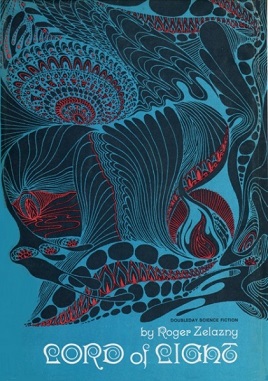
Does the darker atmosphere make it more viable in today's market or does the constant presence of sorcery and mage stuff make it less viable? Both? Neither? Will it cross the same audiences as Martin's work? Or get relegated to a niche because one element overwhelms the other? When you look at typical fantasy, like Terry Brooks' Shannara series, which is unarguably successful from a sales perspective, does that make it better than Roger Zelazny's brilliant and beautifully-written Lord of Light, which is barely remembered?


I'm not particularly concerned about the sales or audience questions at this point, since my story is largely unwritten and, thus, can't be sold even if people wanted to buy it. It's just another of those theoretical questions that invade my brain and cause me to wonder about people's identity crises vis-a-vis their choice of media. Is it OK to be a prototypical "jock" and like fantasy? Or only Game of Thrones-type fantasy? Do those labels even apply anymore? I'm a diehard Michigan football fan who understands the 4-3 under (that's a defense) better than most football fans I've ever met. But I have a closet full of board games, the majority of which could typically be described as "geeky" (Descent, et al) because of their themes and styles. Does that make me the ideal "modern fantasy" consumer? Good thing I know several other people like me, I guess...