Showing posts with label marcus. Show all posts

Tuesday, April 24, 2012

Pride and fall

Constantly bring to your recollection those who have complained greatly about anything, those who have been most conspicuous by the greatest fame or misfortunes or enmities or fortunes of any kind: then think where are they all now? Smoke and ash and a tale, or not even a tale. And let there be present to your mind also everything of this sort, immense how Fabius Catullinus lived in the country, and Lucius Lupus in his gardens, and Stertinius at Baiae, and Tiberius at Capreae and Velius Rufus (or Rufus at Velia); and in fine think of the eager pursuit of anything conjoined with pride; and how worthless everything is after which men and women violently strain; and how much more philosophical it is in the opportunities presented to you to show yourself just, temperate, obedient to the gods, and to do this with all simplicity: for the pride which is proud of its want of pride is the most intolerable of all.
That's Marcus, of course. It's Meditations XII, 27, and specifically about pride. The first passage there is essentially a restatement of the old "Let every action aim solely for the common good." It's a reminder that virtuous actions for the benefit of others will make a person happy (or, at least make a Stoic happy) while self-directed actions will, in the long run, make us unhappy. Pride is part of that because many self-directed actions are driven by pride. Wanting to succeed, wanting to achieve, wanting to display, wanting to be seen or known or revered or admired; all forms of pride. That's something that I've been struggling with for most of my life.

As I've noted before, for all my supposed intelligence, my accomplishments are relatively few and far-between. For all of my pride in my ability to comprehend and utilize information, I haven't turned that into any kind of sustained success. I'm not talking solely about material success, although that would be nice. If I could find my way to a regular writing gig that I could make a career out of, that'd be great. I could make a living doing something that I enjoy and that at least a few people have suggested I have a certain amount of talent for and that they enjoy. But I found that I had just as much pride in accomplishing something that served more people than just me and in more than simply entertainment, in true Stoic fashion. I took pride in those virtuous actions for the public weal. Is that counter-intuitive for the Stoic? Somewhat. After all, that last line about acting with simplicity and false modesty being the worst sort of pride is directed primarily at those who would hold themselves up to be respected for their virtue.

Of course, part of my struggle has always been from another well-known quote of Marcus': "Man is worth as much as what he is interested in is worth." - Meditations VII, 3. If one is interested in the more virtuous of ideals in one's society, is that not a form of pride? Those things are worth more, therefore said person is worth more. Is that the measure of it or a faulty interpretation? Is it appropriate to use pride to drive oneself to be more active and more successful in those idealistic pursuits, knowing that one is not only serving the community but also making himself "worth" more? It seems to become wrong to want to be worth more. It should instead be left up to society to measure that worth and then, perhaps, take equal doses of pride and humility in the fact that one has achieved "greater worth". Of course, given the idiotically skewed values of our current society, expecting that one's worth will be properly measured is a mortgage-backed security of a rather profound quality. Or is it simply my failing as a Stoic that I would perhaps enjoy writing about films more than I would organizing another progressive campaign?

And if one's worth really is greater from this expression of selflessness, does it make sense that the most self-directed action of all- suicide -becomes even more of a crime of self-indulgence for depriving society of that supposed worth? That sounds an awful lot like an expression of extreme pride. One engages in that ultimate self-directed act and presumes that people will feel loss because of one's supposed virtue (this is putting aside emotional attachments, of course; this is part of why Stoics are often perceived as 'unemotional'), so that is properly perceived as an expression of pride (and, unlike the standard Stoic belief, one won't be unhappy after that's over...) But pride in the loss or pride in the action?

For that matter, if one isn't contributing anything useful to society at this point, then there is no virtue to deny said society except for unknown potential. So, suicide deprives no one except the actor of anything. It remains a very self-directed act and not directly beneficial to society, but not implicitly harmful, either. And, of course, classical Stoicism (outside of Marcus) tends to speak on this repeatedly, in that once a person recognizes that a "naturally flourishing" life is unattainable, suicide becomes justifiable with no harm to one's inherent virtue. Seneca, for example, spoke frequently about "living well", as opposed to "mere living" and suggested that a wise person "lives as long as he ought, not as long as he can." Marcus, no different, said essentially the same thing:
When you have assumed these names, good, modest, true, rational, a person of equanimity, and magnanimous, take care that you do not change these names; and if you should lose them, quickly return to them. And remember that the term Rational was intended to signify a discriminating attention to every single detail and to do so with due diligence; and that Equanimity is the voluntary acceptance of the things which are assigned to you by the common nature; and that Magnanimity is the elevation of the intelligent part above the pleasurable or painful sensations of the flesh, and above that poor thing called fame, and death, and all such things. If, then, you maintain yourself in the possession of these names, without desiring to be called by these names by others, you will be another person and will enter on another life. For to continue to be such as you have hitherto been, and to be torn in pieces and defiled in such a life, is the character of a very stupid person and one overfond of life, and like those half-devoured fighters with wild beasts, who though covered with wounds and gore, still plead to be kept to the following day, though they will be exposed in the same state to the same claws and bites. Therefore fix yourself in the possession of these few names: and if you are able to abide in them, abide as if you were removed to certain islands of the Happy. But if you shall perceive that you fall out of them and do not maintain your hold, go courageously into some nook where you shall maintain them, or even depart at once from life, not in passion, but with simplicity and freedom and modesty, after doing this one laudable thing at least in your life, to have gone out of it thus. In order, however, to the remembrance of these names, it will greatly help you, if you remember the gods, and that they wish not to be flattered, but wish all reasonable beings to be made like themselves; and if you remember that what does the work of a fig-tree is a fig-tree, and that what does the work of a dog is a dog, and that what does the work of a bee is a bee, and that what does the work of a human being is a human being.
The question then becomes: Why is that naturally flourishing life unattainable and is it a failure of self or simply an expression of fate? "Every event happens in such a way that your nature can either support it or cannot." X, 3. " "Either you go on living in the world and are familiar with it by now, or you go out, and that by your own will, or else you die and your service is accomplished. There is nothing beside these three; therefore be of good courage." X, 22.

Friday, October 7, 2011

Restraint

So, it's been a while. I wanted to keep up with this on a regular basis, but I've been restrained. The restraints have been physical and mental. A lack of ability in some cases, but largely a lack of motivation or energy. Some have been self-imposed; others, not. But restraint comes in all kinds of forms...

I look out on the Occupy Wall Street (Chicago, LA, ad infinitum) demonstrations and I am both encouraged and dismayed (dichotomy, anyone?) I am encouraged because I see people finally following outrage with action. As much as the presumably cynical and worldly types like to express their worldly cynicism with a haughty disdain over the 'fact' that 'someone is always protesting something', the actual fact that people are actually in the streets at this moment is something that is all too rare in this day and age. But I am dismayed because my initial reaction to those demonstrations is that they are too passive and they will too easily become part of the background noise that is Somnolent America.

When I think of our current circumstances, what I want to say is this:

Let every dirty, lousy tramp arm himself with a revolver or knife on the steps of the palace of the rich and stab or shoot their owners as they come out. Let us kill them without mercy, and let it be a war of extermination and without pity.

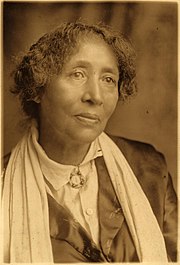
That was Lucy Parsons, who was intimately familiar with the lack of mercy and pity from the owning class. Thus, why not respond in kind? My response to the whine of: "You're talking about class warrrrrr!" has always been: "You're damn right. It's been going on against the poor since time out of mind. It's about time we started talking about it." After all, if we can freely talk about race (kind of) in our free and open society (kind of), then why can't we talk about class? Because it doesn't exist? Or because it strikes too close to the bedrock truth of our free, open, and equitable (not even close) society? We have classes; always have, likely always will, and the rich, the owning class, has a disproportionate amount of power in our free and open (kind of) society. The only way to wrest power from the powerful ("Power concedes nothing without a demand. - Frederick Douglass) has typically been by violence. After all, when one's entire society is based on the primacy of property and violence typically results in the abduction and/or destruction of said property, the people who own it tend to get a little nervous. Nervous is good. Terrified might be better. Compliant is the real goal.

The problem with compelling compliance through violence is that the people who often end up dying as a consequence of said violence are the 99%, as it were. It would be nice if we could all storm the Bastille again and watch the landholders flee the country, but they've figured out that being part of the owning class also means that they own most of the guns and the people that have access to them. Not that parallels to 1789 are completely absent:


Some people will always be oblivious, even if they don't know how to spell "brioche".

My gut reaction that trends toward violence is a product of decades of frustration on this issue, even if I recognize its obvious drawbacks. Thus, if I were to exercise a degree of restraint, I'd more likely want to express something like this:


If, in the present chaotic and shameful struggle for existence, when organized society offers a premium on greed, cruelty, and deceit, men can be found who stand aloof and almost alone in their determination to work for good rather than gold, who suffer want and persecution rather than desert principle, who can bravely walk to the scaffold for the good they can do humanity, what may we expect from men when freed from the grinding necessity of selling the better part of themselves for bread?
That was also Lucy Parsons. Certainly, she was speaking of the potential of her own class, likely having already discarded the idea that anything genuinely good for society could come from the wealthy leeches that surmount it. But it's still a noble idea that one would like to think would compel people toward that compliance; that, indeed, society would be better, even for the wealthy, if more people had access to the time and resources that would allow them to express some of the potential within them. It hearkens back to what I often refer to as the "Henry Ford principle": Ford realized that if he wanted his company to truly grow and become a buttress of American society, he couldn't continue to build products that his own workers couldn't afford to buy. It took a long time and a lot of violence for him to come to that realization, but it did occur. I'd like to cut out both the time and the violence parts and weave me a flying carpet while you're at it, won't you?

That acknowledgement of the seeming need for restraint has a personal quality to it, as well. Marcus stressed the avoidance of negative emotions or actions. The expression of Stoicism in the face of difficult situations was meant to be the perfect example of the nobility of the human spirit. The ability to stand against daunting odds without lashing out should be seen as an example of how to resist and effect change without bloodshed. King thought this and eventually won. But that was 50 years ago and the owning class has learned (witness even now the implicit derision of the media toward the Occupy gatherings.) Brother Malcolm may have been ahead of his time in stating his own preference for how to resist and demonstrate. Or was it simply a reversion to the tried and occasionally true method, acknowledging that the real problem of society, class not race, would never truly be affected? After all, when King shifted his emphasis from race to class, they killed him.

I'm hoping for a tipping point. I'm hoping that said point leads to a genuine acknowledgement of the problem. I'm hoping that leads to genuine change. I'm hoping it happens without too many people getting killed. Or am I?

Tuesday, May 17, 2011

Words, perhaps to live by

Some men look at constitutions with sanctimonious reverence, and deem them like the ark of the covenant, too sacred to be touched. They ascribe to men of the preceding age a wisdom more than human, suppose what they did to be beyond amendment. I knew that age well; I belonged to it and labored with it. It deserved well of its country. But I know also that laws and institutions must go hand in hand with the progress of the human mind. As that becomes more developed, more enlightened, as new discoveries are made, new truths disclosed, and manners and opinions change with the change of circumstances, institutions must advance also, and keep pace with the times. - Thomas Jefferson, letter to Samuel Kercheval, July 12, 1816.

The dictatorship of the proletariat which has risen to power as the leader of the democratic revolution is inevitably and, very quickly confronted with tasks, the fulfillment of which is bound up with deep inroads into the rights of bourgeois property. The democratic revolution grows over directly into the socialist revolution and thereby becomes a permanent revolution... The completion of the socialist revolution within national limits is unthinkable. - Leon Trotsky, Permanent Revolution, 1931.

He that hath not one and the self-same general end always as long as he liveth, cannot possibly be one and the self-same man always. But this will not suffice except thou add also what ought to be this general end. For as the general conceit and apprehension of all those things which upon no certain ground are by the greater part of men deemed good, cannot be uniform and agreeable, but that only which is limited and restrained by some certain proprieties and conditions, as of community: that nothing be conceived good, which is not commonly and publicly good: so must the end also that we propose unto ourselves, be common and sociable. For he that doth direct all his own private motionsand purposes to that end, all his actions will be agreeable and uniform; and by that means will be still the same man.- Marcus Aurelius, Meditations, XI, xix.

Where justice is denied, where poverty is enforced, where ignorance prevails, and where any one class is made to feel that society is an organized conspiracy to oppress, rob and degrade them, neither persons nor property will be safe. - Frederick Douglass, speech on the 24th anniversary of Emancipation, January 1887.

Thankfully, perseverance is a good substitute for talent. - Steve Martin.


Sunday, March 27, 2011

Subconscious expression

I play a little WoW. It's no secret that science fiction and fantasy have been interests of mine since I can remember knowing about them. I was fascinated by things like Star Trek and the Lord of the Rings (which I read at age 7.) However, despite being a huge Blizzard fan and having spent days on end in front of Warcraft, Starcraft, and Diablo (as I used to express to people in the Green party: I'm a peace activist who spends a considerable amount of time playing wargames.), I resisted World of Warcraft and MMOs in general for a long time. I just felt like I had too many other things going on and didn't really have the time to become absorbed in it.

However, a couple years ago, I had some time on my hands and figured I would download the demo and try it out. After playing off and on for a few days, I decided I'd give it a try for a few months, and I've pretty much persisted in that pattern: every couple days I'll get on and play for a couple hours. It's a cool distraction and there are a few other friends of mine who play about as much. In possible subconscious tribute to my environmental politics, my main is a shaman; a class that attempts to commune with the natural spirits of the world and act with them to preserve parts of it and change others. He's part of a race called tauren, whose culture is expressly modeled on that of Native Americans, which is a longstanding interest and probably another subconscious engagement (believe me, if there were a culture modeled on feudal Japan, I would have been all over it.)


My initial role with my shaman was one of offense. There are few things as enjoyable as strapping on a couple of fist weapons (cesti of fantastical proportions and design far beyond anything possibly imagined by the Romans) and whaling away on whatever enemy creatures happen to be within reach. However, there's an alternate talent spec on my shaman that is based solely on healing. I can't do much with it on my own, but I can join a group in 5-, 10-, or 25-person instances and keep them alive so that we accomplish larger goals than I could perform by myself. I'm sure you've heard this theme before...

So, I've fallen into the habit of healing more than anything else when I play. There are four more healing specs among the 9 other classes in the game and I have characters that perform each of those specs. As with a lot of games that I play, I've become interested in the methodology behind the systems and how they accomplish the same goal with different tools. I still find it somewhat odd because, at root, I'm not a healer type, as it were. My personality lends itself to problem-solving (often, uh, direct problem-solving) moreso than sympathy or nurturing; both of which are often associated with the idea of healing. Furthermore, I'm more prone to playing the leadership role in a lot of my activities, which in the game would equate to tanking, not healing.

But I've begun to wonder if the healing approach is instead a substitute for the pursuit of group activity. While groups in the game can't function without a tank, they are equally unable to function without a healer (delving deeper, one realizes that without competent DPS (Damage Per Second) people, it's often difficult to succeed, as well.) However, the healer strikes me as the one that sustains the group as a whole. While the tank is needed to progress, there are many situations in which the group as a whole will be hindered (i.e. getting killed) even if the tank is doing his/her job properly. What gets them past those hindrances is usually the healer. Am I acting out my desire for achieving goals as part of a group/family/society?

There's no denying that I've been part of any number of ventures (personal, professional, political) in which progress has been halted by the lack of enthusiasm of those around me. I can remember any number of times when I was still ready to struggle ahead and everyone else seemed to find better things to do and left me holding the bag or, at the very least, stranded with the remainder whom were either indolent or motivated for narrow reasons, if not both. I've tried to start any number of projects that essentially depended on the participation of others which never came to fruition because my enthusiasm was always greater than everyone else's. So now I find myself enthralled by a game role which requires the presence of others.

The game can be played alone. Despite its appellation as a massively multi-player game, there are many who, in fact, prefer to solo it. One can quest and progress alone as a tank or DPS. It's far more difficult to do so as a healer. So, if one heals, one groups.

Thus we come back to one of our essential dichotomies: anyone who knows me realizes that I'm not overly fond of people and can lose my patience or become bored with most in a very short time. And, yet, the majority of what I enjoy involves other people to an often extraordinary degree: politics, games, even aikido. The latter is nominally a defensive art and perfecting the form requires uke (the person being thrown) to absorb the energy of shi'ite in a manner both protective of himself and in an understanding of the form. In other words, it's really difficult to practice the form alone; even (perhaps especially) the jo katas. You need someone else to exchange energy with.

Logically, one can't fail to see that there are any number of goals that will only be accomplished with the strength of many. Logically, there will have to be some spirit of cooperation amongst the people in order to make progress. Logically, people are going to have to be willing to tolerate either others' company or be reduced to factionalism before the goal is even approached. This is where logic clashes with reality and Ambrose Bierce's example of the post holes comes to mind.

So, here I am, seemingly naturally inclined to solitude, yet driven to participate with others in most of the things that I still enjoy (many of which are, admittedly, fading fast these days.) Am I a socialist at heart or just projecting onto an inclination for human contact, despite recoiling from the majority of it?

Begin the morning by saying to yourself, I shall meet with the busybody, the ungrateful, arrogant, deceitful, envious, unsocial. All these things happen to them by reason of their ignorance of what is good and evil. But I who have seen the nature of the good that it is beautiful, and of the bad that it is ugly, and the nature of him who does wrong, that it is akin to me (not of the same blood an seed, but partaking with me in mind, that is in a portion of divinity), I can neither be injured by any of them, for no one can fix on me what is ugly, nor can I be angry with my kinsman, nor hate him. For we are made for co-operation, like feet, like hands, like eyelids, like the rows of the upper and lower teeth. To work against one another therefore is to oppose Nature, and to be vexed with one another or to turn away from him is to tend to antagonism. - Marcus Aurelius, Mediations, II.
 Still working on it.

Thursday, January 27, 2011

WWMD?

I hated those bracelets/charms/whatevers: What Would Jesus Do? It's not as if there's nothing honorable in following the philosophy espoused by the man known as Jesus in the New Testament. In fact, it's a rather enlightened viewpoint that's been hideously distorted since it was first committed to memory for oral histories and continues to be so today (shhhh... little secret: Jesus was a socialist.) Of course, there's absolutely no requirement to believe in the divinity and/or supernatural existence of the prime mover of said philosophy in order to follow its tenets, just as with any other set of ideas.

What disturbed me was the idea of having to consult someone else's behavior in order to determine one's own. If you're a genuine believer in and follower of the principles of the New Testament, then you really shouldn't have to stop and question what a poor Jew in the middle of the Roman-occupied Levant would do when confronted with the prospect of massive financial fraud involving credit default swaps or deciding whether to crank Boston to 11 in a crowded apartment building at 3 AM. In the latter case, he'd keep it to a reasonable volume and go find a better taste in music and in the former case he'd strike you and anyone involved with said fraud dead as a doornail, as is only appropriate. Who says the son of God can't be as vengeful as Dad?

I can't recall a time when I've ever been confronted with a situation and stopped to ask myself: What Would Marcus Do? That's at least partially because there were many other Stoic philosophers down through the ages, so there's no real reason to elevate MAAA above the rest (except that I do) in the manner of a messiah. But it's mostly because I've absorbed the philosophy into how I deal with the world as a whole. This is who I am, not what I profess to believe in and then make confession for when I deviate from it.

Stoicism is often perceived as the approach or demeanor of someone without emotion. They're "stoic" if they can remain unaffected in an otherwise harried situation. This originates from the concept that "destructive" emotions impede reason and reason is paramount to most Stoics. Suffering will be avoided through apatheia, which means "peace of mind" or, literally, "without passion." And, without suffering, life is good, yes?

Of course, there's a bit more involved, since simply avoiding emotion will only go so far in helping to determine your choices and actions in life. But the supremacy of reason drives much of the rest of the whole. Actions are "good" because they're ethical. If one stops to question whether a particular choice is "good", ostensibly one removes emotion and then weighs its impact on oneself and others ("Let every action aim solely for the common good." - Marcus) via logic and reflection, as well as being in tune with "natural logic"; often depicted as an understanding of how the universe functions. That can easily be interpreted as a cynical estimation of how systems and people and natural events progress, since those are all contained within the "logos" of the universe. It also relies on Aristotle's assertion that humans are inherently ethical and, therefore, good (which would seem to belie the modern interpretation of the Cynical philosophy.)

I can't help but wonder sometimes if my basic nature is to emotionally detach myself from problematic situations and, thus, Stoicism appealed to me, or if that nature was developed by my reading of the philosophy and its proponents. Anyone who knows me will recognize or remember that I engage in a fair amount of "suffering", as I'm quite passionate about particular topics. Or, at least, I used to be. The fires have dwindled on a lot of things. Expansion of Stoicism or growth of Cynicism? Do I just not care anymore? Is that a lack of emotion or simply fatigue based on an understanding that getting fired up about things often ends up being a colossal waste of time? Or does it simply seem that way to me because all of my serious endeavors, those things that I was truly passionate about, have failed or are in the midst of their lowest periods in my lifetime?

I've discovered lately that I've bent my approach from interpreting (almost) everything through logic and reason to simply functioning: these things have to be done, so they get done, regardless of my emotional state or even interest in doing them. It's still logical and reasonable (have to go to work, have to feed the cats, etc.), but it's solely functional. In contrast, many things that I formerly enjoyed doing or was interested in are left behind because I convince myself that I don't have time to do them while I'm making sure that all the requirements of functioning are met. That's still logical and reasonable to a certain degree, but it's also devoid of any real motivation. Stoics weren't meant to go through life as automatons anymore than Epicures were or are. Of course, there's always Epictetus: "Freedom is secured not by the fulfilling of men's desires, but by the removal of desire." I have the whole "removal of desire" thing down pat, at the moment, but I'm not sure that it's helping.

But I always come back to Marcus Aurelius: "Outward things cannot touch the soul, not in the least degree; nor have they admission to the soul, nor can they turn or move the soul; but the soul turns and moves itself alone." The question now becomes: Is that how it remains from here on out? And is that a good thing?