Showing posts with label geek culture. Show all posts
Friday, July 26, 2019
Boys will be boys
Having delved into Amazon recently and found it somewhat wanting, I figured I'd continue with something a bit less random, given my history of involvement with the comic medium, and watched the first couple episodes of Garth Ennis' The Boys. I was a once a huge fan of Ennis' work. I think his original run on Hellblazer, along with Jamie Delano's which preceded him, makes up the definitive version of the character of John Constantine. But after Ennis started a run on The Punisher in the mid-90s, his work began to take on trappings of that character and a decided glee in the "hardass for the sake of being hardass", as it were. Aside from a comedic turn in the miniseries Dicks (which I freely used at one Chicago Comic-con for an attempt at some very cheap laughs with the event announcer), Ennis was mostly producing ever-bigger guns and ever-bigger pools of blood. The introspection of his earlier work was largely missing. I haven't read the comic series that Amazon's production is based on, but after two episodes of their series, I can say that not much has changed.
The premise is that superheroes exist in the 'real world' and a major corporation (Vaught) has lined up most of them as employees that they then make money from via movies, advertising, product placement, and by contracting them out to be the resident protectors of various municipalities that pay dearly to have their own pet super. The supers, of course, are as corruptible and foible-filled as any of the rest of us and are not above using their fame and the constant adulation that results from it to get whatever their petty hearts desire. The Boys are an impromptu gathering of people who've decided they've had enough of being second-class citizens and want to blow the lid off of this situation, including a willingness to blow the respective lids off of the supers in question... which, I mean... OK?
It's not a particularly original premise (cue: superhero comics rant), but not everything has to be if it's told/presented well. It's kinda trying to out-Watchmen The Watchmen, but that's the cinderblock that every "superheroes in the 'real' world" story is going to have hung around their neck, especially given the storytelling abilities of Alan Moore, which often exceed those of the people lined up to attempt the same job. Moore layers themes into his stories, often with subtle visual cues that resonate down through them. The blood drop on the Comedian's smiley face button is the classic example from The Watchmen. Ennis, being less concerned with themes and more with entertainment, instead tends to batter you about the head and shoulders with them: "THIS IS WHAT'S HAPPENING! Corporation bad! Supers bad! Mercenary killers somehow good! IT'S A QUANDARY!" There's nothing for the viewer to figure out because it's not really supposed to be figured out. You're mostly supposed to sit there and be entertained by the blood spray and the fact that famous people might be rapists, too (which in the era of #MeToo seems kind of pedestrian, if still a nod to real life.)
Karl Urban is OK as the lead (Billy Butcher), but kinda lacks the rough edges that you might expect from such a character. Every time I see him, I keep thinking: "This is the urbane Bones McCoy from the new Star Trek films trying to be a badass. And generally failing." I guess there's something to be mined from Jack Quaid's character (Hughie) and his transformation from introvert to a member of a kill team, but I haven't found it yet. In contrast, Erin Moriarty (Starlight) coming to grips with her new situation and complete disenchantment with it has been far more believable. Antony Starr as Homelander has been kind of intriguing, since he's clearly doing the 'stranger in a strange land' bit, albeit as the overeager tool of the menacing Vaught Corp. I admit to not even recognizing Elizabeth Shue (Madelyn Stillwell), which is usually a compliment to someone that has slipped so easily into her role.
But on that note, one of the aspects of the show that really stood out to me is this: These supers are all still mindblowing to everyone around them. Given that the setting indicates that they've been around for years (decades?), it's difficult to rationalize how everyone can still be so much in awe of them. Sure, people get starstruck in different ways and certainly part of the premise is to draw the contrast between how famous and wonderful and heroic these people are and what their normal, human tendencies happen to be. But you're telling me that a multi-term US Senator in tough negotiations with Vaught somehow isn't going to be aware of the paranormal means they might use to entrap/convince him? Not least because the scene was used for one of those cheap (not even) laughs about sex? These guys are going out on nightly patrols and their every move is watched and analyzed on phones and social media just like actors and athletes today and yet one guy taking a long dive off a pier is enough to leave everyone with their jaws on the floor?
Doing these 'real world' situations is always a tough line to walk. After all, it's supposed to be 'normal' and yet not normal. But that single disconcerting note kind of opens the door to my overall impression in that most of this just feels staged. Overall, these don't seem like natural characters doing things that they naturally would. They seem set up to do scenes, rather than follow a storyline; as if, in setting up this tale of ethics about the difference between larger-than-life personalities and the actual people behind them, the creative team kind of lost track of the idea of telling a story and instead are just doing those cheap laughs or playing for shock value. Given that this is the same development team (Seth Rogen, etc.) behind another adaptation of Ennis' work (Preacher), I can't say that I'm too surprised. It's not a disaster and, unlike the fairly bland Mrs. Maisel, it has enough of those rough edges (outside of Urban) to maybe watch a couple more episodes and see if it beds in a little better. But it certainly hasn't reached the level of compelling/binge TV.
Labels:
acting,
comics,
critiques,
geek culture,
superheroes,
The Boys,
tv
Wednesday, November 9, 2016
So, here's the thing
When this whole thing started and I was as surprised as anyone that a narcissistic buffoon with little record of accomplishing anything without someone else's money (i.e. Daddy's) was going to be the Republican nominee for president, I told several people that it would be the most fitting result possible for modern American politics and, if he did win, I was going to laugh my ass off. You'll have to pardon the exaggeration of intensity, because I actually dozed off while reading tonight (and, yes, ignoring election results) and when I woke up, the media were declaring President Trump. The first thing I did?
![]() |
| I'm letting this picture break the margin because... yeah. |
I mean, actually, it was me laughing and the cats looking at me with exasperation like I know so many other people in my life will, but this is a pretty good representation. Everyone is going to try to highlight this or that factor that supposedly led to this result, be it emails or racists or a supposed reluctance to keep the same party in office, three terms in a row. But that last one is kind of crucial because, in the end, they're all the same party.
"What?!!", you scream. "There's no way you can compare that bigoted man-child to any rational candidate!" Oh, but I can, because he's part of the same class of people that own both major parties and, in effect, make them essentially the same party. So is Hillary Clinton. And there's your problem. That problem isn't bigotry or ignorance or religion or ideology, although all of those do contribute to the mess. That problem is money; who has it and who doesn't.
I hang out on a lot of gamer sites, both electronic and the old-fashioned cardboard type. Games are kind of a dominant hobby in my life, whether watching them (Michigan, Liverpool) or playing them or both. Strangely enough, I detested the game theory side of political science when I was in school. But a few months back, there was a post on a gaming forum (Fortress: Ameritrash) that called for people to register to vote in the upcoming election because of the perceived importance of the result. This forum has a number of regulars from around the world, so many of them chimed in with questions about the impending election and why Americans didn't go to the polls and so on. Someone suggested it was simply a matter of laziness on the part of the electorate. My response was this:
We might get better turnout if, like every other modernized nation, people had the day off to vote. We also would get better turnout if people thought their vote actually had an impact on the process by getting rid of the Electoral College and instituting ranked (or instant runoff) voting, so that there would be more viable candidates in the race and an actual choice for many people. You can't blame people for not participating if they've been told that either they have no choice but to vote for someone they find detestable or that their choice doesn't matter at all. And that they should spend hours standing in line away from their families and their jobs while they're making that useless or nonexistent choice. When people are encouraged to not participate, they won't. You can't castigate them for that.
At that point, someone asked for a perspective on the current state of American politics. I've been, uh, out of the scene for a few years, but I like to think that I still have a grasp of some of the nuances, so I chimed back in:
Just to clarify my perspective and position, I built the Green Party from the ground up in the state of Michigan and chaired it for 5 years, so those are my politics. However, I spent a long time trying to deal with the tunnel-visioned in those circles, who often declared that if you weren't part of the solution (that they would happily remonstrate to you at all times), then you were part of the problem. Needless to say, this is how so many good ideas get marginalized, as people attempt to be "Greener than thou" or whatever label they choose to follow or affix. I'm not active anymore for a variety of reasons, but I still know a lot of people in various political circles, on the Hill, etc. and I still like to drop into local meetings and have been, for example, to several Tea Party gatherings over the past few years because I like to know what people are saying and thinking, rather than what other people SAY "those people" are saying and thinking.
The mood in the US right now isn't especially positive and it's driven by a number of things but, at root, the problem is economic. America, the Land of Opportunity is no longer so for the vast majority of the population and that trend has finally enveloped the bulk of the white population, who were the ones who most believed in the concept of that opportunity because it was sold to them from every politician, every neighbor, and every form of media. The American Dream is kinda dead. This is why Avik Roy, a fairly prominent conservative thinker, said the other day that the GOP is dying because it can no longer mask the fact that its central ideology isn't economic conservatism, but, rather, white nationalism. They can't sell the former idea because the concept of moving up the economic ladder is no longer a sure thing, hard work or no. So they've had to rely on the latter idea since Goldwater and it's only accelerated in the past couple decades. The frustration, on the left and the right, is paramount. This is why Donald Trump is where he is.
Think about it: This is a man who, in the course of the past week, dismissed the Geneva conventions, talked about exiting NATO and then the amount of money the other members would have to toss at the US to rejoin, suggested that the president of Russia should release more negative info about Trump's primary electoral rival, and refused to release his tax returns. Any one of those statements or actions would be heavy damage, if not death, to any normal campaign. But Trump's supporters don't give a shit about any of that because it doesn't matter to what's in front of them right now. What's in front of them right now is a pretty stark reality: They need an education to hopefully get a decent job, but the old reliables like law school are no longer so reliable. If they tried to get that education, they'd have to go six figures into debt and, aside from that incredible burden, who'd be working to support their family (whether it be children or parents)? Meanwhile, they're still constantly berated by the stories of the success of the 1% and told that if they work hard they, too, can be "successful". But the reality says that that won't be the case and so now they're looking for answers. Trump is providing those answers in the simplest manner possible and using tried and true methods that are inherent to American politics from the dawn of its existence. Race has always been an element of American politics since before those fabled founding documents were written and it always will be. It will always be easy to divert people's attention from the real cause of their troubles (lack of opportunity caused by the concentration of wealth) to some other vague reason that usually involves people who look differently (race) or act differently (sexuality) or worship differently (obvs.)
What's accelerated the process in the past 20 years is this thing we're currently all sitting on: the Internet. It is, in turn, the greatest and worst communication device ever created. It's the greatest because it allows thoughts and ideas to travel instantly around the world and for people of like mind to find each other and exchange those ideas. It's the worst because it allows people of like mind to segment themselves from the rest of humanity until they hear only what it is that they're comfortable hearing. When what you're already predisposed to believe is repeated to you hundreds of times a day, it's difficult to abandon it even when confronted by the stark reality that it's not true. That's why Trump is lauded for "telling it like it is", even when much of what he says are flat out lies. But those people that support him have been lied to constantly by "regular" politicians (like Clinton, for example) for all of their lives. Hearing different lies from a guy who clearly is not your regular politician is invigorating in a way because it provides some tiny element of hope that he might be able to turn a couple of those lies into reality, if only because he'd try to do something (outlandishly) different. And that's what most of these people are lacking: hope. In other modernized nations, you have socialized medicine, daycare, education, maternity leave, and a dozen other things that support the idea of changing your circumstances and moving on to something new and better. That's hope. That's not present in the US right now because almost none of those things are available, since American Individualism speaks against the idea of socialism in all of its forms (except when it comes to bailing out major banks, but that's another rant...)
This is why there was so much commentary (usually in very dark terms) about how Bernie and Trump supporters were saying the same things. "But they're on opposite sides of the spectrum!", the wealthy and appropriately-threatened talking heads shrieked. No. They're just looking at the same problem from different perspectives. Trump is saying that everything is broken for one set of reasons. Bernie was saying so for a different set of reasons. Clinton, representing the "I got mine!" Democrats, is basically saying that they're both wrong and if we keep doing what we've been doing, everything will be fine. And it will be fine, for the very wealthy segment of the populace that she actually represents. But it won't be for everyone else, including the vast majority of her supporters.
That's the key, yes? As has been said so many times before, it's not about race, or sexuality, or religion, or gender. Those things all have some impact, but when we're talking identities it's really about one thing and one thing only: class. Class means money: who has it and who doesn't. Trump can't identify with the vast majority of the people who voted for him. But neither can Clinton. She travels in the same circles that he does and speaks the same language. Some may call that a necessary evil of US politics. I call it the thing that's making politics virtually irrelevant to the bulk of the population, who might just be inclined to deliver a "vote of change", as it were, no matter how apparently irrational. Yes, I realize that Nate Silver's polling data indicated that Trump's supporters, on average, were wealthier than Clinton's but somehow a good chunk of Mr. Silver's results never seem to conform to the reality that I see on the ground. One begins to question the math.
And already the howls of outrage are beginning to rise; not by Democrats against Trump and the GOP, but Democrats against anyone who didn't vote for their fatally-flawed candidate. This is identical to the situation in 2000. The Democrats put forth a candidate that really stood for no one but the money. When voters went for Bush, instead of blaming their own milquetoast efforts, they blamed minor party candidate, Ralph Nader, and, specifically, Green voters in Florida. This is despite the fact that Nader's votes in Florida were about 10% of the total of registered Democrats who voted for Bush. I suspect we will see similar results here, given that a significant number of former Obama supporters have apparently cast their lot with Trump. Once again, that outrage bespeaks a lack of understanding of or a lack of empathy for the people who, as I noted above, have little hope for improvement in their lives. Asking them to elect another Clinton when the impact of the policies of the first one (NAFTA, Reinventing Government, rescinding Glass-Steagall, Commodity Futures Modernization Act, etc., etc.) helped shape the current economic reality in largely negative ways is asking quite a bit.
But the root of that whole issue goes deeper than just venal Democrats. When discussing the minor party spoiler effect on the aforementioned forum, I also mentioned the pernicious effect of ballot access laws in many states and the denial of actual choice to much of the public, who are thus left with poor selections like Donald Trump and Hillary Clinton:
Most minor parties run presidential candidates for two reasons: 1) Visibility. In a presidential year, no one pays attention if you don't have someone in the horse race. Those are also the years when most fundraising is done and the way to raise the most $ is via high profile races; presumed fool's errands or not. 2) Even more importantly, ballot access laws. See, the laws are written by Dems and Reps to ensure their dominance. The majority of states require you to get a certain percentage of the vote of the highest candidate to stay on the ballot. That's usually a presidential or senatorial race. If you don't run one, you're basically conceding your ballot access next time. Having organized multiple efforts, I can tell you that ballot access drives are often quite difficult and expensive, using time, energy, and money that could otherwise go toward those smaller campaigns. So, no, it's not just because we're all idealistic fools thinking we can win the White House. It's because the laws are written to make it as difficult as possible for the public to actually have a choice. We managed to change the law in Michigan by coordinating every minor party in the state along with a Libertarian-leaning GOP state rep and a sympathetic writer in one of the major papers. Now minor parties only need a certain percentage of the vote of any state-wide candidate, but that's an exception and we took advantage of extraordinary circumstances to get there.
Remember that all election laws are written by and for the two (one) major parties and are written to serve their interests. That primary interest is to stay in power. So, there it is.
I'm no soothsayer. As I mentioned at the start of this ramble, I was as surprised as anyone else when Trump did manage to land the nomination. But the more I thought about it, the more it began to make sense, in the same way that his victory yesterday makes sense. And here we are: President Trump. (Honestly, I convulse with laughter every time I think of that. If that idiot's term in office demonstrates anything, it will be just how absurd the whole situation has become. Non. Stop. Entertainment.)
When the financial crisis of the last decade began in 2008, my opinion was that the only genuine way to solve many of the structural issues it revealed was to let the banks burn. There should be actual consequences for their actions and all that. Instead, they were bailed out and now wield more power than ever. Once again, we have come to a point of reflection. Will the half of the populace who didn't vote for Trump agitate in favor of actual structural change, both economically and electorally, like many of those who did vote for him apparently desire? Or will they just return to the status quo and let big money continue owning the government that's nominally of, by, and for? This would seem to be the moment to take a stand, yo. I'm just going to be over here chortling while thinking about that idiot trying to interact with other nations. Or anyone, really. His victory speech tonight was still him talking about how many generals and admirals were on his side. Hello? Donald? You won, dude. Most humans' egos would no longer need the massage. But, well, yeah... (Seriously. I can't stop laughing.)
Thursday, November 12, 2015
Brave New World
Yes, nerdism has taken over the formerly almost-sacrosanct environments of non-cartoon TV and movies. With the dramatic success of Lord of the Rings, Game of Thrones, all things Marvel, and the impending Star Warsapalooza, there's no shortage of projects that may be springing from prose to screen (Yes, Star Wars first hit big on the screen, but in terms of actual solid storytelling, many of the comics and novels beat the films from the word 'May'.) Someone on the board linked Tor's massive list of potentials and almost-realities (ahem) here. So, let's review, top-to-bottom:
Good Omens: I heard Neil Gaiman tell a hilarious story more than once about the initial attempt to write a screenplay from this book. Whether it can ever beat that story is up for debate.
Altered Carbon: The possessing-someone-else's-body experience has been done, many times, and has still never been improved upon since All of Me. This was a great book. Film? Eh.
Ancillary Justice: This, OTOH, would be, as Leckie says: "tremendously cool"! How to translate it successfully to a TV audience? There's a question.
Bone Street Rumba: Never read it, but the premise sounds way too much like the "villain of the week" serial that they attempted to make of Hellblazer this year and which, of course, died a totally deserved and hopefully agonizing death.
Brave New World: Spielberg? Nope. Syfy? Nope. If it was being done by AMC or HBO or Gilliam, I'd have hope.
Gateway: This, OTOH, may be right up Syfy's alley, in that it can be easily converted to a Star Trek-like "problem to be solved by the 4th commercial break"-of-the-week delivery, even if a lot of the subtexts in the story may be lost. Beyond the black screen horizon...
Little Brother: Creative death, thy first name is "reality-based young adult" series. Seriously.
Lock In: I hate Scalzi's stuff. That is to say I love Scalzi's stuff because he's so much better than I am. This, however, was not one of my favorites and recommending Legendary by referencing Colony does not do it any favors.
Luna: New Moon: Haven't read it. Have heard good things about it. CBS? Ugh. Kill it! Kill it with fire!
Redshirts: This, OTOH, was one of Scalzi's best. FX adaptation for a limited (key word) series? Oh, hell, yes.
Robopocalypse: Haven't read it. If it truly is trying to compete with The Walking Dead, but with robots, I'm not particularly interested unless it's carrying some kind of philosophical bent akin to The Matrix.
Six Months, Three Days: Creative death, thy second name is "light procedural" (read: cop show.) If they do want to turn this excellent story into a modern version of Moonlighting, that only reaffirms my contempt for NBC (see: Hellblazer.)
Spin: Haven't read it. Not a real Wilson fan. Sounds ideal for Syfy...
The House with a Clock in its Walls: As you may have guessed by now, I'm not a huge fan of kids' fantasy,either, and haven't been since I was one. (Exception made for Skeksis.)
The Last Policeman: Haven't read it. Sounds kind of intriguing on a very personal perspective level. But, alas: CBS.
100 Bullets: I really like Azzarello's work. I think he has a good sense of pace and a great understanding of his characters. That said, I think Bullets is one of the more sorely overrated series of the past 20 years and attempting to make a film of it, rather than a TV series, doesn't strike me as wise.
Fortunately, the Milk: Haven't read it. Again, not too excited about kids' stuff, except to say that Gaiman's light, yet layered, touch would probably interest me more than others.
Ghost Brigades: Doing the whole Old Man's War story would be amazing. Doing it by Syfy would be less so, especially given their inability to normally sign actors that could truly bring Scalzi's stuff to life (young or old.) Still, I'd watch.
His Dark Materials: Eh. This sounds like a slightly younger version of the BBC's recent Jonathan Strange and Mr. Norrell, which I watched one episode of and fell asleep halfway through. Twice. I have the other five on the DVR. No telling if I'll come back to it.
Horrorstör: "Hey, you know what'd be cool? If we do a more focused version of Office Space, but with ghosts in a warehouse!" No.
How to Talk to Girls at Parties: Haven't read it and, y'know, Neil is reliable and all, but I keep thinking of Jeff Goldblum in Earth Girls Are Easy and just... nah.
Hyperion: Would be killer. Even on Syfy, I'd be glued to this.
MaddAddam: Margaret Atwood. Darren Aronofsky. HBO. What else needs be said?
Midnight, Texas: Haven't read it. Actually sounds kind of intriguing. But NBC? Any broadcast network that uses the words "humorous, sexy, and downright scary" is going to produce something like Wicked City. Seriously, does anyone that isn't trying to sell middle America another piece of shit use the word "downright" anymore?
Ready Player One: So, so geeked (ahem) for this.
Red Mars: Epic books. I have little background with Spike TV, so I've no idea if they'll throw decent weight behind something as cerebral as this, but Straczynski is a selling point, even if I only saw a few episodes of Babylon 5.
Skin Trade: Decent story. Almost ideal for Skinemax. Maybe.
The Dark Tower: Read the first one. Didn't like it. Not inspired, but remain to be convinced. I'd be far more enthused about a cartoon of Dork Tower.
The Forever War: Would be teh awesome. I'm a little cagey about Tatum, but he was quite good in Foxcatcher.
The Kingkiller Chronicle: Haven't read it, but have had it recommended to me by a couple friends. Anytime someone signs up in as large a way as Lions Gate has, it always strikes me that they're leaning on marketing (and, typically, copying someone else's success as an aspect of that marketing; GoT anyone?)
Time Salvager: Reading the description makes me think 12 Monkeys has already done it and then I see who the director is... HAHAHAHAHAHAHAHAHA! No.
Uprooted: Reading the description makes me think Dragonslayer has already done it.but at least Ellen Degeneres has more credibility than Michael Bay.
Y: The Last Man: I would kill for this. Hopefully, I won't have to.
American Gods: This would be amazing. The Starz label makes me hesitate somewhat, but expanding things actually sounds viable for once and they're clearly engaging the fanbase, so...
Neil Gaiman's Likely Stories: I've read most of them. They're good. Sky TV isn't easily available in the US, so I'm muted on this (in more ways than one.)
She Who Brings Gifts: I'm sorry. No more zombies. Do Not Want. Yes, perhaps humorous, innovative take. Doesn't matter.
Story of Your Life: Never read it, so I'm blank on this one. Can't really go wrong with Adams and Renner... except what am I saying? Of course you can go wrong. But, again, I have no idea. The premise doesn't sound exceptionally different from many similar stories (like one we'll see below.)
The Sandman: Not a chance in hell. The whole series in one film? I don't care if Gaiman and other notables like Goyer and Gordon-Leavitt are involved. It's not feasible. I mean, good luck to'em and all, but to be honest, I was never that huge a fan when comparing it to other things that Vertigo was doing at the time.
Childhood's End: This is what Story of Your Life could aspire to. I'm eager to see how they make this work, especially since I always arched an eyebrow at the appearance of the aliens, since it seemed like too obvious a message. And it is Syfy, but this book may be something they can excel with.
Hunters: Never read them, so I'm blank on this one, too, but the phrase "heavy procedural" just entered my mind. Edit: Having now watched the trailer, it looks bad.
Lucifer: Hrm. I never liked this idea and wasn't particularly enthralled with the story the first time. Now it's going to be a series? Hellblazer, here we come (Ironical!) Edit: Having now watched the trailer, it looks bloody awful.
Preacher: The sole saving grace (heh) of this one is that it's AMC. The comic series, while initially excellent, faded over time and I'm not entirely certain that even AMC will be able to sell some of the excesses of Ennis' imagination to a non-pay-cable (i.e. HBO) audience and, if not, why bother?
The Expanse: Never read it. Sounds pedestrian (MASSIVE conspiracy!) and, of course, Syfy. But it's at least open-ended enough to give a look-see on the pilot and see if they've escaped the clutches of the Sharknado.
The Magicians: Harry Potter as a college student! Awesome! Not really. Edit: Having now watched the trailer... just, no.
The Man in the High Castle: Often Dick's most highly-regarded work, I'll certainly watch it, but I'll begin by questioning whether anyone can capture the twists of his particular insight. Ridley Scott did it once. Edit: Having now watched the trailer, it looks promising.
The Shannara Chronicles: In essence, they're adapting the only worthwhile book of the Shannara series (Elfstones of Shannara) but I have doubts about how well that will come across in the lower budget of TV and, of course, MTV, which doesn't have a track record of releasing anything of cultural impact and/or merit since circa 1983. Edit: Having now seen the trailer: production values are high; acting maybe not so high. Worth a look.
So, a few highlights, some more possibilities, and then the usual amount of fool's errands. We'll see.
Good Omens: I heard Neil Gaiman tell a hilarious story more than once about the initial attempt to write a screenplay from this book. Whether it can ever beat that story is up for debate.
Altered Carbon: The possessing-someone-else's-body experience has been done, many times, and has still never been improved upon since All of Me. This was a great book. Film? Eh.
Ancillary Justice: This, OTOH, would be, as Leckie says: "tremendously cool"! How to translate it successfully to a TV audience? There's a question.
Bone Street Rumba: Never read it, but the premise sounds way too much like the "villain of the week" serial that they attempted to make of Hellblazer this year and which, of course, died a totally deserved and hopefully agonizing death.
Brave New World: Spielberg? Nope. Syfy? Nope. If it was being done by AMC or HBO or Gilliam, I'd have hope.
Gateway: This, OTOH, may be right up Syfy's alley, in that it can be easily converted to a Star Trek-like "problem to be solved by the 4th commercial break"-of-the-week delivery, even if a lot of the subtexts in the story may be lost. Beyond the black screen horizon...
Little Brother: Creative death, thy first name is "reality-based young adult" series. Seriously.
Lock In: I hate Scalzi's stuff. That is to say I love Scalzi's stuff because he's so much better than I am. This, however, was not one of my favorites and recommending Legendary by referencing Colony does not do it any favors.
Luna: New Moon: Haven't read it. Have heard good things about it. CBS? Ugh. Kill it! Kill it with fire!
Redshirts: This, OTOH, was one of Scalzi's best. FX adaptation for a limited (key word) series? Oh, hell, yes.
Robopocalypse: Haven't read it. If it truly is trying to compete with The Walking Dead, but with robots, I'm not particularly interested unless it's carrying some kind of philosophical bent akin to The Matrix.
Six Months, Three Days: Creative death, thy second name is "light procedural" (read: cop show.) If they do want to turn this excellent story into a modern version of Moonlighting, that only reaffirms my contempt for NBC (see: Hellblazer.)
Spin: Haven't read it. Not a real Wilson fan. Sounds ideal for Syfy...
The House with a Clock in its Walls: As you may have guessed by now, I'm not a huge fan of kids' fantasy,either, and haven't been since I was one. (Exception made for Skeksis.)
The Last Policeman: Haven't read it. Sounds kind of intriguing on a very personal perspective level. But, alas: CBS.
100 Bullets: I really like Azzarello's work. I think he has a good sense of pace and a great understanding of his characters. That said, I think Bullets is one of the more sorely overrated series of the past 20 years and attempting to make a film of it, rather than a TV series, doesn't strike me as wise.
Fortunately, the Milk: Haven't read it. Again, not too excited about kids' stuff, except to say that Gaiman's light, yet layered, touch would probably interest me more than others.
![]() |
| And, no, I didn't put in another pic just because it's Scalzi. I'm trying to break up the wordage. |
Ghost Brigades: Doing the whole Old Man's War story would be amazing. Doing it by Syfy would be less so, especially given their inability to normally sign actors that could truly bring Scalzi's stuff to life (young or old.) Still, I'd watch.
His Dark Materials: Eh. This sounds like a slightly younger version of the BBC's recent Jonathan Strange and Mr. Norrell, which I watched one episode of and fell asleep halfway through. Twice. I have the other five on the DVR. No telling if I'll come back to it.
Horrorstör: "Hey, you know what'd be cool? If we do a more focused version of Office Space, but with ghosts in a warehouse!" No.
How to Talk to Girls at Parties: Haven't read it and, y'know, Neil is reliable and all, but I keep thinking of Jeff Goldblum in Earth Girls Are Easy and just... nah.
Hyperion: Would be killer. Even on Syfy, I'd be glued to this.
MaddAddam: Margaret Atwood. Darren Aronofsky. HBO. What else needs be said?
Midnight, Texas: Haven't read it. Actually sounds kind of intriguing. But NBC? Any broadcast network that uses the words "humorous, sexy, and downright scary" is going to produce something like Wicked City. Seriously, does anyone that isn't trying to sell middle America another piece of shit use the word "downright" anymore?
Ready Player One: So, so geeked (ahem) for this.
Red Mars: Epic books. I have little background with Spike TV, so I've no idea if they'll throw decent weight behind something as cerebral as this, but Straczynski is a selling point, even if I only saw a few episodes of Babylon 5.
Skin Trade: Decent story. Almost ideal for Skinemax. Maybe.
The Dark Tower: Read the first one. Didn't like it. Not inspired, but remain to be convinced. I'd be far more enthused about a cartoon of Dork Tower.
The Forever War: Would be teh awesome. I'm a little cagey about Tatum, but he was quite good in Foxcatcher.
The Kingkiller Chronicle: Haven't read it, but have had it recommended to me by a couple friends. Anytime someone signs up in as large a way as Lions Gate has, it always strikes me that they're leaning on marketing (and, typically, copying someone else's success as an aspect of that marketing; GoT anyone?)
Time Salvager: Reading the description makes me think 12 Monkeys has already done it and then I see who the director is... HAHAHAHAHAHAHAHAHA! No.
Uprooted: Reading the description makes me think Dragonslayer has already done it.but at least Ellen Degeneres has more credibility than Michael Bay.
Y: The Last Man: I would kill for this. Hopefully, I won't have to.
American Gods: This would be amazing. The Starz label makes me hesitate somewhat, but expanding things actually sounds viable for once and they're clearly engaging the fanbase, so...
Neil Gaiman's Likely Stories: I've read most of them. They're good. Sky TV isn't easily available in the US, so I'm muted on this (in more ways than one.)
She Who Brings Gifts: I'm sorry. No more zombies. Do Not Want. Yes, perhaps humorous, innovative take. Doesn't matter.
Story of Your Life: Never read it, so I'm blank on this one. Can't really go wrong with Adams and Renner... except what am I saying? Of course you can go wrong. But, again, I have no idea. The premise doesn't sound exceptionally different from many similar stories (like one we'll see below.)
The Sandman: Not a chance in hell. The whole series in one film? I don't care if Gaiman and other notables like Goyer and Gordon-Leavitt are involved. It's not feasible. I mean, good luck to'em and all, but to be honest, I was never that huge a fan when comparing it to other things that Vertigo was doing at the time.
Childhood's End: This is what Story of Your Life could aspire to. I'm eager to see how they make this work, especially since I always arched an eyebrow at the appearance of the aliens, since it seemed like too obvious a message. And it is Syfy, but this book may be something they can excel with.
Hunters: Never read them, so I'm blank on this one, too, but the phrase "heavy procedural" just entered my mind. Edit: Having now watched the trailer, it looks bad.
Lucifer: Hrm. I never liked this idea and wasn't particularly enthralled with the story the first time. Now it's going to be a series? Hellblazer, here we come (Ironical!) Edit: Having now watched the trailer, it looks bloody awful.
Preacher: The sole saving grace (heh) of this one is that it's AMC. The comic series, while initially excellent, faded over time and I'm not entirely certain that even AMC will be able to sell some of the excesses of Ennis' imagination to a non-pay-cable (i.e. HBO) audience and, if not, why bother?
The Expanse: Never read it. Sounds pedestrian (MASSIVE conspiracy!) and, of course, Syfy. But it's at least open-ended enough to give a look-see on the pilot and see if they've escaped the clutches of the Sharknado.
The Magicians: Harry Potter as a college student! Awesome! Not really. Edit: Having now watched the trailer... just, no.
The Man in the High Castle: Often Dick's most highly-regarded work, I'll certainly watch it, but I'll begin by questioning whether anyone can capture the twists of his particular insight. Ridley Scott did it once. Edit: Having now watched the trailer, it looks promising.
The Shannara Chronicles: In essence, they're adapting the only worthwhile book of the Shannara series (Elfstones of Shannara) but I have doubts about how well that will come across in the lower budget of TV and, of course, MTV, which doesn't have a track record of releasing anything of cultural impact and/or merit since circa 1983. Edit: Having now seen the trailer: production values are high; acting maybe not so high. Worth a look.
So, a few highlights, some more possibilities, and then the usual amount of fool's errands. We'll see.
Sunday, September 14, 2014
What it meant
One of my earliest memories is of reading a comic. We were at one of those highly-regulated and organized suburban vacation spots called Camp Dearborn. It's actually owned by the city of Dearborn, MI but is 35 miles away in Milford, MI. I have no idea why. They had canvas-roofed cabins that you could rent, a small lake, a swimming pool, a golf course, hayrides, and the whole nine yards. Very Midwest; very "get away for a weekend"-type thing, and that's exactly what I remember us doing. I was four years old and I was sitting in one of the cabins reading an issue of Man-Thing, Marvel's answer to DC's Swamp Thing (in fact, the same writer had worked on both as many of them drifted back and forth between the Big Two in those years) and another example of Marvel's return to horror comics after its neutering of the Comics Code a couple years earlier. We had been sharing a couple of the cabins with another family we knew and I was in the "boys' cabin" and had a small pile of comics with me. My vague memory says that most of them were mine, but I knew that one of the older boys had a few with him, as well. They had decided to leave before us at that point or were perhaps just running home for a while (the camp at the time was only about an hour from our home) and he burst into the cabin, grabbed a bunch of the comics, including the one in my hand, and ran out. I don't remember which issue it was and I don't remember being particularly outraged that I'd been interrupted and perhaps even had something stolen from me. I just remember that the images of that comic stayed with me and turned into an almost lifelong obsession.
I met someone recently and dropped a Stan Lee reference. We'd been texting about being enchanted and it turned into an exchange of synonyms: beguiled, befuddled, bamboozled, bemused. She mentioned that she liked the alliteration and I said I couldn't help it. I'd read too many Stan Lee comics as a kid. Lee frequently titled his columns "Bullpen Bulletins" or "Stan's Soapbox" or was fond of referring to the readers in ways like "the fightin', ferocious, fantabulous fans of fun!!" Any quick look at many of his early characters (J. Jonah Jameson, Reed Richards, Sue Storm, Peter Parker) demonstrates that this was a regular habit of his. My new friend mentioned that she wasn't really a fan (fightin' or otherwise) but she was fascinated(!) by people that were and what they got out of comics or why they enjoyed them. That, of course, got me to thinkin'...
![]() | ||
| Alliteration fer reals. No one has ever really determined why he has to wear pants, either. |
![]() |
| Beta Ray Bill, FTW! |
... which is kind of funny in one respect because I'm a ferocious critic of story and when you look back at many of the comics that I loved at the time they were produced, like the above issue of Thor, produced by Walt Simonson who has long been considered the best writer/artist to ever helm the book, the pace and dialogue are awful. There are long stretches of clunky exposition or explanations of what's going on in the establishment shot (which can be a regular cityscape) or re-statements of who Thor is and why he is. Editor-in-chief of the time, Jim Shooter, always said that you have to have a continuing story to retain regular readers but that every issue is always someone's first read, so the story couldn't be so dense that they wouldn't be able to get into it. That philosophy is blatantly obvious in reading those old series and makes them kind of painful to get through. That approach was standard in TV for much of its history, as well, and it's only comparatively recently that it has changed such that trying to drop into the middle of things like Breaking Bad would have been difficult for new viewers and it's by far the better experience to watch from the beginning. The way to tell good stories is to let characters grow and develop, especially if they're character-driven stories like almost all superhero comics. You can't have that growth or development if you have to keep explaining what's going on to the new readers. Thankfully, the emergence of limited series in the 80s enabled many writers to escape that Minosian circuit and other series developed with that principle firmly in mind, such as Sandman.
![]() |
| Not a Sandman cover, but one of my favorite McKean images |
But the mention of Sandman is important here because it led to the most significant shift in comics since the Code destroyed EC. While the book has always been written by Neil Gaiman and he had a definite path in mind for it, since it was in the DC Universe he had to play along with the superheroes in his backyard for the first year of its publication, although he tried hard to skirt them as much as possible. Once Karen Berger finally convinced DC to let her take books like Sandman and Swamp Thing into their own imprint, Vertigo, they were finally free from the thing that has held back comics in many ways for the past half-century: superheroes.
Don't get me wrong: I love superheroes. I grew up with them. I've read tens of thousands of stories about them. The nostalgic pull is strong whenever someone brings up stuff like Iron Man under David Michelinie or Amazing Spider-Man under Roger Stern in the 80s. I think the Wild Cards series of anthologies, edited and contributed to by George R. R. Martin, are brilliant. But, as with any genre, there are limits to what can be done with them. Despite my history, I haven't read a superhero comic with any regularity since the early 90s. I can't. The stuff bores me to tears because in many ways it's still following the Jim Shooter model. My friend, Curtis, who is the owner of the local shop in Ann Arbor, Vault of Midnight, tried to sell me on a new version of Iron Fist a few years ago and I devoured the first six-issue collection which was about the character coming to grips with his past and the spirituality surrounding the strange city of K'un Lun and what it meant for him to hold the power that he acquired. I was like: "Yeah. This is the shit!" It was thoughtful, but retained enough touches to Chinese mythology and 60s-era kung fu films to have just a bit of camp to lighten it at the right points. Plus, having practiced martial arts for many years, I was on the same page with the concept of trying to express oneself physically and conform to the art as laid down by those before you. I was totally geeked. And then I picked up issue #7... and it was Villain-of-the-month again. Bzzzt! Thank you for playing! Lovely parting gifts, etc.
![]() |
| Gothic #1 by me and Kevin Leen, cover by Guy Davis |
When we started the studio in the early 90s, it was with the same idea that so many other comics companies have begun: do it differently and better than the big guys. Almost by default, that meant no superheroes. If you wanted superheroes, you knew where to go. Dark Horse didn't do them (except for one brief excursion around that time that I actually kind of enjoyed) because they wanted to avoid competing directly with Marvel and DC and they frequently stated that they thought the concept was more than played out. Image started around that time with the very brash and public announcement that they were going to do things differently from the Big Two. What they produced at the time was utterly similar and essentially the same stuff that all of them had been doing for Marvel with different names. Alan Moore and Frank Miller had shown what superheroes could be taken to in the mid-80s and that limit had pretty much been set. Trying to keep going after that wasn't interesting to me nor was it to many readers who really wanted to read good stories. Fifth Panel Comics produced creator-owned material, though, so amongst our early producers were people that did their hero-of-the-moment stuff but they soon gave up and left. The small core that remained continued with the idea that the medium could only really be advanced with good stories that had little to do with bright costumes and stopping bank robbers or alien invasions.
I read very few comics these days and the closest I come to superheroes is Kurt Busiek's Astro City, which is essentially Busiek using the world he'd created as a kid to convey stories about the human condition. The facade is "superhero" but the stories are very human. Otherwise, ironically, I actually read a lot of Image output as they decided somewhere along the way that most of their stuff was played out, as well. Most of the original creators had moved on and they've attracted a stable of artists and writers that produce good stuff from many different genres, like Greg Rucka's Lazarus. But I still have a deep attachment to the medium as I tend to think of stories in a cinematic fashion (comics being far closer to film than prose.) When I pitched the idea of Coding Time to Ghostwoods, I did so with the idea of a film called The Machinist firmly in mind and I wrote it in that fashion. I could see the panel transitions in my head. I still have a ton of stories for Fifth Panel that never saw the light of day (or the black of night) and I'd still like to see them published somewhere. My friend, Margot, suggested to me a few years back that I try to convert them to prose. It's something I considered a few times but always abandoned because, again, of the chasm between the two media. There are tricks that you can perform with comics that are very difficult, if not impossible, with prose. When you can let the artwork tell one half of the story and can tell a conjoined but disparate story at the same time via captions, that's a technique that's not feasible in prose and that wouldn't be easy to do in film, either. But comics can make it happen because your reader proceeds at his pace, not the film's which gives more time for reflection and understanding. If you have eye-catching art to go with it, so much the better.
So, yeah. That (and so many, many more details) is what I get from comics/what they mean to me/why they still hang over me even though my connection to them is fairly tenuous these days. My creative outlook is shaped by them and always will be. I analyze plot and story of films through the glass of comics in many ways (noting that Snowpiercer worked well as a comic but not very well as a film, for example.) I think it's a powerful medium that doesn't get a lot of the respect that it deserves because it's tied to the shadow of the cape and cowl, despite the billions earned by Marvel's increasingly Bay-like films, which are still regularly trivialized as "summer blockbusters" from an artistic standpoint and deservedly so in most cases. But there are still gems to find. I'd like to think that one or two of them are still in my head.
Monday, April 23, 2012
"Bronn, the next time Ser Meryn speaks, kill him."
Thus, the line of the night in an up-and-down episode of GoT; delivered, as usual, by Tyrion, who has all the best lines in the book, too (at least until Dance of Dragons, where Jon steals what may be the line of the series, to date.) That's replicating a pattern, but other elements of this episode are quite new. One of the most notable, of course, was the introduction of Harrenhal and Qarth in the opening credits. However, I also noticed that even though Pyke, Winterfell, and The Wall were all shown, there was no action in any of those sites. The credit locations haven't always exactly matched the episode's scenes, but that's the largest departure that I can recall. Furthermore, since in the books, Renly had moved to Storm's End to confront Stannis' siege, would it have been so difficult to identify Storm's End as where Renly's camp had been hanging out, rather than on some unknowable part of the coastline? What follows is dark and full of spoilers...
I feel like there's a bit of preachiness seeping into the script here (and, admittedly, it could be frustration from a very disappointing Mad Men episode spilling over the banks) but it's clear that a motivation for many of the women in the storyline has become "Why must everyone be fighting?" It's as good a question to ask as any, of course, but the story has already presented sufficient cause for at least some combat to be taking place (the Mountain riding rampant across the Riverlands, Joffrey being Aerys, Jr., Stannis basically starting a religious war), so it's kind of a specious one. But, since the question has been asked, the show proceeds to reinforce the whys even moreso than before with a couple scenes that are bordering on the gratuitous: Joffrey mistreating Tyrion's gift and the Harrenhal torture scene. Certainly, there's nothing wrong with continuing to point out what a sociopath Joffrey is (played excellently by Jack Gleeson, who gives a sincere sigh of pleasure when one whore starts abusing the other) but after the throne room scene with Sansa, was it necessary to see another woman get the scepter treatment? And, of course, some evidence of what's happening at Harrenhal is important to Arya's story and to the possible introduction of Vargo Hoat and the Brave Companions (in addition to bringing about mention of the Brotherhood without Banners), but it just seemed to stretch it a bit far when we were re-entering the scene and spent a few seconds watching someone's head get hammered onto a stake. Yes, yes, the horrors of war. We get it. You do remember you only have 10 episodes to fit in over 1000 pages of story, yes?
Adding to the preachiness is the introduction of Jeyne Westerling (played by the lovely Oona Chaplin, granddaughter of the great Charlie and namesake of his wife) who claims to be from Volantis (odd and partially pointless, if true, as the Westerlings are bannermen to the Lannisters, providing some of the poignancy of her relationship with the King of the North) and who implicitly blames Robb for responding to the new Mad King in the same way his father did. Yes, it would be great if all problems could be solved by negotiation and passive resistance. It'd be especially great since the common people are the ones who suffer most in any war, not the lords/Congressmen who start it which is, indeed, one of the overarching themes of Martin's work. But this point is being driven home in the same way everything looks like a nail if all you have is a hammer. Surely introducing Jeyne as someone helping the wounded is as poignant a reminder of how devastating the war is as making her blame Robb for the entirety of it? Given that the Lannisters took the field first and unleashed the Mountain before Robb ever thought of leaving Winterfell, methinks the frustration is slightly misplaced. Of course, there's no way Jeyne would know that but the aggression which soon turns to romance bit makes their relationship more than a bit Hollywood for my taste.
Bringing this all back around to the other among the host of strong, female characters in the show, we find Daenerys, four episodes in, finally walking through the gates of Qarth. Xaro Xhoan Daxos looks absolutely nothing like I had imagined him, which is unusual for the show so far. Almost everyone else has at least been an approximation. Nonso Anozie looks too big and too normal. And he's missing the jewels in his nose. But that's not a huge problem. What bugged me even more was the first appearance of Roose Bolton without even a hint of eeriness to the man. Seriously, does this
look like the lord of the Dreadfort or does this? (Bottom left is Roose Bolton.) Again, it's not a disaster and certainly Bolton's seeming normalcy in public and... deviations in private are part of what make him who he is. But I think they missed a moment of one kind to introduce him. Of course, you can make a moment of another kind later by showing the true nature of this unassuming man who only talks about flaying people...
I know. Bitch, bitch, bitch. You'd think I hate the show. Tyrion's scenes were, once again, brilliant, as Dinklage continues to play the role of a man with a firm grasp of the rest of the world's short hairs to the hilt. But I hope the preachiness slowly leaches (no, leeches are Bolton's friends) out of the scripts as we proceed. I realize that's impossible for Catelyn's character, but every other woman doesn't have to be reproving all the time.
Monday, April 16, 2012
Initial thoughts on GoT episode 3 (spoilers)
I suggested to the guys on the board that, since I was no longer reading it, I'd post some thoughts here about Game of Thrones, as many of them have become fans in the last year-and-a-half since the HBO series began. Obviously, there are colossal spoilers below for anyone who hasn't watched or read the books...
I think they conveyed the sense of idleness that permeates the Baratheon/Tyrell alliance. Although the HBO Renly is very different from the book Renly, they both are lacking the same sense of aggression that made Robert the warrior king that he was (or tried to be; far better the former than the latter.) It's all nice and well to assemble 100K men-at-arms and knights, but it's a far cry from an actual army until you have a leader capable of taking it somewhere. Catelyn gets the pleasure of pointing that out on her walk with Renly. Gwendoline Christie was excellent as Brienne, though, and I'm glad they skipped the renaming of Renly's Kingsguard. Given the fact that they're giving free rein to Renly's sexual preferences, rather than overt allusion in the books, the "Rainbow Guard" would have been way over the top. It's a bit much even in the books.
On the one hand, I like that they've introduced Margaery as a smart, capable woman. OTOH, I like the subtlety with which Martin moves her in the books. Even though there is no frank admission of Renly's love for Loras in Clash of Kings, she's presented as clearly knowledgeable about the reality of her marriage and the people around her. Again, this is one of those things that you'd be hard-pressed to imply in a 10-episode TV series (like Melisandre's relationship with Stannis and Craster's arrangement with the Others), so they kind of have to lay it out in the open (as it were.) I think this change to Margaery is unfortunate, but nowhere near as disastrous as the one to Stannis (who was, regrettably, absent from this episode.) With this in mind, it will be interesting to see how they present the Queen of Thorns if she appears next season, as her character is all about subtlety and vague menace. I hope they go into a bit more detail about House Tyrell, as well.
Just like in Clash of Kings, Tyrion is killin' it and, likewise, Peter Dinklage has completely assumed the role of leading man this season. I noticed a lot of people thrilled with his lines and actions in the first two episodes, but this was the one where he really seemed to grow into his own as Hand. The Myrcella situation played out just like in Clash and they preserved a lot of the dialogue, including the moment with Varys ("I've decided I don't like riddles."), which was great to see.
The resolution to the Craster change from last episode was acceptable, although I think they're twisting the "even the good guys make cynical choices in this world" knife a bit too hard. It was obvious when Sam confronted Jon about the fact that Gilly is a person last episode. Having the moment of shock for Jon while Mormont as much as admits that he knows what Craster is up to was unnecessary, IMO. It could have been done much more casually and much faster. We get it, already.
It was certainly good to see Sophie Turner (Sansa) get something out of a script other than shock and dismay. The scene with Shae reminds the TV-only audience that Sansa is still Sansa and not entirely a sympathetic character. I think Shae is being presented as a bit too obvious a fish-out-of-water, though. If this is going to be a secret that is kept from Cersei, the handmaid that flounces around, clearly irritated by her role, is going to be the talk of the servants' quarters pretty damn soon; putting aside the clearly not-Westeros origins.
The Ironborn stuff is still great. Every note of interaction between Theon, Balon, and Yara/Asha has been spot on. While some people complained about the fact that Theon had to be convinced to betray Robb, I think that makes it have more impact. Theon was portrayed by Martin as a petulant irritant from beginning to end (rhymes with 'meek'...), while HBO Theon, although arrogant with the local prostitutes, was showing some genuine ethics and honor in his dealings with Robb. Having to abandon that in order to be accepted by his family makes his decision less of an Eddard-error by Robb and more of a tragedy for Theon. And Aeron Damphair! Woo hoo! But why were the banners gray-blue? Is House Greyjoy so impoverished that they can't replace the banners when they get that badly sun-bleached? Lame.
Bran's scenes were great for two things. First, we got to see Hodor's acknowledgement of it being Bran inside Summer when the latter was walking around. Second, we got to see Maester Aemon actually talk about the maester's chain and its different links, which is a first for the TV show. Isaac Wright-Hempstead continues to impress as Bran, but I find it kind of odd that they still haven't mentioned Summer's name. They, of course, missed the classic line from the first book when he awakens in order to provide a different dramatic moment when Lady is killed last season. But, at some point, you'd think the TV audience would like to know that the wolf has a name.
Finally... Yoren is dead. Too bad. I really didn't care for the character much in the books, but Francis Magee has been brilliant in the past two episodes, sharing the best line honors with Tyrion this time ("I never really cared for crossbows...") Just as Natalia Tena has impressed Martin enough as Osha for him to expand on her part in the upcoming Winds of Winter, one wonders whether Yoren would have gone out so quickly if Martin had had a chance to watch Magee play the role. I think they fumbled the end a bit, as the ordinarily brilliant Maisie Williams (Arya) sounded very wooden when declaring the corpse of Lommy to be Gendry. I think she could have played it sounding a bit more emotional and we could have stopped to look at her while saying the line before moving to the body. But that may be a director thing, as it was the first time for Alik Sakharov in the command chair, even though he's been director of photography on other episodes and many other HBO series.
Anyway, solid episode all around, although I'll be eager to see Dany finally reach Qarth next week.
Friday, March 30, 2012
Is Fantasy. Is not Fantasy.
Win the Internets for a day if you can tell me which band is referenced by the title without Googling. They were easily one of the most innovative groups of the 90s.
So, allow me to prove myself wrong almost immediately by having something occur to me that is not fiction, but is actually about fiction (Is fiction. Is not fiction...), since fantasy and SF seem to be hot items in the entertainment world these days (All those of us who've been fans for decades can finally roll our eyes once again at mainstream America in that respect: Yes. It was always cool.) But there's a bit of seeming hypocrisy present in the fantasy end of the genre and that's what I wanted to touch on because it directly affects what I'm working on from a viability standpoint.
Clearly, the hottest fantasy series out there right now is George R. R. Martin's A Song of Ice and Fire, known to many by the title of the HBO series, named after the first book, A Game of Thrones.
One of the most frequent comments I see about both the TV series and the books (as the vast majority of viewers seem to have become readers, much to the joy of Martin's bank account (and quite deservedly so; it's a strange world in which we live when a person's months or years of work can be bought for less than the price of a fast food lunch, but that's another post...)) is that Game of Thrones is appealing to them because the "fantasy" elements are largely left in the background. With the exception of one appearance by the Others in the first episode and the appearance of dragons in the finale and a couple minor bits along the way (zombies, the presence of the Wall, etc.), Martin's story is far more medieval power struggle than fantasy epic. Of course, since he largely based the series on the Wars of the Roses and Venetian clan conflicts, that's perhaps to be expected. I have grave news for those viewers who still aren't readers in that the fantasy elements tend to ramp up a bit in the second book (and, presumably, in the second season of the TV series, which begins this Sunday.) You'll see alchemists creating a fascimile of Greek fire, more evidence of the Others, shapeshifting assassins, Wildling mammoths, and a huge dose of mysticism in the mysterious city of Qarth. And, of course, the continued presence of flying, fire-breathing lizards. Will that same audience continue to be sucked in by Martin's brilliant characters and simply accept the emergence of the sorcery half of the typical sword-and-sorcery combo?
One of the interesting aspects to that declaration of the enjoyment of "non-fantasy fantasy" is the demeaning comparison to The Lord of the Rings. The latter is presented as the "too much magic" fantasy which Martin supposedly successfully avoids. The interesting thing about that is, if you read Tolkien's books, there really isn't that much typical fantasy involved, once you get past the very presence of elves, dwarves, and orcs. Take out the One Ring and that's short people and skinny people fighting bestial people, which could be propaganda in any number of wars throughout human history.
(Did I just imply that the uruk-hai were the misunderstood victims of politics? Oh, yes, I did.) The movies tended to add fantastical elements that really weren't present in the books (there is no on-camera telekinetic duel between Gandalf and Saruman, for example) but LotR is still considered the byword for something that real people wouldn't admit to reading or liking if they wanted to be accepted by mainstream America (despite the movies somehow raking in billions and several Oscars; I'm not getting into it...)
But the books are quite different. Tolkien used to harp on a concept he called "lore" more than anything else. The rings didn't actually do anything overt. You couldn't haul off and shoot fireballs with them. They simply enabled people to do other things. The elves built the scintillating forest realm of Lothlórien on the strength of one of the three rings. Sauron built the Barad-dûr on the strength of a ring that seemingly did nothing more fantastic than turning the wearer invisible. Nice for David Copperfield, but hardly something that would turn him into ruler of the world. But the "lore" behind it was what was important. It was the theme of Tolkien's story; his disdain for the modern world and its machine-like impulses (most prevalent in the pursuit of war) when the truer, deeper, more elevated impulses were those embodied by not humans: mostly elves. It was a longing for a time that had never been when confronted by a time that he really didn't care for (having been a participant in WWI and with his son an active participant in WWII while he was writing The Lord of the Rings.) The sword-and-sorcery fantasy in Tolkien's work is actually far more conceptual than what would produce big explosions on screen. But his work is now often derided because it is the foundation of modern fantasy and Martin's work, possessed of far more adult-oriented themes than much of Tolkien's work (savage murder by other humans as opposed to monsters, sex, overt politics (as opposed to the subtle themes of Minas Tirith), etc.), is given credit for being that much more "real", walking precisely the path that Tolkien so derided for being what it was. Tolkien wanted to be fantasy and is now derided for it. Martin's story is fantasy and will become even more overtly so once the dragons start contesting the world with the walking ice men, but is hailed for it.
Bringing this all around to what I'm doing: the prologue that I posted the other day is set in a world that is unapologetically fantasy, but not Tolkien fantasy. Magic is a constant presence but so is the presence of what Martin's books are often lauded for. For example, the pseudo-main character is a contract killer who happens to be of the class of people known as magi: those who can invoke powers beyond their world and use that energy to do fantastic things. But murder is a constant presence. So is the (supposedly) past element of slave trading. And labor rights. And the exploitation of the poor by the rich. And drugs. And, yes, "lore" in more of the Tolkien vein (or at least my interpretation of it.) It will be, in essence, both Tolkien and Martin taken to the Nth degree in many ways (except no dwarves or elves, sorry.)
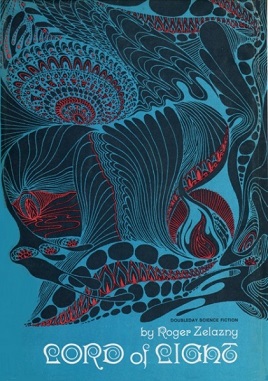
Does the darker atmosphere make it more viable in today's market or does the constant presence of sorcery and mage stuff make it less viable? Both? Neither? Will it cross the same audiences as Martin's work? Or get relegated to a niche because one element overwhelms the other? When you look at typical fantasy, like Terry Brooks' Shannara series, which is unarguably successful from a sales perspective, does that make it better than Roger Zelazny's brilliant and beautifully-written Lord of Light, which is barely remembered?
I'm not particularly concerned about the sales or audience questions at this point, since my story is largely unwritten and, thus, can't be sold even if people wanted to buy it. It's just another of those theoretical questions that invade my brain and cause me to wonder about people's identity crises vis-a-vis their choice of media. Is it OK to be a prototypical "jock" and like fantasy? Or only Game of Thrones-type fantasy? Do those labels even apply anymore? I'm a diehard Michigan football fan who understands the 4-3 under (that's a defense) better than most football fans I've ever met. But I have a closet full of board games, the majority of which could typically be described as "geeky" (Descent, et al) because of their themes and styles. Does that make me the ideal "modern fantasy" consumer? Good thing I know several other people like me, I guess...
Subscribe to:
Posts (Atom)


.jpg)