Showing posts with label culture. Show all posts

Thursday, May 14, 2026

Impressions


After a long absence, I can finally do the MacArthur thing on this blog ("I have returned."), not least because I'm also now sitting in another nation where the people don't initially speak my language and some of them wonder why I'm here. We have made the move to Portugal and my first impressions are that, long-term, we probably made the right choice, even if short-term frustrations and confusion have made the opening week less exhilarating than it otherwise might have been. Moving is always a disruption and a trans-Atlantic move to another culture is moving². We gave up a lot of comfortable and familiar things and people to come here and the upside is that almost all of the people that we've met have been so welcoming that it gives the initial sensation of comfort. And the word "things" doesn't really embody the material stuff. We're still waiting on a couple pallets full of those "things" so this temporary absence is very far from a crisis, albeit sleeping without a mattress has been getting less and less thrilling with each day that goes by. I'm all about camping but generally when I plan to do so.


The most interesting aspect to all of it has been, of course, those welcoming people. The vast majority of Portuguese that we've encountered speak English and often do so without prompting as soon as they see the likely "American" blank face when either they speak or I'm about to ask a question that I don't know how to properly produce without sounding like Twoflower (i.e. somehow if I speak LOUDLY AND SLOWLY they'll understand me.) But they're quite used to both tourists and ex-pats here and the typical pidgin sign language of "Want this?" and "Yes" gets everyone by. It's just always amusing when we walk in with our American-accented "Ola!" and they immediately respond with perfect English, like in the interesting Italian restaurant we stopped into the other day, where we started saying the Portuguese on the menu and the operator immediately stopped and said: "English? Yeah, that's no problem." Said restaurant was interesting because it seemed to be set up on a "fast food" model where you could get fresh pasta, like gnocchi carbonara, but didn't present the American fast food "vibe", as it were. It also wasn't a chain, but is instead just one outlet in Santa Clara (across the Mondego River from Coimbra) doing its own thing.


One of the other upsides was coming to a football-mad culture, where game nights are distinct outings for a lot of the population. We were out during a Monday evening that happened to be when the Primeira Liga was staging all of their games as the season nears its end. Coimbra is heavily-populated by Benfica and Sporting fans, albeit Porto wasn't playing that evening, so there's no way to tell the real ratio. We sat in a local joint, known as The Sports Bar (Portuguese humor may be underrated), to watch the second half of their match as they tried to stay in consideration for the title they've won more than any other club and the anguish of their supporters was evident when the result did not go their way. I know those feelings intimately and they don't change across cultures or locations. Meanwhile, the local semi-pro club, Académica, is playing for promotion into the second division (i.e. the fully pro ranks) this Saturday. We have tickets. If you're not going to support the locals, then why are you there? (Besides, it might be more appealing to watch than Liverpool, at the moment.)


And it's the locals that are of the highest concern in many ways. We went to a concert the other night and were greeted by a couple walking around the facade of the building like we were. They recognized Americans (blank face?) and asked why we were visiting. We said: "We just moved here." The reaction was obvious: "Ahhh...." (slight pause) "Well, welcome!" There are a lot of people like us here and it's an open question as to whether that's a positive thing for the local environment. I'd like to think it is, since adding more to the mix is the same essential element that has made the United States and modern American culture what it is, despite the efforts of the idiots to deny it. Indeed, that modern American culture is evident everywhere here, as you'll often see people walking around wearing clothing with slogans in American English and the aforementioned fast food has also permeated the environment, as one of our neighbors tried to explain our mutual address to someone else by starting with: "Do you know where the Burger King is? We're just up the street from that." That "just up the street" concept is a huge upside, as well, eager as I was to get away from our dependency on a car to do much of anything outside the house. We are a few minutes walk from two major shopping malls (they still have them here), both of them with grocery stores and a smaller one of the latter is one block away. We've been here 8 days and have already walked home with groceries a half-dozen times, which is a wholly unAmerican thing for much of our suburbanized, car-oriented situation in the States in recent decades.


It's also a popular sentiment amongst the expat group that we met up with yesterday. It was an interesting mix of people who'd been here for years or had only recently arrived, like us, many of them chatting about all the cool things within walking distance of their homes. It was also another subtle reaction moment, when one of them asked if I was law enforcement, since they'd briefly seen the word "Justice" tattooed on my arm. I smiled and showed the full piece, which is a Diego Rivera-like rendition of a fist crushing a dollar sign, with the raised fists of  red and black others within it and the words "Equality" and "Justice" basing and capping it, respectively: "No, I'm a Marxist." was my response. I could read the surprise and then wariness in the faces of a couple of them, which is a pretty typical reaction for average Americans, most of whom don't really know what that political philosophy is other than "bad." But a couple of them saw the humor in it and we moved on. It was encouraging to hear later from another of our expat compatriots describing Michigan (his birthplace, as well as mine) as: "Well, there's Detroit and then Ann Arbor and then it's all Republicans until you get to Chicago." That's pretty accurate and another sign of the detachment that modern groups of Americans feel for each other. We'll have to see how we fit in with all of these new groups here and if I can shake the "invader complex" after a while.

Sunday, November 3, 2024

Two nights in Porto and one last one in Lisbon


So, yeah, Porto was generally a better experience than Lisbon, even for a day-and-a-half. Like I said, we were staying right downtown, so there was much more energy around our locale. That energy included repeated entreaties from the tchotchke shops to come in and check out the wares that were the same as any other shop that almost invariably appeared within a half-dozen storefronts, if not less (We were proudly told by one owner that he owned two other shops in that area, including one within 100 meters, so if we didn't find the size we were looking for, he'd just run over to the other shop.) It's like being on Decatur Street in the French Quarter; same shit, different door. 
The other popular locale was shoe stores. On St. Catarina Street, there were more shoe stores in a three-block stretch than I've seen in some whole towns. It was insane. Almost literally every third shop along the several blocks that we walked was a shoe store.


The big event on Tuesday was a river cruise on the Douro River, which is what runs right by Porto to the Atlantic. Porto is entirely on the north shore and the city of Gaya is on the south shore. There are a half-dozen bridges running between the two, some modern and steel, some medieval and stone, and a couple that are multi-level. But the follow-up to the cruise was a port tasting on the Gaya side. Now, as noted, our experience with port was not great, either in Portugal or outside it. The stuff we tried at the local market the night before was also not something I'd go after again (The olives, OTOH, were great.) But we had a tasting with local distiller, Calem, and this stuff was fantastic. I was mistaken when I thought that tawny port was rosé. It's just the most aged of port that changes color with the aging process, with ruby and white having less time in the barrel. That also gives tawny the most barrel character, as you might expect. After a tour of their distillery, where they tried to impress us with the size of their barrels, we tried a tawny and a white, both of which were excellent. They had balance. They weren't overly sweet. They had depth. We were immediately smitten and thought about shipping a couple bottles home... only to be brought up short by Michigan being one of the two or three states in the Union dumb enough to still forbid shipping alcohol, which I was hoping there might be a way around, but there isn't. I thought we were the only ones, but those new friends we met on the tour are from Rhode Island, which also doesn't permit mailing booze. It's just simple-minded protectionism for the local distributors; not even producers. One last, great example of legislatures (and attorney generals) that are effectively bought and paid for. That same problem is what prevents us from shipping home a bottle of ginjinha, which we'd become increasingly fond of while we were there.


We went from there to a restaurant down the street where I finally snagged a francesinha, which is a toasted sandwich of pork roast, ham, bacon, and linguica, over which is cheese melted by a super hot tomato-and-beer sauce. It sounds amazing. It was, in fact, excellent. Would gladly have again, except for the absolute calorie bomb that it is. (Even so, next time we come, I'm making room for one.)


Walking back to our hotel (A-cross the ri-ver!), uphill, in the high 70s, on cobblestone, and hauling 20 pounds of liquid (and glass) that we could get into carry-ons since each item is less than 3.5 oz... we came across a student band from the U of Porto. They were all young women and were all in uniform (white shirts, black ties, black knee-length jackets and skirts) and played a variety of instruments while also doing some mild dance routines and chants that sounded like something you'd associate with European students. I was struck again by the prevalence of traditional dress, right alongside the far more casual look that is emblematic of American students. They were great entertainment and we donated to their instrument fund. I was cramping up by the time we got back to the hotel. We definitely should've called an Uber.


Speaking of which, I forgot to mention before that the dichotomy(!) of cars we've experienced in both Lisbon and Porto is hilarious. The first three Ubers that we called were all driving white Teslas. Not just Teslas, but white Teslas. Every, single car we've had since those first three has been a standard transmission. It's like a step back in time from the modern, electric era to the 70s, since you almost never see standards in the US anymore unless they're full-sized trucks. It also highlighted once again the driving skill of most of them. We had a great dinner at 17, a restaurant on the 17th and top floor of a hotel a couple blocks from where we were staying that, as you might expect, gave us a great view of the city.


There's definitely a sense of rivalry between the capital and Porto, with the latter having a great example of that Second City sourness that Chicago exhibits towards New York. Our tour guide, a Lisbon native and resident, when confronted with the opinions of many in our group who cited how much more dynamic Porto was in comparison, were replied to with: "I am glad you like it. Porto, I am not a fan of." There was no explanation as to why. It was simply that she was on Team Lisbon.


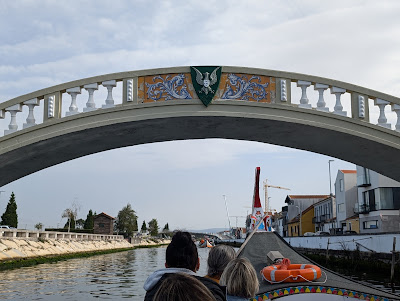
In the morning, we got on the bus back to Lisbon, but made a stop in Aveira on the way; known as the "Venice of Portugal" for its many canals and salt pans, out of which it still produces a substantial amount of the domestic salt production of the nation and has been doing so for a couple thousand years, given the nearness of the ocean and the water that seeps into those pans. It's a pretty cool town, although we didn't see much of it. We took a boat tour of the canals and our guide was a great example of Western European language aptitude, switching easily between Portuguese with our pilot, some French tourists in the boat with us, and English for us; the latter two with no struggle and a near-perfect accent (or at least one not overwhelmed by his native Portuguese.) He was a Benfica supporter and, as I sat down in the boat in my Liverpool hat and Liverpool hoodie, asked: "So, you're a Liverpool supporter?" Me: "How could you tell?" We talked a lot about the game as the boat moved along, between his programmed descriptions of what we were passing by (including a public park with exercise machines, which was kinda cool.) It's always refreshing to find someone that really knows the game and can bring their own perspective to it.


We made it back to Lisbon and immediately set off for the Quake museum, about the 1755 earthquake (and consequent tsunami and fire) that basically destroyed Lisbon, leading to a public inquiry that was not only the first example of seismology as a science, but also modern urban planning. Of course, the most impactful result was the beginning of the Enlightenment (Why did the loving God destroy the capital and kill thousands of devout Catholics in devout Portugal on All Saints Day? "Mysterious ways", my ass.) Anyway, the museum is interesting and quite interactive. Then another solid dinner and a ride with a Bolt driver who was genuinely aggressive in his approach to traffic (and still with a stick shift), which was kind of entertaining. Still drove completely within the law, though.


2.5 hours after I wrote this, we left for the airport to catch our early morning flight to Paris and from there to Detroit. It was a really good scouting trip vacation and we even looked at home prices around Coimbra. Unlike our friend, I don't think I'd do the tour thing again. I just found it too restrictive and with too much time spent in front of things that weren't particularly compelling. We also ran into a couple Trumpers on our bus that I made a couple pointed comments to who then gave us something of a wide berth, which was fine by me. Fuck'em. In contrast, our new friends from Rhode Island were a ton of fun and we may try to arrange another meeting across the pond with them (or the other pond) at some point in the future.


Three days in a few small towns, part II


We spent that night in Fatima, which is the town in which a vision of the Virgin Mary apparently materialized to three children in 1917, telling them that World War I must stop and they needed to deliver her message of peace and life. Said message didn't sink in to two of them, since they died of the Spanish Flu a couple years later (the third lived on into her 90s) but it was apparently enough to attract hordes of Catholics to see the place of the miracle, if not the miracle itself, so there's a colossal basilica in town and they do processions all the time around various buildings/sites and whatnot. The hotel we stayed in was kinda podunk and the town is very, very dead when it comes to entertainment, so if the opportunity comes up when you visit the country, I'd skip it. All of that said, we didn't see a whole lot of said town, since we stopped at a giant gift shop for some reason, which was selling images of Mary and other religious tchotchkes, plus general ones. Most of the 45 minutes that we spent there, I was trying to keep track of Liverpool playing Arsenal, but if there had been anything else to do, I would've kept my head out of my phone. (As it is, we ended up with a 2-2 draw.) We did find a solid bistro with a guy who made really good burgers (again, catering to tourists), though.


The next day, we left Fatima and headed to Tomar, which is the locale of a massive Templar fortress/monastery complex that produced some of the best pictures of the trip. Sitting in the bistro the night before, Tricia had to suffer through a 15-minute lecture about just whom the Templars (and the Hospitallers) were and what happened to them. Our guide did a similar, albeit much shorter summary the next day when we arrived at the fort. On the one hand, she brought up the one fact I'd forgotten about the Templars essentially being the world's first bank. OTOH, she didn't say anything about the Hospitallers or the Crusades, in general, so if you want actual context with your history, I guess that's my (boring) role. I, at least, will not spare you the fact that the Templars were, in many instances, the equivalent of brigands in the Levant, and the Hospitallers were pirates in the last decades of their existence. Opportunists, all.


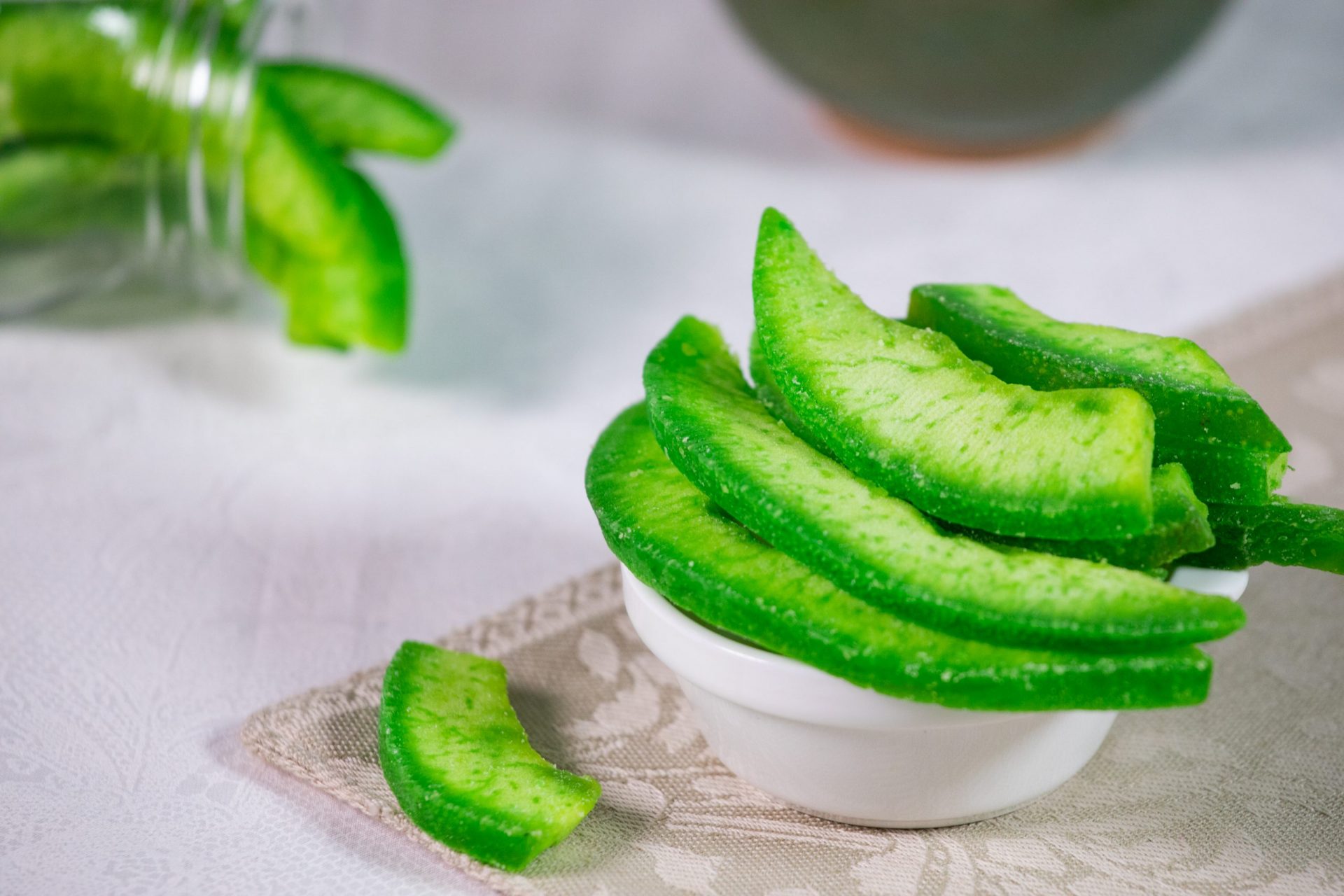
Nevertheless, as you can see, there was some cool stuff inside. Also, we had a bit of an experience with a woman who was outside the exit, selling dried fruit and other things from a cart to the by now hungry tourists. I didn't know that dried grapefruit is naturally bright green because of chlorophyll. I'm not normally a huge grapefruit fan, but this stuff was great.


Then we continued on to Coimbra, which turned out to be one of the highlights of the trip. Coimbra is the former capital of Portugal and the home of its oldest university and one of the oldest in Europe. We had been looking hard at Coimbra in terms of landing spots because it's a college town, which both of us appreciate (both the one we live in and the much larger one next door) for the energy and dynamism that young people bring to local life. That vibe was more than evident in this particular college town from the moment we set foot in it. Not only can you see college kids running around all over the place, including many wearing the traditional cloaks/capes for being part of their various honor societies (which most of the people in our group immediately squealed about "because they look like Harry Potter-!"), but the town is almost equally dependent on their business as it is on hordes of foreign tourists. In other words, this Portuguese town had both the feeling of being oriented toward the Portuguese but also toward the wider world, as most university towns tend to be.


Like Obidos and Nazare, it's also still largely made up of twisting, medieval roads that gives the place part of its enormous character. The architecture of the university is accompanied by similar medieval and post-earthquake 18th-century constructions that still seem to fit right in alongside the modernist apartment and commercial buildings. Speaking of which, our tour guide pointed out some of the government buildings present in town as being built during the Salazar era and having the brutalist nature of Soviet architecture, so authoritarianism doesn't really change much from place to place and culture to culture, whether fascist or Stalinist. (Keep that in mind when it comes to voting on Tuesday, if you would.)


As with most of the major towns and cities in Portugal, there's also a fantastic river that flows right through Coimbra, separating the old town (north) from the new town (south.) We had some great food here at another hole-in-the-wall that we found (duck-and-orange salad with not typical oranges, pica pau (stewed pork)) and just generally loved every minute of it, including while we were marveling at a police van that rolled up right near our meeting spot, spilling out 8 or 10 polícía in vests and kneepads, with batons in hand, looking like they were going to make a bust. Turned out they were just going to get coffee(?) Our tour guide looked at me when they first emerged and said: "What did you do?!" I said: "I don't know. Be a Marxist? I thought you told me Salazar was dead!"


We did miss out on one thing that we were both really interested in, which is the famous library of said university of Coimbra. We know that it was available, because some new friends we met at the fado show who were on the adjoining tour were planning to stop in and had asked us about it in Nazaré. (We ran into them in almost every location we stopped, as you might expect.) Our guide didn't let us know it was an option until we got into town and, by then, there were no time slots open before we were scheduled to leave. So, something to see on the next trip, I guess.


Then we headed up to Porto for the next couple days. Where we're staying in Lisbon is apparently the "old town" which is heavily residential and feels more like many areas of Detroit, where you wouldn't be surprised to not worry about bumping into other people on the sidewalks, despite it being a huge city. We stayed in proper downtown Porto, which meant it had much more of a "big city" feel, even on a Monday night when we arrived. We couldn't walk 20 feet without having to dodge someone else and the city was very alive and lit and still working while we were out. The Mercado do Bolhão, a market similar to the Time Outs, was a couple blocks from our hotel, so we headed there to get something to eat. We tried some port for the first time since we'd gotten in-country (we were waiting to reach Porto) and it was still way too sweet, but not bad (This would change when we tried some genuinely good stuff...) Unlike my usual taste in wine, I liked the white port we had more than ruby (red) or what I thought was a rosé in tawny port. (I was wrong, as I'll explain.) Still can't find a decent porter anywhere in this country, though. The US is still far, far ahead of the rest of the world when it comes to beer. The best we were able to find throughout most of Portugal was a brand called Super Bock which doesn't actually produce bocks, but instead has your bog-standard lagers and an average stout.

Saturday, November 2, 2024

Three days in a few small towns, part I


We set off from Lisbon for Sintra, which is a UNESCO site around a massive mansion formerly inhabited by Freemasons and not a whole lot else. We arrived before a road rally made up of "old cars", many of which were cheap 70s models like Pacers and Vegas, along with a couple old-school, gas-guzzling Mustangs and so forth. Having zero interest in automotive festivities, it continues to fascinate me how and why someone would obtain and restore a crappy 70s hatchback and then use it to run a road rally. But, y'know, everybody's gotta have a hobby.


Anyway, said massive mansion does have some interesting parts, like a well that goes down a couple dozen meters and was never used for water but for initiation to the club. But it was also a tour through another ornate mansion that has never really been my thing (I don't know shit about interior decorating) and we were there for several hours and about two too long. We ate at this local tapas place (they don't call them "tapas" here; it's "petiscos." Why are tapas restaurants in the US labeled as Portuguese? Probably because "petiscos" is too complicated/foreign-sounding for most Americans.) and it was good but it was here that four straight days of seafood were starting to wear on me a bit, too. I mean, I get it. Small country, formerly one of the greatest seafaring nations on Earth and with abundant resources in that respect. But variety is the spice of life, yo.


The people in Sintra were accustomed to tourists (the unending line of tchotchke and pasteis shops was sure enough sign of that) and certainly are happy to have that steady stream of income. But there's a certain expression of resigned endurance that appeared there and in later towns that's probably universal to most tourist spots and Portugal, like Iceland, depends on tourism for its economy to function. I don't think it's the #1 revenue source, but it's pretty close, not least because of the insane number of tour buses that we saw everywhere we went and the fairly astounding skill of the drivers of said buses when it came to maneuvering not only past each other, but also through the roads of medieval towns that are only barely wide enough to accommodate them and which are still part of the complete lack of urban planning and design that never thought about anything larger than a horse-and-wagon.


After Sintra, we briefly stopped off at the westernmost point of continental Europe (during a driving rain squall), Cape Roca, and then moved on to Cascais, the former beach resort of the aristocracy, which kinda still is. Our tour guide was only too proud to inform us that Cristiano Ronaldo had a house there and so did many other players from the Primeira Liga and other leagues in Europe. My impression is that it's kind of a low-rent Ft. Lauderdale, in that there's obvious money around and the town has been reshaped to serve not only that money but the legions of tourists who come to see it. There was a distinct commercial element to pretty much everything and I was kinda repelled. Needless to say, this day wasn't going as well as the others. This was one of the obvious downsides of being part of a tour, too, since if we had encountered this kind of situation on our own, we would have quickly departed for something more interesting.


We returned to Lisbon and headed down to the Time Out Market to eat, since Bourdain had spoken highly of it, as had some friends. It's a venture by a British company which also has locations in Miami and Chicago apparently and, like the food courts in Iceland, is a hotspot, even on a Saturday night. Food was decent. Drinks were solid. We had some more ginjinha, which I failed to mention last time. It's a liqueur made from a type of sour cherries that's incredibly sweet but still not repellent as most things like that would be to me. Part of it may be that I like cherries. We went to a small shop on the edge of one of the plaças that Bourdain (of course) had visited. The proprietor was just finishing up a new bottle that had the berries in question sitting in the liquid, a couple of which landed in each glass and each of which provides kind of a powerful ending punch to the drink. The couple we tried after that lacked berries and kind of paled in comparison until we got to Obidos. A lot of people like it in chocolate cups, which I'm kinda meh on. The stuff at the Market was OK. While it initially struck me as too sweet, the more we tried it, the more comfortable I was with it.


The next day we piled on to the bus to leave Lisbon for a few days, The first stop was Obidos. It's a town that's largely contained within its original medieval walls. You can walk the whole circuit of them and we did. This was a town that was also beset by its original medieval layout, which meant that only residents could have cars within the town itself. That presents some interesting situations wherein said residents know that their living place is utterly dependent on the legions of tourists that pack its streets and make driving on them with a car quite difficult. But, just like the Uber drivers in Lisbon, they just accept it and patiently crawl through crowds that don't really know what a "Peugeot" is or why they should move out of the way of one. 


In addition to the genuinely impressive castle walls, Obidos claims to be the origin place of ginjinha. No one can verify that (and the EU apparently hasn't confirmed it, since the drink is made everywhere in Portugal without issue) but I will say that it was the best we've had so far, outside of that little hole-in-the-wall that Bourdain visited in Lisbon. There was an extra layer of flavor there somewhere and it tempted me again to try to find a way to ship a bottle home (which, of course, isn't possible thanks to Michigan's inane protectionist law.)


After that, we went to Nazare, which is the Portuguese name of Nazareth. This is not really a religious site, despite the name, unless you're into worshiping Poseidon. Nazare apparently has the largest waves in the world striking its two large beaches (mostly the north one.) But that happens only if the wind is coming from the southwest, rather than the northwest as it was on the day we visited. It's also the home of what seems to be an impromptu museum on said beach of Portugal's formerly mighty fishing industry; another casualty of the EU. Nazare would formerly have been one of the centers of major export production, but now just has a bunch of cool-looking boats on the beach with permanent placards talking about who owned them and how they were used, with some of that implicit fado longing in those words about what used to be and now no longer is with the shrug of the shoulders of much of the surrounding residents.


Unlike Cascais, however, Nazare has its own character that has little to do with commercialism, but still a lot to do with tourism. I found the place to be very pleasant and seemed like the prototypical experience of "small Portuguese fishing village" albeit one that no longer really fishes and is known far more for the surfers who come to try the biggest waves in the world (there were placards with the names and faces of several of the more notable figures of that sport also present about 100 yards from the boat museum.) This last pic was from a fort at the end of a peninsula that separates the two beaches and which was quite the hike down and even moreso back up at something like a 40 degree angle. I don't think either of us gained any weight on our vacation... More towns in the next post.


Three days in Lisbon


We were in Portugal. I don't think either of us had ever had it really high on our list of places to go, but it kind of showed up on the life radar recently. Part of it was just wanting to take a trip to a place that neither of us have been before and part of it was thoughts of retirement. There's a large expat community in Portugal, based on the decent climate, the seriously low cost of living, and the easy access to the rest of Western Europe, so we've been giving it some serious thought and figured we'd take the equivalent of a scouting trip to see what's what. A very well-traveled friend of ours has been to Portugal before and recommended linking up with a reputable tour company to avoid the apparent legion of scammers and to simply ease the burden of planning and scheduling and all the other logistics that go with traveling. We did so and ended up with mixed feelings about the results.


We landed in Lisbon at 8 AM on Thursday and dropped our bags at the hotel and took off across town to visit a highly-Google-rated breakfast place called Seventh Brunch. All of the talk online is about how Portugal, like many places, is a non-tipping culture and most workers don't want tips because they feel like it will encourage employers to pay them less because of what they'll potentially make in tips, similar to how the US works. But we discovered that this place clearly catered to Americans because the check had "Suggested Tip" automatically printed at the bottom. Over the course of our eight days, we found only a couple other places that did this, but the (ahem) typical function still appears on Uber and Bolt, which we used quite a bit to get around both Lisbon and Porto. Hard to tell what the mindset is or if it may be changing or if it's just particular businesses that cater to Americans and feeding off the greater wealth of the expat community (and tourists like yours truly.)


In riding with said Uber and Bolt drivers, we got a decent education in current Portuguese and Moroccan hip hop and grime. Most of the drivers weren't that talkative, but it's possible that most of them don't know much English even though it's every bit as common otherwise among service workers as it is in Germany (and, y'know, Liverpool...) We didn't find a single food service worker who doesn't speak at least some level of English and most of them spoke it quite well and we've went everywhere from streetcarts to what many consider the best restaurant in Lisbon, Cervejaria Ramiro.


We went there because of Anthony Bourdain. He went to Portugal no less than four times across three different series, so most people knew that he loved the place. Across those four episodes, the only place he returned to was Ramiro, which is kind of a high-end seafood place that presents as an old school, family restaurant, with different parties seated at the same tables and so forth. We went with some obvious suggestions (shrimp and clams in garlic) and less so (barnacles, murex straight from the shell.) I've never had either of the latter. Any conch I've had before has always been deshelled and in some sauce. These were in the shell and you just hooked them out and tossed them down. Decent. The barnacles were a bit less so. They're fried and then you have to chew off the dried and fried husk before getting at the meat which tastes something like oyster. Not horrible, but not worth the effort, IMO. The tiger prawns grilled over salt were excellent, though. This was also our first direct experience with that cost of living that we were hearing about, in that a multi-dish fresh seafood meal at the restaurant that even our Uber driver recommended as "the best in Lisbon", was probably half the price I would've expected in the States.


The other thing about many of the Uber drivers is that they drive like maniacs (slamming the accelerator down to go two blocks before hitting an intersection and/or stoplight) but they're also scrupulously observant of traffic laws. If they see a yellow light, they actually slow down and then stop, unlike 90% of Americans. Turn signals are always used and, just like in Germany, they're incredibly courteous to everyone else on the road and those other drivers are, in turn, also courteous to them. If someone puts a signal on to move in to a packed lane, someone slows down and lets them in(!) They also make adjustments during traffic and in some of Lisbon's stranger intersections that go from two lanes to five in three different directions and vice-versa. If people make a slow turn or stop in the middle of the road to let someone out or do something else that most Americans would react to with outrage, these drivers just shrug and accept it as part of traffic in Lisbon.


Over those three days, we spent time in both the main city on our own and in a couple "suburbs", which are really more like the continuous sprawl of American cities. As with most large and old cities, there are different qualities to various areas, defined by the concept of "quarters." The pace of modernization has reduced those geographic personalities a bit and I think that's been accelerated by the influx of tourists. Only a couple times throughout our trip did we walk into an area that lacked the presence of American, British, German, or French types with their cameras and little radios to keep an ear to what their guide was saying. Those moments were typically when we walked into what would be considered a Muslim neighborhood, as the stores advertising halal products would suddenly appear and just as quickly dissipate when we walked another block.


We tried the famous bacalhau (salted codfish; the national dish of Portugal despite cod not being present in Portuguese waters) four different ways and found it to be seriously lacking. Traditionally, it's roasted over a bed of potatoes and topped with onions and peppers and a butter sauce. We tried it that way twice and also mixed in a stew and as part of a sandwich and still had no moment where our eyes would light up. Only one section of one of those fish had anything resembling what you would consider SALTED cod. Otherwise, it tasted like anything you'd find breaded and fried in the US (aka frozen fish sticks.) It also seriously lacked flavor precisely because it lacked salt(!) Meanwhile, the couple times we had octopus, it was excellent (and even better when we got to Porto, where it's more of a specialty) and we've had the pasteis de nata a couple times and they're pretty solid. They're sweet but not overly so. But they're still sweet, leading me to wonder why anyone would douse them in powdered sugar. Cinnamon does add a lot to them, though.


Our tour guide has been good enough and has filled us in on not only what we're seeing but the Portuguese mindset in a lot of ways. They're one of the red-headed stepchildren of Germany-... excuse me: the EU, but unlike others such as Greece, who've reacted to being dictated to by Berlin and Paris in terms of economic output with outrage, the Portuguese have kind of shrugged their shoulders at it and accepted their lot. Most people recognize that the upsides of the EU probably outweigh some of the economic downsides. But there's a cultural part to it, as well. As one of our tour drivers put it: they're a small country with an incredibly rich history that most of the world will never know about. A brief examination of said history will prove that to be spot on. They're very proud of their identity as the people brave enough to explore what was the 15th-century equivalent of trying to get to the moon, but also aware of all of the downsides that went with that (colonialism, slavery, etc.) Being under the boot of Antonio Salazar for almost 50 years but now 50 years past has been enough time for reflection that ripples through the national outlook in many ways, too, I think.


On that note (quite literally), we went to a fado show on one of our first nights in Lisbon. Fado is the national music of Portugal; short songs of longing for something often undefinable and accompanied by strings. Despite it being their version of the blues, it's not solely traditional blues (slow paced, mournful) but instead, like modern blues, has embraced all kinds of tempo and often amusing topics, even as it maintains the sonorous delivery and message of unfulfilled desire. We saw a trio on fado guitar (higher pitch than typical acoustic), regular guitar, and stand-up bass with alternating male and female singers. It was great. I'm interested in digging into more of it and apparently so is the rest of Europe, as a couple of performers in that style have become massive stars in the EU in recent years (Ana Moura, etc.) Next up are Sintra and then some smaller towns that we visited on our way north to Porto.

Monday, May 27, 2024

Two more days in Iceland


We got back to Iceland at the end of a mildly harrowing experience at Luton airport,.. and arrived in Reykjavik in the middle of an Icelandic version of a Nor'easter. Except this was in the southwest of the island, so whatever. It was winds between 30 and 50 mph (That's 48 to 80 kph for you metric types, which includes Icelanders. It was mildly jarring going from metric to the only other nation stupid enough to use Standard and then back to metric) and driving rain. Combined with the wind, when the rain hit our faces, it was actually painful, so that was fun. When we landed, we were supposed to go right to the Blue Lagoon, but because of some confusing email traffic, we missed the bus. $90US for a cab ride later, we were at the famous Blue Lagoon (another hot spring with a lot of blue silica in the water) and it's always fun being in a hot spring and wading up to the bar... except when you're constantly trying to not face at least one direction to keep your eyes from being hammered by the stratospheric bullets. So, yeah.


The day was mildly rescued by finding a place to eat that night that was the best food we've had on the entire trip: Salka Valka. It's down on the western end of the city, a little off the main drag of Laugavegur, and there's not a ton of seating. But it does traditional Icelandic food with modern preparation. There was a fish soup with a chickpea base that was astounding (especially fitting for a day when a nor'easter has been drenching us the whole time) and their fish stew and lamb shank were also excellent. Seriously, this was beyond everything else we've eaten. If we ever come back, we're eating there again. Maybe twice. The day was also rescued by our being able to find that weird candy shop with the salty licorice: Taste of Iceland. If was trying to find anything I could on Google and then went down to Laugavegur to see another more famous candy shop (Vinberio) because I knew we'd passed that at some point. I started walking east and was about to give up when we found Taste. Of course, I later discovered their wares in Keflavik airport, so maybe I could've saved us some of the hiking.


On our next (and last) day, we took a tour of what Iceland tourism refers to as the "Golden Circle", which is an area in this part of the island that has the most tourist attractions. We went to the continental divide, where you're standing in the 5 km gap between the North American and Eurasian plates, the first named geyser (Geysir, which is where the word comes from), the most impressive waterfall we've seen here, and yet another hot spring, known as the Secret Lagoon. It was a worthwhile way to spend the day, but followed with some less than impressive food at that same food court we visited last week. Seriously, the fish and weak-ass fries thing (instead of chips) just has to go. I realize it's a lot cheaper for restraurants to just get already-produced stuff, rather than asking staff to slice into dozens of potatoes a day, but it's really disappointing. 


On that somewhat down note, I will say that the transportation options in Reykjavik are a little aggravating. In Liverpool, we just Ubered everywhere and had a driver within one minue almost every time, no matter where we were going. In London, we had the Tubes and still had three other options (bus, taxi, Uber) if we wanted it (The service we used to get to the airport on our way out is called Bolt.) The bus system in Reykjavik is divided between city buses and tour buses with no seeming connection. Also, taxis seem to operate strictly between airport and city, as we never saw one sitting on a curb waiting for a customer and failed to find a way to call one when we weren't interested in walking a dozen blocks in the driving rain. And there is no private driver service like Uber yet operating. So, if you want to get around, you're either walking or renting a car; the latter of which is something that our friends, Katie and David, recommended to us so, y'know, they were right.


So, anyway, that's a wrap. We're leaving at the crack of dawn (that's a joke in Iceland around this time of year, where it stays light outside for around 20 hours out of the day (we have to draw the curtains and blinds to blot out the light at 11 PM so Tricia, at least, can get some sleep.)) There were a lot of highlights to the trip (Liverpool game, attending a Shakespeare performance in Shakespeare's theater) and no genuine lowlights, so a success, overall.

Three days in London


This was a much easier travel day, because all we had to do was take the train down from Liverpool, which takes about 2 hours. We ended up in a nice place nominally in the West End (Edgware Road was the closest Tube station for those of you in the know.) London is, as you all know, a massive city which is still suffused in money, even post-Brexit and which has people from so many walks of life that trying to say that you met the "average Londoner" is akin to saying you met the "average human." The common expression and dialogue on the Tube leads one to believe in the stereotypical "dreary English" type as the grain of truth to said stereotype, but it struck me that most of that distraction was more typical of people engaged in the boundless energy required of major city life. I have spent time in NYC, Chicago, LA, Miami, New Orleans, Seattle and, of course, Detroit (where I grew up) so that kind of life and the personal intensity that it often requires isn't unfamiliar to me. But it struck me that London is still quite obviously one of the loci of human engagement; again, even after the idiotic departure from the EU.


Tricia had been to London once before, but unless you're a regular user, the Tube system takes a little time to pick up. By the third day, we were easily finding our way across routes and beating Google Maps' suggestions for how to get to places. As with most major public transit systems, where you are often defines how good they are. The main line off of Edgware is the Bakerloo line, which is populated by older trains, without digital readouts, with speakers that left the automated announcers' voices muffled ("Mind the gap!" should have been a band name by now, as it does have its own Wikipedia entry), and with trains that reminded me of 80s NYC, where you had to open and close doors to proceed from one car to another. In contrast, the Elizabeth and Victoria lines are much more modern, with wider, more comfortable cars, digital readouts displaying the current stop and the next one both on the interior and exterior of the cars, and flexible joins between cars, so each train is essentially one long carriage. The latter two lines, of course, service the more wealthy parts of town. They were also the ones that produced the standard London, Business Capital of the World encounters, when groups of mostly men would enter the car still engaged in whatever dealmaking they had been pursuing (often overloud, to declare their importance and intent.) That was echoed in some ways by the number of people I saw pursuing a behavior that has largely gone out of style in the States about a decade ago: walking and conducting a phone conversation that only they can hear through ear buds. Back in the day, it was Nokia or Blackberry earpieces. Now it's earbuds, but it's the same behavior: walking along and half-shouting your half of the conversation. That's a rare event as far as I can tell in the States anymore, but every fifth or sixth person we passed in London was doing it. Maybe it does still happen on the regular in larger cities here? Dunno.


When we got in on our first day, we rushed across town and managed to check in before flitting off to Soho for a Music and Pub tour. It was pretty cool. Our guide pointed out a bunch of studios where everyone from Bowie to Hendrix had worked and then the bars that they frequently got drunk in. The highlight for me was visiting the Dog and Duck; Orwell's favorite haunt and where he wrote most of 1984, Then we went on a mildly absurd excursion known as the Bustronome. It's a glass-topped bus that drives around the major sites of London while serving you a six-course meal. It was entertaining, except that they played pop music instead of announcing things we were driving past (sometimes quite quickly) and the food was good (the best course was probably a salmon mosaic that was served first, unfortunately), but I don't think it was worth either the time or the money.


We got up early the next day to do a four hour walking tour of many of those major sites (The Tower, Parliament, St. Paul's, etc.) Our guide was an ex-cop and a total Tory, failing to hide his contempt for the protesters outside Parliament and for particular members of the royal family who didn't conform to the wishes of the recently-deceased queen (Diana, Fergie, etc.) Apparently he'd been a member of the Queen's Guard unit at some point and he displayed all of the attitudes and perspectives that you might expect from someone like that. He was also a West Ham fan. Nice enough guy, though. He gave us the tickets that he collected for the Tower so that we could use them to go back in and look around some more.


That night we went to one of the highlights of the whole trip for me: a performance of Much Ado About Nothing at The Globe, the recreation of William Shakespeare's theater. Just like at Anfield, I was totally geeked to be there. It was an excellent performance and they added a few musical elements to it which worked really well. The theater is fantastic, except that sitting on the edges of the various levels might be a bit problematic for those with longer legs, like I have, as I basically couldn't sit comfortably without my knees intruding on the spaces next to me (which, thankfully, were Tricia who has very short legs and the aisleway.) The next day, we came back to do a tour of the theater and our guide was an unabashed fan of the Bard, talking about how he didn't have complex plots but had a) compelling characters because they acted like actual humans and b) had them because he was interested in telling a story, which is why he breaks the Fourth Wall so readily in most of his plays. He's talking to the audience because he and they are aware of the fact that he's telling them a story. Tricia turned to me at one point and said: "It sounds like I'm listening to you." I was like: "Yes! Because that's the point! That's why Shakespeare works! His characters are  real people, not just levers to the plot, and he's, first and foremost, telling a story!" (This, of course, is a constant refrain in my movie and TV criticism here. The guide pointed out that the Game of Thrones TV series worked because it had compelling characters, while House of the Dragon doesn't because its characters are all ciphers to drive the plot. (Bingo!)) The fact that our guide's name was also mine (albeit spelled with a "k") just made it feel that much more like I was listening to one of my own rants.


We later went to a couple of the stores that Tricia wanted to see, like Pick 'N Cheese, which is a conveyor belt of two dozen different (mainly English) cheeses with various accompaniments. Made a whole meal out of that. That night, we met a friend that I've known for years only electronically, via the board game site (ThereWillBe.Games) and his wife, as they introduced us to a nice vegetarian place in town (Plants by Etta.) One thing I have noticed is that English restaurants in both Liverpool and London are extremely conscious of vegan and vegetarian options. It's growing in the US, but it's still often in the form of "Has a vegetarian option" or "Ask about said option", while in the UK those options were main choices on the menu almost everywhere we went. That kind of segues into what seemed to me to be the strongest cultural icon of England at the moment: Pret a' Manger (which, of course, is a French phrase...) It's a higher-end sandwich shop and it's everywhere. EVERYWHERE. We saw them constantly in Liverpool. We saw them in every neighborhood we went to in London. The night we were on the bus, we were driving past the city center and passed two of them on the same stretch of road, thirty seconds apart. We did not, of course, stop to try one because we usually avoid chains, but the English do love this one.


But one of the more ridiculous moments also took place that night, when we went to get a drink after dinner with our friends. The aggravation for me in drinking both in the UK and Iceland (and Germany, five years ago) is that everything is mass-produced lagers, whether English, American, or Icelandic. There are some ventures into IPAs, which I'm not a huge fan of, and I discovered that Guiness, when it's fresh (i.e. was produced in the neighboring island maybe a couple weeks ago at most, as opposed to the months getting to the US) is actually pretty great. (You can taste the caramelization of the grain!) But, still, just like in Germany, I was constantly on the hunt for something red or dark that wasn't Guiness and always failing. We did find a couple nice local ales on the Pub and Music tour, but that's about it. So, on our last night, we roll into a bar and I see the usual selection of lagers and I ask one of the bartenders if they have a porter. His response: "What's a porter?" I had to stop and blink a couple times. It was invented here! In this city! And this kid doesn't even know what it is. So, yeah, it's safe to say that we are spoiled for cboice here in Michigan and the craft brewing movement still has a long way to go to get anywhere in most of Europe.


We lit out at 4:30 in the morning for our return to Iceland (after having watched a fox simply stroll across the road in the middle of London. Our driver said they're basically pets, which reminded me that I hadn't seen as many squirrels as I'd expect with the number of trees in the city.... We made it to the airport with what we thought was enough time, but then turned out to be the first time I've been sprinting through an airport to catch a flight in many years. Luton Airport is not the most organized of places, just FYI.