Tuesday, July 28, 2020

My life is irrelevant to Joe Biden


I mean, seriously, I knew that already. In the immortal words long attributed (incorrectly) to one Josep Besarionis Jugashvili: "It's not the people who vote that count. It's who counts the votes." In the case of the Democratic party, it's not even vote counting that matters. It's dollar counting. Those dead presidents won the day again tonight. Despite 88% support among Democratic party membership, the platform committee voted down a public health insurance option ("Medicare4All") for the platform upon which Josep(h) Robinette Biden will be running. When the news came out, Michigan's own Abdul El-Sayed had this to say:


I'm sorry, but "Joe Biden isn't Donald Trump!" is not what I'd refer to as a vote of confidence. That line has been the running joke in the media for months now and, in fact, is the Democratic strategy for the past quarter century in sharp focus: "Our awful person isn't as awful as that guy!" . It's a derogatory idea and al-Sayed just laid it right at his candidate's feet as a form of validation. "He's not a walking piece of narcissistic trash who's been looting the government and sacrificed at least 140,000 Americans to his ego over the past few months!" Okay, then. Apparently Biden and the party don't give a shit about the thousands more who are going to die without healthcare and/or go bankrupt and then die, either?

I've never voted for a Democrat or Republican for president. Since I've been able to vote, I've always voted for socialists or Greens for precisely the reasons that the Democratic party just highlighted: They don't care about me. It's not that I'm special. Unless you're an insurance company executive or shareholder, they likely don't care about you, either. But I was thinking this year that if the race seemed to be tight in Michigan (and plenty of gun-toting morons invading the state capitol would seem to indicate that it will be), I might abandon my lifelong principle of, y'know, actually voting for who and what I want (i.e. the purpose of voting.) The Idiot has had the upside that I predicted, in that a lot more people are paying attention to what the problems of this nation are. That phenomenon has only accelerated in these, our times of plague. But he's also done a lot of damage and four years has probably been enough of a wake-up call for enough people to start talking about genuine change. So, there I was, thinking seriously about dropping a vote for good ol' Joe. And then, word of this more limited vote got out.

In the end, it's the same as it ever was. Money still talks. The ownership class still owns the country, just like they own both major parties. That ownership class includes insurance companies, drug companies, the AMA, and many others who continue to benefit from America's bizarrely unique addiction to profiting off the sick and injured. And when it comes down to getting that sweet, sweet campaign cash, all of those institutions are happy providers, as long as the party does their bidding and continues to let profits come before people. Even Democratic-voting people who, clearly, don't count.


The details of my particular situation are simple: If I fall off the public rolls, as the state of Michigan keeps threatening that I will come next year (pandemic changes in policy yet to be revealed, of course), I won't be able to afford the ridiculous prices for the drugs that, quite literally, keep me alive. The only recourse is to find a job with health insurance. If I can't do that (and no luck so far!), then a few months after I'm turned away by the state for having been a non-productive member of society for too long...

I die.

But, hey, I wasn't producing anything of value, anyway, right? And isn't all of this kind of superfluous? After all, Biden said he'd veto Medicare4All back in March if it somehow made it through Congress and to his desk. Said it's too expensive. And, hey, he's right! That medical stuff is really expensive. Some doctors were speculating that fighting the next pandemic would cost about $22 billion a year! The annual budget for the Pentagon is 33 times that amount; just FYI. The current impact on their precious economy is significantly more than that, especially given the number of people that will be burdened with hospital bills in the tens of thousands from a hospital stay, thanks to COVID-19. Bills that they can't pay and which will be written off as losses for those hospitals (and the wealthy corporations that own them. Tax breaks! Woo hoo!) One would think that after the mounting public health crisis became a concern to his owners and ours, that attitude might have changed...?

But, no, the Democratic party has just confirmed to me that my existence, the fact that I'm breathing, is not of interest to them. This is the same message they've delivered for decades to people in more dire, long-term circumstances than I'll find myself (the homeless, the non-White, the immigrants, the poor.) This time, they're not even stooping to give lip service to the idea. You know... those planks that end up in the platform that sound so good (almost as good as the Republican platform back in the 50s!) but which are really just a nod and a wink to the campaign donors and which are immediately forgotten the moment their person is in office? Obama, to his extreme credit, actually kinda followed through on a promise that he made on the campaign trail, getting the ACA passed through a Democratic Congress and over stiff resistance from many members of his own party. It turned into the polyglot monster that it is, which basically still requires a job to afford the significant rates charged to "preexisting condition"-types like myself and often doesn't provide coverage that makes it genuinely useful. But it was a follow through on a platform plank! So, y'know, credit where it's due. Now, along comes Obama's vice president, 12 years later, with even greater public support for an actual public option and overwhelming support within the party and during the most significant public health crisis since the 1980s... and we don't even get lip service.

5 million people have lost their employer-based health insurance since February. Another 10 million may lose theirs as businesses continue to shut down or minimize operations in a slower economy. Those are the conservative estimates. Some are projecting the number of people having lost insurance to spike as high as 27 million by the end of the year; to say nothing of those who didn't have any in the first place. And COVID-19 continues to rampage through the nation. But all of those people should vote for Biden because... he isn't Donald Trump. The Democrats have just overtly told me and all of them that we don't count, because even if I vote for Biden for some reason this time, they've set it in stone that I may not live to vote for him or any of them the next time.

Wednesday, July 8, 2020

Killing them gritty


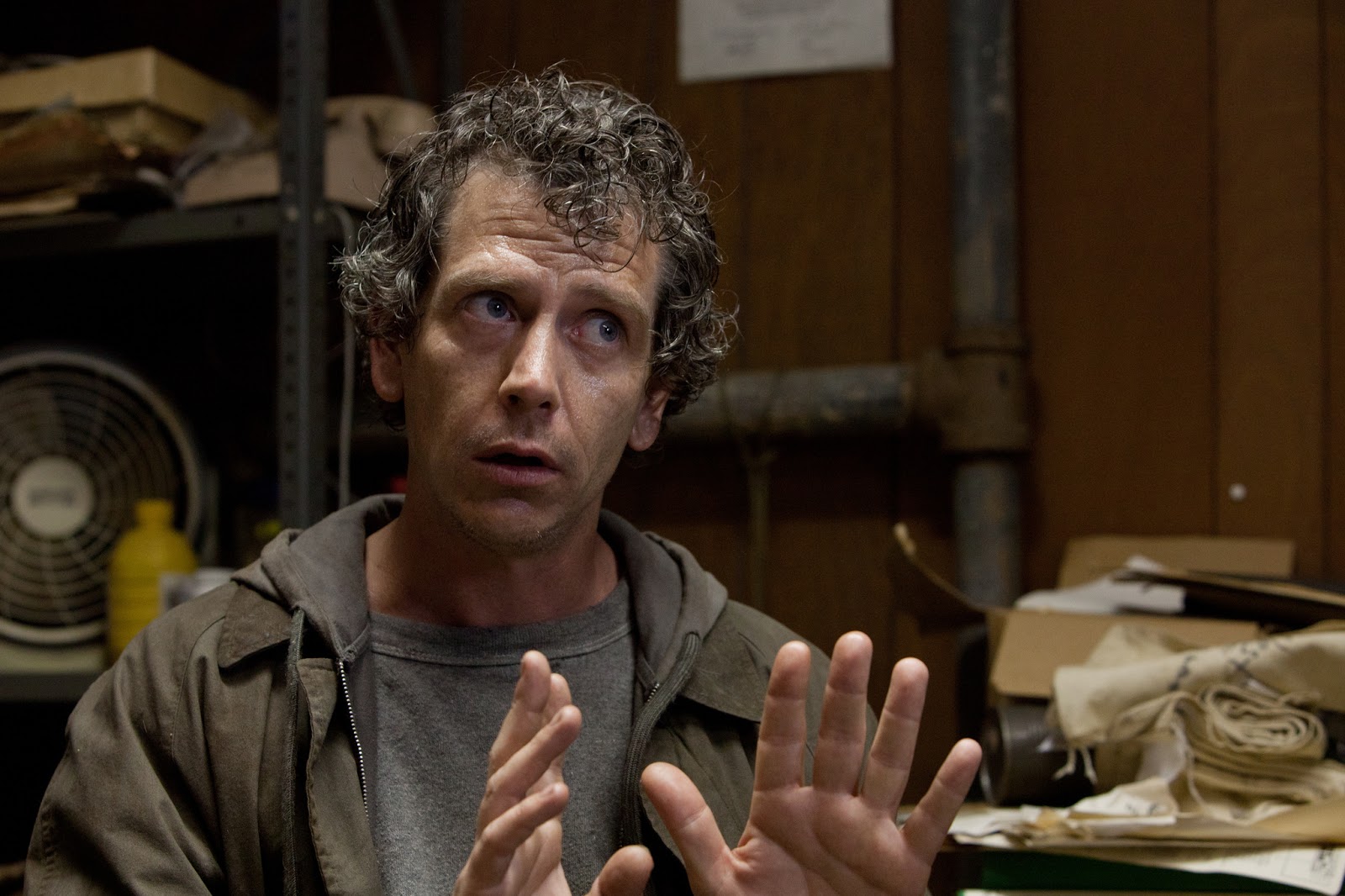
We haven't been watching too many films lately; having been absorbed by various series in our time of confinement. I'm slowly getting Tricia to appreciate the awesomeness that is Rick and Morty (Get schwifty!) by rewatching the entire series (I'm not entirely sure that I've seen all of them), since we still have HBO. However, one thing I've had in my Netflix queue for some time is Killing Them Softly, a pretty low-key release from 2012. I don't remember how it ended up in my queue, but it was probably from me reading something on Twitter about films that made some noise at Cannes and which faded without a whisper shortly thereafter. It's a crime film based on George Higgins' novel, Cogan's Trade. The novel is very much 70s crime (i.e. right down in the dirt; it was written in 1974) and screenwriter/director Andrew Dominik stays very much in that vein. Generally incompetent criminals Frankie (Scoot McNairy) and Russell (Ben Mendelsohn) are convinced to knock over a poker game run by the local mob and actually pull it off, only to suffer the consequences when said mob hires hitman Jackie Cogan (Brad Pitt) to show Frankie and Russell the downside. The film doesn't shy away from the details, as we get the sweat of their faces, the dirt of their lives, and the blood of their consequences, often in slo-mo highlights.

Dominik chooses to frame this petty crime encounter and its various tangents with the 2008 financial crisis and presidential election, as opposed to its 70s roots. While that may have been more pertinent to 2012 moviegoers, it struck me as some combination of background noise, decent undercurrent, and cinderblock-over-the-head message delivery... which, when you get down to it, kind of mirrored the execution of the film overall. Yes, a ton of people were down-and-out at that point, just like Frankie and Russell. Yes, the entire crisis was built on the gambling and criminal activities of a lot of banks and speculators... just like an illegal poker game! Yes, a lot of little people paid hard for that gambling and criminal activity, while the real bad guys (in this case, racketeers and hitmen) got away clean. So, I get it. But I'm not sure the message couldn't have been delivered just as effectively without Bush the Younger prattling away in the background every time a TV was in the scene (regularly) and finally ending with Pitt's soliloquy about how Obama's victory speech in Chicago was bullshit because America wasn't a community, it was just business. Maybe it's because that's a cynical thought that I've held in my head since I was a child and I didn't need to have it pushed in my face to understand it. Or maybe it's because the film ended on the equivalent of a philosophy exposition dump while most of the characters had been doing that in their own, more subtle way throughout the film and the ending was kind of discordant in that way.


Pitt does a decent job being Brad Pitt, which also means he's a very cynical and methodical hitman who still doesn't like emotion to enter the confines of his job. The hitman who's too sensitive to see his victims' faces? Similarly, James Gandolfini does another mob turn here as Mickey, the hitman Pitt brings in to kill a target that he knows personally (so as to save Jackie from those emotions), but whom has lost his touch and only wants to drink and get laid... which is what pretty much all of us want, so there's the America that doesn't want to know what the banks are doing? Maybe. One person that caught my eye was Mendelsohn, whom I really enjoyed in Mississippi Grind (which I wrote about here), as he was great at being the scuzziest of the guys involved. Ray Liotta is also present; still doing mob movies and still being Henry Hill. There should, however, be a law against anyone using any variation of the phrase "Fucking pay me!" in a film with Liotta (which Pitt does in this film), given Henry's legendary application of it.


Dominik heightens the gritty feel of the film with every moment of violence underscored by both close-ups and slow-motion FX so that shards of glass, spent shells, and geysers of blood are regular features throughout the film. Once, maybe twice, to get the message across works. Using it in every instance makes me think you're trying to hit me over the head with said message that violence is bad/disruptive/outlandish/messy which, y'know, I understand already. The scenes aren't done poorly and the action doesn't come across as cheap. It simply could've benefited from a little variation, especially given that the outpouring of emotion and angst from most of the characters about the lives that they're leading is already very present in almost every other scene. Dominik approached his other most well-known film The Assassination of Jesse James by the Coward Robert Ford (also a Pitt vehicle) in similar, mildly overwrought fashion, so perhaps it's just his thing.

All of that said, it held my interest and is worth the couple hours of time if you're running out of things to watch. But Mississippi Grind is also on Netflix and I'd watch that again, given an option.

Monday, June 8, 2020

The privilege of ignoring


As some of you know, I've done some writing for a website called ThereWillBe.Games. I'm a relatively long-time member of the community that it's based upon; the original Fortress: Ameritrash. That group was made up of a number of members of Boardgamegeek, who were (and still are) vocal fans of a style of game once known as "Ameritrash." Whereas Euro games, like Settlers of Catan emphasized mechanics over theme, Ameritrash games emphasized theme over mechanics; such that they were often much more random and had aspects that were often embraced/derided as simple "bad luck." Think Talisman or Dungeonquest, if you know games (albeit both from a British producer...)

As games, in general, have shifted away from the old "roll a die and move" approach, so the site has shifted away from its former neo-frat house nature. About a year-and-a-half ago, I was deeply involved in an attempt to broaden the audience of the site, in the same way that many game producers and retailers have been striving to do with the industry as a whole. No one wants the gaming world to be made up solely of pasty, White guys like me, as there are a lot of other people who also enjoy playing, designing, and producing. We wanted the site and the forum to be welcoming to anyone interested in playing games, regardless of their identity. That, of course, produced some pushback. Publishing articles and running a forum on any site is tricky in its execution, but especially so on sites that are nominally confined to a certain topic. In this case, you want the conversation to largely orbit around the topic of games, but you also don't want to prohibit expression. Games are a social endeavor. "Social" means interacting with others. That means other issues can and will arise.

The pushback immediately manifested in the pseudo-libertarian perspectives of some complaining about "free speech" concerns. (I've commented many times before about how that interpretation of the First Amendment is self-serving horseshit, so I'll spare you a rerun.) But it also occurred in the context of gaming as an "escape" from everyday life. It occurred again recently when the site's director decided to add TWBG's voice to those speaking out about the problems of police brutality and systemic racism in our society. As most of us have been tied down with COVID-19 issues and some have tailed off in output, she recently emailed all of the site's regular contributors about their well-being and received a response of that kind, which I'll reproduce here:
My dissent is this: people need spaces where politics don't intrude. Gaming, for me, is one of those. I can't speak for anyone else, but my days include occasionally being on conference calls/webinars with the current administration of the US Department of Education, often with the [...] State Department of Education, and dealing with the rough-and-tumble of a local school board and town council--all extra highly politicized at the moment. I need a break once in a while, and I don't need my hobby throwing politics back in my face. I was sorry to see it come to TWBG.
This is one of the purest expressions of privilege you're likely to see in casual conversation. It's not spoken with any malice or overt racism, but it is spoken with the perspective of someone who has never had to think about conditions that he takes for granted, but which might be serious blockades to the enjoyment, comfort, or even function (like, say, breathing) of others in our society.

This was a project announced by GMT until a backlash canceled it.
Whenever "politics" as an intrusion or "politicization" are cited, it almost always comes from someone who doesn't want to think about other peoples' problems. After all, as a White male, I don't have any concerns about driving to the game store, purchasing a new game, and maybe sitting down to play it right there. I'm in control. Those decisions aren't impacted by any societal circumstances or the narrower ones surrounding those actions. How comfortable might a Black gamer be driving to the store (because of the police)? How comfortable might a transgender gamer be dealing with the staff? How comfortable might a female gamer be simply walking up to the table and asking if she can play? Those are "political" issues because those are social issues. They affect the society that we all happen to live in. That's why the site decided to join the chorus of protest against injustice.

Most people who aren't White males don't have the luxury of deciding when and where they want to forget about what's happening to other people. Instead, they have to consider the social (and, sometimes, legal) barriers constructed against them and decide whether it's worth the risk of encountering anything from feeling uneasy (which, y'know, kinda makes playing a game less enjoyable) to direct fear of being arrested, assaulted, or killed; most notably by those whose purported role in society is to protect its citizens. In short, if your response to someone highlighting these problems is: "I don't want to make one tiny sacrifice of my attention in the name of changing what other people have literally sacrificed their lives for", then I think a moment of introspection might be called for.

A lot of games present fantasy worlds to immerse yourself in. It's safe to say that the author of that response wants to live in two of them: the swords-and-sorcery/meeples kind and the "one where racism doesn't really happen" kind. Again, he has that privilege because of the status that his skin color and gender bestow upon him. What other people want is the ability to also slip into both of those fantasy worlds and make the second one more of a reality. Furthermore, no one is saying that you have to live the larger world every moment. I don't think anyone is thinking about larger societal issues while they're watching a baseball game or an episode of The Blacklist or while they're reading a novel or, yes, while they're playing a game. No one has to be "on" all the time. What we're talking about is the actual ability for some people to turn "off" some of the time and have access to that ability in the same way that the dominant social presence does. That, of course, means progress, which means change, which always makes people uncomfortable. But that's the way the dice roll sometimes, yo.

Friday, June 5, 2020

The Newspaper of Farce


The Tom Cotton Affair with the New York Times (and, oh, how appropriate is that phrasing...) has become an absurdist fantasy. Arkansas senator Tom Cotton wrote an op-ed for the Times that encouraged the use of military force against all protesters in the nation as a way to "restore order." It sounded typical of a screed written for The American Conservative, railing against "chic salons" for encouraging civic participation, rather than meekly accepting the right of police to kill Black people with impunity. But the response to it was overwhelmingly negative, given that it was encouraging military intervention against American citizens (which is illegal in several different ways) during a mass protest against police brutality. The Times' response was that they were just going about their business of "presenting opinions; even those we disagree with." Many other journalists, as is the typically kneejerk response, leapt to their defense with pearl clutching about "free speech" and the "freedom of ideas." But it's not that simple.

"Free speech" means one thing and one thing only: the government can't prosecute you for what you say or write. Full stop. Do not pass Go. That's it. That's the only thing that clause of the First Amendment means. As I've often said to people over the years, there's no part of the Amendment that means people can't shun you for acting like an asshole, if you insist on acting like one. No one is forced to listen to your wackjob opinions; US Senator or no. But then we come to the "freedom of ideas" part and how it's argued as being more ethical/principled/whathaveyou to have distasteful opinions presented so that they can be refuted by those same principled people. And that's the far more complex issue, since that isn't the Times' real intent and hasn't been for a very long time.

First off, publishing Cotton's piece can actually be addressed by legal precedent about free speech issues. In the same way that you're not allowed to shout "Fire!" in a crowded theater, promoting the idea that violence should be used against the population because they're exercising those same First Amendment rights doesn't seem to be the wisest contribution to public safety. There is a certain amount of professional responsibility incumbent upon journalists and newspapers and, unless one wants to be perceived as a trash propaganda organization like Fox News or OANN, a little editorial discretion might've been employed here to protect the public, including a not inconsiderable number of Times readers, one would think. In short, Cotton was promoting violence and the Times gave him one of the largest platforms in the world from which to do so.


Secondly, there is a certain obligation for any serious publication to recognize the validity of the opinions they're displaying, as it were. The Times' publisher, A. G. Sulzberger, claimed that he was fine with publishing opinions that he didn't agree with. Does that mean I could write up a screed on Holocaust denial and expect that the Times would publish it? How about just cutting to the chase for American racists and write up something on returning Black people to slavery so we don't have to worry about police brutality or the associated protests? I'm betting he doesn't agree with those opinions, either, but I'm betting that any writer, senator or no, who brought those opinions to the Times would be rejected out of hand. And there's the rub.

See, the Times has long been known as the Newspaper of Record. It's essentially the voice for "the way things are" in America. If news makes it to the Times, then it carries the authority of the largest paper in the nation's largest city. It is what is to be believed; even trusted. But the Times has fully embraced that mantle, such that their main mission over the past 25 years has largely been to be the voice of the establishment, no matter whom that establishment happens to be. As an example, the NYT was one of the most vocal cheerleaders for the invasion of Iraq, despite that invasion being based on ludicrous evidence or the lack thereof. It was Maureen Dowd who delivered the story that DoD operatives on site had gestured to a man who they say provided the evidence of "weapons of mass destruction", but whom she wasn't allowed to speak to or even know the name of. But, since it was printed in the Times, it gained the imprimatur of truth because that's what the Times wanted. The current government under George W. Bush wanted the invasion so the Times wanted the invasion. It's the equivalent of Pravda; just with better writing.

That tendency has carried over into the madhouse that is the administration of the Idiot. Despite the man's habit of lying virtually every time he opens his mouth, the Times will never call him on those lies. They're "inaccuracies" or they "lack evidence" or his statements are "confused." There's no confusing the intent of the Times, though. They're the establishment. The current establishment is represented by the Idiot. Therefore, what he says must be reported as if it carries veracity. The institution that is the president of the United States can't be mocked or reviled. That would mean other institutions might be mocked or reviled! Like... the New York Times. Too late...


The paper has decided that, in order to provide some semblance of dignity to what the Idiot and his sycophants (like Cotton) say, they have to apply the "both sides" approach to everything they print. That's why "some experts say" that hydroxychloroquine might be effective against COVID-19, as the president has stated. No valid study or actual expert has said this. It's also why "Antifa might make up elements of the protests." No evidence of this suspicion has been confirmed, especially given that there is no organization known as "Antifa." It's also why Cotton's fascist fantasies were given space by the Newspaper of Record. It's a valid, conservative opinion, after all! But it's not a valid opinion to suggest violating the law in the name of shooting American citizens in the streets. It's a criminal one. But the Times wants to present it as valid so they can continue to print opinions from the conservative wing of American politics that has lost all moral authority to govern in any way, shape, or form. But since the Idiot is the establishment, faithful hound dog NYT tries to make authoritarian wet dreams sound credible.

But then we come to the coup de grace: According to an internal meeting at the Times, held to try to defuse the staff revolt against the Cotton piece, not only did James Bennet, opinion editor at the paper, not read the piece before he gave the go-ahead to publish it (that's kind of the basic function of an editor...), but it turns out that it wasn't Cotton who pitched the piece to the Times:


So, not only does the Times give credence to ridiculous statements like Cotton's. It solicits them. This more than anything else shows the paper for what they are. They're promoting fascism. They're promoting authoritarianism. Why? Well, because those things are usually a positive result for very wealthy entities like the paper, its publisher, and its editors. If they could just get those pesky people off the streets, then they could all go back to shopping at Columbus Circle and not have to think about Black people at all! And, of course, it means that, just like Dowd, they'll still be invited to all the best parties in DC. They'll still have access. They'll still be inside, where the wealthy kids play.

Meanwhile, everyone else, on the outside, who've been relying on the Times as an impartial source of information... Well, you'll have to look elsewhere. The Newspaper of Record has become a farce.

Tuesday, June 2, 2020

Piercing the American religion


A friend asked a question on the board last night: "Psychologically, what makes 'us' hate protesters so much? What causes people to be more viscerally upset by people marching and yelling and waving signs or taking a knee or even doing property damage than they are by straight-up murder?" Putting aside the obvious racist implications for a moment, by response was this:

The simplest answer is this: Pointing out that something is wrong with America makes people uncomfortable because patriotism is the national religion of this country and it essentially lacks foundation. When you question someone's religion, if they're a committed believer, then they rely on their faith in the tenets of that religion. They believe in an idealized set of principles that are embodied by faith in a higher power or mysteries that can neither be easily explained or easily disproved. Neither you nor they can prove that their god does not exist. Similarly, neither you nor they can prove that said god exists. Their faith is based upon the idea that there is a higher purpose for themselves and for everyone.

Patriotism, OTOH, is based on ideas that are rooted in reality. It just may not be the reality that everyone wants to face. Mo Wagner, former University of Michigan and current LA Lakers basketball player, was tweeting yesterday about how when he first came to the US, everyone greeted him with: "Welcome to America, the greatest country in the world!" Everyone. It happened so often that it went from surprising to funny to kind of weird. There is a mindset that exists among Americans that the US is the pinnacle achievement in socio-political history; that since this is the "land of the free" and the "birthplace of democracy" and the "land of opportunity" to which so many wish to come, everything about it must be good and proper.


But the truth is that the US is all of those things for really only a very few people. For everyone else, it can be those things, but often is markedly different, in both degree and substance. When people point that out, many people react viscerally, as if you've questioned their personal character. Colin Kapernick was attacked for kneeling during the national anthem when he attempted to call attention to racism and police brutality. But for many, he wasn't pointing out racism. He was defiling the anthem! He was disrespecting the flag and the troops! He was despoiling our football, that most American of games! But what he was really doing was pointing out that it's only the "land of the free" for part of the population and people really don't want to hear a contrary opinion to what they've been taught since they were young and have had continually reinforced on a daily basis from news and entertainment media, every time a politician opens his or her mouth, and from every flag-waving sports entity that insists on playing the national anthem before every game.

Hell, they make young children recite a pledge of allegiance to a piece of cloth at the start of every school day. What greater sign of religion is there than everyone mumbling the national psalm together? It ends with "... with liberty and justice for all." But any casual experience in many American communities will tell you that the "liberty" part is often based on your skin tone and there sure as shit ain't no justice for anyone who doesn't have the money to buy it. But if you question the national religion, you're "unAmerican." You've stepped outside the illusion and are implicitly mocking anyone left within it. Many people object to that because, unlike actual religions, their belief isn't rooted in an idea about a higher power. It's rooted in the concept that America is the best thing ever and can't be questioned in the first place. Any evidence to the contrary must be based on the people being wrong; not the place. That's a lack of foundation. There is no faith there; just an insistence that a mirage is real.

Donald Trump is the walking manifestation of that insistence. His contradictory message- that America is the greatest nation on Earth and yet needs to be "made great again" -is the perfect embodiment of a population that knows the core is rotten but insists on shining the apple. It's like sports fans insisting that their team is the greatest ever, while fans of all the other teams chuckle behind their hands. Samuel Johnson said that "Patriotism is the last refuge of a scoundrel" because he knew that vermin like the current president and Senate Republicans would continue to flog it as their lone defense against the perfidy of their actions. He also knew that much of the public would respond because, just as with organized religion, most people need something to believe in. Not everyone can be comfortable living in a Hobbesian world. But, at the very least, people should be willing to argue the point without sheltering in a bunker of distractions from the reality that faces us.

Sunday, May 31, 2020

Police are the biggest gang in town


There's a funny perception of figures like Wyatt Earp in American history. He's often presented as a "lawman" who "brought order to the Wild West." This is commonly thought because Earp was named a US marshal while he was in Kansas City and later brought that authority to Arizona. He was a "good guy" in an era supposedly loaded with "bad guys" that would've been an even greater number without these knights in shining armor. But the truth is a bit less black-and-white than that.

The truth is that Earp was hired muscle, like a lot of men were in those times and places. In Kansas City, he was employed by one group of wealthy business owners to enforce the law against men often employed by other business owners or those who just wanted to take advantage of situations where and when they could. In other words, Earp was kind of a gang leader. He just happened to run with/lead the biggest gang in town and that's why he came out of it looking like someone who operated on behalf of wider society. History is, after all, written by the winners. Does this sound familiar?


Cops right now are the biggest gang in town in many of the communities that they ostensibly serve. They've demonstrated this repeatedly over the past few days as they assault citizens with vehicles, attack journalists, and occasionally flash the true colors that motivate those actions against the people that they claim to protect.


How do I know they're a gang? Because they all wear the same colors and they all unify behind each other when one of them does something wrong. Now you can say that about many social groupings, like football teams. But cops are one step beyond, because they have authority over other social groupings. Earp was granted authority not just by the local ownership class, but also by the federal government because he happened to serve the interests of that ownership class who, of course, owned that government the way they always have and most certainly do now. (Are we as outraged by the looting of a Target as we are by the rampant looting of the public treasury during a pandemic?) Modern policing is no different. They're mostly there to prevent property crimes (Don't mess with our turf or the merchants under our protection), gather revenue for the local governments (our protection...), and enforce the interests of the wealthy. When it comes to being confronted by the wider public, it's very much a case of "us vs them."

Now, the kneejerk response to criticism like this is usually something like: What are they supposed to do? (Feel free to adopt the Helen Lovejoy tone here.) Well, let's take a look at the sheriff of Genesee County in Michigan:


He disarmed his men, took off his own gear, and joined the march. That's a deliberate choice to approach a situation not in a confrontational manner, which almost inevitably escalates the emotion and tension of any situation, but in a cooperative manner. He wanted to convince the people marching that the cops were members of their community, rather than the enforcers of it. He wanted his police to not be the local gang telling people how they should live, but rather just other people in town, who live with them.

Another kneejerk response is: What about the criminals? Well, that's easy. If the police aren't treating everyone as a criminal, then it's pretty easy to spot the actual criminals, right? If the police are cooperating with the demonstration, rather than confronting it, then it's really simple to pick out the few degenerates coming from other places to try to take advantage of the chaos that the police are no longer creating or helping to fuel. There was no looting or vandalism during the demonstration in Genesee County last night and, if there had been, the instigators would've been seen and removed instantly. That's when the police are actually part of a community and not the overlords of it.

And it's clear that there have been attempts to turn a tense situation into a riotous one by people who think a "race war" is the path toward a better White America. And it's clear that there have been simply random attempts to take advantage of the situation and get some kicks breaking windows and stealing stuff. But the real problem runs deeper than either of those. That problem is having a gang, detached from its surrounding community, oblivious to the concerns of its residents (especially Black residents), armed to the teeth, and eager to use all those toys on the people they're supposed to be protecting. Any mobster would tell you that randomly abusing the people under your racket is a bad way to do business. Until we have an approach to policing that is honestly about protecting people, rather than property, it's bad business for everyone but the 1% (like usual.)

Friday, May 29, 2020

The Others' problem


Derek nominated me for one of those silly games on Facebook the other day, where you're supposed to give an image of a film that "impacted you" without any other explanation and then nominate someone else to also participate. Movie enthusiast that I am, I figured I'd actually join in, despite my attention given to Facebook being minimal, at best. Over the first three days, I picked three films that really stand out to me and which I may write some detail about later. On the fourth day- today -I picked another that I'm really fond of: Escape from New York.

I'm a big fan of John Carpenter's early career. I think there was a tension to his technique that really made his work shine, even on the lower budgets that he was often working with or the, uh... less than stellar material. Let's not kid ourselves: Escape is a B movie. Despite the presence of bankable stars like Kurt Russell, Isaac Hayes, and Lee Van Cleef, the story is pretty shallow and no one gives a performance that would see them considered for a little, gold statue. It's your average, nigh-on post-apoc, speculative fiction (e.g. "What if World War III really happened AND crime ran out of control?!") There were a lot of them in those days; still firmly embedded in the Cold War and with a stagnant economy that Reagan had not yet performed his "miracle" upon. I had been politically aware for a few years by then and was in Tennessee, attending a small, recently post-military school outside Knoxville. When we finally convinced our floor manager to let us walk into Sweetwater, the local town, and catch the latest Hollywood depiction of a destroyed Statue of Liberty (all of us with fond memories of the end of the original Planet of the Apes (spoiler!), despite said image having little to do with Escape), we hit a brief moment of nirvana.

Here was a hardass ex-soldier who spoke in an OTT, raspy growl, dropping into New York, the locus of crime and corruption (even as a Detroit native, I remember this impression), and taking on the whole city so he could get out in the process of... rescuing the president? Wait. What? Even at that age, I was pretty much a cynic and reflexively distrusted most American officials of any kind. I had no idea why Snake Plissken would want to rescue the leader of the system that created so many problems! (Even then, I was pretty much a Marxist, too.) Of course, Snake felt the same way ("The president of what?"), until he was effectively blackmailed into it. So, yeah, instant hero identification. But as we got through the film and came to the last scene; the one that takes place in that image above, I realized that this was something unusual for my young eyes and brain. Not only was Snake an anti-hero, doing the right thing incidentally, rather than intentionally, but the opposition was more complex than your typical villain, too. Bob Hauk (Van Cleef) was trying to maintain order, within the prison and within the nation, which was his job (and saving a life, I guess.) The Duke of New York (A #1!; Hayes) was trying to speak for an entire city of supposed criminals; heavy with the implication that something akin to martial law had dropped them into this Lord of the Flies situation, justly or not. And the president (Donald Pleasance) wasn't some corrupt mastermind, devising ways to screw everyone for his own benefit. No, the thing that stood out most to me about that president is the same problem that most of them carry, intentionally or not, fictional or real.

It was the indifference.

The poignant moment of that scene depicted above is Snake's pointed question to the man he'd just risked his life to rescue and that several others had given theirs to enable. The president's response to that question is a blank acknowledgement that people he didn't care about did something to make sure he was still among the living. He was more worried about being on camera in a couple minutes (similar to the current idiot.) He was oblivious to the suffering, the trauma, and the struggle that took place to make sure that he was still president and "leader of the free world." As we sit here with Minneapolis burning as a response to yet another Black man being murdered by the police ostensibly there to protect him and all of us, that indifference is the thing that once again really stands out to me.


The manifestations of it are all around us. It is always happening to someone else. Therefore, why should we care? It's especially easy in the case of those of us who are White Americans. Black people are already deemed The Other. That bad stuff only happens to The Others and usually because they encouraged it somehow, right? It's the same situation with COVID-19. "I won't get it! I'm invincible!" Yeah, sure. You're invincible. But it's not about you. It's about all of the other people that you might transmit it to who don't happen to be invincible in their own mind like you. "But it's mostly affecting nursing homes and old people and I'm not old and I don't go to those places!" Sigh... This is just like when Republicans argue against national healthcare... right up until that moment when some part of their family goes bankrupt because of cancer or a similar situation. Then, suddenly, they realize that "this is a problem that affects all of us!"

But in this case, it doesn't affect all of us. It affects Black people. In most cases, even other minorities in this nation don't live in fear of being approached by the police. Only Black people. White people may get nervous about how fast we're driving when we pass a cop on the highway. But we don't fear being pulled over just because we're driving. And it's not just the harassment. As situations like George Floyd, Sandra Bland, Terrence Crutcher, and Michael Brown (and on and on and on...) demonstrate, their very existence is enough to encourage treatment that results in their death. Or we go one step further and discover that even being shot by non-cops isn't always sufficient to be treated as not The Other, as in the case of Ahmad Arbery, without massive public pressure. That's the purest example of racism: the treatment of others as if they were less than human. Less than animal, in some cases. How many people were just as outraged over Amy Cooper's treatment of her dog as they were over the fact that she lied to the police in order to encourage them to come and deal with this Black man who had only asked her to follow the law? She made that call and made it in that manner because she knew there was a high possibility that Cooper would be mistreated by said police; perhaps even killed. She made that call with malice. That's racism. But she was indifferent to the effects on him. That's also racism.

It's that indifference that is something of a plague on the fabled "American experiment." The idea of individualism emphasizes the suppression of feelings of consideration for others; of taking their feelings and well-being, physical and mental, into account when trying to climb the ladder of success. Even worse, the death of the American dream means that the 99% are reduced to stepping on each others' heads, regardless of the consequences, often even as they try to reach a point of sustainability, to say nothing of what most Americans deem "success." What that phenomenon means for society at large is multiplied tenfold for Black Americans.

And if we're going to get through the remainder of Republican control of government; if we're going to survive as a nation that serves the majority, rather than a wealthy minority; if we're going to pull down those edifices of wealth and redress the wrongs that that hoarding of wealth creates; then it's going to take all of us, of whatever color and of whatever gender. We can no longer look aside from what afflicts The Other. We can no longer ignore the fact that our Black brothers and sisters are people that need our help against a system designed to oppress them and a perception weighted against them. We can no longer be indifferent to the suffering of others if we are to call ourselves human. ("The name's 'Plissken'.")