Wednesday, November 7, 2012

They've won. Again.

Nation of sheep. Ruled by wolves. Owned by pigs.

Election season arrives at its two- to ten-month hiatus, depending on your status (local, state, federal) and obsession (What will Fox and Friends choose to obsess over and will the term "lame duck" begin to be used for a president's entire second term?) Last night was similar to 2008 in that I kept only vaguely in touch with the proceedings until it was all over but Karl Rove's shouting (Well, sniveling, really.) Then it was a mix of laughing uproariously at the funereal air enshrouding Fox News and nauseous disgust at a lot of the blather on Facebook and other networks where friends, associates, and colleagues of mine seemed to revel in the idea that a Democratic president had been reelected to continue to plague the nation with both action and inaction.

He doesn't even need the rock rolled away first. (H/T gamesthirst.com)
This is a man who justifies the assassination of US citizens from afar without due process or trial, who claims that the death of children in the process of these assassinations is also justified because they are of "military age", and who maintains a "kill list" of people he most desires to see in the crosshairs of the nearest unmanned drone (regardless of the nearby presence of a few dozen Pakistani villagers.) This is a man who employed Tim Geithner as his Treasury Secretary (the primary goalkeeper for the interests of the banks who nearly destroyed the global economy) and Larry Summers as his primary economic adviser. Summers is perhaps the one person about whom I could accept the concept of public lynching, as would doubtlessly happen were he to set foot in the Baltic nations or Russia anytime soon, where the people who lost savings, homes, livelihoods, and relative after relative to suicide as a direct result of Summers' "shock therapy" transformation away from communism would descend on him as soon as he appeared in public. This is a man who not only extended the duration of the most virulently anti-privacy and anti-individual rights law since 1790, but expanded upon its tenets. The Patriot Act is now even more oppressive than the previous administration had hoped for and we have liberal, socialist, Muslim Obama to thank for it. Don't you all feel safer?

I mean, to a certain degree, I'm used to this. I've been involved in electoral politics even before I could vote (1988) and it's no surprise to see the public mindlessly flock to the polls every 2 and 4 years to elect people who think of them as beneath contempt (i.e. easy targets for unmanned drones and the economic dreams of Larry Fucking Summers) and then revel in it as if this time they finally found the right guy. In this case, they found him again, even though he spent the last 4 years doing everything he could to dissuade them of their fantasies. What makes it even more galling was seeing a number of people whom I, at one time, considered political allies crowing about the reelection of a man who's done everything he can to make "Hope and change" into a punchline, rather than a mantra.

"But health care!", they say. Right. A money soak for the already wealthy insurance industry and a "solution" that does nothing to address the real problem of lack of government price controls, even in government programs, and the ever increasing costs created by medical professionals too willing to soak the system. As always, gotta protect those big donors. "But social issues!", they say. The Democrats' response to most social issues is the equivalent of someone attacking the tide with a broom. Obama's lone progressive social moment in his first term was a last-minute acknowledgment of the right of gay people to have a publicly recorded relationship with the person of their choice and he only did that when it was clear that his poll numbers were wavering. Glory fucking day. Otherwise, he essentially served out George W. Bush's third term.

Those social issues, while important in the long run, are also often seen as inevitable in that same period of time (witness Colorado and Washington's legalization of marijuana; anyone want to make a bet with me that Obama doesn't touch that issue for the next 2-3 years? The prison industry donates a lot of money to Democratic coffers.) Said issues also do absolutely nothing to alleviate the fact that those soon-to-be-happily-married gay people are just as economically screwed as the rest of us. It's the equivalent of the GOP getting angry, poor, white guys to vote for guns and against abortion while draining their wallets of anything meaningful. We've arced past the inequality of the Gilded Age. What do we call it when everything is plated in platinum?

This is the wealthiest nation in the history of human existence... but more people are going hungry now than at any time since the 1930s. This is the fabled Land of Opportunity... but social mobility is lower now than it has been in a century and getting worse. We'll have spent $707 billion on guns, planes, tanks, and soldiers in FY 2012 but somehow teachers' salaries and their pensions are the reason that our municipal, state, and federal budgets are out of whack. Progress on social issues? You mean we're finally approaching the level of devoutly Catholic Spain, which permits gay marriage and abortions as national policy? Awesome. Is that happening because of or in spite of the fact that people keep gladly electing criminals to public office and then throwing a party at their own funeral?

Hello, um, America. And goodbye.
Now, you could say that the outpouring of emotion last night and today is a product of the relief of a closely fought election but the worst part about that supposition is that all of this was easily predictable, months ago. Sure, Nate Silver is properly getting his 15 minutes because he actually paid attention to the numbers and understood what was happening, whereas the rest of the political world was still trusting its collective gut, which all too often has shit for brains. But all of this was obvious even above and beyond Silver's data. Romney was an historically bad candidate with a campaign that will be the benchmark for what not to do for decades to come. Who lets their candidate on a yacht named Cracker Bay(!) for an exclusive "thank you" dinner for big donors in the midst of economic hard times? What GOP candidate in the past century could have imagined having the CEOs of two of the biggest multinational corporations in the nation tell him that he and his ad crew were "full of shit"? Even at a private dinner, who dares to state that almost half the electorate is beneath your notice? The incompetence displayed by the Romney campaign over the past year is astonishing and I have a hard time believing that any of those who led it could possibly find another job in 2014.

Put simply: There was no doubt that Obama was going to win. There was as little doubt as in 2008 when the Alaskan Dingbat Carnival took over the McCain campaign. There was no struggle of values here; no hard-fought engagement for the future of the American people. It was two rich guys slinging crap at each other in an effort to make themselves seem less bad (as in, more attuned to people who won't make in 10 lifetimes what either of them will make next month) and betting heavily on the idea that said people are too weak-willed or defeated or distracted to ask for something better. It makes me physically ill to see people claim that their vote doesn't matter because of where they live so that they feel free to vote for what they actually want and believe in, while others bemoan the fact that their state isn't "safe" and they therefore don't feel justified in choosing the candidate that they truly desire. This is the Democrats' Boogeyman Syndrome written into stone. It's no longer used as a threat to scare people. It's now a moral obligation to heed the fact that the Dems' candidate gives better lip service to the ideals that those voters favor and that said voters must accept personal blame if their vote leads to the GOP candidate winning who, in the example laid out for us by Obama, is only slightly worse, if at all. Think GWB would have been in favor of the indiscriminate bombing of the Pakistani countryside? I'd give a lot to be able to see that interview, especially now that he's out of office.

So, yeah: Four more years. Hoo. Ray. Four more years of killing, hedging away from anything the public actually wants, and rule by the monied elite. The below picture was perhaps the best summation of the whole thing. I wonder how big the party will be in 2016 when they get elected for a third time.

(H/T Not a Dime's Worth of Difference)


Sunday, October 28, 2012

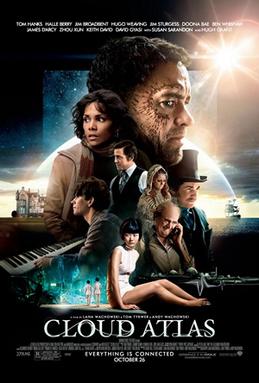
Cloud Atlas


Made it to the theater today to see Cloud Atlas and really enjoyed it. I read the book years ago and found it fairly fascinating, especially for someone rooted in comics which, as a serial production, often have multiple storylines (and often multiple timelines) running simultaneously. It was an ambitious novel and Roger Ebert made a point of lauding the film in the same way, calling it "one of the most ambitious films ever made." I think there's some veracity to that, especially given a mass release to an audience that is often unprepared for this kind of complex storytelling (I still grimace when thinking of the local news media broadcasting a story about the phenomenon that was Pulp Fiction and interviewing people walking out of the theater saying: "I don't think I liked it. It was too confusing. First, John Travolta was alive and then he was dead and then he was alive again...")

Most of the performances were good, although I was kind of disappointed at Tom Hanks' lack of range. He never really escapes the Tom Hanksisms that make him who he is, which departs from the idea of all of these characters being linked across time, but still distinct people, and none of the roles were lengthy enough for him to display the depth that he can sometimes reach (as in Philadelphia.) That's a situation complicated by the "leading man" vs. "character actor" dynamic that I'll get into one day. I was pretty impressed with Hugh Grant in all of his roles (I did not expect to be) and Halle Barry as Luisa Rey, though. I do have to say that the makeup in the Sonmi-451 story, providing everyone with epicanthic folds, was a little jarring and could have been subtler.

As for the story itself, there were changes from the book (surprise!) but those were inevitable. The fact that it was made into a film, and a good one, is impressive enough. The overall pace of the film is much more frenetic than the book, which is typical of the Wachowskis' style and something likely necessary to keep a modern mass audience in their seats for three hours. However, I have to say that I felt more convinced of the emotional and cerebral impact of the story in reading the novel than I did in viewing the film. The most important of the six on a broad level is An Orison of Somni-451, while the best on a personal level is Letters from Zedelghem. I think the latter came across very well, while the philosophical underpinnings so necessary to the former weren't as well conveyed. It's very difficult to present a message of inspiration, since so many will take inspiration from different things. On a personal/character scale, Somni-451 was, like Letters, excellent. Bae Doona is another who deserves commendation for taking on a difficult and transformative role and pulling it off without traipsing in to melodrama.

I do disagree with Ebert on a very prominent point, though: I wasn't confused. There are moments when you will certainly be lost as to the relevance of what you're seeing in the overall picture and I had the advantage of having read the book, so I knew where much of it was going. But the fact that there are so many possible interpretations are what make the film good, not confusing. Looking for logical connections in the film is about as pointless as doing so in life, in general. Some things are simple to be experience and, by that experience, understood. Analysis will often get you nowhere.

So, good stuff, overall. It's Oscar season, of course, and I'm eager to see several other films, although money is a limiting factor these days. I wanted to see The Master and will hope for its rapid release on Amazon, but I've heard the raves for Argo and would like to see Lincoln, Seven Psychopaths and, of course, The Hobbit in December, although I'm still not certain how you could turn that simple story into three films without hijacking a ton of the Silmarillion. We'll see.

Tuesday, October 23, 2012

Roxanne


I have a fundamental attachment to this film. It's one of those that I've seen any number of times but would gladly watch again any time that I see it on or even toss in myself (VHS!) First off, I think Steve Martin is a creative genius and I have always been a fan of the work that he has created, like The Jerk and his stand-up material. I draw that line between what he's "created" (acknowledging that acting, in and of itself, is a creative effort) and what he's done to earn a paycheck, like the execrable comedies he's been making with people like Goldie Hawn and Queen Latifah. There was a self-assuredness that I heard in his stage routines that was really appealing to me when I was young and remains so. He's confident and so much so that much of his humor seems self-deprecating without being desperate. He doesn't make decisions out of lack of knowledge ("I played football in high school. I was the quarterback. I used to like to punt on first down.") He makes them because he's simply on a higher plane of understanding than everyone else ("You take geometry and geology in college and it's all numbers and you just forget it all. But you take just one semester of philosophy and it's enough to fuck you up for the rest of your life.")

While the tone of the film veers toward the sappy and it deftly avoids any deeper message than what the original story of Cyrano de Bergerac conveyed; and while none of the performances outside of Martin's (and Shelly Duvall's somewhat) are memorable; and while the story is simple... it's still appealing because the script is so brilliant and Martin's performance is so earnest that it dispenses with guile and cynicism even while his character is the most cynical person in town. He takes you past that and demonstrates a basic feeling that many of us (most assuredly me) are often loathe to admit: the desire to be wanted.

American individualism is an essential element of our modern culture. It's the dictum that encourages people to slough off any emotional pain and keep rolling along. If they can't "get over it", then there's something wrong with them. Martin's character attempts to turn that perspective on its philosophical head and declare that deep (and often tragic) feelings are what make people feel alive. I've known that from a very negative perspective for as long as I can remember. Rage drove me for many years and occasionally still does. But I'm attached to this simple little movie because it the character is "weak" and is plaintive and is lost in the search for something that he feels he can't have but which is actually searching for him.

And, of course, any film that presents both Strauss' Blue Danube and Mozart's divertimento in B flat Major is worthwhile viewing, IMO (I try to overlook the standard alto sax theme music and score that all 80s movies were contractually obligated to use):


Sunday, October 14, 2012

Five minute impressions: The Walking Dead, season 3, ep. 1

Disclaimers:
1. I only read Kirkman's first story arc. It was OK.
2. I am not a zombie guy, despite being very much a post-apoc guy.
3. My standards for watchable TV are admittedly kind of high.


I'm a huge fan of some of AMC's offerings but it took me a while to get there. I watched the first episode of Mad Men when it premiered, but wasn't taken by it and never watched another until last fall, when a friend suggested that I was missing out and should take advantage of the series on Netflix (other people had suggested this before; this time, I listened.) I immediately realized that I should have been more patient with it, watched seasons 1-4 quite quickly, and was on track for season 5 this past spring. Likewise, I hadn't bothered to pay attention to Breaking Bad but had always put it on my "someday" schedule. After learning that season five would be airing this past summer, I once again hit Netflix for as much as was available and then watched the rest on DVD and the new season with a group of friends that had also caught up rapidly. Both series are brilliantly written and I haven't regretted one second of the time I've sat in front of them. I've often said that the best thing ever put on TV was The Wire, but Breaking Bad is a very close second, at this point.


Determined that I would not be left behind again, I began to watch some of AMC's more recent offerings from the beginning; specifically, The Walking Dead and Hell on Wheels. Unfortunately, both have been much more uneven than either of the aforementioned series. I wasn't even sure that I'd watch the second season of Hell on Wheels and am still uncertain about the third season, despite its steps toward improvement, script-wise, in the recently concluded episodes. I had the same issue with Walking Dead in its second season, as the storyline seemed to stagnate and the characters other than Daryl were two-dimensional in their motivation and hollow in their actions. Hell on Wheels improved because of a creative change in which the brothers Gayton were removed as the writers. Walking Dead also underwent a fairly dramatic change in the off-season, in which the tempestuous Frank Darabont left the project and a new showrunner, Glen Mazzara, stepped in. It was with that in mind that I decided I'd give it one more try.


I knew a lot about what was coming in this season as I've accumulated information from AMC's promotions, talk on the Web, and friends who are dedicated fans. I know that they're still loosely following Kirkman's story and that the events at the prison and the introduction of Michonne are key developments here. So, it was gratifying to see them dive right into it within the first few minutes of the opening. I was under the impression that, having seen the prison so nearby in season 2's finale, the story would reopen relatively soon after that close. A quick glimpse of Lori's distended belly and Herschel's thick beard put the lie to that and it was clear that we were seeing the group a few months post-season 2. With a new writing team and direction, I think that's fine. It gives the new team a chance to jump right into their versions of the characters and it's not jarring for the fans to see them moving as a coordinated unit when dealing with the walkers. It also gave rise to good character moments, such as Carol attempting to joke about screwing around with Daryl. It's left uncertain as to whether their relationship has taken that next step or whether they're still sorting it out, which is a good tease for the viewers.


On the one hand, having seen the prison so close in the season 2 finale, there's room to question how they could have failed to stumble across it for several months. Of course, one has to consider just how easy it is to run in circles in the countryside without modern communication and the activity of other humans to follow, so I have no issue with that. I think Rick's demonstration of disdain and anger with Lori is a sign of the writers having moved him past the angst-filled "nice guy" to a genuine survivalist in the Daryl mode. What made Daryl the only really decent character in the first two seasons was the fact that he actually matured in respect to his surroundings. He was still the callous survivor, but it was clear that he was also touched by the group actually desiring his presence and the fact that his particular code of ethics (concern for others' well-being not only as a survival method but also because that's how humans generally act in crisis) was particularly well-suited to the circumstances. If that's the direction that Rick is going, so much the better, as it will reduce the level of guilt/angst/general caterwauling that often brought things to a grinding halt in season 2. Obviously, Rick is also being set up to be too callous and cold, but I can live with that kind of development as long as it doesn't become rote "redemption of the hero."


There were a lot of ways that introducing Michonne could have been an abject failure. She's the most fanciful of Kirkman's characters to appear and it could easily disintegrate into the Roger Corman arena if she's not handled carefully. I think it was well done here, showing a bit more of her sword work and her pet zombies, but staying away from exposition and allowing her to retain an air of mystery for a while longer. I'm especially interested in seeing a bit more of her style with the weapon. On the one hand, there are different ways to use it. OTOH, in the picture above, she's holding it like a baseball bat, which is not the way a katana would be wielded whether you're doing iaido, kendo, or some kind of koryū. I really hope they paid attention to some of the riddles of steel, as it were. Unfortunately, there continues to be no riddle whatsoever about T-Dog, who keeps running his two season marathon of following orders and generally not contributing anything to the conversation. Likewise, it seems pretty unusual that Glenn and Maggie would still be that wooden with each other with another few months of life under their relationship belts.

That said, I think this was probably the best episode of the series so far. The script was well-paced and no one said anything glaringly stupid or annoying. The action scenes were more suspenseful, especially since the zombie action is moving back into enclosed spaces inside the prison, rather than outdoors in the sunlight where they're much less threatening. It's still not hitting the high points of Mad Men or Breaking Bad and likely never will, given the greater room for thoughtful subtlety afforded to those mostly-"real life" stories (yes, even including the blue meth.) But I felt actually intrigued by this episode and not left thinking that I shouldn't be watching so much TV. It's also the closest I'll ever get to seeing something like Gamma World, where mundane facilities like prisons are highly valued for the trove of stuff that could be inside...


I do have to say that, if AMC does much more of this mini-season split crap, where a series is shown eight episodes at a time, separated by several months, I may just give up even on things that I enjoy. It's ridiculous that we're waiting another year after only 8 episodes of Breaking Bad and having a multi-month split in between the two halves of season 3 of Walking Dead is possibly even worse. There is a point where you piss off your loyal viewers and, IMO, AMC is reaching it.

Tuesday, August 21, 2012

Things

Low output lately. I wish I could say it was because I was diligently at work on something else, but I can't. There's more than one "something else" and diligence has only occasionally been a part of it. I don't get writer's block. I get low-grade writer's malaise and it's not (always) about the content of what I'm writing. It's more about futility, in general. Already racked up my first two rejections in the fiction market. Same as it ever was. So, I thought I'd just leave some brief thoughts:

1. Some of you whom were watching the Super Bowl (I was because there was food (Margot food) and good people) in the Michigan area may remember this ad:


Here we have the young Asian girl, bicycling along the rice paddies in her yellow shirt and speaking clear but slightly halting English about the threat of (presumably) Chinese people like her stealing American jobs because of Senator Debbie Stabenow's (D-MI) personal spending policies. What people immediately jumped on was the unmitigated racist nature of the ad (Foreigner! She took our jobs!) and, from a marketing standpoint, it's ridiculously over the top. Of course, most Midwesterners wouldn't know a rice paddy if they fell into one and drowned, but it was a nice touch all the same. Immediately, the media descended upon Hoekstra, with the state party saying it would have nothing to do with insufferable conduct of that vulgar nature. Pete, for his part, stood his ground, claiming that the intent was not racist and saying absolutely nothing about the fact that the entire spiel (Chinese people stealing American jobs because of the out of control spending of the US government) makes not a bit of sense in any way, shape, or vaguely economic form. Stabenow doesn't even sit on a significant trade committee and has been a back bencher of small repute on the Senate Budget committee in the most ineffective and largely invisible sessions of the US Senate in recorded history.

Pete's campaign had already been largely given up for dead when he unleashed this seemingly suicidal assault on the tender political sensibilities of the modern state. Most people considered it a grave "error". But no one who's been in the game as long as Hoekstra and whom spent the considerable outlay for a Super Bowl ad makes an "error" like that. Pete knew that if he wanted to get ahead in the primary struggle, he'd need a horde of wacky fanatics to give him the boost amidst the collection of milquetoast individuals then vying for the nomination. As soon as the media began its tirade, Hoekstra assumed the modern conservative stance of oppressed victim in a largely conservative and religious state. The Tea Party sycophants flocked to his side and a huge infusion of cash hit his coffers (doubtlessly a good thing since he probably broke the bank paying for the ad time.) Pete was telling it like it really is and the "librul media" and the "lamestream Republicans" weren't going to hold back the righteous hordes. 'Lo and behold, Pete wins the primary.

Thus, we come to Todd "legitimate rape" Akin, who has now been asked by the Romney campaign to step down for comments made a few days ago. Of course, he still leads Democrat Claire McCaskill (D-MO) in the general polls and there are no doubt a flock of "real Republicans" pouring cash into his pockets to protect him from those who don't want to hear the truth about illegitimate rape. Akin, of course, didn't plan this like Hoekstra did, but he can take advantage of it in the same way. Mind you, this is only a feasible political strategy if the bulk of your electorate is dumb as a fucking bag of hammers, but, there you go...(Just as an aside: Pete knew without a doubt what he was doing, as the ad ran largely in markets that are heavily populated by people to whom this kind of marketing would appeal, e.g. not the main urban centers of the state.)

2. In listening to one of the endless NPR homilies on the plight of the jobless a few weeks ago, I came across a phrase that stuck with me. I wake up some mornings with it in my head, quite possibly because I understand the deprivation and discouragement of the speaker's circumstances. The topic of the show was unemployment and underemployment. The caller was from Tennessee and he'd been a philosophy and divination student at Vanderbilt and a couple other schools and held multiple advanced degrees in those areas. He'd been unable to find work teaching and so had finally answered an ad for a house painting job and was still employed in this work at the time he called. The host of the show asked him if such work paid the bills and he replied: "Well, I've got peanut butter, no jelly. Sandwich, no chips. But you get used to it."

Here was a highly educated and intelligent man whose possession of those qualities matters not at all to our modern society. And he knew it. Just as so many other people that I know whom are in similar straits also know it. Society does not want them because they cannot do anything "productive" (i.e. profitable.) Even most universities don't want them. Our grand society.


3. I was thinking of doing some more detailed analysis of Hell on Wheels, as I've seen the first two episodes of the second season (including the first episode not written by the Gayton brothers, the show's creators) and it might, maybe, kinda, sorta be veering its way toward some interesting material. I think the potential for the setting is boundless (railroad expansion immediately after the Civil War, with a mixed crew of laborers, and venturing through Indian territory) but, while the Gaytons created some great characters, their ham-handed dialogue and mono-chromatic storytelling was letting a lot of the air out of the balloon by the end of last season. I mentioned this on the board one day and a lurker spoke up, saying that he was friends with someone at AMC who was connected to the show and that they were bringing in a stable of writers for the second season. The Gaytons wrote the first episode this year, so I was wondering if the plan was still in motion, but the second was written by John Shiban of X-Files fame and it began to seem almost human, so I'm looking forward to more. It's no Breaking Bad or Deadwood, but few things are. Anyway, if anyone among the half dozen or so of you out there has any interest, say so.

Sunday, July 22, 2012

Dark Knight closing

There's a fair amount to be said about The Dark Knight Rising and much of it has to do with trends in the source material: the Batman/Detective comics that have been published for almost 75 years now. I think DKR was a solid movie, but I can't say it was a great one. I think it is the weakest of the Nolan trilogy, but still vastly superior to anything done by Burton or the wretched sequels that followed his efforts. Part of that is an appreciation for the character's roots and part of it is clearly an appreciation for its (relatively) very recent history. Significant spoilers below.


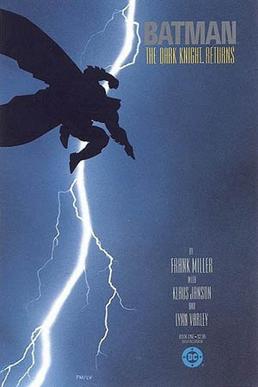
No matter what anyone tries from this point forward, they will likely never be able to escape the presence of Frank Miller's The Dark Knight Returns mini-series. Along with Watchmen, it heralded the beginning of the "grim and gritty" era of comics in the mid-80s. Those books grounded comics in "the real world"; they were emblematic of the way people talked and thought and lived in the 1980s, not some upgraded version of the 1950s that most superhero worlds inhabited. Despite dealing with drugs, sex, and racial issues from the late 60s onward (Marvel's Amazing Spider-Man #96-98 in 1969 essentially broke the Comics Code publishing authority by including a story about the detrimental effects of heroin addiction; the authority essentially ceased to be relevant from that point forward) and despite Neal Adams and Denny O'Neill having restored the Batman to his dark roots in the early 70s in an effort to escape the 1960s TV show, the culture of the worlds that comics created were still outside the realm of the everyday. They were still too staged and too preoccupied with super-powered explosions.

Then came Watchmen, firmly grounded in the Cold War and humanity's natural tendency to fear and hate whatever it didn't understand, including those weird people with the masks and very unnatural abilities. The Dark Knight Returns also rode that wave, pursuing the idea that the Batman along with those like him had been outlawed many years before, leaving a bitter and spiteful Bruce Wayne to watch Gotham City sink into chaos. In Miller's story, he attempts to save it from the utter destruction visited upon it by the gangs that control it. The Joker returns and the public blames the Batman for his actions. In the end, all-out war takes place on the streets, as different factions vie with each other and the Batman attempts to keep order, while ducking the government's attempts to capture him (with Superman, no less.). Along the way, the only person defending him is the now-forcibly-retired Commissioner Gordon. Sound familiar?

Miller reflected society and what would be at least some of the prevailing impulses and responses to a costumed vigilante. Nolan's scripts reflect this, as well, because the movie-going public will not swallow the basic reality that the comic-reading public often accepts: that seeing Spider-Man swinging down the street in pursuit of Electro and having the Batman beating the crap out of Killer Moth outside your restaurant is simply the natural order of things.

I think that the Nolans' script continues to embrace Miller's perspective (as I mentioned before, Batman Begins borrows heavily from Miller's Batman: Year One), but they've also demonstrated a willingness to adapt that perspective to tell their own story about a man so possessed by vengeance that he would sacrifice his fortune, his life, his friends, and his body in order to fulfill it. In the process, they've come full circle on that quest and shown the ripple effects of its outsized ambition. I like that. I appreciate that they showed the blowback, as it were, rather than simply dismissing what has gone before as last issue, which will only become relevant when the surely-dead major villain miraculously appears alive.


Interestingly, Bane as a character was essentially an homage to Miller's work, as well. In the second issue of The Dark Knight Returns, the Batman is beaten to within an inch of his life by the leader of the Mutant gang. He eventually returns the favor and breaks the will of the gang by defeating their leader (assisted, incidentally, by a version of the Batmobile that is more tank than car; yes, that's Miller, too.) This was the first time that Batman had been seen to be physically overmatched by another human, albeit one that was, as Wayne himself noted in the story "faster, stronger, and younger than [me] by 20 years." I think that inspired Denny O'Neill, who was an editor in the early 90s, to develop the idea of a character that would "break" the Batman, physically and mentally. Thus, Bane was developed as one of the early 90s massive crossover/super-platinum cover events which dominated the market (and almost destroyed it later in the decade) and still does to one degree or another.

In other words, Bane is a cipher. He's a plot device. He doesn't really have a motivation other than to break Batman's back, which he does, releasing chaos onto the streets, while the Batman is replaced by an almost-equally psychotic disciple for a few months until miracle surgery can be performed to return him to Gotham to defeat both Bane and the new Batman. It was all rather trite and redolent of spectacle over story... which is why I think that, despite some of the nice turns that Nolan put into the script to create Bane as something more than a device, the story still falls behind the prior two films. The central threat is not driven by anything that most audiences will be able to either relate to or even care about and, fittingly, Bane is removed from the film by a casual blast from the Bat-pod driven by Selina Kyle and, presumably, dies off-screen somewhere. In some respects, it's appropriate because, of course, the true driving force behind the whole threat is not Bane, but Talia. It's also appropriate in that, at it's root, the story is not about Bane. It's about the Batman/Bruce Wayne. But the reason that The Dark Knight worked so well and the reason that Batman/Detective comics have lasted as long as they have is that the Batman is not so much the protagonist of his adventures as the antagonist. The audience/reader wants to see the crazy stuff that the Joker, the Riddler, and the Scarecrow are going to engage in. They want to see inside the mind of the insane. The single-minded force of reason (the Batman) is already understood. What's interesting is to explore the other side. In Rising, Bane doesn't supply that because he's still more tool than character, which is a shame.

Things I liked


I like that they included Talia. She had always been an element of stories surrounding Ra's al Ghul and it's appropriate that Nolan hewed close enough to the source material to make her the driving element behind the master scheme. It's also nice to see a very capable and intelligent woman in the recent parade of superhero movies (they haven't been entirely absent, but they haven't been foci, either.) One wonders if Marion Cotillard will approach Nolan about being something less than a mildly-crazed destructive force for his next film, since that seems to be her trend. Nothing wrong with playing a villain, of course, as I tend to follow Dark Helmet's dictum on that. While the sexual/love interest contact between her and Wayne was as contrived as ever, it was nice to see their nod to that element of the two characters' relationship, which has been present since Ra's was created by O'Neill in the 70s. (Incidentally, the name Ra's al Ghul means "head of the demon" in Arabic (after the "demon star", Algol) and it's pronounced "raysh", not "rahs". Given their otherwise spectacular attention to detail, I wonder why that's never been corrected.)


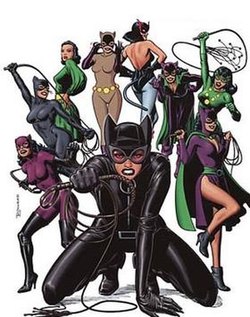
I like that they never once referred to Selina Kyle as "Catwoman".  The fact that her IR goggles when pushed back on her head resembled a cat's ears seemed playfully coincidental. Hathaway played another intelligent, energetic, and capable female character and it was, again, good to see them slip in the romantic attachment that has been an element of Selina Kyle since she was first created (as "The Cat") by Bob Kane and Bill Finger in the 30s.

I liked the reduction in explosions. While there were still plenty to be had, the Dark Knight became a bit glutted by fire and shock waves to the point of tedium. More of the action in Rising was reverted to plain, old Batman fisticuffs, which can be tiresome in its own right, but was broken nicely by multiple perspectives and a lot of motion. One of the previews prior to the film was for the latest film incarnation of Resident Evil. I'm fairly certain that no more than two seconds elapsed at any point during the 60-second clip before yet another incendiary or propulsive display took place. That one got the greatest Sigh Factor™ for the day.

I liked the inclusion of contemporary issues and the public questioning of how the average citizen will survive while the owning class revels in their own existence.*

I think all of the performances were solid. Bale's was probably his best of the three films (one wonders if the Oscar win for The Fighter was his light bulb moment) as he certainly seems to have grown, not just in this role, but in his craft, overall. I continue to think that Gary Oldman is criminally underused in the staid Commissioner Gordon role, but there's something to be said for versatility (akin to Helena Bonham-Carter's performance in The King's Speech.) It was good to see Cilian Murphy return as Jonathan Crane for a few minutes. That was also a nice nod to the Robin legend at the end which was, thankfully, kept off-screen and served as a fitting pass of the torch to whomever takes up the writing/directing chair(s) in the future.

Things I not so liked

The script was uneven. There were some good lines (Hathaway seemed to get the best of them) and the characters remained as real as in the prior films. But there were some heavy expository moments that didn't involve philosophical outlooks so much as rote re-telling of origin stories or some such thing that you hoped would be shown more than told. Furthermore, there seemed to be a lot more "comic dialogue" than was present in the earlier films. When the Batman first encountered the Joker in The Dark Knight, he didn't stop to blurt out the latter's name so everyone in the crowd would know who it was. Everyone knew that already. Yet, in Rising, when he first encounters Bane, despite being aware of who he is and the audience already being fully educated, Bale stops and delivers the dramatic line: "Bane." I sat in anticipation of the Image-style posing shot before the ego-massaging/face-beating commenced.

Despite the capable direction of the action sequences, I think we've reached the limit of where the "real-time fighting" can take us. Half of the Bane/Batman engagements seemed to be a version of E. Honda's Hundred-Hand Slap: there were clearly a lot of strikes, but you didn't know where they landed or sometimes who threw them. Having practiced martial arts for a number of years, I've come to appreciate films (and actors) who've taken the time to engage in actual techniques that clearly do something other than just batter the opponent like a hailstorm. I can see the aikido and the jiu-jitsu and the escrima that Jason Bourne uses and I can see the kickboxing that Martin Blank uses in Grosse Pointe Blank; mostly because I can see them throwing punches and can see where they land. While it's all well and good to convey the speed and urgency of the encounter, I wouldn't mind going back to a little choreography that could actually be followed.

Perhaps it was simply the poor sound equipment of the theater or the position we were in relative to the speakers (we saw the IMAX version and ended up pretty close to the screen) but I heard a ton of reverb and feedback that frequently overwhelmed spoken lines. The ominous bass line of the soundtrack didn't help with this at all and, of course, the fact that Bane's voice was already distorted meant that I spent a fair amount of time trying to decipher what he said rather than simply listening to what he was saying.

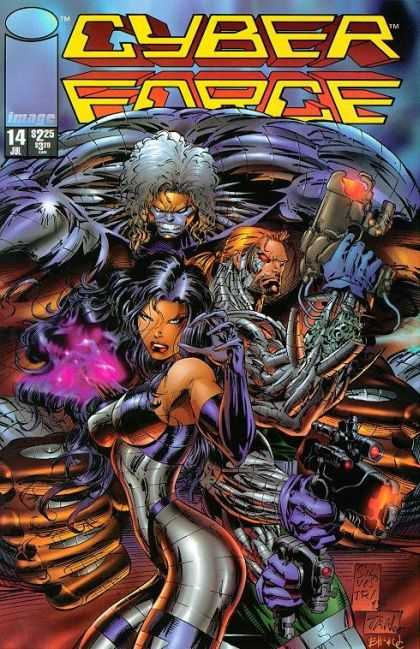
On the topic of Bane, I failed to understand the whole mask backstory. The original character wore a mask for the same reason the Batman does: to intimidate his opponents. What gave him his power was a drug called Venom that was injected directly into his brain.


That's why you can see cables wrapped around him in most of his pictures from the comics. In Rising, we were presented with the idea that Bane's face had been ruined in prison and he took drugs from a unit directly attached to his face to save him from the pain of... bad dental work? The pain suppressors are what enable him to break concrete pillars by punching them? I have a hard time believing that his voice couldn't have been altered in the same way that Bale's is when he's in costume. Perhaps I'm just missing something.

*That said, I expressly disliked the idea that the revolt of the average citizen against the wealth that owns them was somehow necessarily driven by a nihilistic savage and was, therefore, implicitly wrong. Given that significant social change and some degree of justice in this country is unlikely to occur without violence, one doesn't need a terrorist and a fusion bomb to effect it. One really only needs Mitt Romney and Barack Obama as the only two sides of the argument about how many of the underclass should be sacrificed for a couple more million to flow to the top percent.

So, overall, I wouldn't call it one of Nolan's stronger efforts, but I think it was a decent end to a trilogy that will have lasting positive effect on the character and its legend for most of the public. I'd certainly recommend seeing it if you enjoyed the prior films, but it's not a must-see if you're just not into the whole Caped Crusader thing.

Friday, July 20, 2012

More is always better. God says so.

WASHINGTON -- Rep. Louie Gohmert (R-Texas) said Friday that the shootings that took place in an Aurora, Colo. movie theater hours earlier were a result of "ongoing attacks on Judeo-Christian beliefs" and questioned why nobody else in the theater had a gun to take down the shooter.
During a radio interview on The Heritage Foundation's "Istook Live!" show, Gohmert was asked why he believes such senseless acts of violence take place. Gohmert responded by talking about the weakening of Christian values in the country.
"You know what really gets me, as a Christian, is to see the ongoing attacks on Judeo-Christian beliefs, and then some senseless crazy act of terror like this takes place," Gohmert said.
"Some of us happen to believe that when our founders talked about guarding our virtue and freedom, that that was important," he said. "Whether it's John Adams saying our Constitution was made only for moral and religious people ... Ben Franklin, only a virtuous people are capable of freedom, as nations become corrupt and vicious they have more need of masters ... We have been at war with the very pillars, the very foundation of this country."
Ernest Istook, the host of the show and a former Oklahoma congressman, jumped in to clarify that nobody knows the motivation of the alleged Aurora gunman. Gohmert said that may be true, but suggested the shootings were still "a terrorist act" that could have been avoided if the country placed a higher value on God.
"People say ... where was God in all of this?" Gohmert said. "We've threatened high school graduation participations, if they use God's name, they're going to be jailed ... I mean that kind of stuff. Where was God? What have we done with God? We don't want him around. I kind of like his protective hand being present."
Gohmert also said the tragedy could have been lessened if someone else in the movie theater had been carrying a gun and took down the lone shooter. Istook noted that Colorado laws allow people to carry concealed guns.
"It does make me wonder, with all those people in the theater, was there nobody that was carrying a gun that could have stopped this guy more quickly?" he asked. (HT: HuffPo)
Emphasis mine, of course, because when one is in a dark room, packed with people, many in costume, under the flashing lights of a two-story movie screen, and filled with tear gas, what better solution to the situation could there be than MORE GUNS? After all, it was doubtlessly a room full of trained police officers and combat vets there to see the midnight showing of The Dark Knight Rises, right? All of those people would have understood the chaotic situation into which they were discharging a firearm, just like the individual who sowed said chaos, no? Personally, I don't give a damn if the room was filled with the local law enforcement convention. Under those circumstances, I'd rather be in a coop full of armed chickens who just got doused with water.

Newsflash: The solution to guns in our society is not more guns. It's less of them. Less access, less numerous, and lower rates of fire. Those hallowed Judeo-Christian values ("all who take the sword, die by the sword") should tell you that.