Monday, September 23, 2013

Daunted?


So I've had two books sitting on my shelf for a while that I finally got around to reading in the past couple weeks. Both are by authors I hold in pretty high regard: Neal Stephenson and William Gibson. Both came out of the "cyberpunk" movement, Gibson with the seminal Neuromancer and Stephenson with Snow Crash. Both have since moved on.


Stephenson's book is called Anathem. He finished it a couple years ago (he's since written another called Reamde, which I haven't read yet) and it was a high concept story about communication (how language changes), knowledge and its conveyance (how it affects society and the perceptions both of those who have it and those who don't), and world-realization (particle theory about conjoined but different universes and how observation makes them split.) Most of his books have been like that. He's always thinking in a very large manner. The trick is that he does that with characters that are still human, with a pace that keeps you turning the pages (albeit occasionally bogged down in theory), and with some memorable turns of phrase. He's had problems with endings before, in that his grandiose ideas resist being succinctly ended, but I think he pulled it off well in this one.


Gibson's is called Pattern Recognition. It's been out for a decade and many critics regard it as his finest work (he's written two more, Spook Country and Zero History, which I also have yet to get to.) It's explicitly about modern society and how technology and advertising tends to shift cultural tides before people are even aware that they're in the water. It's told in Gibson's hyper-cynical and bleak tone, but his writing, unlike Stephenson's, isn't about conveying a grand idea(s) so much as it is a slow presentation of said ideas while every sentence becomes an expression unto itself. His writing is the closest I've ever seen to the idea of "lyrical." The story is an exercise in description of the environs surrounding his characters and how they interact with them and how they interact with the emotions generated by them.

They're (obviously) very different approaches and, as much as I am forever indebted to Gibson for blowing my mind in 1984 with Case, Molly, and Wintermute, I've come to appreciate Stephenson's style more; likely because I'm another one of those "grand idea" guys, but also possibly because I don't see myself ever being able to accomplish the type of rhythm that Gibson pulls off. Have I tried? Occasionally. But that kind of texture seems to be the province of writers superior to me. Is it because most of what I turn out is generally crap? Quite possible.

On that note, I was out with the trivia team last week and the guy running the session was playing some solid music. One track was Tom Waits' Goin' Out West and it got me into listening to Bone Machine again over the past few days. Hearing Earth Died Screaming for the first time in a few years dovetailed nicely with a neo-concept I've had in my head for a while and I put down the first few hundred words of it but, as with all things that I start, I'm not quite sure it will be worth the effort of finishing (i.e. it's all crap.) I think it lacks both the grand idea and the textural lyricism. At this point, it's safe to wonder whether I'll finish anything simply because I'll hold it to a standard that I may never be able to achieve.

Why did I wait so long to read these two books by two of my favorite authors? I'd like to say that's just how things turn out sometimes, but I've read many, many other books in the intervening years. Is it because I didn't want to be confronted again with work that I can't even approach, much less match? That certainly wasn't foremost on my mind, but it would make me into a typical Gibson character...

Monday, September 2, 2013

The art of letters


I'm a technological enthusiast. While not as quite as much a gadget-freak as my friend, Chris (who quickly obtains the latest phone/tablet/computer or other such enhancement to something he frequently already owns), I'm fond of moving forward, as it were. One of the ways we've all moved forward is in forms of communication, such as the one I'm using here. The US Postal Service, once the envy of the world, is now crumbling under this change. Who needs to write letters when one can email or text or blog or Skype or Vine or Tweet or whatever other method will emerge in the coming years? (Yes, olfactory communication (aka Smell-o-vision) is still on the minds of some people...)

I'm well into a novel at the moment by one of my favorite writers, Neal Stephenson. He actually published it a few years ago and I've had it sitting in my "to read" pile until last week. It's a very complex tale about communication, language, knowledge, and the roots of ideas and how they're transmitted. At one point, the lead character inquires if there will be some way to send a letter while they're traveling. His companion asks if he's writing "to a girl" and he admits that he is. When he stammers about what he should say, since their travel is taking him away from the woman in question, he's told that he shouldn't bother with the detail of what he's doing and where he's going. Instead, he should just tell her what he feels for her. Even in the fairly advanced setting of the novel, these people are in a situation where he's actually going to have to write a letter with a pen and a pad of paper. But that is, of course, the best way to pursue the advice that he's been given.

Modern communications can be dismissed easily. It takes seconds to text and, if one receives it, a response takes seconds, as well. Communication is constant and therefore ephemeral. While it's certainly more convenient and can carry its own level of intensity because it's everpresent and easily conducted, I think it tends to lose the gravitas that a handwritten letter once held because the latter could easily take hours to write and then days or weeks or even months to reach its destination. The effort in comparison to the modern 2-minute Gmail experience is different by multiple orders of magnitude. When one sat down to convey a message of importance, to let someone separated by miles or oceans know one's most heartfelt thoughts, it had to be conveyed with a certain level of ferocity and elaboration. Ideas had to be spelled out at length, both as a way to convey the feeling and to demonstrate its intensity. No emoticons or icons or hashtags could be used to elaborate upon (or cover up) the emotions involved. Only words.

Did she know that a certain scent reminded you of her and that moment put a twist into your gut until it passed? If not, you'd have to spell it out (quite literally) and she would only know weeks from now, when that moment was distant (until it happened again.) Did she know that you watched the sunset because it brought forth a memory of the sun shining through her hair as she looked back at you with an affection that you didn't know existed in the world to that point? You'd have to tell her and hope that perhaps she remembered the same moment. That world wasn't captured in rapid-fire moments of thumb-typed affirmations that soon get lost in the flurry of other signals, real and imagined. It had to be crafted over time and longed for with an energy that could either keep one moving through the days or make them agony until that separation was ended.

I'm not trying to say that the proliferation of communication and its ease have made relationships less passionate or that modern forms can't be used to convey those same ideas. But there's a difference. My friend, Leca, mentioned a text to me a few months ago that she'd gotten from her (now) husband, Kevin. It mentioned that she had looked especially beautiful that morning as she'd left for work. A mutual friend of ours had an immediate reaction: "Awwww. He's trying to get some." Maybe that's true or maybe he was being absolutely genuine with this thoughts. But if one had to set pen to paper and wait even just days for a response, would it be interpreted so casually or would it carry the weight of those supposedly more "genuine" impressions?

Of course, every time I try to think about writing something like that, my words veer into the archaic and Shakespearean, which makes it sound even less "genuine" than a simple text. The other advantage of this change in communication habits and styles is that my handwriting is god-awful, so I'm not sure anyone that I wrote to with a pen would be able to read it, outdated language or no. But I wonder if those ideas and gestures aren't being muted by the constant stream of contact we currently swim in and if it behooves us to take more time with matters that used to require strength simply to write down.

Sunday, August 11, 2013

AMC: Explosive, yet limp

Two of AMC's regular series have returned within the past 24 hours: the electric Breaking Bad and the surprisingly mundane Hell on Wheels. [I shouldn't have to say this but: OMG! SPOILERS BELOW!]


The latter continues to befuddle me, as its writers continue to seem to be every bit as lost in the wilderness as Bohannon (Anson Mount) was in the opening of the new season. Not only did this season essentially begin with a complete reboot of the camp that bears the show's name, thus creating a gulf between the new season and much of what had gone before, in complete contradiction of what has been the hallmark of modern TV (i.e. you have to watch from the beginning to really "get it"), but said reboot carried with it the same middling performances and hardly exciting "plot twists" that have dogged the series since its beginning.


Most concerning is the appearance of Jennifer Ferrin as Louise Ellison, intrepid reporter. Firstly, it's clear that Ferrin has arrived to replace Dominique McElligott, who was killed off at the end of last season in a rather stilted attempt at a "shock ending". She's also playing the role of the "assertive woman", which HoW has had a distinct lack of other than occasional outbursts by Eva (Robin McLeavy.) But the role is so obvious that it detracts from Ferrin's presence as anything other than a device. It's as if the new showrunner, John Shiban, told his writers: "Create somebody that 21st century women can identify with!" (murmuring from the writers' room) "Aha! The new Lois Lane paradign! Perfect!" (silence) "What? It works for Superman!" Yeah, see, because it's always a good idea to base your characters on archetypes created to modernize an extremely limited concept like Superman that has never and will never translate well to any medium other than comics (and not even very well in that one.) Ellison, as a character, seems completely out of place because, well, she is. Most newspapers of that era didn't employ journalists looking to tell the "true story of the West" or much of anything else. They were scandal rags that concerned themselves solely with local news and local politics, except on the East Coast, where they engaged in national politics and always with a pretty significant slant to one side or the other. Furthermore, no newspaper would have sent a woman to a railroad camp. They would have found some aspiring (male) novelist to create fanciful tales for a few weeks that would snare readers interested in fiction and that would be the end of it. She makes no sense from an historical viewpoint and, even given creative license, she makes no sense from a dramatic standpoint, either, because she's too obvious. If you're going to present your semi-ethical characters with dilemmas that even raise the hairs on their necks, the last thing you need is to emphasize that subtlety (which then kinds of loses its nature) with the acerbic reporter pointing out that "frontier justice" is a complete misnomer. No shit, lady. We kinda got that from the director's endless shots of Anson Mount's grim-yet-determined face.


In addition to that, the rest of the cast has returned still doing the same old, not really interesting things as before. Durant (Colm Meaney) is paying off politicians in his dastardly attempt to reclaim the railroad. Ferguson (Common) is still feeling like Bohannon's hired hand and constantly asserting that he isn't. Ruth (Kasha Kropinski) is still the moral center of a camp named after Hell by being the only "godly" person there. And on and on. Why am I still watching? I can't say for certain. I think it's mostly because I like gritty Westerns and this aspires to be that and also because this period of history in that section of the country is OVERFLOWING with story potential, almost none of which the show has effectively mined since its inception. Of course, most of said material has to be propelled by interesting characters and very few of those on the show (Eva, most notably) have been that. When the plots stop being transparent and the actors stop speaking in platitudes, perhaps we'll get somewhere. But as long as this is Gunsmoke with a little dirt on it, we really won't. I thought the departure of the Gayton brothers as showrunners would improve things and this event was probably part of the reason for the semi-reboot, but that transformation was second verse, same as the first.


Contrast this, of course, with the return of The Heisenberg Show and it looks even worse. The second half of season 5 promises to be some of the most explosive (perhaps literally...) material in the show's history and that's saying a lot, because they have to wrap up more depth and complexity in 8 episodes than you can find in most of AMC's other offerings combined. The premiere did not disappoint. We all expected Hank to dive back into the case and probably could have even predicted their confrontation in his garage (which was an excellent scene; Dean Norris deserves great credit for his performance there) but combining that with the return of Walt's cancer and the actual fulfillment of his promise to Skyler to step away from the business sets up some interesting paths as we walk toward the M60 stashed in Future Walt's trunk.


And, as usual, almost nothing in the show's repertoire is better than watching Jesse (Aaron Paul) wrestle with the consequences, internal and external, of his past actions.  As much as Walt is on the road to self-destruction (if he can get to the end before the cancer does), based on the bad things he's done in the past, Jesse is in lockstep beside him mostly because of the good things he's doing now in an effort to assuage his own guilt. Paul's performance, as he subtly winces every time Walt puts a fatherly hand on his arm to give him the "Just forget it all!" advice, is the best of the show, by far. My one slightly down note about the first episode was the scene with Saul (Bob Odenkirk) who is unfortunately in the situation where the usual shyster routine doesn't fit the circumstances, so he doesn't have as much material to work with. OTOH, it has to be said for those of us in the Detroit area, that despite the tragic circumstances of Drew Sharp's death in the show, I can't hide the little smile I get every time they refer to killing someone of that name... Also, who could possibly not appreciate one of the trademark BB musical montages set to Primus? Killer.

If Hell on Wheels had even one character as interesting as Walt or Jesse or Hank or Saul, there would be something to build on. Shiban says that the show is going to be "about work; about the building of the railroad" and that's great, as long as you're willing to do it with real characters and not the artificial constructs like Ellison. Breaking Bad, meanwhile, has me waiting with bated breath like no show since The Wire.

Tuesday, June 25, 2013

Welcome to the rest of the world

In the midst of job hunting again, I came across a listing for an NGO in California that is nominally led by a good friend of mine. They're looking for someone to handle the financial end of their operation and, while finance and fundraising are not my most preferred activities, I'd certainly feel a lot better about doing so for an activist organization than for yet another property owner. So I pinged my friend and asked if they'd be OK with me doing the job remotely, as I'm not currently compelled to go back to Cali. He said: "It's no problem doing it remotely, but I have to tell you, the board is pretty set on hiring a person of color."

...

The first thought that comes to mind, since I'm kind of eager to be employed again, is that it's frustrating as hell to immediately be discounted simply because of who I am. They haven't looked at a resume or even seen my name and already I am persona non grata. The second thought that comes to mind is: Welcome to what many non-white people encounter every day! Irritating as it is, it's almost impossible to remain so because there are probably 10 other jobs for which I would be ushered right to the top of the list, while someone who didn't share my skin color or gender would not be.

(H/T jabarkas for reminding me of this.)

Now, one competing thought is that the progressive political world is one that needs more people, not less. One of the defining characteristics of that world, in general, is inclusiveness. Anyone that wants to assist in reforming society or pushing forward an agenda that helps everyone, not just the rich, is going to be welcome there, regardless of color, sex, creed, whathaveyou. And not just welcome, but NEEDED. Gotta keep up with the Tea Party somehow, right? (Ignorance is always easier than reason.) On the other hand, it's also that world that should be at the forefront of demonstrating that people who aren't white can also be at the helm. It's that world that should be actively promoting the idea that non-white people are just as capable of performing any task asked of them. How does one do so? By counter-balancing the inherent racial attitude of society by creating accelerated opportunity. In other words, intentionally choosing people of color (and/or women.)

There is, of course, room for argument that doing so is inherently a racist act. I would be justified in the eyes of some by claiming: "I was encouraged not to apply simply because I'm white!" And that's true. As I said, the board was already slanted against me without even having seen my name. But there's a rather poignant example from the book, Freakonomics, on just how much impact actually seeing my name would have had. Those with "black-sounding" names frequently get less, or less positive, attention than those with "white-sounding" names. (And you don't get much more white-sounding than my full name.) I've seen evidence of this, first-hand, as well.

I just left a job on the south side of Taylor, the population of which is predominantly black. The company I worked for is fairly ruthless about rent collection and I had to review my delinquency reports with another long-time manager in an adjoining property to ensure that I was toeing the company line. Now, this woman is white and had been working in Taylor for at least 20 years. Every single time we came across a "black-sounding" name, like "Tawnisha", she would pretend to struggle over its pronunciation and then shake her head and grumble at the idea that someone would actually have that name, as opposed to something like "Judy". I always followed her faux struggles with a quick enunciation of the name in question ("Taw-NEE-sha."), which she responded to with a roll of her eyes. Accompanying that mild cultural resistance was a rather pronounced difference in attitude when it came to interpreting just why the rent wasn't paid. White names had reasons. Black names had excuses or lies.

So, in my personal circumstances, I'm disappointed that I wouldn't be given the opportunity. I like the sound of the job. It fits my principles. It's something I am motivated to do. I want the job. But there are many more people who may be as capable of and are as motivated to do the job as I would be who haven't had opportunities before this one and I think that's probably the more positive result for society, overall. Frustrating, especially while unemployed, but understandable.

Saturday, June 22, 2013

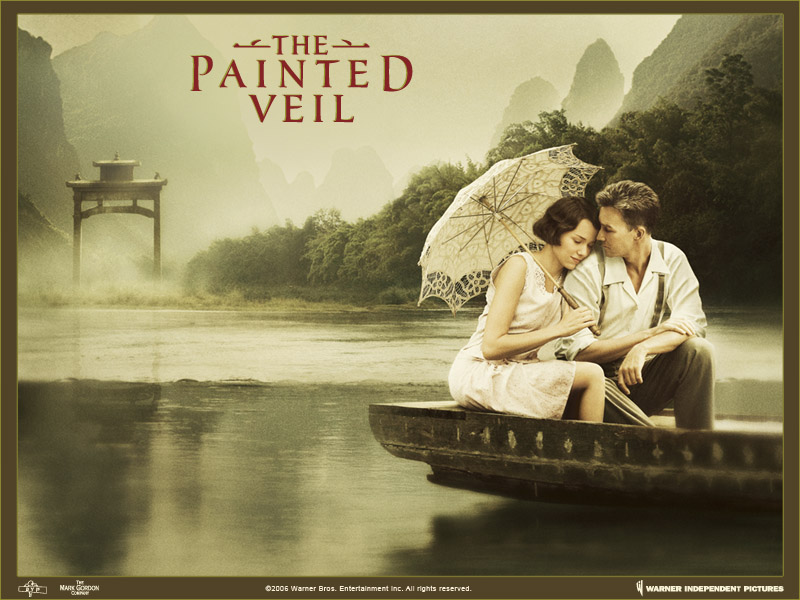
The Painted Veil


I first saw this film a few months after its release. It came up as a recommendation on Netflix, probably because I'd displayed a passion for historical pieces. What arrived on the disc was an historical piece with far more passion than I'd expected and it's a film that has sat with me ever since. It's one of those that I have to avoid when looking for something to watch for a few minutes over a meal because I know I'll sit there to the end. Sometimes I do, anyway.

I've never read the Somerset Maughm novel that it's based upon nor have I seen the two earlier film adaptations. I suppose that engaging any of those might be interesting, simply to see how other actors and writers have approached it. But I have such an identification with the 2006 version that I feel certain that I'd be disappointed with any other depiction at this point.


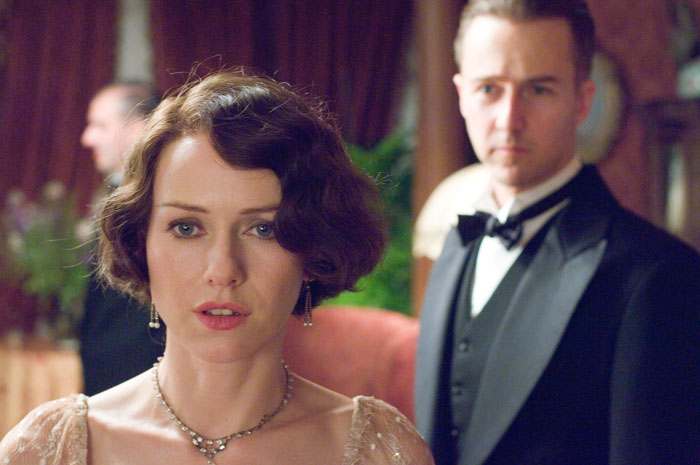
First and foremost, it's the performance of the two leads, Naomi Watts and Edward Norton, that makes the film go. As it is essentially focused on the peaks and valleys of their relationship (and like the surrounding karst, there are many), that seems only natural. But both of them carry the film with such intensity that it seems to border on a recorded play. Everything in the film smolders when they're on the screen, whether with anguish or lust, heartache or fear. Norton, as the austere and emotionally stunted Walter Fane, creates an image so distant and spiteful that it's difficult to actually sympathize with his reaction to being cuckolded. When the revelation is made some distance into the story that he's actually fond of children and chooses to spend most of his time caring for them, the audience is every bit as surprised as his then-estranged wife.

Watts, as Kitty, displays her own dichotomy, as well, given that her character is far more emotionally and sexually experienced than her husband, but perhaps just as easily adrift in her own fantasy world about the way things "ought to be." Having been the life of her own little social circle in London, she enters the circle of the real world when she takes up with her lover (Liev Schreiber) and believes that this far more suitable man will disrupt his own life to perfect hers. This time it's Walter's turn to be the more experienced one as he laughs at her disillusionment before the two of them proceed into the hinterlands of China.


It's that setting which plays the third role in the film, as the foreign culture, the sub-tropical location, and the stark class and racial struggles and differences create the crucible that expands the story beyond that of yet another infidelity tale. Walter's delicate dance between age-old spiritual customs, the realities of the then-still-recent science of bacteriology, and the nationalist politics amidst competing warlords create a story that would be interesting to follow as a documentary but which is presented here with the greater urgency generated by his personal conflict. By the same token, Kitty is also forced to come face-to-face, quite literally, with both "the other half" and the conditions they inhabit, often based on class, but in this case also starkly tied to race (in true British Imperial fashion.) Her submergence of the playgirl lifestyle, so obvious to everyone around her, in order to work in an orphanage run by nuns, is a demonstration of a personal transformation. Her doing so even as Walter reminds her that the inherent religious imperialism practiced by those nuns (and their mother superior, played by Diana Rigg, currently of Game of Thrones' Olenna Redwyne fame) is at least partially responsible for the resistance of the local population to their very presence is a demonstration of just how fine the lines can be when trying to compress one's personal philosophies into the shapes requested or even needed by society. This in itself is a replication of the struggle that the two leads have: how to get their disparate personalities and worldviews to function for the betterment of both of them. As Rigg states to Kitty at one point: "When you have duty and passion, then you have grace within you."


There's a certain languid intensity that permeates the film's every corner, even when Watts and Norton aren't the focus. The touches on various historical elements - the opium culture and its notorious British past; the ferocity of and terror created by a disease like cholera; the implacability of the warlords in the face of a "Nationalist" rule that is best defined as "only within the eyesight of the ruler" - all create a texture rich enough to generate 2 or three films, but which is properly contained here to give as complete a story as possible and let the audience pursue it afterward in their own thoughts as they may. The film stays with you because of that texture and the infused passion. What encourages that is the phenomenally moody and ethereal score composed by Alexandre Desplat:


That simple 5-note phrase has so much depth that it's almost an emotional appeal unto itself. One could get lost in the story hidden behind that music even without having seen the film. There aren't many soundtracks that I listen to without the movie playing. This is one of them.


Of course, it has to be said here that the class struggles and the history are perhaps more poignant to me than most. Societal transformation and the emergence into a new cultural paradigm both within and without China during the period that the film is set is the "writ large", as it were, of the two leads' personal anguish. But what also comes to my mind is that I first saw this film while going through a period in my own marriage that was very similar. My (now) ex-wife and I were on very different pages in the manual of life and of mindsets that were quite similar to Walter and Kitty, respectively. I remember when the credits first started rolling and both of us were silent for quite some time, digesting not only what we'd seen but how emblematic it was of what we were living at that time. One would think that that's another reason, perhaps the primary one, of why the film has stuck with me over the years. But I never think about that time when I see it these days, as the film stands on its own as a rather under-appreciated production of a remarkable story about life, death, and the emotional path that ties them together.

Thursday, June 13, 2013

Writing sonnets to Vivaldi this time

Nulla in Mundo Pax Sincera, to be specific. Why is it that this works best with baroque composers? Don't ask me. I just spew here. Following on the heels of the Bard, perhaps. Once again, just trying to exercise the form and not have it come out as complete doggerel. Remember now, class. The rhythm is like a heartbeat: ba-dum, ba-dum, ba-dum...

Ahem.

A spark alit with thine emergent word
Of int'rest piqued and thoughts aloft to try
Intent and energy were borne and heard
And no moment to stop and question why
The past pursued with seeming earnest zeal
Our present heralded by growing fire
No thought as to whether this may be real
A future left in visions of desire
Claims of anticipation 'til we meet
The days suffused in dreams of further light
A message ling'ring flash a peal so sweet
The truth a cloud a trick of fading light
Now to the yoke of mem'ry flames are lashed
Plunged into darkness soaring hopes are dashed

Exeunt.

Monday, June 10, 2013

They already know everything because you let them

Edward Snowden is now being heralded by no less than Daniel Ellsberg. Snowden, of course, exposed the rampant NSA spying program and fled to China in order to escape what will surely be energetic attempts at retribution by the US government. The program is being labeled an attempt at "security". The question that no one is asking is: Security from what?


A "war on terror" is deliberately left wide open to be pursued in any direction. Nameless, stateless; it could be anyone and anywhere and, most importantly, it could be us. The first time government of, by, and for the people was mentioned was the last time it existed. Now the only question is why.

Why would the government be so obsessed with controlling its citizenry? Because people left with no other choices tend to revolt. Revolt would be bad for those in power, not least because it disturbs their carefully crafted image of the land of opportunity/greatest nation in the world/(insert pathetic slogan here.) It's been less than a couple weeks since the last time I was attacked for rejecting the benefits afforded me by being part "of this great nation." People believe this stuff, even when the evidence of rampant inequality, perhaps the highest in the history of said nation, is everywhere. If much of the population is doomed to work low-wage jobs for the rest of their existence, with little prospect of change, what hope do they have other than violence? If the highly educated segment of the population is largely demoralized because that education has been devalued if it doesn't produce instant profits, what message might they deliver to people actually willing to read their books, view their art, and listen to their speeches? Is it hope? Is it opportunity? Or is it "don't bother following me here"?

A populace without choices is a populace without hope. No hope means nihilism. Nihilism means violence. Thus, the control. That control is already so effective that much of the population, urged on by wealthy and compliant media sources, screams for more whenever a violent event occurs. After the Boston Marathon bombing, some of the first responses were complaints about the government not knowing enough and/or acting quickly enough. The only way to know that much and act that fast is with the type of program that Snowden revealed. It's a howl of outrage, not that two men took such actions, but that the government wasn't hovering over them to stop those actions. It's easy to do when it's "crazy Muslims" aka NOT ME. I don't have anything to hide! I don't have anything to answer for! They shouldn't be spying on me! Just the bad people! It's NOT ME!

But it is you.

Just like animals in a very pretty and comfortable enclosure at the zoo, it is you. If you're lucky, you have food and a nice place to stay and despite the fact that you walk the same boring path and look at the same boring plants every day, it's easy to not think about how your entire world is 50 square yards. Until perhaps you lose that nice job of being looked at by the tourists. Or you lose that good food. Or that enclosure isn't so comfortable anymore. And then you realize that they have been watching you, guiding you, controlling you... because, at its root, they're afraid of you.

They're afraid because they know that if enough animals in the zoo that are less equal than others decide to band together and resist the controls, revolt against the keepers, and abandon the enclosures, they might be in trouble. Without doubt, their profit margins would be in trouble and that is, in the end, the most important thing to any member of Congress and any president elected in the past 150 years, at least.

So, should people be outraged about the NSA program? Sure, I guess. It's just one more symptom of how the system is maintained. But what they should really be outraged about is not that the system of control was exposed, but that it exists in the first place. The NSA program is one element of a massive problem that is summed up in one simple phrase: rule by the rich. As long as that exists, you might as well relax and perform for the watchers. Nothing you do will matter until that changes. And, incidentally, if 1/10 of the outrage currently being spewed about the spying were directed at the massive economic and environmental problems in this country, things might actually start to change.

The Man's got a surefire system
An economic prison!
Ya gotta get out!
Ya gotta get out!