Wednesday, October 7, 2020

Today I learned that an oil change for a Lamborghini costs $1600


The definition of class standing is often a moment of awkwardness in discussions among Americans. Few people want to admit to being "wealthy" because that involves an inherent conflict of perspective when associating with those who aren't. Likewise, most people aren't eager to announce themselves as "poor", because of the similar social stigma. Back in the Old Country, it was simply accepted that those who were of the noble class were simply superior humans (Star-bellied Sneetches) to others and both sides were more or less comfortable with that arrangement (or had to be.) This kind of division had been handed down in many ways from the Roman Republic's patrician and plebeian divide, where the former class, even if its members weren't wealthy, had certain rights that placed them above the "commoners". That system, like that of later Europe, eventually became fuzzy around the edges, as wealthy New Men, like Gaius Marius and Marcus Licinius Crassus, later demonstrated just how foolish the idea of genetic superiority was (Yes, we still have a problem with that...) It was, of course, later revived in the Dark Ages like so many other things that had been dismissed.

In the US, there has nominally never been a "noble" class... unless you were White. And male. And a landowner. But aside from all of that, the ideal of the American experiment was that social mobility was key and anyone could be whatever they wanted, so long as they worked hard enough. This is The American Dream. As the US was founded as a moneymaking venture and has never departed that classification, the idea of social divisions was based solely upon that more practical divide that people like Crassus once used to their advantage: money. The "highest" social class in the modern American perspective is that of "middle class", since one can access pretty much everything that one wants (and certainly everything one needs) and not be seen by the bulk of the population as being part of the ownership class, who are the ones properly reviled for making/writing/altering the rules to their own advantage; typically to the misery of the rest of us. As part of the middle class, one can be comfortable and still qualify as Average Joe. It's a conceit and a pretty obvious one, but it's a tiny part of the vast illusion that so many carry about the success of that American experiment.

That's what makes the Robert Frank article yesterday on CNBC's site, spotlighting the ruffled feathers of the ownership class about Joe Biden's proposed new tax plan, so funny. First off, let's start with the idea that an income of $400,000/year defines one as "middle-class." (Why the hyphen? I don't know.) This ludicrous concept is solidly refuted within the article itself, as it points out that said income places one in the top 2% of income earners in the nation. Given a scale from 1 to 100, I'm willing to bet that most people would define the "middle" of that as somewhere within shouting distance of 50; such that "middle class" would be, say, the middle third, roughly 36 to 75% or so. That, of course, would plunge a number of people into those labels that they're eager to avoid: "upper class", "wealthy", "rich", and so on. This is, again, mirrored by those not wanting to define themselves as "lower class", since the shine of being a blue-collar worker on the lower end of the income scale has been rapidly rubbed off over the past half-century. It's not so much that people are doing "honest" or "necessary" work for lower pay (we can talk about the societal morality of that some other time), as much as it is that being perceived as "lower class" is part of being among those who have "failed" in America. Thus, everyone aspires to be "middle class" so that everyone can be the same and, of course, be treated the same just like all Americans are treated, right? Right? Tell it to a woman when the topic of salary comparisons comes up. Tell it to a Black person when the topic of treatment by police comes up.

This is from the Wall Street Journal, the last time Obama was seriously talking taxes (2013.) Extremely tough going for that single person making a quarter mil and needing to drop another $3K.

But let's get back to why Robert Frank has decided to take the ownership class' perspective on the concept of being "middle class". Let's start with the obvious: The real target of Biden's prospective plan is the super wealthy (i.e. the top .1% of income earners.) But that doesn't mean it stops only there. Thus, the acknowledgment that those who make $400K or more are, in fact, wealthy. CNBC attempts to refute this by suggesting that, since those "middle class" earners aren't driving a Lamborghini, they don't deserve to be labeled as such. (A friend pointing out this farce also informed me of the cost of an oil change for that line of cars. Life is rough.) He follows swiftly by citing the fact that less than 2% of the nation's population earns 25% of its gross income. If one is trying to make the point that the "middle class" is already burdened enough, this is hardly the way to start. And, as always, let's be sure to keep in mind the difference between income and wealth; the latter of which is often more difficult to quantify but which represents a significant factor in the difference between the wealthy(!) and everyone else. He reinforces this rake-stepping assessment of the obvious by pointing out that $400K is six times the national median (hardly "middle class", then, right?) and even three times the median in high-cost locales like New York and San Francisco.

This is immediately followed by the disclaimer that living in one of those high-cost cities means that $400K doesn't really go as far as you'd think (still 2 to 3 times the median!) when under the following definition of "middle class":

“Based on the expenses, a $400,000 household income provides for a relatively middle-class lifestyle,” Dogen said. “A middle-class lifestyle is defined as: owning a home, having two kids, saving for retirement, saving for college, going on modest vacations several weeks a year, and retiring in one’s early 60s.”

From a personal perspective, I've always considered myself to be somewhere in the vicinity of middle class because even when I (or we) was struggling to make ends meet, I still had enough for things like cable TV and wasn't in crisis mode when it came to paying the rent or putting food on the table. That's how I define "middle class." I've owned a home once in my life. It was a net negative to our income, because it meant that our housing cost basically doubled over the amount of rent we'd been paying previously. Oh, but the tax benefits! was the answering refrain when I brought up that point. Yeah, those tax benefits occurred once a year, but I was paying that mortgage in the 11 other months. I've never worked a job that paid me enough to seriously consider the idea of substantially saving for a child's college expenses (this doesn't even consider the outrageous cost of 4-year universities, currently), to say nothing of two. I've also rarely had a job that let me save for more than roughly six months of "retirement" expenses. Most so-called "middle class" jobs start at one or two weeks of vacation. If you stay there for 10 years, maybe you'll climb up to three or four. None of those qualify as "several weeks a year", be they "modest vacations" or not. Am I, then, not "middle class"?


But Frank argues that middle class folks who clear $400K/year (aka more than I've made at most of my jobs in almost 10 years) aren't doing so well, considering the mortgage on their $2 million home... So, why does their home cost $2 million as a "middle class" person again? Is it because they live in San Francisco? Well, that's a luxury good/choice, right? According to CNBC, even if they do make that luxury choice, they're still making 3 times the median income there, right? And they're still dumping what was close to an entire year's salary for me into their 401K, right? That sounds pretty damn wealthy. The fact that you spend every dime you make (except for, you know, the $40K going into a retirement account every year) doesn't make you unable to live the high life. It just means that you've made choices that make you cash poor in order to subtly signal your status (home worth $2 million in NYC), while you can claim to be more affected than you could be. People enjoying this special CNBC status are what the Russian peasantry used to call kulaks, peasants that had become landowners themselves, although that term originally meant "tight-fisted", which is not what's happening here.

And, of course, the genuine irony here about CNBC's definition of "middle class" is that all of those assertions that they make about that status were what Average Joe used to be able to do. When the unions were strong from the 40s to the 70s, they actually could work blue collar jobs and still send their kids to college, own a home, take vacations, and so on. A lot of people working the "white collar" jobs like I've done could do the same. We could do these things because the power of collective action meant that the ownership class was forced to acknowledge the value of both our labor and our identity as human beings. Since the Reagan era, that has been less and less of a concern to the wealthy and most Americans have been indoctrinated into their religion, as well. The ownership class became disturbed that lesser people could enjoy that fabled American Dream and decided to reorient the public's perception of who deserved what. Instead, what we now have is this:


What that basically displays is the number of weeks the average male worker needs to work in order to afford major expenses (housing, health care, education, etc.) In 1985, it was 30 weeks. In 2018, it was 53. It hasn't gotten better. It is, of course, even worse for women: In 1985, it was 45 weeks (just barely enough for those "several" weeks of vacation!) In 2018, it was 66. This also doesn't include other necessary expenses like food, clothing, utilities, and maintenance of those major expenses. It also comes equipped with the assumption that emergencies will never occur and, of course, that retirement will never, ever happen.

One thing to keep in mind, though, is that those same kulaks in early 20th-century Russia were believed to be tentative allies of the revolution, because they recognized the vast gulf that remained between their life of relative comfort and the resplendence that the top of the pyramid enjoyed. That may be the case here, as well, since the central theme of control always employed by the ownership class is turning one segment of the population against another; whether it be by differences of income, skin tone, religion, or otherwise. It's useful to keep in mind the source of this article and the type of America that they're most interested in promoting.

Monday, August 31, 2020

Rough patch

At some point, fictional universes inspire expectations from their audience. If HBO ever gets around to making a miniseries about Tales of Dunk and Egg, George RR Martin's most prominent series of short stories based in Westeros, there are going to be things you simply expect. It's going to be mostly swords and not much sorcery. People are going to talk about the noble houses that we're all familiar with. And there's going to be sexposition to explain the political situation almost a century before the events in A Game of Thrones and the subsequent novels. We're all cool with this. We know the world and we know how his stories (or screenplays) in Westeros usually proceed and we've become accustomed to certain aspects of it. Lovecraft fans are the same way.

The reason that HPL is even remembered today is because of the mythology he created around the Ancient Ones and the Outer Gods. Unlike contemporary, friend, and pen pal, Robert E. Howard, Lovecraft didn't write series of stories based around a singular character like Conan the Barbarian or Kull the Conqueror. He tended to write singular stories that all took place in a world that was ostensibly our own, if only slightly shifted into darkness. Later writers expanded upon that world/universe and the Lovecraft Mythos was born. So, people that have spent some time hanging out in that universe, whether by reading or playing games or some combination thereof will probably have some expectations about what they'll be seeing. You shouldn't be seeing knights in armor or bubble helmets and rayguns in a Lovecraft-style story. In most cases, they'll be based somewhere between the late 19th century to contemporary times (such as the ones written by yours truly) and tend to involve some weird-looking creatures or at least the impression of those creatures, somewhere in the shadows. Those could be servants of the aforementioned dark beings, alien races battling them, manifestations of the gods themselves, or some other departure on the weird and tentacly. What they're usually not is bog-standard ghost stories. So, we come to tonight's episode: "Holy Ghost"...

Now, it's key to keep in mind that Lovecraft Country isn't intended to be a boilerplate retelling of HPL's stories. It'd be kind of boring if they did take that approach, since you can easily find casual ripoffs like Annihilation if you really want something like that (or note-for-note renditions like Color Out of Space.) Instead, as noted before, it's about that cosmic horror combined with the very real racist horror faced by Black people in this country. So, while you could've suggested that the second episode kind of jumped in with both feet first, with the Gate to Eden and so on, the most recent episode drew way back from all of that and stuck to far more familiar horror themes; specifically, a haunted house. Lovecraft absolutely engaged with those themes over the course of his career. Indeed, one of the best genuine horror stories he ever wrote, IMO, was In the Vault, about an unfortunate encounter in a mausoleum. But I have to say that I was left wanting in some respect by this latest episode because, with my expectations still loaded by my knowledge of HPL and how the first two episodes had moved along, to be confronted with another Amityville Horror or Poltergeist tale was a bit of a drag.

Making up for it in some respects was not only the continued engagement with the themes of racism on Chicago's north side, but the continued development of not only our two leads, but also Hippolyta, as she struggles with the aftermath of George's death. Indeed, we see some of those standard horror themes extended as she takes out her grief and frustration on a copy of Dracula, George's favorite book according to his brother, and seems intent on mangling another copy to keep that inner fire burning. Those racist themes are overt, in terms of the actions of Leti and Ruby's neighbors, and also subtle, where the opening title card is presented in typical fashion, implying blame for the disappearance of three people on the presence of non-Whites. One could almost have plucked that lede from the pages of the modern New York Times; always ready to frame things in a way that won't offend their proper, White audience.

In the end, we discover that the acquisition of the house that led to the odd (and not so odd) events of this episode was, once again, initiated by a spell of Christina Braithwhite... which is starting to become a little deus ex machina to me. The thing that really excited me about the first episode was the fact that we had a series based on Black characters who actually had agency. Despite the fact that one of them was writing a Green Book-like travel guide, this wasn't Green Book, the film, where the Black character had to wait for the White guy to save him in every situation he encountered. Indeed, here, pretty much all of the White people are threats, as a central theme of the story, so Christina is simply carrying on the supernatural angle of that White threat. But she's also robbing our leads and their associates of that agency, because suddenly they're dancing on the strings of first her father and now her to have any motivation, outside of their own emotional ties, to do anything.

Thankfully, those emotional ties are still present and we learn a lot and see a number of good scenes involving Hippolyta, Leti, Ruby, Dee, and Tic, as they sort through everything that's happening around them and between them. The moment where Dee is about to set a place for George and stops herself was particularly good. Also, the moment where Tic ruefully mentions that the tactics the neighbors are using (heat and noise) to try to drive them out are the same things they used in Korea; to which Leti asks: "For what?" and Tic decides he'd rather not get into that. War can get you to do things you might not be proud of. And, honestly, I'd probably still be interested in a story that simply involved regular Black folks struggling with 1950s racism, a brilliant example of which was finally resisting the neighbors' harassment (a burning cross in their yard), and still having to assume the "cooperative position" (kneeling, hands behind their heads)... but that's not why I started watching a series that involved Lovecraft.

I was a little put off by Leti's (and, presumably, everyone else's?) arrest being so graphic as the cops allow her to be injured in the back of the paddy wagon, but she's right back at home the next day. The process usually didn't move that swiftly, especially for Black people, unfortunately. And this kind of ties in to this whole Christina thing, where it seems like some shortcuts are being taken to fit each of the stories from the novel into a single episode. Again, I haven't read the novel, so I don't know that that's exactly what is happening, but we're three episodes in now and, despite the personal stories being interesting and following what seems like a natural rhythm, the overall plot seems much less symmetrical, culminating in this episode with the villain-explains-their-entire-method-to-helpless-hero scene between Tic and Christina. ("Do you expect me to beg?" "No, Mr. Bond! I expect you to die!") In contrast, Hippolyta's encounter with the weird orrery (and apparent departure with it?) was at least a crumb to follow that was a little more exotic.

So... yeah. I'm still interested and I'd like to see how things develop with these characters, but we're in a difficult moment here and I'd either like to see a bit more on the tentacular side or something else that tells me I'm not just watching a period drama about racism with occasional fantastic flourishes. Again, there's nothing wrong with that, but it's not what l walked into the theater expecting.

Monday, August 24, 2020

Small hiccups before the payoff

Many modern TV series have learned the pitfalls of exposition. They've learned that it's probably a better idea to just drop your audience into a story, rather than spend a lot of dialogue scenes endlessly explaining who these people are and why they're doing what they are. Episode 1 of Lovecraft Country had a couple slower moments, like Lettie's run-in with her sister, who cited the former's indifference to other humans more prominently than you might expect from two people who know each other well. But everything still flowed nicely without stopping to give everyone the map to said country and the path our characters would be taking to get there. Come the second episode, though, it's more a case of Loocy, You Got Some 'Splainin' To Do and the rhythm of that episode "Whitey's on the Moon" suffered from it a bit.

There were a couple more complicated elements to deal with, most notably the Order of the Ancient Dawn and Tic's origins and heritage, that are apparently underpinnings of the story and which have to be explained for it to make sense to the audience (not that it always has to, as we'll see.) This differs from the first episode, in which broad, thematic elements could simply be demonstrated, without much dialogue to push them along (family, cosmic horror, earthly horror in the form of racism, etc.) That left the screenplay for episode 2 a bit heavy on the exposition, although not horribly lacking for development at the same time. I did notice about halfway through, though, that I was getting a little impatient for our heroes to get somewhere when they were already confined to the manor of the Order and then confined to their own rooms once George and Lettie could actually remember what they'd been through. In some ways, it's another metaphor for the racism of American society; first the confining of mind ("Just accept that this is the way things are.") and furthered by the confinement of body, even when the mind is free.

But the other problem is that the story itself was a bit disjointed. First, 2/3 of our party still have motivation despite no memory of what should be motivating them and they suspect Atticus of mental illness. Then, they do have memory, but are confined to strange fantasies in their rooms that have no introduction to the audience. We experience the shock and displacement in the same way they do and are left to figure out what's happening. And, in the midst of this, Christina Braithwhite attends the birthing of a dhole (or something) from a cow, declaring that "It's her first time." I'll leave you to suss out the potential innuendo of that moment. Following all of this, Montrose is discovered, but not happily, and George and Tic decide to play along with the now very disturbing events to their catastrophic end.

Despite that, all is not lost (except, you know, the house...) There is still a significant amount of character development that happens amidst the chaos. We learn, for example, that part of Lettie's detachment from other people is a childhood trauma of abandonment. We also learn, of course, that Tic's parentage may not be what he's always thought it was, as George and Montrose bicker over what that reality may be. This is on top of the fact that a pertinent historical example of slavery and the depredations suffered by those enslaved may have led to Atticus having more influence in these strange happenings than anyone first realized. Plus, there's no way to deny the emotional impact of the final scene. High marks to Jonathan Majors here, as it's really difficult to convey that kind of traumatic grief in a convincing manner and he did really well. Kudos also to Jurnee Smollett for also delivering the half-panicked, half-confused desire to comfort someone without really knowing what's appropriate at that moment. If nothing else can be said (and, obviously, there's a lot that can), the acting in the first two episodes has been top-notch.

Of the three visions, the most interesting, by far, was Tic's. While it may be another insight into Lettie's character to see her terror at potentially being assaulted in the same manner as the window displays, and it may be a reinforcement of the longing by George for an earlier time, Tic's vision brings us back to the stuff that he's constantly carrying with him. Is the Korean woman that he struggles with also the one who called him in the first episode? Is she the woman represented by Dejah Thoris from A Princess of Mars in his dreams on the bus ride home? And, if so, why was she trying to kill him?

The little details that were present in the first episode are also still evident here. George finds a copy of House on the Borderlands on the shelf, which is the one that opens the secret door. That book was cited repeatedly by HP Lovecraft as a huge influence on his own work. Also, the Order of the Ancient Dawn is an obvious stand-in for the Order of the Golden Dawn, which was a cabal of mystics in the late 19th century, including Aleister Crowley, who were trying to promote the idea of ancient sorceries and rituals as a form of enlightenment. They're often connected to the Illuminati and the Masons and other organizations, secretive and not. Layered over all of that is Gil-Scott Heron's poem, "Whitey's on the Moon", which cites the excessive behavior that American society often engages in when so much money and energy is often needed to address problems that already exist. This manifests most pointedly in Samuel Braithwhite's desire to emulate the same ceremony that his predecessor (and Tic's ancestor) attempted and which failed, but by which he's willing to destroy everything and everyone around them in its futility. Also, huge credit to the writers/showrunner for the music and pop culture elements of the show. Opening with The Jeffersons theme was excellent for this child of the 70s.

And one final, major element of the story is the discovery of the irascible Montrose, who doesn't reveal exactly why he was trapped there and shows no particular appreciation for being rescued from his state. It will be interesting to see Michael K. Williams ("Omar comin'!") in a regular role again, as I never caught Boardwalk Empire (which is something I guess I could do between episodes of Lovecraft Country...) I'm not sure quite where he fits in, tonally, given that Tic and Lettie both have plenty of direct conflict surrounding them already (aside from being, you know... Black in racist America) and George was a calming influence on a turbulent situation that won't get better with Montrose. But conflict is the essence by which stories are made, so here we go.

Next week: Holy Ghost.

Tuesday, August 18, 2020

Slimy, green book

There's something to be said for a TV series that opens with Jackie Robinson splattering what is nominally Great Cthulhu with a baseball bat. Even if I wasn't already interested in things Lovecraft, that opening scene of Lovecraft Country would've been enough to stop me from channel surfing and to take a moment to see just where this thing might go. It's based on the novel of the same name, about a young, Black man and his family and their encounters on the road in Jim Crow America and how the horrors of bigotry are often just as awful, if not worse, than facing down an interdimensional demon.

For those that don't know, it's worth mentioning up front that H. P. Lovecraft was an unrepentant racist. Many of his more famous creations are rooted in his opinions of people not like him and, quite often, Black people, such as Nyarlathotep, often known as The Black Man or Shub-Niggurath, the Black Goat of the Woods, and so on. You'd like to think that it's akin to things like the antisemitism of Wagner, except that HPL's racism is actually embodied in his work. It wasn't a universal theme in his output, but it was there. So it was singularly appropriate for author, Matt Ruff, to take those not-so-subtle themes and turn the spotlight on them and still get to engage shoggoths and demon hounds while he was at it. I haven't read the book, but from what I've heard from people who have, the first episode of the HBO series, released last night, stayed in lockstep with Ruff's vision.

In some respects, the overall premise isn't that different from Green Book, except that the Black people in this show actually have agency. They do get some help from a woman in a silver car (Does she start it with a silver key...?) but otherwise they're encountering and mostly solving their own problems. That agency is driven by familial and emotional concerns, which also means that they're real people; not itinerant adventurers who want to motor halfway across the country to look into weird things in backwoods Massachusetts. 

Jonathan Majors does some compelling work as Atticus "Tic" Freeman. I remember him from Last Black Man in San Francisco, but little else. I also like Jurnee Smollett's turn as Letitia Lewis, especially when it becomes apparent that she's not particularly attached to anyone or anything, but mostly just takes advantage of people for the couple days that she needs before she moves on. That's not exactly a sympathetic character but, again, it's a real character, as I'm sure that most of us know someone(s) like that. She's not malicious about it. An unwillingness to be tied down or forced into societal roles is often seen as a trait to be admired and it's a continuation of theme, given the number of forced roles that Black people in this country often still have to adopt. But there's emotional impact from that kind of behavior and it's something to build a real story upon.

It says something, too, that it's basically a relief when the monsters show up to rescue Tic, Tish, and George from the police. (This is where I always remember the line from Fletch: "Oh. Thank God. The... police.") The show builds tension nicely from the restaurant to the World's Slowest Car Chase scene and continues it into the woods and the running chase/battle from there. Again, tribute to the writers and producers for picking up Ruff's themes so well. "They only come out at night" is a phrase that could've been applied to sundown towns, where the real monsters were the cops and the local klansmen (Sometimes a two-fer! Those who burn crosses are the same who work forces, yo.) The gore might be a little OTT for a mythos rooted mostly in eerieness and dread, but doing a more active take on HPL's ominous darkness isn't a bad thing. That's what you'll get if you play Arkham Horror and end up walking around with a double-barreled sawed-off and nightgaunts all over the streets.

That's not the only deviation from the mythos, though. Rather than using one of the classic HPL towns (Arkham, Innsmouth, Kingsport, Dunwich, etc.), the writers decided to suggest it was a misread of a letter from Tic's father and the town they're looking for is actually "Ardham." This is kind of clever, in that the characters are already aware of HPL's fiction (and racism) and it would end up being kind of trite if Arkham really existed. This way, it can basically exist, but it's actually some other village in the hinterlands of New England. This draws the audience in with the characters as we're all living out our fantasies of being investigators of the power of the Old Ones. On that topic, we delve into a true nerd moment here in the fight scene, as it's implied that the beasts in the forest are shoggoths, which Atticus refers to as "blobs with eyes and teeth." He's right but, with maybe one exception, that's not what those things were. They reminded me much more of the hounds of Tindalos, except they didn't come out of the angles in the walls. (Go on. Wiki it up. I'll wait.) Shoggoths are also usually translucent, which these things weren't. But that's sticking to canon which many, many other authors after HPL didn't and, if they're taking liberties, more (ancient) power to them.

There were some smart little details elsewhere in the episode, as well, like the Denmark Vesey bar. Vesey was a former slave who was executed for supposedly planning a slave revolt in Charleston, SC. Also, we see Tic reading A Princess of Mars, the first in the Barsoom/John Carter series, which is a story about an Earth man going to a new world where he is the outsider among several races of Martians separated by the color of their skins. He is occasionally mistaken for being one of the white apes of Barsoom; the only truly savage species of humanoid on the planet...

So, I think this has promise and I'm interested to see where it goes. Next week's episode is entitled "Whitey's on the Moon". I'll be back then.

Tuesday, July 28, 2020

My life is irrelevant to Joe Biden


I mean, seriously, I knew that already. In the immortal words long attributed (incorrectly) to one Josep Besarionis Jugashvili: "It's not the people who vote that count. It's who counts the votes." In the case of the Democratic party, it's not even vote counting that matters. It's dollar counting. Those dead presidents won the day again tonight. Despite 88% support among Democratic party membership, the platform committee voted down a public health insurance option ("Medicare4All") for the platform upon which Josep(h) Robinette Biden will be running. When the news came out, Michigan's own Abdul El-Sayed had this to say:


I'm sorry, but "Joe Biden isn't Donald Trump!" is not what I'd refer to as a vote of confidence. That line has been the running joke in the media for months now and, in fact, is the Democratic strategy for the past quarter century in sharp focus: "Our awful person isn't as awful as that guy!" . It's a derogatory idea and al-Sayed just laid it right at his candidate's feet as a form of validation. "He's not a walking piece of narcissistic trash who's been looting the government and sacrificed at least 140,000 Americans to his ego over the past few months!" Okay, then. Apparently Biden and the party don't give a shit about the thousands more who are going to die without healthcare and/or go bankrupt and then die, either?

I've never voted for a Democrat or Republican for president. Since I've been able to vote, I've always voted for socialists or Greens for precisely the reasons that the Democratic party just highlighted: They don't care about me. It's not that I'm special. Unless you're an insurance company executive or shareholder, they likely don't care about you, either. But I was thinking this year that if the race seemed to be tight in Michigan (and plenty of gun-toting morons invading the state capitol would seem to indicate that it will be), I might abandon my lifelong principle of, y'know, actually voting for who and what I want (i.e. the purpose of voting.) The Idiot has had the upside that I predicted, in that a lot more people are paying attention to what the problems of this nation are. That phenomenon has only accelerated in these, our times of plague. But he's also done a lot of damage and four years has probably been enough of a wake-up call for enough people to start talking about genuine change. So, there I was, thinking seriously about dropping a vote for good ol' Joe. And then, word of this more limited vote got out.

In the end, it's the same as it ever was. Money still talks. The ownership class still owns the country, just like they own both major parties. That ownership class includes insurance companies, drug companies, the AMA, and many others who continue to benefit from America's bizarrely unique addiction to profiting off the sick and injured. And when it comes down to getting that sweet, sweet campaign cash, all of those institutions are happy providers, as long as the party does their bidding and continues to let profits come before people. Even Democratic-voting people who, clearly, don't count.


The details of my particular situation are simple: If I fall off the public rolls, as the state of Michigan keeps threatening that I will come next year (pandemic changes in policy yet to be revealed, of course), I won't be able to afford the ridiculous prices for the drugs that, quite literally, keep me alive. The only recourse is to find a job with health insurance. If I can't do that (and no luck so far!), then a few months after I'm turned away by the state for having been a non-productive member of society for too long...

I die.

But, hey, I wasn't producing anything of value, anyway, right? And isn't all of this kind of superfluous? After all, Biden said he'd veto Medicare4All back in March if it somehow made it through Congress and to his desk. Said it's too expensive. And, hey, he's right! That medical stuff is really expensive. Some doctors were speculating that fighting the next pandemic would cost about $22 billion a year! The annual budget for the Pentagon is 33 times that amount; just FYI. The current impact on their precious economy is significantly more than that, especially given the number of people that will be burdened with hospital bills in the tens of thousands from a hospital stay, thanks to COVID-19. Bills that they can't pay and which will be written off as losses for those hospitals (and the wealthy corporations that own them. Tax breaks! Woo hoo!) One would think that after the mounting public health crisis became a concern to his owners and ours, that attitude might have changed...?

But, no, the Democratic party has just confirmed to me that my existence, the fact that I'm breathing, is not of interest to them. This is the same message they've delivered for decades to people in more dire, long-term circumstances than I'll find myself (the homeless, the non-White, the immigrants, the poor.) This time, they're not even stooping to give lip service to the idea. You know... those planks that end up in the platform that sound so good (almost as good as the Republican platform back in the 50s!) but which are really just a nod and a wink to the campaign donors and which are immediately forgotten the moment their person is in office? Obama, to his extreme credit, actually kinda followed through on a promise that he made on the campaign trail, getting the ACA passed through a Democratic Congress and over stiff resistance from many members of his own party. It turned into the polyglot monster that it is, which basically still requires a job to afford the significant rates charged to "preexisting condition"-types like myself and often doesn't provide coverage that makes it genuinely useful. But it was a follow through on a platform plank! So, y'know, credit where it's due. Now, along comes Obama's vice president, 12 years later, with even greater public support for an actual public option and overwhelming support within the party and during the most significant public health crisis since the 1980s... and we don't even get lip service.

5 million people have lost their employer-based health insurance since February. Another 10 million may lose theirs as businesses continue to shut down or minimize operations in a slower economy. Those are the conservative estimates. Some are projecting the number of people having lost insurance to spike as high as 27 million by the end of the year; to say nothing of those who didn't have any in the first place. And COVID-19 continues to rampage through the nation. But all of those people should vote for Biden because... he isn't Donald Trump. The Democrats have just overtly told me and all of them that we don't count, because even if I vote for Biden for some reason this time, they've set it in stone that I may not live to vote for him or any of them the next time.

Wednesday, July 8, 2020

Killing them gritty


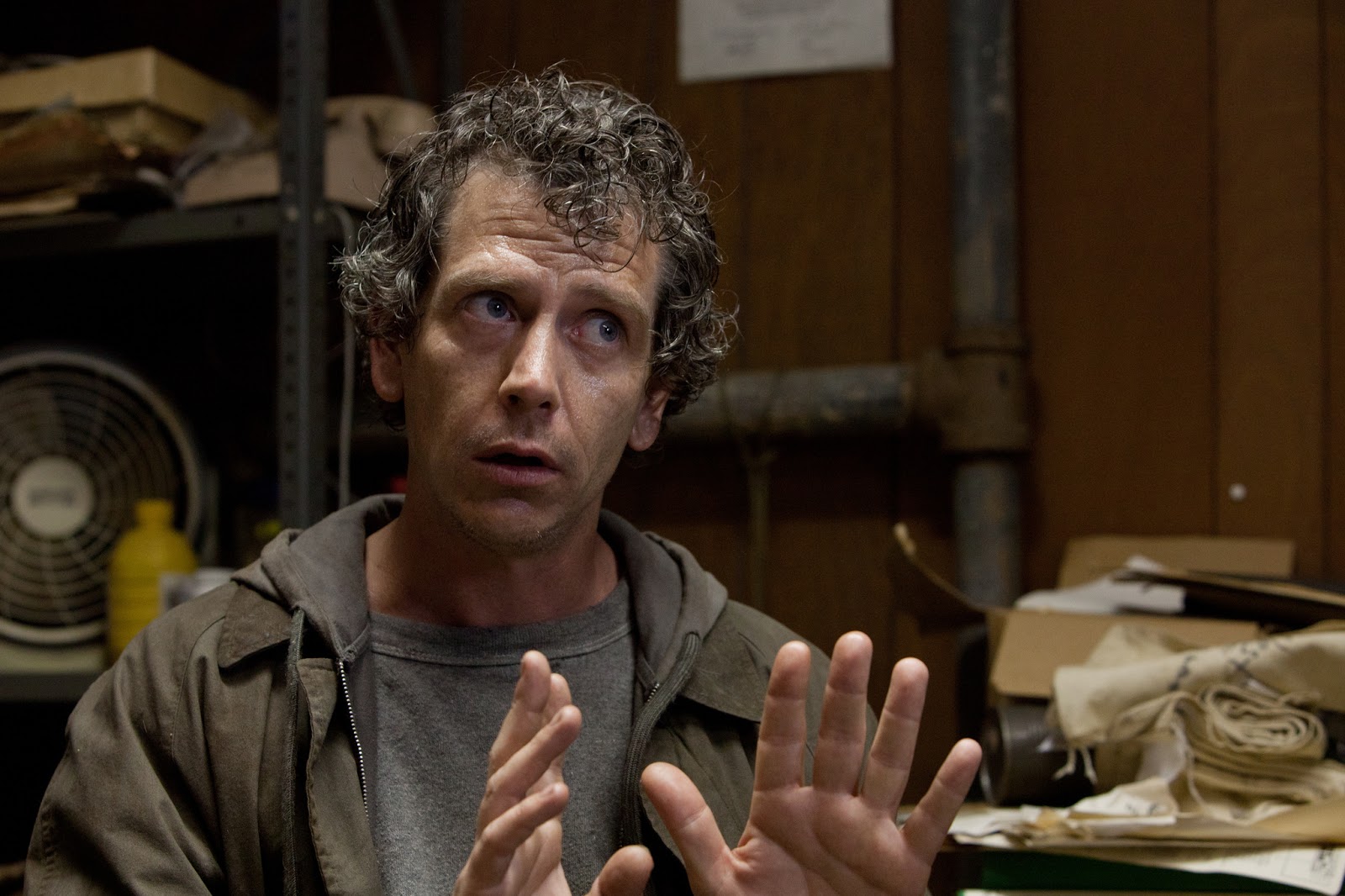
We haven't been watching too many films lately; having been absorbed by various series in our time of confinement. I'm slowly getting Tricia to appreciate the awesomeness that is Rick and Morty (Get schwifty!) by rewatching the entire series (I'm not entirely sure that I've seen all of them), since we still have HBO. However, one thing I've had in my Netflix queue for some time is Killing Them Softly, a pretty low-key release from 2012. I don't remember how it ended up in my queue, but it was probably from me reading something on Twitter about films that made some noise at Cannes and which faded without a whisper shortly thereafter. It's a crime film based on George Higgins' novel, Cogan's Trade. The novel is very much 70s crime (i.e. right down in the dirt; it was written in 1974) and screenwriter/director Andrew Dominik stays very much in that vein. Generally incompetent criminals Frankie (Scoot McNairy) and Russell (Ben Mendelsohn) are convinced to knock over a poker game run by the local mob and actually pull it off, only to suffer the consequences when said mob hires hitman Jackie Cogan (Brad Pitt) to show Frankie and Russell the downside. The film doesn't shy away from the details, as we get the sweat of their faces, the dirt of their lives, and the blood of their consequences, often in slo-mo highlights.

Dominik chooses to frame this petty crime encounter and its various tangents with the 2008 financial crisis and presidential election, as opposed to its 70s roots. While that may have been more pertinent to 2012 moviegoers, it struck me as some combination of background noise, decent undercurrent, and cinderblock-over-the-head message delivery... which, when you get down to it, kind of mirrored the execution of the film overall. Yes, a ton of people were down-and-out at that point, just like Frankie and Russell. Yes, the entire crisis was built on the gambling and criminal activities of a lot of banks and speculators... just like an illegal poker game! Yes, a lot of little people paid hard for that gambling and criminal activity, while the real bad guys (in this case, racketeers and hitmen) got away clean. So, I get it. But I'm not sure the message couldn't have been delivered just as effectively without Bush the Younger prattling away in the background every time a TV was in the scene (regularly) and finally ending with Pitt's soliloquy about how Obama's victory speech in Chicago was bullshit because America wasn't a community, it was just business. Maybe it's because that's a cynical thought that I've held in my head since I was a child and I didn't need to have it pushed in my face to understand it. Or maybe it's because the film ended on the equivalent of a philosophy exposition dump while most of the characters had been doing that in their own, more subtle way throughout the film and the ending was kind of discordant in that way.


Pitt does a decent job being Brad Pitt, which also means he's a very cynical and methodical hitman who still doesn't like emotion to enter the confines of his job. The hitman who's too sensitive to see his victims' faces? Similarly, James Gandolfini does another mob turn here as Mickey, the hitman Pitt brings in to kill a target that he knows personally (so as to save Jackie from those emotions), but whom has lost his touch and only wants to drink and get laid... which is what pretty much all of us want, so there's the America that doesn't want to know what the banks are doing? Maybe. One person that caught my eye was Mendelsohn, whom I really enjoyed in Mississippi Grind (which I wrote about here), as he was great at being the scuzziest of the guys involved. Ray Liotta is also present; still doing mob movies and still being Henry Hill. There should, however, be a law against anyone using any variation of the phrase "Fucking pay me!" in a film with Liotta (which Pitt does in this film), given Henry's legendary application of it.


Dominik heightens the gritty feel of the film with every moment of violence underscored by both close-ups and slow-motion FX so that shards of glass, spent shells, and geysers of blood are regular features throughout the film. Once, maybe twice, to get the message across works. Using it in every instance makes me think you're trying to hit me over the head with said message that violence is bad/disruptive/outlandish/messy which, y'know, I understand already. The scenes aren't done poorly and the action doesn't come across as cheap. It simply could've benefited from a little variation, especially given that the outpouring of emotion and angst from most of the characters about the lives that they're leading is already very present in almost every other scene. Dominik approached his other most well-known film The Assassination of Jesse James by the Coward Robert Ford (also a Pitt vehicle) in similar, mildly overwrought fashion, so perhaps it's just his thing.

All of that said, it held my interest and is worth the couple hours of time if you're running out of things to watch. But Mississippi Grind is also on Netflix and I'd watch that again, given an option.

Monday, June 8, 2020

The privilege of ignoring


As some of you know, I've done some writing for a website called ThereWillBe.Games. I'm a relatively long-time member of the community that it's based upon; the original Fortress: Ameritrash. That group was made up of a number of members of Boardgamegeek, who were (and still are) vocal fans of a style of game once known as "Ameritrash." Whereas Euro games, like Settlers of Catan emphasized mechanics over theme, Ameritrash games emphasized theme over mechanics; such that they were often much more random and had aspects that were often embraced/derided as simple "bad luck." Think Talisman or Dungeonquest, if you know games (albeit both from a British producer...)

As games, in general, have shifted away from the old "roll a die and move" approach, so the site has shifted away from its former neo-frat house nature. About a year-and-a-half ago, I was deeply involved in an attempt to broaden the audience of the site, in the same way that many game producers and retailers have been striving to do with the industry as a whole. No one wants the gaming world to be made up solely of pasty, White guys like me, as there are a lot of other people who also enjoy playing, designing, and producing. We wanted the site and the forum to be welcoming to anyone interested in playing games, regardless of their identity. That, of course, produced some pushback. Publishing articles and running a forum on any site is tricky in its execution, but especially so on sites that are nominally confined to a certain topic. In this case, you want the conversation to largely orbit around the topic of games, but you also don't want to prohibit expression. Games are a social endeavor. "Social" means interacting with others. That means other issues can and will arise.

The pushback immediately manifested in the pseudo-libertarian perspectives of some complaining about "free speech" concerns. (I've commented many times before about how that interpretation of the First Amendment is self-serving horseshit, so I'll spare you a rerun.) But it also occurred in the context of gaming as an "escape" from everyday life. It occurred again recently when the site's director decided to add TWBG's voice to those speaking out about the problems of police brutality and systemic racism in our society. As most of us have been tied down with COVID-19 issues and some have tailed off in output, she recently emailed all of the site's regular contributors about their well-being and received a response of that kind, which I'll reproduce here:
My dissent is this: people need spaces where politics don't intrude. Gaming, for me, is one of those. I can't speak for anyone else, but my days include occasionally being on conference calls/webinars with the current administration of the US Department of Education, often with the [...] State Department of Education, and dealing with the rough-and-tumble of a local school board and town council--all extra highly politicized at the moment. I need a break once in a while, and I don't need my hobby throwing politics back in my face. I was sorry to see it come to TWBG.
This is one of the purest expressions of privilege you're likely to see in casual conversation. It's not spoken with any malice or overt racism, but it is spoken with the perspective of someone who has never had to think about conditions that he takes for granted, but which might be serious blockades to the enjoyment, comfort, or even function (like, say, breathing) of others in our society.

This was a project announced by GMT until a backlash canceled it.
Whenever "politics" as an intrusion or "politicization" are cited, it almost always comes from someone who doesn't want to think about other peoples' problems. After all, as a White male, I don't have any concerns about driving to the game store, purchasing a new game, and maybe sitting down to play it right there. I'm in control. Those decisions aren't impacted by any societal circumstances or the narrower ones surrounding those actions. How comfortable might a Black gamer be driving to the store (because of the police)? How comfortable might a transgender gamer be dealing with the staff? How comfortable might a female gamer be simply walking up to the table and asking if she can play? Those are "political" issues because those are social issues. They affect the society that we all happen to live in. That's why the site decided to join the chorus of protest against injustice.

Most people who aren't White males don't have the luxury of deciding when and where they want to forget about what's happening to other people. Instead, they have to consider the social (and, sometimes, legal) barriers constructed against them and decide whether it's worth the risk of encountering anything from feeling uneasy (which, y'know, kinda makes playing a game less enjoyable) to direct fear of being arrested, assaulted, or killed; most notably by those whose purported role in society is to protect its citizens. In short, if your response to someone highlighting these problems is: "I don't want to make one tiny sacrifice of my attention in the name of changing what other people have literally sacrificed their lives for", then I think a moment of introspection might be called for.

A lot of games present fantasy worlds to immerse yourself in. It's safe to say that the author of that response wants to live in two of them: the swords-and-sorcery/meeples kind and the "one where racism doesn't really happen" kind. Again, he has that privilege because of the status that his skin color and gender bestow upon him. What other people want is the ability to also slip into both of those fantasy worlds and make the second one more of a reality. Furthermore, no one is saying that you have to live the larger world every moment. I don't think anyone is thinking about larger societal issues while they're watching a baseball game or an episode of The Blacklist or while they're reading a novel or, yes, while they're playing a game. No one has to be "on" all the time. What we're talking about is the actual ability for some people to turn "off" some of the time and have access to that ability in the same way that the dominant social presence does. That, of course, means progress, which means change, which always makes people uncomfortable. But that's the way the dice roll sometimes, yo.