Showing posts with label Michigan Theater. Show all posts

Tuesday, June 3, 2025

Realism in fiction


It's not often that a month goes by without anything showing up here, but it is in fact one whole month since the last post. Part of it is that I've been spending most of my writing time at Dystopia.ink. But another part is that we haven't been at the theater very often in the last couple months because there hasn't been much to see. I don't know if it's just a dearth of releases caused by the writers' strike a couple years ago or if the new approach of "Marquee Arts" (the new face of the Michigan Theater non-profit) is to emphasize stuff that makes money (mainstream films) over the smaller returns of the art films that were the reason we joined up in the first place. I really hope the latter is just idle speculation. But tonight we made it back for a film I didn't have tremendously high hopes for, but which turned out to be a solid effort. In a way, my perspective was like the outlook of the main character, Agathe (Camille Rutherford) in Jane Austen Wrecked My Life.


Agathe is an introverted bookseller at Shakespeare and Company (an actual bookstore on the Left Bank in Paris) and an aspiring novelist. She also has no relationships with anyone but her sister and nephew whom she lives with and her best friend and co-worker, Félix (Pablo Pauly.) When she finally gets inspiration from a sake cup in a local Chinese restaurant, she writes the first couple chapters of a romantic novel, which Félix likes and secretly sends to the Jane Austen Residency in England. Agathe reluctantly attends while she tries to sort out her own romantic interactions with Félix and Oliver (Charlie Anson), the son of the people who run the residency. It's not a complex plot, but there's enough depth to the characters and their quite human foibles and exchanges that it was sufficient to keep Story Guy interested in what was coming next, rather than sighing as I predicted the next five minutes from scene to scene. Agathe isn't an especially compelling character, but the story is genuine enough that she doesn't have to be.


This is a mixed-language film, which is nominally French, but spends about half the runtime with the characters speaking English. I'm not sure whether that was a nod to its inspiration (Austen) or just a demonstration of its modernist perspective, in that a significant portion of Western Europe can speak English (or, at least, that's been the case in our ventures into places like Germany, Portugal, and Liverpool.) There's still a certain level of romance (naturally) attached to the French language and I think that may have been part of writer/director Laura Piani's intent. It was billed as a "rom com", but there wasn't much about it that felt comedic, per se. As Jaime pointed out when we were leaving, it felt more like a drama that didn't take itself too seriously and left its characters in several situations that didn't approach the level of tragedy (using the old Greek dramatic split here (comedy/tragedy)), but were emotional enough to not have everyone laughing the whole way through. Stick in the mud that I am, I didn't laugh at all, but did appreciate the humor in several moments; most of them driven by the blessed European forthrightness of the dialogue. I always enjoy the fact that European films with modern characters don't shade their dialogue for the horrible crisis that might be a child walking into the theater. If they're talking about sex, they're not doing it on stage. They're doing it in real life and expressing themselves like real people do.


Of course, given that this film is largely about the crisis of confidence of a writer, I was also instantly interested in that, in the same way I have been with others. We've all been there before. We all will be again. I can say that I've been spending so much time on Dystopia because of that same struggle to put things into words that don't seem to want to cooperate. In Agathe's case, it was also about speaking those words to the people around her and taking the risk of being directly connected to someone. That's an introvert's regular challenge and it's part of why I found her character so believable. I have to say that I tend to share Oliver's initial perspective that Jane Austen is mildly overrated, but I also appreciated Agathe's assertion that Austen was the first Western writer to represent women as human beings, rather than plot devices, some of them "even with a sense of humor." There are points where the film drags a bit, but that may just be the nature of how Piani wanted to tell the story. The best word possible for both the main character and the story, in general, is "thoughtful." The other word that all of us emerged from the theater with is "cute." Again, that's not tremendously compelling, but it could have been a bog-standard, three act comedy, too, and this was elevated some way past that. Worthwhile.

Tuesday, April 29, 2025

A stylish cloak on a standard frame


I generally like Ryan Coogler's films. I think he has a solid visual sense and good recognition of both the space and limits of the story that he's trying to tell. On those that he's been directly involved in (Fruitvale Station, Black Panther) and indirectly (Homeroom, Jesus and the Black Messiah), I think he's a key part of the process in getting stories told that often wouldn't be otherwise. Among those is his latest, Sinners. As with Fruitvale and Black Panther, he's both writer and director on this one and his sense of style is visible all over it. It's just that when we get to some of the plot details that I feel like he could've done even more to take it in his own direction and somehow play those last few notes. (Mild spoilers below.)


That latter phrase is based on the fact that the film is largely about music and its influence, not only in African-American culture, but world culture. It takes place in one of the most vibrant and deeply-felt areas of that musical culture: the Mississippi delta. That's where Coogler, regular leading man Michael B. Jordan, and regular accompanying composer, Ludwig Göransson, build story and music together so that one never becomes separate from the other. The film itself isn't a musical, per se, but has several musical numbers that tell large portions of the story by themselves. It's a stylistic approach that worked spectacularly, without forcing us to watch another version of West Side Story. The music wasn't just the vehicle for the story. It was the story. Central to that embodiment was Miles Caton, who played Sammie Moore, aspiring guitarist and the son of a preacher man. Caton was the very embodiment of Delta blues and his powerful voice and playing (ably assisted by one of my long-time favorites, Delroy Lindo, on piano and harp) drove the story forward even more than Jordan's excellent rendition of twin brothers, Smoke (Elijah) and Stack (Elias.) Everything presented there would've made for a great story even without the supernatural elements that accompanied it.


And it's there where the river kinda dried up. Due credit to Coogler for including the local Choctaw presence, who show up in pursuit of a bad element. Unfortunately, that bad element turns out to be a bog standard vampire. That English descriptive that I'm fond of is even more appropriate in this place, as the vampire, Remmick (Jack O'Connell) is appropriately European (Irish) in his desire to dominate or destroy the non-White cultures that he encounters. Of course, given the history of the Irish in this country and back in Europe, Remmick's appeal to solidarity among the collected peoples when he tries to convince the twins and their friends to join the non-human set is yet one more valid metaphor in the story that Coogler's trying to tell. But it's also the same, tired vampire myth that we've seen before; involving garlic, wooden stakes, and sunlight. Smoke's (ex-)wife, Annie (the wonderful Wunmi Musaku) is a practitioner of traditional spiritualism and medicine down on the bayou and, between her knowledge and the presence of the Choctaw, it feels like we could've ventured into something a bit more exotic and less retreaded than the same Romanian refugees who happen to be walking around with a Gaelic accent. Why couldn't we have had people possessed by corrupted shilombish or something like that? Instead, we get typical bloodsuckers who try to trick people into inviting them in, but are powerless to do anything else until that point.


My complaint about Black Panther was that it was telling an interesting espionage and international diplomacy story until we got to the third act, where everything devolved to explosions and cyber-rhinos. I assumed at the time that that was just the necessary price of entering the Marvel Universe. But that's kinda how this story ends up, too; with a cascade of bullets, blood, and fire, even after the supernatural elements have departed the scene. We go from a deeply-invested story about the power of music suffusing culture deep into the past and far into the future and, at the end, the only music we get is the staccato of a tommy gun, which kind of wipes the mind of everything that's been told before. For the first two acts, I really thought we were going somewhere and then the third just left us at the door of typical Hollywood horror flick, like a slightly more cultured From Dusk 'til Dawn. I liked the script and the dialogue (Women talking frankly about sex! Just like, y'know, real life.) I liked most of the characters and performances. I highly appreciated the music, including the Irish jig that Remmick and Co. engage in (Rocky Road to Dublin.) But, in the end, I came out of the film thinking about all of the opportunities missed, rather than the spectacle that I'd just seen, which is really unfortunate. It's certainly worth the time to see it, but I can't point at it and suggest that it's a song that's going to stick with you.

Tuesday, April 22, 2025

Sound and fury


I've generally appreciated Alex Garland's films over the years. I'm not a devoted fan, in that I'll run out to see whatever he does. But he hit a high point for me with Ex Machina and adding to that writing the screenplays for 28 Days Later (the best modern rendition of the zombie genre) and Dredd (the only decent adaptation of the legendary OTT British comic series) means I'll generally at least take a look at whatever else he gets involved in. That reputation took a minor hit for me with Annihilation (just another version of The Colour Out of Space) and Men, which I talked about here and an even larger hit with Civil War, which I didn't bother to cover. That review of Men was similar to this one in that, again, it's an interesting premise but there are various flaws which make it something less than a must-see or something I'd be eager to watch again (or own, in the way that I do Ex Machina.) In all of those respects, Warfare is no different.


Garland co-wrote and co-directed the film with Ray Mendoza, a former Navy SEAL, based on the latter's experiences in the Iraq War; specifically, the Battle of Ramadi and a couple of hours that Mendoza and his team spent trapped in a house while resistance fighters tried to extirpate them. On a technical level it is, as Garland's films almost always are, very well done. It's told almost completely in "real time", following every movement of and moment that the squad occupied the house and uses ground-level perspective on all of the characters involved, so that we see and hear what they do, with broader looks at the scene represented only by views of the screens of spotter planes as they track enemy movements around the city. It doesn't spare any of the tactical actions or approaches to the situation (multiple "shows of force" (where an F-16 comes in low enough to make everyone want to duck for cover), proper stacking of infantry, etc.) and it also doesn't spare the effect of those tactical actions. This is one of the films that I would generally refer to as "ferociously violent", like The Northman but even moreso. And that, of course, is all well and good if you lack any empathy whatsoever for the human beings that experienced all of this and were the ones behind the blood and the screams of agony and so forth, which presents us with the real problem in all of this...


The Iraq War was one of the more contemptible and stupid actions in this nation's history (almost surely to be surpassed by the current idiot in the White House any day now, which is saying quite a lot.) It was one of the purest expressions of imperialism ("You're sitting on our oil!") and complete obliviousness to the reality infusing the region. Indeed, we had spent decades supporting Saddam Hussein, not least because he was radically opposed to just the kind of fanatical Islamic tendencies that were unleashed as soon as he was toppled. We had a president who had decided on his own "show of force" and that was to unleash the US military machine on a nation that had absolutely nothing to do with the terrorist acts carried out by Al-Qaeda but which made him feel like a tough guy and, therefore, consequences (and millions of Iraqi lives) be damned. Just like other films about the period like American Sniper, this film does nothing to express any of that political reality. It's just an action moment that ends up lionizing the people involved and which will be responded to by much of the American audience with a "Thank you for your service!" obeisance and a complete neglect of the outright crimes committed throughout that period of time. Indeed, it's just a memoir of someone involved in a terrifying moment that doesn't reflect whatsoever on, for example, the terrorizing of the two families that lived in the house that the SEALs occupied. The end of the film even shows the return of members of the unit to that same address as if all is forgiven and now it's just a curio box for former soldiers to remember "those days."


Does it show the brutality of war? Sure does. Does it show the enormous amount of pain, terror, anguish, and trauma that accompanies combat? Absolutely. Does it deliver any kind of message about why any of that should be avoided like in movies such as 1917 and All Quiet on the Western Front? No. It's just an action moment. Certainly, some humans will be spooked by being that close to stuff they've only seen as sanitized news reports before, but just as many will think it's cool to see a JTAC in action and seeing someone hit the clicker to blow the Claymores and so on. In the end, I just don't see the point, despite my appreciation of its technical merits, and my disdain for the central story of this film and the way it's presented is why I still haven't seen things like American Sniper and why my opinion of Garland is continuing to diminish, seemingly with every further step he takes these days.

Wednesday, March 19, 2025

Got slipped a Mickey


It's hard to come up with something innovative in the sci-fi world these days. There are a lot of easy comparisons, especially if one is engaging in the "exploration of strange, new worlds" theme. It's even more difficult if the story you're trying to tell only has SF trappings in order to deliver a message and/or metaphor, since you're mostly serving the message in that case, rather than trying to spin a somehow new tale about space travel, aliens, and the future. It's easy to fall into the "been there, done that" realm. That's, unfortunately, what happens with Mickey 17, Bong Joon Ho's first film since the masterful Parasite.  There's a brilliant absurdist premise in the first third of the film, but it then degenerates into bog-standard lessons about alien interactions, facsimiles of current politics, and an adventure story that really lacks adventure.


That brilliant premise is the idea of Mickey (Robert Pattinson) being what is known as an Expendable: a worker whose entire mental and physical imprint are stored in machines so that he can be cloned and returned to life after engaging in whatever lethal situation is deemed necessary by the corporatist/nationalist overlords controlling humanity's venture into deep space. Mickey volunteers for this duty because of mistakes made back home and then ruefully accepts his fate as a societal loser who regularly dies in increasingly gruesome ways. It's that idea- the casual disposal of crucial labor by massive corporations -that not only provides incredible (morbid) humor to the first act, but which created a foundation to build upon that I think might have produced something worthy of memory if Bong had decided to continue with it. But about halfway through act 2, we suddenly pivot to the alien encounter, such that Mickey's societal status becomes virtually irrelevant to the plot and the film is taken over by Mark Ruffalo's pointedly Trumpian performance as right-wing politician, Ken Marshall, who rants about the aliens as a threat, despite their clear lack thereof, and preens for the camera in the hopes that everyone will continue worshipping him. I mean, I can see that just by watching CNN for an hour. Despite Bong's protestations that Marshall was intended to be a representation of "authoritarian figures throughout history", it's a bit too on-the-nose to make any 2025 audience think of anyone else.


And that's part of the problem, in that that character isn't that interesting and neither is anything going on around him. The absurd situation of Mickey constantly being tossed into an almost literal meat grinder and simply shrugging his shoulders and getting on with it was a far more interesting scenario and more potent metaphor for our current circumstances. Instead, we spend a lot of time with CGI-rendered alien hedgehogs and attempts to communicate with them and understand their society and protect them from the depredations of corporatists and yadda, yadda, yadda. I went from cackling with glee for the first 45 minutes to confused for the middle 45 and finally to really wanting it to be over for the final third. We went from wondering how this could possibly continue and where it might end up to yawning at predictable action scenes and wondering how our meek, put-upon, sympathetic main character had transformed into Stock Action Hero. I mean, I guess it's still considered character development if your character goes from painfully human with obvious failings to cardboard cutout with Teflon skin, but it's probably not the kind of development most intelligent viewers really want to see. Meanwhile, interesting characters like Dorothy (Patsy Ferran), the only sympathetic scientist among those maintaining Mickey, get left behind with the (ahem) Expendable plot, and plot device characters like Timo (Steven Yeun) become more central. And this is to say nothing of characters that don't seem to serve any purpose whatsoever to any of the plot lines, like Kai Katz (Anamaria Vartolomei), who might have been a second love interest or a target of Marshall's idiot cult or a challenge to Mickey's newfound role as prime communicator with the aliens, but turns out to be none of these before she disappears from view.


Bong insisted that he had final cut of the film, but I'm not sure he wants to claim that too loudly, because it means that as writer, director, and editor, he's solely responsible for a story that blew away in the breeze halfway through his film and then tottered along on the most overused legs since A Trip to the Moon for the rest of it. It's not a bad film and might be worth seeing just for the humor of the first act. But it's not something that should have any staying power at all because it's mostly just recycled, like Mickey.

Tuesday, February 18, 2025

Too bright for a dirge - 2025 documentary shorts

There was an interesting dichotomy in this collection, in that two were about music and three were about death in one form or another. A full house of contrasts, although there is certainly music about death and if the first selection had been about children playing Mozart, I definitely would have made a reference to the Requiem. This collection was among the best we've seen, I think, as none of them failed to get their message across and all of them were worth the time spent, even if one did run a little long (for a short.)


Instruments of a Beating Heart- The opener started us off on a (ahem) high note, with a presentation of Japanese first graders about to move on to second grade and being given the task of performing Beethoven's Ode to Joy for the incoming class of new first graders. If that sounds like quite the task for kids that young, you're not alone. It was a good example of the standards set by the Japanese educational system and what many Americans see as hallmarks of Japanese society (elegance, pressure, achievement, determination) for good or ill. The central focus was one young girl, Ayame, who first aspired to the drum and then to the cymbal for their performance and fell short of the needed diligence to produce what their teacher was asking, only to be encouraged by him, her classmates, and another teacher to reach the level that all of them were striving for. It's something that sung to both my musical and socialist hearts about the cooperation and tolerance among humanity to bring more literal joy out of our daily existence than the spontaneous frivolity of children would otherwise produce. It was also just this side of unbearably cute in every scene and moment, not least for the eagerness displayed by the children to come to grips with a project that they likely didn't quite understand the scope of, but were constantly assured that they were capable of doing. It was an incredibly positive and entertaining story.


Incident- Of course, the next entry was one enormous pile of outrage and cynicism that wiped away all of the joy and brightness that its predecessor had introduced. It's the story of the murder of Harith "Snoop" Augustus by Chicago police in 2018, told entirely through body- and surveillance cameras. When Augustus is first accosted and then assaulted by police for no reason whatsoever, he attempts to escape and is gunned down. Watching the police, from the probationary officer who shot him to lieutenants scheming, prevaricating, and excusing in an attempt to cover up the fact that multiple officers had committed crimes ranging from simple assault and unlawful detention to second degree murder in the space of a couple minutes and then, of course, committed several other crimes in an attempt to cover it up was just a reminder of both the level of violence that is tolerated by society's "protectors" and their near-absolute authority in escaping the very justice that they're nominally responsible to uphold. This was, by far, the best production of the five we saw, as the screen was split into two, three, or four parts to show the progression of the incident from every angle available and even following some of the police away from the scene of the crime. That multi-perspective depiction also put on full display the power disparity between the normal citizens that came to ask questions of their "protectors" and the indifference of the latter to that inquisition. The film lacked the narrative style of most of the other entries, but the technical excellence and the power of the simple message it delivered made it a strong favorite for me (which means, of course, that it won't win.)


I Am Ready, Warden- Continuing the theme of death, we came to the case of John Henry Ramirez, who was convicted of the stabbing murder of Pablo Castro outside the convenience store where the latter worked in 1984 in Corpus Christi, TX. After being caught four years later, Ramirez was placed on death row and the film was about his last few days and how he was dealing with what he deemed his final release from prison, as well as how Pablo's son, Aaron, 14 at the time of his father's death, was confronting it, as well. The situation was brought to a tipping point when the local DA, Mark Gonzalez, tried to withdraw the death warrant for Ramirez after Gonzalez changed his mind about the morality of the death penalty. It was a careful examination of both the ethical situations involved in the murder, the conviction, and the impending execution, as well as the emotions that suffused all of those. The film handled those ethical questions with a very light touch, which is always the most effective method, IMO. As a death penalty opponent, I'm also quite sympathetic to the tacit idea of "justice" needing to be meted out to the perpetrators of heinous crimes; not least the ones they freely admit committing and to which they agree they probably deserve the harshest punishment, as in the case of Ramirez. Of course, given that region of Texas and the predilection of everyone involved to invoke Christianity into these matters, I couldn't help but regularly think of Deuteronomy: "Vengeance is mine" (saith the Lord...)


The Only Girl in the Orchestra- Returning to our theme of music, this film was about the life and career of Orin O'Brien, a double bassist who was also the first woman to play as part of the New York Philharmonic; hired by Lenny Bernstein himself. Like the first film, it was an incredibly positive piece about a woman who wouldn't let anything slow her down in any way, including the trappings of fame that came with her standout role as "the only girl." It was a great story of determination and passion for music while constantly professing the desire to not be in the spotlight and to embody the "support" role that she says that the double bass occupies in that form of music. The film was produced and directed by her niece, Molly, who regularly encourages Orin to wax rhapsodic on what she's accomplished, to which Orin responds by waving away any and all platitudes. It's a remarkable expression of humility by someone not only highly intelligent and clearly talented, but also driven by the memory of her Hollywood parents, whose careers took a downturn in the second half of their lives and left them both feeling unfulfilled. Orin, 87 at the time of filming and retired from playing (but still teaching!), regularly emphasizes that she had done pretty much everything she wanted to do in her professional career, but still felt the urge to keep going because of the happiness that that success generated. To her, it was about passing on that passion to her students and those around her. While it felt like this one ran a little long, given the relative lightness of its subject matter in comparison to the others, it was still really enjoyable.


Death by Numbers- And, finally, the denouement of death. This is a film based on the journals of Sam Fuentes, one of the survivors of the Parkland high school shooting, and how she was processing what had been happening to her while the shooter, Nikolas Cruz, was involved in a four-month long sentencing hearing to determine whether he would be given life without parole or the death penalty. A talented writer with a poetic turn of phrase, Fuentes' running narration of the events and her perception of them, as well as her victim's statement at the trial, delivered a message as powerful as any other that we saw tonight. I also thought that its placement as the finale was yet another statement about the current political climate, given Cruz's affection for the ideas expressed by both the historical Nazis and the ones currently controlling the US government. The fact that Fuentes has been attending a class about the history of the Holocaust while Cruz, his AR-15 emblazoned with swastikas, fired through the window is a discombobulating coincidence and something of a cosmic statement on the absurdity of US gun laws, the casual shrug with which yet another school shooting is accepted on a weekly basis, and the fact that bigots like Cruz have not only perpetuated both of those farces but are now in control of the government. In an ironic twist, the vengeful reaction of other bigots like Ron DeSantis to the result of Cruz's sentencing again brings us back to the ethics of vengeance and the question of how important it is to redress the crimes after they've happened or try to change our society before they occur.

Again, my favorite, simply for the way it was produced, is Incident. However, I think both the timeliness and the emotional impact of Death by Numbers will hand it the statue; fully deserved. So, those are the shorts for this year. It was probably the best total batch we've seen in some time, with no single glaring failure in any category. Now to track down four of the five feature-length docs that we haven't seen.

Sunday, February 16, 2025

Whimsical but fascinating - 2025 animation shorts

This is the category that has most frequently had the entry or entries that simply didn't measure up. When we were walking into last year's showing, my friend, Brian, said to me: "I'm pretty sure there's one you're going to absolutely hate." He was right. Consequently, this is the category that Tricia, Jaime, and Larissa are often least interested in seeing and I'm the voice in the wilderness saying: "No, really. Animation is good." Thankfully, this year's nominees had no such cinderblocks attached.


Magic Candies- This is a Japanese film, based on the Korean picture book of the same name. The story is about Dong-Dong, a lonely, little boy who spends most of his time by himself and loves to play marbles. A local shop owner convinces him to buy a packet of marble-looking magical candies. Putting one in his mouth leads to the sofa in his and his dad's apartment talking to him and complaining about things like his dad farting all the time. That kind of magical encounter soon follows with the other candies, ranging from his pet dog to the falling leaves in the local park. The animation style is CGI, but emblematic of the rounded, stop-motion style used in Christmas classics like Rudolph the Red-Nosed Reindeer. It's a great message about the power of children's imagination and how they create their own worlds when there's no one else around to share their experiences. It was also quite upbeat and funny, so it was a good launching point after having seen the live action nominees an hour beforehand.


In the Shadow of the Cypress- This was an Iranian entry and done solely in pen-and-ink animation with the classic, wavery lines that come with individually drawn cells. There's no dialogue, so the viewer just has to follow along with the tale of a former sea captain struggling with PTSD and his poor relationship with his daughter. One day, a sperm whale is beached outside their home and their struggles to alleviate the creature's suffering leads to him questioning not only his connection with his daughter, but how he's conducting life, in general. Speaking of connections, this is the one entry that I didn't really find an attachment to. It wasn't a bad film and I'd be willing to watch it again to try to discern where I just didn't land with it. Their travails with the whale and how to address the problem are nicely detailed, so it's a very "realistic" story, but I never felt like I really got the message other than what was already obvious.


Yuck!- This one, OTOH, was a delight. It's a French film about pre-teens figuring out the concept of kissing, romance, and human connection and whether they'd ever want to let themselves be drawn into such a disgusting concept. Director Loic Espuche used a great delivery method by having those disgusting adults' lips shimmer pink whenever they were planning to kiss or actually doing so. Léo (voiced by Noé Chabbat) while repelled by the whole idea has also noticed that his own lips are starting to do the same thing as he confronts childhood curiosity about what his siblings and friends insist isn't something they will ever do. It was probably the funniest of the 10 films we saw this evening, paced well, and replete with the little reminders of being that age and not really understanding what all of the fuss was about... until it happens to you. I could easily see this one snagging the statue.


Wander to Wonder- This one was a joint French, British, Belgian, and Dutch production (Channel bros, unite!) and my absolute favorite of the evening for a few different reasons. One, it's stop-motion animation, which I've been a fan of since seeing my first Ray Harryhausen film. Two, it's virtually a post-apocalyptic setting, as the three characters are puppets from a Mr. Rogers-style show who are then left behind in the abandoned studio when the show's host passes away and food is becoming scarce. Three, the puppets in question: Fumbleton (the great Toby Jones), Mary (Amanda Lawrence), and Billybud (Terence Dunn) are these bizarre, hyper-happy bear-like things in the first place which would probably have been the source of many children's nightmares in an evil clown fashion if the show had actually existed. As I've noted many times, I'm always a sucker for post-apoc stuff and this one was no different. The elaborate settings, their interactions with the local pigeons, and the very blunt presentation of all of it in the nominal "children's show" just had enough of the edge of the bizarre for me to really enjoy it. I think it's just a bit too edgy to garner the trophy, but I would've handed it off without thinking twice.


Beautiful Men- The final entry was again a joint production between France, Belgium, and the Netherlands about the hair replacement industry that is currently running full steam in Istanbul and other ports of Türkiye. Three brothers, Bart (Peter Van den Begin), Koen (Peter De Graef), and Steven (Tom Dewispelaere) decide to take the plunge together and almost immediately run into practical problems, as well as the lurking issues in their relationships with each other caused by their various insecurities (about all the things other than their lack of hair.) It was quite funny and had very realistically-presented characters, along with great dialogue ("You're a doctor." "I'm a dentist!" "So what? I'm a sales manager but I still fix your car for you!") The animation style was quite similar to Magic Candies and, like that film, very smooth and fluid throughout. I suspect this one will walk away as the winner.

So, a much more positive result than in prior years. The last category, documentaries, will either be tomorrow or Tuesday.

Saturday, February 15, 2025

Heavy on tragedy again - 2025 live action shorts

Like last year, the live action shorts were mostly dominated by a sense of tragedy, both past and present, with one bit of comedy (albeit dark) and a sliver of light that eventually shone through the pain. One of the best themes that stretched across almost all of the nominees was that of uncertainty; leaving their endings largely ambiguous and allowing the viewers to fill in the blanks, whether obvious or not.


The Man Who Could Not Remain Silent- This is a Croatian film about the Štrpci Massacre, where a Serbian paramilitary unit abducted multiple Bosnian Muslims and one Croatian from a train in what is now Bosnia-Herzegovina, beat them, and eventually executed them in 1993, during the height of the Yugoslav disintegration conflicts. At the center of the story is Tomo Buzov (Dragan Mićanović), a retired army officer who was the only passenger who tried to confront the attackers and was taken away with the rest of their targets and killed as a consequence. I enjoyed this one and the careful cinematography that kept the confusion of the passengers highlighted and the uncertainty about both what was happening and the subsequent events that everyone assumed would be happening. I did think it was too short, but still effective in the delivery of its story.


Anuja- This was an American-Indian production about two young sisters who work in a garment factory in Delhi. The younger one, Anuja (Sajda Pathan), has a talent for math that the local educator is aware of and he tries to convince her to take the national test which will get her placed in school and off the street but, of course, leave her sister behind. There's a significant amount of emotional weight behind this one, as the audience (and the characters) know the best choice for Anuja but also understand her circumstances and those of her sister, Palak (Ananya Shabhag) and how it might feel to "betray" the most important person in your life. There ends up being a fairly positive message here, despite its rather dire setting, but this is also one of those that left the ending vague so that the central element of the plot- choosing how and whether to better oneself, even while those closest won't benefit -is still there for the audience to consider.


I'm Not a Robot- This is a Dutch entry and Dutch language film, despite the presence of a heavy dose of English technical language. Lara (Ellen Parren) is a music producer who gets locked out of her system and has to take several CAPTCHA tests to reenter. Said tests lead her to a conclusion about her humanity in very Blade Runner-esque fashion, which her boyfriend, Daniel (Henry van Loon), grudgingly confesses to. The rest of the story is about Lara trying to convince everyone, including herself, that she's not what they (and she) all think she is. It's a black comedy, but it is a comedy and was hugely entertaining, not only for its modern relevance to Internet security foibles, but because it pointedly asks similar questions to Blade Runner: What makes us human? Like most of the rest, the ending is also somewhat ambiguous, when Lara takes the final (ahem) step toward proving her point and perhaps discovers that she wasn't as right as she thought she was. I really enjoyed this one, not least for its SF elements and comparison to the best SF film ever made. Probably my favorite.


A Lien- This is an American film and probably the most poignantly-timed of the nominees, given the American fascists that have taken control of the government and their draconian concept about immigration and who actually qualifies as a citizen. Oscar (William Martinez), his wife, Sophia (Victoria Ratermanis), and daughter, Nina (Koralyn Rivera) are attempting to get Oscar's green card processing completed. Of course, showing up at the immigration office to complete said paperwork also makes one an easy target to be apprehended by ICE just for trying to comply with the law. As with so many people in Oscar's circumstances, his situation is complicated by having been brought here as a child but, having a established a career, a family, and a life here, the possibility of being sent "back" to a nation that he has no memory of and has no foundation in is exactly as traumatic as it sounds for everyone involved. Except ICE and the fascists, of course. This one is played quite well by the whole cast and I expect that its timeliness will gain it enough votes to be considered the winner, which is, like so many things involving immigration, no genuine crime. Due credit for the nice wordplay of the title, too.


The Last Ranger- The main topic of this one- protecting animals from poaching -is close to my heart, so that won me over almost instantly. But it's also a great depiction of the dangers and struggles involved with being an anti-poaching ranger in sub-Saharan Africa, not least because it's based on a true story about a young girl who accompanied a couple rangers into the field and was present when poachers attacked a white rhino and those rangers. It centers largely around Litha (Liyabana Mroqoza), a young Xhosa girl, who is fascinated by the rhinos and holds the passion for protecting animals that most young humans do and takes it one step further by wanting to understand the ranger mindset of her friend, Khuselwa (Avumile Qongqo.) This one was perhaps loaded with more anguish and tragedy than any of the rest of them on the face of it, but also ended with the most upbeat message of all of them, so wins the prize for meeting both extremes. It's also very possible that this one could walk away with the trophy.

All in all, a good batch. There were none that any of us walked away thinking of as a waste of time or that somehow didn't measure up to the rest in at least some fashion. Next up, animation.

Tuesday, January 21, 2025

Cinderblocks, ahoy


I've often criticized storytellers of all kinds of being too obvious in their delivery of their central themes. In most cases, you want the audience to draw out and discover the themes of your work as they're conveyed by situations and characters, unless you happen to be writing a polemic, the sole purpose of which is to deliver The Message. The Brutalist is not a polemic, but its method of delivery is both as blunt as the architectural style from which it draws its title, and sometimes as direct as "being hit over the head with a cinderblock", which is my usual phrase of derision for storytellers who do that in their work. There are several themes at work here: the immigrant experience in America; the post-war European Jewish experience of processing what had been done to them; the casual bigoted disdain for Jews in America during the war and even afterwards; all of these things are presented in this film. The problem is that none of them are delivered by any stories or character that feel human or even really interesting. They're just kinda there.


Fair warning: This is a three-and-a-half-hour film, which is something to sit through for a lot of people, which is why it comes equipped with a 15-minute intermission. Now, unlike travesties like Megalopolis, it didn't have me checking my phone to see what time it was 10 minutes in. This isn't a horrible film. With a cast that includes Adrien Brody and Guy Pearce, most films are still going to be at least watchable so that you can see where it's going and this one is no different. I was eager to find out where it was going, but largely because most of the time it didn't feel like it was going anywhere. I kept waiting for a dramatic moment to emerge or some kind of real emotional response that felt like I was watching a human being, rather than a character designed solely to deliver the cinderblock to your skull. And this is a film with Adrien Brody-! Despite my affection for films like Julia and Schindler's List, I will continue to say that the best representation of the Holocaust that I've seen on film is The Pianist, mostly for Brody's spectacular rendition of one human who was lucky enough to live through it. So, I know that he can deliver that kind of performance and, indeed, the most interesting aspect to his character was absolutely the most human: his addiction. But even that ended up being more of a detail that was an obvious segue into a dramatic moment with his wife, Erzsébet (Felicity Jones), that everyone was anticipating for at least an hour before it happened, thus sapping it of any emotional effect it might have had.


And that's probably the film's biggest failing. Despite being interesting enough to keep watching for three-and-a-half hours (at least until they get to the search scene for Harrison Van Buren (Pearce) at which point I was doing the 'hand twirling to move things along' motion), at no point does the film escape the essential style of the architecture: it's all just basic story motions that are apparent to everyone and none of them deliver any sense of style or human texture that would make them memorable. I'm sitting here less than an hour after walking out of the theater and struggling to remember any moment in the film that stood out to me as one that I could mentally point at the screen and say: "Yeah. That's something to file away for a writing moment." Maybe the only one that approached that is a couple views of the marble mines at Carrara; complete with Lászlô's (Brody) friend, Orazio (Salvatore Sansone) who at least talked about doing something dramatic, by stating how he traveled across the country near the end of the war to beat Mussolini's corpse with his bare hands. But that's almost three hours into the film and, even then, is a bit part to set up a rather intimate encounter between Lászlô and Van Buren that is, once again, so obvious a depiction of Pearce's character that's just this side of parody.


The most galling thing was the epilogue, where co-writer and director, Brady Corbet, apparently decided to stop to explain all of the subtexts in his story, just in case the audience didn't get them. It was a 10-minute encapsulation of the previous 3+ hours that felt like a coda to an encyclopedia entry. Why do we need this reminder of the things that you've been tossing in front of us for three hours? If they had injected a small amount of the emotion that adult Zsôfia (Ariane Labed) carries when memorializing her still-living father (seated not far away, in a wheelchair just like Erzsébet used throughout the film; did you get it?), then there might have been something else to remember. As it is, the most prominent emotional message I carried from the film was me pining for something interesting to happen for most of it. Even if it involved just dropping a block of Carrara marble on someone's head, it might've been worth it.

Tuesday, January 7, 2025

Blood wasn't the only thing that sucked


The original Nosferatu has a story that's possibly even more interesting than that of the film itself. Not only is it one of the finest examples of the German expressionist era in film and a further example of the fragility of the early art form, after most copies were ordered to be destroyed until a few were later (ahem) unearthed and has since been preserved in various other forms, but it's also a shining example of copyright infringement and an attempt to not pay creators what they're owed. Prana Film, a short-lived production company, didn't want to pay for the rights to Bram Stoker's novel, Dracula, and thus ordered their screenwriter, Henrik Galeen, to change minor details (like Count Dracula becoming Count Orlok and half the story taking place in Germany, rather than England) in an attempt to claim that it was an original story. Stoker's widow, Florence Balcombe, promptly sued after its 1922 release and all copies of the film were ordered to be destroyed by the court. Thankfully, not all of them were, so we can still see the film today and appreciate F. W. Murnau's storytelling technique and innovations in the medium and with the vampire concept, in general (like suggesting that they're destroyed by sunlight, rather than just typically trying to avoid it.) So, there's a space for the film in the history of the medium, even if it was an attempted ripoff. Indeed, the story of its production is fascinating enough that Elias Merhige and Steven Katz collaborated on Shadow of the Vampire about 25 years ago, which is a fictionalized retelling of the filming of Nosferatu which involves some suspicion among the crew as to whether Max Schreck, who plays Count Orlok in the original film and is played in this reexamination by Willem Dafoe, is exactly what he says he is...


So, it was kind of exciting to learn that Robert Eggers was going to attempt a genuine remake of the F. W. Murnau film. I wasn't blown away by The Lighthouse, but I was willing to give it a chance because the latter wasn't terrible and because of my attachment to the original film, which I've seen three times, including at our Michigan Theater, accompanied by the organ to add to the eeriness of its overall tone. Well, in Eggers' new version, tone is definitely an issue because the one he was apparently aiming for was loud, overwrought, and lacking any of the subtlety of the original. You would think that, at the very least, the one upside would be the ability to take advantage of modern production techniques and technology for the visuals, but even those come across as a lesser version of the 1922 film because they're not really used to convey anything interesting. The fascination with Murnau's version was the use of the vampire's shadow to convey threat and accomplish things from a distance and Eggers duplicates that here but it lacks the jittery charm of the original, such that I found myself pining for Coppala's homage to it in his Bram Stoker's Dracula from 33 years ago, if only because it was clearly an effect and didn't look so perfectly clean and manufactured as the version employed by Eggers.


But that's kind of a minor detail because the main problem was simply how loud and abrasive everything was, from the acting to the score. It seems like the instruction given to the cast was that, since they were in a film set at the beginning of the Victorian era (1838), everyone had to act as if they needed a fainting couch at the ready because their next line might drain them of the will to live (kinda like a vampire...) The gushing and exhalation was constant. It was akin to watching an endless series of Loveswept novel covers, one after the other. I thought that it was a cute twist to have Dafoe included in the cast for this film as a seeming nod to Shadow, but I also kind of hoped that his gravitas and capacity for eeriness with just a glance or two might ground it in something akin to Murnau's version. Not so much. He was chewing as much scenery as anyone else and, in a film where the main villain is constantly biting people, that becomes more of a meta description than I care to make. And everything about this production was at that level of OTT. One of the worst parts was the score. This film can easily be summarized by the phrase "orchestral crash" because there were so many of them that the constant din became a genuine annoyance. You really don't need that many strings to announce that someone has once again rushed to a window in anguish/horror/plaintive longing/whathaveyou yet again. We've been there. You use music for atmosphere but here it might have been used as a way to keep people awake. Those of us who had no issue with that just found it irritating.


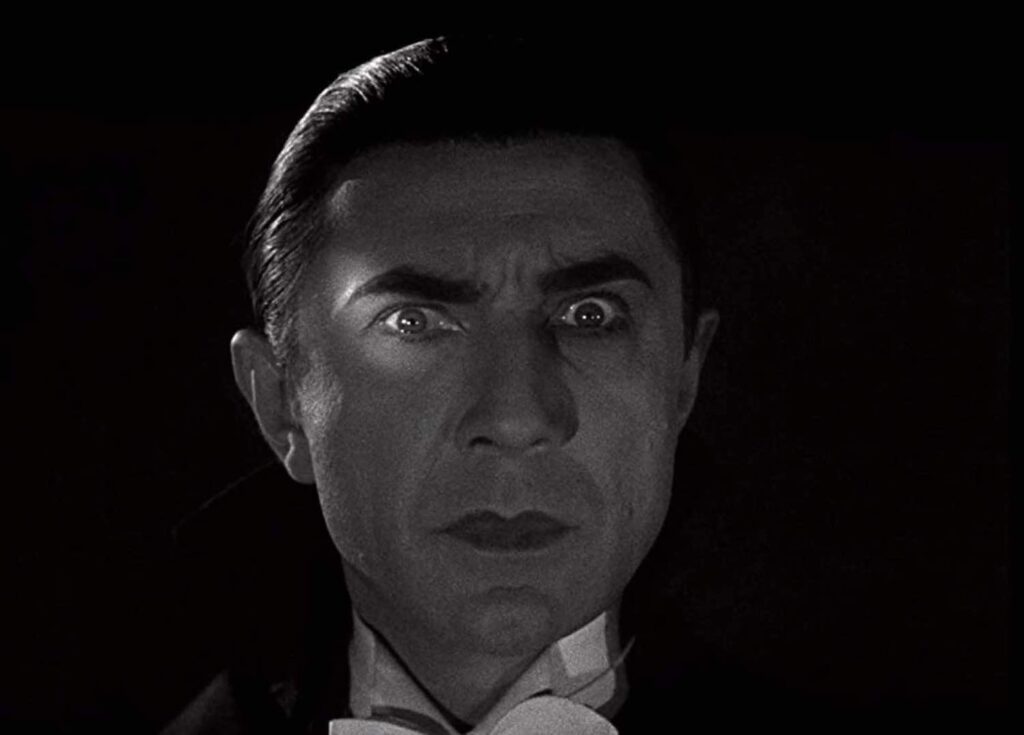
But that inability to keep people interested is a major issue, as well. I was distinctly bored about 2/3 of the way through the film and was restraining myself from checking the phone to see how much longer this might take. Part of the problem for me is certainly that I've seen this same story (and read the book) so many times I honestly can't count them. I know I've seen Murnau's version three times. I've seen Tod Browning and Bela Lugosi's version multiple times, as well. And then there's Coppola's and the Universal derivations of the Lugosi picture (often with Lugosi reprising the role) and on and on. I don't want to say that once you've seen one version, you've seen them all, but the novel has kind of been woven into the cultural fabric, such that seeing it reworked for the dozenth (and more) time isn't going to be mindblowing. With that in mind, it's fair to say that trying to do something slightly innovative with the story might not be a bad idea. But this was bog-standard vampire flick from the very outset, but made worse because it genuinely lacked any of the sense of style that the Prana film or any of the Universal films brought to the screen. There are no moments here that you would point at in the manner of Max Shreck's hand along the wall or Lugosi's penetrating stare and say that it's something that will become iconic or an instant identifier for this film. Instead, the identifier is going to be Lily-Rose Depp falling onto a bed again while we hear the orchestra telling us what's happening right in front of us. For the fifth time in the last ten minutes. So, I cannot recommend this one at all. Find the original streaming somewhere and play something like Danse Macabre in the background if you want an experience with some genuine atmosphere.

Tuesday, November 19, 2024

Comforting in its relatability


I don't really seek out Jesse Eisenberg films. Despite his legions of fans, most notably for his starring turn in The Social Network (a film which, despite my affection for David Fincher's work, I found fairly boring), I've always that he was a bit too typecast for my taste. Most of his roles play up the nerdy, insecure guy and, as soon as you see him, you know that's what you're going to get, which tends to make a lot of what goes on around him equally predictable. Of course, that sense of reliability also creates a sense of relatability, since his most frequent character is a reflection of any number of introverts that we all know in our lives in various fashions. But A Real Pain, which he wrote, directed, and starred in as that same, nerdy, insecure guy and despite being obvious in some respects, actually turned out to be a step above the comfort food level of many of his other films. He was doing his same, old thing, but combining that with the absolute explosion that is Kieran Culkin made for a story that had multiple levels of insight on their characters and relationships, in general, which is always a positive outcome in my book.


The story is not particularly original, since it's something that many people have done and still seek to do throughout the ages: come face to face with their or their family's place of origin. Eisenberg and Culkin play two cousins who visit Poland to see their ancestral homeland and the home of their grandmother who survived the camps of World War II. On a guided tour with a few other people (among them Jennifer Grey), they subject all of them to Benji's (Culkin) emotionally overwrought behavior combined with brutal honesty and David's (Eisenberg) attempts to make up for his cousin's confrontational attitude to them, their tour guide (Will Sharpe, most recently seen in the second season of The White Lotus), and the surrounding locals. The title, at this point, becomes pointed, not only because it's the obvious joke, but also because Culkin, just as he so often did in the brilliant Succession, tends to overwhelm the atmosphere of any scene that he's in. If the story was intended to have deeper meaning, his antics completely wipe out that possibility for a decent chunk of the film. The highlight is the scene of the two cousins jumping a train back to Lublin to return to their tour after David fell asleep and Benji, despite being aware that they missed their stop, deciding that he was sleeping too peacefully to disturb him. Priorities are in question throughout the film but usually to highlight the willingness to engage life that is Benji's character. And that's where things begin to turn.


Despite Benji being on a rampage for much of the first half of the film, the deft turns taken by Eisenberg as actor, writer, and director steer us back to the central message which is the emotional awareness of not just the amount of tragic history that still cloaks the area, but the very personal struggles that arise from confronting that history and which both Benji and David are carrying with them; not just about their recently-deceased grandmother, but about their roles in this life and what meaning they may have to both of them. In some ways, it's still a comfortable and, thus, predictable message, but it's delivered with enough humor (the absolute mundanity of finding their grandmother's home, only to be accosted by the neighbors on a very pragmatic level) and insight to see the grander picture that those underlying themes touch upon. And this is to say nothing of the timeliness, given that the incoming government of the US seems intent on returning us to the era of mass internment camps and all of the potential horrors that go with them. The most poignant moment of the emotional parade that is this story may be the final scene, watching Benji sitting in the airport by himself, still considering just what everything means and where he fits into it all. Been there.

So, yes, despite Eisenberg doing the thing again and despite the overall plot not being anything mindblowing, I think there's enough texture here to recommend this film; not least for Culkin's performance, but also for the writing that led him there and Eisenberg's capable direction to keep us aware of all of the levels on which his story works. Not a masterpiece, but a really solid step forward.

Wednesday, November 13, 2024

Where I can't feel anything for a bunch of emotionless people


Last night was another of those moments when I'm beginning to feel firmly detached from modern cinema and especially modern cinema criticism because I can't for the life of me understand what was so compelling about the film we saw that would have critics raving about it, not least because it won the Palm d'Or at Cannes. That film is Anora. It's another Sean Baker production and I agreed to see it for precisely that reason. It's described as a "romantic comedy", which is normally something that I would avoid like it was on fire because most of them are awful. But Baker has a lot of credit in the bank with me because of two previous films: The Florida Project and Red Rocket. The former is a great example of the chasm in understanding between the privileged few and the underserved many in our nation. It's a story with pathos and one that most decent humans could feel sympathy for, in the same way that we watch Willem Dafoe make his own life more difficult in the name of making his tenants' a tiny bit easier. The latter is one of the best things we've ever seen at the Michigan/State theaters. It's a fantastic example of overweening ambition and the obvious impending failure that it leads to (reach exceeds thy grasp or thy Johnson, as the case may be.) Both of those films are replete with examples of genuinely human characters and their genuinely human circumstances and reactions to same. As many have said about Shakespeare: characters will drive your stories and make them last. Both of those stories have that. Anora... does not.


We're presented with a situation that is a young woman's (Mikey Madison) fairly successful stripping/escort career, since she lives in a comfortable home with her sister in Brighton Beach and works at what is implied as an upscale club, probably somewhere in the Lower East Side. She meets an incredibly wealthy young Russian ne'er-do-well (Mark Eydelshteyn) whom she entrances and then convinces to pay her a substantial fee to hang out with him as his "girlfriend" for a week. So far, everything is paved with gold here. But then his family finds out and their servants here in the States come to disrupt this Shangri-La, which is where our story veers from Pretty Woman to Uncut Gems. Anyone who remembers my review of the latter film will recall that I found it to be both tedious and obnoxious, which is a morbidly impressive combination. So our story of the stripper whose life is already pretty cozy and only gets better throughout the first act is suddenly turned into a 25-minute-long home invasion scene where everyone is screaming at each other and, just like with Uncut Gems, is basically being a collection of obnoxious New Yorkers failing to communicate. Just as with that film, I have no concept of how this can be entertaining to anyone. What's worse is that none of the characters involved are even remotely interesting. They're not human. They're ciphers. Pretty Woman is usually discarded as fluff because it is, failing to even approach the reality of working women in LA. Same thing here. What would make me feel sympathy for Ani's situation or person when we don't see her even stepping up from the level of hiding the rent in the toilet tank before dating the millionaire? The worst crisis she encounters before the family servants come barging in is being woken up early by her sister. It never feels like she's latching on to that one thing she's been waiting for and is then traumatized by having it swept away from her. Instead, we've basically watched her just take advantage of the situation (as most would do) and not be too troubled by any of it.


In truth, the only genuinely interesting character in the whole film is Igor (Yura Borisov), one of those thugs who breaks in to disrupt her moment with the wayward Russian heir. What makes him interesting is that we simply watch his face for the entire invasion scene, largely agog at what's happening around him and clearly not quite understanding why he's there in the first place. I really enjoyed Borisov in Compartment No. 6 and was happy to see him again, being just as effective in this role as he was as Lyokha on the train. As the one person not being bombastic but merely trying to survive the ride, he struck me as the one person reacting like most people would in that situation. In other words, as I will say again and again in all of my criticism, he was human. And acting human while everyone else was chewing scenery. He maintains that humanity even as things take a sharp turn into sentimentality in act 3. This would be the point where said sentiment is supposed to engender sympathy from the average American moviegoer. But Baker's films have never been about that, so I don't suspect that that was his intention. But the problem is that, even if it was, none of these characters, including Ani, had done anything throughout this story to generate that sympathy. Everything kind of slid off of her and so she kind of slid off of us, pants on or not. By the end of the film, we still don't really know who she is other than perhaps a vague sensation that she's been brazening her way through most of her life and this was the one time she couldn't call the shots? If that's all you have in terms of character development, then we are a long way from earlier examples of Baker's work.

And, yet, critics are raving about it (97% on RT; the Palm d'Or(!)) and all I can ask is: What am I missing? I look at this film and think of my usual later-Ridley Scott criticism: It's more spectacle than story. I mean, was the Cannes crowd just thrilled that the American submission wasn't another damn Marvel movie?

Tuesday, October 1, 2024

When the most innovative thing about your story is the title


So, I'm the story guy. Any of you that have read this blog more than once knows this. If I'm going to enjoy anything on any screen, it's going to have to have at least a semblance of a decent story. That is, in the end, the purpose of most creative works, be they words, pictures, or moving pictures. The old "... worth a thousand words" is a cliché for a reason. Even more importantly, if you're going to present a creative work that's just the latest in a long, long, long train of similar works because the genre has some inherent appeal to modern culture, then you really have to try just a bit more to make your efforts worthwhile. Sadly, My Old Ass does not do this. It's presented as a "coming of age" story with the twist being that the person helping guide Elliott (Maisy Stella, in her well done film debut) through that transition is the older version of herself, complete with knowledge of how their conjoined life will proceed which, of course, can't be told to the younger version, who's too insouciant to care early on in the film, anyway.


The main problem with the story presented in this film is that it lacks pathos. Nothing in it makes you think that it resembles the real life of teenagers around the world in any way, shape, or form. There is no tragedy. There is no concern. There's not even a bit of frustration outside of constructed elements that only vaguely resemble the disenchantment that most teenagers have with family life. The reason for this lack of real emotion is that none of the characters in this film are real people. They're all perfect representations of people, but they lack any hint of the trouble or problems or fears or consternation that all real humans actually have. This is a Hallmark card come to life. One brother is an expert golfer who's going to take over the family cranberry farm, not because he has to in order to save it or because his parents have demanded that he do so, but because he wants to be a farmer in 2024. The other brother is a blissful pre-teen whose only identifying trait is a serious attachment to Saoirse Ronan. Elliott makes noises about being annoyed by both of them as most teenaged girls would be with their younger brothers, but neither of them displays any behavior whatsoever that would be annoying to her. They're cardboard cutouts. Perhaps as a perfect example of how detached this script is from reality, despite this being an American film, all of the characters in it are non-threatening Canadians, since presumably no one could have this artificial an existence in Trumplandia.


Elliott is no different. Not only is she about to depart the rural enclave which is a beautiful lake house and her parents' cranberry farm for life at the University of Toronto with no baggage whatsoever, but she also has equally perfect and contented friends, the girlfriend she's always wanted, and has nothing to do but drive her boat around the picturesque lake out back. Sex with said girlfriend is stated to be fantastic and, of course, since we somehow can't see an actual coming-of-age sequence, Elliott is already eighteen when the film opens, so she's even a legal adult when it comes to sex, just in case some parts of the American audience would have conniptions about the fact that teenagers might have sex with each other. (They do. All the time.) There's absolutely nothing that would drive this film toward telling any kind of story because there's really no story to tell. There is no conflict. There is no change. There's no pathos that is a regular feature of most kids climbing through their teenage years. A perfect contrast is one of the classics of the genre, Stand By Me. In that film, Gordie's parents ignore him in favor of his deceased brother; Chris' older brother is a thug and he's regarded as one by association; Teddy's father is abusive and he bears the emotional trauma of that; and Vern is an outsider to this group of outsiders, seemingly loved and appreciated by no one, but pitied instead (Pathos!) They go through an adventure that shows them confronting these realistic problems and coming out the end of it in a more positive, reflective place. There's a story there that conveys that. My Old Ass, OTOH, shows you a complete fantasy that has to deliver the "wisdom" inherent to coming-of-age films with a boilerplate recital by Elliott telling us all to be brave enough to actually live life, rather than try to avoid its pitfalls. If there were any actual pitfalls in this film, that message might not have sounded so utterly hollow.


As we coasted along through this like Elliott in her boat, the word that kept coming to me as the best descriptor of this film is "cute." If that's all you want your film to be, OK. It rings more of a music video director (and, uh, writer) but I'm probably aiming a lot higher than most audiences, too. The other encapsulation that came to mind is that My Old Ass is the cinematic equivalent of one of those "Live, Love, Laugh" pictures that show up in people's bathrooms. I'd be a lot more interested in "Live, Sob, Glare Accusingly at Husband Over Breakfast" because at least there'd be something that comprised an actual story there and which might resemble life as all of us real humans know it, rather than in that mystical land of Perfectly No Problem Canadia. Am I being too cynical about this? Maybe. But mostly I'm just reacting to the fact that, once again, I sat in a theater for 90 minutes and no one told me a story that was worth seeing. I mean, sure, if all you want is a feel-good "story", fine. But that's why we have Hallmark cards, most of which don't take an hour-and-a-half to read before you find out they weren't worth it.