Showing posts with label kurosawa. Show all posts

Wednesday, January 26, 2022

The show must go on


Sometimes, it's all about the navigation, be it winding around the islands near Hiroshima or figuring out just how you're going to deal with things left undone and unsaid which can never be completed. Those are just two of the themes in Ryusuke Hamaguchi's Drive My Car, which is easily among the best films we've seen at the Michigan/State Theater in the past year. I'm certainly a fan of Japanese cinema, as my lifelong affection for Akira Kurosawa will attest, but this goes beyond my fondness for the style (which this film maintains) and instead is simply a response to a story well told, well acted, and so emotionally present that I couldn't help but feel echoes to the turns my own path has taken, both recent and well in the past.

Yûsuke Kafuku (Hidetoshi Nishijima) is a theater actor whose wife, Oto, is a screenwriter who develops ideas through sex and not always just with Yûsuku. Struggling with his own feelings of betrayal competing with his devotion to her, he's not present when she dies suddenly and he's left to deal with his feelings of frustration and survivor's guilt. When he agrees to direct a production of the Anton Chekov play, Uncle Vanya, which he's previously performed in the title role, he encounters not only one of his wife's former lovers among the cast, but a woman assigned to him as a driver, Misaki Watari (Tôko Miura), under the theater company's regulations, which disrupts his usual method, his self-enforced distance from others, and the last real connection he has with Oto, who recorded lines for him to listen and respond to while he drove. Misaki has her own deep-rooted problems from her past and the film ends up being a depiction of how they try to struggle through those issues, with the shadow of Chekov's work all around it.


At its root, this is just a great story, which is always the baseline test for me with any film. It's not especially complex or elaborate on the surface level, as its mostly about the basic relationships and emotions that almost every human encounters and frequently struggles with. But it becomes complex because of its depth and because of the passion with which its expressed, not only by the two leads, but also by a couple of their co-stars, especially Masaki Okada as Kôji Takatsuki and and Park Yoo-rim as Lee Yoo-na, who communicates only through Korean sign language throughout the film. Indeed, language is a key element, as Yûsuke prefers to mix languages in his productions, so that the actors performing Uncle Vanya are speaking in their native tongues, whether that be Japanese, Korean, Mandarin, Tagalog, or Malay. It's this natural flow of communication for the speaker which is sometimes unintelligible to the listener that is perhaps the best euphemism for the difficulties of conveying emotion, even for those who've been bonded for a long time; sometimes especially for them.

Nishijima is fantastic as the primary (ahem) vehicle of the film, as all of our action is from his vantage point, and he never once slips into melodrama or emotion for its own sake, even as he portrays the rather self-righteous and demonstrative title character of Chekov's. You can always see the vulnerability of a person so tortured by their longing for someone who hurt them so terribly but it never rises to a rending-of-sackcloth level. Certainly, that's within the style of Japanese drama, so it can't be too surprising, but it's still a brilliant performance. Likewise, the cavernous pain of Miura's eyes, even when she begins as the strictly professional employee and gradually slips into the role of someone who clearly sympathizes with Yûsuke's pain, not only because it mirrors her own but simply because she's a human being who understands that internal conflict, is fascinating to watch. Combining those standout performances with the excellent thematic visuals of roadways, tunnels, and a lonely pair of headlights in the pitch blackness of the Chûgoku countryside is a genuinely standout example of craftsmanship by Hamaguchi and cinematographer, Hidetoshi Shinomiya. One interesting choice in that respect was what may have been the longest cold open of any film I've ever seen, as the credits only appeared a third of the way into the film's three hour runtime; every minute of which was worth it.


Indeed, there was a point about a half hour from the end, when the two leads were reaching something of a crux point in both their own relationship and their understanding of the most important past ones (Oto for Yûsuke and her mother for Misaki) when I had a personal reflection on emotional communication that, as always, in hindsight seems blindingly obvious but which is just a feature of the human condition that makes us sometimes unable to take the simplest steps. But just like the characters in Drive My Car and those in Uncle Vanya, the eventual message is that you have to push through those barriers and the pain and the confusion because, in the end, the show must go on. This is when you know you've encountered a great story that makes you think about things larger than yourself, but which may, in the end, be just about yourself and how you interact with the world around you and especially the other humans who inhabit it. I can't say enough positive things about this one, as you've probably realized by now. Spectacular.

Thursday, April 19, 2012

On Westerns

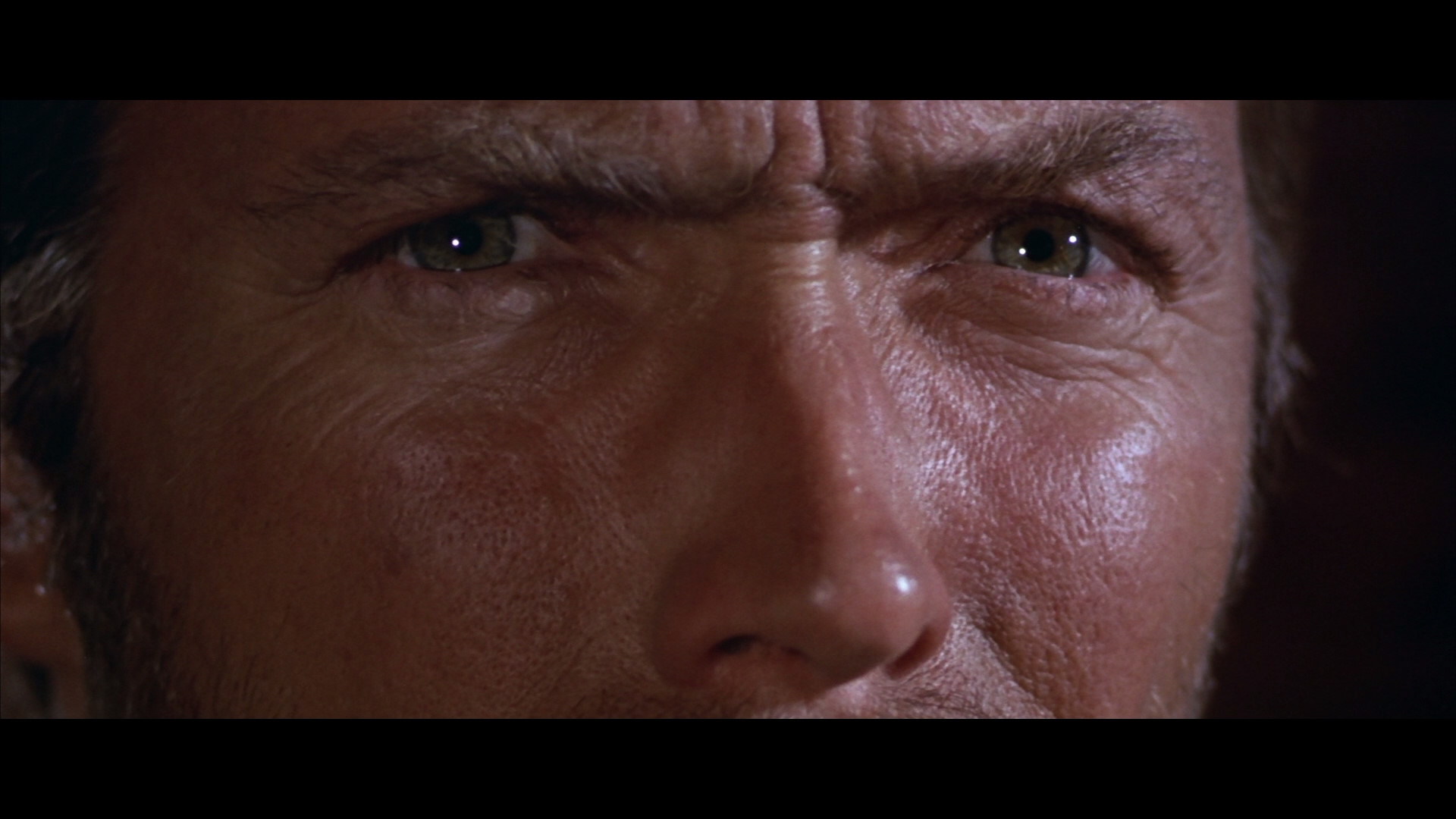
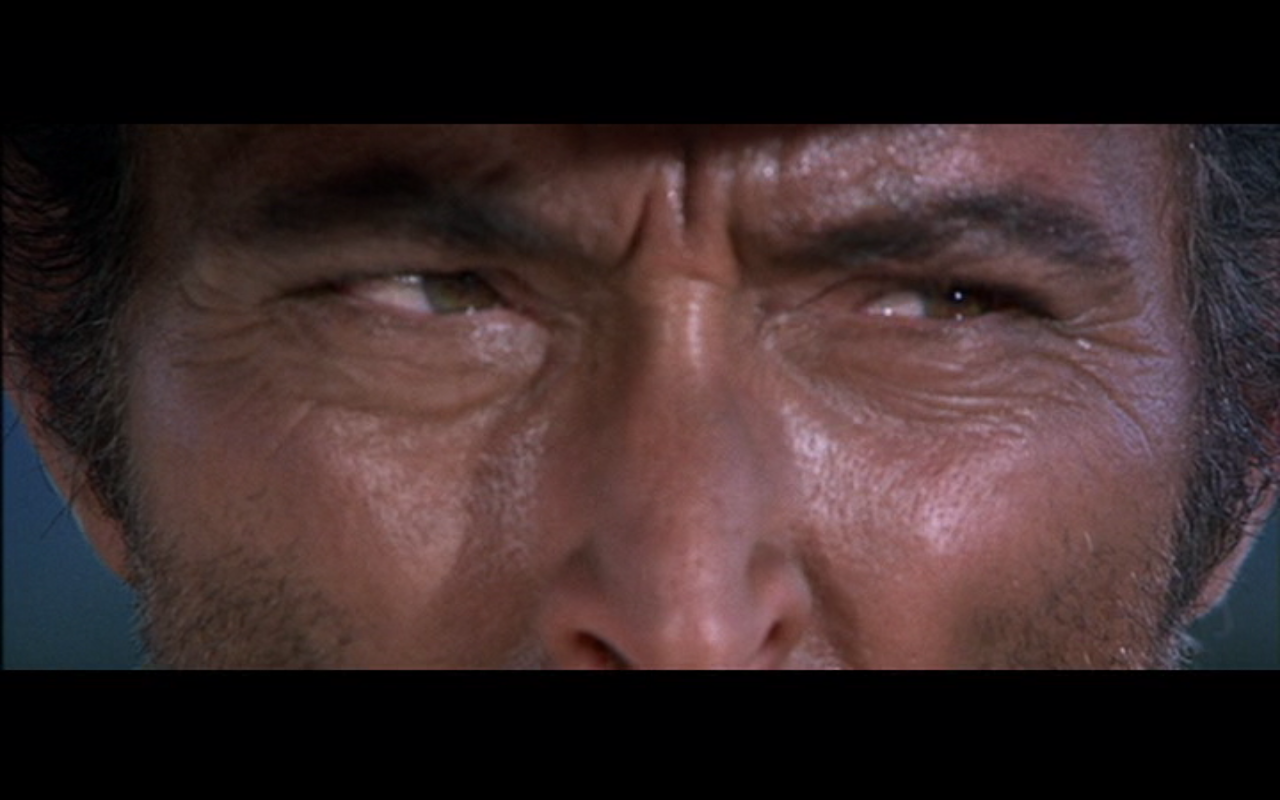
Sometime last year I made an off-hand comment about doing a post on Westerns, as they've long been one of the more interesting genres of American film, in my opinion. I grew up in the 70s, when the Western was largely dormant, but Clint Eastwood's famous "Man with No Name" trilogy was present in syndication and he and Lee Van Cleef became early heroes of mine (alongside Mr. Spock, Godzilla, and Cornelius from Planet of the Apes.) I think that first exposure colored my view of Westerns from then on, as I was non-plussed with the more "standard" John Ford/John Wayne-style material even as a kid. The notion of everything being so clean and orderly and transparent as to whom was the "bad guy" and whom was the "good guy" seemed utterly foreign to me after the dirt and dust and variable ethics of The Good, the Bad, and the Ugly. The former seemed like Hollywood. The latter seemed like life. Having seen many more examples of those styles and more in the years since, I tended to perceive a progression of three distinct periods of the genre and a path of stylistic variance and return, but more evolutionary than periodic.

The classical period

John Ford's Stagecoach, 1939.


This period covers everything from The Great Train Robbery up to the late 50s. The former was a 1903 film short at a time when fiction about "the Old West" was still a popular pastime in the US. Many of the standout figures of that era, such as Wyatt Earp and Bat Masterson, were still alive at the time and the fictionalization of their various careers had long been established, something touched upon by Eastwood in his Unforgiven, when Little Bill confronts English Bob's biographer about the facts behind the case of The Duke (Duck) of Death.

The mythology of the "Old West" was one based on the hard life that was presented by the frontier, as opposed to the more civilized environs of the East Coast and the original colonies and their urban areas. On the frontier, you had no organized government and lesser respect for the laws that it defended. Furthermore, you had greater threats in terms of exposure, wildlife, and what was presented as the almost-ubiquitous threat of the "savage" Amerindian peoples. Combine all of that with the lack of resources or personal infrastructure of many of the settlers and you had that "harder life" which naturally trends toward stories of great adventure (cue Joseph Campbell's "hero's journey".) The authors of what would later be known as "pulp fiction" were happy to emboss the actually often-mundane realities and gloss over the occasionally sordid details.

This was a tradition that directors like John Ford and Howard Hawks were glad to carry on, whether because it was a personal outlook on concepts like the American/white man's destiny or because they, like the pulp writers, knew what would sell if properly presented (often in that "destiny" vein.) As times moved on in the 20th century, the glorification of the Western frontier, now long past, was also a method of confirming the heroic status of American culture for directors, actors, and audiences. The fact that the frontier life was easily slotted into simplistic moral and ethical scenarios that called for blunt, black-or-white decisions tended to reinforce two things: the concept of frontier people as "heroic" because of their easy acceptance of the way things were (akin to Robert E. Howard's assertion that barbarian ethics, like those of his famous Conan, were superior to civilized corruption); and the anti-intellectualism of those same heroic individuals. Those people didn't need to stop to consider the ramifications of their racial, ethical, or environmental decisions. They were acting that way because the frontier demanded it and, if one wanted to survive on the frontier, then this is how things were handled, especially if you were the "good guy".

As the century progressed and the frontier receded into the historical horizon ("Don't go, Shane!") and began to be overtaken by the possibility of a new frontier overhead, the Western began a transition from the relatively obvious moral decisions of John Ford characters to situations where it became difficult to tell the "white hats" from the "black hats", even using those frontier ethics. In fact, it became easier to associate everyone with "gray hats", especially because that made them... you know... human. It started with a film called Vera Cruz,


Vera Cruz is set during the Franco-Mexican "intervention" and was notable for its rampant cynicism and casual attitude toward violence, which was fairly startling for a movie in 1954. It's considered an inspiration for many later films, including those of Sergio Leone, who is the key player in the real change in Westerns in the 60s. Another contributor to this trend was Warlock.


Warlock presented a situation where the most prominent actor, Henry Fonda, wasn't either the hero or the villain, but  more of an "anti-hero". He was still a lawbreaker and was opposed by the genuine "good guy" of Widmark, but it was clear that his intentions were at least nominally good the whole time. This character, more than any other, was predictive of Eastwood's Man with No Name.


The spaghetti period

Sergio Leone wanted to do Westerns, but he wanted to do them with a more realistic bent, reflecting the questioning of society's underpinnings that was occurring throughout modern culture during the 1960s. In a curious twist, he and other directors of the time were deeply inspired by Akira Kurosawa, Japan's most famous cinematic auteur who had begun a series of samurai films inspired largely by Shakespeare and... John Ford Westerns! Indeed, John Sturges' The Magnificent Seven was a remake of Kurosawa's Seven Samurai and Leone's A Fistful of Dollars so closely aped Kurosawa's Yojimbo that the latter's producers sued and won damages. Kurosawa's films are notable for many things, but one of the most prominent is the often difficult ethical situations faced by his characters who are frequently having to combat personal mores, as well as those of society. His most memorable characters(in addition to being Toshiro Mifune) are typically loners because of their need to be external to society's strictures in order to be confronted with these situations in the first place. Enter: Clint Eastwood.


A Fistful of Dollars introduced the first truly prominent anti-hero to the American Western genre. Eastwood's character, known as "Joe" (the press would soon tag the Leone/Eastwood trilogy of films as "The Man with No Name" series, even though his character had a name in all three films) seems to be acting in the general direction of "good" but makes it clear that he's most interested in the money and the outcome for the public weal is incidental... except when Marianne Koch as Marisol asks him why he was helping and he makes a reference to his past and a woman he'd once known. So, resolving personal issues or actually doing the "right thing"? That's left to the audience to determine, which is exactly as it should be.

Leone and Eastwood continued their association with For a Few Dollars More and, finally, one of the finest films ever made: The Good, The Bad, and The Ugly.


The Western genre would be changed forever with that trio of films released from 1964 to 1966, but it would take American audiences (and directors) a while to catch on. Other than Leone's brilliant Once Upon a Time in the West, the genre really wouldn't have any significant releases until Eastwood began making his own films in the mid-70s and those drew significantly from an altered assessment of the time period, as well as Leone's genre-shifting work.

The pasta-modern period

Society had moved on from the idea of simplistic heroes and villains. After the turmoil presented by the Vietnam War and Watergate, the presence of a character like the Man with No Name (or the Outlaw Josey Wales) seemed almost a given. Certainly, there were films that attempted to stay within the confines of the Ford/Hawks template and there were homages to that approach, like Lawrence Kasdan's Silverado (which everyone should see, if only for John Cleese's performance as a local sheriff: "As you may have noticed, I am not from these parts.") but most took the more cynical approach of the American public and Leone's take on the genre and began to view it in a seemingly post-modern, constructivist perspective. Not least among these was Eastwood himself, who directly questioned the myth-making of the period with his Unforgiven:


But other fine examples abound, especially those that lifted the genre away from its formerly perpetual obsession with the "unrepentant savages that threatened the frontier way of life", like Dances with Wolves and Geronimo. They appeared alongside films that continued to question the myths surrounding key figures of the period (Wyatt Earp, Tombstone) and remakes that presented their earlier plots in a more intricate skein of people, agendas, and changing times, like the recent 3:10 to Yuma:


In many ways, the modern Western is similar to what the modern gangster movie has become post-Godfather and post-Sopranos: conscious of history and self-aware of the modern perspective that now arches an eyebrow at much of that history. At some point in the future, I'll probably delve back into the Leone/Eastwood trilogy, as those films still carry the most weight for me in the genre as a whole (despite my appreciation for direction and performances, I am not much of an Unforgiven fan, for example.) And, of course, one of these days I should do a post about Kurosawa. And, speaking of Japanese films, watching Godzilla on the 4 O'clock Movie, back in the day...

Monday, February 14, 2011

Dramatic pause

I'm an unusual movie buff. Some people just love movies. They'll watch all kinds with enthusiasm, even though they have their favorite genres, actors, directors, and time periods. I'm only enthusiastic about good movies, which is an awfully arrogant way of saying I'm a really picky movie buff. I find it very difficult to countenance the idea of wasting two hours of my life on the next Too Fast Too Furious (even though I thought Vin Diesel's (godawful Hollywood name) performance in Pitch Black was decent), even if I have absolutely nothing better to do (I may be dead; check if I ever say I'm going to do this.)

I have my favorites, of course: early Ridley Scott and John Carpenter, anything by Akira Kurosawa, the Coen brothers, or Stanley Kubrick, every other Kevin Smith film (1, 3, 5, etc.); I could watch Salma Hayek stand in a phone booth for two hours... But most people will look at a movie listing, think to themselves "That sounds OK." and agree to see it if friends or family are going or if they're just sitting in front of the TV. I can't do that. If my thought is "It sounds OK.", I'll probably want to turn it off/walk out halfway through it because I'll start rolling my eyes at the performances or blowing holes in the script or whatever.

Obviously, in life and relationships, you sometimes have to go along to get along. On this, I just can't. It's just alien to me and not in the good Ridley Scott way. A former girlfriend once remarked on it as the most obvious example of how I'm expecting to be around someone(s) who are in tune with (or at least tolerant of) the way my mind wanders, 24-7, and how it will never happen... which is probably one of the sadder statements of my life but, there it is.

So, every year around Oscar time, I spend more time than usual at the nearest theater to see just what is in the running for the little statue and why. Here's where other movie snobs lift their noses and decry the Oscars as "biased", "out-of-touch", and a "popularity contest." All of that is true, but they also tend to spotlight many genuinely good films and are evidence that the American film industry hasn't completely imploded in the way that the music industry basically has. (You couldn't pay me to watch or listen to the Grammy awards. It's all crap.)

This year I ended up seeing True Grit, Black Swan, The Fighter, and The King's Speech all in the space of a few weeks.


True Grit had the advantage of being a Coen brothers production to begin with. I've seen everything they've ever made and show no signs of stopping. Critics kept harping on how they told the story "straight" without their "trademark quirkiness", but those critics must have forgotten the brilliant No Country for Old Men, which was pretty straight, not to mention films like Miller's Crossing and Blood Simple. Most of them are fixated on classics like Fargo and The Big Lebowski (with some justification) and forget that the Coens know how to tell a story as well as any other mainstream dramatist(s), even if no one in it even approaches saying "Yah!" to some hotdish.

Speaking of Lebowski, I thought Bridges was excellent in this role; almost as good as he was in Crazy Heart last year. In the latter, his performance earned him the trophy because he lost himself in it. He basically became Otis Blake and showed me the first time I could look at him and not assume that he was about to spout a line like: "Well, that's just like... your opinion, man." Seriously, when he was on stage, staring at the statuette in his hand, saying: "This is really great.", I completely expected him to follow with: "This is totally gonna tie the room together, man!" Once again, in True Grit, Bridges managed to lose himself, turning the typical drunk cowboy routine into a fascinating character to watch. Matt Damon's performance was good enough to make me fail to recognize him for the first couple minutes he was on-screen and people have been raving about Hailee Stanfield for good reason. She took command of every scene that she was in (aka all of them; how do you get "supporting actress" from someone who's in every shot?) and was the foremost reminder of the excellent conceit that the Coens used concerning the dialogue, in which every occupant of backwoods Texas and Arkansas spoke the Queen's English as if they'd just stepped out of Windsor. It worked well for many of the roles in Deadwood and works perfectly here.

The Coens hewed more closely to the source novel than John Wayne's original did, as well. I'd never seen the original (I'm not a Duke fan, except as a rapper), so I had nothing with which to compare it in that respect. My preference for Westerns aligns pretty closely with the presence of a Man With No Name (who actually did have a name in all three films...; someday soon I'll do a post about Westerns) and movies like those. But I think I agree with my friend, Rodger, who summed up this version of True Grit by saying: "It was just a great film- story, characters, direction -beginning to end."


Black Swan fell short of my expectations. That's not to say that it had any particular failing, but I suppose I went in with a mixture of seriously high expectations for a film with Natalie Portman (a favorite) and Darren Aronofsky (director of the The Wrestler) but little knowledge of or affection for the dance world. As it turns out, I suppose I was expecting something that carried more personal impact with me. I enjoyed it, but once it was over, it was gone. The Wrestler was so poignant and well-done that it stuck with me for weeks afterward, as scenes like Randy's tantrum behind the deli counter would come back to me. Black Swan didn't do that at all.

Part of my lack of enthusiasm had to do with the way in which the "thriller" was delivered. In most movies that carry that label, a certain set of ground rules are established as "normal". Then, the abnormal begins to intrude and, in many of them, begins to mesh with the normal until the audience has difficulty distinguishing one from the other. One film that did this really well was Jacob's Ladder. It set the ground rules of normal in more than one place and then started displaying fantasy in glimpses and then in full scenes, until the viewer is totally lost and wandering as it all fell into place. Black Swan, on the other hand, never established normal. From the first scene, there were elements that seemed real but were then revealed to be fantasy, so we never knew what the rules of the game were.

That being said, I still enjoyed it. Portman, Mila Kunis, and Barbara Hershey were all excellent and Vincent Cassel did a decent job in the first role I remember him doing since the sadly often-overlooked Eastern Promises. Again, holding almost no knowledge of the dance world, I was a bit out of my element, but that didn't stop me from appreciating the commitment neé obsession of many of its inhabitants. I've been in communities where the bonding activity was lived and breathed and I can understand that kind of motivation and I think Aronofsky did, as well; perhaps even moreso than the wrestling world.


I knew the story of Mickey Ward, as I'd kept an eye on his trio of fights with Arturo Gatti back in the early years of the previous decade, so the film was fairly predictable (and probably would have been for many people even if they hadn't followed the real life events.) But it still had a couple elements that really made it sing.

One of these was Christian Bale. I'm a fan of Bale's work. As much as I enjoy the Batman films for their departure from Tim Burton campiness, I'm even more of a fan of things like American Psycho, The Machinist, and 3:10 to Yuma (the latter film even quieting my normal Russell Crowe aversion.) Those were all very affecting or intriguing roles. I think Bale at least matched them all here. In fact, there's room to argue why this was supposedly a film about Mickey Ward, when Dicky Eklund (Bale's role) was far more interesting and went through much more of a traditional transformation than Mickey did. Bale is an actor who maintains his character off-camera and you could really see that in this role, as he really climbed inside Eklund's skin and made it part of himself. The director commented that "Dicky has a music to him" and Bale hit the tune.

The other element was the septet of women playing Mickey's sisters, who played the role of a Greek chorus on PCP; always announcing to the audience when tragedy was about to strike and usually creating or participating in it themselves. You've never seen such detestable and somehow vaguely endearing characters as the Seven Irish Harridans. The movie maintains a pretty serious tone, but they end up somehow delivering most of the comic relief.

Not to be left out are Amy Adams, in a serious departure from her very milquetoast roles in the past, and Melissa Leo, as Mickey's manipulative and passive-aggressive mother (Jack McGee gets a mention in a solid performance as Mickey's harried father, too.) In fact, most of the performances were so strong that they carried the film, turning what was a typical "hard-luck kid makes good" story into an interesting character study. I almost think it would work better as a play. The one letdown in this respect is really Mark Wahlberg, as Mickey. His performance isn't bad. It's just burdened with his trademark woodenness (the only movie in which I've seen him escape this tendency is The Departed) and a role that didn't really give him much to work with, in my opinion, especially when standing next to roles like Bale's and Leo's. It was still a very worthwhile film.


The King's Speech was flat-out brilliant. I admit some hesitation, even after hearing gushing reviews from opinions that I trust. I mean, how interesting can someone learning not to stutter (or stammer, as the English call it) really be? But it was excellent. The script was fantastic, the performances were great, and the very slowly-paced movie kept me totally engrossed from beginning to end.

I'm not familiar with most of Colin Firth's oeuvre. When I first heard his name, the only thing that came to mind was Shakespeare in Love and I completely missed A Single Man, so it was kind of surprising to hear him being lauded so much for this role, but he deserves every bit of it. He pulled off the rather difficult feat of playing the formal British royal while also expressing the deep frustration of his condition without having to chew the scenery like a latter-day Pacino or Nicholson probably would have. You felt the genuine sympathy of some of the bit players in the film, almost gesticulating in trying to draw the words out of him as he struggled to voice them. Geoffrey Rush was his usual adept self. For all that he's lauded for things like Shine, I think these slightly off-kilter roles (yes, that was a Shine joke...) such as Lionel Logue and Casanova Frankenstein (in the subtly hilarious Mystery Men) are the ones that really let him do his best work.

My two very tiny criticisms are that, first, Helena Bonham-Carter was totally wasted in her role. Her range is so great and expressiveness so prominent that having her play the staid, royal British matron is a waste of her talents. The fact that she could pull it off is a testament to her ability and might have been part of the attraction of the role for her. It just struck me as an incredibly confining situation. The second is that I think director Tom Hooper lingered just a bit too long on some of the interactions between Logue and Bertie. That was, indeed, the focus of the film; that their connection enabled the future king to get over his impediment, but it began to get a bit trying near the end, where one more deep exchange of meaning was traded in their lengthy stares (I'm reminded of the incessant crying that took place in the otherwise excellent Lord of the Rings films that had me fearing that all of Middle-Earth might drown by the time we reached the middle of Return of the King.) But those are really minor. It was a genuinely great movie.

So, awards. I'm placing my bets on:
Melissa Leo for Best Supporting Actress (The Fighter)
Geoffrey Rush for Best Supporting Actor (The King's Speech; even though I really think Bale should win.)
Colin Firth for Best Actor (The King's Speech)
Nicole Kidman for Best Actress (Rabbit Hole)
The King's Speech for Best Screenplay
The Social Network for Best Adapted Screenplay
Tom Hooper for Best Director (The King's Speech; I'd favor the Coens)
And the King's Speech for Best Picture.

Back to the real world next time.