Showing posts with label impending doom. Show all posts
Wednesday, April 15, 2020
Justin Amash and the travail of choices
I discovered that Justin Amash was seriously considering a presidential run as a Libertarian when I read the board this morning. The person who posted the story immediately attacked Amash for potentially threatening Biden's victory by providing conservatives that dislike Trump with another option. The first response to his post was a dismissal akin to "Egotistical politicians all think they're the savior that America needs.", which was also an expression of dismay that someone else other than the two anointed ones might get involved in the race. I found both reactions to be an interesting display of both a failure to see beyond one's own window and an assumption that almost all politicians, by their very existence, are bad people. Both are also implicitly expressions of American monotheism in politics.
First off, it's ridiculous to deny the presence of ego in politics. Most people who run for office have a fair share of it in order to stand up in front of people and say either "I have new ideas" or "I'm the voice for your ideas", if not both. Most politicians are fond of their own opinion. That's why they're politicians. The question of the presence of egotism is a bit murkier and certainly the speculation that all politicians have a messiah complex is just part of that "Politicians are bad people" trope. There are a number of reasons that most people choose to run for office. John Conyers used to talk about civic duty. When he started, there weren't a lot of people willing to stand up and talk about what was happening in that part of Detroit, because it was mostly Black. (I once joked with him, on a live mic, that he'd be better off joining the Greens, since his outlook was closer to ours. He suggested that we should talk later.) Similarly, a lot of minor party or impossible-to-win-in-this-red/blue-district races are run because there's no one speaking for the people in that locale who don't agree with the dominant viewpoint. And some people just think they can do things better than the person already there. Look at Alexandria Ocasio-Cortez, for example.
In this case, the latter motivation is likely what's moving Amash. The guy already left the GOP because of how insane it's become, despite continuing to spout off regular conservative viewpoints as an independent. How many times have we seen Republicans (Never Trumpers, etc.) talk about how repelled they are by what their party has become and, yet, Amash's run somehow has to be all about Amash? But they're all corrupt! They're all in on it! They're all fatuous egotists! Both sides! All sides! But if you can't believe anyone who wants to run for office might do at least OK in that office, then what's the point of any of this? The old homily that the "best person to run for president is the person who doesn't want the job" is moronic. What's the best example? The current idiot in the White House. He didn't want the job. He just wanted the attention, narcissist that he is. That's why he's spent half his time in office playing golf. Being president is kinda difficult. It's a lot of work. Who wants that? Well, really driven people who think they have good ideas. That old James Lipton questionnaire that he always asked of guests on Inside the Actors Studio had a "What job would you never want to do?" question. The nearly universal answer was "Politics."
There are few more ego-driven people in the world than actors. They have to be. That's part of their craft. And, yet, none of them want to take the role of society's presumed egotists. Why? The simple answer is that none of them want to be "bad people." The more reasonable answer is that all of them realize that it's a difficult job trying to respond to the wants and needs of a variety of people in whatever district, municipality, or nation that they happen to oversee. It's often a thankless job, whereas at least as an actor you get applause and sometimes awards. And it's also a job that brings such an intense level of warped scrutiny from media sources and the public that even those people already under intense scrutiny, as actors, are probably not interested in subjecting themselves to it. You can't please everyone or, often, even anyone when compromise (that thing that existed pre-1994) is the order of the day.
Which brings us to our second response: the idea that Amash is somehow threatening Biden's chances in November and should, therefore, be condemned for it. This is the opposite of the typical perspective; that Democrats are threatened by Greens and those to the left, while Republicans are threatened by Libertarians and those to the right. In this case, the initial poster determined that there are a lot of non-Trump conservatives out there, just like Amash, who would otherwise be voting for Biden. This is a much more difficult question (and assertion) and there's really no way to state anything about the situation as a fact. As we've all seen, repeatedly, in recent elections, there's basically no way to determine who someone will vote for given alternative choices. The popular theory on the Democratic side is that, without Nader's presence in the 2000 election, it's a "fact" that all of those Green voters would have voted for Gore.
This is the point where another popular saying comes up: "Anecdote does not equal evidence." The difference is that this saying is actually accurate. I don't know whom Green voters in Florida or elsewhere would've voted for. I do know that I, as a Green voter in Michigan, wouldn't have voted for him because I've never voted for a major party candidate for president in my life. Without Greens on the ballot, I always voted for socialists who, incidentally, gained more votes in Florida than the difference between Bush and Gore in 2000, if you really want to get picky about it. Can anyone tell me, for certain, that non-Trump Republicans were going to bite the bullet and vote for Biden? Can anyone tell me they won't do that, anyway, even with Amash in the race? Of course not. That's about as predictable as Clinton losing all of the upper Midwest in 2016, right?
So, this is mostly about American political monotheism: Thou shalt worship no other gods before the Democrat and the Republican. This is the argument usually put forth by someone who is content with the current establishment, barring one orange, misogynist outlier. This is why entities like the New York Times won't mention that many current systems are broken or that the president tells lies almost literally every five minutes. They're content with the way things work right now. Life isn't as good as it could be, but they have jobs, they have health insurance, their 401ks and their mutual funds are doing OK; things were generally fine until the orange man-baby arrived. So, they don't want people to question the way the system operates (good luck with that during a pandemic!) They just want to focus on getting rid of the "other guys." This is what minor party people like myself used to laugh about when it seemed like the biggest difference between a Dem or GOP Congress was who had the larger offices in the Capitol.
Along comes former Republican, Justin Amash, and... he might spoil(!) everything! Once again, he's giving people CHOICE on the ballot! You know what happens when people have choices! The wrong people might win! But still the system will remain unchanged and the 'right' people will win it back later. This is the "boogeyman" argument that both major parties have used for the last thirty years. A lot of Democrats feel justified in currently saying something along the lines of "See?! We were right!" Well, yeah, albeit once in 30 years is similar to suggesting that the two non-Trumpers you've spoken to have said they're voting for Biden and that makes all the difference. Hey, the one time you were right has given us an election where only the hardcorest of the hardcore actually want to vote for president! Great. But it's not that simple, because it never is.
And now we're in a situation where all the systems are breaking down and their flaws are being seen not just by the people who have struggled under them for decades (if not centuries), but by everyone. Amash is essentially saying: "Hey. This isn't working. I'd like to do something different." And the response is: "All politicians are egotistical assholes and YOU'RE not the right kind of asshole!" In other words: "Not this time. This isn't the right time for change. Wait until next time." I would ask: "If not in the midst of a pandemic that's going to have lasting effects on life around the world, is there a time that is a good time?" Because time is what a lot of people will be lacking, quite soon. Without jobs, a lot of people are going to find themselves without food and shelter. Is your only answer to them going to be "Hey. Things will be fine if we all line up behind so-uninspiring-he's-soporific Joe Biden, so that things will go back to normal." 'Normal' is the problem; politically, economically, socially. Doing 'normal' with Democrats and Republicans is what has gotten us to this state of affairs; with people dependent on jobs for insufficient insurance, living paycheck-to-paycheck on those jobs, and not knowing what they'd do in any kind of calamity... just like this one.
Just as a side note: No, I'm not making a direct comparison between Dems and the GOP. Even if I were inclined to believe in the "all politicians are horrible" trope, as with all things in life, there are gradations of horrible. Some are clearly worse than others. In my direct encounters with most politicians, they're usually just regular people: dumb, self-interested herd animals. That's kind of demoralizing when it comes to the federal government, as you'd like to think that people who made it that far aren't fucking idiots but, as we've seen, that's very, very far from the case.
Friday, November 11, 2016
Going back to the well
Here we are, two days out, and I've been involved in a number of conversations with people trying to understand the whys and wherefores of president-elect, Donald J. Trump. I get that. It's a surprising turn of events for many people who figured there was no way that the voting public could be so irrational as to elect that idiot. But I don't think irrationality is the issue here. I've also been involved in a couple conversations wherein people objected to my overtly humorous reaction to the election. I get that, too. A lot of people are frightened of what a Trump administration could look like, especially as we are now regaled with stories of who is under consideration: Ann Coulter, Myron Ebell, Rudy Giuliani, Sarah Palin, etc. A couple things about that:
Race is a factor, as David Duke and his execrable ilk are now happy to tell you. Clinton's difficulties on the stage and with regular folks are a factor, as has been cited often. But just because some of Trump's supporters are bigots
and just because Clinton was a suboptimal candidate on the stump
doesn't make those the defining traits of her loss. Anyone remember what Bill Clinton's in-house slogan was for his campaign in 1992?
And there you go. When you have a block of voters that have missed out on the benefits of the "new economy" and are, at best, serially lied to by politicians promising to help them or, at worst, are labeled as losers by the media for not succeeding in said "new economy", presenting them with a candidate whose message is just more of the same is a sure recipe for disaster. The only thing that kept this race close for Clinton was the fact that Trump is such a horrible human being (and who goes on trial for fraud in a couple weeks. 'Merica!) If she'd been running against Romney, it would have been a slaughter. But, again, one of the reasons someone like Romney or Jeb Bush didn't get nominated is that they represent the same things Clinton does: Goldman Sachs, concentration of weatlh, and continued oligarchy. In the emails that were hacked from the DNC, Neera Tanden, president of the Center for American Progress put it best:
So, what now? Well, what this presents us with now is opportunity. Yes, the next four years are going to be a bit of a trial with the GOP controlling all of the government and that idiot loose in the White House. But the opportunity comes in the fact that so many people dread that reality. This should be a galvanizing event. Don't be one of those Facebook warriors screeching at me about how others are going to suffer more than I am. I'm aware of that. What I'm saying is that there were plenty of people already suffering, including those highlighted by the keyboard champions whose only real expression of concern was to hit a Paypal button to toss $20 toward the Clinton campaign and feel like they were "contributing" to anything other than a stagnant edifice that's already rolling in cash, thanks. Again, borrowing from people who are likely expressing it better than I am, take a listen to Marc Lamont Hill on The Breakfast Club from a few months back:
The pertinent stuff begins at the 11:05 mark, but the whole thing is worth a watch, as he's a very interesting guy. But, in short, what he says is that he's not interested in voting for the same thing that continues to not work and a Trump presidency may be the thing that gets the majority of people to finally fight back against a system that is largely designed to make them passive observers (i.e. the equivalent of walking into a voting booth every four years), rather than active participants.
We can't just keep dismissing this event as the work of closed-minded racists. That's missing the point. The point is that a genuinely democratic and/or representative republic has to work for more than just the wealthy and ours simply doesn't.
- My sense of humor has been described as anything from "macabre" to "quaint" because I tend to find humor in situations that many people find abhorrent. There's a certain level of cosmic perspective ("Nothing will ever match the depredations that would accompany the world being taken over by Yog-Sothoth!") but it's often a Robert Frost thing ("If we couldn't laugh, we would all go insane.")
- I TOTALLY called the Palin as Secretary of the Interior thing. There's no better indication of a collection of people that have no clue as to how government (to say nothing of Interior) actually functions than to believe that she's the right choice for that post.
- Ann Coulter as White House press secretary. Can't you just imagine Trump barging onto the dais in the press room to interrupt Coulter saying something outrageous with a pronouncement that's even MORE outrageous? Pardon me while I convulse with laughter again. It helps if you have absolutely zero respect for most of these institutions as a whole, given that they largely deserve none.
Race is a factor, as David Duke and his execrable ilk are now happy to tell you. Clinton's difficulties on the stage and with regular folks are a factor, as has been cited often. But just because some of Trump's supporters are bigots
Low-income rural white voters in Pa. voted for Obama in 2008 and then Trump in 2016, and your explanation is white supremacy? Interesting.— Tim Carney (@TPCarney) November 9, 2016
and just because Clinton was a suboptimal candidate on the stump
This is very curious advice. Clinton not a great speaker, reportedly great listener. That works on @foxnews? https://t.co/UJYjS2YapR— Medellín (@TonyJohnIII) July 22, 2016
doesn't make those the defining traits of her loss. Anyone remember what Bill Clinton's in-house slogan was for his campaign in 1992?
And there you go. When you have a block of voters that have missed out on the benefits of the "new economy" and are, at best, serially lied to by politicians promising to help them or, at worst, are labeled as losers by the media for not succeeding in said "new economy", presenting them with a candidate whose message is just more of the same is a sure recipe for disaster. The only thing that kept this race close for Clinton was the fact that Trump is such a horrible human being (and who goes on trial for fraud in a couple weeks. 'Merica!) If she'd been running against Romney, it would have been a slaughter. But, again, one of the reasons someone like Romney or Jeb Bush didn't get nominated is that they represent the same things Clinton does: Goldman Sachs, concentration of weatlh, and continued oligarchy. In the emails that were hacked from the DNC, Neera Tanden, president of the Center for American Progress put it best:
“I mean it makes my life more difficult after telling every reporter I know she’s actually progressive but that is really the smallest of issues. It worries me more that she doesn’t seem to know what planet we are all living in at the moment.”Here's a hint: She doesn't.
So, what now? Well, what this presents us with now is opportunity. Yes, the next four years are going to be a bit of a trial with the GOP controlling all of the government and that idiot loose in the White House. But the opportunity comes in the fact that so many people dread that reality. This should be a galvanizing event. Don't be one of those Facebook warriors screeching at me about how others are going to suffer more than I am. I'm aware of that. What I'm saying is that there were plenty of people already suffering, including those highlighted by the keyboard champions whose only real expression of concern was to hit a Paypal button to toss $20 toward the Clinton campaign and feel like they were "contributing" to anything other than a stagnant edifice that's already rolling in cash, thanks. Again, borrowing from people who are likely expressing it better than I am, take a listen to Marc Lamont Hill on The Breakfast Club from a few months back:
The pertinent stuff begins at the 11:05 mark, but the whole thing is worth a watch, as he's a very interesting guy. But, in short, what he says is that he's not interested in voting for the same thing that continues to not work and a Trump presidency may be the thing that gets the majority of people to finally fight back against a system that is largely designed to make them passive observers (i.e. the equivalent of walking into a voting booth every four years), rather than active participants.
We can't just keep dismissing this event as the work of closed-minded racists. That's missing the point. The point is that a genuinely democratic and/or representative republic has to work for more than just the wealthy and ours simply doesn't.
Monday, May 12, 2014
Hellblazer?
John Constantine is returning to the in-motion visual medium this fall. NBC has announced that Constantine will be one of their new shows for the season, as they try to capitalize on the recent surge in horror/sci-fi/fantasy audiences (they were always walking among us...) i09 was recently raving about this trailer:
I'm, um... mixed. While I appreciate the fact that, unlike the abhorrent Keanu Reeves film, it appears they actually, you know, read Hellblazer before making the series, it still strikes me as questionable.
First off, Constantine isn't an exorcist. While his story is steeped in Judeo-Christian mythology and lore and some of the best story arcs have revolved around his relationship with Lucifer and other entities of that ilk, presenting him in this fashion leads very quickly to the assignation of black hats and white hats. The demons are the black hats and their exorcist must, of course, be the white hat... which is exactly the wrong way to approach the character AND the wrong way to present this material, in general. Despite trying to attach themselves to the coattails of shows like Game of Thrones and True Blood, I get the feeling that NBC still hasn't quite grasped the idea of shades of gray (yes, even more than 50...) If you draw a clear line between good and evil, not only do you confine your stories to boilerplate Hollywood/Joseph Campbell stuff, you also do the Keanu Reeves thing by utterly missing the point of the character.
John Constantine is generally an asshole. He has friends who range from hating themselves for letting him into their lives to barely tolerating him. Part of the reason is his essentially anti-social attitude. The other part of the reason is that many of them know what he's done to other people who considered themselves his friends. Constantine sees the big picture. The big picture, as we know, often overlooks the little guy. Those little guys are often friends of his and if he needs to sacrifice them in order to accomplish a greater good (like freeing an entire town from the death cult that has infected it) well, that might just have to happen. And does. Repeatedly. Constantine is not without a conscience in that all of these sacrifices that he's made tend to stay with him (some of them quite literally) and so he spends a fair amount of time inside a bottle. Is NBC going to be willing to show him screwing over the people that love him, drinking himself to death, and spitting in the eye of whichever demon he's scripted to deal with this episode? Or is it just going to be a canned retelling of The Exorcist every week? I think the former is a bit much for their main channel. If it was showing up on one of their subsidiaries like FX (home base for the brilliant and way-too-risqué for NBC Archer), I'd feel a lot more secure that they weren't going to sanitize it into idiocy or, even worse, a slightly scruffier version of Highway to Heaven.
Secondly, Hellblazer was rarely confined to just Christianity. There are a lot of other religions and forms of magic in the world and Constantine had experience in most of them. That was what made him what he was; jack-of-all-trades, master of none. That's part of why other entities considered him so dangerous because they were focused on one area of the netherworld and he was comfortable everywhere. If you're going to confine him to a strictly Westernized and Americanized approach, again, you've limited the range of motion of the character before he even hits the screen or are reducing him to taking the occasional excursion to New Orleans ("The Brady Bunch goes to Hawaii!!" "The Simpsons go to Africa!!") to deal with the eerie voudoun before getting back on the anti-Satan train the following week.
Finally, Constantine is a cynic. That's what made him interesting when Alan Moore first created him. That's how he excelled when Jamie Delano and Garth Ennis took him to the greatest heights that the series hit during its run. He's bitter about society (he's the former front man for a hardcore punk band, Mucous Membrane; what else would I be listening to while writing this other than Minor Threat?); he's contemptuous of almost everyone because he can see what makes them tick; he despises his own knowledge, the ambition that led him to acquire it, and the horrible things that it has led him to experience and to do. Matt Ryan, at least in the clips I've seen, is not that guy. He's way too glib and not nearly suspicious enough of those around him to be John Constantine. Yes, he's blond, and raggedy, and English (Keanu Reeves? Seriously? You needed a casting director and found some guy gutting fish, right?) but he doesn't display that unfathomably canny attitude that makes the character what he is.
Despite my praise of Ennis, Delano, and Moore, I have to say that the best encapsulation of the character I ever read was done by Neil Gaiman in a limited series called The Books of Magic. The premise was that a young boy was the Earth's new sorcerer supreme (ahem) and he needed to be taught just what that meant and how to deal with it (a decade before Harry Potter.) In one of those issues, his guide is the inimitable John Constantine, who proceeds to give the lad the streetwise angle on how to deal with his newfound power and all of the danger that it will present. At one point, they stumble into a meeting of DC's magical community (Zatanna, the Spectre, various demons, etc.), all of whom are trying to influence the young Tim and Constantine stops them all cold. The room comes to a standstill as he tells them: "You know me. You know my reputation. Does anyone really want to start something?" Silence. When Tim asks him how to tell the good guys from the bad guys, Constantine tells him that there aren't any. They're all just people, trying to get by. I don't get that kind of real world acumen from the limited bits that I've seen of this show and it's the kind of mercenary and realistic attitude that's not generally going to appear in a show that NBC likely thinks is mostly about the horned guys on fire.
And, yes, confessed cynic here, especially on topics like this. I've seen too many bad attempts at this sort of thing to the point where I doubt that any network that is as concerned about the censors as NBC is will ever be able to get it done. At this point, it's cable or nothing and preferably pay cable... which also means it's HBO or nothing, since a Constantine written with the acumen of a Black Sails is a series waiting to be put out of its misery before the first episode.
Sunday, March 3, 2013
Finally, the deeper meaning
Significant spoilers below if you haven't seen the most recent episode of The Walking Dead.
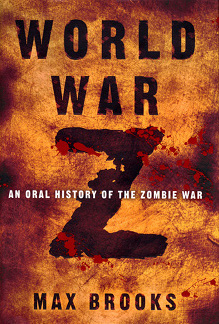
I'm not a huge zombie fan. Most of the entertainment surrounding them is pretty one-note: dead people chase, live people flee and occasionally kill. None of the Living Dead films has ever been more complex than that and most have been relatively self-contained in scope, aside from occasional details about what might be happening elsewhere. The whole world is represented by one little town or even one shopping mall. The exceptions to that are the "28" films (Days and Weeks), which examined the initiation of the problem from a purely scientific perspective (a weaponized disease that escaped containment) and which instigated the utter collapse of the British nation, and World War Z, an excellent book presented as a series of first-hand accounts collected by a UN Commission ten years after the "zombie war".
The book is used to examine any number of social issues that confront us today and which would be accentuated by the utter breakdown of society that takes place during the war, just as it does in the 28 films. That is what makes both book and films interesting, because the problems are far more complex than simply confronting walking corpses. The Walking Dead, originally as a comic and now as the TV series, is presented in a similar vein: the story isn't about running from and occasionally killing zombies. It's about what happens when society completely breaks down. Where does food come from? Where does electricity come from? Who enforces the laws? Who heeds them? Do you absorb others into your group, creating security but also creating more mouths to feed? Or do you reject all but a chosen few once you've learned to trust them?
The TV series has come under criticism from fans of the Romero movies who profess to simply want more scenes of hardcore corpse-killing action. That's a series that would last about two seasons and then get cancelled and the producers and the original writer of the story, Robert Kirkman, have often tried to explain that reality. There has to be something more to the story being presented or else it will quickly become trite. Tonight's episode highlighted that in almost every way possible and finally made the last two-and-a-half seasons well worth watching.
Lennie James returns as Morgan, who appeared in the first episode of the first season with his son, Duane (Adrian Turner), as they rescue Rick Grimes (Andrew Lincoln) after his escape from the hospital. They're holed up in their house in Rick's home town and they explain how the world has changed before Rick sets off in search of his family, promising to try to keep in touch with them by radio. Tonight, we learned that Morgan has remained in town, but shifted locations to a more defensible area where he's amassed an arsenal and established an array of traps for the walkers while he continues to paint doomsday graffiti on every available surface. Duane has died and turned at the hands of his mother whom Morgan says he was too selfish and too weak to kill. Morgan has been driven at least mildly insane by this course of events and is now determined to embody the nihilistic approach toward the world that he thinks is the only reasonable course: everyone will turn and everyone will die, so there's no sense in associating with other other people or trying to rebuild society.
This is the crux of the story: Will society be rebuilt and, if so, by whom and how? The Governor of Woodbury has one approach that seems bent on authoritarian control and an intent that society will be what they want it to be, which is closer to the approach of most of the forces present in the 28 films. Rick's group, on the other hand, seems relatively deterministic: survival is the only real goal and the future will somehow take care of itself, once the problem of the zombies is resolved, which is closer to World War Z's depiction of the problem. The Walking Dead has managed to incorporate both approaches and this episode is what brings it into focus. Morgan had been a survivor, but now presents as an iconoclast. Nothing matters and it's his own weakness that has assured that situation (again, still somewhat deterministic, as his inaction seemingly assured his insanity and change in philosophy.) As he says: "I was too weak and it's people like me that have inherited the Earth."
Meanwhile, the former iconoclast of Rick's group, Michonne, discovers in the course of the same episode that perhaps it is better to be part of a group than a loner determined to distrust everyone. She does this by assisting Carl in the retrieval of the last picture of his mother that he knows to exist. His effort to reach this is motivated by personal feelings, but also by his desire to show his sister, Judith, what their mother looked like. In this way, he firmly positions himself in the camp of those trying to rebuild society, as he understands that the foundation of many human relations is the memory of what has gone before. If we don't possess knowledge of our forebears, we're cast adrift; essentially making it up as we go along, rather than confronting problems with a set of values rooted in the past and our knowledge of the people that lived then. As Orwell said: "Those who control the past, control the future. Those who control the present, control the past." That's a bit more heavy-handed than Carl's motivations, but the truth is essentially the same. Society will be based on a vision of what the controllers feel is essential to preserve, whether out of genuine altruism (Carl) or darker motivations (The Governor.)
I've been watching the series because I'm interested in most comic-oriented stories and Kirkman's is one that has been spoken of quite highly (I only read the first arc.) At times, it was difficult to continue because the story seemed to lack purpose. It was, in fact, just a bunch of people sitting around bemoaning their fate and occasionally entertaining us with new methods of killing walkers. But the third season has been a bit of a revelation in that it finally began to address the bigger picture and this episode brought it home, not because it delivered some poorly-executed expositional homily to the idea of recreating what was, but because it showed people confronting those problems and how it motivates and changes all of them. In that respect, I think I've become an actual fan.
Thursday, February 23, 2012
Market-driven idiocy
So, I came across this interesting article from Al Jazeera, which goes into some detail about "peak oil" possibilities and the suspicion that most OPEC members have been drastically overstating their reserves in order to expand their sale quotas. Cue Capt. Louis Renault...
I posted it on the board because someone had earlier asked about the current jump in oil prices. The usual cavalcade of responses followed: some grim agreement, some questions, and the usual market-driven refutations about the limited knowledge of so-called "scientists" to understand how a "profit-making" venture really works.
To wit:
To the market devotee (especially the "free" market devotee), everything is defined by short-term profits. To expect traders and their true believers to think beyond, say, tomorrow is folly. Their self-assured position that the unfettered market will react perfectly and rationally to all available information and, furthermore, convey that information in a perfect and rational way to all of society is absolute. This is Adam Smith's oft-misinterpreted "invisible hand" phrase pushed to the Nth degree. This is economics as science putting all lesser sciences (like, say, geology) to shame. Except that economics isn't a science. It's a loosely understood set of supposed rules that depends largely on external factors that often can't be controlled. Like humans, most of whom are idiots and subject to whim and lack of information or the wisdom to know how to use it if they had it. Or, even more important in this case, greed.
Even better is the assertion that the market would react appropriately to an anticipation of lack of supply when the article is based on the idea that the producers of said supply are lying about that very issue and making profits based on that lie. If the market can only function perfectly with perfect information (something the aforementioned Smith mentions repeatedly and which is studiously ignored by most of his presumed disciples), then it can't react to the problem.
But that's OK because "They are thinking about replacing supplies as they are used." See, despite the fact that oil is a finite resource, the smart engineers and geologists that work for the oil companies are already thinking about ways to make it sustainable. The market clearly hasn't reacted, so it must be so. Paraffin candles for everyone!
I posted it on the board because someone had earlier asked about the current jump in oil prices. The usual cavalcade of responses followed: some grim agreement, some questions, and the usual market-driven refutations about the limited knowledge of so-called "scientists" to understand how a "profit-making" venture really works.
To wit:
If it was more profitable to hold resources than sell them, oil companies would not hesitate to do that. So really, this article asserts that it understands the oil business better than the oil companies. I'll believe that when I see it.No. That's not what it's saying. It's saying that oil, the very cornerstone of modern civilization, the substance that is used (or the byproducts of which are used) for everything from energy (oil, gasoline, kerosene, jet fuel) to lubricants to asphalt to plastics to resins to artificial fibers (nylon) to solvents will soon become harder to obtain and, thus, more expensive... which makes everything produced from it more expensive and/or more difficult to obtain. Understanding the oil business has little relevance to anything if there's less (or no) oil to be had.
If it was clear that supply really will be restricted, people would be acting accordingly. If you really believe what you say, you should research the oil companies with the highest proven reserves and buy their stock, because you believe those reserves are undervalued at current prices.OK. See, first off, I'm not saying anything. I'm passing along what Al Jazeera and geologists, government agencies, and the US Department of Defense(!) have all been saying for some time now: there's a problem a'comin' and it has enormous implications for society as a whole, the preparation for which has exactly zero to do with sticking one's head in the sand and suggesting that short-term profit anticipation would have reacted by now to a long-term problem (which is ridiculous even from a market-based approach.) I loved the suggestion that I should invest for the long-term, though. Forethought! Or maybe...
The market's not perfect. But least it's informed. They have engineers working the fields. They have an exploration and planning process. They are thinking about replacing supplies as they are used. If the market had a reasonable basis for believing that supply will fall substantially, the market would react in anticipation, just as it has reacted to the threat of war in the Middle East.Hm. How to put this simply...? Ah. Got it. Market no matter if oil no there no more. I realize there were two polysyllabic words in there but one has to make allowances when dealing with a complex topic.
This makes me wonder about the breezy conclusion in the article that we know supply is going to plummet. At a minimum, that conclusion is not self-evident to market participants, no matter the degree to which it is an article of faith in much of the environmentalist community.
To the market devotee (especially the "free" market devotee), everything is defined by short-term profits. To expect traders and their true believers to think beyond, say, tomorrow is folly. Their self-assured position that the unfettered market will react perfectly and rationally to all available information and, furthermore, convey that information in a perfect and rational way to all of society is absolute. This is Adam Smith's oft-misinterpreted "invisible hand" phrase pushed to the Nth degree. This is economics as science putting all lesser sciences (like, say, geology) to shame. Except that economics isn't a science. It's a loosely understood set of supposed rules that depends largely on external factors that often can't be controlled. Like humans, most of whom are idiots and subject to whim and lack of information or the wisdom to know how to use it if they had it. Or, even more important in this case, greed.
Even better is the assertion that the market would react appropriately to an anticipation of lack of supply when the article is based on the idea that the producers of said supply are lying about that very issue and making profits based on that lie. If the market can only function perfectly with perfect information (something the aforementioned Smith mentions repeatedly and which is studiously ignored by most of his presumed disciples), then it can't react to the problem.
But that's OK because "They are thinking about replacing supplies as they are used." See, despite the fact that oil is a finite resource, the smart engineers and geologists that work for the oil companies are already thinking about ways to make it sustainable. The market clearly hasn't reacted, so it must be so. Paraffin candles for everyone!
Subscribe to:
Posts (Atom)