Showing posts with label fantasy. Show all posts

Friday, July 31, 2026

The Odyssey, but not epic poetry


The question of adaptation has been an open one in culture since people began doing them in other media, as it were. Just like the fact that sex wasn't invented in 1968, this is not a 20th century or now 21st century phenomenon. The Odyssey, the epic poem ascribed to Homer, was most likely just a written rendition of what had been oral tradition for many years or even centuries before the point where he is acknowledged to have written it (~8th century BCE.) But legends of this sort have been the subject of books, plays, operas (one of my favorite moments in Amadeus refers to this quandary, when Wolfgang argues against constantly using the same, old subjects) and more recently, film and TV. No one is ever going to get it "right" because there is no "right." The best creators understand that this is their world and welcome to it and I'm assuming that's what motivated writer/director Christopher Nolan in the latest film adaptation of The Odyssey.


Now, right up front, one has to acknowledge that even in a three hour film, which this almost is, there's almost no way to reasonably encapsulate all 24 books of the original poem, so things are going to be left out. Nolan does follow some of the same narrative pattern of the poem by first introducing Odysseus (Matt Damon) already living with the nymph, Calypso (Charlize Theron) and trying to remember everything he went through after he and his followers left Troy. To his extreme credit, he also weaves in a few more elements that would likely have been excluded, such as the eating of the lotus flower causing Odysseus' lack of memory (a different adventure in the poem) and the inclusion of the Laestrygonians destroying most of the expedition; a moment that most have likely never heard of if they hadn't read the original story. I also appreciate that he weaves in actual history to the proceedings, as one of the concerns of the time is the encroachment of the Sea Peoples, who are cited in the historical record as the most likely primary cause of the collapse of much of civilization after the Bronze Age (~12th century BCE.) So there's enough here to make an epic story. But I'm not sure there's enough to make an epic film. The main theme that Nolan operates from is the actual desire of Odysseus to forget what he has done and what kind of person it makes him. In doing so, it ascribes a very modern perspective to a very old story. I don't think there's anything wrong with that, intrinsically. Again, this is Nolan's interpretation and the theme that he assigns to the protagonist is a very understandable and, indeed, laudable one. It's not at all in tune with the poem, given that Odysseus and his crew raid the Cicones, allies of the Trojans, on the first step of their journey home and promptly sack their town, slaughter all of the men and sail off with the town's money and all of their women to be slaves of one kind or another. This is how it was done in 750 BCE.


Nolan also focused more on the case of the suitors than the poem does. That story is prominent in the poem, but not to the extent that it's the focus around which the story revolves. We spent almost as much time with Telemachus (Tom Holland) and Eumaeus (John Leguizamo) as we did with Odysseus. I realize that's an attempt to not only give an emotional attachment for a modern audience to revolve around but also to give some agency to Penelope (Anne Hathaway) who otherwise has comparatively little in the poem, in contrast to other women like Calypso and Circe (Samantha Morton.) If Odysseus is not only trying to get home for 20 years but is in conflict with himself over whether he even wants to make that attempt, it's nice to know something about the people he's going home to. But that focus on the suitors also meant that some of the other stories were kind of given short shrift. The most notable is the encounter with the cyclops, Polyphemus. In the poem, Polyphemus speaks normally as he's eating Odysseus' men and Odysseus eventually gets him drunk to get him to talk to them as humans, rather than dinner. That's the point where he falls asleep and they blind him in order to escape. But the whole point of that encounter is that Polyphemus, as a host, violates Zeus' law which is supposed to be emblematic of the collapse of proper society and was a main theme of the film. Instead, it's just a cyclops who looks more like a mutant derivation than an entire race of them (the island on which they land in the poem is inhabited by many of them) and the whole episode becomes just a run-in with a monster which, again, minimizes it and denies another opportunity to point out one of the central themes of the story.


Another of those themes was the rejection of divinity. Unlike in the poem, Odysseus frequently questions any kind of faith in the gods. That walks hand in hand with the perspective of a man who rejects the 10-year-war and wholesale slaughter that he's just been a part of, because why would the gods bless something like that? The fact that Agamemnon had sacrificed his daughter to make sure they had the favor of the winds is just reinforcement of that question. In that respect, I appreciate not only the central thrust of that idea but also that all of "the gods", with one exception, were left to appear as they were to the ancient Greeks: as forces of nature. "Zeus" was the crack of thunder. "Poseidon" was rough seas. Yes, "the gods" might have been there and Poseidon might have made it difficult for them to return because of what they'd done to Polyphemus (one of his many sons) but there was no way to verify that in the same way there's no way to verify the influence of any kind of divinity. That's what faith (or lack thereof) is and Odysseus was a man who had lost it, in more ways than one. The lone exception was Athena (Zendaya) who appears multiple times to simply ask the questions that bring the story along. I thought that was smart and it follows with Athena being one of the more human-approachable of the Olympians in many of the myths (the other one who has a significant role in the poem is Hermes, alas.) It's just too bad that it didn't transition from those elegant themes into the dialogue.


Straight up, the dialogue was weak. Most of it was boilerplate and overly obvious. If you had to fill the dialogue balloons of your average adventure story, these lines would've fit right in with little effort. I can't think of a single memorable line from the film, which is disappointing, especially considering the source material (i.e. epic poem.) Likewise, none of the performances really stood out to me except the two pig people: Leguizamo as the earnest pigherd and Morton as the witch who sees people for what they truly are. Given the opportunity to make Circe the villainess that many have presented her as over the centuries, Nolan stuck to the poem and made her a far more understandable and sympathetic character (She and Odysseus become lovers and live together for a year in the poem...) But, unfortunately, as with the rest, none of Morton's lines really stick out to deliver that. It was more about her ability to deliver through acting; again, to her credit. On a technical level, it's perhaps fortunate that none of the dialogue was that great, since a fair amount of it gets lost in the SFX noise. It might have been just a product of the sound system at the theater we were in, but I've heard other complaints about the sound mixing, as well. It's also notable that, despite the poem being replete with sex and sexual encounters, the film has none of that. That's not really surprising, as sex has never been a major driving force in Nolan's films and, again, this is his interpretation. It's just kind of funny to see such a major element of the poem become completely invisible.


In the end, it's a decent film that present an interesting moral quandary for its protagonist and one that I'd be willing to see again but one which I also think falls fairly short of most of Nolan's other achievements (Memento, The Dark Knight, Inception, even Oppenheimer.) I also appreciated some of the timing of it, not least the encounter with Scylla and Charybdis since we just finished our third chapter which revolves around namesakes of those legendary creatures. I wrote that story 15 years ago after first imagining my interpretations (ahem) of them 35 years ago because, of course, I'd read The Odyssey. I'd still recommend sitting down for three hours and watching the film, so that's my interpretation of it.

Wednesday, November 13, 2024

Where I can't feel anything for a bunch of emotionless people


Last night was another of those moments when I'm beginning to feel firmly detached from modern cinema and especially modern cinema criticism because I can't for the life of me understand what was so compelling about the film we saw that would have critics raving about it, not least because it won the Palm d'Or at Cannes. That film is Anora. It's another Sean Baker production and I agreed to see it for precisely that reason. It's described as a "romantic comedy", which is normally something that I would avoid like it was on fire because most of them are awful. But Baker has a lot of credit in the bank with me because of two previous films: The Florida Project and Red Rocket. The former is a great example of the chasm in understanding between the privileged few and the underserved many in our nation. It's a story with pathos and one that most decent humans could feel sympathy for, in the same way that we watch Willem Dafoe make his own life more difficult in the name of making his tenants' a tiny bit easier. The latter is one of the best things we've ever seen at the Michigan/State theaters. It's a fantastic example of overweening ambition and the obvious impending failure that it leads to (reach exceeds thy grasp or thy Johnson, as the case may be.) Both of those films are replete with examples of genuinely human characters and their genuinely human circumstances and reactions to same. As many have said about Shakespeare: characters will drive your stories and make them last. Both of those stories have that. Anora... does not.


We're presented with a situation that is a young woman's (Mikey Madison) fairly successful stripping/escort career, since she lives in a comfortable home with her sister in Brighton Beach and works at what is implied as an upscale club, probably somewhere in the Lower East Side. She meets an incredibly wealthy young Russian ne'er-do-well (Mark Eydelshteyn) whom she entrances and then convinces to pay her a substantial fee to hang out with him as his "girlfriend" for a week. So far, everything is paved with gold here. But then his family finds out and their servants here in the States come to disrupt this Shangri-La, which is where our story veers from Pretty Woman to Uncut Gems. Anyone who remembers my review of the latter film will recall that I found it to be both tedious and obnoxious, which is a morbidly impressive combination. So our story of the stripper whose life is already pretty cozy and only gets better throughout the first act is suddenly turned into a 25-minute-long home invasion scene where everyone is screaming at each other and, just like with Uncut Gems, is basically being a collection of obnoxious New Yorkers failing to communicate. Just as with that film, I have no concept of how this can be entertaining to anyone. What's worse is that none of the characters involved are even remotely interesting. They're not human. They're ciphers. Pretty Woman is usually discarded as fluff because it is, failing to even approach the reality of working women in LA. Same thing here. What would make me feel sympathy for Ani's situation or person when we don't see her even stepping up from the level of hiding the rent in the toilet tank before dating the millionaire? The worst crisis she encounters before the family servants come barging in is being woken up early by her sister. It never feels like she's latching on to that one thing she's been waiting for and is then traumatized by having it swept away from her. Instead, we've basically watched her just take advantage of the situation (as most would do) and not be too troubled by any of it.


In truth, the only genuinely interesting character in the whole film is Igor (Yura Borisov), one of those thugs who breaks in to disrupt her moment with the wayward Russian heir. What makes him interesting is that we simply watch his face for the entire invasion scene, largely agog at what's happening around him and clearly not quite understanding why he's there in the first place. I really enjoyed Borisov in Compartment No. 6 and was happy to see him again, being just as effective in this role as he was as Lyokha on the train. As the one person not being bombastic but merely trying to survive the ride, he struck me as the one person reacting like most people would in that situation. In other words, as I will say again and again in all of my criticism, he was human. And acting human while everyone else was chewing scenery. He maintains that humanity even as things take a sharp turn into sentimentality in act 3. This would be the point where said sentiment is supposed to engender sympathy from the average American moviegoer. But Baker's films have never been about that, so I don't suspect that that was his intention. But the problem is that, even if it was, none of these characters, including Ani, had done anything throughout this story to generate that sympathy. Everything kind of slid off of her and so she kind of slid off of us, pants on or not. By the end of the film, we still don't really know who she is other than perhaps a vague sensation that she's been brazening her way through most of her life and this was the one time she couldn't call the shots? If that's all you have in terms of character development, then we are a long way from earlier examples of Baker's work.

And, yet, critics are raving about it (97% on RT; the Palm d'Or(!)) and all I can ask is: What am I missing? I look at this film and think of my usual later-Ridley Scott criticism: It's more spectacle than story. I mean, was the Cannes crowd just thrilled that the American submission wasn't another damn Marvel movie?

Friday, September 2, 2022

Re-forging the rings of storytelling


Amazon's long-anticipated series about the Second Age of J.R.R. Tolkien's Middle-Earth, The Rings of Power, was released in the last couple days and brought with it my usual personal complications around Tolkien's work. I'm a long-time fan, having read pretty much everything he's ever written about his world (yes, including the collections of notes and letters; a lifetime ago, I worked for Borders and got'em on the cheap. I used to read a lot more then, too.) However, Middle-Earth became the bog standard for fantasy literature, TV, and films so long ago that there's some degree of disdain that now accompanies it. While I was fascinated by Peter Jackson's films bringing the world I'd known for so long to visual life, those felt like isolated instances and not something I was really interested in reengaging with on a creative level. If you'd asked me if I ever wanted to write a bog-standard, Western fantasy story at any point over the past thirty years, my answer would've been a resounding: "No." It's been done. I see no point in my doing it again. In that respect, it wouldn't be illogical to extend that to more productions about Middle-Earth. I thought The Hobbit was an overproduced and overlong video game with a half-assed script and didn't see either of the sequels. Consequently, I went into Rings with a certain degree of weary trepidation because I didn't expect to see anything more than the usual routine of orcs, elves, and dwarves. Having watched House of the Dragon tread heavily over the same ground that Games of Thrones did in the past two weeks certainly didn't help my attitude. But now that I've seen the first two episodes of Rings, I have to say that I'm not entirely convinced, but I'm at least more interested in watching episode three of that series than I am House. (Of course, I'm far more interested in the season opener of Rick and Morty on Sunday than anything else, but that's a (very) different story.)


One significant upside of Rings is the tonal shift that they've taken in terms of storytelling. In LotR, everyone but the hobbits seemed to know everything that was going down. The hobbits were the new players at the RPG table, while everyone else had read the Monster Manual years ago and knew just what to do and when to do it at almost all times. All the bad guys and good guys were clearly marked. The approach to Rings is somewhat different. Rather than being straightforward D&D, the atmosphere felt far more Diablo-esque, in that things were dark and murky and uncertain and everyone was attempting to figure out just what was happening during much of it. The hunt for Sauron in the far north; the skull-wearing goblin bursting from the ground; the sword that feeds on blood; the secret that Durin is hiding from Elrond; all of these things are not hugely innovative fantasy elements (far from it) but they were presented in such a way that even those of us intimately familiar with Tolkien's world were dropped into a bit of uncertainty, just like the characters were. That's a distinct advantage of the story being set in the Second Age, which has only just emerged from an almost-literal war of the gods (The War of Wrath between Morgoth and the Valar.) What that means is that everything is somewhat new, as Middle-Earth has lost about a third of its land mass and a lot of it has to be genuinely explored by the people in front of us. But since it had still been partially inhabited for thousands of years prior, one still gets the mystery of the "people who came before us" that has always been one of the enchanting parts of Tolkien's work (and subsequent epic fantasies by other authors.)


Certainly, one can't fault the notorious budget that was put into this series, as everything looked like it had just come out of a nine-figure film production. Also, unlike House, there was the occasional moment of interesting dialogue ("Why should we enter where sunlight fears to tread?") and the majority of the characters felt like something other than people slotted into roles to move the plot. I can't say I'm thrilled with the large presence of the Harfoot; both as a Tolkien fan (Hobbits don't appear until the Third Age, whereas the Harfoot were an offhand comment of his) and as someone who feels like this series should stand on its own (relatively) without pandering to the people who think that "Middle-Earth" means "goofy characters with big feet" by default. There are enough "regular Joe" humans present that I'm not sure we really needed more of the "people who have no idea what's going on" since, as noted, that's largely everyone in the first place. We don't need little roly-poly people for the audience to identify with. We have the real humans to do that with already, plus elves and dwarves who are a lot more emotional and approachable than Orlando Bloom will ever be.


On the topic of storytelling in the big picture, my friend, Nathan, did point out that in their condensed telling of the First Age at the beginning of episode one, they missed a rather grand opportunity to build upon the fact that the Noldor elves had pursued Morgoth to Middle-Earth against the wishes of the Valar and had slaughtered other elves in order to do so (the Kinslaying; one of several.) It was pride that created that war and that's a great dramatic building block that could have been carried by Galadriel (Morfydd Clark) and Elrond (Robert Aramayo) and everyone else who remembers what things were like before Morgoth was defeated and Beleriand sank into the ocean. I'm not sure how many people would have caught the note about Elrond not being allowed into the council because it was for "elf lords only" and Elrond, of course, is only half-elven; a topic that was ignored in Jackson's films. It's not beyond the realm of reason that those things might be included and/or elaborated upon later in the series (five seasons are planned) but it was an opportunity to inject it right away. Certainly, loading down newcomers with that much lore might be a bit much to ask. It's easier, for example, to present the ingrained dwarven distrust of elves as something personal between Durin and Elrond than it is to point out how the dwarves were actually created first by the Valar, Aulë, who was forbidden from awakening them because Eru, the big god, wanted his chosen folk, the elves, to come first. There's a fair amount of subtext built in there that's more complex than just "You missed my wedding!" and that's the same for a lot of Tolkien's world that didn't really become obvious to readers who may have only confined themselves to The Lord of the Rings. Is all of that necessary to tell a good story? No. But I think it helps tell one that can be a straight adventure story, like this one was for the first two episdoes, as well as a more involved political tale, like GoT was and House is attempting to be. Of course, much of that kind of story will likely emerge as we introduce the men of Númenór starting next episode (speaking of pride leading to disaster...)


So, if you haven't figured it out by now, I'm feeling a lot more positive about Rings than I am House. It wasn't earth-shaking. It wasn't mindblowing. It didn't even stray that far from the dread "bog standard." But it was solid and somewhat interesting and has me looking forward to the next episode to see where the showrunners take us both within the boundaries of Tolkien's tales of the Second Age and beyond. And whether the guy who fell in the meteor is Beorn (which was another very Diablo-esque moment, for anyone who played Diablo III, for example.)

Thursday, October 8, 2015

Time travels they are a changin'

Amazon has produced their latest "100 Science Fiction and Fantasy books to read in a lifetime" list. Like most listicles, it's a marketing tool, but at the very least, it's an obvious marketing tool, coming from one of the three legs of the marketing (s)tool that makes up the Interwebs (the other two being Google and porn.) Couple things:

1. Why they feel compelled to combine SF and Fantasy, rather than splitting them into their own lists, is kind of jarring. They were always combined as the wing of geek literature that most booksellers didn't care about. Now, with the prevalence of all things geek (see: Game of Thrones, Marvel movies, impending Star Warsapalooza, etc.), you'd think that there's enough material to define each genre on its own. But, then again, it might be weak on the Fantasy side, but I think it's weak just based on what they have listed already (more below), especially since they insist on including some of the hoary classics that aren't even good books.

2. On the one hand, it's gratifying that they're including a lot of new (and very good) material rather than exclusively dwelling upon said hoary classics. OTOH, this is a marketing tool that can be used to sell new stuff, amirite? So, as with most listicles, this is one set of opinions and far from definitive. That said, again, good to see new(er) stuff, in addition to some things which may not have been recognized before.

I've read only 54 of them, believe it or not. Guess I'm slacking(?):

1. A Wizard of Earthsea. The first of three LeGuin selections. It's gratifying to see her reputation continue to grow as the decades pass, as she was among the best of the New Wave that elevated SF and Fantasy past what the Sad Puppies were whining for at the Hugos for the past few years. I liked the Earthsea stuff, but didn't stay with it.


2. The Windup Girl. One of the aforementioned newer selections. This was excellent.
3. Snow Crash. Still Stephenson's most iconic work, even if it is awash in "old school" cyberpunk trappings and came during his "troubled ending" phase, where it seemed like he had much more story to flesh out but decided to cut it off before he wandered too far afield. The Deliverator lives on.
4. Starship Troopers. Iconic and inflammatory in a far different way than the Verhoeven film, which remains high comedy in the guise of action.
5. Cloud Atlas. I enjoyed this one and I think the film was decent on its own merits. Do I think it belongs on this list? Maybe in one possible future.
6. 20K Leagues Under the Sea. This is one of those classics that I'm OK with in terms of giving the reader a broad appreciation of how the genre has developed and where it began.
7. The Forever War. This is one of those irreplaceable choices, because it remains timeless, even if it was a very pointed statement for its time.
8. Solaris. Lem's work was always legendary among the SF set. It's starting to descend to the hoary level, as one film after another tries to capture it and fails. I actually read this for an SF course at Michigan, suggesting that you can get something useful out of education.
9. The Road. Obvsly.
10. Slaughterhouse Five. Something else I read in that course at Michigan. Prior to that, I'd never really considered Vonnegut or his status as an SF author.
11. Blood Music. This was a selection in one of those "10 books for a penny" deals that Publishers Clearinghouse used to run. I knew Bear's name from several other books I'd seen on the shelves in bookstores, but had never stopped to read one. That's what marketing used to be.
12. 2001: A Space Odyssey. I appreciate the story, but this one has more impact for Kubrick's film, which makes me question its status as an actual thing you should read before you die, or simply one of those boxes to be checked.


13. Game of Thrones. This was also a selection on a different Publishers Clearinghouse list (yes, I guess I'm a good example of marketing success; that was the original cover, too), shortly after it was first published in 1996. I knew Martin only vaguely, but the blurb about political infighting in a fantasy world was enough for me to snag it.
14. Ender's Game. Another checked box. His best book and the one that should really be read is Speaker for the Dead.
15. Old Man's War. So, similar question: Do you include the first of a now-iconic series or do you replace it with the better writing and better story of later entries?
16. A Wrinkle in Time. I have several friends who swear by these books that they read when they were kids. I was unimpressed when I did.
17. The Sword of Shannara. Here's where we arc from pseudo-serious list into the land of total marketing. Sword was a blatant Tolkien ripoff and not a good book in any way. If you want to recommend anything from the Shannara series, you want The Elfstones of Shannara.
18. The Martian Chronicles. Box checked, but still a great work.
19. The Hitchhiker's Guide to the Galaxy. Worked better as a radio play, honestly. I think Adams would agree with me.
20. Sandman Slim. As pleased as I am to see this new(er) work here, I'm also kind of surprised. I didn't think it had gained the kind of cachet needed for this list.
21. The Left Hand of Darkness. Another LeGuin and probably her most famous.
22. Good Omens. I have a hilarious story about the attempts to write a screenplay of this book...
23. I Am Legend. Book decent, not sure it belongs here. Movie awful
24. Dune. Still probably the best fictional political tale until GoT and yet shared the Hugo with a much smaller book (This Immortal) written by a man absent from this list.
25. 1984. Box checked. Predictions continue to resonate, even 31 years past. The more things change...
26. Childhood's End. Forget 2001. This is the Clarke book that should be here, even if the imagery does get kind of heavy-handed. (Devils? Really?)


27. Lord Foul's Bane. Eh. I really enjoyed the Thomas Covenant stuff when I read it at the age of 10, even if it was an obvious Tolkien lift (it was done better than the Shannara stuff...) I guess it's become kind of a pillar of Fantasy, but I'm still arching an eyebrow.
28. Pawn of Prophecy. Awful. Eddings wrote these as an "exercise of the form" and his paper-thin characters and lack of real action display that to the fullest.
29. The Lord of the Rings. Box checked. Still worthwhile as the foundation of modern fantasy.
30. Ringworld. Possibly Niven's best stuff.
31. The Lion, the Witch, and the Wardrobe. Read these as a kid. Liked them better than l'Engle, even if the Christian imagery was obvious even then.
32. Red Mars. Was a great leap forward when it emerged. Robinson has been doing great stuff.
33. Dragonflight. Has unfortunately been an anchor around her neck ever since. I liked it when I first read it, but I drifted away from her books as I got older.
34. Stranger in a Strange Land. Overrated, but interesting for the deep insights into Heinlein's philosophy and his dismay at the changing times.
35. Brave New World. See: 1984.
36. The Gunslinger. Again, have a few friends who loved this series. I read this one and stopped. I just wasn't impressed.
37. American Gods. I don't have a good screenplay story about this one, but it's the better book of the two Gaiman selections included.


38. Neuromancer. Easily my favorite of the list. Gibson rejects this work now, but I'm an old-school cyberpunker and I still love the taut but fluid prose in much of it. This book inspired me to write more than any other.
39. The Handmaid's Tale. You can see the dreams of much of the Republican base. Solid, if unheralded, film, too, even if it largely deviates from the book.
40. World War Z. Great book. Riotously awful film.
41. H.P. Lovecraft: Tales. I've read all of them, even if not in this particular collection.
42. Riddle-Master. I read all of these on the advice of another of these lists (but printed on paper, as they did, back in the 80s) but never quite "got" them, I think.
43. Hyperion. Like Red Mars, kinda ground-breaking at the time, and deserving of all the praise it's gotten.
44. The Time Machine. Probably the better pick of the hoary classics, between this and War of the Worlds, since it's a social statement on the level of 1984 and others.
45. The Stars My Destination. Another I picked up as a kid from a "Best of" list.


46. Perdido Street Station. This is one of those books that discourages me from writing, since I don't think I'd ever be able to do something this good.
47. Interview with the Vampire. Ugh. Got 23 pages into it and put it down because she'd used the same phrase 4 times in those 23 pages. Old girlfriend insisted that it got better. It didn't.
48. The Hobbit. Marketing. Not a great book, prologue to LotR or not.
49. The Colour of Magic. Yes, it's the beginning, but The Light Fantastic is where the series and his writing really begin to shine.
50. A Canticle for Leibowitz. Still excellent, even today. That he didn't follow up is one of the great voids of the genre.
51. Frankenstein. Box checked. Read this for that class, too.
52. I, Robot. I find it fascinating how Asimov's Laws have become a kind of public property for much of science fiction.
53. Fahrenheit 451. I also find it fascinating how Bradbury's political views changed so much over the decades that he objected to Michael Moore's averring to his title.
54. Do Androids Dream of Electric Sheep? Perhaps the one instance where I'll say the movie (Director's Cut only!) was better.

Requisite "But where...?" response, albeit brief:

Where are Harlan Ellison and Roger Zelazny? If Neuromancer was the book inspiration, those two were my author inspirations. Strangely, they have the effect of both Neuromancer and Perdido Street, in that I read their stuff and am just awed into depression. The insight of Ellison and the poetic flow of Zelazny are both mind-blowing and crushing, all at once. "Maybe there was a pocket universe under my bed. I'd never looked." kind of sums it up.

Monday, April 30, 2012

"Anyone can be killed."

Thus, the hallmark of the Song of Ice and Fire for many fans, supposedly never knowing when another major character will be killed off. This is actually less true than many believe it to be, in the same way that Arya's assertion that "anyone" can be killed is true only so far as one is capable of doing so. Or having the friends to do so.

This episode was rife with excellent character moments and exchanges between the different players. All of the performers seemed to be on their game. One wonders if the direction had any part of it or whether everyone was just given plenty of red meat to toy with in this script. While it lacked some of the powerful one-liners of previous episodes, it exceeded them in story and performance and was the best episode of the season so far; at least for those of us that appreciate the sometimes-dizzying complexity of the story.


I found myself wondering if the shadow scene was too abrupt, in that it is a major turning point of the book. Of course, I kind of felt that about the book, as well, as I remember questioning whether Renly was actually dead and what, in fact, had killed him until I arrived at the next Brienne/Catelyn scene and everything coalesced. Of course, this episode was so packed with people and events and their reactions that one wonders whether it could have been anything but abrupt. For the first time, I wondered whether non-reading viewers were going to have trouble following what was happening, as new characters like Qhorin Halfhand were introduced without much direct indication, and important events were taking place at a pace that may not have allowed the new viewer much time to digest and by which to appreciate their magnitude. That said, I thought the overall pacing felt much less rushed than other episodes this season.

When Littlefinger arrived at the Baratheon/Tyrell camp last episode in a deviation from the books, I thought the producers were doing so in order to make the machinations of Tyrion and Petyr more obvious, since much of that happens off-camera in the books. In a way, it could be seen as ham-handed. But I think it worked well here, especially with Aidan Gillen playing the canny negotiator with an emotional Loras being reminded, as Brienne was, that revenge is difficult when you're dead.

The character development moments were plentiful and almost all were both subtle and involving more than one person coming to a new moment. Davos and Stannis arguing over Melisandre; Tyrion and Cersei continuing Dinklage and Headey's remarkable chemistry; Theon realizing the opportunity for true betrayal and potential glory with Dagmer Cleftjaw; Arya and Jaqen H'ghar striking their deal; Bronn, Tyrion, and one of the Wisdoms of the Alchemists' Guild arguing over the wildfire (with the unintentionally ironic statement "Men win wars, not magic tricks." coming shortly after Renly's assassination); Bran and Ser Rodrik; Xaro Xhoan Daxos and Daenerys; all of these were great scenes that gave real insight into the characters involved and demonstrated the skill of the people playing them.


It was good to see that some of the best material in the book and probably the most intriguing relationship (Arya and Jaqen) was given plenty of screen time. This encounter, more than anything else, sets Arya on her presumed life path and gives her the realization that she can genuinely alter her life and the expectations around her by the force of her own will. Maisie Williams continues to be an absolute treasure as her willful but subservient reaction to Tywin's interrogation wins her his grudging respect and her reaction to the Tickler's death was, by far, the best moment of the episode and, fittingly, the climax.

Short bits:

I thought the detail of Tyrion not wearing the badge of the Hand in the increasingly unhappy streets of Kings Landing was smart. While he and Bronn are obvious to us, they're less likely to be noticed by the smallfolk on the streets.

Although I enjoyed the moment with Theon and Dagmer, the routine of Theon getting treated like an alien is getting a little old. If they're truly moving the story at an accelerated pace, we could probably live without yet another scene of Yara rubbing Theon's nose in the shit that his life has seemingly become.


Dolorous Edd was in fine form: "We'll live another day. Hurrah."

I'm really unsure about the seeming jealousy and cultural conflict between Doreah and Irri. I don't know that the personal conflict serves a whole lot of purpose and the spotlight on the Dothraki being strangers in a strange land was better emphasized by two of them bickering over how to dismantle a golden statue before they leave. Was it really necessary to have the two handmaidens arguing over whether Daenerys is a princess or a khaleesi?

In that same vein: "Valyrian stone"? Really? What's next? Valyrian wood? Valyrian grass, the kind you just can't get out of the crevices in your driveway? I was fine with Valyrian steel. It's a fantasy trope, like mithril and adamantium, but it's based in the history of Damascus steel and provides a nice link to the past in the hereditary swords. Couldn't they have just said that Xaro's vault door was solid granite or 'black quartz' if you really want to invoke the Mohs scale?

On the other hand, I'm glad that they laid a little groundwork for Pyatt Pree. The House of the Undying sequence in the book was not one of my favorites. It felt like going from the "realistic" fantasy of Game of Thrones right into the introspective, New Wave science fiction of the late 60s and early 70s. I'm really wondering both how they're going to handle that scene and what the audience reaction will be like.

Monday, April 23, 2012

"Bronn, the next time Ser Meryn speaks, kill him."


Thus, the line of the night in an up-and-down episode of GoT; delivered, as usual, by Tyrion, who has all the best lines in the book, too (at least until Dance of Dragons, where Jon steals what may be the line of the series, to date.) That's replicating a pattern, but other elements of this episode are quite new. One of the most notable, of course, was the introduction of Harrenhal and Qarth in the opening credits. However, I also noticed that even though Pyke, Winterfell, and The Wall were all shown, there was no action in any of those sites. The credit locations haven't always exactly matched the episode's scenes, but that's the largest departure that I can recall. Furthermore, since in the books, Renly had moved to Storm's End to confront Stannis' siege, would it have been so difficult to identify Storm's End as where Renly's camp had been hanging out, rather than on some unknowable part of the coastline? What follows is dark and full of spoilers...

I feel like there's a bit of preachiness seeping into the script here (and, admittedly, it could be frustration from a very disappointing Mad Men episode spilling over the banks) but it's clear that a motivation for many of the women in the storyline has become "Why must everyone be fighting?" It's as good a question to ask as any, of course, but the story has already presented sufficient cause for at least some combat to be taking place (the Mountain riding rampant across the Riverlands, Joffrey being Aerys, Jr., Stannis basically starting a religious war), so it's kind of a specious one. But, since the question has been asked, the show proceeds to reinforce the whys even moreso than before with a couple scenes that are bordering on the gratuitous: Joffrey mistreating Tyrion's gift and the Harrenhal torture scene. Certainly, there's nothing wrong with continuing to point out what a sociopath Joffrey is (played excellently by Jack Gleeson, who gives a sincere sigh of pleasure when one whore starts abusing the other) but after the throne room scene with Sansa, was it necessary to see another woman get the scepter treatment? And, of course, some evidence of what's happening at Harrenhal is important to Arya's story and to the possible introduction of Vargo Hoat and the Brave Companions (in addition to bringing about mention of the Brotherhood without Banners), but it just seemed to stretch it a bit far when we were re-entering the scene and spent a few seconds watching someone's head get hammered onto a stake. Yes, yes, the horrors of war. We get it. You do remember you only have 10 episodes to fit in over 1000 pages of story, yes?


Adding to the preachiness is the introduction of Jeyne Westerling (played by the lovely Oona Chaplin, granddaughter of the great Charlie and namesake of his wife) who claims to be from Volantis (odd and partially pointless, if true, as the Westerlings are bannermen to the Lannisters, providing some of the poignancy of her relationship with the King of the North) and who implicitly blames Robb for responding to the new Mad King in the same way his father did. Yes, it would be great if all problems could be solved by negotiation and passive resistance. It'd be especially great since the common people are the ones who suffer most in any war, not the lords/Congressmen who start it which is, indeed, one of the overarching themes of Martin's work. But this point is being driven home in the same way everything looks like a nail if all you have is a hammer. Surely introducing Jeyne as someone helping the wounded is as poignant a reminder of how devastating the war is as making her blame Robb for the entirety of it? Given that the Lannisters took the field first and unleashed the Mountain before Robb ever thought of leaving Winterfell, methinks the frustration is slightly misplaced. Of course, there's no way Jeyne would know that but the aggression which soon turns to romance bit makes their relationship more than a bit Hollywood for my taste.

Bringing this all back around to the other among the host of strong, female characters in the show, we find Daenerys, four episodes in, finally walking through the gates of Qarth. Xaro Xhoan Daxos looks absolutely nothing like I had imagined him, which is unusual for the show so far. Almost everyone else has at least been an approximation. Nonso Anozie looks too big and too normal. And he's missing the jewels in his nose. But that's not a huge problem. What bugged me even more was the first appearance of Roose Bolton without even a hint of eeriness to the man. Seriously, does this


look like the lord of the Dreadfort or does this? (Bottom left is Roose Bolton.) Again, it's not a disaster and certainly Bolton's seeming normalcy in public and... deviations in private are part of what make him who he is. But I think they missed a moment of one kind to introduce him. Of course, you can make a moment of another kind later by showing the true nature of this unassuming man who only talks about flaying people...

I know. Bitch, bitch, bitch. You'd think I hate the show. Tyrion's scenes were, once again, brilliant, as Dinklage continues to play the role of a man with a firm grasp of the rest of the world's short hairs to the hilt. But I hope the preachiness slowly leaches (no, leeches are Bolton's friends) out of the scripts as we proceed. I realize that's impossible for Catelyn's character, but every other woman doesn't have to be reproving all the time.

Friday, March 30, 2012

Is Fantasy. Is not Fantasy.

Win the Internets for a day if you can tell me which band is referenced by the title without Googling. They were easily one of the most innovative groups of the 90s.

So, allow me to prove myself wrong almost immediately by having something occur to me that is not fiction, but is actually about fiction (Is fiction. Is not fiction...), since fantasy and SF seem to be hot items in the entertainment world these days (All those of us who've been fans for decades can finally roll our eyes once again at mainstream America in that respect: Yes. It was always cool.) But there's a bit of seeming hypocrisy present in the fantasy end of the genre and that's what I wanted to touch on because it directly affects what I'm working on from a viability standpoint.

Clearly, the hottest fantasy series out there right now is George R. R. Martin's A Song of Ice and Fire, known to many by the title of the HBO series, named after the first book, A Game of Thrones.


One of the most frequent comments I see about both the TV series and the books (as the vast majority of viewers seem to have become readers, much to the joy of Martin's bank account (and quite deservedly so; it's a strange world in which we live when a person's months or years of work can be bought for less than the price of a fast food lunch, but that's another post...)) is that Game of Thrones is appealing to them because the "fantasy" elements are largely left in the background. With the exception of one appearance by the Others in the first episode and the appearance of dragons in the finale and a couple minor bits along the way (zombies, the presence of the Wall, etc.), Martin's story is far more medieval power struggle than fantasy epic. Of course, since he largely based the series on the Wars of the Roses and Venetian clan conflicts, that's perhaps to be expected. I have grave news for those viewers who still aren't readers in that the fantasy elements tend to ramp up a bit in the second book (and, presumably, in the second season of the TV series, which begins this Sunday.) You'll see alchemists creating a fascimile of Greek fire, more evidence of the Others, shapeshifting assassins, Wildling mammoths, and a huge dose of mysticism in the mysterious city of Qarth. And, of course, the continued presence of flying, fire-breathing lizards. Will that same audience continue to be sucked in by Martin's brilliant characters and simply accept the emergence of the sorcery half of the typical sword-and-sorcery combo?

One of the interesting aspects to that declaration of the enjoyment of "non-fantasy fantasy" is the demeaning comparison to The Lord of the Rings. The latter is presented as the "too much magic" fantasy which Martin supposedly successfully avoids. The interesting thing about that is, if you read Tolkien's books, there really isn't that much typical fantasy involved, once you get past the very presence of elves, dwarves, and orcs. Take out the One Ring and that's short people and skinny people fighting bestial people, which could be propaganda in any number of wars throughout human history.


(Did I just imply that the uruk-hai were the misunderstood victims of politics? Oh, yes, I did.) The movies tended to add fantastical elements that really weren't present in the books (there is no on-camera telekinetic duel between Gandalf and Saruman, for example) but LotR is still considered the byword for something that real people wouldn't admit to reading or liking if they wanted to be accepted by mainstream America (despite the movies somehow raking in billions and several Oscars; I'm not getting into it...)

But the books are quite different. Tolkien used to harp on a concept he called "lore" more than anything else. The rings didn't actually do anything overt. You couldn't haul off and shoot fireballs with them. They simply enabled people to do other things. The elves built the scintillating forest realm of Lothlórien on the strength of one of the three rings. Sauron built the Barad-dûr on the strength of a ring that seemingly did nothing more fantastic than turning the wearer invisible. Nice for David Copperfield, but hardly something that would turn him into ruler of the world. But the "lore" behind it was what was important. It was the theme of Tolkien's story; his disdain for the modern world and its machine-like impulses (most prevalent in the pursuit of war) when the truer, deeper, more elevated impulses were those embodied by not humans: mostly elves. It was a longing for a time that had never been when confronted by a time that he really didn't care for (having been a participant in WWI and with his son an active participant in WWII while he was writing The Lord of the Rings.) The sword-and-sorcery fantasy in Tolkien's work is actually far more conceptual than what would produce big explosions on screen. But his work is now often derided because it is the foundation of modern fantasy and Martin's work, possessed of far more adult-oriented themes than much of Tolkien's work (savage murder by other humans as opposed to monsters, sex, overt politics (as opposed to the subtle themes of Minas Tirith), etc.), is given credit for being that much more "real", walking precisely the path that Tolkien so derided for being what it was. Tolkien wanted to be fantasy and is now derided for it. Martin's story is fantasy and will become even more overtly so once the dragons start contesting the world with the walking ice men, but is hailed for it.

Bringing this all around to what I'm doing: the prologue that I posted the other day is set in a world that is unapologetically fantasy, but not Tolkien fantasy. Magic is a constant presence but so is the presence of what Martin's books are often lauded for. For example, the pseudo-main character is a contract killer who happens to be of the class of people known as magi: those who can invoke powers beyond their world and use that energy to do fantastic things. But murder is a constant presence. So is the (supposedly) past element of slave trading. And labor rights. And the exploitation of the poor by the rich. And drugs. And, yes, "lore" in more of the Tolkien vein (or at least my interpretation of it.) It will be, in essence, both Tolkien and Martin taken to the Nth degree in many ways (except no dwarves or elves, sorry.)

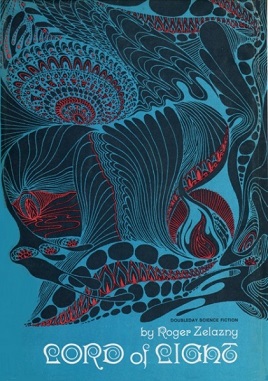
Does the darker atmosphere make it more viable in today's market or does the constant presence of sorcery and mage stuff make it less viable? Both? Neither? Will it cross the same audiences as Martin's work? Or get relegated to a niche because one element overwhelms the other? When you look at typical fantasy, like Terry Brooks' Shannara series, which is unarguably successful from a sales perspective, does that make it better than Roger Zelazny's brilliant and beautifully-written Lord of Light, which is barely remembered?


I'm not particularly concerned about the sales or audience questions at this point, since my story is largely unwritten and, thus, can't be sold even if people wanted to buy it. It's just another of those theoretical questions that invade my brain and cause me to wonder about people's identity crises vis-a-vis their choice of media. Is it OK to be a prototypical "jock" and like fantasy? Or only Game of Thrones-type fantasy? Do those labels even apply anymore? I'm a diehard Michigan football fan who understands the 4-3 under (that's a defense) better than most football fans I've ever met. But I have a closet full of board games, the majority of which could typically be described as "geeky" (Descent, et al) because of their themes and styles. Does that make me the ideal "modern fantasy" consumer? Good thing I know several other people like me, I guess...