Showing posts with label history. Show all posts

Tuesday, April 25, 2023

It's all about the music, man


There's a certain gravitas that's often extended to historical films and TV series. It's often because they're depictions of actual events (or some approximation thereof) but it's also often a factor of the presentation. Most of them have elaborate sets, elaborate costumes, and are about people that carry themselves with some degree of haughtiness. You're frequently given the impression that you're watching something about Very Important People. In this respect, Chevalier is no different from any that have come before it. Indeed, given that it's about Joseph Bologne, who was a figure of fascination to the French nobility in the years just before the revolution of 1789, it almost couldn't be more self-important. The fact that Bologne is presented as supremely confident in himself and his own abilities further lends itself that room-filling presence. But the problem with a lot of them is that in their eagerness to spend money on setting and clothing, they often fall short in what I regard as the most important aspect of film (or almost any creative endeavor), which is storytelling. Chevalier, again, is no different.


Imagine yourself watching the BBCs Masterpiece Theatre. You're in the middle of I, Claudius or Bleak House and firmly in the fantasy land of the first century CE or the depredations of the 1890s. The problem is that this program is funded by the BBC, so if you were expecting some of the genuine excesses of the reign of the third emperor of Rome or how people actually lived (and mostly died) in a Dickens novel, you're going to be disappointed. There simply isn't the creative license to show things that are that up close and personal. Even worse, since they're trying to depict an historical period that many people are quite familiar with, there will be some level of restraint on what they feel they can do in the course of telling an interesting story. This is the pitfall that Chevalier entered and was unable to climb out of. We're presented with the character of Joseph Bologne, supremely talented musician, composer, and fencer within the first few minutes of the film... and that character never changes. There's basically no development whatsoever. You can say that he comes down from his cocky high of being the toast of the town to being just another supporter of the Rights of Man and the Citizen and you'd be right. But it's still the same person, post-personal shame of losing out on his most desired position in society and post-romantic tragedy of losing the one real love of his life. He is still the same Joseph and he never stops being the same Joseph. The story doesn't really carry us anywhere past the Wikipedia entry that tells you everything you need to know. The extent of the character's development could be told by suggesting that he is forced to confront his status as a Black man in the midst of racist France. But he knew that already and so did we from the first moments of the film. So, where did we go here?


Kelvin Harrison, Jr. does well in the title role, but he's restrained by a character that doesn't really allow him to be much than what he already is. It's starkly different from his much smaller role as Christian in Cyrano, who had to fully experience some range of emotion within a scene and not just express it because that scene says so. It felt like most of the characters were kind of slotted into their roles without much of a nod to really becoming something within them. Lucy Boynton demonstrates some of the conflict of Marie Antoinette as a fellow stranger-in-a-strange-land with Joseph, who then has to conform to society's general disdain for him, despite her status as queen. But Martin Csokas, formerly Guy of Guisignan in Kingdom of Heaven, is the same straightforward "bad guy who does bad things to leading lady" as he did in that film. It's a horrible thing to be typecast, but I guess it's work. In fact, the only character who seemed like she had agency within her own sphere was Nanon, Joseph's mother, played wonderfully by Ronke Adekoluejo. Whenever she was on screen, she was needling her son about his acceptance of his role in the White (and rich) man's world, but also supporting him in being who he was and wanted to be. That character felt genuine because it sounds like a genuine mother; trying to coax her son to be something more, but encouraging him to be himself, as well. That's a bit of an internal conflict, which is what made her human, whereas everyone felt like they were just playing the role of a human.


For all of its dynamic setting that, too, falls victim to the circumstance of being more encyclopedia entry than story. The film is told in a clearly American style, without any of the longer quiet shots or moodier approaches common to French films and which it really might have benefited from. It's framed, of course, by the advent of one of the most turbulent revolutions in modern history, but it takes that highly complex and varied setting and reduces it to its most basic elements that carry little of the trauma or tragedy of the situation as a whole. Indeed, the most poignant moment of the film might have been the caption at the end that mentioned that Napoleon restored slavery in the French colonies and outlawed Joseph's music, which is why so little of it is heard today, despite its obvious quality. That, of course, has to be emphasized, since Joseph's music is heard throughout the film and really does well to carry it across some of its more obviously-delivered dramatic moments. The whole time, I felt like I wanted a film that lived up to the majesty of the score that was supporting it. I wanted more story, more emotion, more character, more something that would push this from Masterpiece Theatre to a film that I wanted to see in an actual theater... which, y'know, I did so I guess I was still just wanting something that lived up to the setting? Again, like Air, I'm not meaning to trash it. It's not a bad film. It's just not what serves its very proud and talented namesake. Oh, and the concept of Mozart being offended by someone challenging him on stage is kind of ridiculous. Mozart was an inveterate showoff and being confronted by someone just like him would have only made him that much more enthusiastic. You might have gotten a better story out of just the two of them dueling with violins.

Friday, December 8, 2017

Knightfail


I finally caught up with Vikings and have been watching it in real time (Ewww! Commercials?) along with everyone else. More on that below. But today I wanted to ramble a little bit about the History Channel's new show, Knightfall. I'm a day late, but maybe some of you still haven't seen it. After reading this, you may not want to.

Knightfall is about the Knights Templar; a monastic order founded in the 12th century to protect and assist Christian pilgrims on the trail to the Holy Land after the Crusades had been initiated and the various Christian states had emerged in the Levant. Their official name is The Poor Fellow-Soldiers of Christ and of the Temple of Solomon. Over time, they became known as the Knights of the Temple or simply Templars, in the same way that the similar Order of Knights of the Hospital of St. John of Jerusalem became known as the Hospitallers. Nicknames are far from a modern invention. The Templars were a warrior order and one of the more effective fighting forces on the Christian side during the two centuries that it took the Muslims to expel the Europeans from the region. That being said, they were still a monastic order, which meant that they lived like monks often did, spending a lot of time at prayer and taking vows of poverty (they are the "Poor Fellows"), chastity, and so forth. It's the poverty angle that usually comes up in any historical discussion about them.


Since they were on the leading edge against the infidels, they became a favored charity inside the church (Saint Bernard of Clairvaux was their most prominent advocate) and received not only money but businesses and land (i.e. wealth.) With the rapid growth of their order, the actual warriors soon became a relatively small fraction of the whole organization and they designed an early method of banking, where pilgrims could leave their money at a Templar fortress in Europe, travel to the Holy Land with a letter of credit, and receive the same sum from a fortress in Jerusalem or Acre or wherever they ended up. The purpose of the organization soon became money management, rather than bringing the word (and sword) of God to the infidel. This ramped up when the Crusader states were destroyed and the Templars returned to Europe without much else to do. In the end, they became a primary lender to various monarchs, most notably Philip IV of France, whose own activities following on the heels of his father, Philip III, had plunged the state into debt and who went to the Templars to get a bailout. All good so far?

OK. So here's where we get to the show, somewhere around 1306. Instead of, say, doing a show like Vikings, where the founding of the order is displayed and we see the daily struggles, battles, and politics of the Levant in the Crusader era; or simply a show just about the extremely complex politics surrounding the post-Acre period in France and the order's eventual destruction, the driving plot element for our main characters at the center of those political machinations is... the Holy Grail.


Yes. That Holy Grail. With the magic and the healing and the voices booming down from the heavens and yadda, yadda, yadda. So, Vikings took a few figures from legend and many from the historical record, most prominently Ragnar Lodbrok, and has successfully woven it into a fairly accurate portrayal of history (There's that word.). Knightfall, OTOH, is taking a well-documented segment of that same historical record and weaving a legend into it that doesn't become prominent for another couple hundred years and then has more to do with silly English knnnniggets than a monastic order. The Grail was first mentioned in a poem in Flanders in the 12th century, but it was regarded as a work of fiction and it didn't have any of the trappings of being the cup of Christ or anything like that. All of that came later when someone thought it'd be a cool spin. In short, the Templars had absolutely zero to do with it and riding that horse means veering away from the quite interesting story of the Templars themselves and into Dan Brown Da Vinci Code stuff which just detracts from the whole picture. In the first episode, we already have the secret compartment in the sword of Godfrey with the gemstone that was somehow carved years ago to indicate that the Grail had made it to France. This is like the goofy side of Indiana Jones, where objects of extreme veneration and surrounded by ancient cities filled with devout believers are placed in rooms that are so dangerous that no one would ever go in there to worship the deity in question. Similarly, no one would "hide" the location of the grail by carving a gemstone to reveal the first clue in the puzzle unless they wanted said gemstone to be a plot device in a TV show. Try finding evidence of that in your nearest medieval epic.


That's pulp adventure stuff, which is absolutely fine if that's what you want. I love Raiders of the Lost Ark. It's a great film. But there are also no illusions about what it is: an adventure film, as opposed to a TV series that is ostensibly about the Knights Templar, but seems intent on sidelining much of their interesting and complex history (there's that word again) for magical fireworks. They're not doing the Templars. They're doing King Arthur and calling it the Knights Templar. Seriously, we already have our Perceval (Bobby Schofield; young lad, innocent, true believer, not jaded) and our Lancelot. They call him "Landry" (Tom Cullen) but that was probably a writing room goof: "This guy, the not-quite-leader, best warrior, we'll call him Lannnn... dry. Yeah." How do I know he's Lancelot? Because the devoted monk is breaking his vows of chastity in the most spectacular way possible by screwing the king's wife!


Really? This is how we explain the eventual decision by Philip to exterminate the Templars, not because he was a right bastard and figured that rubbing out his lenders was better than actually paying his debts (they didn't call him the "Iron King" for nothing; of course, some people also called him "the Fair"...) but because he's going to be mad that his wife is screwing his best friend? As soon as Merlin walks in with a prophecy, we should be good to go, yeah? The problem with the story of the Templars is the same one that afflicted the samurai in the later Shogunate era: with no enemy to fight (or at least, the lack of will to do so), the warrior class reverts to other activities. The Templars became bankers that prayed a lot. The samurai became clerks and bureaucrats who carried swords. Both groups tried to maintain the very martial and focused outlook that their original role demanded, but it became impossible. The Hospitallers became little more than pirates in their waning days, for that matter. I think that's enough story material to drive the series forward without invoking the Arthurian legend in ways large or small.

Plus, there's way too much of this "knight in shining armor" stuff. No one walks around in plate armor. It's heavy and uncomfortable and you certainly don't keep it on your horse if you're hurrying into the countryside at the last minute. There's no way your horse would have been armored like that in the middle of Paris, so why should you grab it from the stable in full plate regalia? But then when the moment comes to display just why the Templars were so feared, they dropped the ball. The Knights were prominent in the Levant because wearing that much metal made them the medieval equivalent of a tank. They would charge, shatter lines, and then the infantry would clean up. This was showed to decent effect during the siege of Acre scene at the beginning. But when they rush out of Paris to save the Jews, they come down the road on the flank of the mercenaries. That's a prime target. Take the charge and the mercs won't even have time to turn their spears properly. That's an easy win. Instead, they ride around to the front of the enemy's formation (i.e. its strongest point) and dismount. Za? You're knights. The word goes back to the equestrian order of the Romans. Your advantage is that you're on horseback. But you decide to abandon that advantage and slug it out on the ground. OK.


None of the performances stuck out in any marked way. There's no interesting character like Ragnar or quirky character like Floki or even frustrated, simmering character like Rollo. Lance- uh, Landry is simmering in frustration, but it's so drowned in angst that it's hard to be sympathetic. Plus, he's decided to relieve some stress by shacking up with Joan of Navarre. The real Joan was reportedly a highly intelligent and shrewd woman, so it's a natural fit if the showrunners wanted a strong female character. But the real Joan had also grown up with Philip and they were very fond of each other, in contrast to many other medieval marriages. But I could live with all of that. I could live with the "love interest" routine and the need for sex in a "mature" series and so forth. It's all good. Maybe Joan of Navarre was getting horizontal with the master of the Templars. But all of those little failings pale in significance to the fact that the series is going to be driven forward by the chase for the magic chalice. They chose... poorly. I'll probably watch the second episode just to see what happens, but it's not likely I'll go past that.

*                 *                *


On Vikings, I thought they did really well with a lot of the time compression and the eventual introduction of the Great Heathen Army. It remained interesting and Ragnar's constant, driving need for glory and legacy was a very human motivation that made waves for everyone around him. I thought that Floki's realization in Algeciras that the Muslims were ignoring the invaders because of their devotion to their god and the practice of their religion was a highlight of the whole series; a very moving moment. The first couple episodes of season 5 have been a little rocky. I think everyone- cast, writer, and fans -knew that it was going to be difficult to replace the energy not just of Ragnar, but Travis Fimmel and the void is definitely there. Neither Lagertha, Bjorn, Harald, or Ivar can be the central focus that Ragnar/Fimmel was. None of the other actors have that charisma and writer, Michael Hirst, has taken advantage of that void to present all of those people striving to fill the gap that Ragnar left them. It's much easier to do method when a change in production basically demands it. The one exception is Floki. His travels to and around Iceland have been interesting and have carried a lot of subtle excitement and emotion. I don't think Vikings will ever carry the weight and quality that other legendary shows have. I'm watching not because I'm fascinated by the story or the people playing it, but because I already know the story and I'm interested to see it brought to life on the screen.

Anyway, next I'll return to Westworld. Yes, I've finally gotten through the majority of it and I might as well put down some perspective before the new season arrives in the new year. There's no guarantee I'll actually watch the new season, but I'll get to that next time.

Monday, January 23, 2017

Catching up with the past


In addition to Westworld (which, yes, I will get back to at some point. I've watched the third episode, but Tricia and I have been watching most series together and we've been kind of distracted by house things and it's a measure of interest generated by any particular show as to how quickly she falls asleep while trying to watch it. Orange is the New Black? No problem sitting through three or four episodes. Westworld... eh.), I recently started watching Vikings, which has been heralded by the history geeks on the board for years now. I was hesitant to get into it for a couple reasons. First off, my tolerance for dramatized history is fairly low. Being a nerd, I know the reality of a lot of what I'm watching and, thus, don't often have the fascination with it like I would for a new story. I've kinda seen it before, so when deviations are added for the sake of story, it's a little jarring and then I start poking holes in things and it just gets muddled. A lot of people I know rave about HBO's Rome as one of the best things ever. I did enjoy it, but I also thought it was adding a lot of soap opera drama for a story that was already pretty exciting (see: William Shakespeare, if not The Gallic Wars.) In terms of historical dramas, I thought Deadwood was vastly superior and I enjoy Roman history much more than the American West.

Secondly: History Channel. I get that they have to produce what sells and that their audience is probably largely made up of nominal Trump voters who enjoy endless retakes on Vietnam and other manifestations of the Cold War, but they've already created an American Heroes channel. Isn't that enough? Every depiction of history is going to have an implicit agenda, but I stopped watching the History channel years ago because I really tired of the often-ridiculously Americanized aspect to it. Howevah, I had a day off and finally started watching some Vikings.


That phrase has some odd implications. It's like being a 9th-century monk in some monastery on the coast of the North Sea whose previous goal in life was observing the habits of Northern Lapwings. "The Bloodythroated Savages began their migration today. The local field was quite literally aflame with their presence." And, of course, the opening scene to the first episode is exactly that, showing Ragnar (Travis Fimmel) and brother, Rollo (Clive Standen), slaughtering the natives somewhere in what is presumably a narrowly-successful raid, since they seem to be the only survivors. Can two people guide a longboat back across the sea? Guess we'll find out. It's a bit too early in the timeline for them to be the Danish invaders/settlers on the British east coast.


But then we drop right back into wherever Ragnar and Co. are originating from ("Scandinavia") and get a good dose of the culture surrounding them. I thought that was a great way to start, especially since they spent a fair amount of time on the Thing, the tribal council that somewhat influences Earl Haraldson's (Gabriel Byrne) thinking. It's about as effective in that respect as our own modern Congress will be in the next four years, but it at least conveys some of the differences in Viking thought from, say, Western European serfdom. Speaking of Byrne, I was at first excited to see that he was present, since I'm a fan of a lot of his work, and the presentation of some past tragedy involving his sons was at least the foundation of a motivation that gives him more depth than the usual Sauron-style bad guy ("I am mean and angry... because I am mean and angry! Arrrrrrr!") However, fairly soon, it felt to me like Byrne was kind of slumming it for a paycheck in that there was nothing particularly compelling about his character. It was a nice Denethor moment (speaking of Sauron; the LotR references will be plentiful here, given the foundation for much of Tolkien's work) when he was warning Ragnar to keep his wild ideas to himself, though.

Most of the other actors do well enough in their parts. Some of them shaded a bit toward the trite side; Lagertha (Katheryn Winnick) having to flex her shieldmaiden muscle and Floki (Gustaf Skarsgård) being the prototypical "mad scientist" shipbuilder who will enable Ragnar to follow his dream like his namesake of legend (and possibly history.) But you can forgive some of that for the level of production involved and the writers trying to clue people in to both the history and the drama, simultaneously, because they know there are nerds out there like me who will be spot-checking.


So, altogether, pretty worthwhile. I'm mildly fascinated by that period of history (as with so many others) mostly because of the aforementioned migratory patterns of the tribes and civilizations of that era and the impact that they had. I don't know that I'll be checking back in regularly on it in this space, since I'm not sure what kind of progress I'll make. New seasons of regular stuff like House of Cards and GoT aren't that far off. And, yes, I'm trying to finish Westworld. But I thought it was worth a mention and perhaps I'll see if I can get on board with all the other sunstone compass followers.

Friday, April 5, 2013

History and culture

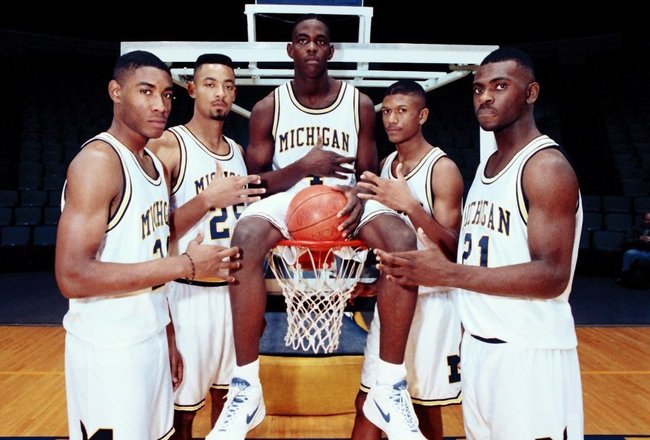
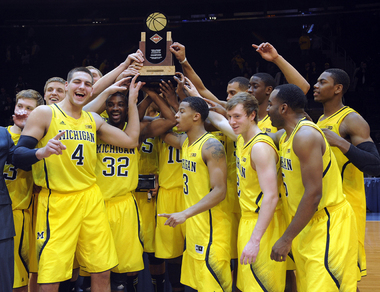
The Fab Five, an ESPN documentary about the Michigan Wolverines basketball team of the same name, is playing again tonight on ESPN2. It was first released in 2011 and is the highest-rated ESPN film ever made. That alone might be sufficient for ESPN to be willing to show it again; especially during tournament season. But it is, of course, being rebroadcast tonight because Michigan is back in the Final Four of the men's tournament for the first time since the Fab Five's second season at Michigan.


When I it was first released, I loved it. It was a great trip down memory lane to a time when I was a couple years out of  Michigan (we had won the title with Rice, Vaught, Robinson, Mills, and Co. in my junior year) and it took time to tell the side of the story that few people focus on relative to that team, but which has come into sharp relief in the past two decades with the evergrowing pile of money that has subsumed college sports and phenomena like the Ed O'Bannon lawsuit. It also mentions the cultural impact that the team had and continues to have on the college game and America's perception of it, in which young, black men "dared" to be themselves rather than the public's self-centered idea of what they "should" be.

On the arrogant Michigan fan side, I enjoy the fact that the current team has reawakened the national following that Michigan sports often enjoys. After all, ESPN isn't broadcasting material about Louisville or Syracuse or Wichita St. because there really isn't any. Michigan has the largest living alumni base in the world and a fanbase many times larger. If there's any way to get advertisers to respond, you troll for that audience. However, it's also nice to know that there's still a certain cachet amongst Michigan athletics that creates that kind of furor. After all, the current team is also replete with starting freshmen and has become one of the more stylish of the tournament contenders because of the brilliant play of its point guard, Trey Burke, and its starting (freshman) center, Mitch McGary. The team plays exciting basketball and the larger fanbase of the game itself tends to respond to that.


Winning games in remarkable fashion doesn't hurt that cause any, either.


On the other hand, I find myself unable to watch the entire documentary because the memories it brings up are quite painful ones, as a fan. The excitement of the initial Fab Five run took a heavy hit when the team was hammered by Duke in the first title game and the missed opportunity of the second, when we were the vastly superior team to North Carolina, makes it that much worse. Combine that with the aftereffects of that team, which doomed the basketball program to a decade of mediocrity or worse from 1998 to 2008 and the shine comes off pretty quickly. To its credit, the documentary both doesn't shy away from that topic and also dares to ask questions about the presumed conclusive nature of much of it (Mitch Albom questioning the thousands of dollars allegedly given to Webber when his family lived quite modestly was the most salient point.)

But the most interesting aspect of the current team is that, while the Fab Five had enormous impact on the cosmetic culture of the game, the current team is silently providing veracity to a perception about B1G basketball. Simply as a fan of the game, it's enlivening to me to see the team that plays the furthest thing from the glorified rugby that is Big 10 conference play be the sole representative for the conference in the tourney's final rounds. Separated from B1G officiating, much of the conference often flames out in the first weekend. Michigan, on the other hand, has never looked better this season.

Here's hoping for a different end to this trip to the finals.

Wednesday, January 23, 2013

It's like it really happened!

One of Caelus' This Day in History posts on the board recently mentioned Edward II of England and that quickly invoked the topic of Braveheart to those of us who are historically-inclined. While not a great film (Oscar winner or no), I continue to think Braveheart was a very good film almost solely for its cinematic qualities and cultural effects; the latter of which demonstrated how some degree of ignorance about history can sometimes generate a greater response than the actual facts.

It had been some time since a film had created the kind of mass battle effects that Braveheart displayed and which have now become virtually routine in historical and fantasy films (or those that combine the two, like this one.) On the one hand, that generated some veracity street cred right away. Gibson showed the effects of mass combat, morale, the chaos that frequently embodied such events in the Middle Ages (as opposed to ancient combats involving Roman armies; let's not get started on the idiocy of Gladiator...), and the rather brutal results. On the other hand, it was the history of the battles themselves where the movie most often went awry.

First off, the Scots didn't win any fights on an open field, precisely because of the threat of heavy cavalry and the always superior numbers of their southern oppressors. The initial battle of the film, referred to as "Stirling" was actually that of Stirling Bridge, wherein the Scots hung out on the opposite side of the bridge from the English until the latter crossed, piecemeal, and began forming up their lines. Like any good guerrilla commander, Wallace chose that moment to defy propriety and decided not to let the superior force get good and ready. Pushed up against the river, the English scattered and fled. As much as it might have made good cinema for Gibson to suggest that the Scots had developed one of the two key elements that reduced the power of the mounted knight (pike formations, most famously wielded by the Swiss; the other being gunpowder), it's a bit hard to swallow, given that word about those kinds of things does tend to get around. Yes, I realize that the English didn't realize the Renaissance was happening until a century after it was over, but stories about things like military surprises not only travel but tend to grow in the telling, as opposed to tales of Italian paintings. Suggesting that such a dramatic victory could have occurred and not been recorded by someone (especially, say, those Irish monks who "saved" Western civilization) is testing the limits of reason pretty hard.

Or is it?


History, as they say, is written by the winners. This is the central conceit of Gibson's film, in that it purports to give the "true" story of William Wallace that was covered up by the English for centuries in order to prevent the inspiration of the Scottish people. Consequently, massive victories by Wallace were supposedly changed in the historical record to make him seem like more of a bandit than a wartime hero. Of course, one person's bandit is often another's wartime hero and there's no shortage of situations in which the above maxim about the historical record is plainly obvious. Take the War of the Pacific in the 40s. It's almost universally presented as a war of response to unfounded Japanese aggression and it's certainly true that the martial character of the post-shogunate Japanese state certainly encouraged that kind of aggression. However, what drew Japan into conflict with the United States (against its greatest admiral's inclination, but not dramatized and dire warnings) was the fact that the latter was conducting a trade war against a nation that has always been desperate for natural resources, in addition to sovereignty-violating impositions like the Washington Naval Treaty of 1922. Few people talk about that because its easier to simply imagine that the Japanese were evil.

So, is it beyond the realm of reason to think that Wallace's time on earth may have been closer to Gibson's Hollywood version? No, it's not. But it's still pretty unlikely. To his credit, Gibson has never said anything about the film other than it made a great story. He also deserves credit for one of the greatest Oscar quotes ever made. But what really makes the film interesting is the impact that its fantastical story had on Scottish culture and the national attitude, in general. Following the film's release, there was an upsurge in Scottish nationalism and greater discussion of national identity. The Scots began pressing London to fulfill longstanding promises for greater autonomy. This was the final leg being kicked from the stool of the British Empire and it was caused by a movie. Said movie also resulted in the only extant statue of Mel Gibson known to exist:


I mean, sure, it's supposed to be William Wallace but, uh, I got news for you: among the many, many historical errors or outright fantasies presented in the film, one of the most prominent is that they had men running around in skirts. Kilts are a 19th-century faux "tradition" that supposedly hearkens back to the days of the Picts. It was created during another surge of Scottish nationalism that didn't make it very far. During the time of Wallace, men mostly wore what they wear now: jorts.


Or pants, actually. Even the title of the film actually referred to Robert the Bruce, who's presented as a conflicted bad guy that has to learn about leadership from Wallace.

Interestingly, that same Scottish nationalism is so obvious to most that pay attention to politics on the other side of the pond and/or the EPL that it struck me as utterly distorted in the latest James Bond film, Skyfall. While it was a generally good Bond film and was the proper follow-up to Casino Royale in place of the utterly forgettable Quantum of Solace, at one point, they're ostensibly testing Bond's mental state and decide to do some word association. The doctor says "Country" and Bond responds with "England." First off, as an officer of MI6, he's serving the crown or Great Britain, not England. Furthermore, the second half of the film is spent emphasizing Bond's origins... in Scotland. I think it's a pretty safe bet that no Scot would respond with "England" to any word association trigger other than "Detestable."

What many Scots would gladly do to Windsor Castle
One final note on Braveheart is that it has to be acknowledged that Patrick McGoohan was absolutely brilliant in his depiction of Edward I, the Longshanks:


although, again, it's mildly ridiculous that they refer to Edward as "a cruel pagan", given that he was not only Christian but participated in the Crusades. If they really wanted to emphasize how cruel he supposedly was, they'd have shown him breaking the will of the Welsh where, in at least one instance, he refused the surrender of a Welsh castle in order to test out his new toy from the Continent: a trebuchet. But no one can pronounce the names of any Welsh national heroes, so...

Wednesday, February 15, 2012

"The Catholic Church is not a democracy."

These were the words posted on the board in response to this poll, which indicates that 61% of Catholics in the US support the idea of mandatory coverage of contraception in insurance plans provided by religiously-affiliated employers. I'm sure you've heard about the controversy, since it's been rebounding from the walls of the newsosphere for the past couple weeks. The opinion proffered by the title comment was that it didn't matter that the majority of US Catholics supported the idea. The Church is against it and the Church is not a democracy, so people will just have to suck it up and live with medieval philosophy for a while longer. A quick response was that it was too bad for the Church, because the US is a democracy. In a democracy, we don't cotton to the idea of a bunch of old, rich, white men making decisions about what happens with women's bodies without even consulting the women.

Anti-abortion bill signing, because all of them are worried about being forced to have one.

Oh. Right.

What I always find amusing is the ability for the same people who regularly rant about "government control infringing upon our freedoms" to instantly accede to the idea that "the Church is against it, therefore we must obey." This isn't even a case of drawing some barely contextual example from the Bible to "prove" that "God said so!". This is following a dictate set down by a bunch of guys who are extrapolating from that presumed word of God and giving it their own shine (in the same way that a lot of people like to extrapolate from the Constitution... but let's get back to that later.) "Go forth and multiply" becomes "Thou shalt never not run the risk of having kids if thou art performing the evil, evil deed that God intended thou perform to have kids." And that's it. They said, therefore everyone must follow. This is the same institution that used to pressure scientists to not talk about things that contravened Church opinions, even though those discoveries soon were proved true and are accepted by everyone today. But most of those, of course, were about physical phenomena and this issue is about social engineering, which has always been more important to the proponents of organized religion.

Much of said engineering occurs on the strength of one idea: the Pope is the direct conduit to God. Everything the Pope says is what God says. Even the councils to choose the next Pope must be divinely inspired (omniscient and omnipotent, remember?) because that's how they got the right guy, of course. Believe what you'd like to believe, but it stretches credulity for intelligent humans in this day and age to completely subsume themselves in the concept that someone can be a regular, pious individual one moment and be speaking the Word of God in the next; especially in a day and age when the Church is losing members. It's as if they feel like they're in an arms race with other religions and everyone has to do their part. Repeatedly. And without end. The arms just happen to be human and most have two of them (the concern over the loss of "cherished cultures" as a consequence of low birth rates (in comparison to less cherished (i.e. non-white) cultures) has been prevalent for some time.)

In the end, it's hard to escape the idea that this is all really about sex, as opposed to the sanctity of human life and/or associated organisms.


Sin of Onan and all that. The funny thing about that skit is the line in the song where he says that "Catholics will take you as soon as you're warm", when most know that the anti-choice movement in the US is far more concerned about human life when its connected to an umbilical cord and for not one second after that cord is cut (especially if you're not, you know, white...)

There are two things that humans in general and men in specific like to do: screw and kill each other. Given the choice, most would prefer the former. Why that's always been a problem for organized religion is enough to fill a couple dozen more posts but let's let it rest with the idea that if people favor "earthly pleasures" over "serving God (and especially the Church!)", many think that religion kinda loses its verve. While humans have proved at times that they're fully capable of engaging in multiple pursuits with abandon, monotheism is monotheism for a reason. If you piss off the one God, you can't go running to another like Taygete (even though she didn't really anger Zeus; it was all about the sex (again!)) Therefore, sex should be about procreation and it's enjoyable because you should be multiplying. If you take away the threat of procreation, it's just enjoyable and you forget about serving God. See how easy? And you don't even have to get into that whole conflict of interest wherein a desire for sex may preclude you from killing each other or, preferably, those the Church would have you kill. That's too complicated. Deus vult!

Friday, October 7, 2011

Restraint

So, it's been a while. I wanted to keep up with this on a regular basis, but I've been restrained. The restraints have been physical and mental. A lack of ability in some cases, but largely a lack of motivation or energy. Some have been self-imposed; others, not. But restraint comes in all kinds of forms...

I look out on the Occupy Wall Street (Chicago, LA, ad infinitum) demonstrations and I am both encouraged and dismayed (dichotomy, anyone?) I am encouraged because I see people finally following outrage with action. As much as the presumably cynical and worldly types like to express their worldly cynicism with a haughty disdain over the 'fact' that 'someone is always protesting something', the actual fact that people are actually in the streets at this moment is something that is all too rare in this day and age. But I am dismayed because my initial reaction to those demonstrations is that they are too passive and they will too easily become part of the background noise that is Somnolent America.

When I think of our current circumstances, what I want to say is this:

Let every dirty, lousy tramp arm himself with a revolver or knife on the steps of the palace of the rich and stab or shoot their owners as they come out. Let us kill them without mercy, and let it be a war of extermination and without pity.

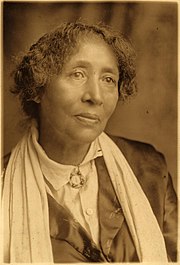
That was Lucy Parsons, who was intimately familiar with the lack of mercy and pity from the owning class. Thus, why not respond in kind? My response to the whine of: "You're talking about class warrrrrr!" has always been: "You're damn right. It's been going on against the poor since time out of mind. It's about time we started talking about it." After all, if we can freely talk about race (kind of) in our free and open society (kind of), then why can't we talk about class? Because it doesn't exist? Or because it strikes too close to the bedrock truth of our free, open, and equitable (not even close) society? We have classes; always have, likely always will, and the rich, the owning class, has a disproportionate amount of power in our free and open (kind of) society. The only way to wrest power from the powerful ("Power concedes nothing without a demand. - Frederick Douglass) has typically been by violence. After all, when one's entire society is based on the primacy of property and violence typically results in the abduction and/or destruction of said property, the people who own it tend to get a little nervous. Nervous is good. Terrified might be better. Compliant is the real goal.

The problem with compelling compliance through violence is that the people who often end up dying as a consequence of said violence are the 99%, as it were. It would be nice if we could all storm the Bastille again and watch the landholders flee the country, but they've figured out that being part of the owning class also means that they own most of the guns and the people that have access to them. Not that parallels to 1789 are completely absent:


Some people will always be oblivious, even if they don't know how to spell "brioche".

My gut reaction that trends toward violence is a product of decades of frustration on this issue, even if I recognize its obvious drawbacks. Thus, if I were to exercise a degree of restraint, I'd more likely want to express something like this:


If, in the present chaotic and shameful struggle for existence, when organized society offers a premium on greed, cruelty, and deceit, men can be found who stand aloof and almost alone in their determination to work for good rather than gold, who suffer want and persecution rather than desert principle, who can bravely walk to the scaffold for the good they can do humanity, what may we expect from men when freed from the grinding necessity of selling the better part of themselves for bread?
That was also Lucy Parsons. Certainly, she was speaking of the potential of her own class, likely having already discarded the idea that anything genuinely good for society could come from the wealthy leeches that surmount it. But it's still a noble idea that one would like to think would compel people toward that compliance; that, indeed, society would be better, even for the wealthy, if more people had access to the time and resources that would allow them to express some of the potential within them. It hearkens back to what I often refer to as the "Henry Ford principle": Ford realized that if he wanted his company to truly grow and become a buttress of American society, he couldn't continue to build products that his own workers couldn't afford to buy. It took a long time and a lot of violence for him to come to that realization, but it did occur. I'd like to cut out both the time and the violence parts and weave me a flying carpet while you're at it, won't you?

That acknowledgement of the seeming need for restraint has a personal quality to it, as well. Marcus stressed the avoidance of negative emotions or actions. The expression of Stoicism in the face of difficult situations was meant to be the perfect example of the nobility of the human spirit. The ability to stand against daunting odds without lashing out should be seen as an example of how to resist and effect change without bloodshed. King thought this and eventually won. But that was 50 years ago and the owning class has learned (witness even now the implicit derision of the media toward the Occupy gatherings.) Brother Malcolm may have been ahead of his time in stating his own preference for how to resist and demonstrate. Or was it simply a reversion to the tried and occasionally true method, acknowledging that the real problem of society, class not race, would never truly be affected? After all, when King shifted his emphasis from race to class, they killed him.

I'm hoping for a tipping point. I'm hoping that said point leads to a genuine acknowledgement of the problem. I'm hoping that leads to genuine change. I'm hoping it happens without too many people getting killed. Or am I?

Wednesday, June 29, 2011

Goebbels was right

The Newspaper of Record (there is some question as to whether that old nickname is even viable any longer) has printed a story about Governor Rick Scott (R-Florida) and his sinking approval numbers now that the public has gotten a good, hard look at his policies and methods. The implication is that those who elected the Tea Party candidate may not have known exactly what it is they were asking for. I think their focus is too narrow. This isn't a problem specific to Florida, nor is it a phenomenon that is recent. The Tea Party is simply an outgrowth of something that's been endemic to the American electorate for some time and has only increased as sources of misinformation have proliferated on the Interwebs: stupidity.

People are stupid. Always have been, always will be. Tell them something in a firm tone of voice and they're likely to initially believe it. Repeat that something over and over and they'll believe it even in the face of completely contrary evidence. Continue to repeat it and they'll often create spurious evidence in their own minds to reassure themselves that it's true. If they've been trained to distrust most institutions (or not had their interests served by said institutions and, thus, become frustrated with and opposed to them), all the better.

Most Tea Partiers that I've met, read, or listened to have not the first clue what they really want. They have a utopian notion of government/democracy/civil society that has been planted in their mind or that they have self-created and they're now attempting to pursue that with all the vigor of the righteous oppressed. The idea that Scott or people like him (such as Governor Scott Walker (R-Wisconsin)) are now plummeting in popularity because those who elected them have fallen for the bait-and-switch is preposterous. Those people handed the bait to Scott and Walker and told them to run with it until they found themselves in front of a touchscreen. Any momentary consideration of the effects of policies that begin with "get government out of our lives" would have led any mildly intelligent person to conclude that that might not be the best thing for a bunch of voters depending on things like Social Security and Medicare.

But most voters don't stop for that momentary consideration because they're not trained to think. They're trained to believe. And the first thing they'd like to believe is whatever someone tells them in a firm tone of voice. It certainly doesn't hurt if you happen to be reasonably attractive and are only spouting the same kind of misinformation that people have been lapping up for the past quarter-century, as well. Cue Sarah Palin...

Most Tea Partiers worship at the altar of the Blessed Reagan. The GOP and other right-wing sources have been spewing the line about Reagan being the greatest president since... well, since the so-called Founding Fathers really, because they can't say "greatest since Calvin Coolidge" because the latter led the country right into the Great Depression (despite occasional attempts by Republicans to lay the blame at the feet of FDR, who didn't take office until 3 years later.) They really can't say "greatest since Abraham Lincoln", either, since he committed the twin awful sins of both enforcing the rule of the federal government and espousing equality for those black people... No, they really have a tough time finding paragons of Republicanism to hearken back to other than Reagan (Nixon? Creator of the EPA and scion of Watergate?) so they just like to go ahead and name Reagan the greatest since, well, forever because they've been taught that he was the shining example of everything true Republicans/right-wingers should stand for: small government and low (or zero) taxes.

Of course, they seem to forget the fact that following the hallowed Economic Recovery Tax Act of 1981 (Google it), which created a tax cut of $264 billion and dropped the country into one of the most brutal recessions it had ever experienced, Reagan proceeded to raise taxes 11 times, beginning with the Tax Equity and Fiscal Responsibility Act of 1982 (Google it), which not only raised taxes but did so in a manner that didn't touch the top 5% of "earners" that Reagan and current politicians, both Republican and Democrat, so slavishly step-and-fetch for. Instead, it raised FICA taxes; that chunk that comes out of every one of your paychecks. Focus the cuts and spread the costs is, was, and shall always be the mantra of both the ruling class and the elected officials that serve them. Why? Because they can get away with it so long as idiots like those that make up the Tea Party and most of the electorate believe otherwise.

The Tea Party is a manifestation of the Republican Southern Strategy, writ large. The aforementioned Nixon used the Civil Rights Act of 1964 to divide the southern states against the Democratic party whose president (Johnson) had signed the Act. Of course, those same Democrats had been using that strategy to stay in power since Reconstruction, since it was the Republicans who had violated the "sovereign rights" of the southern states in the 19th century. The only way to keep rich white people in control of those states was to make poor white people think their lives were hard because of the poor black people. That's how you distract people long enough to convince them that voting for policies completely inimical to themselves and their wallets is somehow the right thing to do. That same strategy is at the root of the Tea Party phenomenon. The target is no longer solely poor black people since that kind of talk isn't acceptable in public any longer. Now it's just even poorer white people somehow getting rich (but staying poorer) from that evil faceless entity known as the Government, which has gotten out of control and exists only to keep the regular Poor White Man down. Don't worry. It only sounds stupid because it is. People accept this as a form of common wisdom because it's easier to believe that other, regular people are cheating the system, rather than that the system is designed and continually modified to be a way of keeping people in their place.

"If you tell a lie big enough and keep repeating it, people will eventually come to believe it." - Josef Goebbels. Would I dare to invoke Godwin's Law when talking about the Tea Party and the herd instinct amongst the American electorate? I sure would. After all, the historical similarities are self-evident and simply one more example of our electoral system being constructed on that most durable of political substances: bullshit.

Tuesday, May 31, 2011

Ethical-type substances

Now that the big news has broken in the college football world that the good Senator Tressel may not be as lily-white as his books proclaim (First page in the Manual: Cheaters win. For a while.), I thought I'd revisit the topic of ethics that I brushed past a few weeks ago on the new national holiday now known as Osama Got His day. (Just for the record, I never believed Tressel was as spotless as his true believers like to think. After all, I knew his name from Youngstown State.)

What exactly are the ethics of an assassination? Under the traditional rules of war, anything goes with regard to figures of strategic importance. In World War II, often referenced by half-assed liberals as "the last good war" (I won't even get into the concept of 'good war' here), the US had broken the Japanese codes and knew which plane Admiral Isoroku Yamamoto was going to be flying in and promptly ambushed it and shot it down; an assassination as sure as one from a single bullet but a wartime act against a soldier and, thus, more easily placed within the realm of 'ethical' combat.

Killing Osama bin Laden, in the midst of our perpetual war (cue Orwell) against an enemy that can come from anywhere and can be identified as anyone; whose status in life can change from "citizen" to "terrorist" to "combatant" to "enemy non-combatant" (my favorite) with the stroke of a key, ended up being just one more example of the plasticity of the ethical code that the US has long touted as what sets it apart from much of the rest of the world.

Big surprise, right? I mean, we're all cynics here. It just amuses me in the same way that watching people fervently believe in US presidential candidates does. After all, think about the killing of this man the next time that people are outraged when a US or allied VIP is killed in a random bombing. It's a horrible crime against humanity! But killing this unarmed guy is somehow 'justice'. On the contrary, a targeted assassination is just what it sounds like (and, incidentally, illegal under US law and multiple international treaties which the US is a signatory to, not least of them the Geneva Conventions), whether you use a SEAL team or and a gun or a block of plastique and a Honda. The phrase "don't stoop to their level" comes to mind.

"Oh, but it's not even the same!", you say. "After all, we just shot one guy who deserved it. They kill innocents with their bombs." In military parlance, innocents are often termed "collateral damage". I won't bore you with the endless stories about collateral damage that currently has the president (read: stooge) of Afghanistan making vague threats against the US as a consequence. Go find them.

Terrorists are often the neighbors of the collateral damage and it's said activity that frequently propels them into that life. Of course, there are still ethical questions even within the framework of terrorism. When the Baader-Meinhof/Red Faction group were active in Germany in the 70s, they committed a number of bombings; at least two that injured the very workers that they claimed to represent. There was, of course, outrage within the organization for having harmed the very people they were fighting for, even though the most notable occurrence was an attempt to assassinate the editor of a prominent German newspaper.

If the RAF or al-Qaeda had the ability to only kill their targets with their bombing attacks, one would think they would exercise said ability (which, incidentally, is not completely beyond the reach of many groups, since Hezbollah has proven to be very adept at this over the years.) After all, why kill or maim the very people you're trying to recruit/protect/serve/inspire? A reasonable person has to assume that some degree of ethical assessment goes into acts like this in the same way that the US government calculates what laws it's willing to break or principles it's willing to abandon to serve its masters' interests.

Of course, it's easier to simply assume that bin Laden and all of his associates are simply inhuman monsters because it's easier to fight and kill people when you dehumanize them. That's been a standard approach of warfare from time out of mind. So, did the inhuman monster deserve to die? Most people would insist that he did because of his supposed role as the planner of the World Trade Center attacks. After all, even though he was only indirectly responsible, the perspective of Nuremberg, that the planners are every bit as culpable as the doers, is still a popular and easily argued stance. It's only mildly hilarious to the historically obsessed among us that the very Conventions that the US has been serially violating for the past half century were written in response to the very acts that took place in the time period of the Good War and to which Nuremberg was the initial response. Irony is fun!

Again, did he deserve to die? I don't know. Does Larry Summers deserve to die for inflicting his economic ideology on the Baltic republics and Russia and indirectly (i.e. like bin Laden) causing what may be thousands of suicides and untold misery? (pleasesayyespleasesayyespleasesayyes) Where do personal ethics, national ethics, and the concept of justice meet? Do they meet? Does national interest trumps ethics or can it be one and the same, in the long-term? "Let every action aim solely for the common good..." Or is it simply impossible to be genuinely ethical in a "wartime" situation?

Let's back up a bit: When the Bill of Rights was first discussed and promoted by George Mason and later Madison and Jefferson, one of the key points that they referenced was "freedom from occupying armies", which became the third amendment that freed civilians from being forced to quarter troops in their homes. Part of that was motivated by people being tossed from their homes by the British in Boston during the revolution. But part of it was motivated by there being a distinction between wartime and peacetime. Most of the writers of the Constitution were very concerned about the concept of a standing army, as it not only represented a drain on resources, but also a government that always had the use of force within easy access. This concern (and confusion) was later eloquently expressed by Einstein, when he said: "You cannot simultaneously prevent and prepare for war."

However, since the end of World War 2, the US has been on a wartime footing and wartime economy, with the "war on terror" only the latest manifestation of the national policy that someone is always out to get us so we'd better be ready to shoot back (cue MacArthur). Does that mean wartime ethics are perpetual, as well? And what defines them? We've already seen the willingness of the US to evade the accepted 'rules' of war., but there's a more pervasive aspect than simply outrageous acts of violence. It's yet another example of the militarization of US society that has created an outlook where nothing can be sufficiently 'solved' without the use of guns; most often in the interest of economic influence or control in other nations (at home, of course, we just use old-fashioned bribery.)

If one decides that we are permanently at war, then any ethical constraints on behavior become that much weaker (after all, "things happen" in war) and the concept of a civilized society becomes that much more distant. If one decides that the previously acknowledged 'rules' of war are no longer applicable because this war is different, it just gets that much worse. So, where do ethics and, for that matter, civility actually come into play, not just in the bin Laden assassination, but US foreign policy in general?