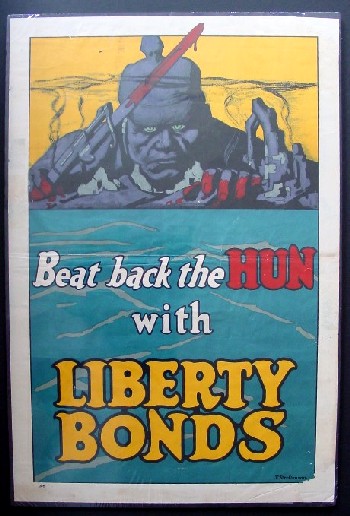
About halfway through yet another interminable fight scene, I knew that my prevailing thought about The Hobbit was going to be: "Oh God, make it stop." Alas, there was to be no divine intervention and I would have to wait through the whole thing. I'm seriously questioning whether I'm willing to sit through two more over the next couple years.
A suitable instrument for slow torture? Oh, yes...
When the project was first announced under the command of Guillermo del Toro, it was going to be one film. I think the idea was that del Toro would give his dark fantasy spin to what was originally intended to be a children's tale. Anyone who's seen Pan's Labyrinth would understand that such an approach is right up his proverbial demonic alley. Creative conflicts ensued and del Toro left the film. Peter Jackson, slated to be the producer, picked up the reins with his usual team of wife and friend (Fran Walsh and Philippa Boyens, respectively) and decided to make two films out of it. I understand the desire to do so, as The Hobbit is the foundation from which The Lord of the Rings and The Silmarillion (and mountains of backstory) would spring. There are brief mentions of things, like the Necromancer, in the book that wouldn't be appropriate to drop into a film, but could easily be expanded into their own segments. Hell, I wanted to see the White Council challenging the Necromancer. Why not? It sounds cool. We all know what it leads into in the later books. But I guess I still envisioned the Hobbit being a two-hour movie and then perhaps the Necromancer material being its own thing, because the book is only about 200 pages. There's not enough there to make an epic. And, of course, once some studio executive who'd never read it heard about all the footage that was shot and left in the editing room, I'm sure he immediately thought: "It'll be a SECOND trilogy just like the FIRST one!"
You guys don't look like you're enjoying the genius of this idea.
Except... well, it's not. The Hobbit was a fairy tale. Lord of the Rings was a genuinely epic story about cultural change and Christian mythology. I could sit through a trilogy of three-hour (or even four-hour) films drawn from the latter. The former is a single three-hour movie, at most. Stretching it in this fashion makes it tedious and that's exactly what this first offering was. Most of the scenes lost my interest after about a minute and they all lasted ten. I don't think Jackson realizes that while he's been off working on other projects, we've all been watching his extensive CGI and liberal use of circling helicopter shots over and over on TBS. We've been there and have the really expensive T-shirts to show for it. But The Hobbit is just more of the same; more and more and more of the same. Ian McKellen, reappearing as the constant Gandalf, actually had a little unintentional insight on the whole project early in the film when he mentions Radagast the Brown for the first time. He tells the group that the Istari are actually five wizards, including the two blue ones whose names he can't recall. He can't remember them because Tolkien didn't name them until his son collected his notes for Unfinished Tales and Jackson probably didn't want to bother explaining even more. But he really did name them in this film because I know their names: Exposition and Padding. They were the stars of the show.
First lesson of fiction writing: Avoid expository dialogue. Show your story. Don't have your characters tell it. But the meeting of the White Council in Rivendell was exactly that and this is the material that was added to the story. The four of them stand around for over five minutes of screen time, arguing over whether an evil knife means anything and giving everyone insight into how the Necromancer is really the Enemy (but maybe not really.) This scene goes nowhere and contributes nothing. It's precisely the kind of scene you'd put in if you were spoon-feeding your story to your audience because you don't know how to make it a story, rather than a Wikipedia article. People stood around and talked in Lincoln, but they were talking about big ideas that propelled the film. This was tedium disguised as backstory.
My sword actually glows blue from angst.
What makes it even worse is that the action scenes were no better. A chase through a cavern where people are falling? Sure. Moria. Been there. Running through the woods or over hills being chased by warg riders? Yep. The added scene in Two Towers. Seen it. Jackson was essentially ripping himself off for two-and-a-half hours. You could even recognize some of the same locations in New Zealand. And the action scenes not only wouldn't stop, but he had to add the extra moments of melodrama to make them even more grueling. Did we really need to see Thorin stalk off the burning tree in full righteous outrage to confront his "nemesis" that he'd met all of one time before? In the book, Azog was a detail, a snippet of Thorin's story that established him as a warrior who'd experienced some profound personal trauma (snd just as important to the story of Dain of the Iron Hills.) In the film, Azog is a cheap recurring villain with a motivation as thin as "See familiar dwarf. Kill."
By far, the best scene in the film is one of the two best scenes in the book: the riddle contest.
You were saying the director took too much time?
Andy Serkis once again does an excellent job of making the repellent and pathetic Gollum a highly entertaining character that the audience laughs with as much as they laugh at. I wrote the title of this review in that fashion because I almost fell asleep during the troll encounter, but I was wide awake and perfectly enchanted during the riddle scene, even though I know the riddles and the result by heart. This scene demonstrated that, once again, CGI doesn't have to be explosions. Even though Serkis' character is mostly generated, it was the dynamic between him and Martin Freeman that makes that scene come alive. Acting and dialogue makes a film work? Who'd'a thunk it? At the very least, I noticed that Serkis got a promotion for his efforts, as he appeared in the credits as the second unit director. And one has to at least credit Jackson for inserting the Wilhelm scream into the escape from the goblin kingdom. Freeman's Bilbo was solid for Freeman. He's an excellent actor and I love his Watson in the Sherlock TV series. But it wasn't solid for the Bilbo Baggins from the book, who is at least mildly neurotic and still quite frantic even at the end of the story during the Battle of Five Armies. Freeman just isn't a frantic person. He's too level-headed for that. So, while he makes a good lead and performs well, he's not what the story really calls for.
Perhaps the most telling moment of my experience was walking out of the film with the collection of 20-somethings around me. These are people who literally grew up with Jackson's Lord of the Rings movies so, in many ways, this is kind of their Star Wars prequels moment... with exactly the same result. They were as dismayed as I was because Jackson essentially abandoned his profound sense of story in the first trilogy for cheap melodrama and lots of explosions and blurred action in the second. This is why directors generally need to avoid material that they've mined before.
I was interested to see the film both because I love the books, I loved Jackson's LotR movies, and I honestly wanted to see the impact of the high frame rate on the audience. I didn't see the 3D version because I detest it as a marketing tool that does nothing but make people pay more for the same film and that's the version cited in the Gizmodo article as the source of the problem (and confirmed by more than one friend.) I can't say that I saw any real difference in visual quality and I certainly didn't dislike the film because my visual receptors were overloaded. I disliked it because it was bloody awful. If you want to experience the Hobbit, read the book again. You'll probably finish it before you could make it through the film (and you'll probably stay awake.)
Win the Internets for a day if you can tell me which band is referenced by the title without Googling. They were easily one of the most innovative groups of the 90s.
So, allow me to prove myself wrong almost immediately by having something occur to me that is not fiction, but is actually about fiction (Is fiction. Is not fiction...), since fantasy and SF seem to be hot items in the entertainment world these days (All those of us who've been fans for decades can finally roll our eyes once again at mainstream America in that respect: Yes. It was always cool.) But there's a bit of seeming hypocrisy present in the fantasy end of the genre and that's what I wanted to touch on because it directly affects what I'm working on from a viability standpoint.
Clearly, the hottest fantasy series out there right now is George R. R. Martin's A Song of Ice and Fire, known to many by the title of the HBO series, named after the first book, A Game of Thrones.
One of the most frequent comments I see about both the TV series and the books (as the vast majority of viewers seem to have become readers, much to the joy of Martin's bank account (and quite deservedly so; it's a strange world in which we live when a person's months or years of work can be bought for less than the price of a fast food lunch, but that's another post...)) is that Game of Thrones is appealing to them because the "fantasy" elements are largely left in the background. With the exception of one appearance by the Others in the first episode and the appearance of dragons in the finale and a couple minor bits along the way (zombies, the presence of the Wall, etc.), Martin's story is far more medieval power struggle than fantasy epic. Of course, since he largely based the series on the Wars of the Roses and Venetian clan conflicts, that's perhaps to be expected. I have grave news for those viewers who still aren't readers in that the fantasy elements tend to ramp up a bit in the second book (and, presumably, in the second season of the TV series, which begins this Sunday.) You'll see alchemists creating a fascimile of Greek fire, more evidence of the Others, shapeshifting assassins, Wildling mammoths, and a huge dose of mysticism in the mysterious city of Qarth. And, of course, the continued presence of flying, fire-breathing lizards. Will that same audience continue to be sucked in by Martin's brilliant characters and simply accept the emergence of the sorcery half of the typical sword-and-sorcery combo?
One of the interesting aspects to that declaration of the enjoyment of "non-fantasy fantasy" is the demeaning comparison to The Lord of the Rings. The latter is presented as the "too much magic" fantasy which Martin supposedly successfully avoids. The interesting thing about that is, if you read Tolkien's books, there really isn't that much typical fantasy involved, once you get past the very presence of elves, dwarves, and orcs. Take out the One Ring and that's short people and skinny people fighting bestial people, which could be propaganda in any number of wars throughout human history.
(Did I just imply that the uruk-hai were the misunderstood victims of politics? Oh, yes, I did.) The movies tended to add fantastical elements that really weren't present in the books (there is no on-camera telekinetic duel between Gandalf and Saruman, for example) but LotR is still considered the byword for something that real people wouldn't admit to reading or liking if they wanted to be accepted by mainstream America (despite the movies somehow raking in billions and several Oscars; I'm not getting into it...)
But the books are quite different. Tolkien used to harp on a concept he called "lore" more than anything else. The rings didn't actually do anything overt. You couldn't haul off and shoot fireballs with them. They simply enabled people to do other things. The elves built the scintillating forest realm of Lothlórien on the strength of one of the three rings. Sauron built the Barad-dûr on the strength of a ring that seemingly did nothing more fantastic than turning the wearer invisible. Nice for David Copperfield, but hardly something that would turn him into ruler of the world. But the "lore" behind it was what was important. It was the theme of Tolkien's story; his disdain for the modern world and its machine-like impulses (most prevalent in the pursuit of war) when the truer, deeper, more elevated impulses were those embodied by not humans: mostly elves. It was a longing for a time that had never been when confronted by a time that he really didn't care for (having been a participant in WWI and with his son an active participant in WWII while he was writing The Lord of the Rings.) The sword-and-sorcery fantasy in Tolkien's work is actually far more conceptual than what would produce big explosions on screen. But his work is now often derided because it is the foundation of modern fantasy and Martin's work, possessed of far more adult-oriented themes than much of Tolkien's work (savage murder by other humans as opposed to monsters, sex, overt politics (as opposed to the subtle themes of Minas Tirith), etc.), is given credit for being that much more "real", walking precisely the path that Tolkien so derided for being what it was. Tolkien wanted to be fantasy and is now derided for it. Martin's story is fantasy and will become even more overtly so once the dragons start contesting the world with the walking ice men, but is hailed for it.
Bringing this all around to what I'm doing: the prologue that I posted the other day is set in a world that is unapologetically fantasy, but not Tolkien fantasy. Magic is a constant presence but so is the presence of what Martin's books are often lauded for. For example, the pseudo-main character is a contract killer who happens to be of the class of people known as magi: those who can invoke powers beyond their world and use that energy to do fantastic things. But murder is a constant presence. So is the (supposedly) past element of slave trading. And labor rights. And the exploitation of the poor by the rich. And drugs. And, yes, "lore" in more of the Tolkien vein (or at least my interpretation of it.) It will be, in essence, both Tolkien and Martin taken to the Nth degree in many ways (except no dwarves or elves, sorry.)
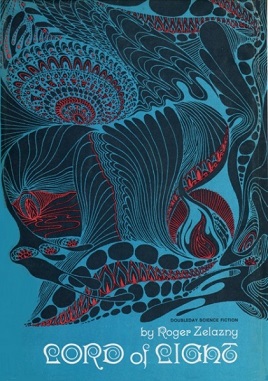
Does the darker atmosphere make it more viable in today's market or does the constant presence of sorcery and mage stuff make it less viable? Both? Neither? Will it cross the same audiences as Martin's work? Or get relegated to a niche because one element overwhelms the other? When you look at typical fantasy, like Terry Brooks' Shannara series, which is unarguably successful from a sales perspective, does that make it better than Roger Zelazny's brilliant and beautifully-written Lord of Light, which is barely remembered?
I'm not particularly concerned about the sales or audience questions at this point, since my story is largely unwritten and, thus, can't be sold even if people wanted to buy it. It's just another of those theoretical questions that invade my brain and cause me to wonder about people's identity crises vis-a-vis their choice of media. Is it OK to be a prototypical "jock" and like fantasy? Or only Game of Thrones-type fantasy? Do those labels even apply anymore? I'm a diehard Michigan football fan who understands the 4-3 under (that's a defense) better than most football fans I've ever met. But I have a closet full of board games, the majority of which could typically be described as "geeky" (Descent, et al) because of their themes and styles. Does that make me the ideal "modern fantasy" consumer? Good thing I know several other people like me, I guess...