Showing posts with label bloody brilliant. Show all posts

Thursday, January 25, 2024

American Truth


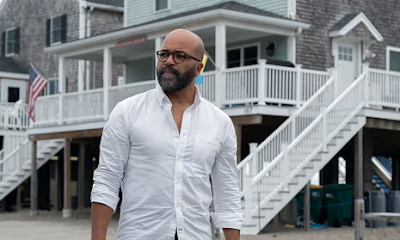
There are moments when various forms of media feel like they're speaking directly to you. The characters react the way that you'd react and the storyline follows something that's, to one degree or another, intimately familiar to you. That was the reaction that I had when watching American Fiction. It's not just that the main character Thelonious "Monk" Ellison (an excellent Jeffrey Wright) is a writer who can't seem to find his audience (been there, my whole life) or that the material that's produced around him seems like it's just serving the base interests of the public [waves hand in general direction of world] or that he thinks he knows better about what's actually worthwhile (ahem.) It's also that those perspectives make him feel separated from much of the world at large. That's an instinct that I've worked hard to curb in the last 15 years of my life, having recognized that you can't tell people what to like, so I think I'm a bit more social and a bit less judgmental than Monk is as presented in this story. But, man, did that story sing to me.


Monk is a novelist and instructor at a small college in California who objects to the success of the fiction written by African-Americans and lauded by White reviewers and publishers as emblematic of the "Black experience." To Monk, the Black experience is the American experience and he finds no value in feeding the preconceptions of the White audience, whether sympathetic or otherwise, with material like a competitor's "We's Lives in the Ghetto." Monk is in what is often referred to as "literary fiction" (which, y'know, excludes any of that petty "genre" stuff) but his work is so elevated that it ends up getting classified as Afro-American studies in local bookstores. When he gets encouraged to take a leave of absence and go visit his dysfunctional family (which he largely detests and avoids) in Boston, he begins running headlong into those antisocial tendencies and begins to discover the people he dismisses as beneath him as having intelligent opinions and perspectives of their own which inform their own "Black experience" that happens to be quite different from his.


From the very beginning, the characters felt genuine, which is always a key aspect of any film to me. If I'm watching roles that feel like they were solely aimed to push the message, rather than be real people who incidentally drove the theme of the film, I'm generally going to feel cheated (see: Don't Look Up and Leave the World Behind as pristine examples.) Even the side characters that are clearly there to be foils for Monk feel like they have the reactions of real people that are wholly believable (White angst and guilt, artificial salesmanship, etc.) Lorraine (Myra Lucretia Taylor), Monk's mother's housekeeper, is one of his grounding points in the general goodness of humanity. Despite all of the "family melodrama" (as Monk refers to it) surrounding his circumstances in Boston, when she decides to get married, it's a sign that life keeps proceeding, no matter how much you may think the world revolves around you and your problems. Those problems include his mother, Agnes (Leslie Uggams), losing her awareness of the surrounding world, but never quite losing awareness of what makes her children, especially Monk, special.
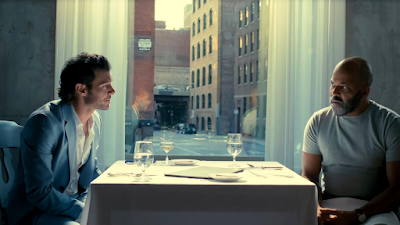

Part of that specialness is Wright, who is perfectly cast in the role. I can't think of another actor who could have presented the frustration, weariness, and biting intelligence of the character better than he did. It's appropriate that Percival Everett, who wrote the book Erasure, that the film is based upon chose the last name "Ellison" for the main character and his family based on other people that also bore that name: Harlan Ellison, famously caustic SF writer and essayist; Ralph Ellison, who wrote about social issues faced by Black people in America; and Sheila Ellison, who writes about parenting and familial relationships. All of those elements inhabit this character and the circumstances he's forced to confront and Wright excels at presenting a typically human reaction to them, while still driven by who and what the character is. He's nicely counterbalanced by his sister, Lisa (Tracee Ellis Ross), his brother Cliff (Sterling K. Brown), and the neighbor across the street, Coraline (Erika Alexander); all of whom present different perspectives on those circumstances, but also on their approach in trying to connect with Monk who, as with many driven people, often instinctively distrusts their attempts to do so (um... yeah.) There's a great moment when Agnes, fading in and out of awareness, mentions that she thinks the reason Monk is so miserable most of the time is that "Geniuses are lonely because they can't connect with the rest of us." I'm not going to be so arrogant as to label myself a "genius", but I've certainly felt that distance where most people just don't seem to see what I do.


Also, I absolutely loved the way they handled the ending. The alternate approaches not only mirror the difficulty of the writing process, but also showed just how people will often react to the conclusion of a story they're being told and whether they'll feel that it's appropriate (Hollywood happy ending!) or closer to reality (the final choice, which had me doubled over in laughter) or simply indeterminate; a lot like life ends up. That difference in perspective suffuses the film, especially in one key exchange between Monk and that rival, successful writer, Sintara Golden (Issa Rae.) When he bemoans the fact that the public and publishers "... aren't acknowledging our potential!", Sintara replies that "Potential is what people see when what's in front of them isn't good enough." It's a salient point about perspective, but it doesn't apply to this film, as it's more than good enough. It's the best thing I've seen this (Oscar) year.

Tuesday, October 17, 2023

Mastery of tension


We wanted to see Past Lives when we saw the trailer at the Michigan Theater, but it didn't end up meeting our usual schedule. I don't recall if it was because it simply wasn't showing on Tuesdays or if showtimes were too early for us to make it. I remember thinking that it looked at first glance like a standard "long lost relationship" story, but there was something subversively attractive about it that elevated it beyond what I would have normally dismissed as boilerplate. With the recent dearth of interesting films at the two theaters, we decided to take a chance on this one on Apple TV+ and I'm really glad we did, because it was anything but bog standard and is one of the better films we've seen this year.


There's an art to cinematic romance that goes beyond the dreamy quality that many people associate with it. It's not just about living out fantasies. Sometimes it's about dealing with the emotions that are known to all of us and inherent to the human condition. The ability to display that is an art in and of itself because many will associate those presentations with sappiness or "chick flicks", but when you can convey real anguish and uncertainty and restraint, it creates a tension on the screen that is the essential hallmark of storytelling. It's what keeps your viewer glued to the screen. They want to find out what happens next, whether it's the predictable (Love conquers all!) or the not so much (Real life...) This film has that tension from beginning to end. From the moment we first see 12-year-old Nora (Greta Lee) and Hae Sung (Teo Yoo), we can feel the bond between them and their desire to immerse themselves completely in it. But we can also feel the restraint (the uncertainty of youth; the conflicting paths of life; the attachments to others) that they have to exercise to keep themselves from engaging in that deepest desire. It's a difficult task to sell that tension without overselling it to the point of melodrama and both Lee and Yoo, as well as writer-director, Celine Song, pull it off with aplomb.


Indeed, some of the best moments of the film are those without dialogue or obvious action, but which are instead simply studies of the two leads as their faces betray everything they want and everything they're containing as they try to navigate their changing circumstances from 12 to 24 to 36. I've often said that visual storytelling is often a lost art in modern filmmaking but Song's pacing and direction have it down. That extends to the sets and costuming, as well. There's nothing overly remarkable about any of the backgrounds or apartments or restaurants. They all seem everyday and normal because this situation is also everyday and normal, but no less important for being so. Nothing that you see detracts from the focus on the characters and the emotions that they're alternately struggling to contain and desperate to express. It's an extraordinary feeling when you can understand why it would be gratifying to some degree to see these two people finally get to interact in the way that they both want, but would also be a hindrance to the telling of a genuinely good story if they tipped over that edge. Again, that tension is what separates the film from the bog standard and it had to be maintained. The fact that much of the story was drawn from Song's own life probably made it that much easier to tell.


Some mention also has to go to Nora's husband, Arthur, played by John Magaro, who some might consider the truly tragic character in this drama, as he's the innocent bystander in this drawn out collision. He cogently identifies himself as the "White bad guy" in this romantic scenario when all he's trying to do is continue to love the woman that he's been married to for a decade. You feel for him at least as much as the two leads for knowing that his wife may still be bonded at the soul, as it were, to another person. But she also points out that she made the choice to have this life and she's choosing to spend it with him. It's that choice that kept Nora and Hae Sung apart the first time they rediscovered each other, so he's a conscious inclusion. But, of course, the genuine desire is written on Nora's face through the final third of the film, whether Arthur is present or not. In the end, it's a great film in the path of favorites of mine like Blue is the Warmest Color, because it's a film about humans and how we react to the world and the people around us. Highly recommended for a watch and a re-watch, for that matter.

Monday, February 20, 2023

Crafting short stories - 2022 Live Action shorts

There's a certain art to crafting a short story. To many people, short stories are just short novels, which really isn't the case, as it often takes a different frame of mind and a whole lot of restraint to recognize that what you have isn't really novel length and is best delivered in a form that will give just enough of a story for the reader/viewer to come away with the message that you'd like to deliver (or simply the tale you'd like to tell) and not be subsumed in the world that you've created. They're glimpses; snippets; insights. The writers and directors of this year's submissions took a variety of angles toward that goal and, for the most part, produced some excellent films that embodied the concept.


Ivalu: This is a story told half in the dreamworld of intelligent ravens and memories and half in the brutal reality of a missing sibling and a dire situation at home. It's based on the graphic novel of the same name by Morten Dürr and you can tell that directors Anders Walter and Pipaluk K. Jørgenson wanted to stick to Dürr's visual style, as they create several long, focusing shots on key elements in the story: the expression on a face, the seeming intelligence in the blank eyes of a bird, and so on. This is very much a comic, panel-by-panel approach and it does a good job of sustaining a narrative without dialogue. They also decided to layer in a lot of narrative dialogue by Pipaluk, the younger sister of the namesake of the film who is desperate to find her older sibling and bring her home, half out of concern and half out of Pipaluk's own fear of the menace that exists at home. It's a solid story but, like the perhaps unneeded dialogue, I think it went too far into the reality of the situation when the implications were already plain as sunlight on a glacier from the very beginning. If the intent was to show Pipaluk's transition out of her escapist fantasy that she used to try to shield herself from what was happening, then that was accomplished. It just felt to me like they had taken an excellent indirect approach and then abandoned that in the third act to just present the problem that had caused both sisters so much anguish. It feels like the message might have been stronger without simply portraying the horrific reality. That said, it was still wonderfully shot, with great visuals of the culture and scenery in Greenland and is well worth the watch.


Night Ride (Nattrikken): This entry was an unusual story of a little person who inadvertently steals a local tram somewhere in Norway and then has to figure out how to deal with unruly passengers and their harassment of a trans person. It's a great story about the continued persecution of many among us for their size or their identity or anything that the majority deems "not normal." In some ways, this was the bluntest of presentations of the five films, since it didn't have any of the stylistic approaches of the rest but simply presented its story, including spending a fair amount of time showing Ebba (Sigrid Kandal Husjord) trying to figure out how to pilot her stolen tram. Of course, that's part and parcel of the whole story, in which she's dropped into multiple uncertain situations and has to find a way out of or through them. In that way, it paralleled "real life" moreso than the rest and didn't bother to try to reach for any deeper a moral message than what was displayed by the actions of its characters. It's the second year in a row that a little person was the star of one of the live action shorts and it's nice to see that there are continued opportunities for those who don't fit the standard billing, as it were. I wouldn't rank it as one of my favorites of this set, but it was solid.


Le pupille: In utter contrast was this film that was almost overloaded with a production design and approach that was vastly beyond any of the rest of the entries (and was by far the longest presentation, as well), including musical interludes, filming at different speeds, and attempts at absurdist humor both visual and dialogue-driven. This was the one entry where you might think that the writers needed a stronger editor because it was teetering on the edge of trying to cram a novel into a short story and not succeeding at either. We're given more detail than is really needed about the situation of these girls in a Catholic orphanage, including one getting to go to her family for the holidays while the rest are left behind, the presence of a man posing as a nun inside the orphanage while his desperate girlfriend prays for his return, and an inclusion of the chimney sweeps at said orphanage, first as background scenery and then as key figures in the conclusion. It all felt a bit disorganized and wasn't helped by my recoiling from the ardent hypocrisy of the Church and its instruments of instruction (aka nuns.) While it did have one of the most amusing scenes of the night, as the girls are forced to pose in an elaborate nativity scene while the local townsfolk come to plead for the prayers of the orphans, it all felt a bit too much and too long and, again, like it missed the point of a short story. Unfortunately, given its elaborate presentation, I have a feeling it will end up being the one to take the statuette home.


The Red Suitcase: But then we came across one of my favorites of the evening in a story about a teenaged Iranian girl in the Luxembourg airport, desperately trying to avoid the moment where she meets up with her arranged husband, a much older man who has paid her family for her. This was an excellent depiction of the most traumatic half hour of this girl's life and which she, Ariane (Nawelle Ewad), brilliantly portrays without speaking a single word throughout. All of the dialogue is from other characters asking her questions that she can't understand and her intended husband asking her father questions on the phone that he can't answer, as he's shipped his daughter off like a package to be picked up. Central to the story is her old, red suitcase that she continues to clutch at every opportunity, as it contains the elements of the life that she'd like to live and which she knows will be denied to her if she can't escape from the man that has bought her. This period of constant tension is occasionally broken by the unanswered texts from her father, at first inquisitive about her location and then increasingly frantic at her silence and unwillingness to complete the business deal that he has made. It's a story of isolation, betrayal, abominable traditions, and determination. It spotlights a brief time of crisis but tells a lifetime of meaning. This is a proper short story and, thus, a proper short film.


An Irish Goodbye: How appropriate that in a year where a darkly comic film about an Irish community is one of the favorites for Best Picture (The Banshees of Inisherin), an absurdly but also darkly funny Irish short film about two brothers dealing with the passing of their mother is in the running for its own trophy. This was easily the funniest film of the evening with Father O'Shea (Paddy Jenkins) stealing most of the scenes that he's in ("Does she feel... still warm to ye?") But Turlough (Seamus O'Hara) and Lorcan (James Martin) also have plenty of moments of their own as they try to come to terms with each other while both still grieving for their lost mum. It was especially heartening to see Martin, who has Down syndrome, essentially play it straight as someone afflicted with the same condition who, contrary to everyone else's expectations, is still fully capable of determining the direction of his own life but really wants to pursue that life alongside his older brother. This is a much bigger tale which alludes to a lot of the history that makes up the characters in front of us, but only tells us about what's happening right now. That's a smart writer, director, and editor. It's a great story with a quite predictable end, but which still ends up being very satisfying.

If there's any justice in the world, Banshees will win Best Picture and Goodbye would win Best Live Action Short but I have my doubts. I could also make a serious case for Suitcase as the best film of the night, as it embodied the art form and was gripping from beginning to end. Tomorrow night we wrap up with Animation.

Tuesday, January 31, 2023

Dialogue of power


There are many great films which are largely based on a dialogue contained in a single space. I've written about one of them very recently but the tradition goes back to the origins of Western literature, in the writings of Socrates and Plato and Xenophon. Those, of course, are about a protagonist (usually Socrates himself) leading a discussion about morals and ethics with other men. Women Talking abandons the sole protagonist and instead leads the discussion in a more democratic fashion, mostly among women. Like Lysistrata, a later drama in the Greek tradition, it is about women asserting their power in a society that largely oppresses them until they take a stand for their own well-being which is also for that society's well-being, above and beyond themselves. But it sticks to that original approach, and occasionally abandons drama for the sake of engaging the rhythm and intent of the dialogue and the discussion about rights, beliefs, identities, power and, overall, justice.


The story is rooted in the actual events that took place at the Manitoba Colony of Mennonites in Bolivia which inspired the novel by Miriam Toews upon which the film is based. Cow tranquilizer, serial rapists (of girls as young as three, as well as women), and the ultra-conservative religious and societal traditions of the Mennonites are all ingredients in the mix that creates a discussion of human rights that supersedes all of that and leaves the women questioning the basic human reactions to most crises: fight or flight. Or lay down and take it, which is the option that the majority rejects, leading to the dialogue about the upsides and downsides to the two realistic options. The ensuing discussion is intelligent, interesting, genuine, lively, and doesn't spare the emotion attached to words that bring doubt upon faith, confusion upon certainty, and determination amidst despair. It's an excellent example of a hard-fought argument that doesn't degenerate into a refusal to accept an opposing point of view or the violence that often follows that roadblock. Indeed, it's a great reminder of both the ability to agree to disagree on the basis of reason and intelligence, rather than ignorant refusal, and to change the minds of the most fervent believers into a recognition that the world is perhaps different than what they have always thought it to be. It is, of course, also a premier example of the most insidious and deprecating aspects of religion, which consigns people to being treated as if they had less value than property and to inhabiting a world of darkness even when they imagine they're surrounded by light. On the other hand, it's also an example of the higher aspects of deep belief in a moral code that shows how problems can be resolved without bloodshed and where peaceful refusal to accept the wrongs against you can be just as effective, if not moreso, than throwing down in the streets.


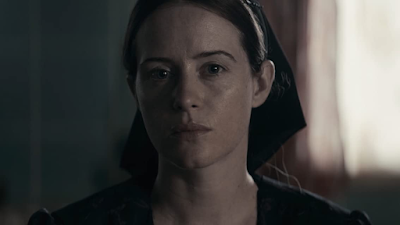
Among a host of great performances, Rooney Mara's stands above them. As the eminently reasonable Ona, she is one of the most intelligent voices in the room, but also one that demonstrates the ability to change one's outlook once enough of that reasonable discussion has passed. Accompanied by Claire Foy (Salome) and Jessie Buckley (Mariche), the two sides of raging anger who don't allow that emotion to overwhelm the solid basis for their perspectives, it creates a trio of analysts who propel what could have been a dry discussion of basic human rights into a story about the essential humanity of the people involved in this problem. Writer/director Sarah Polley developed these characters into roles that Mara, Foy, and Buckley had to climb into in order to present themselves as Mennonite women, confined by their culture and their determination to ascend to the kingdom of heaven, but whom also knew that they had to live as actual human beings in order to get there in the first place. As Salome points out: "Isn't there something worth living for in this life, not always the next?" Judith Ivey (Agata), Sheila McCarthy (Greta), and Kate Hallett (Autje) also give excellent support to that trio. I have to single out Hallett, who does an excellent job in her acting debut, to present a younger viewpoint on the whole situation, ranging from boredom and distraction, to righteous anger and stubbornness, to mature recognition that she's acting not only for her own interests and safety, but for the women who've been suffering this abuse for years before she was even born. It was also interesting to see Frances McDormand in a very tiny role which had me questioning why she was willing to do it, until I discovered in the end credits that she was the producer of the film. It seemed like she was willing to put her muscle behind it and then step back to let these other stars carry the show.


In the end, I walked away from it thinking that every choice that Polley had made was smart and that makes for a great film. Not least among those choices was getting Hildur Guðnadóttir to do the score, as she's been a favorite since Chernobyl and her music, while quite restrained, still conveyed exactly the level of intensity that was needed. The quiet piano as Mariche entered her house for one last night in the same space as her abusive husband, Klaus, was chilling, just as it should've been. There are some who might think that a bit more action and less talking might have led to a more effective bit of storytelling, rather than hitting the audience over the head with the points the script was making. But I found the discussion to be so smart(!) and fascinating that there were more than enough action and emotion to deliver exactly the story that needed to be told. Highly recommended, especially for the men who tend to sustain the kind of culture that the story is exposing and questioning in true Socratic fashion.

Tuesday, December 27, 2022

Being honest


Most of the time, there's a lot to like about Darren Aronofsky's films. He's not afraid to take risks. All of them tend to carry his brutally realistic perspective about life, which is still layered with a level of mysticism or fantasy that makes you wonder if that "real life" image is, instead, just on the edge of reality. His style is so distinctive that it's immediately obvious when you're watching his work. That remains true about The Whale, his latest effort which has drawn both enormous praise and enormous criticism. I find the former perfectly understandable. I find the latter to be largely performative and absurd.

Like some of his other works (Requiem for a Dream, The Wrestler), this is a very blunt story about the emotional struggles of a man who has decided to take revenge upon himself by turning into his (and much of society's) image of a grotesquerie. He has decided that because of his failures with his wife, his daughter, his dead lover, and his own estimation of what he hasn't done with his life, he will turn himself into something that everyone will physically recoil from, despite the constant evidence of the people who don't recoil but whom instead care deeply about him, from the nurse that comes daily to his home to tend to him to the pizza delivery guy whom he never sees, but who still feels human concern for the well-being of his best customer. Charlie (Brendan Fraser) is so consumed with guilt and despair over the loss of the love of his life that he has decided that he can't be loved at the same time that he's trying to reconcile with his daughter that he hasn't seen in eight years to give himself some reassurance that he's done something positive in his life. If that sounds like an incredibly complicated and, thus, very human character then you're absolutely right. Charlie is the titular "Whale" and, like Moby-Dick, an essay about which is one of his fascinations, his bodily condition is simply a cipher for the emotional trauma of Charlie and all the other characters around him. In the same way that the novel isn't about whale hunting, but instead about obsession, perception, and perspective, the film isn't about the tragedy of fat people, but rather the tragedy of trying to be something that you aren't and trying to make up for the hurt you've caused people as you try to get to that better understanding of self.


This is, without question, Brendan Fraser's best performance of his career. The anguish and self-loathing and doubt that he exudes at every moment conveys a more realistic character than he's ever been given to portray. There is raw emotion at every moment that he's onscreen, which is 99% of the film. It's quite easy to see that it's based on a play, as almost all of it takes place in one room and with a very small cast, which means that it would be far easier to produce on a stage. But Fraser's performance is also indicative of that theatrical underpinning, simply because it's obvious that the character was written to hurl his emotions to the far corners of a room and without the assistance of a three-story screen. Similarly, Liz (Hong Chau) and Ellie (Sadie Sink) both give excellent depictions of the nurse who's lost her brother to her father's distorted religion and the daughter whose inflammatory behavior is a constant signal of how she's been wronged by her father, respectively. Chau's smoldering anger at the injustice of her sibling's death and the equivalent self-destruction by his lover is brilliant mostly for its restraint. It's never absent from her performance but it doesn't overwhelm it, either. She is the constant rock that she was unable to be for her brother and, if she's honest with herself, knows she'll be unable to be for Charlie, as well. Sink presents initially as the rude and insouciant teenager, but she quickly reveals a deeper understanding of life, well beyond the screen of her phone (One could almost call it "Ishmael-like".) Like Charlie, at moments she drips with anguish over what her father has robbed her of, but at other times she's almost sadistically pleased to be exposing all of the illusions that everyone around her is cloaking themselves with. Thomas (Ty Simpkins), a fervent missionary who feels that "saving" Charlie has become his calling, is no different in this respect and becomes the most amusing of the four of them because he's so earnest in his attempts to hide what he feels that he is, while urging everyone around him to find the truth that he sees (or has been conditioned to see) in religion.


The overarching theme of honesty should be obvious here, from the images that these characters try to convey to their frequent blunt admission of what they're trying so hard to deny; from Charlie's marriage to Mary (Samantha Morton) solely to bring a child into the world to Ty's flight from what his parents want him to be to Ellie's show of disdain and contempt for the world when all she really wants is her daddy, all of these people and situations speak to the difficulties in trying to come to grips with oneself, both who you are and whom you want to be. Unfortunately, a lot of that is being overshadowed by a critical response that, like many of these characters, is largely performative. Many critics' objection to Charlie being displayed as an object of scorn, disgust, and derision is spectacularly missing the forest for the trees. These are the people who think Moby-Dick was about whale hunting because it had a great, white whale, rather than being about the humanity of the characters that pursued said whale. The message of the film isn't about "fat people". It's just about people; one of whom happens to be fat. Is the reaction of Dan the pizza guy (Sathya Sridharan) and Charlie's students to his appearance a little overblown? Probably. Most people don't visibly flinch at the sight of someone who's obese. But has society trained many of us to look at heavyset people as objects of derision? Wait. Are we being honest here? Oh, yes, it has. Charlie has decided to eat himself to death because of the guilt and contempt for himself that suffuses him. He's turned himself into what he and much of society see as an object of scorn. That's the point. At the same time, his estranged daughter and ex-wife and friend who half-blames him for the death of her brother still love him and want him to be in their lives, no matter what size he is. The fact that he's fat is a metaphor for many things in the story. It shouldn't be a target for the performative outrage of critics over anything even mildly controversial. Or, for that matter, anything even mildly honest.

This is the best thing we've seen this year and is absolutely worth the time. Outstanding.

Wednesday, November 9, 2022

Five-fingered parable


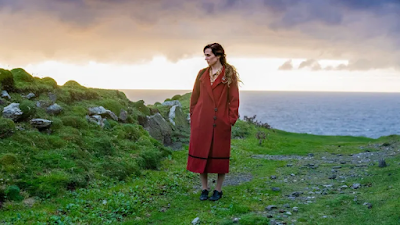
I don't know that I'd say it's essential to have an appreciation for black comedy to be able to enjoy Martin McDonagh's films, but it probably helps. Tricia will often give me a disapproving look when I bust out laughing at some morbid development in public affairs or other situation in the world. I just have a deep understanding of the level of stupidity inherent to most of humanity, so it's amusing to me when someone reaches a pinnacle moment. And that's really what The Banshees of Inisherin is all about; a few people striving to escape the dolorous inanity of the rest. Of course, it's also a parable about friendship, how a neighborhood (mal)functions, and the Irish Civil War, so you can be as high-minded as you like. But when it comes down to it, it's mostly about trying not to be a drone, or at least feeling free enough to not be identified as one.


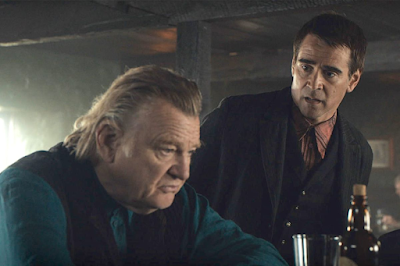
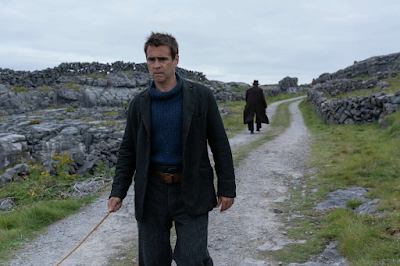
There's no doubt that this is one of the darker of McDonagh's films, which is saying quite a bit. The moments of levity to break up the angst-ridden Pádraic (Colin Ferrell) and the brooding Colm (Brendan Gleeson) are sparse for the first act and only become more frequent because we've begun to understand our characters and their situation and not because they were specifically written that way. Layering on top of that the exasperation and loneliness of Siobhán (Kerry Condon) and the tragedy that is Dominic's (Barry Keoghan) life and there's not a whole lot to find humorous or light-hearted for some time. But then it dawns on you, just as it does with most of his works: It's the absurdity of the situation that turns out to be funny. When Siobhán rails against Pádraic being woeful about losing the friend who never treated him as an equal in the first place or when Colm bemoans the fact that he'll never be remembered as the genius from a tiny island off the coast of a nation at war, it's difficult to stop laughing at the lack of perspective on display. That kind of foolishness is also, of course, a metaphor for the Irish Civil War, one of the more inane of modern conflicts, which is setting the bar quite high, and which continues in the background of our story, with the occasional shrug of the shoulders by one of our characters and a "Hope things are going OK" acknowledgement. 


Beyond anything else, I think it's irrefutable that the cast was stellar, which is what you might expect from a solid collection of character actors given a McDonagh script to work with. Another regular aspect of his films is the very interesting and genuine characters that he summons up for each of his stories. From the world's most genial hitmen of In Bruges to the barely self-contained and bereaved mother of Three Billboards Outside Ebbing, MO, it's often hard to forget the people portraying his stories. Banshees is no different. Reuniting Colin Farrell with Brendan Gleeson almost guarantees chemistry on the screen and the two of them didn't disappoint, returning to the easy connection they carried in In Bruges, albeit in a somewhat different situation. It's still Gleeson leading Farrell to the deeper meaning of life, but this time it's not an act of courtesy, but one of bitterness and, eventually, resignation. Sheila Flitton was also fantastic as Mrs. McCormick, who represented one part of the film's title, as she walked around portending death like the spirits of old. The fact that she also annoyed everyone she encountered to the point where she engendered the same level of dread as the legendary creature is just another moment of comedy hidden under layers of scorn and despair for the local neighbors. Dominic was another high point, as he presented someone to look down upon for the lowly Padráic but was one of the more heartfelt characters of the story. The moment where he professes his affection for Siobhán in his halting style and then confesses "There goes that dream." is a genuinely emotional moment in a sea of cynicism and an unwillingness to admit the depression that drives them all to their individual isolated existence. This is a neighborhood of people who often refuse to acknowledge that they're all swimming in this pond together which, again, hearkens back to the war clattering across the strait and the overall search for meaning in what  otherwise seems a rather pointless life, which is, of course, the primary complaint of Colm about his existence and his relationship with Padráic.


Banshees will probably not be an easy film to like for many people; just as many of its characters will be likewise difficult to warm up to. Overall, it lacks some of the dynamism of McDonagh's earlier work. The deeper meanings are prevalent, but not exactly pronounced and there's a great deal of time spent in the common activity of early 20th century, rural Ireland. But if you can stay with it and just appreciate the little details that create a much greater skein, I think you'll be able to appreciate the subtle cues that say far more than what's immediately obvious. Personally, I thought it was feckin' brilliant.

Thursday, September 22, 2022

Heavy is the head that wears the crown

It's not often that I describe a film as "simply delightful", but that was the phrase that was in my head as we walked out of the Michigan Theater last Tuesday after having seen The Good Boss (El Buen Patrón.) It was almost everything that I would ask of a dark comedy: believable characters, tension, drama, uncertainty, but still riddled with moments of humor that constantly played to the presence of the audience, only narrowly avoiding the breaking of the fourth wall. It was an excellent example of filmmaking from screenplay to acting to direction to camera work. What excited me most was that it was simply a smart film. It didn't play to the lowest common denominator like a lot of modern comedies (see, for example: Knives Out.) It respects the audience's intelligence about the modern world of work, industry, and corporate attitudes, but also doesn't sink to cynicism about the whole process. The more reprehensible motivations of the good boss in question (the brilliant Javier Bardem) have little to do with profit and almost everything to do with vanity and a desire to simply keep things running smoothly for his own gratification, rather than any material motive.

In fact, the central plot line is rooted in that concept of vanity. Julio Blanco (Bardem) owns a multi-award winning company that makes scales and he's anticipating being handed another one by a local chamber of commerce for "business excellence." Of course, in the process, Julio will try to encourage his employees to keep their private lives out of his business so that nothing gives the wrong impression to the committee. This includes his childhood friend's (Manolo Solo) marital issues that also involve his capable shipping foreman (Tarik Rmili), an elderly welder's (Celso Bogallo) son who happens to be a petty thief, and an attractive young intern that Julio later realizes he has a deeper connection with than he realizes. Most of those situations involve people that are doing a fine job of lying to themselves (the purest expression of vanity), in addition to others, and none of them are those that you would expect your employer to become involved in, but Julio is, of course, in the name of presenting an image of one big, happy family in front of the regular people with regular problems that make up his workforce. This is on top of the recently-fired employee who has camped out on the hill overlooking the company entrance in a protest over losing his job and whom neither the security guard out front (Fernando Albizu) nor the local police seem very interested in removing.

It's not difficult to see the obvious comedy threads inherent to all of these situations, but none of them devolve to slapstick or are set up in the ham-handed method of something like Knives Out. All of them grow naturally from what seem like everyday situations and which maintain an air of intelligence that leaves the viewer interested in the story, as well as the jokes. The underlying issues of labor vs management, the value of work, the bonds of childhood loyalty, and the question of work-life balance are all present. The film fully embraces these social issues but doesn't become weighted down by them. Much of that free-flowing pace is a result of Bardem's ability to keep each scene moving, but he's helped by excellent performances by the rest of the cast, not least Oscar de la Fuente, as José, the wronged employee, who is fully aware as a character of his own absurdity and remarks wryly on it in multiple moments with the security guard, Román. Almudena Amor is also excellent as Liliana, the intern, who is only too conscious of her power over Julio from the moment she sees him and isn't afraid to exercise it, not for personal gain, but to fulfill an urge she's felt since childhood. Their relationship is the backdrop to a dinner table scene (also including her parents and Julio's wife, Inés (Yael Belicha)) that is almost the equal of the famous one from Little Miss Sunshine, albeit in a very different vein of comedy. It's a really remarkable film and it's surprising that it hasn't received more approbation than it has. 

Tuesday, September 20, 2022

A treat of the visual art form

It's pretty rare that, even with as many good films we see at the Michigan/State Theaters, we hit it out of the park two weeks in a row. I still haven't written anything about The Good Boss, but I will get to it. But I had to immediately sit down and write something about God's Country, because it was simply that good. (Admittedly, I also wanted to test out the keyboard of the new machine I picked up with something a little lengthier than a tweet. So far, so good.) You've probably seen me comment about film being a visual medium and, consequently, the best of them letting the visuals tell the story. This is the key behind many of my favorites, like Rashomon and Blade Runner (the director's cut.) When you have a good director and someone great behind the camera, you can take a short story, as this film did, and make it blossom into something far greater than originally presented. When we first saw the trailer for Country a couple weeks ago, I was interested, but kind of dreading the "outsider dealing with the locals until the violence of justice erupts" premise that it implied. We've seen that many times before. But this film was something far greater and far more interesting than that simple (and often simplistic) approach. There was a depth of character and story here that meant much more than just another Dirty Harry pastiche, where the bad guys get what was comin' to'em, no matter what the law says.

The roots of Thandiwe Newton's character go far beyond the simple setting. We're presented with a college professor at a small school out in the hinterlands who has just lost her mother and is entering the holiday season at the end of the term still wrestling with her sorrow and now being confronted by a couple of local hunters who want free rein on her land; possibly because she's a she, an academic, is Black, but mostly because all of the above makes her an outsider to 'Merica. But the impact of her recent loss goes beyond a child losing their last and strongest link to family, as we slowly discover that Sandra isn't just an "outsider" from cosmopolitan New Orleans now in the backcountry, but that she and her mother were present during the most traumatic event of the city's existence, when Katrina struck in 2005. That sense of loss and anguish; for herself, for her mother, for the people that she knew ("born and raised") colors everything about Sandra's character and how she deals with everyone from the too-casual sheriff's deputy (Jeremy Bobb) to her too-comfortable colleague at the university (Joris Jarsky) to said colleague's beleaguered assistant (Tanaya Beatty.) There's been a recent surge in stories about the survivors of Katrina and the enormous psychological impact it had on them and everyone in and around New Orleans. For many outside the city, the disaster was over as soon as we stopped hearing about the toxic FEMA trailers ("You're doin' a great job, Brownie!") But for those who were there, it persists and those stories need to be told (HBO's Katrina Babies is a good recent example.)

On the face of it, that sounds like something that could easily become overloaded with emotion and it is a dramatic film. There's a lot of tension in the air, even when not dealing with the eminently hostile locals and their guns. But it's also a patient film that is willing to tell its story slowly which gives its characters and story room to breathe and, in some ways, even contributes tension to scenes that would otherwise be mundane. What keeps everything moving is, quite literally, the camera. Julian Higgins' direction and Andrew Wheeler's cinematography are both spectacular. Again, we're given the opportunity to see the story happen, rather than have it told to us. When Sandra enters her bedroom, we don't see her face and then drop to the dog she notices, sprawled on its bed. We start at the dog's level, seeing her feet enter before she drops into our frame of reference. When she confronts one of the locals and he threateningly invites her inside and then slowly pursues her to her car, we don't get an orchestral crash that signals something ominous. We just get the rush of movement that is then interrupted by the blaring noise of a passing train. When Sandra angrily opens a long-sealed box from her closet, none of it happens on-camera with her hands working ominously and the object of her search rising into the light. Instead, all of it happens behind the bed that she's crouching beside, as the intensity of her action and our supposition about what she's after are already telling us what we need to know.

The framework for all of this is one of faith and belief or the lack thereof; in oneself, in one's community, in the societal structures that elevate some and confine others. It's not difficult to see where the film likely departed from the boundaries of the short story it's based on, James Lee Burke's "Winter Light." But those departures are necessary to showcase a larger and more complex character study that needs the little moments of every day life and how they have different meaning to everyone involved and how each day contains events of magnitude, whether obvious or not. The original story is one of coming to grips with the modern ethics around masculinity. This story is about everything except that and it's a better insight into the modern state of society which is contrasted with the slower-changing world that Sandra finds herself in. This is one person's experience of endings and then transformation, rather than simply the creation in seven days which is the arc of presentation. It's a well-acted, well-written, well-directed film that is the complete package of what you'd hope to get whenever you sat down in a theater. Can't recommend it highly enough.