Showing posts with label writing. Show all posts

Friday, September 5, 2025

Alien: Earth, episode 5: Prequels, flashbacks, and irrelevance


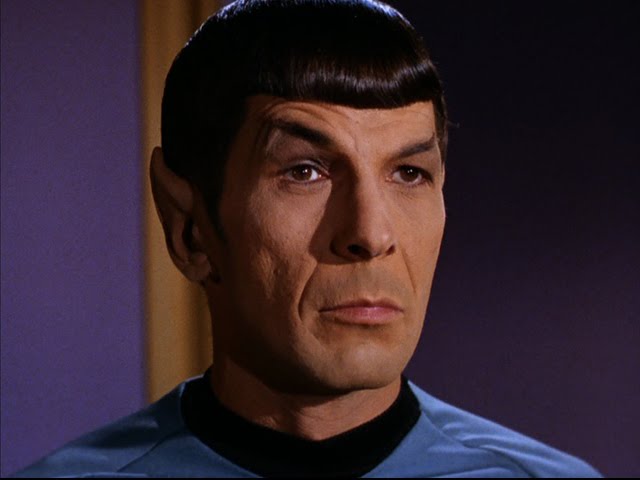
That image above is basically my expression when looking at this whole episode, except I was probably displaying more contempt. As noted before, the problem with prequels is that they sap a lot of the potential tension and interest from a story because everyone knows what the outcome is for both plot and characters. It's the equivalent of Roger Ebert citing "fans" as the most boring people imaginable because "they're always asking you questions to which they already know the answers." You know what's worse than a prequel? A flashback within said prequel! Not only do we already know where things are going in a macro sense, but now we do in a micro sense, as well. In that respect, In Space, No One... was something close to the most pointless episode one could think of. All of the events that took place on it a) didn't advance the story and b) didn't tell us anything new, since the main thrust of the plot was discovering the identity of the person who sabotaged the Maginot and landed it in Prodigy territory which is... Petrovich, a guy who was already dead in the first episode and died within minutes of appearing in this one. Knowing this person was completely irrelevant. The events that he caused were the relevant part and we saw those events in episode one. We basically just wasted an hour to see a rerun.


I mean, one thing I guess we learned is that Weyland-Yutani is somehow one of the most powerful entities on Earth despite most of its scientists being incompetent and its engineering staff not improving in 17 years when they attempt to bring back another xenomorph. It must be written somewhere in the crewing regulations that all engineering teams be made up of a crusty, overly suspicious guy and a semi-social idiot. Either that or it's just Hawley and his writers again pandering to the nostalgia of the audience for the original Alien film. And it doesn't stop at simply emulating the cast from the film (Zaveri (Richa Moorjani) is Ripley; Shmuel (Michael Smiley) is Parker; Malachite (Jamie Bisping) is Brett) because we're also given the imagery from that film that isn't already the functional stuff like Mother. No, we get Morrow (Babou Ceesay) dropping his cigar down one of the holes through multiple decks created by the acid blood, just like Brett looking down one of those holes or, for that matter, the Marines doing so in Aliens. At least Morrow has some qualities that make him distinct from Ash. But what that means is that the most interesting member of the entire crew is Teng (Andy Yu), the perv stalker among them. Not only does he see right through the plot and point it out to other cast members, but does so in a genuinely entertaining fashion. However, his role in that plot is non-existent. He doesn't serve any purpose except to entertain people who aren't that fascinated by the rehash of both a 48-year-old film and the episode of this series that we saw a mere four weeks ago.


And why does a scientist somehow forget to seal the containment chamber of clearly dangerous aliens while under no stress whatsoever? Boredom? And if something is contained in a cryo pod, where life is supposed to be suspended for long travel, how is it that a face hugger is still moving and an implanted embryo can break free? The counter-example to Hawley inexpertly filling his plot hole is right there in the film franchise, where Alien³ showed that Ripley and Newt being frozen kept their embryos in stasis just like they were. But, somehow, despite this clearly being the same technology and this crew actually following protocol (From the immortal Parker: "Why don't they just freeze him?!"), Hawley apparently decided that the only way to write oneself out of this corner was to make it all simply not work this one time. Also, the constant references to specific knowledge about the aliens ("It's an embryo that's escaped and is now running around the ship. How big can these things get?") is more fan service than any decent plot should allow, despite this entire episode basically being fan service, since it serves little other purpose. I mean, there's a couple personal background moments with Morrow (who is also an Ink Spots fan) but those could easily have been woven into actual progression of the plot on Earth. And we wrap up this pointless venture with Cherub Rock which, again, has no relation to anything that's going on but is simply another piece of music that Hawley thinks is apparently retro-cool. Or something?


Yeah, if it's not incredibly evident, I'm losing faith quite quickly here. This was series padding in episode five and padding created by continually hearkening back to material that was not only covered almost 40 years ago, but also four weeks ago. One more like this and I'm probably bailing.

Sunday, November 10, 2024

Dystopia; or briefly The Thing That Describes a Lot of My Mindset About the World


Jeff Donaldson and I were the main figures in a comic studio that Jeff started almost 34 years ago. The studio ran for almost the entire decade of the 90s before economic factors (lack of distribution, lack of money) shut us down. A few months back, Jeff told me that he'd started drawing again with a new program and wondered if I was interested in digging up some of the old material that I'd created for said studio- Fifth Panel Comics -and seeing if we could produce it as a Webcomic. I signed on and here we are:


https://www.dystopia.ink/

Dystopia is a multi-genre setting somewhere in middle America that was basically a way for me to introduce a lot of concepts that I hadn't found a home for, as well as a way for everyone involved in the studio at the time (somewhere in the range of a dozen people, but really a half-dozen "regulars") to collaborate on the same project, if they chose to do so. I explain a lot of this here: https://www.dystopia.ink/2024/04/20/the-origin-story/ which is the almost-first post on the News page of the site. At the moment, when you go to the News page, you'll see the most recent post, but then have to scroll down to see the older ones. I'll figure out how to rework that at some point. Anyway, all of the posts on the News site describe the basic background of the setting, how we wanted to implement it, and what the idea is for the future. The comics, OTOH, are here:

https://www.dystopia.ink/comic/

When you first arrive on the site, you'll automatically see the last page that Jeff has completed and can use the controls to shift to the beginning or to previous (and subsequent) pages and so forth. At the moment, we're beginning with a story based on The Rim, the top level of the city (Into Darkness), but we'll be moving around from there. Jeff is hoping to maintain a schedule of a page a week as we move forward. Meanwhile, I'll be posting more stuff on the blog page (News) and, for those so inclined, we've set up a Discord (linked on the Home page) and will be hoping to hear/see as much feedback as possible; not just on places like Facebook, but the site itself.

If you know anyone who likes comics, Webcomics, SF, horror, cyberpunk, or anything even vaguely related, PLEASE feel free to send them the link to the site. The most gratifying thing for me as a writer has always been for as many people as possible to read it and see if they get something out of it. Quite literally, the more the merrier, yo. Thanks and I hope (at least some of you) enjoy.

Friday, July 12, 2024

Hopes and dreams


I haven't been posting here much lately because there hasn't been much to post about, as the films we've been seeing have been somewhere on the spectrum of typical, bland, and mediocre. Most of my writing time has been going toward a semi-new project and I don't have particularly high hopes for that one because it, like every other writing venture I've been involved in, likely won't find an audience and will come to nothing. That's how I tend to prepare for things like that, anyway. My ex- once asked me: "What are your hopes and dreams?" I said: "I don't have any. I kinda just take each day as it comes and deal with it." I have interests (way too many), desires (like any human), and make a lot of plans to do this or that thing, some of which even come to fruition. But dreams? No. I've seen too many of those dissipate to spend any time hoping for one of those to come true.

I've never written anything for myself. Some people like to engage in that; journaling so that they have a record of their thoughts (and dreams!) and observations about life. That's a worthwhile endeavor. It's just not something I engage in. If I'm going to put down my thoughts, as I'm doing right now, it's always for someone else to read. I don't need to spell things out for myself. I can do that already. Everything I write is for someone else to hopefully get something from. The problem I run into too often is that there either aren't enough people who get something from it (that's my fault) or there aren't enough people who care (which isn't anyone's fault.)

I wrote about American Fiction a while back; the film that I thought was the best of 2023. It sang to me from the opening stanza because it was about a writer who never seemed to get his message across to people or at least not enough people who cared. I know that feeling better than any other in my life. I get it every time someone reads something and doesn't react or gives the most harmless of platitudes: "It was good." that tells me that it didn't register with them at all. I feel that sensation even more when I know that they didn't bother to read it at all; as I look at things I've blogged about where the unique views are in the single- or low double-digits. I mean, I guess I should be happy, right? If I was "writing for myself", the only unique view would be mine; the loneliest number.


My friend, Jeff, and I are returning to material I created for our comic studio, Fifth Panel Comics. He's decided that he needs to be drawing again and I have several hundred pages of script, prose, story concepts, scenes, characters, and setting that have never seen the light of day. So we're going to try to turn it into something again, 30 years later. I don't have any hope for it. I can't. Every time I think of 5th Panel, I think of the hilarious times we had in the studio and doing conventions and just speculating- dreaming, you might say -about what we could make it into. But I also think of the time that we stopped into a restaurant with a couple of our artists and the guy behind the counter asked us what we were talking about and we showed him the anthology book we'd created, Razorwire. He asked everyone to sign it and both artists signed their stories and Jeff signed as the publisher and then the guy looked at me and said: "And who are you?" And I had nothing to say because, despite being the nominal editor and having come up with the title, neither my name nor my work was in that book. I had made other people's dreams come true (at least partially), but I hadn't even been able to write something for me. Or, at least, what little I had that had been published hadn't been good enough to become something noticeable.

So we're back at it. We have a website and some of the old artwork and I, of course, have every one of the hundreds of thousands of words that I've written for, about, and of the world that I created. Will it come to anything? I don't know. The dream, of course, would be that it takes off and Jeff and I can both retire from our day jobs and do this thing that we love for as long as we want to do it. But that's the kind of dream that I find myself unable to believe in (which is, y'know, like all of them.) I believe in Jeff's intent. I believe- kinda -in the work, although you'll never hear me say it. I'd like those around me to believe in it, but most of those people just aren't interested, which doesn't make me think that this time is going to be any different from the last one. You can't blame people for not being interested. That's the first hurdle in writing things for other people. They either are or they aren't the camel that can be led, presuming you're even leading them to water. If there's no water, it won't matter that they've been led in the first place.


When we get the material rolling and the site loaded with stuff, I'll post the link here to whoever still notices this outlet. "Hopefully" someone will. Maybe it will even be worth your time and attention. I'm afraid I was always more writer than oneiromancer. Or, at least, that's what I claimed to be. For someone else.

Thursday, October 8, 2015

Time travels they are a changin'

Amazon has produced their latest "100 Science Fiction and Fantasy books to read in a lifetime" list. Like most listicles, it's a marketing tool, but at the very least, it's an obvious marketing tool, coming from one of the three legs of the marketing (s)tool that makes up the Interwebs (the other two being Google and porn.) Couple things:

1. Why they feel compelled to combine SF and Fantasy, rather than splitting them into their own lists, is kind of jarring. They were always combined as the wing of geek literature that most booksellers didn't care about. Now, with the prevalence of all things geek (see: Game of Thrones, Marvel movies, impending Star Warsapalooza, etc.), you'd think that there's enough material to define each genre on its own. But, then again, it might be weak on the Fantasy side, but I think it's weak just based on what they have listed already (more below), especially since they insist on including some of the hoary classics that aren't even good books.

2. On the one hand, it's gratifying that they're including a lot of new (and very good) material rather than exclusively dwelling upon said hoary classics. OTOH, this is a marketing tool that can be used to sell new stuff, amirite? So, as with most listicles, this is one set of opinions and far from definitive. That said, again, good to see new(er) stuff, in addition to some things which may not have been recognized before.

I've read only 54 of them, believe it or not. Guess I'm slacking(?):

1. A Wizard of Earthsea. The first of three LeGuin selections. It's gratifying to see her reputation continue to grow as the decades pass, as she was among the best of the New Wave that elevated SF and Fantasy past what the Sad Puppies were whining for at the Hugos for the past few years. I liked the Earthsea stuff, but didn't stay with it.


2. The Windup Girl. One of the aforementioned newer selections. This was excellent.
3. Snow Crash. Still Stephenson's most iconic work, even if it is awash in "old school" cyberpunk trappings and came during his "troubled ending" phase, where it seemed like he had much more story to flesh out but decided to cut it off before he wandered too far afield. The Deliverator lives on.
4. Starship Troopers. Iconic and inflammatory in a far different way than the Verhoeven film, which remains high comedy in the guise of action.
5. Cloud Atlas. I enjoyed this one and I think the film was decent on its own merits. Do I think it belongs on this list? Maybe in one possible future.
6. 20K Leagues Under the Sea. This is one of those classics that I'm OK with in terms of giving the reader a broad appreciation of how the genre has developed and where it began.
7. The Forever War. This is one of those irreplaceable choices, because it remains timeless, even if it was a very pointed statement for its time.
8. Solaris. Lem's work was always legendary among the SF set. It's starting to descend to the hoary level, as one film after another tries to capture it and fails. I actually read this for an SF course at Michigan, suggesting that you can get something useful out of education.
9. The Road. Obvsly.
10. Slaughterhouse Five. Something else I read in that course at Michigan. Prior to that, I'd never really considered Vonnegut or his status as an SF author.
11. Blood Music. This was a selection in one of those "10 books for a penny" deals that Publishers Clearinghouse used to run. I knew Bear's name from several other books I'd seen on the shelves in bookstores, but had never stopped to read one. That's what marketing used to be.
12. 2001: A Space Odyssey. I appreciate the story, but this one has more impact for Kubrick's film, which makes me question its status as an actual thing you should read before you die, or simply one of those boxes to be checked.


13. Game of Thrones. This was also a selection on a different Publishers Clearinghouse list (yes, I guess I'm a good example of marketing success; that was the original cover, too), shortly after it was first published in 1996. I knew Martin only vaguely, but the blurb about political infighting in a fantasy world was enough for me to snag it.
14. Ender's Game. Another checked box. His best book and the one that should really be read is Speaker for the Dead.
15. Old Man's War. So, similar question: Do you include the first of a now-iconic series or do you replace it with the better writing and better story of later entries?
16. A Wrinkle in Time. I have several friends who swear by these books that they read when they were kids. I was unimpressed when I did.
17. The Sword of Shannara. Here's where we arc from pseudo-serious list into the land of total marketing. Sword was a blatant Tolkien ripoff and not a good book in any way. If you want to recommend anything from the Shannara series, you want The Elfstones of Shannara.
18. The Martian Chronicles. Box checked, but still a great work.
19. The Hitchhiker's Guide to the Galaxy. Worked better as a radio play, honestly. I think Adams would agree with me.
20. Sandman Slim. As pleased as I am to see this new(er) work here, I'm also kind of surprised. I didn't think it had gained the kind of cachet needed for this list.
21. The Left Hand of Darkness. Another LeGuin and probably her most famous.
22. Good Omens. I have a hilarious story about the attempts to write a screenplay of this book...
23. I Am Legend. Book decent, not sure it belongs here. Movie awful
24. Dune. Still probably the best fictional political tale until GoT and yet shared the Hugo with a much smaller book (This Immortal) written by a man absent from this list.
25. 1984. Box checked. Predictions continue to resonate, even 31 years past. The more things change...
26. Childhood's End. Forget 2001. This is the Clarke book that should be here, even if the imagery does get kind of heavy-handed. (Devils? Really?)


27. Lord Foul's Bane. Eh. I really enjoyed the Thomas Covenant stuff when I read it at the age of 10, even if it was an obvious Tolkien lift (it was done better than the Shannara stuff...) I guess it's become kind of a pillar of Fantasy, but I'm still arching an eyebrow.
28. Pawn of Prophecy. Awful. Eddings wrote these as an "exercise of the form" and his paper-thin characters and lack of real action display that to the fullest.
29. The Lord of the Rings. Box checked. Still worthwhile as the foundation of modern fantasy.
30. Ringworld. Possibly Niven's best stuff.
31. The Lion, the Witch, and the Wardrobe. Read these as a kid. Liked them better than l'Engle, even if the Christian imagery was obvious even then.
32. Red Mars. Was a great leap forward when it emerged. Robinson has been doing great stuff.
33. Dragonflight. Has unfortunately been an anchor around her neck ever since. I liked it when I first read it, but I drifted away from her books as I got older.
34. Stranger in a Strange Land. Overrated, but interesting for the deep insights into Heinlein's philosophy and his dismay at the changing times.
35. Brave New World. See: 1984.
36. The Gunslinger. Again, have a few friends who loved this series. I read this one and stopped. I just wasn't impressed.
37. American Gods. I don't have a good screenplay story about this one, but it's the better book of the two Gaiman selections included.


38. Neuromancer. Easily my favorite of the list. Gibson rejects this work now, but I'm an old-school cyberpunker and I still love the taut but fluid prose in much of it. This book inspired me to write more than any other.
39. The Handmaid's Tale. You can see the dreams of much of the Republican base. Solid, if unheralded, film, too, even if it largely deviates from the book.
40. World War Z. Great book. Riotously awful film.
41. H.P. Lovecraft: Tales. I've read all of them, even if not in this particular collection.
42. Riddle-Master. I read all of these on the advice of another of these lists (but printed on paper, as they did, back in the 80s) but never quite "got" them, I think.
43. Hyperion. Like Red Mars, kinda ground-breaking at the time, and deserving of all the praise it's gotten.
44. The Time Machine. Probably the better pick of the hoary classics, between this and War of the Worlds, since it's a social statement on the level of 1984 and others.
45. The Stars My Destination. Another I picked up as a kid from a "Best of" list.


46. Perdido Street Station. This is one of those books that discourages me from writing, since I don't think I'd ever be able to do something this good.
47. Interview with the Vampire. Ugh. Got 23 pages into it and put it down because she'd used the same phrase 4 times in those 23 pages. Old girlfriend insisted that it got better. It didn't.
48. The Hobbit. Marketing. Not a great book, prologue to LotR or not.
49. The Colour of Magic. Yes, it's the beginning, but The Light Fantastic is where the series and his writing really begin to shine.
50. A Canticle for Leibowitz. Still excellent, even today. That he didn't follow up is one of the great voids of the genre.
51. Frankenstein. Box checked. Read this for that class, too.
52. I, Robot. I find it fascinating how Asimov's Laws have become a kind of public property for much of science fiction.
53. Fahrenheit 451. I also find it fascinating how Bradbury's political views changed so much over the decades that he objected to Michael Moore's averring to his title.
54. Do Androids Dream of Electric Sheep? Perhaps the one instance where I'll say the movie (Director's Cut only!) was better.

Requisite "But where...?" response, albeit brief:

Where are Harlan Ellison and Roger Zelazny? If Neuromancer was the book inspiration, those two were my author inspirations. Strangely, they have the effect of both Neuromancer and Perdido Street, in that I read their stuff and am just awed into depression. The insight of Ellison and the poetic flow of Zelazny are both mind-blowing and crushing, all at once. "Maybe there was a pocket universe under my bed. I'd never looked." kind of sums it up.

Monday, September 23, 2013

Daunted?


So I've had two books sitting on my shelf for a while that I finally got around to reading in the past couple weeks. Both are by authors I hold in pretty high regard: Neal Stephenson and William Gibson. Both came out of the "cyberpunk" movement, Gibson with the seminal Neuromancer and Stephenson with Snow Crash. Both have since moved on.


Stephenson's book is called Anathem. He finished it a couple years ago (he's since written another called Reamde, which I haven't read yet) and it was a high concept story about communication (how language changes), knowledge and its conveyance (how it affects society and the perceptions both of those who have it and those who don't), and world-realization (particle theory about conjoined but different universes and how observation makes them split.) Most of his books have been like that. He's always thinking in a very large manner. The trick is that he does that with characters that are still human, with a pace that keeps you turning the pages (albeit occasionally bogged down in theory), and with some memorable turns of phrase. He's had problems with endings before, in that his grandiose ideas resist being succinctly ended, but I think he pulled it off well in this one.


Gibson's is called Pattern Recognition. It's been out for a decade and many critics regard it as his finest work (he's written two more, Spook Country and Zero History, which I also have yet to get to.) It's explicitly about modern society and how technology and advertising tends to shift cultural tides before people are even aware that they're in the water. It's told in Gibson's hyper-cynical and bleak tone, but his writing, unlike Stephenson's, isn't about conveying a grand idea(s) so much as it is a slow presentation of said ideas while every sentence becomes an expression unto itself. His writing is the closest I've ever seen to the idea of "lyrical." The story is an exercise in description of the environs surrounding his characters and how they interact with them and how they interact with the emotions generated by them.

They're (obviously) very different approaches and, as much as I am forever indebted to Gibson for blowing my mind in 1984 with Case, Molly, and Wintermute, I've come to appreciate Stephenson's style more; likely because I'm another one of those "grand idea" guys, but also possibly because I don't see myself ever being able to accomplish the type of rhythm that Gibson pulls off. Have I tried? Occasionally. But that kind of texture seems to be the province of writers superior to me. Is it because most of what I turn out is generally crap? Quite possible.

On that note, I was out with the trivia team last week and the guy running the session was playing some solid music. One track was Tom Waits' Goin' Out West and it got me into listening to Bone Machine again over the past few days. Hearing Earth Died Screaming for the first time in a few years dovetailed nicely with a neo-concept I've had in my head for a while and I put down the first few hundred words of it but, as with all things that I start, I'm not quite sure it will be worth the effort of finishing (i.e. it's all crap.) I think it lacks both the grand idea and the textural lyricism. At this point, it's safe to wonder whether I'll finish anything simply because I'll hold it to a standard that I may never be able to achieve.

Why did I wait so long to read these two books by two of my favorite authors? I'd like to say that's just how things turn out sometimes, but I've read many, many other books in the intervening years. Is it because I didn't want to be confronted again with work that I can't even approach, much less match? That certainly wasn't foremost on my mind, but it would make me into a typical Gibson character...

Monday, September 2, 2013

The art of letters


I'm a technological enthusiast. While not as quite as much a gadget-freak as my friend, Chris (who quickly obtains the latest phone/tablet/computer or other such enhancement to something he frequently already owns), I'm fond of moving forward, as it were. One of the ways we've all moved forward is in forms of communication, such as the one I'm using here. The US Postal Service, once the envy of the world, is now crumbling under this change. Who needs to write letters when one can email or text or blog or Skype or Vine or Tweet or whatever other method will emerge in the coming years? (Yes, olfactory communication (aka Smell-o-vision) is still on the minds of some people...)

I'm well into a novel at the moment by one of my favorite writers, Neal Stephenson. He actually published it a few years ago and I've had it sitting in my "to read" pile until last week. It's a very complex tale about communication, language, knowledge, and the roots of ideas and how they're transmitted. At one point, the lead character inquires if there will be some way to send a letter while they're traveling. His companion asks if he's writing "to a girl" and he admits that he is. When he stammers about what he should say, since their travel is taking him away from the woman in question, he's told that he shouldn't bother with the detail of what he's doing and where he's going. Instead, he should just tell her what he feels for her. Even in the fairly advanced setting of the novel, these people are in a situation where he's actually going to have to write a letter with a pen and a pad of paper. But that is, of course, the best way to pursue the advice that he's been given.

Modern communications can be dismissed easily. It takes seconds to text and, if one receives it, a response takes seconds, as well. Communication is constant and therefore ephemeral. While it's certainly more convenient and can carry its own level of intensity because it's everpresent and easily conducted, I think it tends to lose the gravitas that a handwritten letter once held because the latter could easily take hours to write and then days or weeks or even months to reach its destination. The effort in comparison to the modern 2-minute Gmail experience is different by multiple orders of magnitude. When one sat down to convey a message of importance, to let someone separated by miles or oceans know one's most heartfelt thoughts, it had to be conveyed with a certain level of ferocity and elaboration. Ideas had to be spelled out at length, both as a way to convey the feeling and to demonstrate its intensity. No emoticons or icons or hashtags could be used to elaborate upon (or cover up) the emotions involved. Only words.

Did she know that a certain scent reminded you of her and that moment put a twist into your gut until it passed? If not, you'd have to spell it out (quite literally) and she would only know weeks from now, when that moment was distant (until it happened again.) Did she know that you watched the sunset because it brought forth a memory of the sun shining through her hair as she looked back at you with an affection that you didn't know existed in the world to that point? You'd have to tell her and hope that perhaps she remembered the same moment. That world wasn't captured in rapid-fire moments of thumb-typed affirmations that soon get lost in the flurry of other signals, real and imagined. It had to be crafted over time and longed for with an energy that could either keep one moving through the days or make them agony until that separation was ended.

I'm not trying to say that the proliferation of communication and its ease have made relationships less passionate or that modern forms can't be used to convey those same ideas. But there's a difference. My friend, Leca, mentioned a text to me a few months ago that she'd gotten from her (now) husband, Kevin. It mentioned that she had looked especially beautiful that morning as she'd left for work. A mutual friend of ours had an immediate reaction: "Awwww. He's trying to get some." Maybe that's true or maybe he was being absolutely genuine with this thoughts. But if one had to set pen to paper and wait even just days for a response, would it be interpreted so casually or would it carry the weight of those supposedly more "genuine" impressions?

Of course, every time I try to think about writing something like that, my words veer into the archaic and Shakespearean, which makes it sound even less "genuine" than a simple text. The other advantage of this change in communication habits and styles is that my handwriting is god-awful, so I'm not sure anyone that I wrote to with a pen would be able to read it, outdated language or no. But I wonder if those ideas and gestures aren't being muted by the constant stream of contact we currently swim in and if it behooves us to take more time with matters that used to require strength simply to write down.

Thursday, May 30, 2013

The Iron Fist rule

There's a creative problem that comes up most often in serial productions like comics and in movies (which comics are closer to than prose) that are destined for sequels (and, aren't they all if they make serious money?), but which also emerges in prose. It's a tendency that I've always referred to as the "Iron First rule."


Iron Fist is a Marvel Comics character that was created in the 70s during the height of the Bruce Lee-led martial arts explosion. As with most one-note and/or fad creations, the series only lasted for 15 issues because the fad flamed out fairly quickly, as well. (You can see this phenomenon in all kinds of Marvel efforts in the 70s and 80s, including a series based around a trucker, but I digress...) But part of what propelled the series' demise is that the character itself, despite having an interesting backstory that could have led to all kinds of creative discursions, was part of the Marvel Universe™ and had to have some way to compete with the guys who could punch through walls or shoot down aircraft with their eyes or whatever. He had to be, in short, a superhero and not simply a badass martial artist. Whither Batman, you cry? Sure, but he also couldn't just be another badass martial artist who also happened to be filthy rich enough to drive tanks down the street in order to take on the guy made of living flame.

Consequently, Danny Rand also had a superpower: his fist could become unto a thing of IRON!! That's how you beat the guys who could brush off your jeet kune do. That's how you're Iron Fist. And that's how you beat them and be Iron Fist. Every. Single. Time. Every issue involved becoming the thing of iron, perhaps even multiple times. Now, you're thinking that I've just described the average porno (in detail, even.) You're not wrong. But putting aside the implications of getting your readers off with every issue (not passing judgment here; everybody has their thing), you also can't keep doing it the same way every issue (unless you're talking about actual porn. Sometimes. I'm leaving this metaphor.) If every fight is solved by hauling out the iron fist, why not just do it in the first three pages of the issue and deal with the latest super-villain right away? (Just like porn has become 3 minute clips instead of 90 minute films. I'm leaving it. For real.)

Not only do you have to come up with a good reason to not use the ultimate power right away, you have to come up with guys that aren't affected by it unless it's used in new and exotic ways AND you have to convince the audience that all of this is credulous. Granted, baseline credulity and superheroes do not often mix. Your audience is already often predisposed to the fantastical or not really concerned about a shaky premise because they've just decided to plop down and read one issue of your continuing series. But if you do have a regular readership, they're going to get tired of that routine at about the same pace as the writer. No one wants to keep distracting themselves with justifying their story while they're trying to write it. But if your character is more self-contained, you don't have that problem.


Shang-chi also existed in the Marvel Universe™ and was also an outgrowth of the 70s martial arts explosion. However, while Iron Fist lasted 15 issues, Shang-Chi lasted for 125; a success story by almost any measure in the comics world. Shang-Chi was simply a kung fu guy, walking the earth, and his book remained in that sphere. There was no ultimate power because there were very rarely opponents of the standard super-villain style. He did encounter other characters in Marvel's stable, but almost always in their books. His story continued to be largely his story because it was about the character and not about his supreme ability. But that Iron First rule can work against more established and well-rounded characters, as well.


Most people remember this famous scene:


(among others.) "Dude! He can kill people just by looking at them! And holding his hand in the kung fu grip!" OK, fine. Then why does he have to throw down in risky lightsaber battles with his real enemies? Because if Vader could just snuff out everyone he ran across by frowning, there would be no story. "But wait!", you say. "The reason he can't just reach out and treat Luke's head like a water balloon is because Luke is also strong with the Force!" Sure. That's plausible. But what about the next time they meet up? And the next time? And the next time? Eventually, it all comes crashing in, which is why one of the few things Lucas did properly post-Empire was to let Vader die. Once you've presented an irresistible force, it either lays waste to everything or it ends. That, of course, isn't possible if the character in question, like Iron Fist, is the franchise. But that also results in the inherent problem of many sequels in movies.


The first Iron Man film was a good film. Not just a good superhero film, but a good film overall. Well acted, tightly-paced, tightly-written, and with a decent resolution. Tony Stark has created the world's ultimate weapon in the name of defending it and does so successfully. The End. Enter Iron Man 2. What now? "Well... Let's blow more stuff up!" This is the Iron Fist rule again (perhaps it is now just "the rule of Iron"?) You're still a man in a suit of armor and there have to be an increasing number of more spectacular ways of displaying that if you want to keep (some) audiences entertained. Hollywood's shortcut these days is usually CGI explosions, plus 3D, IMAX, and whatever else they can tack on to keep people from simply waiting to watch it on their 50" flatscreens at home. Iron Mans 2 and 3 are not horrible films. Robert Downey, Jr. is the lifeline in both of them, as he was seemingly born to play this role (and Ben Kingsley was a hoot in 3.) Furthermore, Tony Stark has always been one of Marvel's more interesting characters because of his implicit moral quandary (weapons manufacturer wanting to protect people), personal issues (alcoholism), and heavy load of responsibility for his company and the people whose lives are affected by it. The movies portray most of this very well, so it's not as if the films were entirely bogged down by the rule. But there can be little argument that the first film was the best because it simply told a story and didn't concern itself with having 15 Iron Men flying about in one of the most appropriately-labeled deus ex machina moments I can remember:


How do you do better than Iron Man? "Have more! And blow more stuff up!" I'm all about heightening the excitement and trying to top yourself. But there comes a time when the ordnance and the one-note superpower tends to overwhelm the story. At that point, you're just a gimmick and gimmicks, like fads, neither last long (Cue Twilight fans in 3... 2... 1...) nor are remembered very fondly. This rule does stretch into prose, as well, and sometimes very good prose.


I just finished Joe Abercrombie's First Law trilogy. It was excellent. It was a very restrained take on the fantasy genre combined with a rather brutal depiction of medieval mores, all functioning under the relatively obvious veneer of modern political corruption. His characters are great and they speak and act like real people, which is always my first hope in reading or watching a story. One of the most prominent is Logen Ninefingers. Logen is a Northman who can speak to spirits; something he does precisely twice in the ~2000 pages of story. Logen also has an alter ego that resembles the famed Viking battle frenzy, wherein he becomes what people around him refer to as "the Bloody Nine" and proceeds to slaughter everything within reach: friend, foe, and innocent alike. He does this several times in the series and almost always at a crisis point (very Hulk-like, since we're talking about comics.) By the third book, it becomes mildly predictable and a bit tedious, but what restrains it from being a completely Iron Fist situation is that there are implications to his actions beyond simply defeating the enemy. As noted, he kills everything, including characters of some prominence in the story and then is left with nothing but the guilt of having saved some and slain others that he was trying to save. It doesn't rescue the situation completely, but it at least provides tension for the reader, knowing that wanting Logen to go off won't always have the best results for the story if you've become fond of one of his incidental victims. I mention it here largely to demonstrate that the rule isn't a complete death knell to either character or story and can be contextualized successfully. However, the standard note about length must be included. Abercrombie has written three more books in the same world as the First Law series. Logen is not present in them. When his story was done, it was done.

What has occurred to me over the years is simple: If you want to have good characters, they can't be one-dimensional and you can't cover up that lack of depth with any success if you want to do something credible. Granted, it also depends on your readers' willingness to follow along.