Showing posts with label games. Show all posts

Monday, June 8, 2020

The privilege of ignoring


As some of you know, I've done some writing for a website called ThereWillBe.Games. I'm a relatively long-time member of the community that it's based upon; the original Fortress: Ameritrash. That group was made up of a number of members of Boardgamegeek, who were (and still are) vocal fans of a style of game once known as "Ameritrash." Whereas Euro games, like Settlers of Catan emphasized mechanics over theme, Ameritrash games emphasized theme over mechanics; such that they were often much more random and had aspects that were often embraced/derided as simple "bad luck." Think Talisman or Dungeonquest, if you know games (albeit both from a British producer...)

As games, in general, have shifted away from the old "roll a die and move" approach, so the site has shifted away from its former neo-frat house nature. About a year-and-a-half ago, I was deeply involved in an attempt to broaden the audience of the site, in the same way that many game producers and retailers have been striving to do with the industry as a whole. No one wants the gaming world to be made up solely of pasty, White guys like me, as there are a lot of other people who also enjoy playing, designing, and producing. We wanted the site and the forum to be welcoming to anyone interested in playing games, regardless of their identity. That, of course, produced some pushback. Publishing articles and running a forum on any site is tricky in its execution, but especially so on sites that are nominally confined to a certain topic. In this case, you want the conversation to largely orbit around the topic of games, but you also don't want to prohibit expression. Games are a social endeavor. "Social" means interacting with others. That means other issues can and will arise.

The pushback immediately manifested in the pseudo-libertarian perspectives of some complaining about "free speech" concerns. (I've commented many times before about how that interpretation of the First Amendment is self-serving horseshit, so I'll spare you a rerun.) But it also occurred in the context of gaming as an "escape" from everyday life. It occurred again recently when the site's director decided to add TWBG's voice to those speaking out about the problems of police brutality and systemic racism in our society. As most of us have been tied down with COVID-19 issues and some have tailed off in output, she recently emailed all of the site's regular contributors about their well-being and received a response of that kind, which I'll reproduce here:
My dissent is this: people need spaces where politics don't intrude. Gaming, for me, is one of those. I can't speak for anyone else, but my days include occasionally being on conference calls/webinars with the current administration of the US Department of Education, often with the [...] State Department of Education, and dealing with the rough-and-tumble of a local school board and town council--all extra highly politicized at the moment. I need a break once in a while, and I don't need my hobby throwing politics back in my face. I was sorry to see it come to TWBG.
This is one of the purest expressions of privilege you're likely to see in casual conversation. It's not spoken with any malice or overt racism, but it is spoken with the perspective of someone who has never had to think about conditions that he takes for granted, but which might be serious blockades to the enjoyment, comfort, or even function (like, say, breathing) of others in our society.
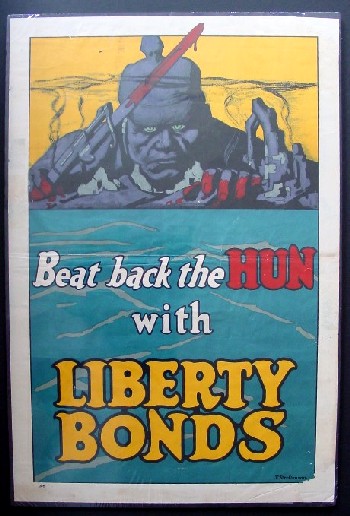
This was a project announced by GMT until a backlash canceled it.
Whenever "politics" as an intrusion or "politicization" are cited, it almost always comes from someone who doesn't want to think about other peoples' problems. After all, as a White male, I don't have any concerns about driving to the game store, purchasing a new game, and maybe sitting down to play it right there. I'm in control. Those decisions aren't impacted by any societal circumstances or the narrower ones surrounding those actions. How comfortable might a Black gamer be driving to the store (because of the police)? How comfortable might a transgender gamer be dealing with the staff? How comfortable might a female gamer be simply walking up to the table and asking if she can play? Those are "political" issues because those are social issues. They affect the society that we all happen to live in. That's why the site decided to join the chorus of protest against injustice.

Most people who aren't White males don't have the luxury of deciding when and where they want to forget about what's happening to other people. Instead, they have to consider the social (and, sometimes, legal) barriers constructed against them and decide whether it's worth the risk of encountering anything from feeling uneasy (which, y'know, kinda makes playing a game less enjoyable) to direct fear of being arrested, assaulted, or killed; most notably by those whose purported role in society is to protect its citizens. In short, if your response to someone highlighting these problems is: "I don't want to make one tiny sacrifice of my attention in the name of changing what other people have literally sacrificed their lives for", then I think a moment of introspection might be called for.

A lot of games present fantasy worlds to immerse yourself in. It's safe to say that the author of that response wants to live in two of them: the swords-and-sorcery/meeples kind and the "one where racism doesn't really happen" kind. Again, he has that privilege because of the status that his skin color and gender bestow upon him. What other people want is the ability to also slip into both of those fantasy worlds and make the second one more of a reality. Furthermore, no one is saying that you have to live the larger world every moment. I don't think anyone is thinking about larger societal issues while they're watching a baseball game or an episode of The Blacklist or while they're reading a novel or, yes, while they're playing a game. No one has to be "on" all the time. What we're talking about is the actual ability for some people to turn "off" some of the time and have access to that ability in the same way that the dominant social presence does. That, of course, means progress, which means change, which always makes people uncomfortable. But that's the way the dice roll sometimes, yo.

Wednesday, November 9, 2016

So, here's the thing

When this whole thing started and I was as surprised as anyone that a narcissistic buffoon with little record of accomplishing anything without someone else's money (i.e. Daddy's) was going to be the Republican nominee for president, I told several people that it would be the most fitting result possible for modern American politics and, if he did win, I was going to laugh my ass off. You'll have to pardon the exaggeration of intensity, because I actually dozed off while reading tonight (and, yes, ignoring election results) and when I woke up, the media were declaring President Trump. The first thing I did?

I'm letting this picture break the margin because... yeah.
I mean, actually, it was me laughing and the cats looking at me with exasperation like I know so many other people in my life will, but this is a pretty good representation. Everyone is going to try to highlight this or that factor that supposedly led to this result, be it emails or racists or a supposed reluctance to keep the same party in office, three terms in a row. But that last one is kind of crucial because, in the end, they're all the same party.

"What?!!", you scream. "There's no way you can compare that bigoted man-child to any rational candidate!" Oh, but I can, because he's part of the same class of people that own both major parties and, in effect, make them essentially the same party. So is Hillary Clinton. And there's your problem. That problem isn't bigotry or ignorance or religion or ideology, although all of those do contribute to the mess. That problem is money; who has it and who doesn't.

I hang out on a lot of gamer sites, both electronic and the old-fashioned cardboard type. Games are kind of a dominant hobby in my life, whether watching them (Michigan, Liverpool) or playing them or both. Strangely enough, I detested the game theory side of political science when I was in school. But a few months back, there was a post on a gaming forum (Fortress: Ameritrash) that called for people to register to vote in the upcoming election because of the perceived importance of the result. This forum has a number of regulars from around the world, so many of them chimed in with questions about the impending election and why Americans didn't go to the polls and so on. Someone suggested it was simply a matter of laziness on the part of the electorate. My response was this:

We might get better turnout if, like every other modernized nation, people had the day off to vote. We also would get better turnout if people thought their vote actually had an impact on the process by getting rid of the Electoral College and instituting ranked (or instant runoff) voting, so that there would be more viable candidates in the race and an actual choice for many people. You can't blame people for not participating if they've been told that either they have no choice but to vote for someone they find detestable or that their choice doesn't matter at all. And that they should spend hours standing in line away from their families and their jobs while they're making that useless or nonexistent choice. When people are encouraged to not participate, they won't. You can't castigate them for that.
At that point, someone asked for a perspective on the current state of American politics. I've been, uh, out of the scene for a few years, but I like to think that I still have a grasp of some of the nuances, so I chimed back in:

Just to clarify my perspective and position, I built the Green Party from the ground up in the state of Michigan and chaired it for 5 years, so those are my politics. However, I spent a long time trying to deal with the tunnel-visioned in those circles, who often declared that if you weren't part of the solution (that they would happily remonstrate to you at all times), then you were part of the problem. Needless to say, this is how so many good ideas get marginalized, as people attempt to be "Greener than thou" or whatever label they choose to follow or affix. I'm not active anymore for a variety of reasons, but I still know a lot of people in various political circles, on the Hill, etc. and I still like to drop into local meetings and have been, for example, to several Tea Party gatherings over the past few years because I like to know what people are saying and thinking, rather than what other people SAY "those people" are saying and thinking. 
The mood in the US right now isn't especially positive and it's driven by a number of things but, at root, the problem is economic. America, the Land of Opportunity is no longer so for the vast majority of the population and that trend has finally enveloped the bulk of the white population, who were the ones who most believed in the concept of that opportunity because it was sold to them from every politician, every neighbor, and every form of media. The American Dream is kinda dead. This is why Avik Roy, a fairly prominent conservative thinker, said the other day that the GOP is dying because it can no longer mask the fact that its central ideology isn't economic conservatism, but, rather, white nationalism. They can't sell the former idea because the concept of moving up the economic ladder is no longer a sure thing, hard work or no. So they've had to rely on the latter idea since Goldwater and it's only accelerated in the past couple decades. The frustration, on the left and the right, is paramount. This is why Donald Trump is where he is. 
Think about it: This is a man who, in the course of the past week, dismissed the Geneva conventions, talked about exiting NATO and then the amount of money the other members would have to toss at the US to rejoin, suggested that the president of Russia should release more negative info about Trump's primary electoral rival, and refused to release his tax returns. Any one of those statements or actions would be heavy damage, if not death, to any normal campaign. But Trump's supporters don't give a shit about any of that because it doesn't matter to what's in front of them right now. What's in front of them right now is a pretty stark reality: They need an education to hopefully get a decent job, but the old reliables like law school are no longer so reliable. If they tried to get that education, they'd have to go six figures into debt and, aside from that incredible burden, who'd be working to support their family (whether it be children or parents)? Meanwhile, they're still constantly berated by the stories of the success of the 1% and told that if they work hard they, too, can be "successful". But the reality says that that won't be the case and so now they're looking for answers. Trump is providing those answers in the simplest manner possible and using tried and true methods that are inherent to American politics from the dawn of its existence. Race has always been an element of American politics since before those fabled founding documents were written and it always will be. It will always be easy to divert people's attention from the real cause of their troubles (lack of opportunity caused by the concentration of wealth) to some other vague reason that usually involves people who look differently (race) or act differently (sexuality) or worship differently (obvs.) 
What's accelerated the process in the past 20 years is this thing we're currently all sitting on: the Internet. It is, in turn, the greatest and worst communication device ever created. It's the greatest because it allows thoughts and ideas to travel instantly around the world and for people of like mind to find each other and exchange those ideas. It's the worst because it allows people of like mind to segment themselves from the rest of humanity until they hear only what it is that they're comfortable hearing. When what you're already predisposed to believe is repeated to you hundreds of times a day, it's difficult to abandon it even when confronted by the stark reality that it's not true. That's why Trump is lauded for "telling it like it is", even when much of what he says are flat out lies. But those people that support him have been lied to constantly by "regular" politicians (like Clinton, for example) for all of their lives. Hearing different lies from a guy who clearly is not your regular politician is invigorating in a way because it provides some tiny element of hope that he might be able to turn a couple of those lies into reality, if only because he'd try to do something (outlandishly) different. And that's what most of these people are lacking: hope. In other modernized nations, you have socialized medicine, daycare, education, maternity leave, and a dozen other things that support the idea of changing your circumstances and moving on to something new and better. That's hope. That's not present in the US right now because almost none of those things are available, since American Individualism speaks against the idea of socialism in all of its forms (except when it comes to bailing out major banks, but that's another rant...) 
This is why there was so much commentary (usually in very dark terms) about how Bernie and Trump supporters were saying the same things. "But they're on opposite sides of the spectrum!", the wealthy and appropriately-threatened talking heads shrieked. No. They're just looking at the same problem from different perspectives. Trump is saying that everything is broken for one set of reasons. Bernie was saying so for a different set of reasons. Clinton, representing the "I got mine!" Democrats, is basically saying that they're both wrong and if we keep doing what we've been doing, everything will be fine. And it will be fine, for the very wealthy segment of the populace that she actually represents. But it won't be for everyone else, including the vast majority of her supporters.
That's the key, yes? As has been said so many times before, it's not about race, or sexuality, or religion, or gender. Those things all have some impact, but when we're talking identities it's really about one thing and one thing only: class. Class means money: who has it and who doesn't. Trump can't identify with the vast majority of the people who voted for him. But neither can Clinton. She travels in the same circles that he does and speaks the same language. Some may call that a necessary evil of US politics. I call it the thing that's making politics virtually irrelevant to the bulk of the population, who might just be inclined to deliver a "vote of change", as it were, no matter how apparently irrational. Yes, I realize that Nate Silver's polling data indicated that Trump's supporters, on average, were wealthier than Clinton's but somehow a good chunk of Mr. Silver's results never seem to conform to the reality that I see on the ground. One begins to question the math.


And already the howls of outrage are beginning to rise; not by Democrats against Trump and the GOP, but Democrats against anyone who didn't vote for their fatally-flawed candidate. This is identical to the situation in 2000. The Democrats put forth a candidate that really stood for no one but the money. When voters went for Bush, instead of blaming their own milquetoast efforts, they blamed minor party candidate, Ralph Nader, and, specifically, Green voters in Florida. This is despite the fact that Nader's votes in Florida were about 10% of the total of registered Democrats who voted for Bush. I suspect we will see similar results here, given that a significant number of former Obama supporters have apparently cast their lot with Trump. Once again, that outrage bespeaks a lack of understanding of or a lack of empathy for the people who, as I noted above, have little hope for improvement in their lives. Asking them to elect another Clinton when the impact of the policies of the first one (NAFTA, Reinventing Government, rescinding Glass-Steagall, Commodity Futures Modernization Act, etc., etc.) helped shape the current economic reality in largely negative ways is asking quite a bit.

But the root of that whole issue goes deeper than just venal Democrats. When discussing the minor party spoiler effect on the aforementioned forum, I also mentioned the pernicious effect of ballot access laws in many states and the denial of actual choice to much of the public, who are thus left with poor selections like Donald Trump and Hillary Clinton:

Most minor parties run presidential candidates for two reasons: 1) Visibility. In a presidential year, no one pays attention if you don't have someone in the horse race. Those are also the years when most fundraising is done and the way to raise the most $ is via high profile races; presumed fool's errands or not. 2) Even more importantly, ballot access laws. See, the laws are written by Dems and Reps to ensure their dominance. The majority of states require you to get a certain percentage of the vote of the highest candidate to stay on the ballot. That's usually a presidential or senatorial race. If you don't run one, you're basically conceding your ballot access next time. Having organized multiple efforts, I can tell you that ballot access drives are often quite difficult and expensive, using time, energy, and money that could otherwise go toward those smaller campaigns. So, no, it's not just because we're all idealistic fools thinking we can win the White House. It's because the laws are written to make it as difficult as possible for the public to actually have a choice. We managed to change the law in Michigan by coordinating every minor party in the state along with a Libertarian-leaning GOP state rep and a sympathetic writer in one of the major papers. Now minor parties only need a certain percentage of the vote of any state-wide candidate, but that's an exception and we took advantage of extraordinary circumstances to get there.
Remember that all election laws are written by and for the two (one) major parties and are written to serve their interests. That primary interest is to stay in power. So, there it is.

I'm no soothsayer. As I mentioned at the start of this ramble, I was as surprised as anyone else when Trump did manage to land the nomination. But the more I thought about it, the more it began to make sense, in the same way that his victory yesterday makes sense. And here we are: President Trump. (Honestly, I convulse with laughter every time I think of that. If that idiot's term in office demonstrates anything, it will be just how absurd the whole situation has become. Non. Stop. Entertainment.) 

When the financial crisis of the last decade began in 2008, my opinion was that the only genuine way to solve many of the structural issues it revealed was to let the banks burn. There should be actual consequences for their actions and all that. Instead, they were bailed out and now wield more power than ever. Once again, we have come to a point of reflection. Will the half of the populace who didn't vote for Trump agitate in favor of actual structural change, both economically and electorally, like many of those who did vote for him apparently desire? Or will they just return to the status quo and let big money continue owning the government that's nominally of, by, and for? This would seem to be the moment to take a stand, yo. I'm just going to be over here chortling while thinking about that idiot trying to interact with other nations. Or anyone, really. His victory speech tonight was still him talking about how many generals and admirals were on his side. Hello? Donald? You won, dude. Most humans' egos would no longer need the massage. But, well, yeah... (Seriously. I can't stop laughing.)

Friday, April 18, 2014

Friday Music

There's a habit on the board (it's not really consistent or old enough to refer to it as a "tradition") for a couple years now in which people post Youtube videos of bands they're currently listening to or have recently discovered or just think that the majority of the regulars won't know and might enjoy. There's a fairly diverse set of tastes and interests there, so it's usually a decent introduction to new and generally good stuff. The few times that I've participated (where I'm working now makes Youtube a bit of a challenge), I've usually posted 4 or 5 items largely because I tend to be listening to multiple new things (just today I dropped another $40 in new mp3s over at the commerce overlords (aka Amazon)) or have enough varied things on my mind that people might be interested in that it's easier to just do an information dump. Since I was home today (hooray for pointless religious observances that have nothing to do with the religion (or lack thereof) of the majority of the population!), I was ready to spam my usual output, but in thinking about what to post, decided to bring it here instead.


I've been listening to a lot of North Mississippi All-Stars lately. I'm fond of Delta Blues and these guys are the genuine item; plus they put on a helluva show because they're very enthusiastic about their music and their fans and that's always fun to see. Two overriding themes in many of the bands/performers that I regularly listen to is: a) Fearlessness. They try different stuff on a regular basis and aren't afraid to grow, even if they know that will piss off a segment of their audience that doesn't want to change; and, b) They're audiophiles. Part of that willingness to try new stuff is because they like taking sounds and making music with them, regardless of source or connection to their own assigned genre. NMAS are definitely in that vein, even if they stick to their Delta roots. The multiple layers of percussion in Goin' Down South makes it stand out from its more conventional blues guitar work. There are several rhythms going on here and you can bob and weave with any or all of them.

Speaking of awesome shows, my friend, Nathan, traveled down to the Majestic in Detroit with me a few weeks ago to see one Les Claypool and his current project, Duo de Twang:


I've enjoyed stuff by Claypool ever since Primus because, again, he's one of those aural experimenters. His song are bass-focused, as you might expect, but he's all over the spectrum in terms of rhythm, melody, and style. The problem is that, unlike more electronically-focused performers like The Orb or The Crystal Method, his music doesn't really jump off the disc to me when it's prerecorded. There are some performers that just do better on stage than in the studio and, based on what I saw at the Majestic, he's one of them, as his show completely blew me away. He and Bryan Kehoe just sat on stage with nothing but a blue light on them the whole time and just tore it up. I kept trying to follow his hands on the bass and kept losing him because he was doing more with it than most other players that I've ever seen (the only person I can remember who struck me as similarly talented is Melvin Gibbs, who I saw a couple times with Rollins Band.) It didn't hurt that they had a hilarious opening act ("Hello. We are reformed whores... and, uh, that is the name of our band, too.") and I happened to be the crossing point for two different groups of people passing some really good stuff back and forth (since I was helping, I was duty-bound to take a hit; Duty. Bound.) I pulled up some regular tracks on Youtube the next day and it just didn't have the same energy, so I'll wait 'til he rolls into town again but I will definitely be going. EDIT: Of course someone recorded the Majestic show, the first part (of six) of which I've now included.


Speaking of electronic bands, I've been a long-time fan of the Dutch techno producer, Speedy J, who originally engaged in the more flowing style that emerged from Detroit in the 90s and became prominent with groups like the aforementioned Orb and Aphex Twin, but later switched into much heavier rhythms and more complex sonic arrangements that often leave a tonal memory in your head precisely because of their lack of melody. He's using sounds to create an image in the same way that musical scores do for film, TV, and stage. What I really like about this approach is that it hearkens back to the industrial sounds of the early 90s that bands like The Disposable Heroes of Hiphoprisy and Atari Teenage Riot were using (albeit in drastically different ways) and, again, keeps with that thought of using new and interesting sounds to make music that a wider audience can still appreciate.

Soundtracks aren't confined to just performed art anymore, either, as there's a great amount of really good music turning up in games.


This is the background music for an area of the World of Warcraft called Booty Bay. As you might expect from the name and should be able to tell from the sound, it's where a lot of pirates tend to hang out. It's clearly soundtrack music designed to generate a certain image and atmosphere and does so in a rather phenomenal way, IMO. Even though the location is some distance from the regular cities where the majority of players tend to stay because certain services are easily available, I've left a couple characters here upon signing off just so that when I logged on, I could hear the background theme because it was so inspiring and exciting. Having a full orchestra to make game music certainly helps with that endeavor and, as any viewer of shows like Game of Thrones will tell you, having an innovative thinker like a Ramin Djawadi can go a long way toward making your show/game/play a compelling draw for years to come and leave your viewers/players/audience humming your theme songs as they go about their day.


On the orchestral note, I figured I'd end with a favorite composer, George Philipp Telemann. Telemann was a German baroque composer of the late 17th to mid-18th centuries and a contemporary of JS Bach and his sons, as well as Georg Friedrich Handel, among others. He was one of the most prolific composers of history and tended to stay at the cutting edge of musical development and led a lot of that change himself by his willingness to experiment with underused instruments (like the viola) and new arrangements. I have a collection of his trumpet concertos that's a favorite because of the compelling sound of the horns breaking free from the supporting music around them. This piece, the Concerto for 3 trumpets, 2 oboes, and timpani in D, is probably my favorite from that collection. Unfortunately, the arrangement in the above performance is a bit shaded toward the strings and less toward the horns, which are much clearer in the one that I have listened to most often (and which occasionally compels me to abuse Shakespeare's sonnet style, to the chagrin of everyone around me.) But the music still embodies the phrase "clarion call" and is one of the more compelling that I own. I gave a copy to my friend, Juscha, a few years back and she emailed me the next day, saying that she "woke up today to the sound of beauty."

Bonus extra!:

In the course of the last 45 minutes of writing this I've actually been listening to none of these performers but instead to Trixie Whitley. She's the daughter of semi-known blues guitarist Chris Whitley, whose one significant charting hit from the 90s was a track called "Big Sky Country":


Sadly, Chris died about a decade ago but his daughter has been carrying on with her own career after performing on several of his albums. She did some work with a group called Black Dub, which is kind of a blues/dub/rock fusion with some supporting sounds, but recently released her first full-length offering, Fourth Corner. This is one of the gems from that:


In short, she has dad's voice which kinda makes my knees go weak every time I hear it (but I'm odd like that; I've been talking a lot recently with a friend from the political past who speaks Dutch and my knees wobble just at the thought of hearing that...) Plus, it was a good excuse to bring this back to its blues beginning. Now on to some Lydia Loveless...

Friday, November 15, 2013

Questions from the past


Going to be looking for work again soon, as the current employer apparently doesn't want to make it a permanent thing. Temping is the closest I've come to the experience of being a pro in my life. I've never partaken of one's services, although I've been approached. But working for a temp agency must be akin to being pimped, since the majority of the money you make goes to someone else and they have no real interest in your success or progression or even whether you do the job poorly. It's like wage slavery, but even further from a worthwhile living.

It got me to thinkin', though. I spent some time a few months back with a friend I hadn't seen in many years. I met him shortly after I graduated from Michigan and he was still a student at the time. Back then, I was still running RPGs (Nerd moment: Role-playing games aka Dungeons and Dragons, but not), most of which I designed myself, because it let me experiment with story and character and gave me an outlet for the acting gland, since I wasn't part of a regular theater group at that point. As the GM ("Gamemaster"), you have to play all the characters that the other players are interacting with, so it takes a bit of creativity and mental agility, both of which I used to have considerable amounts of. Anyway, there were 5 regular players in this group and me. My friend, Todd, was one of them.

Todd graduated from Michigan with a degree in accounting. Like many in the early 90s, he promptly went into programming, which he had been doing a fair amount of on the side, and has been a very successful programmer for many years now. He and his wife, Carolyn (an accountant for a car dealership chain in Canada) have a massive house on a lake out in Onsted and Todd works from home 4 days a week and is otherwise surrounded by house, cars, boat, side business of karting, and a trio of miniature Dobermans

Another member of that group was Adoni, who is currently a tenured professor of classics at Ohio State with multiple published volumes under his belt. He was hired by OSU with the mandate of building their classics department into something of renown and has done an admirable job of it from all the sources I've seen. He lives in Columbus with his wife, Carolina (also tenured at OSU), her son and their daughter.

Third was Greg, a successful architect in Ann Arbor (he was finishing his master's while we were haunting bars for a couple years) who lives in town with his wife, Terri, their two children, and a rambling red brick house.

Gamer #4 was Wendy. Unlike the rest, I knew Wendy while I was actually in school and we had stayed together after I graduated and I'd become pretty close with her sizable family (she has five siblings.) Wendy finished her undergrad, wobbled around for a year, and then returned to school for a master's in library science. She eventually became head librarian at the Texas Wesleyan School of Law and acquired a J. D. in the process.

Last was Kevin, Wendy's brother-in-law, who was married to Wendy's sister, Michelle, and had two kids with her while climbing to an executive position at a New Orleans chemical and plastics firm.

I remember stopping to think about all of that while hanging out with Todd because it kind of surprised me that the respective lifepaths of those 5 and I had gone in such different directions. All of them achieved model success in most or all of the measures that people use to assess modern life: money, career, family, property. Out of the whole group, the only one who hadn't succeeded in those respects was the leader: me.

So, I started to wonder: What was it that separated me from all of them? Ambition? Work ethic? Inherent talent? There's little doubt that all of them were talented in some way, if not multiple ways, and Adoni is easily the most intelligent person I've ever met in my life. I think I shared the ambition and work ethic that they displayed in trying to keep an independent comic studio running for years and then building a political party from the ground up and chairing it for some time; all of that while holding down a full-time job. I like to think that both of those require some degree of talent and, yet, all of them had found success and here I was, two steps removed from a drifter.

Was it bad choices? Clearly, venturing into the creative field and the political field outside of the major players could easily be seen as dead ends from the moment they've begun. And I had been married with a house at one point, but neither of them particularly resonated with me, as it were, and I abandoned them both while also walking away from the secure job that I'd had for years primarily because I had to pay the damn mortgage. Does staying in a dead marriage and a house you can't afford alone count as success?

So, after 43 years, I basically have nothing to show for it in the conventional estimations of society. Granted, my path hasn't been very conventional but that makes me very, very far from unique. Interestingly, shortly thereafter I got back together with another friend, Jeff, whom I'd seen briefly only twice in the past decade and who had been my partner in the comic studio. I spent a day over the weekend of the 4th of July with him and his family and it was easily the best day I'd had in years. Jeff and I finally had a chance to sit down and talk at length and I mentioned this comparison that I had been mulling over and he said a funny thing: "You know, I respect you more than anyone else I know. You've spent your life doing things that you're passionate about, no matter the material cost or sometimes the personal cost. I don't know anyone else like that."

I'm still not sure how to take that. Jeff is one of the few people in the world that I implicitly trust but I look back at the last decade and realize that I haven't done anything with passion for the vast majority of it. Indeed, my sole societal accomplishment, my marriage, failed because of a lack of passion, mostly on my part. I had tons of it for the studio, which failed, and the party, which failed, and I used to be a determined writer, which has yet to produce anything but failure. He reminded me of the time I drove to his home in White Lake from Ann Arbor in an ice storm because "it was Tuesday and that was the day we said we'd work." I suppose I'd still do that today if I thought I'd have someone at the end of that drive to welcome me in and pursue a dream with me.

I finished a book recently, Stay Awhile and Listen, which is about the development of Condor Studios, which developed the game, Diablo, in partnership with Blizzard (Yes, I know. It always comes back to games. Maybe that's why I never get anywhere...) The company had emerged in the early 90s, right around the time we were building the comic studio, and reading this account of it was so emotionally familiar it was almost painful. They talked about not thinking about money or success or pretty much anything else except making the coolest game they could come up with. They were doing it all with ad hoc approaches and technology and code that they were dreaming up on the spot because the video game industry was still in its infancy and no one was telling them that they couldn't. They didn't think of the conventional idea of success, either (except as much as they'd like to be able to pay the bills while still making games.) They had ambition, work ethic, and talent. That was us, 20+ years ago. That was me when things still seemed like they held promise, no matter how long I or we had to search for it.

That all went away as people moved into real life, as it were. Except me. I'm still here on the fringes and wondering how the so-called leader of so many things fell behind everyone else.

Friday, March 30, 2012

Is Fantasy. Is not Fantasy.

Win the Internets for a day if you can tell me which band is referenced by the title without Googling. They were easily one of the most innovative groups of the 90s.

So, allow me to prove myself wrong almost immediately by having something occur to me that is not fiction, but is actually about fiction (Is fiction. Is not fiction...), since fantasy and SF seem to be hot items in the entertainment world these days (All those of us who've been fans for decades can finally roll our eyes once again at mainstream America in that respect: Yes. It was always cool.) But there's a bit of seeming hypocrisy present in the fantasy end of the genre and that's what I wanted to touch on because it directly affects what I'm working on from a viability standpoint.

Clearly, the hottest fantasy series out there right now is George R. R. Martin's A Song of Ice and Fire, known to many by the title of the HBO series, named after the first book, A Game of Thrones.


One of the most frequent comments I see about both the TV series and the books (as the vast majority of viewers seem to have become readers, much to the joy of Martin's bank account (and quite deservedly so; it's a strange world in which we live when a person's months or years of work can be bought for less than the price of a fast food lunch, but that's another post...)) is that Game of Thrones is appealing to them because the "fantasy" elements are largely left in the background. With the exception of one appearance by the Others in the first episode and the appearance of dragons in the finale and a couple minor bits along the way (zombies, the presence of the Wall, etc.), Martin's story is far more medieval power struggle than fantasy epic. Of course, since he largely based the series on the Wars of the Roses and Venetian clan conflicts, that's perhaps to be expected. I have grave news for those viewers who still aren't readers in that the fantasy elements tend to ramp up a bit in the second book (and, presumably, in the second season of the TV series, which begins this Sunday.) You'll see alchemists creating a fascimile of Greek fire, more evidence of the Others, shapeshifting assassins, Wildling mammoths, and a huge dose of mysticism in the mysterious city of Qarth. And, of course, the continued presence of flying, fire-breathing lizards. Will that same audience continue to be sucked in by Martin's brilliant characters and simply accept the emergence of the sorcery half of the typical sword-and-sorcery combo?

One of the interesting aspects to that declaration of the enjoyment of "non-fantasy fantasy" is the demeaning comparison to The Lord of the Rings. The latter is presented as the "too much magic" fantasy which Martin supposedly successfully avoids. The interesting thing about that is, if you read Tolkien's books, there really isn't that much typical fantasy involved, once you get past the very presence of elves, dwarves, and orcs. Take out the One Ring and that's short people and skinny people fighting bestial people, which could be propaganda in any number of wars throughout human history.


(Did I just imply that the uruk-hai were the misunderstood victims of politics? Oh, yes, I did.) The movies tended to add fantastical elements that really weren't present in the books (there is no on-camera telekinetic duel between Gandalf and Saruman, for example) but LotR is still considered the byword for something that real people wouldn't admit to reading or liking if they wanted to be accepted by mainstream America (despite the movies somehow raking in billions and several Oscars; I'm not getting into it...)

But the books are quite different. Tolkien used to harp on a concept he called "lore" more than anything else. The rings didn't actually do anything overt. You couldn't haul off and shoot fireballs with them. They simply enabled people to do other things. The elves built the scintillating forest realm of Lothlórien on the strength of one of the three rings. Sauron built the Barad-dûr on the strength of a ring that seemingly did nothing more fantastic than turning the wearer invisible. Nice for David Copperfield, but hardly something that would turn him into ruler of the world. But the "lore" behind it was what was important. It was the theme of Tolkien's story; his disdain for the modern world and its machine-like impulses (most prevalent in the pursuit of war) when the truer, deeper, more elevated impulses were those embodied by not humans: mostly elves. It was a longing for a time that had never been when confronted by a time that he really didn't care for (having been a participant in WWI and with his son an active participant in WWII while he was writing The Lord of the Rings.) The sword-and-sorcery fantasy in Tolkien's work is actually far more conceptual than what would produce big explosions on screen. But his work is now often derided because it is the foundation of modern fantasy and Martin's work, possessed of far more adult-oriented themes than much of Tolkien's work (savage murder by other humans as opposed to monsters, sex, overt politics (as opposed to the subtle themes of Minas Tirith), etc.), is given credit for being that much more "real", walking precisely the path that Tolkien so derided for being what it was. Tolkien wanted to be fantasy and is now derided for it. Martin's story is fantasy and will become even more overtly so once the dragons start contesting the world with the walking ice men, but is hailed for it.

Bringing this all around to what I'm doing: the prologue that I posted the other day is set in a world that is unapologetically fantasy, but not Tolkien fantasy. Magic is a constant presence but so is the presence of what Martin's books are often lauded for. For example, the pseudo-main character is a contract killer who happens to be of the class of people known as magi: those who can invoke powers beyond their world and use that energy to do fantastic things. But murder is a constant presence. So is the (supposedly) past element of slave trading. And labor rights. And the exploitation of the poor by the rich. And drugs. And, yes, "lore" in more of the Tolkien vein (or at least my interpretation of it.) It will be, in essence, both Tolkien and Martin taken to the Nth degree in many ways (except no dwarves or elves, sorry.)

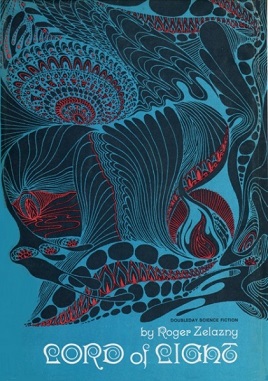
Does the darker atmosphere make it more viable in today's market or does the constant presence of sorcery and mage stuff make it less viable? Both? Neither? Will it cross the same audiences as Martin's work? Or get relegated to a niche because one element overwhelms the other? When you look at typical fantasy, like Terry Brooks' Shannara series, which is unarguably successful from a sales perspective, does that make it better than Roger Zelazny's brilliant and beautifully-written Lord of Light, which is barely remembered?


I'm not particularly concerned about the sales or audience questions at this point, since my story is largely unwritten and, thus, can't be sold even if people wanted to buy it. It's just another of those theoretical questions that invade my brain and cause me to wonder about people's identity crises vis-a-vis their choice of media. Is it OK to be a prototypical "jock" and like fantasy? Or only Game of Thrones-type fantasy? Do those labels even apply anymore? I'm a diehard Michigan football fan who understands the 4-3 under (that's a defense) better than most football fans I've ever met. But I have a closet full of board games, the majority of which could typically be described as "geeky" (Descent, et al) because of their themes and styles. Does that make me the ideal "modern fantasy" consumer? Good thing I know several other people like me, I guess...

Friday, February 17, 2012

Risk

I play a lot of games. That being said, I don't play Risk because it's a little too simplified for me. I'm all about complexity, so that makes me an elitist about my boardgames, my beer (I generally avoid American mass-produced swill; I drink because I like the taste of it, not just because it's there), and my fiction. If you're going to try to hand me something recycled from 20 years ago with 2-dimensional characters and monosyllabic dialogue, but with flashier special effects, you will likely lose. On the one hand, this looks good: Guy Pearce, some witty banter, grim future; I'm all about it. On the other hand, it's Escape from New York in space and I'm betting that it lacks the moody direction of John Carpenter that made the latter rise above its B-movie level. The story overall simply lacks complexity. There's no risk inherent in presenting it because it likely doesn't push the boundaries of anything that's been presented before.

No one will ever be Snake Plissken again. That's probably a good thing.


I like risk-taking because I think it encourages original thought. Game design is a sterling example of how it can be done well and done poorly. Games Workshop is notorious for including minor rules in its games that presumably reward risky play. What they don't get is that, in the framework in which they provide such things (turn-based wargames that already involve a substantial amount of risk known as "dice"), those risks will preclude their participation because they create scenarios that go beyond individual choice. It's not a case of "If I make this move, I could win the game." It's "If I do this, there's a solid chance it could go horribly awry because of a die roll over which I have no control and I could lose what should be a sure win in this fight... or I could just do well in the fight." This is a risk-reward system predicated too heavily on the risk. (Why does a lifelong peace activist play wargames? Dichotomy, baby.)

That guy in front is a good guy. Fer reals.
 
WoW has been the same way over much of its development. Warlocks, historically, have been saddled with many abilities that focused largely on their traditional "attempts to control forces beyond their ken" (this is a recurring theme in GWs approach, as well, as many of the major "drawback" rules appeared in their games for Chaos (read: the bad guys.)) The problem is that, if you're into organized play, like raiding, you don't want random factors or large drawbacks to impede your progress. If that warlock summoning that demon is going to tip the balance against you in a tough encounter, most players will not engage that ability and would rather just work through the problem with abilities they know either won't damage them or will work more reliably. Blizzard, to their credit, has deemed said abilities "not fun" (i.e. no one uses them) and has been gradually weeding them out over the years. GW is a little slower on the uptake...

Should I sacrifice a friend to summon this thing that might attack me... or just grind through it? (rhetorical!)

This whole process is similar in a political vein: risk-taking encourages original thought because it often is original thought. By the same token, it also encourages knee-jerk, reactionary, and often hysteric responses. That's the risky part. Should we continue down a path of ever-dwindling and increasingly-dirty fossil fuel extraction or should we make a serious effort at transforming our economy and our infrastructure into something sustainable, despite the fact that the capitalist model of ceaseless economic growth will likely stall while this development takes place? Should we persist in demonizing (warlock term!) "non-traditional" lifestyles in the name of protecting the sanctity of outdated traditions or should we put all of that aside and pay attention to some problems that really matter? The answer to both of those is both more complex than a one word answer (which is one reason you'll rarely hear them addressed in an honest fashion by major party politicians) and perfectly obvious if approached in a logical and reasonable fashion (which is the other reason.)

Most political figures can't answer them in one word because they'd have to explain them. Explaining things requires context, which opens one up to being misquoted or having things taken out of context and then used against you. The reason that tactic works is the other reason you can't stop to explain things: the American electorate, by and large, is neither logical nor reasonable but, in fact, dumb as a bag of hammers. Containing complex concepts to three word soundbites ("Drill, baby, drill!") is a way of both staying on message (no matter how stupid said message may be) and risk aversion. Why doesn't anyone want to take the risky approach with their Chaos Lord or warlock? Because people are naturally risk averse; even moreso when presented with a bad choice (e.g. where one selection is not clearly more positive than the other(s).) There's a brilliant book on this sort of behavior that we're all subject to called Scorecasting. It contextualizes the concept of risk aversion into sports and makes it clear(er) why officials, coaches, and players often do what they do. Politicians, like most humans (speaking very broadly here...), are subject to the same psychological tendencies.

Are solar, wind, and geothermal sources of energy sustainable? Yes. Are they cleaner than fossil fuels? Yes. Will they create new industries and technological innovation? Yes. Can they be achieved on a national scale quickly? No. (There's risk.) Will it be an easy transition? No (There's risk.) Are there enormous moneyed interests working against it? Of course (biggest risk of all...) From this perspective, the idea that a politician may be abandoned by an enormous source of campaign cash and political influence (the fossil fuel industry) is indeed a warlock's bargain for him or her. It's a good risk for the rest of the world, but a bad risk for the short-term profits of BP and the short-term prospects of most American politicians; not to mention their personal short-term profits that BP would love to pay them as soon as they leave office.

Is fighting against gay marriage a waste of time and money...? Seriously, do I need to go into this? If you're concerned that the sanctity of your marriage might be threatened by the relationship of two other complete strangers, I'm sorry, but you're an idiot.

To be honest, I'm not sorry. You're just an idiot.

Risk and risk aversion are essential concepts in a lot of the things I enjoy. In many cases, I tend to focus on them because I like to see how other people are willing to engage or avoid them. As I said, I appreciate risky behavior because it often means people are thinking "outside the box" (to overuse an aphorism that should probably be killed by now.) Do I engage in it myself? Sure. I even tried using some of those horrible choices presented by GW and WoW; mostly because I just wanted to see what happened. It doesn't make me particularly good at playing said games. As a case example, I just played a couple games of Twilight Struggle (games and politics!) with Brian this past weekend. My risk aversion led to a play in our second game that likely sealed the loss for me. If I'd been willing to be more risky, things might have turned out differently. (The fact that I won the first game because he led the world into a nuclear war will go almost unspoken...) Are you considered more of a success at life if you take the safe path and are good at what you do or if you opt for the less traveled road, as it were?

The final example of risk today goes to the following clip, because it's the most beautiful political rant I've heard or seen in 20 years. Napolitano was already getting cancelled, so the risk is whether he'll ever land a TV job again. Bet he could get a few votes for public office at this point...