I stopped into a drugstore today and the clerk behind the counter ran me through his whole spiel on their discount card in a very enthusiastic manner. He struck me as a person who was very happy simply to have a job. Given the overall unemployment figures and especially those in Michigan, it's not unusual for that to be the case among any number of people.
The thought occurred to me to think to myself: "I've been there." I've been unemployed for fairly lengthy stretches at times, struggling to pay the rent on time and putting 1 or 2 dollars into the gas tank; just enough to keep the car moving from one interview to another. But it's not true. I've never been happy simply to have a job. Any job that I've had that has directly contributed to keeping a roof over my head has always been one that I despised. Its sole function was to pay for the necessities of survival and nothing else. Well, that's also not true. The other purpose it served was to make me hate the majority of my existence while I was doing it.
I have had jobs that didn't pay the rent. Those were the ones that I loved and would have gladly continued doing even as financial failures. I did them while I was also working for a paycheck and didn't consider them "work" in the dolorous sense. Of course, they were work and lots of it. They often required more energy and effort, physical and mental, than anything I expended on the tasks that people were paying me for. But I was driven to do them because I loved what I was doing. The people that enjoy those tasks they do for a living are often termed "people that love their jobs". They're defined as a jovial anomaly; someone that, essentially, got away with something in the game of life because they found a way to put food on the table and still be happy while doing it. "Pursuing one's passion" they call it and it often involves a serious expenditure of money on one's own part to get to the point where you can chase those dreams.
Except that it's not such a great idea to make the attempt any longer, as a number of recent reports suggest that unpaid student debt now exceeds $1 trillion (ever notice how no one uses the phrase "that's billion with a 'b'" anymore, because the numbers we talk about in ominous tones now routinely exceed trivial billions?) The sad thing about that is not only that a large share of said student debt is based on people making attempts into the fields that they were encouraged to pursue because they were seen as "sure things" (read: economically viable) but that those things are nowhere near as sure as they used to be.
Time was, you could spend your 4 years in college and come out with an anthropology degree and find a career in research or curating or education or even cultural relations for the nearest oil company wanting to lay waste to Borneo. That's all gone now (except for the oil devastation.) I met a really interesting woman a while back who has just such a degree and further education besides. She's fully trained to maintain and enhance the nearest museum exhibits on what has gone before. But those exhibits might as well be telling the story of the American education system that used to be a byword for opportunity but is now reduced to this simple message:
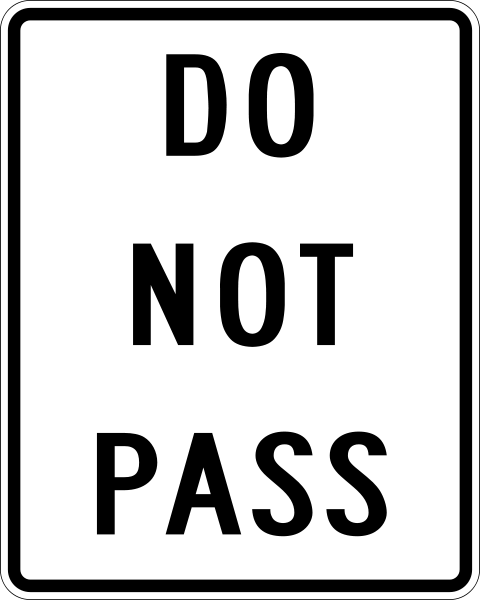
(When I was 5 or 6, I remember thinking that my dad was going to get in trouble for driving past one of these signs...)
Do not attempt to be an art historian. Do not attempt to be a historian. Do not attempt to be a marine biologist (Ghostcrawler promised me a pony!) or a journalist or a practitioner of any number of cultural or geographic arts. And don't even bother to get medieval on anyone's ass. No one else cares. It doesn't serve the drive of the modern society. It's not productive. You can go into business, technology, the law, or medicine. Make your choice.
Except that... well... you can't really go into any of those, either. The vast majority of the aforementioned debt is the (ahem) product of people venturing into those fields in the past decade or so. Those are, after all, the fields that society has deemed truly beneficial. After all, they get paid the most and the most assuredly, right?
A friend of mine started a blog recently, entitled "Inside the Law School Scam", which details the apparent effort by major law schools to recruit students not for the purpose of teaching them to become lawyers, but simply to make money... for the law schools. It is becoming a supposition among lawyers that law school doesn't really teach you about practicing law. You learn that in the real world, when you're making money. After all, that's the point of being "productive", right? To make money? Except that making money often involves being unhappy; something done for the sake of "getting by".
What kind of successful society perpetuates unhappiness for the sake of popular concepts of efficiency? What kind of society deems any activity that does not make an immediate or enormous profit one that is, essentially, a burden to that society? Produce or die. And yet, most of the major works of art and literature that form the foundation of our modern society were the product of patronage or starvation. The very culture that is lionized and revered by the ownership class was created by the kind of people that that class reviles. Most of those people did so because they were driven by passion and, occasionally, assisted by those who had means.
Our means, at the moment, is often directed toward creating more means as an end unto itself. I remember thinking about going back to school a couple years after I had graduated from Michigan. I had thought about getting a master's in education and going into teaching. My father attempted to talk me out of it because "there's no money in it." True enough. Unless you're a big-time law or business or medical professor, I suppose.
What kind of society perpetuates these conditions? Presumably, the one that doesn't care about them and those left to endure them. That, in itself, is an argument for burning said society to the ground and starting over. "There always seems to be money for war but not for education..." Or happiness.
Tuesday, November 1, 2011
Friday, October 7, 2011
Restraint
So, it's been a while. I wanted to keep up with this on a regular basis, but I've been restrained. The restraints have been physical and mental. A lack of ability in some cases, but largely a lack of motivation or energy. Some have been self-imposed; others, not. But restraint comes in all kinds of forms...
I look out on the Occupy Wall Street (Chicago, LA, ad infinitum) demonstrations and I am both encouraged and dismayed (dichotomy, anyone?) I am encouraged because I see people finally following outrage with action. As much as the presumably cynical and worldly types like to express their worldly cynicism with a haughty disdain over the 'fact' that 'someone is always protesting something', the actual fact that people are actually in the streets at this moment is something that is all too rare in this day and age. But I am dismayed because my initial reaction to those demonstrations is that they are too passive and they will too easily become part of the background noise that is Somnolent America.
When I think of our current circumstances, what I want to say is this:
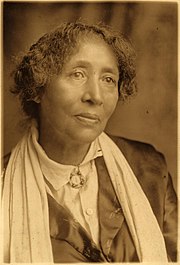
That was Lucy Parsons, who was intimately familiar with the lack of mercy and pity from the owning class. Thus, why not respond in kind? My response to the whine of: "You're talking about class warrrrrr!" has always been: "You're damn right. It's been going on against the poor since time out of mind. It's about time we started talking about it." After all, if we can freely talk about race (kind of) in our free and open society (kind of), then why can't we talk about class? Because it doesn't exist? Or because it strikes too close to the bedrock truth of our free, open, and equitable (not even close) society? We have classes; always have, likely always will, and the rich, the owning class, has a disproportionate amount of power in our free and open (kind of) society. The only way to wrest power from the powerful ("Power concedes nothing without a demand. - Frederick Douglass) has typically been by violence. After all, when one's entire society is based on the primacy of property and violence typically results in the abduction and/or destruction of said property, the people who own it tend to get a little nervous. Nervous is good. Terrified might be better. Compliant is the real goal.
The problem with compelling compliance through violence is that the people who often end up dying as a consequence of said violence are the 99%, as it were. It would be nice if we could all storm the Bastille again and watch the landholders flee the country, but they've figured out that being part of the owning class also means that they own most of the guns and the people that have access to them. Not that parallels to 1789 are completely absent:
Some people will always be oblivious, even if they don't know how to spell "brioche".
My gut reaction that trends toward violence is a product of decades of frustration on this issue, even if I recognize its obvious drawbacks. Thus, if I were to exercise a degree of restraint, I'd more likely want to express something like this:
That acknowledgement of the seeming need for restraint has a personal quality to it, as well. Marcus stressed the avoidance of negative emotions or actions. The expression of Stoicism in the face of difficult situations was meant to be the perfect example of the nobility of the human spirit. The ability to stand against daunting odds without lashing out should be seen as an example of how to resist and effect change without bloodshed. King thought this and eventually won. But that was 50 years ago and the owning class has learned (witness even now the implicit derision of the media toward the Occupy gatherings.) Brother Malcolm may have been ahead of his time in stating his own preference for how to resist and demonstrate. Or was it simply a reversion to the tried and occasionally true method, acknowledging that the real problem of society, class not race, would never truly be affected? After all, when King shifted his emphasis from race to class, they killed him.
I'm hoping for a tipping point. I'm hoping that said point leads to a genuine acknowledgement of the problem. I'm hoping that leads to genuine change. I'm hoping it happens without too many people getting killed. Or am I?
I look out on the Occupy Wall Street (Chicago, LA, ad infinitum) demonstrations and I am both encouraged and dismayed (dichotomy, anyone?) I am encouraged because I see people finally following outrage with action. As much as the presumably cynical and worldly types like to express their worldly cynicism with a haughty disdain over the 'fact' that 'someone is always protesting something', the actual fact that people are actually in the streets at this moment is something that is all too rare in this day and age. But I am dismayed because my initial reaction to those demonstrations is that they are too passive and they will too easily become part of the background noise that is Somnolent America.
When I think of our current circumstances, what I want to say is this:
Let every dirty, lousy tramp arm himself with a revolver or knife on the steps of the palace of the rich and stab or shoot their owners as they come out. Let us kill them without mercy, and let it be a war of extermination and without pity.
The problem with compelling compliance through violence is that the people who often end up dying as a consequence of said violence are the 99%, as it were. It would be nice if we could all storm the Bastille again and watch the landholders flee the country, but they've figured out that being part of the owning class also means that they own most of the guns and the people that have access to them. Not that parallels to 1789 are completely absent:
Some people will always be oblivious, even if they don't know how to spell "brioche".
My gut reaction that trends toward violence is a product of decades of frustration on this issue, even if I recognize its obvious drawbacks. Thus, if I were to exercise a degree of restraint, I'd more likely want to express something like this:
If, in the present chaotic and shameful struggle for existence, when organized society offers a premium on greed, cruelty, and deceit, men can be found who stand aloof and almost alone in their determination to work for good rather than gold, who suffer want and persecution rather than desert principle, who can bravely walk to the scaffold for the good they can do humanity, what may we expect from men when freed from the grinding necessity of selling the better part of themselves for bread?That was also Lucy Parsons. Certainly, she was speaking of the potential of her own class, likely having already discarded the idea that anything genuinely good for society could come from the wealthy leeches that surmount it. But it's still a noble idea that one would like to think would compel people toward that compliance; that, indeed, society would be better, even for the wealthy, if more people had access to the time and resources that would allow them to express some of the potential within them. It hearkens back to what I often refer to as the "Henry Ford principle": Ford realized that if he wanted his company to truly grow and become a buttress of American society, he couldn't continue to build products that his own workers couldn't afford to buy. It took a long time and a lot of violence for him to come to that realization, but it did occur. I'd like to cut out both the time and the violence parts and weave me a flying carpet while you're at it, won't you?
That acknowledgement of the seeming need for restraint has a personal quality to it, as well. Marcus stressed the avoidance of negative emotions or actions. The expression of Stoicism in the face of difficult situations was meant to be the perfect example of the nobility of the human spirit. The ability to stand against daunting odds without lashing out should be seen as an example of how to resist and effect change without bloodshed. King thought this and eventually won. But that was 50 years ago and the owning class has learned (witness even now the implicit derision of the media toward the Occupy gatherings.) Brother Malcolm may have been ahead of his time in stating his own preference for how to resist and demonstrate. Or was it simply a reversion to the tried and occasionally true method, acknowledging that the real problem of society, class not race, would never truly be affected? After all, when King shifted his emphasis from race to class, they killed him.
I'm hoping for a tipping point. I'm hoping that said point leads to a genuine acknowledgement of the problem. I'm hoping that leads to genuine change. I'm hoping it happens without too many people getting killed. Or am I?
Tuesday, August 16, 2011
Words, in fact, lived by
"Just, as a novel concept, try not pissing me off for a while."
"At this point, spiraling out of control seems like the far more suitable choice."
"Sad trombone." (in a far higher pitch than should have been used, unfortunately.)
"Don't let reason, fact, or any shred of sanity slow you down."
"If I thought it was a worthwhile endeavor, I probably would have tried it."
"Life is, in fact, often shorter than it should be."
"If I'm doing this right, you guys are screwed."
"Just let Douchebaggus Maximus over there say his piece and then we can all go on with our lives."
"I wish I had found a way to do it better. I wish I had found a way to do it. I wish I had found a way. I wish."
[All of the above were said by, near, or to me at some point in the last 24 to 36 hours. None of it may be worth a damn, but there it is.]
"At this point, spiraling out of control seems like the far more suitable choice."
"Sad trombone." (in a far higher pitch than should have been used, unfortunately.)
"Don't let reason, fact, or any shred of sanity slow you down."
"If I thought it was a worthwhile endeavor, I probably would have tried it."
"Life is, in fact, often shorter than it should be."
"If I'm doing this right, you guys are screwed."
"Just let Douchebaggus Maximus over there say his piece and then we can all go on with our lives."
"I wish I had found a way to do it better. I wish I had found a way to do it. I wish I had found a way. I wish."
[All of the above were said by, near, or to me at some point in the last 24 to 36 hours. None of it may be worth a damn, but there it is.]
Tuesday, August 9, 2011
Outside agitators
I've been in a couple near-riots. The first was in 1989. Michigan had just won the national championship in basketball and the students (of which I was one) erupted on to the streets of Ann Arbor in a frenzy of celebration. As with most large gatherings that involve a) sports b) victory and c) alcohol, the cheers and hugs and dances soon turned to collapsed awnings, torn down street signs, and broken windows. In their rush to outdo each other as to whom can CELEBRATE HARDER, destruction became easier than doing a better dance. The university's response was to declare all such destruction to be the work of "outside agitators" and not their highly intelligent and presumably civil-to-a-fault student body. (Strangely, on a trip to a town of 60 people on the north end of Hawaii's big island 12 years later, I encountered someone whose only visit to Ann Arbor had been that very night, as he attended a concert at Hill Auditorium and later said: "And I walked out into the midst of a riot." I responded: "Yeah! I was in that riot!" Small world...)
The other was a few years later when I went to see the fireworks over the Detroit river with a couple friends. It had been one of those deathly humid July nights and something, somewhere, sparked a bunch of the locals to start intimidating, then threatening, and then assaulting and robbing the wealthier folks who had come down from Oakland County to see the show. By the time we were leaving, there were a dozen melees erupting all over Jefferson, Washington, Griswold, and Woodward and crowds of people naturally screaming and fleeing the ruckus. The city's assessment? "Outside agitators"... until someone pointed out that most of the young men arrested were, in fact, residents of the city. Then they became "hardened criminals."
I had first-hand exposure to the perpetrators in both incidents. The first group were students. Period. They were drunk and they decided to party to the limit, as it were. The second group were no more "hardened criminals" than my grandmother, unless average high school kids in Polo shirts had become the most fearsome element of society.
As I'm sure you've all seen, London and other communities are on fire:
Events were triggered by police shooting an unarmed man as they attempted to make an arrest last Thursday. The man, Mark Duggan, happens to be black. A candlelight vigil two days later soon erupted in the first wave of violence and it's been proceeding since then. PM David Cameron's and Home Secretary Theresa May's responses: "a certain element", "outside agitators", "hardened criminals." It's like training parrots: One says it, then the others follow.
In addition, they mentioned "more robust police action", "prosecuting to the limits of the law", and general harsh justice and recrimination all around. What they didn't stop to do was question why this much unrest amongst the typically staid British populace might be taking place with no Premier League win to be seen. Likewise on this side of the pond, only a few people have brought up the diverse array of motivations, any or all of which might be responsible for the outbreak: youth unemployment, racial tensions, police brutality, austerity measures. That's a pretty toxic combination of economic and social conditions that would strain most societies to a potential breaking point (unless they're distracted by the latest episode of Toddlers and Tiaras like, you know, Americans.) And yet London's response is typical British (and American) Empire: Control and punish.
Certainly, some swift action has to be taken to contain a situation that could easily boil out of control, if it hasn't already. And, of course, the stiff upper lip must always be displayed to reassure the rest of the obedient population that reacting to the government's draconian treatment of its non-wealthy citizens must not be tolerated. Can't go giving anyone any ideas or tolerating any new ones, for that matter. Like telling schoolchildren that they can't bring a nail clipper to class because of a "zero tolerance" policy, it's simply inconceivable to those in charge, especially annoyed as they are from having been dragged home from their Mediterranean vacations, that wielding the hammer even harder might be precisely the wrong thing to do. After all, if the trigger event for this was police brutality (only exacerbating the bad economic straits that many find themselves in), what happens when Cameron's order for a "more robust response" is taken seriously by the police on the ground?
As is the situation with most riots, the eruption of same in lower-class or middle-class neighborhoods has only engendered the disgust and enmity of the people suffering many of the same problems (leaving the racial issue aside, for the moment.) As Jello always said: "Tomorrow you're homeless. Tonight it's a blast!" That's not exactly the best way to effect social change, but some outbursts can't necessarily be controlled. All the same, just as in politics, making enemies of those who might otherwise be your allies and support you is, in a word, stupid. But I don't think anyone's ever seen an intelligent riot.
If I had my way, I wouldn't necessarily try to control it but, rather, direct it. No sense in tearing up your own community when the problem is the rather ritzier locales elsewhere, where the people who own your community actually live. It's like the old Q&A: Q- Why rob banks? A- That's where the money is. If you're going to cause general mayhem, you might as well do it where the money is. Nothing gets the state hopping faster than threatening the paymasters.
Am I talking about class war again? Tsk, tsk, old boy.
The other was a few years later when I went to see the fireworks over the Detroit river with a couple friends. It had been one of those deathly humid July nights and something, somewhere, sparked a bunch of the locals to start intimidating, then threatening, and then assaulting and robbing the wealthier folks who had come down from Oakland County to see the show. By the time we were leaving, there were a dozen melees erupting all over Jefferson, Washington, Griswold, and Woodward and crowds of people naturally screaming and fleeing the ruckus. The city's assessment? "Outside agitators"... until someone pointed out that most of the young men arrested were, in fact, residents of the city. Then they became "hardened criminals."
I had first-hand exposure to the perpetrators in both incidents. The first group were students. Period. They were drunk and they decided to party to the limit, as it were. The second group were no more "hardened criminals" than my grandmother, unless average high school kids in Polo shirts had become the most fearsome element of society.
As I'm sure you've all seen, London and other communities are on fire:
Events were triggered by police shooting an unarmed man as they attempted to make an arrest last Thursday. The man, Mark Duggan, happens to be black. A candlelight vigil two days later soon erupted in the first wave of violence and it's been proceeding since then. PM David Cameron's and Home Secretary Theresa May's responses: "a certain element", "outside agitators", "hardened criminals." It's like training parrots: One says it, then the others follow.
In addition, they mentioned "more robust police action", "prosecuting to the limits of the law", and general harsh justice and recrimination all around. What they didn't stop to do was question why this much unrest amongst the typically staid British populace might be taking place with no Premier League win to be seen. Likewise on this side of the pond, only a few people have brought up the diverse array of motivations, any or all of which might be responsible for the outbreak: youth unemployment, racial tensions, police brutality, austerity measures. That's a pretty toxic combination of economic and social conditions that would strain most societies to a potential breaking point (unless they're distracted by the latest episode of Toddlers and Tiaras like, you know, Americans.) And yet London's response is typical British (and American) Empire: Control and punish.
Certainly, some swift action has to be taken to contain a situation that could easily boil out of control, if it hasn't already. And, of course, the stiff upper lip must always be displayed to reassure the rest of the obedient population that reacting to the government's draconian treatment of its non-wealthy citizens must not be tolerated. Can't go giving anyone any ideas or tolerating any new ones, for that matter. Like telling schoolchildren that they can't bring a nail clipper to class because of a "zero tolerance" policy, it's simply inconceivable to those in charge, especially annoyed as they are from having been dragged home from their Mediterranean vacations, that wielding the hammer even harder might be precisely the wrong thing to do. After all, if the trigger event for this was police brutality (only exacerbating the bad economic straits that many find themselves in), what happens when Cameron's order for a "more robust response" is taken seriously by the police on the ground?
As is the situation with most riots, the eruption of same in lower-class or middle-class neighborhoods has only engendered the disgust and enmity of the people suffering many of the same problems (leaving the racial issue aside, for the moment.) As Jello always said: "Tomorrow you're homeless. Tonight it's a blast!" That's not exactly the best way to effect social change, but some outbursts can't necessarily be controlled. All the same, just as in politics, making enemies of those who might otherwise be your allies and support you is, in a word, stupid. But I don't think anyone's ever seen an intelligent riot.
If I had my way, I wouldn't necessarily try to control it but, rather, direct it. No sense in tearing up your own community when the problem is the rather ritzier locales elsewhere, where the people who own your community actually live. It's like the old Q&A: Q- Why rob banks? A- That's where the money is. If you're going to cause general mayhem, you might as well do it where the money is. Nothing gets the state hopping faster than threatening the paymasters.
Am I talking about class war again? Tsk, tsk, old boy.
Monday, August 8, 2011
EVOO
I use olive oil in so many things I may have begun to forget what it tastes like. I eat packaged crackers that claim to be infused with olive oil (and pepper and various other flavors.) Are they? I'm not entirely sure. I think the flavor is there, but I'd have a hard time picking it out over the pepper or the salt or the wheat or whatever else is involved. One assumes the maltodextrin isn't overwhelming the olive oil but then one would have to have a fairly textured grasp of the taste of maltodextrin now, wouldn't one?
Extra virgin olive oil, of course, is ubiquitous in my use and virtually any cooking I've ever seen or partaken of (I guess that's not entirely true, since I've done a fair bit of Japanese cooking.) But, once again, what exactly separates it from plain, old virgin oil? (As an aside, I think almost all Westerners associate the term 'virgin' with the Church and the proliferation of its use with Italian cooking. At one point, terms like 'virgin' proliferated because of the rather religious nature of the Italian peninsula and the omnipresence of the Latin language as a religious vehicle. Thus, olives become tied to Italian cooking, despite their origin with the Greeks and profligate use in Greek, French, and Spanish cooking; not to mention the rampant spread of half-assed Italian cooking (and distortions thereof; pizza, anyone?) as a vehicle for the tastes of mass market America. You don't often see frozen Greek, French, or Spanish meals at the local store. This may have nothing to do with my main point but this is how my mind occasionally wanders...)
What normally separates EVOO from VOO is nominally acidity and taste. I don't know that I'd be able to tell the difference by taste, despite having tasted and cooked with any number of high quality oils over the years; even the disgustingly overpriced ones at places like Zingerman's (Bourgeois! Burn him!) Could I tell the difference between EVOO and VOO? I like to think so, since I have been able to tell the difference between Greek and Italian olive oils in the past. But, again, it's seemingly omnipresent in my life at the moment and I begin to wonder if I can pick it out amidst the static haze.
Can you tell what your life would be like without democracy? If you're an American, you've been living with it all of your life but would you be able to tell if it were gone? Would it matter? Would you care? As long as Modern Family came on at the proper time and you could still get it in HD, would it matter to you that you'll never have the opportunity to improve your life or the lives of others by participating in the grand process? And when I say "participating", I mean actively; not walking into a booth every four years and pulling a lever/darkening an oval/tapping a screen for some schmuck who's only vaguely dissimilar to the last schmuck who steps and fetches for Goldman Sachs and whomever else pays him.
Would it matter to you if the current occupant of the Oval Office stepped up to the podium tomorrow and, instead of giving some indignant response to the credit raters (the vast majority of whom would be in jail for crimes various and sundry if they weren't, you know, indirectly paying him and everyone around him), actually stated that we were giving up on the whole democracy schtick and instead just converting back to the feudal system? We're almost there, anyway. Would it matter? As long as you could still get to Lowe's and Whole Foods and Bed, Bath, and Beyond and as long as you could still get the kids to camp or Disney World, would you be able to tell that you no longer had any choice in the direction of your country? Is the concept of democracy so twisted, so distorted, so ephemeral to the average American's waking hours that it has become background noise?
Tea Partiers like to think of themselves as participants in democracy and, compared to the average American, they are. Despite being ridiculously ignorant, often bigoted, and incapable of understanding the broad and long-term meaning of many of their actions ("You keep your government away from my Medicare!"), they were sufficiently motivated and active enough to elect a collection of borderline insane people to the highest legislative body in the land. That's how our system is supposed to work. It's also the reason that the following aphorism is true: Imagine that the average voter is the average sports radio caller. Now, construct a defense for democracy.
Can you tell when your government has changed? Everyone is in a panic over the obdurate nature of the Tea Party and how it almost plunged the US into default and how our credit rating is down for the first time in history and yadda, yadda, yadda... So, people are actually sitting up and paying attention to their democracy. Their response? Many people that I've heard or read are now desperate to re-elect Obama, presumably so that they can go back to treating their government as background noise because, after all, Jimmy has soccer and that just takes up so much time and the feudal system really won't change that.
I'm going to keep cooking with olive oil, because I like it. But now I might think about where it is among the panoply of tastes that I'm eating and about whether I might do something differently.
Extra virgin olive oil, of course, is ubiquitous in my use and virtually any cooking I've ever seen or partaken of (I guess that's not entirely true, since I've done a fair bit of Japanese cooking.) But, once again, what exactly separates it from plain, old virgin oil? (As an aside, I think almost all Westerners associate the term 'virgin' with the Church and the proliferation of its use with Italian cooking. At one point, terms like 'virgin' proliferated because of the rather religious nature of the Italian peninsula and the omnipresence of the Latin language as a religious vehicle. Thus, olives become tied to Italian cooking, despite their origin with the Greeks and profligate use in Greek, French, and Spanish cooking; not to mention the rampant spread of half-assed Italian cooking (and distortions thereof; pizza, anyone?) as a vehicle for the tastes of mass market America. You don't often see frozen Greek, French, or Spanish meals at the local store. This may have nothing to do with my main point but this is how my mind occasionally wanders...)
What normally separates EVOO from VOO is nominally acidity and taste. I don't know that I'd be able to tell the difference by taste, despite having tasted and cooked with any number of high quality oils over the years; even the disgustingly overpriced ones at places like Zingerman's (Bourgeois! Burn him!) Could I tell the difference between EVOO and VOO? I like to think so, since I have been able to tell the difference between Greek and Italian olive oils in the past. But, again, it's seemingly omnipresent in my life at the moment and I begin to wonder if I can pick it out amidst the static haze.
Can you tell what your life would be like without democracy? If you're an American, you've been living with it all of your life but would you be able to tell if it were gone? Would it matter? Would you care? As long as Modern Family came on at the proper time and you could still get it in HD, would it matter to you that you'll never have the opportunity to improve your life or the lives of others by participating in the grand process? And when I say "participating", I mean actively; not walking into a booth every four years and pulling a lever/darkening an oval/tapping a screen for some schmuck who's only vaguely dissimilar to the last schmuck who steps and fetches for Goldman Sachs and whomever else pays him.
Would it matter to you if the current occupant of the Oval Office stepped up to the podium tomorrow and, instead of giving some indignant response to the credit raters (the vast majority of whom would be in jail for crimes various and sundry if they weren't, you know, indirectly paying him and everyone around him), actually stated that we were giving up on the whole democracy schtick and instead just converting back to the feudal system? We're almost there, anyway. Would it matter? As long as you could still get to Lowe's and Whole Foods and Bed, Bath, and Beyond and as long as you could still get the kids to camp or Disney World, would you be able to tell that you no longer had any choice in the direction of your country? Is the concept of democracy so twisted, so distorted, so ephemeral to the average American's waking hours that it has become background noise?
Tea Partiers like to think of themselves as participants in democracy and, compared to the average American, they are. Despite being ridiculously ignorant, often bigoted, and incapable of understanding the broad and long-term meaning of many of their actions ("You keep your government away from my Medicare!"), they were sufficiently motivated and active enough to elect a collection of borderline insane people to the highest legislative body in the land. That's how our system is supposed to work. It's also the reason that the following aphorism is true: Imagine that the average voter is the average sports radio caller. Now, construct a defense for democracy.
Can you tell when your government has changed? Everyone is in a panic over the obdurate nature of the Tea Party and how it almost plunged the US into default and how our credit rating is down for the first time in history and yadda, yadda, yadda... So, people are actually sitting up and paying attention to their democracy. Their response? Many people that I've heard or read are now desperate to re-elect Obama, presumably so that they can go back to treating their government as background noise because, after all, Jimmy has soccer and that just takes up so much time and the feudal system really won't change that.
I'm going to keep cooking with olive oil, because I like it. But now I might think about where it is among the panoply of tastes that I'm eating and about whether I might do something differently.
Sunday, August 7, 2011
Casino Republic
Casino Royale is an excellent Bond movie. In fact, it may be the best Bond movie ever. Not only did it revive the franchise from the doldrums initiated by Roger Moore's later work and regrettably sustained by Timothy Dalton and Pierce Brosnan, but it also returned the series to its roots: the Fleming novels, in which Bond was a ruthless killer, allowing for almost anyone to be expendable in the name of Queen and Country. Just the same, it was clear that Bond was intended to be the "hero" in the murky world of covert activity and Cold War politics.
In sticking with the title theme, the producers chose to follow the most recent trend of gambling heroics and used no-limit Texas hold'em as the game upon which the premise rested.
Above is the final scene of the poker game. The game was established as a 10-player table with each player beginning with $10 million in chips. There was also a permitted $5 million re-buy, by which a player who had been knocked out could re-enter the game. Despite the rather farcical nature of the poker presented for the camera (if these players were genuinely skilled and practiced, the betting patterns were... odd, to say the least, based on the flops), one can accept that the game had to be dramatically presented, which meant a certain amount of melodrama was expected. That's all well and good until you come to the topic of the re-buy.
First off, allowing someone back to the table after they've lost their initial stake defeats the purpose of a winner-take-all tournament and puts more pressure on those players who, either through good cards or good play (or both) have managed to stay and prosper at the table. Secondly, allowing players back in with a half-stake is tantamount to suicide and something that no sensible person would do, as they would expect to do nothing but sacrifice another 5 million based on simple facts.
If we assume that the players who lost took some time to do so, that means the big and small blinds have risen considerably by the time they buy their way back in, such that they're significantly hit every time either blind rolls around to their position. Furthermore, if we naturally assume that fewer players buy back in than have lost out of the game, one can also assume that those players remaining at the table have considerably more money than their initial stake. What that means is that the bets will be played at a higher level than someone returning to the game can manage, even with what they assume is a solid hand. If someone is sitting at 14 million and the player returning with 5 million decides to bet $50K on a hand, that's a significant outlay of his available cash. But it's relatively chump change to the player sitting with 3 times that much in front of him. He can casually raise to $500K and still not feel a horrible sting, but that would be 10% of the re-buyer's entire roll in one hand. In other words, all that the remaining players have to do to eliminate the returners is to lean on them for a few hands. Soon enough, between competitive hands and the blinds, they'll be pushed to an all-in position and likely lose their roll again.
This is precisely the situation which perfectly embodies the current American economic and political situations.
The owning class (the top 5% or so) has a catastrophically-larger share of the wealth in this nation. Any challenge to their control can simply be leaned upon until it wilts under the pressure of that much money. How so? Perhaps by manipulating the stock market for political gain? After all, if "It's the economy, stupid" then powerful financial groups can certainly make sure that the economy stays flaccid if their puppets start to get uppity. This is, of course, presuming that said puppets aren't of the owning class and prefer things as they are, anyway. Oh, wait...
A similar situation exists in the world of political parties, wherein the Democrats and Republicans have been in control for so long that they've not only gerrymandered districts to either completely distort the desires of neighborhoods and communities or make it virtually impossible for the current party in control to ever be removed, but they've also established any number of regulations that make gaining and retaining ballot access for minor parties a frequently nonviable goal. If those don't work, it's a relatively simple task for either wing of the major party to lean on smaller competitors in a similar economic manner to that described above. After all, if elections are all about money ("It's the political economy, stupid!"), then he who has the gold still makes the rules. Where do they get this gold? Why, from the ownership class, of course. Convenient, that.
In short, they own the government. They own the economy. They essentially own you and everyone around you and no fantastical re-buy is going to get the other 95% of us back in the game and even if one existed, all they need to do is pool resources and lean upon any intruder to the system until they give up. Certainly, expecting the next Democrat blowing smoke about "hope and change" is an utter lost cause (at it has been for at least 60 years now; have you learned? please?)... unless we, the underclass, start fighting back.
How does one "fight back" against that kind of economic weight? Well, the easy answer is violence. The only slightly less easy answer (and far more palatable) is to exclude ourselves from the system. What worked in the past were strikes and mass disruptions to said system a la the Arab Spring but that takes a level of coordinated action that generally only emerges with some kind of significant shock like, say, a financial implosion...
There have been two last-minute saves in the past 3 years: the bailout of the banks and AIG in 2008 and the recent "debt ceiling" crisis. Either of those events allowed to proceed to their natural conclusion might have stirred up just enough suffering and consequent outrage to put people back in the streets for real. But that's exactly what they don't want to see, so it might be time for some low-level initiative. I'm not holding my breath for it, but it's either that or we wait for "Vote Palin/Bachmann 2012: It's a no-brainer!"
Sell enough of those and I'll finance the damn revolution myself.
In sticking with the title theme, the producers chose to follow the most recent trend of gambling heroics and used no-limit Texas hold'em as the game upon which the premise rested.
Above is the final scene of the poker game. The game was established as a 10-player table with each player beginning with $10 million in chips. There was also a permitted $5 million re-buy, by which a player who had been knocked out could re-enter the game. Despite the rather farcical nature of the poker presented for the camera (if these players were genuinely skilled and practiced, the betting patterns were... odd, to say the least, based on the flops), one can accept that the game had to be dramatically presented, which meant a certain amount of melodrama was expected. That's all well and good until you come to the topic of the re-buy.
First off, allowing someone back to the table after they've lost their initial stake defeats the purpose of a winner-take-all tournament and puts more pressure on those players who, either through good cards or good play (or both) have managed to stay and prosper at the table. Secondly, allowing players back in with a half-stake is tantamount to suicide and something that no sensible person would do, as they would expect to do nothing but sacrifice another 5 million based on simple facts.
If we assume that the players who lost took some time to do so, that means the big and small blinds have risen considerably by the time they buy their way back in, such that they're significantly hit every time either blind rolls around to their position. Furthermore, if we naturally assume that fewer players buy back in than have lost out of the game, one can also assume that those players remaining at the table have considerably more money than their initial stake. What that means is that the bets will be played at a higher level than someone returning to the game can manage, even with what they assume is a solid hand. If someone is sitting at 14 million and the player returning with 5 million decides to bet $50K on a hand, that's a significant outlay of his available cash. But it's relatively chump change to the player sitting with 3 times that much in front of him. He can casually raise to $500K and still not feel a horrible sting, but that would be 10% of the re-buyer's entire roll in one hand. In other words, all that the remaining players have to do to eliminate the returners is to lean on them for a few hands. Soon enough, between competitive hands and the blinds, they'll be pushed to an all-in position and likely lose their roll again.
This is precisely the situation which perfectly embodies the current American economic and political situations.
The owning class (the top 5% or so) has a catastrophically-larger share of the wealth in this nation. Any challenge to their control can simply be leaned upon until it wilts under the pressure of that much money. How so? Perhaps by manipulating the stock market for political gain? After all, if "It's the economy, stupid" then powerful financial groups can certainly make sure that the economy stays flaccid if their puppets start to get uppity. This is, of course, presuming that said puppets aren't of the owning class and prefer things as they are, anyway. Oh, wait...
A similar situation exists in the world of political parties, wherein the Democrats and Republicans have been in control for so long that they've not only gerrymandered districts to either completely distort the desires of neighborhoods and communities or make it virtually impossible for the current party in control to ever be removed, but they've also established any number of regulations that make gaining and retaining ballot access for minor parties a frequently nonviable goal. If those don't work, it's a relatively simple task for either wing of the major party to lean on smaller competitors in a similar economic manner to that described above. After all, if elections are all about money ("It's the political economy, stupid!"), then he who has the gold still makes the rules. Where do they get this gold? Why, from the ownership class, of course. Convenient, that.
In short, they own the government. They own the economy. They essentially own you and everyone around you and no fantastical re-buy is going to get the other 95% of us back in the game and even if one existed, all they need to do is pool resources and lean upon any intruder to the system until they give up. Certainly, expecting the next Democrat blowing smoke about "hope and change" is an utter lost cause (at it has been for at least 60 years now; have you learned? please?)... unless we, the underclass, start fighting back.
How does one "fight back" against that kind of economic weight? Well, the easy answer is violence. The only slightly less easy answer (and far more palatable) is to exclude ourselves from the system. What worked in the past were strikes and mass disruptions to said system a la the Arab Spring but that takes a level of coordinated action that generally only emerges with some kind of significant shock like, say, a financial implosion...
There have been two last-minute saves in the past 3 years: the bailout of the banks and AIG in 2008 and the recent "debt ceiling" crisis. Either of those events allowed to proceed to their natural conclusion might have stirred up just enough suffering and consequent outrage to put people back in the streets for real. But that's exactly what they don't want to see, so it might be time for some low-level initiative. I'm not holding my breath for it, but it's either that or we wait for "Vote Palin/Bachmann 2012: It's a no-brainer!"
Sell enough of those and I'll finance the damn revolution myself.
Thursday, July 21, 2011
It's not capitulation. It's collusion.
So the latest rumor from the Beltway is that the default avoidance deal will be all cuts and no revenue increases (i.e. taxes on the rich.) There was the usual anguished gnashing of teeth and dismay among the Democrats and D-sympathizers on the board which, at a base level of sympathy, I can understand. After all, you'd like to think that a still-relatively popular president with a pathetically-loyal following and control of the top house of Congress would be able to cut a better deal than everything the opposition party wants and none of what his wants.
But do they want it?
We all know the answer to that because we are all thinking people, rather than believing people. The answer is: Don't be ridiculous. Of course they don't want it.
Almost every member of Congress and the vast majority of Obama's administration are either too wealthy or completely servile to those who are too wealthy to ever want a change in economic policy that imposes more of the public burden on them; regardless of what happens to the little people depending on the programs targeted for the deepest cuts (Social Security and Medicare.) That includes Obama. The election is less than a year-and-a-half away. He can't cut into the loose change of the people who fill his election coffers and whom will be happy to pave the driveway of the rest of his life with gold when he leaves office. He's already raised a record amount of cash. No sense turning off that spigot.
"But how can he do this?!", his erstwhile supporters shriek. It will cost him the election! Interestingly, most of them don't voice the more immediate concern: it's a complete violation of the line of horseshit that all of them fell for in 2008 (and every election prior...) and, for some reason, continue to cling to in the face of all activity to the contrary. It's hard to confront the truth sometimes, so we'll give them that. But will it cost him the election?
Traditionally, on the face of it, you don't want to savage major spending programs right before an election when the economy and employment situation is already weak. The current employment situation in the US would more properly be termed "dire", so it would seem even less intelligent to cut spending in the situation where most sitting presidents start showering programs with money in order to have something beneficial to the peasants to point to on the campaign trail. So, why?
Because, despite all the Obama and Dem supporters' insistence that he has the GOP by the short hairs in this standoff (which, in political terms is probably true) what they don't understand (or don't want to admit) is that the people he really has in his grip are them. You can come to that conclusion simply by listening for the howls of outrage to gradually be drowned out by the sonorous drone: "He had no other choice."
Imagine that these monks are your average Democrats or D-sympathizers; condemned to a life of self-abuse and mindless chanting while their leaders discard them like so much Dark Ages rabble. The image is perfect. They're the mirror image of GOP followers of people like Bachmann and Palin, neither of whom should be allowed near public office if common sense were the determinant of political reality in this country. Those Democrats believe that their leaders won't betray them again and again, despite repeated occurrences of exactly that. They're believers, not thinkers, and they're every bit as dangerous to the body public as the Bachmann hordes, if not worse, because they prevent any real change from occurring while encouraging everyone around them to accept palliatives as real medicine. And, when the Dems are betrayed, they immediately fall to the mantra: "He had no other choice." Despite being a sitting president and controlling half of Congress, he had no other choice. Clinton committed all kinds of perfidy against traditional Democratic values and programs, even while the Democrats controlled both houses, and the Democrat base was still informed that "he had no other choice." He had to go along to get along with people who really couldn't have stopped him, despite much sound and fury to the contrary. But Clinton, at least, was slick while selling his aluminum siding. Obama doesn't even try that hard.
"But the election-!", they scream. "Even loyal followers and, most importantly, independents won't put up with this." Oh, but they will. This is where the short hairs come back in, courtesy of two things: 1. The GOP field is pathetically bad in the eyes of the general public. Even if Obama hammers those least able to resist, the idea that anyone on the GOP side wouldn't do the same thing is preposterous. 2. The age-old Democratic boogeyman about how it could only be worse under the GOP, no matter how bad the current guy is. That's the essence of Democratic politics for the past two decades.
So, no, he won't end up losing the election by showing his true colors here (for only the 30th time of his presidency so far...) People will lap up the "nothing else he could do" mantra and hedge it with the idiocy of the current GOP field and that old boogeyman: "Think of how much WORSE it could be... as it continues to do nothing but get worse. But, y'know, slowly. So, that's better."
The simple fact is this: Obama has too many donors, friends, colleagues, and sycophants who are enjoying the Bush II tax rates, so there's no way he'd stoop to change them, even if he personally wanted to, which he doesn't, based on every action he's taken since he's been in office. If we had more thinkers and fewer believers, perhaps the reaction of the populace (and his supporters) would be different.
Democracy (and its republican bastardizations) with a somnolent electorate ensures oligarchy. Welcome to it.
But do they want it?
We all know the answer to that because we are all thinking people, rather than believing people. The answer is: Don't be ridiculous. Of course they don't want it.
Almost every member of Congress and the vast majority of Obama's administration are either too wealthy or completely servile to those who are too wealthy to ever want a change in economic policy that imposes more of the public burden on them; regardless of what happens to the little people depending on the programs targeted for the deepest cuts (Social Security and Medicare.) That includes Obama. The election is less than a year-and-a-half away. He can't cut into the loose change of the people who fill his election coffers and whom will be happy to pave the driveway of the rest of his life with gold when he leaves office. He's already raised a record amount of cash. No sense turning off that spigot.
"But how can he do this?!", his erstwhile supporters shriek. It will cost him the election! Interestingly, most of them don't voice the more immediate concern: it's a complete violation of the line of horseshit that all of them fell for in 2008 (and every election prior...) and, for some reason, continue to cling to in the face of all activity to the contrary. It's hard to confront the truth sometimes, so we'll give them that. But will it cost him the election?
Traditionally, on the face of it, you don't want to savage major spending programs right before an election when the economy and employment situation is already weak. The current employment situation in the US would more properly be termed "dire", so it would seem even less intelligent to cut spending in the situation where most sitting presidents start showering programs with money in order to have something beneficial to the peasants to point to on the campaign trail. So, why?
Because, despite all the Obama and Dem supporters' insistence that he has the GOP by the short hairs in this standoff (which, in political terms is probably true) what they don't understand (or don't want to admit) is that the people he really has in his grip are them. You can come to that conclusion simply by listening for the howls of outrage to gradually be drowned out by the sonorous drone: "He had no other choice."
Imagine that these monks are your average Democrats or D-sympathizers; condemned to a life of self-abuse and mindless chanting while their leaders discard them like so much Dark Ages rabble. The image is perfect. They're the mirror image of GOP followers of people like Bachmann and Palin, neither of whom should be allowed near public office if common sense were the determinant of political reality in this country. Those Democrats believe that their leaders won't betray them again and again, despite repeated occurrences of exactly that. They're believers, not thinkers, and they're every bit as dangerous to the body public as the Bachmann hordes, if not worse, because they prevent any real change from occurring while encouraging everyone around them to accept palliatives as real medicine. And, when the Dems are betrayed, they immediately fall to the mantra: "He had no other choice." Despite being a sitting president and controlling half of Congress, he had no other choice. Clinton committed all kinds of perfidy against traditional Democratic values and programs, even while the Democrats controlled both houses, and the Democrat base was still informed that "he had no other choice." He had to go along to get along with people who really couldn't have stopped him, despite much sound and fury to the contrary. But Clinton, at least, was slick while selling his aluminum siding. Obama doesn't even try that hard.
"But the election-!", they scream. "Even loyal followers and, most importantly, independents won't put up with this." Oh, but they will. This is where the short hairs come back in, courtesy of two things: 1. The GOP field is pathetically bad in the eyes of the general public. Even if Obama hammers those least able to resist, the idea that anyone on the GOP side wouldn't do the same thing is preposterous. 2. The age-old Democratic boogeyman about how it could only be worse under the GOP, no matter how bad the current guy is. That's the essence of Democratic politics for the past two decades.
So, no, he won't end up losing the election by showing his true colors here (for only the 30th time of his presidency so far...) People will lap up the "nothing else he could do" mantra and hedge it with the idiocy of the current GOP field and that old boogeyman: "Think of how much WORSE it could be... as it continues to do nothing but get worse. But, y'know, slowly. So, that's better."
The simple fact is this: Obama has too many donors, friends, colleagues, and sycophants who are enjoying the Bush II tax rates, so there's no way he'd stoop to change them, even if he personally wanted to, which he doesn't, based on every action he's taken since he's been in office. If we had more thinkers and fewer believers, perhaps the reaction of the populace (and his supporters) would be different.
Democracy (and its republican bastardizations) with a somnolent electorate ensures oligarchy. Welcome to it.
Subscribe to:
Posts (Atom)